Every EV on the road in 2026 uses a lithium-ion cell with a graphite or graphite-silicon anode. But the battery research pipeline keeps pointing toward one material that could fundamentally change energy storage: pure lithium metal. If you've seen headlines about lithium-metal batteries promising 500+ mile ranges and 10-minute charges, you're not alone in wondering whether today's EV is already obsolete.
It isn't. Pure lithium-metal anode cells remain in pre-production and limited pilot programs as of 2026. The chemistry powering your Tesla Model Y, Hyundai Ioniq 5, or Ford Mustang Mach-E is mature, well-understood, and backed by real-world degradation data spanning hundreds of thousands of miles. This guide breaks down the battery tech you actually own today — LFP vs. NMC/NCA chemistry, realistic degradation curves, warranty coverage, replacement economics, and care habits that maximize longevity — while putting the pure lithium metal promise in honest context.
LFP vs. NMC/NCA: The Chemistry You Can Buy Today
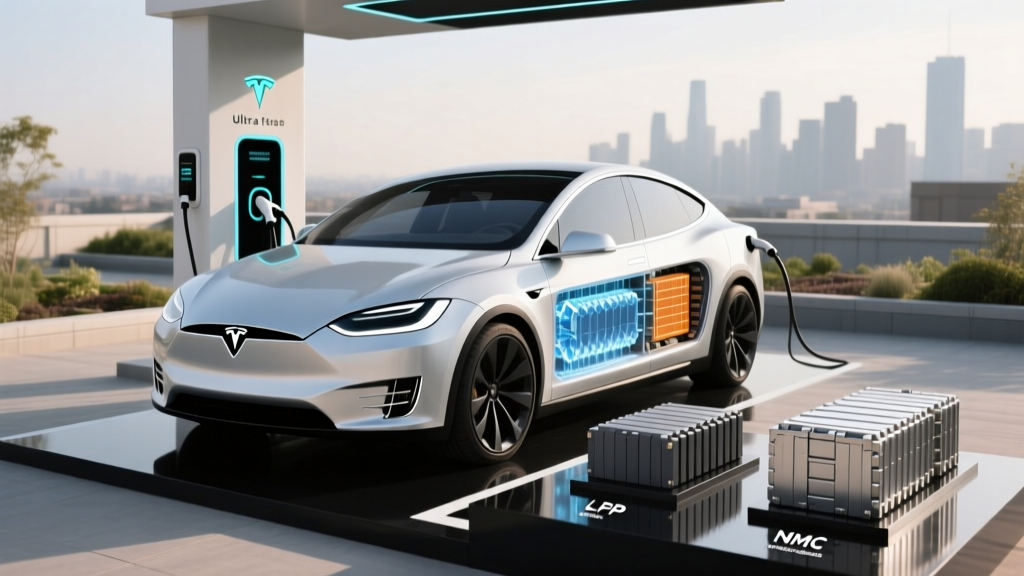
Two cathode families dominate the 2026 EV market. Nickel Manganese Cobalt (NMC) and Nickel Cobalt Aluminum (NCA) cells prioritize energy density, making them the default for long-range and performance trims. Lithium Iron Phosphate (LFP) cells sacrifice some energy density for cycle life, thermal stability, and lower cost — and they've expanded well beyond Tesla's Standard Range models into offerings from Ford, Rivian, and several Chinese-market imports.
Both chemistries still use a graphite-based anode. This is where pure lithium metal enters the conversation: replacing graphite with a thin foil of metallic lithium could theoretically double anode capacity. But dendrite formation, electrolyte consumption, and manufacturing scale-up have kept pure lithium metal anodes out of mass-production EV packs.
| Attribute | LFP (Lithium Iron Phosphate) | NMC / NCA |
|---|---|---|
| Energy Density (cell-level) | ~160–180 Wh/kg | ~230–290 Wh/kg |
| Typical Cycle Life (to 80% SoH) | 3,000–5,000+ cycles | 1,000–2,000 cycles |
| Cold-Weather Performance | Moderate; greater range loss below 32 °F | Better low-temp discharge capability |
| Thermal Stability | Excellent; higher runaway threshold | Good; requires robust BMS & cooling |
| Cost per kWh (pack-level, 2026 est.) | ~$95–$110 | ~$120–$145 |
| Recommended Charge Habit | Can charge to 100% regularly | Best kept 20–80% for daily use |
| Common 2026 Applications | Tesla Model 3 RWD, Ford Mustang Mach-E Select, Rivian R1S Standard | Tesla Model Y LR, Hyundai Ioniq 5 LR, BMW iX, Porsche Taycan |
The takeaway: if you prioritize maximum range in a single charge and don't mind managing state-of-charge habits, NMC/NCA delivers. If you want a pack that tolerates daily 100% charges, lasts longer in calendar years, and costs less upfront, LFP is the pragmatic pick — especially for commuters who can charge at home every night.
How Long Do EV Batteries Actually Last?
The short answer: longer than most buyers expect. Data aggregated from fleet operators, manufacturer warranty claims, and independent testing by sources like Recurrent Auto shows that the average 2022–2025 model-year EV battery retains roughly 90–95% of its original capacity after three years and 45,000–60,000 miles. Degradation follows a curve that's steepest in year one (typically 2–5% loss as the solid electrolyte interphase stabilizes) and then flattens to roughly 1–2% per year under normal use.
Typical Degradation Trajectory (NMC 75–82 kWh pack, moderate climate, mixed charging):
- Year 1 / 15,000 mi: ~95–97% State of Health (SoH)
- Year 3 / 45,000 mi: ~90–93% SoH
- Year 5 / 75,000 mi: ~87–91% SoH
- Year 8 / 120,000 mi: ~82–88% SoH
- Year 10 / 150,000 mi: ~78–85% SoH (varies significantly by usage)
LFP packs typically show slower mid-life degradation and may retain 90%+ SoH at the 8-year mark under similar conditions.
For context, an EV with an EPA-rated 310-mile range and 85% SoH at year eight still delivers roughly 263 miles — more than adequate for 95% of daily driving. The fear that EV batteries "die" at 100,000 miles like a timing belt is not supported by the data. Most packs outlast the vehicles they're installed in.
What the Battery Warranty Actually Covers
Federal law mandates that EV manufacturers provide a battery warranty of at least 8 years or 100,000 miles (10 years / 150,000 miles in California Air Resources Board states). This covers defects and excessive capacity loss — typically defined as falling below 70% of original usable capacity.
| Vehicle | Warranty Period | Mileage Cap | Capacity Threshold |
|---|---|---|---|
| Tesla Model Y Long Range | 8 years | 120,000 mi | 70% retention |
| Tesla Model 3 RWD (LFP) | 8 years | 100,000 mi | 70% retention |
| Hyundai Ioniq 5 | 10 years | 100,000 mi | 70% retention |
| Ford Mustang Mach-E | 8 years | 100,000 mi | 70% retention |
| Rivian R1S / R1T | 8 years | 175,000 mi | 70% retention |
| BMW iX xDrive50 | 8 years | 100,000 mi | 70% retention |
| Chevrolet Equinox EV | 8 years | 100,000 mi | 60–70% retention* |
*Verify exact threshold with manufacturer; some GM Ultium-platform warranties specify 60% for certain commercial applications. Consumer warranties are typically 70%.
Important nuance: warranty coverage applies to capacity retention, not range. If your 300-mile EPA-rated EV drops to 210 miles at 70% SoH, that's the threshold — and it's still a usable vehicle. Warranty claims for battery replacement remain rare; most manufacturers will first attempt module-level repair or rebalancing before authorizing a full pack swap.
EV Battery Replacement Cost: The Real Numbers
If your battery falls outside warranty coverage — say, at 140,000 miles on a 2019 model — replacement is expensive but rarely catastrophic. Prices have declined steadily as pack-level costs have fallen from over $200/kWh in 2020 to roughly $110–$145/kWh in 2026.
| Vehicle / Pack Size | Battery Capacity | Part Cost (est.) | Labor + Total (est.) |
|---|---|---|---|
| Tesla Model 3 RWD (LFP) | ~60 kWh | $6,000–$7,500 | $8,000–$10,500 |
| Tesla Model Y Long Range | ~75 kWh | $9,000–$11,000 | $12,000–$15,000 |
| Hyundai Ioniq 5 Long Range | ~77.4 kWh | $9,500–$12,000 | $13,000–$16,500 |
| Ford F-150 Lightning Extended | ~131 kWh | $16,000–$20,000 | $20,000–$26,000 |
| Chevrolet Silverado EV | ~200 kWh | $22,000–$28,000 | $27,000–$35,000 |
| Porsche Taycan (Performance Plus) | ~83.7 kWh | $14,000–$18,000 | $18,000–$24,000 |
Several factors moderate these figures. First, most batteries never need full replacement — module-level repairs run $2,000–$5,000. Second, the used EV battery market is growing; refurbished packs from totaled vehicles can cut costs 30–50%. Third, if the failure occurs within the 8-year/100,000-mile federal mandate, the replacement is free. For the vast majority of owners who sell or trade their EV within 8–10 years, battery replacement cost is a theoretical concern, not a practical one.
Factors That Accelerate Battery Degradation
Battery wear isn't random. The same cell can last 1,500 cycles or 4,000 cycles depending on how it's treated. Here's what the electrochemistry actually punishes:
Habits That Minimize Degradation:
- Keep daily SoC between 20–80% (NMC/NCA). LFP owners can charge to 100% regularly — the chemistry tolerates it.
- Minimize DC fast charging to road trips. Daily Level 2 (7–11.5 kW) home charging generates far less heat stress than repeated 150+ kW DC sessions.
- Precondition the battery before fast charging in cold weather. Most EVs do this automatically when you navigate to a charger; confirm your vehicle's preconditioning is active.
- Avoid prolonged storage at 100% or near 0%. If leaving the vehicle for 2+ weeks, set SoC to ~50%.
- Park in shade or a garage when possible. Sustained battery temps above 95 °F accelerate calendar degradation.
- Use scheduled charging so the car finishes charging just before you leave, rather than sitting at high SoC for hours.
The single highest-impact habit is reducing DC fast-charge frequency. Data from IDTechEx and fleet analyses show that vehicles fast-charging more than three times per week exhibit roughly 1.5–2× the degradation rate of vehicles that primarily use Level 2 home charging. The charge curve matters too: charging from 80–100% on DC fast charging generates disproportionate heat because the cell's internal resistance increases at high SoC. This is why your EV tapers charge speed above 80% — it's the battery management system protecting the cells.
Monitoring Battery Health: How to Check SoH
State of Health (SoH) is the percentage of original usable capacity your battery retains. Unlike a gas car's compression test, there's no single standardized SoH readout, but several reliable methods exist:
- In-vehicle displays: Tesla's Service Mode (accessible via the software menu) shows estimated battery degradation. Some Hyundai/Kia models display SoH through the diagnostic menu. BMW and Mercedes include battery health in their connected-car apps.
- OBD-II dongles + apps: Tools like OBDeleven, Leaf Spy (Nissan), or Scan My Tesla read the BMS-reported SoH directly from the CAN bus. These typically cost $30–$60 for the hardware.
- Manufacturer service centers: Requesting a battery health report during routine service gives you a dealer-documented SoH figure — useful for resale negotiations.
- Third-party services: Companies like Recurrent provide battery health reports based on telematics data, often free for members.
When buying a used EV, always verify SoH before purchase. A 2021 Model 3 Long Range showing 91% SoH at 55,000 miles is typical and healthy; one at 82% SoH at the same mileage warrants investigation into prior fast-charging habits or potential BMS miscalibration.
Pure Lithium Metal, Solid-State, and Silicon Anodes: The Horizon
Here's where the target keyword earns its keep. Pure lithium metal anodes represent the theoretical endgame for lithium-based batteries. By replacing graphite (which stores lithium ions between carbon layers) with a thin foil of metallic lithium, cell-level energy density could jump from today's ~260 Wh/kg (NMC) to 400–500 Wh/kg. That translates to a 75 kWh pack weighing what a 50 kWh pack weighs today — or a same-weight pack delivering 500+ miles of EPA range.
Companies like QuantumScape, Solid Power, and Samsung SDI are developing solid-state cells with lithium-metal anodes, where a ceramic or sulfide solid electrolyte replaces the flammable liquid electrolyte and (in theory) suppresses dendrite growth. Toyota has announced pilot production of solid-state cells for a limited 2027–2028 vehicle, and Nissan has targeted 2028 for a solid-state prototype.
The realistic timeline for pure lithium metal batteries in mainstream, affordable EVs is 2029–2032 at the earliest. The manufacturing challenges — dry-room requirements, lithium foil handling at scale, electrolyte interface stability over thousands of cycles — are substantial. Current pilot cells show promising energy density but struggle with cycle life below 800–1,000 cycles, far short of the 1,500+ needed for consumer viability.
In the nearer term (2026–2028), silicon-dominant anodes are the more practical incremental step. Companies like Sila Nanotechnologies and Group14 are supplying silicon-carbon composite anodes that boost energy density 10–20% over pure graphite. The Mercedes-Benz G-Class electric variant and select Porsche models are early adopters. Silicon anodes offer meaningful range gains without the manufacturing upheaval of pure lithium metal.
If you're shopping for an EV today, waiting for pure lithium metal or solid-state is not a rational strategy. The vehicles available now will serve reliably for 10–15 years, and the next generation of battery tech will debut in premium, low-volume applications before reaching mainstream price points.
Frequently Asked Questions
How long do EV batteries last in years and miles?
Most modern EV batteries (2020+ model years) retain 82–90% of original capacity at 8 years and 100,000–120,000 miles under normal use. LFP chemistry packs often exceed 90% retention at the same interval. Catastrophic failure is rare; gradual capacity loss is the norm, and most packs remain functional well beyond 150,000 miles.
How much does it cost to replace an EV battery out of warranty?
Full pack replacement runs $8,000–$15,000 for most sedans and crossovers (60–82 kWh packs) and $20,000–$35,000 for large trucks and SUVs with 130–200 kWh packs. Module-level repairs cost $2,000–$5,000. Within the federally mandated 8-year/100,000-mile warranty, replacement is free if capacity drops below the manufacturer's threshold (typically 70%).
What does the EV battery warranty cover?
Federal law requires at minimum 8 years / 100,000 miles of battery coverage (10 years / 150,000 miles in CARB states). Coverage includes manufacturing defects and capacity loss below a stated threshold — usually 70% of original usable capacity. It does not cover damage from accidents, flooding, or unauthorized modifications. Check your specific owner's manual for exact terms.
LFP vs. NMC — which battery chemistry is better for me?
Choose LFP if you want lower cost, longer cycle life, the ability to charge to 100% daily without worry, and superior thermal stability — ideal for commuters with home charging. Choose NMC/NCA if you need maximum range per charge, better cold-weather performance, or are buying a long-range or performance trim. Neither is universally "better"; the right choice depends on your driving pattern and charging access.
How do I check my EV's battery State of Health?
Use your vehicle's built-in diagnostics (Tesla Service Mode, Hyundai/Kia diagnostic menus), an OBD-II reader with EV-compatible software (OBDeleven, Leaf Spy, Scan My Tesla), or request a battery health report from your dealer. Third-party services like Recurrent also provide SoH estimates via connected-car telematics.
Will pure lithium metal batteries make today's EVs obsolete?
Not for at least 3–6 years. Pure lithium metal anode cells remain in pilot production with unresolved cycle-life and manufacturing-scale challenges. Solid-state batteries using lithium metal are expected in limited premium applications around 2028–2030. Today's graphite-anode NMC and LFP cells will remain the standard through at least 2030, and the vehicles using them will remain fully serviceable and practical well beyond that.
Does frequent DC fast charging really damage the battery?
"Damage" is too strong, but it does accelerate degradation. Fleet data shows vehicles that DC fast-charge 3+ times per week degrade roughly 1.5–2× faster than those primarily using Level 2 home charging. Occasional road-trip fast charging has negligible long-term impact. The key is making Level 2 home charging your daily routine and reserving DC fast charging for trips.
For official battery warranty details and federal requirements, refer to your vehicle's warranty booklet and EPA's EV basics page. For tax credit eligibility on new EV purchases — which factors in battery component sourcing under §30D rules — consult the IRS clean vehicle credit page and verify with a tax professional.