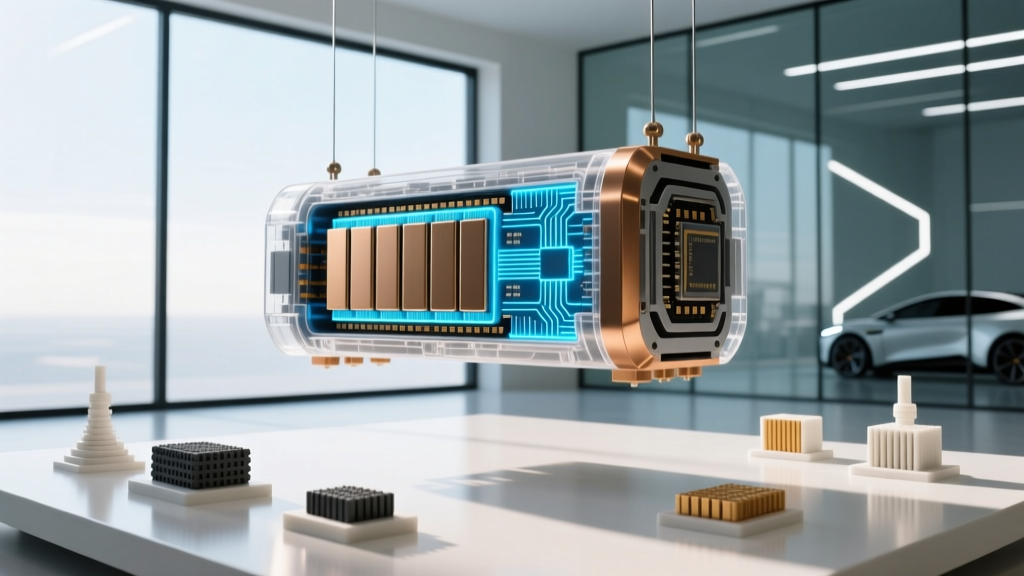
If you own a Toyota Prius—or are considering buying one used or new—the single most common question is about the high-voltage hybrid battery. Unlike a conventional 12V starter battery, the traction battery in a Prius powers the electric motor, assists the gasoline engine, and captures energy through regenerative braking. When shoppers search for the life expectancy of Prius hybrid battery packs, they're often surprised to learn that these batteries routinely outlast the vehicles they're installed in.
This guide covers the real data behind Prius hybrid battery longevity, what chemistry Toyota uses, how degradation actually works in a hybrid (which is very different from a full battery-electric vehicle), what replacement costs, and how to maximize the pack's lifespan whether you drive a 2010 third-gen or a 2026 fifth-generation Prius or Prius Prime plug-in hybrid.
How Long Does a Prius Hybrid Battery Actually Last?
Based on owner reports, fleet data, and Toyota's own warranty structure, a Prius hybrid traction battery typically lasts 150,000 to 200,000 miles before requiring replacement—and many exceed 250,000 miles with minimal capacity loss. In years, that translates to roughly 12 to 15 years for an average driver covering 12,000–15,000 miles annually.
This longevity is not accidental. Toyota's hybrid system (called the Hybrid Synergy Drive, now the Toyota Hybrid System or THS in current models) uses a conservative battery management strategy. The system never fully charges or fully depletes the high-voltage battery—it operates within a narrow state-of-charge window, typically between roughly 40% and 80%. This shallow-cycling approach dramatically reduces chemical stress on the cells compared to a full EV that cycles between 10% and 90% daily.
- 50,000 miles: Virtually no measurable capacity loss in most Prius packs; performance indistinguishable from new.
- 100,000 miles: Typical capacity loss of 5–10%. Drivers rarely notice any change in fuel economy.
- 150,000 miles: Capacity loss of 10–15% in well-maintained packs. Some early third-gen (2010–2015) units begin showing cell imbalance.
- 200,000+ miles: Capacity loss of 15–25%. This is where some packs require service—often individual cell or module replacement rather than a full pack swap.
Sources: Toyota owner forums (PriusChat), Consumer Reports reliability surveys, and independent hybrid shop data aggregated across model years.
It's worth noting that the Prius Prime (the plug-in hybrid variant, called Prius PHEV in some markets) uses a larger lithium-ion battery pack that experiences different cycling patterns because it regularly depletes to near-zero during electric-only driving. Even so, Toyota's battery management keeps degradation well-controlled, and Prime owners report strong longevity through 100,000+ miles of electric driving.
Prius Hybrid Battery Chemistry: NiMH vs. Lithium-Ion
The Prius has used two different battery chemistries over its production run, and understanding which one your model has matters for longevity expectations and replacement cost.
Nickel-Metal Hydride (NiMH): Used in the first-generation Prius (1997–2003), second-generation (2004–2009), and third-generation (2010–2015), as well as the standard Prius through the fourth generation (2016–2022). NiMH chemistry is heavier and has lower energy density than lithium-ion, but it is extremely durable, tolerant of temperature extremes, and forgiving of shallow cycling. This is the chemistry that built the Prius's reputation for bulletproof battery life.
Lithium-Ion (NMC/NCA-type): Toyota transitioned to lithium-ion packs for the Prius Prime starting with the 2017 model year and expanded lithium-ion use in the fifth-generation Prius (2023–present) for weight and packaging efficiency. The current 2026 Prius Prime uses a 13.6 kWh lithium-ion pack (gross) delivering an EPA-rated 44 miles of electric-only range. Lithium-ion offers higher energy density and lower weight but requires more sophisticated thermal management.
For context, here is how the chemistries commonly found in electrified vehicles compare:
| Property | NiMH (Prius Gen 2–4) | NMC Lithium-Ion (Prius Prime, most EVs) | LFP (Tesla, BYD, some EVs) |
|---|---|---|---|
| Energy Density | Low (~70–100 Wh/kg) | High (~200–260 Wh/kg) | Medium (~140–170 Wh/kg) |
| Cycle Life | Very high (3,000–5,000+ cycles) | Good (1,000–2,500 cycles) | Excellent (3,000–6,000+ cycles) |
| Cold Performance | Good | Moderate (reduced range below freezing) | Moderate to poor (greater cold-weather loss) |
| Cost per kWh | Higher (older tech) | Moderate (~$100–130/kWh at pack level) | Lower (~$75–100/kWh at pack level) |
| Degradation Profile | Very slow, linear | Moderate, faster early then plateaus | Very slow, highly linear |
| Best For | HEV shallow cycling | PHEV & BEV range priority | BEV longevity & cost priority |
For the Prius specifically, Toyota's choice of NiMH for standard hybrids and NMC lithium-ion for the Prime reflects a calculated trade-off: maximum durability where the pack is small and shallow-cycled (standard HEV), and higher energy density where electric-only range matters (PHEV).
What Does the Toyota Hybrid Battery Warranty Cover?
Toyota's hybrid battery warranty is among the strongest in the industry and provides a strong signal of how long the automaker expects these packs to last. For the 2026 Toyota Prius and Prius Prime, the hybrid battery warranty is:
| Coverage Detail | Specification |
|---|---|
| Duration | 10 years / 150,000 miles (whichever comes first) |
| Capacity Retention Threshold | Coverage applies if battery fails to function or drops below a defined performance threshold (Toyota does not publish an exact percentage publicly, but dealer diagnostics assess capacity and cell balance) |
| Transferable? | Yes—warranty transfers to subsequent owners automatically |
| What's Covered | Full hybrid battery pack replacement or repair, including labor, at a Toyota dealer |
| Hybrid System Components | 8 years / 100,000 miles for hybrid control module, inverter, and related components |
Toyota extended its hybrid battery warranty from the previous 8-year/100,000-mile standard to 10 years/150,000 miles starting with 2020 model-year vehicles. This applies to all Toyota hybrids, including the Prius, Camry Hybrid, RAV4 Hybrid, and Highlander Hybrid. If you're buying a used 2019 or earlier Prius, the original 8-year/100,000-mile warranty applies.
You can verify current warranty terms on Toyota's official warranty page.
Prius Hybrid Battery Replacement Cost: What to Budget
If your Prius hybrid battery does fail outside of warranty, the replacement cost is far less catastrophic than many buyers fear—especially compared to full EV battery replacements, which can exceed $10,000–$20,000 for large packs.
| Replacement Option | Estimated Cost (Parts + Labor) | Notes |
|---|---|---|
| New OEM battery (Toyota dealer) | $2,500–$4,000 | Varies by generation; Gen 3 and Gen 4 NiMH packs typically $2,500–$3,500; Prius Prime lithium-ion packs $3,500–$4,000 |
| Refurbished/remanufactured battery | $1,500–$2,500 | Rebuilt with tested modules; 1–3 year warranty typical; available from hybrid specialists |
| Individual cell/module replacement | $500–$1,500 | Only viable if one or two modules have failed; requires a hybrid-specialist shop with cell-balancing equipment |
| Used/salvage battery | $800–$1,500 | Pulled from wrecked/low-mileage vehicles; variable remaining life; short warranty if any |
For comparison, a full EV battery replacement (say, a 75 kWh pack in a Tesla Model 3 or an 84 kWh pack in a Hyundai Ioniq 5) runs $10,000–$18,000 or more. The Prius hybrid battery is small—roughly 1.3 kWh in the standard Prius and 13.6 kWh in the Prius Prime—so replacement costs scale accordingly.
The key insight: most Prius owners never need a battery replacement. The pack typically outlasts other major components (suspension, A/C compressor, head gaskets on older models) and often outlasts the car's economic life. Fear of a $3,000–$4,000 battery replacement should not deter a used Prius purchase—especially for a vehicle that may have 200,000+ trouble-free miles ahead of it.
Factors That Affect Prius Hybrid Battery Life
While Toyota's battery management system does an excellent job protecting the pack, owner behavior and environmental conditions still influence how long the battery lasts. Here are the factors that matter most, ranked by impact:
- Extreme heat exposure: Sustained ambient temperatures above 100°F accelerate chemical degradation. Prius taxis in Phoenix and Las Vegas show higher failure rates than those in cooler climates. Tip: Park in shade or a garage when possible. The battery cooling fan intake (usually near the rear seat) must remain unobstructed.
- Extended storage at extreme SoC: Leaving a Prius (especially the Prime) sitting for weeks at very high or very low charge stresses the cells. Tip: If storing a Prius Prime for more than two weeks, leave the battery at roughly 50% charge.
- Neglected battery cooling system: The Prius hybrid battery has a dedicated cooling fan and air duct. If the cabin air filter is clogged or the duct is blocked by cargo or pet hair, the battery runs hotter than designed. Tip: Replace the cabin air filter per the maintenance schedule and keep the rear-seat battery vent clear.
- High-mileage stop-and-go driving: While regenerative braking is gentle on the battery, extreme urban taxi-style use (50,000+ miles/year of constant charge/discharge cycles) accelerates wear. Average drivers need not worry.
- Aftermarket modifications: Non-OEM charging equipment, battery tenders not designed for hybrid systems, or modifications to the hybrid control system can damage the battery management logic.
- Cold weather: Unlike full EVs, the Prius's small battery and shallow cycling mean cold weather has minimal impact on battery degradation. You may notice slightly reduced fuel economy in winter (the engine runs more to heat the cabin and warm the powertrain), but this does not damage the battery.
How to Check Your Prius Hybrid Battery Health
Unlike full EVs that sometimes display a battery State of Health (SoH) percentage in the infotainment system, the standard Prius does not show a consumer-facing battery health metric on the dashboard. However, there are several ways to assess your pack's condition:
1. Toyota Dealer Diagnostic (Health Check): Any Toyota dealer can run a hybrid battery health check using Toyota's Techstream diagnostic software. This reads individual cell voltages, internal resistance, and overall capacity. The test takes about 30 minutes and is often included free in a multi-point inspection during a service visit. If any cell is significantly out of balance, the system flags it.
2. OBD-II Scanner with Hybrid App: Enthusiast-grade OBD-II adapters (such as the OBDLink MX+ or Carista) paired with apps like Dr. Prius or Hybrid Assistant can read real-time battery data including individual block voltages, battery temperature, charge/discharge current, and estimated capacity. The Dr. Prius app includes a "Life Expectancy Test" that cycles the battery and estimates remaining capacity. This is the most accessible DIY option and costs under $50 for the hardware.
3. Fuel Economy Trend Monitoring: A gradual decline in MPG over tens of thousands of miles can signal battery degradation, though this is a lagging indicator. A healthy Gen 4 Prius should consistently deliver 50–56 MPG combined per EPA estimates on fueleconomy.gov. If your average drops below 42–45 MPG consistently (excluding winter driving and short trips), it's worth investigating the battery and other hybrid system components.
4. Dashboard Warning Lights: If the hybrid system warning light or check engine light illuminates with hybrid-related diagnostic trouble codes (such as P0A80 for battery system malfunction or P0A7F for battery pack degradation), the battery has a confirmed issue requiring professional diagnosis.
For Prius Prime owners, monitoring electric-only range over time provides a rough SoH proxy. If your 2024–2026 Prius Prime originally delivered 44 miles of electric range and now consistently delivers only 32–35 miles in similar conditions, that suggests roughly 20–25% capacity loss—worth a dealer diagnostic check.
Emerging Battery Technology: What's Next Beyond the Prius?
Toyota is investing heavily in next-generation battery technology, and some of this will eventually trickle down to the Prius lineup. Here is a realistic look at what's on the horizon—none of which is available in production vehicles as of 2026:
Solid-State Batteries: Toyota holds the most solid-state battery patents of any automaker and has announced plans for limited solid-state EV production in the late 2020s. Solid-state chemistry promises higher energy density (potentially 2× current lithium-ion), faster charging, and improved safety (no liquid electrolyte to catch fire). However, manufacturing challenges—particularly achieving consistent solid-to-solid contact at scale—have repeatedly delayed timelines. Realistic expectation: solid-state batteries may appear in a Toyota EV before 2030, but a Prius application is unlikely before the early 2030s, if ever, given the cost premium and the Prius's small-battery architecture.
Bipolar NiMH: Toyota introduced a bipolar nickel-metal hydride battery in the 2022 Aqua (Japan-market Prius c successor). This design reduces internal resistance and improves charge/discharge efficiency while retaining NiMH durability. It may appear in future global Prius variants as a cost-effective upgrade.
Silicon Anode Lithium-Ion: Companies like Sila Nanotechnologies and Group14 are developing silicon-dominant anodes that could boost energy density by 20–40% over graphite anodes. These are expected to reach production EVs in the 2027–2030 timeframe. For the Prius Prime, a silicon-anode upgrade could push electric-only range from 44 miles to 60+ miles without increasing pack size or weight.
For current buyers, these technologies are forward-looking context, not purchase decision factors. Today's Prius battery is proven, well-understood, and cost-effective to replace if needed.
Frequently Asked Questions
How long do Prius hybrid batteries last in years and miles?
Most Prius hybrid batteries last 150,000–200,000 miles or 12–15 years before significant degradation. Many exceed 250,000 miles. Toyota's warranty covers the battery for 10 years or 150,000 miles on 2020 and newer models.
How much does it cost to replace a Prius hybrid battery?
A new OEM replacement battery from a Toyota dealer costs $2,500–$4,000 depending on the generation and chemistry. Refurbished batteries run $1,500–$2,500, and individual cell/module repairs can cost as little as $500–$1,500 at a hybrid specialist.
What does the Toyota hybrid battery warranty cover?
Toyota covers the hybrid battery for 10 years/150,000 miles (2020+ models) or 8 years/100,000 miles (2019 and earlier). Coverage includes full replacement or repair if the battery fails or drops below a performance threshold. The warranty is fully transferable to subsequent owners.
How do I maximize my Prius hybrid battery's lifespan?
Keep the battery cooling fan intake unobstructed, replace the cabin air filter regularly, avoid prolonged storage at extreme charge levels (especially for the Prius Prime), park in shade or a garage in hot climates, and follow Toyota's maintenance schedule. The car's battery management system handles the rest.
Is the Prius hybrid battery the same as the 12V battery?
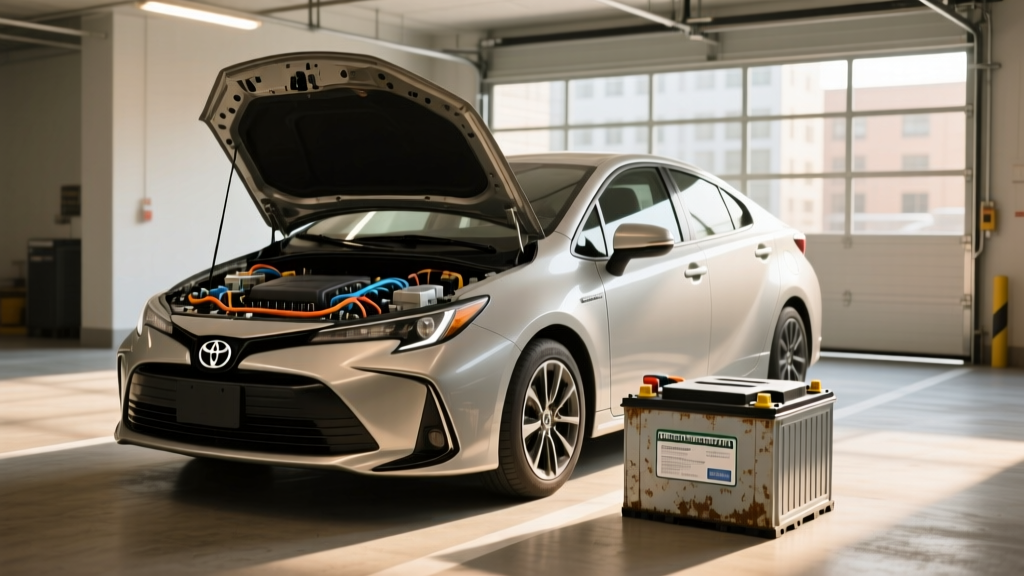
No. The Prius has two batteries: a conventional 12V auxiliary battery (similar to a regular car battery) that powers electronics and starts the hybrid system, and a high-voltage traction battery (NiMH or lithium-ion) that powers the electric motor. The 12V battery is inexpensive to replace ($150–$300) and is not covered by the hybrid battery warranty.
LFP vs NMC — which battery chemistry is better for hybrids?
For full EVs, LFP (lithium iron phosphate) offers longer cycle life and lower cost but sacrifices energy density and cold-weather performance. NMC (nickel manganese cobalt) offers higher energy density for longer range. For the Prius hybrid, Toyota uses NiMH for the standard model and NMC lithium-ion for the Prime PHEV—each optimized for its use case. LFP has not been adopted in the Prius lineup as of 2026.
Can I drive a Prius with a failing hybrid battery?
The Prius can technically operate with a degraded hybrid battery, but performance, fuel economy, and acceleration will suffer noticeably. If the hybrid system warning light is illuminated, Toyota recommends having the vehicle serviced promptly. Continuing to drive with a confirmed battery fault can stress other hybrid system components.
For official fuel economy data on current and past Prius models, visit fueleconomy.gov. For Toyota's current hybrid warranty details, see toyota.com/owners/warranty.