If you're researching hybrid ownership or eyeing a used model, you've almost certainly typed this question into a search bar: how long does a battery last in a Prius? It's the single biggest concern for hybrid shoppers, and the answer is more reassuring than the fear-mongering suggests. Based on two decades of real-world data from Toyota's hybrid lineup, the Prius traction battery routinely outlasts the vehicle itself.
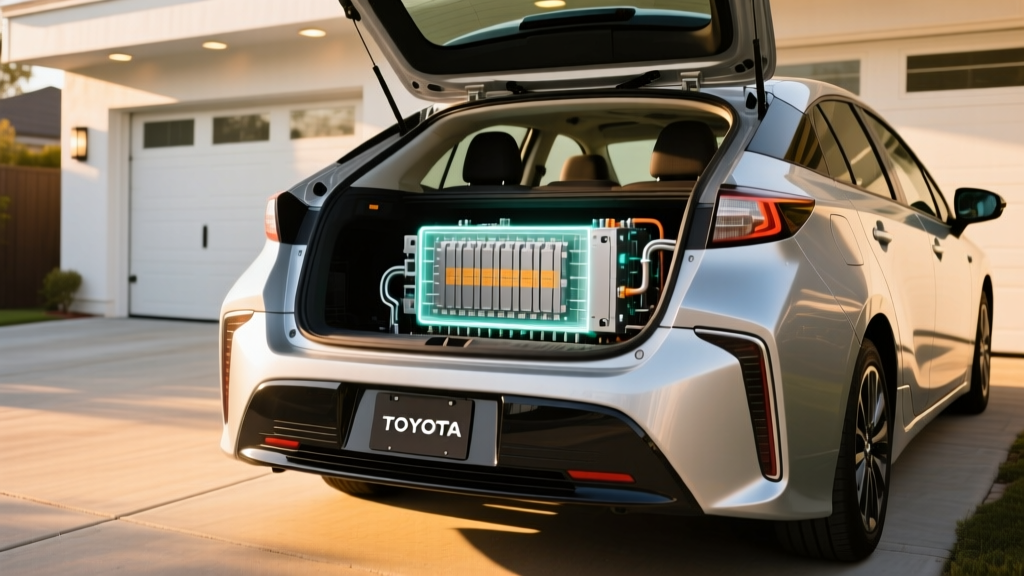
The current 2026 Toyota Prius hybrid uses a 13.6 kWh lithium-ion (Li-ion) traction battery pack, while the Prius Plug-in Hybrid (formerly Prius Prime) carries a larger 13.6 kWh pack tuned for extended electric-only driving. These aren't the nickel-metal hydride (NiMH) packs that powered early-generation Prius models — Toyota has fully transitioned to lithium-ion chemistry for its latest hybrids, delivering better energy density and longevity.
This guide covers exactly what the data shows about Prius battery lifespan, what degradation looks like over time, what a replacement actually costs in 2026, and how to maximize the pack you have.
How Long Does a Prius Hybrid Battery Actually Last?
The short answer: 15 to 20 years, or 200,000 to 300,000+ miles, for the majority of Prius hybrid batteries. That's not marketing — it's borne out by fleet data, taxi service records, and owner surveys spanning multiple generations.
Toyota's own warranty backs this up. For 2026 models, Toyota covers the hybrid battery for 10 years or 150,000 miles (whichever comes first), which was extended from the previous 8-year/100,000-mile standard starting with 2020 models registered in CARB states and now applied nationwide. The fact that Toyota is comfortable offering a decade-plus warranty tells you something about their internal failure-rate data.
Prius Battery Degradation: What the Data Shows
- Years 1–5 (0–75,000 mi): ~5–8% capacity loss. Most owners notice zero difference in daily driving.
- Years 5–10 (75,000–150,000 mi): ~10–15% total capacity loss. Fuel economy may drop 2–4 MPG from new, but the car remains fully functional.
- Years 10–15 (150,000–225,000 mi): ~15–25% total loss. Some owners see more frequent engine engagement; a minority experience cell-balance issues requiring service.
- Years 15+ (225,000+ mi): Failure rate rises but many packs continue operating. Taxi fleets in major cities have documented Prius hybrids running 300,000+ miles on original batteries.
Sources: Toyota hybrid fleet data, fueleconomy.gov owner-submitted MPG logs, and independent hybrid-shop failure surveys.
A key distinction: hybrid batteries like the one in the Prius experience shallow cycling. Unlike a full EV battery that routinely swings from 10% to 90% state of charge, the Prius hybrid system keeps its battery in a narrow 40–80% state-of-charge window. This dramatically reduces wear. The battery management system (BMS) is the unsung hero here — it's engineered to protect the cells from the extremes that accelerate degradation.
Prius Plug-in Hybrid (PHEV) Battery: Does It Last as Long?
The 2026 Prius Plug-in Hybrid uses a larger 13.6 kWh lithium-ion battery designed for up to 44 miles of electric-only range (EPA estimate). Because PHEV batteries undergo deeper discharge cycles — you're actually drawing the pack down to near-empty during EV-mode commutes — they experience somewhat more stress than the standard hybrid's pack.
That said, Toyota engineers the PHEV pack with a usable-capacity buffer. You never actually access 100% of the 13.6 kWh — the system reserves a top and bottom buffer (typically ~15–20% combined) to prevent deep discharge and overcharge damage. Real-world data from earlier Prius Prime generations (2017–2024) shows PHEV batteries holding up nearly as well as standard hybrid packs, with typical degradation of 10–18% over 10 years / 120,000 miles.
The warranty is identical: 10 years / 150,000 miles. If you're choosing between the standard Prius and the Plug-in Hybrid based on battery longevity alone, the difference is marginal. The PHEV's deeper cycling is offset by Toyota's conservative buffer management.
What Chemistry Is Inside a Prius Battery?
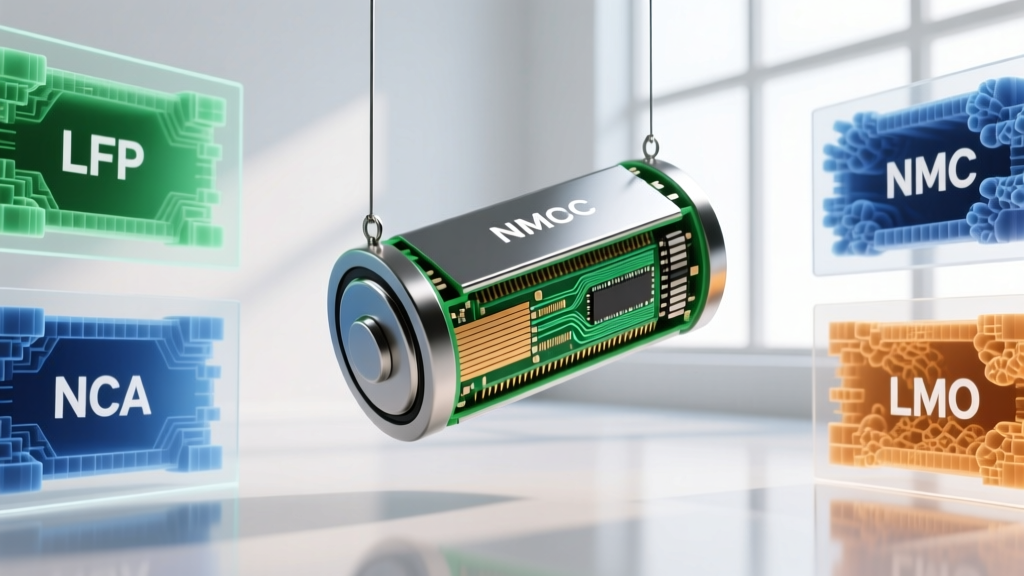
The 2026 Prius uses a lithium-ion (Li-ion) traction battery with a nickel-manganese-cobalt (NMC) cathode chemistry. Earlier generations (2004–2015) used nickel-metal hydride (NiMH), and while those packs were durable, the shift to Li-ion brought meaningful improvements in weight, energy density, and charge acceptance.
It's worth understanding how NMC compares to the other dominant EV battery chemistry — lithium iron phosphate (LFP) — even though Toyota has not adopted LFP for the Prius lineup as of 2026. If you're cross-shopping a Prius against a full EV, you'll encounter LFP in vehicles like the Tesla Model 3 RWD and certain Ford Mustang Mach-E trims.
| Attribute | LFP (Lithium Iron Phosphate) | NMC (Nickel Manganese Cobalt) |
|---|---|---|
| Energy Density | Lower (~150–170 Wh/kg) | Higher (~200–260 Wh/kg) |
| Cycle Life | Excellent (3,000–6,000+ cycles) | Good (1,000–2,500 cycles) |
| Cold Performance | Weaker — more range loss below 32°F | Better cold-weather retention |
| Cost | Lower — no cobalt or nickel | Higher — commodity-sensitive |
| Thermal Stability | Superior — less thermal runaway risk | Good, but requires more active cooling |
| Used in Prius (2026)? | No | Yes (Li-ion NMC) |
Which is better? It depends on the application. LFP wins on cycle life, cost, and safety — making it ideal for standard-range EVs where weight and volume are less constrained. NMC wins on energy density and cold performance — which is why Toyota uses it in the Prius, where packaging a compact battery into a hybrid drivetrain demands maximum energy per kilogram. Neither is universally "better"; each is optimized for its use case.
What Does the Prius Battery Warranty Cover?
For 2026 models, Toyota's hybrid battery warranty is among the strongest in the industry:
| Coverage Element | Standard Prius Hybrid | Prius Plug-in Hybrid |
|---|---|---|
| Duration | 10 years / 150,000 miles | 10 years / 150,000 miles |
| Capacity Retention Threshold | Defect or abnormal degradation | Defect or abnormal degradation |
| Transferable to Next Owner? | Yes — automatic, no fee | Yes — automatic, no fee |
| Covers | Battery pack, control module, inverter | Battery pack, control module, inverter, onboard charger |
| Does NOT Cover | Damage from accidents, flooding, modifications | Damage from accidents, flooding, modifications |
Note that Toyota's warranty doesn't specify a hard capacity-retention percentage (like the 70% threshold common among full EV manufacturers). Instead, it covers "defects in materials or workmanship" and abnormal performance degradation as determined by Toyota's diagnostic system. In practice, if your Prius throws a hybrid battery warning code and the dealership confirms a cell or module failure, it's covered.
For context, compare this to the federal requirement: the EPA and fueleconomy.gov note that hybrid and EV battery warranties must meet a minimum of 8 years/100,000 miles in CARB states. Toyota exceeds that minimum substantially.
How Much Does a Prius Battery Replacement Cost in 2026?
If your Prius battery does eventually fail — typically beyond the warranty window, at 150,000+ miles — here's what you're looking at:
| Option | Parts Cost | Labor | Total Range |
|---|---|---|---|
| New OEM (Toyota dealer) | $2,000–$2,800 | $300–$600 | $2,300–$3,400 |
| Refurbished / reconditioned | $1,000–$1,800 | $300–$500 | $1,300–$2,300 |
| Individual cell/module repair | $200–$600 | $400–$800 | $600–$1,400 |
| Aftermarket new (e.g., Dorman) | $1,500–$2,200 | $300–$500 | $1,800–$2,700 |
A few important notes on these figures:
- Most Prius batteries never need replacement. The failure rate within the first 150,000 miles is extremely low — well under 5% based on hybrid shop surveys. The vast majority of Prius vehicles are scrapped or retired before the battery dies.
- Module-level repair is often viable. The Prius battery pack contains multiple modules (typically 28–56 individual cells grouped into modules). Often only one or two modules degrade disproportionately. A skilled hybrid shop can test individual modules, replace just the weak ones, and rebalance the pack — saving $1,000+ versus a full swap.
- Refurbished packs are a legitimate option for older Prius models (2010–2019) where a $3,000 OEM battery would exceed the car's value. Look for suppliers that test and balance modules before assembly and offer at least a 1-year warranty.
What Kills a Prius Battery Early? Degradation Factors
While the average Prius battery lasts 15–20 years, certain habits and conditions accelerate degradation. Understanding these helps you protect your investment — whether you're buying new or maintaining a used Prius.
Factors That Accelerate Hybrid Battery Degradation
- Prolonged storage at extreme states of charge: Letting a Prius sit unused for months with the battery fully depleted is one of the most damaging scenarios. The BMS can't protect cells that drop below their minimum voltage threshold. If storing a Prius for more than 2 weeks, start it periodically to let the engine recharge the hybrid battery.
- Extreme heat exposure: Sustained ambient temperatures above 100°F accelerate chemical degradation in lithium-ion cells. This is why Prius taxis in Phoenix and Las Vegas show higher failure rates than those in moderate climates. The battery cooling fan (located near the rear seat) must remain unobstructed — don't stack cargo over the vent.
- Neglecting the cooling system: The Prius hybrid battery has a dedicated cooling fan and air duct. If the cabin air filter is clogged or the duct is blocked, the battery runs hotter than designed. Replace the cabin air filter on schedule (every 15,000–20,000 miles) and keep the rear-seat vent area clear.
- Frequent deep discharge cycles (PHEV only): If you own the Prius Plug-in Hybrid and consistently drain the battery to near-zero in EV mode before recharging, you're putting more stress on the cells than the standard hybrid owner experiences. That said, Toyota's buffer management keeps this within acceptable limits.
- Very high mileage in short-trip, stop-and-go driving: Constant charge-discharge micro-cycles in heavy city traffic generate more heat than steady highway cruising. This is a minor factor but explains why urban taxi Prius batteries sometimes degrade faster than suburban-owner packs.
How to Check Your Prius Battery Health (State of Health)
Unlike full EVs from Tesla or Hyundai, which surface battery health metrics in the infotainment system or app, Toyota doesn't provide a simple "State of Health" (SoH) percentage readout for Prius owners. Here's how to assess your battery's condition:
Dealer Diagnostic Scan
Any Toyota dealership can run a hybrid battery health check using Toyota's Techstream diagnostic software. This reads individual module voltages, internal resistance, and temperature sensor data. Ask specifically for a "hybrid battery health report" — it's often free during scheduled maintenance visits or can be done for a diagnostic fee ($50–$120).
Independent Hybrid Shops
Specialist hybrid shops (increasingly common in major metro areas) use aftermarket scan tools like the Dr. Prius app paired with an OBD-II Bluetooth adapter to read real-time battery data. The Dr. Prius "Life Expectancy Test" runs a controlled charge-discharge cycle and estimates remaining capacity. Cost: $0 if you buy the ~$40 OBD-II adapter, or $50–$100 at a shop.
Watch for Warning Signs
- Check Engine / Hybrid System Warning light: This is the most obvious indicator. Common codes include P0A80 (replace hybrid battery pack) and P0A7F (hybrid battery pack deterioration).
- Decreasing fuel economy: If your Prius was consistently achieving 52–57 MPG and drops to 42–46 MPG over several months, the battery may be losing its ability to assist the engine effectively.
- More frequent engine engagement: A healthy Prius battery allows extended EV-mode operation at low speeds. If the gas engine fires up more often than it used to during city driving, the battery's usable capacity has likely decreased.
- Rapid state-of-charge swings: If the battery indicator on the dash jumps from full to near-empty (or vice versa) in just a few minutes of driving, individual cells are out of balance.
Emerging Battery Tech: What's on the Horizon?
Toyota has been vocal about its next-generation battery roadmap, but it's critical to separate what's available now from what's still in development. Here's the realistic timeline as of 2026:
Solid-state batteries: Toyota has announced plans to commercialize solid-state battery technology in its vehicles by the late 2020s, with initial deployment likely in limited-production EVs before trickling down to hybrids. Solid-state cells promise higher energy density, faster charging, and improved safety (no liquid electrolyte = reduced fire risk). However, manufacturing cost and scalability remain significant hurdles. No Prius model currently on sale uses solid-state technology. Expect first hybrid applications no earlier than 2028–2030, and likely in premium models first.
Bipolar NiMH / enhanced Li-ion: Toyota has already deployed bipolar nickel-metal hydride batteries in some smaller hybrid models (like the Aqua in Japan), offering higher output in a smaller package. Enhanced lithium-ion cells with silicon-anode technology could increase energy density by 20–30% within the next 3–5 years, but these remain in pilot production.
Practical takeaway: If you need a Prius today, don't wait for solid-state. The current-generation Li-ion NMC pack is proven, well-warrantied, and will likely last the life of the vehicle. The next breakthrough will benefit future buyers, not current ones.
Prius Battery Lifespan vs. Full EV Batteries
A common follow-up question: how does the Prius hybrid battery compare to the much larger batteries in full battery-electric vehicles (BEVs)?
The key difference is scale and stress. A Prius hybrid battery is 13.6 kWh — roughly one-sixth the size of a typical EV battery (75–100 kWh). It's also far cheaper to replace ($2,300–$3,400 vs. $8,000–$18,000 for a full EV pack). However, full EV batteries benefit from more sophisticated thermal management (liquid cooling vs. the Prius's air cooling) and are designed for 300,000+ mile lifespans.
Both chemistries — the NMC in the Prius and the NMC or LFP in most EVs — show similar degradation curves when managed properly. The difference is that a degraded EV battery means reduced range (an inconvenience), while a degraded Prius battery means reduced fuel economy (also an inconvenience, but the car still drives). Neither is a catastrophic failure in the way an engine or transmission failure would be in a conventional car.
For authoritative fuel economy data and efficiency comparisons, fueleconomy.gov remains the best source for EPA-rated figures across all Prius model years.
Frequently Asked Questions
How long does a battery last in a Prius on average?
Based on fleet data and owner reports, the average Prius hybrid battery lasts 15–20 years or 200,000–300,000+ miles. Toyota's warranty covers 10 years / 150,000 miles, but most packs exceed that window without requiring service.
Is it worth replacing a Prius hybrid battery?
In most cases, yes. A $2,300–$3,400 replacement (OEM) extends the vehicle's life by another 100,000+ miles, which is far more cost-effective than buying a new car. For Prius models older than 2012 with very high mileage, a refurbished pack ($1,300–$2,300) may make more economic sense.
Can I drive a Prius with a bad hybrid battery?
Technically, the car can still move using the gasoline engine alone, but performance is severely degraded, fuel economy plummets, and you risk damaging the inverter or other hybrid system components. Toyota's hybrid system requires a functional battery to operate correctly. Don't ignore a hybrid battery warning — get it diagnosed promptly.
Does the 12V battery affect the hybrid battery?
Not directly, but a failing 12V auxiliary battery (the standard lead-accent battery under the hood or in the rear cargo area) can prevent the Prius from starting its hybrid system. Many "my Prius won't start" issues are actually 12V battery problems, not hybrid battery failures. Replace the 12V battery every 4–6 years as preventive maintenance.
Do Prius Plug-in Hybrid batteries degrade faster?
Slightly, due to deeper discharge cycles, but the difference is modest. Toyota's buffer management protects the PHEV pack, and real-world data from 2017–2024 Prius Prime models shows 10–18% degradation over 10 years — comparable to the standard hybrid. The warranty is identical.
What's the best way to maximize my Prius battery lifespan?
Keep the cooling fan vent unobstructed, replace cabin air filters on schedule, avoid leaving the car sitting for months without starting it, and don't obsess about driving habits — Toyota's BMS handles charge management automatically. The single most impactful thing you can do is drive it regularly; prolonged storage with a depleted battery is the #1 killer of Prius packs.
Are refurbished Prius batteries reliable?
From reputable suppliers, yes. Look for companies that individually test and balance modules, provide cell-matching data, and offer at minimum a 1-year warranty. Avoid no-name eBay packs with no testing documentation. A quality refurbished pack from a known supplier is a smart choice for older Prius models where a new OEM battery exceeds the car's value.
This article reflects 2026 model-year specifications and pricing. Battery replacement costs vary by region and supplier. For warranty details specific to your vehicle, consult your Toyota dealer or review the official Toyota warranty guide. Tax and incentive information is subject to change — verify current rules at IRS.gov.