If you've searched "how long will a Prius battery last" before buying or keeping one, you're not alone. It's the single most common concern among hybrid shoppers — and the good news is that two decades of real-world data give us a remarkably clear answer. The bad news? Most of the advice floating around forums is outdated, anecdotal, or conflates the tiny 12V accessory battery with the high-voltage traction battery that actually powers the car.
This guide pulls together degradation data, warranty terms, replacement costs, and care strategies for the 2026 Toyota Prius (both the standard HEV and the Prius Prime PHEV) so you can buy and own with confidence.
HEV vs. PHEV: Which Prius Battery Are We Talking About?
The 2026 Prius lineup includes two fundamentally different battery systems, and their longevity profiles differ:
- Prius HEV (standard hybrid): Uses a ~1.0 kWh lithium-ion traction battery. It's small, lightly stressed, and rarely cycles through full depth-of-discharge. This is the battery that has earned the Prius its longevity reputation.
- Prius Prime (PHEV): Packs a larger ~13.6 kWh lithium-ion battery enabling roughly 40–44 miles of EPA-rated electric-only driving. It sees deeper daily cycles and more frequent charging, which changes the degradation calculus.
Both use Toyota's proven battery management system (BMS) with active thermal management, but the Prime's pack works harder. That said, Toyota engineers both for a service life that typically exceeds the vehicle's useful life.
Prius Battery Chemistry: NMC vs. LFP Trade-Offs
Understanding battery chemistry helps explain why Prius batteries last as long as they do — and how they compare to the packs in full EVs.
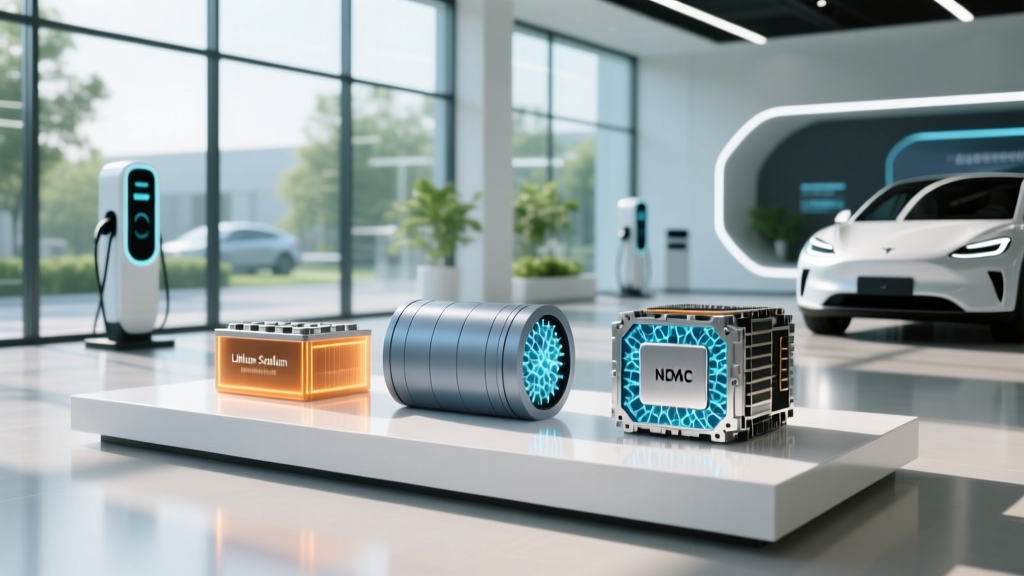
The 2026 Prius HEV and Prime both use NMC (nickel manganese cobalt) lithium-ion cells. This is the chemistry Toyota has refined over two decades of hybrid production. It offers a strong balance of energy density and cycle life, and Toyota's conservative BMS strategy — never letting the pack charge to true 100% or discharge to true 0% — dramatically extends calendar life.
By contrast, LFP (lithium iron phosphate) chemistry is gaining ground in budget EVs (like the Tesla Model 3 Standard Range and some Chinese-market vehicles) because it offers superior cycle life and lower cost, though at the expense of energy density and cold-weather performance. Toyota has not adopted LFP for the Prius line as of the 2026 model year, but it's worth understanding the trade-offs:
| Attribute | NMC (Prius / Most EVs) | LFP (Budget EVs) |
|---|---|---|
| Energy Density | Higher (~220–260 Wh/kg cell-level) | Lower (~150–180 Wh/kg cell-level) |
| Cycle Life | 1,000–2,000 full cycles (to 80% SoH) | 3,000–5,000+ full cycles (to 80% SoH) |
| Cold Performance | Better low-temp discharge capability | More range/power loss below freezing |
| Cost per kWh | Higher (cobalt/nickel content) | Lower (iron/phosphate — no cobalt) |
| Thermal Stability | Good with BMS management | Excellent — inherently more stable |
| Used In | Prius, most US-market EVs | Tesla Model 3 RWD, BYD, some commercial EVs |
For the Prius HEV specifically, the small battery size means cycle count is less of a concern than calendar aging. A Prius HEV battery might see the equivalent of only 200–400 shallow cycles per year, so cycle life is rarely the limiting factor. Calendar degradation (chemical aging over time, regardless of use) matters more — and Toyota's conservative charge window management keeps this minimal.
Real-World Degradation Data: What Owners Actually See
Here's what long-term data and owner reports tell us about Prius battery degradation across both platforms:
- Prius HEV at 100,000 miles (~7 years): Typically 5–10% capacity loss. Fuel economy impact is negligible — perhaps 1–2 MPG drop from new.
- Prius HEV at 150,000 miles (~10 years): 10–15% capacity loss. Most owners report no noticeable change in daily driving; the BMS compensates seamlessly.
- Prius HEV at 200,000+ miles: 15–25% capacity loss. Some owners begin noticing reduced regenerative braking effectiveness and slightly higher fuel consumption. This is where individual cell failures may occur, though full pack replacement is still not always necessary.
- Prius Prime (PHEV) at 80,000–100,000 miles: 8–12% capacity loss on the larger pack. Electric-only range may drop from ~44 miles to ~38–40 miles. Still highly functional.
Sources: fueleconomy.gov owner data, Consumer Reports long-term hybrid reliability surveys, and peer-reviewed lithium-ion calendar aging studies from the National Renewable Energy Laboratory (NREL).
A critical nuance: the Prius HEV's tiny battery isn't tasked with providing range — it assists the gas engine and captures regenerative braking energy. Even with 20% degradation, the car remains fully drivable and efficient. The Prius Prime's larger pack, by contrast, directly affects your electric-only commuting distance, so degradation is more noticeable in daily use.
For context, data aggregated from fleet operators and owner forums suggests that fewer than 5% of Prius HEVs require a traction battery replacement before 150,000 miles. The vast majority of batteries outlast the vehicle itself.
Toyota's Hybrid Battery Warranty: What's Covered in 2026
Toyota's warranty coverage is one of the strongest in the industry and reflects the company's confidence in its battery durability:
| Coverage | Prius HEV | Prius Prime (PHEV) |
|---|---|---|
| Hybrid Battery Warranty | 10 years / 150,000 miles | 10 years / 150,000 miles |
| Capacity Retention Threshold | Defect/malfunction coverage (no published % threshold for HEVs) | Below ~70% usable capacity may qualify as a defect |
| Hybrid System Components | 8 years / 100,000 miles (inverter, control module) | 8 years / 100,000 miles |
| Transferability | Yes — transfers to subsequent owners | Yes — transfers to subsequent owners |
| State Variations | CARB states: 10 yr/150k mi standard; non-CARB may differ on hybrid components | Same CARB-state enhanced coverage |
Key detail: Toyota's hybrid battery warranty covers defects and abnormal capacity loss, not normal gradual degradation. If your battery simply holds a bit less charge at 140,000 miles but still functions, that's considered normal wear. However, if individual cells fail or the BMS throws error codes, that's a warranty claim. Toyota dealerships have historically been cooperative with legitimate hybrid battery warranty claims, and the 10-year/150,000-mile term means most original owners will never need to pay for a replacement.
Prius Battery Replacement Cost: What You'll Actually Pay
If your Prius battery does fail outside of warranty — typically at 180,000+ miles or 12+ years — here's the financial reality:
| Option | Prius HEV (~1.0 kWh) | Prius Prime (~13.6 kWh) |
|---|---|---|
| OEM New (Toyota Dealer) | $2,500 – $3,500 (parts + labor) | $4,000 – $5,500 (parts + labor) |
| Refurbished / Remanufactured | $1,500 – $2,200 | $2,800 – $3,800 |
| Individual Cell Repair | $500 – $1,200 (specialty hybrid shops) | Less commonly available for larger pack |
A few important context points:
- The HEV battery is relatively cheap to replace because it's small (~1.0 kWh). Compare this to a full EV like a Tesla Model Y or Ford Mustang Mach-E, where a battery replacement can cost $12,000–$20,000+ due to the 70–90 kWh pack size.
- Refurbished batteries are a legitimate option for older Priuses. Several reputable companies rebuild Prius HEV packs with tested, matched cells and offer 1–3 year warranties on the refurbished unit.
- Cell-level repair is possible on the HEV pack at specialist hybrid shops. Often only 1–3 cells out of dozens have failed, and replacing just those cells can restore the pack for a fraction of a full swap.
- The Prius Prime's larger pack is more expensive but also benefits from more sophisticated thermal management and a deeper warranty safety net.
What Kills a Prius Battery Early — And How to Prevent It
While most Prius batteries age gracefully, certain habits and conditions accelerate degradation:
- Avoid prolonged storage at extreme SoC: For the Prius Prime, try not to leave the car sitting for weeks at 100% charge or near 0%. The BMS manages this for the HEV, but Prime owners should aim for 40–80% if storing for extended periods.
- Park in shade or a garage when possible: Sustained high battery temperatures (above 95°F ambient, especially in direct sun) accelerate calendar aging. This matters more in Arizona, Texas, and the Southeast.
- Don't skip the cooling system maintenance: The Prius hybrid battery has a dedicated cooling fan and air intake. A clogged filter or failing fan forces the battery to run hotter, accelerating degradation. Check the cabin air intake vent (usually near the rear seat) periodically.
- Drive it regularly: Lithium-ion batteries prefer moderate, regular cycling over long idle periods. A Prius that sits for months at a time will age faster than one driven daily.
- For Prime owners — DC fast charging is fine in moderation: Occasional DC fast charging won't destroy your pack, but making it your daily habit (versus Level 2 home charging) adds thermal stress. Toyota's BMS limits the Prime's max DC charge rate to protect the pack, which helps.
- Keep up with software updates: Toyota periodically refines BMS algorithms via dealer updates. These can improve charge management and thermal strategies.
The single biggest enemy of any lithium-ion battery is sustained heat. A Prius in Phoenix that's regularly parked in direct sun will see faster calendar degradation than one in Seattle — even with identical mileage. The battery cooling system does its best, but ambient temperature is a factor you can partially control through parking choices.
Checking Your Prius Battery Health: SoH Monitoring
Unlike full EVs where State of Health (SoH) is often displayed in the infotainment system or app, the Prius doesn't surface battery health data to the driver in an obvious way. Here's how to monitor it:
- Dr. Prius app (HEV): This popular third-party app connects to the OBD-II port and reads individual cell voltages, internal resistance, and estimated SoH. It's the gold standard for DIY Prius health checks and costs under $20.
- Hybrid Assistant app (HEV): Similar functionality to Dr. Prius with a more modern interface. Reads real-time battery temperature, charge/discharge rates, and cell balance data.
- Toyota dealer diagnostic: Ask for a "hybrid battery health check" during routine service. The dealer's Techstream diagnostic tool can read cell-level data and flag imbalances.
- Prius Prime — MyToyota app: The Prime's connected services app shows estimated electric range, which indirectly reflects battery health. If your fully charged EV range drops significantly below the original EPA estimate, degradation is occurring.
- Fuel economy as a proxy (HEV): If your Prius HEV was averaging 52–57 MPG and you notice a sustained drop to 46–48 MPG (not explained by cold weather or driving pattern changes), the battery may be losing capacity.
For most owners, a quick OBD-II health check once or twice a year is sufficient. If cell voltages show more than 0.2V imbalance between the highest and lowest cells, it's worth having a hybrid specialist evaluate the pack.
Looking Ahead: Solid-State and Next-Gen Battery Tech
Toyota has been vocal about its solid-state battery roadmap, and it's worth understanding what's coming — with realistic timelines:
- Solid-state batteries: Toyota has announced plans to begin commercializing solid-state batteries in EVs by 2027–2028. These promise faster charging, higher energy density, and potentially longer cycle life. However, initial deployment will likely be in premium EVs, not hybrids like the Prius, due to cost.
- Bipolar LFP packs: Toyota has also referenced a "performance" and a "popular" battery architecture for upcoming EVs. The "popular" version may use LFP chemistry with a bipolar cell design to reduce cost. Again, this is EV-focused and not expected to trickle down to the Prius HEV in the near term.
- Silicon anode technology: Several battery manufacturers are developing silicon-dominant anodes that could boost energy density by 20–40%. This is still in the pilot-production phase as of 2026 and is years away from mainstream hybrid applications.
The practical takeaway: if you're buying a 2026 Prius today, you're getting a mature, well-proven NMC battery system. Next-generation chemistries may offer improvements, but they won't be available in the Prius lineup for several years at minimum — and current technology already delivers 150,000–200,000+ miles of reliable service.
Frequently Asked Questions
How long will a Prius battery last in years?
Most Prius HEV traction batteries last 12–15 years (or 150,000–200,000+ miles) before degradation meaningfully affects fuel economy. Many exceed this. The Prius Prime's larger battery follows a similar timeline, though its electric-only range may decrease by 10–15% over that period.
How much does it cost to replace a Prius battery?
A new OEM Prius HEV battery replacement costs $2,500–$3,500 at a Toyota dealer. Refurbished options run $1,500–$2,200. The Prius Prime's larger pack costs $4,000–$5,500 new. Cell-level repair at a hybrid specialist can cost as little as $500–$1,200 for the HEV.
Does the Prius battery warranty transfer to a second owner?
Yes. Toyota's 10-year/150,000-mile hybrid battery warranty is fully transferable to subsequent owners, which is a significant advantage when buying a used Prius. Always verify remaining warranty coverage via a Toyota dealer using the VIN.
Is the 12V battery the same as the hybrid battery?
No. The Prius has two batteries: a small 12V auxiliary battery (like a conventional car battery, powering lights, electronics, and computers) and the high-voltage traction battery (powering the electric motor). The 12V battery typically needs replacement every 4–6 years and costs $150–$300. It's the high-voltage traction battery discussed in this article.
Can I replace my Prius battery myself?
The HEV battery can technically be replaced by an experienced DIYer with proper safety equipment (the pack operates at ~200V, which is lethal if mishandled). However, most owners should use a qualified hybrid shop or Toyota dealer. The Prime's larger, higher-voltage pack should only be serviced by professionals.
Will a new battery make my old Prius feel new again?
In terms of fuel economy and regenerative braking performance — yes, a fresh battery typically restores the car to near-original efficiency. The rest of the vehicle (suspension, brakes, engine) will still reflect its age and mileage, but the hybrid system will perform as designed.
Should I buy an extended warranty for the Prius battery?
Generally, no — Toyota's included 10-year/150,000-mile hybrid battery warranty is already among the best in the industry. Third-party extended warranties for hybrid batteries often have restrictive terms and high deductibles. The factory coverage is usually sufficient.