When Colorado State University spinout Prieto Battery began demonstrating a 3D solid-state lithium-ion cell using an antimony-based foam architecture, it caught the attention of an EV industry hungry for safer, longer-lasting energy storage. But for today's EV buyer or owner, the practical question is straightforward: how does this emerging technology stack up against the LFP and NMC batteries actually powering vehicles on the road right now — and when might it arrive in a production car?
This guide dissects Prieto Battery's approach alongside current EV battery chemistry, degradation data, warranty coverage, replacement economics, and the care habits that determine how long your pack actually lasts. Whether you drive a 2025 Tesla Model 3 with an LFP pack or a Hyundai Ioniq 5 with NMC cells, the fundamentals below apply to your ownership experience today.
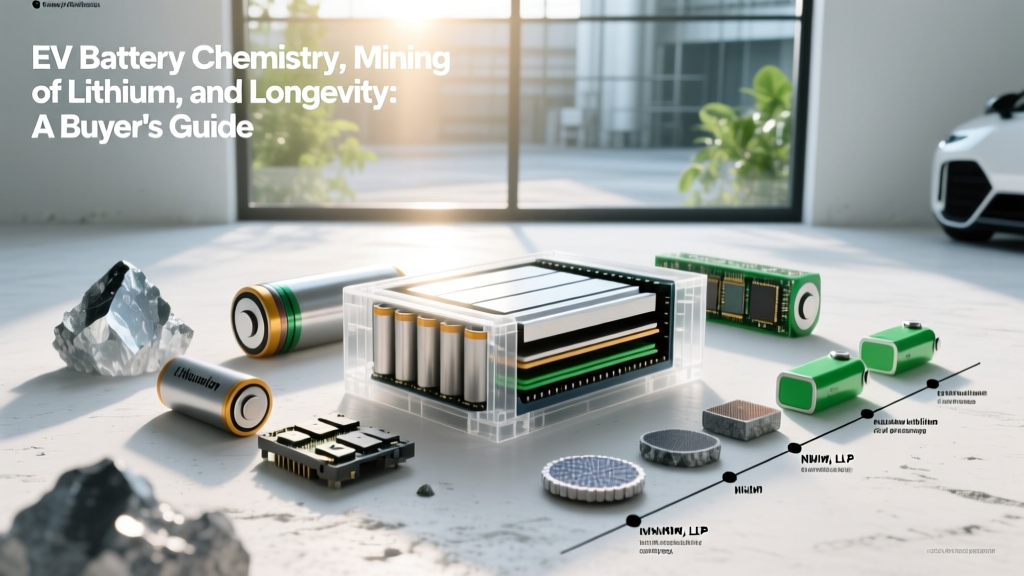
Current EV Battery Chemistry: LFP vs. NMC Explained
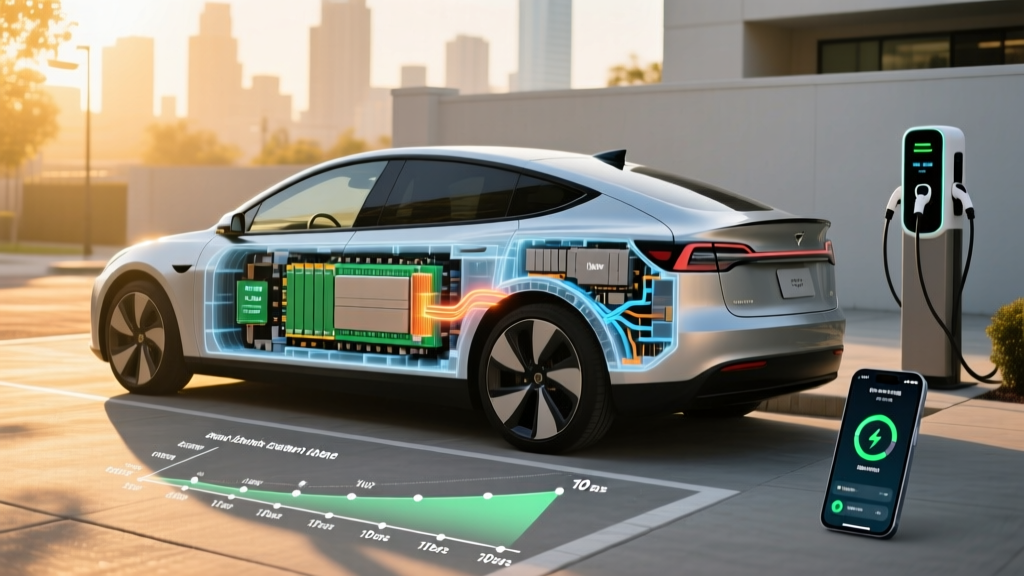
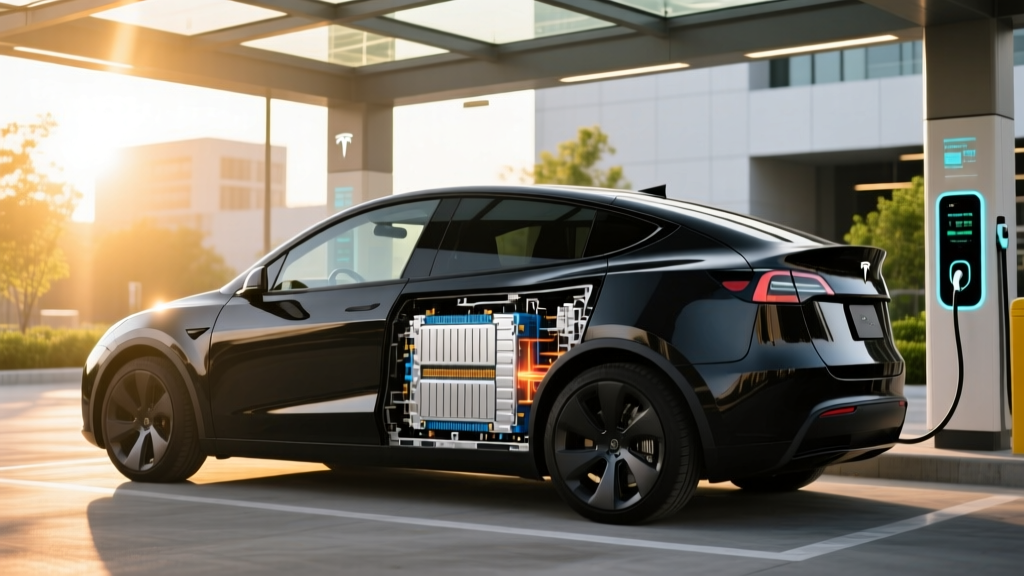
Every battery-electric vehicle sold in the U.S. today uses one of two dominant cathode chemistries: lithium iron phosphate (LFP) or nickel manganese cobalt (NMC) / nickel cobalt aluminum (NCA). The chemistry dictates energy density, cycle life, thermal stability, cold-weather behavior, and cost — all of which shape your real-world ownership experience.
LFP (LiFePO₄) cells use iron and phosphate in the cathode, avoiding expensive and ethically fraught nickel and cobalt. Tesla's standard-range Model 3 and Model Y, the base Ford Mustang Mach-E Select, and several BYD models all use LFP. The trade-off is lower energy density — meaning a heavier or physically larger pack for the same range — but superior cycle life and thermal stability.
NMC/NCA cells dominate long-range and performance trims. The Hyundai Ioniq 5 (84 kWh usable, NMC), Chevrolet Silverado EV (200+ kWh, NMC), and BMW iX (111.5 kWh, NMC) all rely on nickel-rich cathodes to maximize energy density and keep pack weight manageable. The downside: higher material cost, faster degradation under aggressive use, and more demanding thermal management.
| Attribute | LFP (Lithium Iron Phosphate) | NMC / NCA (Nickel-Based) |
|---|---|---|
| Energy density (cell-level) | ~160–180 Wh/kg | ~230–300 Wh/kg |
| Typical cycle life | 3,000–5,000+ cycles | 1,000–2,000 cycles |
| Cold-weather performance | Moderate — greater range loss below 32°F | Better low-temp discharge, but still loses 15–30% range |
| Thermal stability / safety | Excellent — higher thermal runaway threshold (~270°C) | Good with active management; runaway threshold ~210°C |
| Charging to 100% SoC | Recommended periodically for BMS calibration | Daily limit of 80% SoC advised to slow degradation |
| Cost (per kWh, cell-level) | ~$80–$100/kWh (2025 pricing) | ~$110–$140/kWh (2025 pricing) |
| Common applications | Standard-range EVs, fleet vehicles, home storage | Long-range, performance, large-SUV/truck EVs |
Which is better? Neither is universally superior. LFP wins on longevity, safety, and cost — ideal for daily commuters and high-mileage drivers. NMC wins on energy density — essential for 300+ mile range targets in sedans and large vehicles. Your choice should align with how you drive: if you charge at home nightly and rarely need maximum range, LFP's durability advantage matters more. If you road-trip frequently and need every mile per kWh, NMC's density pays off.
What Is Prieto Battery and How Does It Differ?
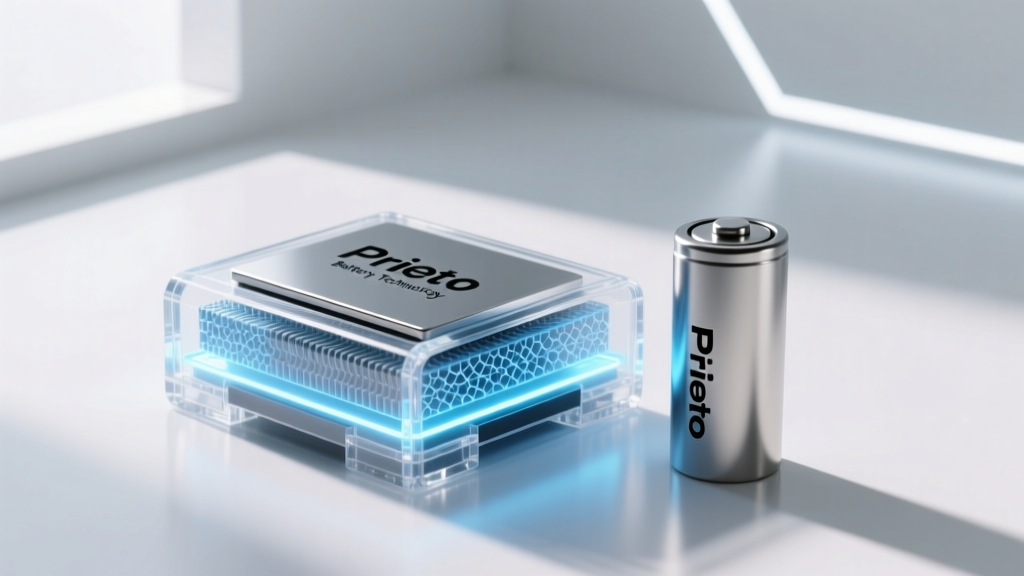
Prieto Battery, founded by CSU chemistry professor Amy Prieto, takes a fundamentally different approach from conventional flat-layer lithium-ion cells. Instead of stacking thin cathode and anode sheets separated by a liquid electrolyte, Prieto's design uses a 3D copper foam substrate coated with an antimony-based anode material and a solid polymer electrolyte.
The claimed advantages are significant:
- No flammable liquid electrolyte — reducing thermal runaway risk and potentially eliminating complex cooling systems
- 3D architecture — shorter ion transport paths, enabling faster charge/discharge without lithium plating
- Cobalt- and nickel-free — addressing supply-chain and ethical concerns
- Potentially lower manufacturing cost — the foam substrate is produced via electrodeposition, a scalable industrial process
However, Prieto Battery remains in the development and prototyping stage as of early 2026. The company has demonstrated proof-of-concept cells and secured partnerships for scale-up, but no production vehicle currently uses Prieto cells. Realistic automotive integration timelines for novel solid-state and semi-solid chemistries typically extend to the 2028–2032 window, assuming successful scale-up and automotive qualification. For now, LFP and NMC remain the chemistries you'll actually encounter as a buyer.
How Long Do EV Batteries Last? Real Degradation Data
The single most persistent fear among prospective EV buyers is premature battery failure. The data, however, tells a reassuring story: the vast majority of EV battery packs outlast the vehicles they power.
According to long-term fleet data analyzed by Recurrent Auto, the average Tesla Model 3/Y battery retains approximately 90–93% of its original capacity after 100,000 miles. Hyundai/Kia EVs with NMC packs show similar trajectories, with the Ioniq 5 averaging roughly 8–12% degradation over 5 years / 75,000 miles in moderate climates.
| Milestone | LFP Packs (e.g., Tesla SR) | NMC Packs (e.g., Ioniq 5, Mach-E ER) |
|---|---|---|
| 1 year / 15,000 miles | ~97–99% SoH | ~95–98% SoH |
| 3 years / 45,000 miles | ~93–96% SoH | ~90–94% SoH |
| 5 years / 75,000 miles | ~90–94% SoH | ~86–92% SoH |
| 8 years / 100,000 miles | ~86–92% SoH | ~80–88% SoH |
| 10 years / 150,000 miles | ~82–89% SoH (projected) | ~75–84% SoH (projected) |
SoH (State of Health) represents the percentage of original capacity remaining. A pack at 85% SoH with an original 75 kWh usable capacity now holds ~63.75 kWh — still providing meaningful range, just reduced from the original EPA sticker.
Key takeaway: Most modern EV batteries will retain 75–90% capacity at the 10-year mark. Catastrophic failure (sudden, total loss) is extremely rare — degradation is gradual and linear, not a cliff. The average American keeps a car for 8.4 years; the battery will almost certainly outlive your ownership.
What Does the EV Battery Warranty Actually Cover?
Federal law mandates that EV battery warranties cover a minimum of 8 years / 100,000 miles (in California Air Resources Board states, it's 10 years / 150,000 miles). Every major automaker meets or exceeds this floor. The critical detail is the capacity retention threshold — the SoH percentage below which the manufacturer must repair or replace the pack.
| Manufacturer | Warranty Term | Capacity Threshold | Notes |
|---|---|---|---|
| Tesla (Model 3/Y LFP) | 8 yr / 100,000 mi | 70% SoH | Standard Range; 8 yr / 120,000 mi for Long Range |
| Hyundai / Kia | 8 yr / 100,000 mi | 70% SoH | 10 yr / 100,000 mi in CARB states |
| Ford (Mach-E, F-150 Lightning) | 8 yr / 100,000 mi | 70% SoH | Covers battery and hybrid/electric components |
| GM (Ultium platform) | 8 yr / 100,000 mi | 70% SoH | Covers Bolt EV/EUV, Silverado EV, Blazer EV |
| BMW | 8 yr / 100,000 mi | 70% SoH | Modular replacement — only faulty modules swapped |
| Rivian | 8 yr / 175,000 mi | 70% SoH | Higher mileage cap reflects truck use-case |
Warranties cover defects and abnormal degradation — meaning if your pack drops below 70% SoH within the term, the manufacturer replaces or refurbishes it at no cost. They do not cover damage from accidents, flooding, improper charging equipment, or modifications. Normal gradual degradation above the 70% threshold is considered expected wear and is not warrantable.
According to IRS §30D guidelines, vehicles must meet battery component and critical mineral sourcing requirements to qualify for the federal clean vehicle credit — but this is a purchase-time eligibility matter, separate from the warranty that covers you post-purchase.
EV Battery Replacement Cost: What Owners Actually Pay
Out-of-warranty battery replacement is the scenario that generates the most anxiety — and the most misleading headlines. Here are the real numbers for 2025–2026 model-year vehicles:
| Vehicle | Battery Size (usable kWh) | Chemistry | Replacement Cost Range |
|---|---|---|---|
| Tesla Model 3 SR (LFP) | 57.5 kWh | LFP | $10,000–$14,000 |
| Hyundai Ioniq 5 | 77.4 kWh | NMC | $14,000–$20,000 |
| Ford Mustang Mach-E ER | 91 kWh | NMC | $18,000–$25,000 |
| Chevrolet Silverado EV 4WT | 200 kWh | NMC (Ultium) | $30,000–$40,000 (modular: less per module) |
| BMW iX xDrive50 | 111.5 kWh | NMC | $20,000–$28,000 (modular design reduces cost) |
| Nissan LEAF (40 kWh) | 40 kWh | NMC | $6,500–$9,000 |
These figures include the pack and labor but vary by region, dealer, and whether refurbished modules are used. Crucially, the vast majority of EV owners will never pay this. Battery packs are lasting 200,000+ miles in real-world use, and most vehicles are retired, sold, or traded before the pack requires full replacement. When replacement is needed, modular architectures (BMW, GM Ultium, Rivian) allow swapping individual faulty modules for $2,000–$5,000 rather than the entire pack.
Factors That Accelerate — or Prevent — Battery Degradation
Battery chemistry sets the ceiling, but your habits determine where within that range your pack lands. The five biggest factors:
1. State of Charge (SoC) extremes. Storing an NMC battery at 100% SoC for extended periods accelerates cathode degradation and electrolyte oxidation. For NMC packs, a daily charge limit of 80% and avoiding prolonged storage below 20% SoC can add years of useful life. LFP packs are more tolerant of 100% SoC and actually benefit from periodic full charges for BMS (battery management system) calibration.
2. DC fast charging frequency. Occasional DCFC (DC fast charging) is fine — modern BMS systems manage heat and current carefully. But daily 150+ kW fast charging without preconditioning generates sustained high temperatures that stress cells. Data from Recurrent shows that Teslas primarily charged on Level 2 at home degrade measurably slower than those relying heavily on Superchargers.
3. Extreme temperatures. Battery chemistry operates optimally between roughly 60–85°F (15–30°C). Sustained exposure to 100°F+ ambient heat (Arizona, Texas summers) accelerates calendar aging. Extreme cold doesn't permanently damage cells but temporarily reduces available capacity and slows charge acceptance — preconditioning is essential before DCFC in winter.
4. Depth of discharge cycles. Shallow cycles (charging from 30% to 70%) are far gentler than deep cycles (5% to 95%). You don't need to obsess over this, but avoiding regularly draining the pack below 10% extends life.
5. Calendar aging. Even a parked EV battery degrades over time. A pack stored at 50% SoC in moderate temperatures loses roughly 2–3% capacity per year from calendar aging alone. Storing at 100% SoC in heat can double or triple that rate.
Battery Care Best Practices — Actionable Checklist
- NMC owners: Set daily charge limit to 80%; charge to 100% only before road trips
- LFP owners: Charge to 100% at least once per week for BMS calibration
- Use Level 2 home charging as your primary method; reserve DCFC for road trips
- Enable battery preconditioning when navigating to a fast charger (Tesla, Hyundai, Ford all offer this)
- In extreme heat, park in shade or a garage when possible
- In extreme cold, plug in when parked to allow the BMS to maintain pack temperature
- Avoid storing the vehicle at 100% SoC or below 10% SoC for more than a few days
- Monitor SoH quarterly via the vehicle's app or third-party tools (see next section)
How to Check and Monitor Your Battery's State of Health
Most EVs provide some form of battery health indication, but the depth of information varies by manufacturer:
In-vehicle and app displays: Tesla's app shows estimated range at 100% charge, from which you can derive SoH by comparing to the original EPA range. Hyundai's infotainment includes a battery condition screen (accessible via the engineering menu on some model years). Ford's Pass app provides charge-level data but limited direct SoH readouts.
OBD-II diagnostics: Third-party tools like OBD2 dongles paired with apps such as Car Scanner, ABRP (A Better Route Planner), or LeafSpy (for Nissan LEAF) can read the BMS directly and provide a more precise SoH percentage. This is the most reliable method for independent verification.
Dealer assessment: If you suspect abnormal degradation — for instance, a noticeable range drop that seems disproportionate to mileage — request a battery health report from the dealer. Under warranty, they are obligated to assess and address packs below the 70% threshold.
Third-party services: Companies like Recurrent Auto offer free battery health reports by connecting to your vehicle's telematics data. These reports compare your pack's degradation to a fleet of identical vehicles, giving you context on whether your battery is aging normally.
Emerging Battery Tech: Solid-State, Silicon Anode, and Prieto's Timeline
The battery landscape is evolving rapidly, but it's critical to separate laboratory breakthroughs from production-ready technology:
Solid-state batteries (Toyota, Samsung SDI, QuantumScape) promise higher energy density (~400+ Wh/kg at cell level), faster charging, and improved safety by replacing liquid electrolyte with a solid conductor. Toyota has announced a 2027–2028 target for limited production vehicles, but industry analysts broadly expect meaningful solid-state availability in mainstream EVs no earlier than 2029–2032. QuantumScape's cells are undergoing validation with Volkswagen's PowerCo, with a similar timeline.
Silicon-dominant anodes (Sila Nanotechnologies, Group14) increase energy density by replacing graphite with silicon, which can store roughly 10x more lithium ions per unit mass. These are already appearing in limited applications (Mercedes EQG is expected to use silicon anode cells) and will incrementally expand through the late 2020s.
Prieto Battery's 3D foam architecture sits in this forward-looking category. Its solid polymer electrolyte and antimony-based anode represent a genuine innovation in cell design, but the path from lab-scale demonstration to automotive-grade production at scale involves formidable engineering and qualification challenges. A realistic estimate for Prieto cells appearing in a consumer vehicle is the early-to-mid 2030s, pending successful partnerships and manufacturing scale-up.
For today's buyer, this means: purchase based on current LFP/NMC technology, which is mature, well-understood, and backed by extensive real-world data. The next generation of cells will arrive eventually, but waiting for a chemistry breakthrough that's 4–8 years away is rarely a sound purchase strategy.
Frequently Asked Questions
How long do EV batteries last in years and miles?
Based on fleet data from Recurrent Auto and manufacturer reports, modern EV batteries typically retain 80–90% of their original capacity at 100,000–150,000 miles and 8–10 years of use. Most packs will provide usable service for 200,000+ miles before degradation makes range impractical for daily use. Catastrophic failure is rare — degradation is gradual and predictable.
How much does an EV battery cost to replace out of warranty?
Replacement costs range from roughly $6,500 for a small pack (Nissan LEAF 40 kWh) to $30,000–$40,000 for a large truck pack (Chevrolet Silverado EV 200 kWh). Mainstream mid-size EVs (Ioniq 5, Mach-E) fall in the $14,000–$25,000 range including labor. However, most owners never face this cost — packs outlast typical ownership periods, and modular designs allow partial replacement at lower cost.
What does the federal EV battery warranty cover?
Federal law requires a minimum 8-year/100,000-mile warranty on EV batteries (10 years/150,000 miles in CARB states). The warranty covers defects and abnormal degradation below a specified capacity threshold — typically 70% State of Health. If your pack drops below this threshold within the warranty period, the manufacturer must repair or replace it at no cost. Normal gradual degradation above 70% is not covered.
How do I check my EV's battery health?
You can check SoH through your vehicle's app (Tesla, Hyundai, Ford), OBD-II diagnostic tools (Car Scanner, LeafSpy, ABRP), dealer battery health reports, or third-party services like Recurrent Auto that analyze telematics data. Compare your current range at 100% charge against the original EPA range to estimate SoH percentage.
LFP vs. NMC — which battery chemistry is better for me?
LFP is better if you prioritize longevity, lower cost, and can accept slightly lower range per pound — ideal for daily commuters and home chargers. NMC is better if you need maximum range from a lighter, more compact pack — essential for road-trippers and larger vehicles. LFP tolerates 100% daily charging; NMC should be limited to 80% for daily use. Both are safe and well-proven when properly managed.
Will Prieto Battery's technology be available in EVs soon?
Not in the near term. Prieto Battery's 3D solid-state foam cells remain in the development and prototyping phase as of 2026. Realistic timelines for novel battery chemistries to reach automotive production are 5–8 years from the prototype stage, placing potential availability in the early-to-mid 2030s. Current LFP and NMC packs are mature, reliable, and the right choice for today's buyers.