Why PowerCo QuantumScape Battery Development Matters for EV Buyers
The collaboration between Volkswagen Group's battery subsidiary PowerCo and QuantumScape represents one of the most closely watched solid-state battery programs in the EV industry. As of 2026, PowerCo has been conducting A-sample testing of QuantumScape's solid-state cells, with the stated goal of bringing this technology to production vehicles later this decade. But what does this mean for current EV shoppers weighing lithium-ion options today?
Solid-state batteries promise higher energy density, faster charging, and improved safety compared to conventional lithium-ion cells. Yet they remain in development — not on dealer lots. Understanding where PowerCo QuantumScape battery development stands, alongside the realities of today's proven LFP and NMC chemistries, helps buyers make informed decisions now while keeping an eye on what's coming.
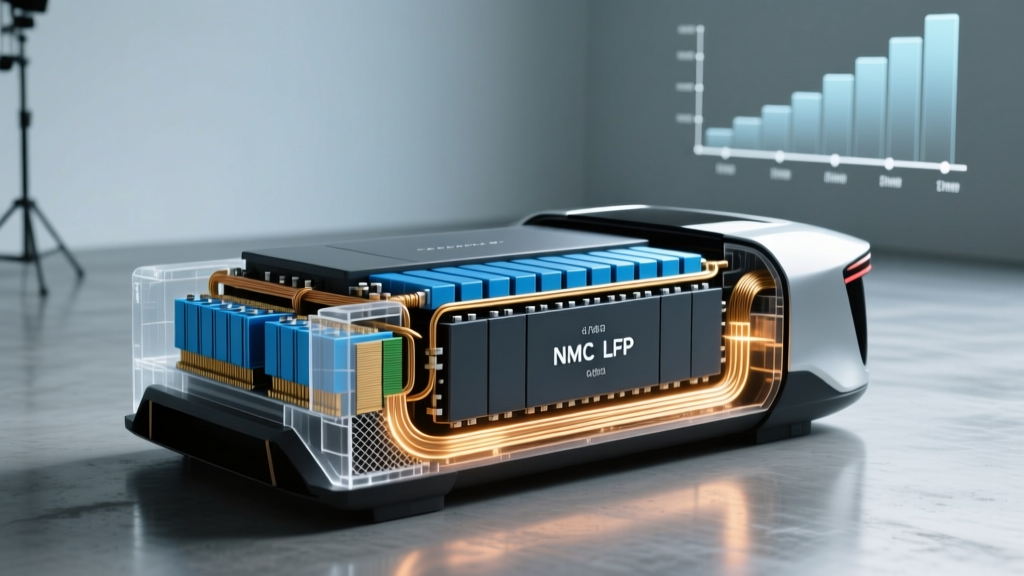
Today's EV Battery Chemistries: LFP vs NMC vs NCA
Before evaluating next-generation technology, it's essential to understand the two dominant chemistries powering EVs sold in 2026. Every battery-electric vehicle on the road uses either Lithium Iron Phosphate (LFP) or a Nickel Manganese Cobalt / Nickel Cobalt Aluminum (NMC/NCA) formulation. The trade-offs between them directly affect range, longevity, charging behavior, and price.
| Attribute | LFP (Lithium Iron Phosphate) | NMC / NCA (Nickel-based) |
|---|---|---|
| Energy Density | Lower (~160 Wh/kg cell-level) | Higher (~250-300 Wh/kg cell-level) |
| Typical Use | Standard-range, entry-level trims | Long-range, performance trims |
| Cycle Life | 3,000-5,000+ cycles to 80% capacity | 1,000-2,000 cycles to 80% capacity |
| Cold-Weather Performance | More range loss in freezing temps (~30-40%) | Better cold performance (~20-30% loss) |
| Thermal Stability | Excellent — very low thermal runaway risk | Good — requires more active thermal management |
| State-of-Charge Recommendation | Can charge to 100% daily without harm | Best kept 20-80% for daily use; 100% for trips only |
| Cost | Lower — no cobalt or nickel | Higher — cobalt/nickel commodity exposure |
| Examples (2026 models) | Tesla Model 3 RWD, BYD models, base Chevy Equinox EV | Hyundai Ioniq 5 Long Range, Ford Mustang Mach-E Extended Range, BMW iX |
Which is better? It depends on your use case. If you prioritize maximum range per charge and don't mind managing state of charge carefully, NMC/NCA delivers. If you want a battery you can charge to 100% every day, expect to last well beyond 200,000 miles, and pay less upfront, LFP is the stronger choice. LFP's lower energy density means shorter EPA range per kWh of battery, but its cycle-life advantage is substantial.
How Long Do EV Batteries Actually Last?
The most persistent EV myth is that batteries need replacement every few years like laptop batteries. Real-world data tells a different story. Most modern EV traction batteries are engineered to outlast the vehicle's useful life, and degradation follows a predictable curve that plateaus after the initial break-in period.
Typical Degradation Curve (NMC-based pack, averaged across fleet data):
- Year 1 / 15,000 miles: ~2-4% capacity loss (initial formation loss)
- Year 3 / 45,000 miles: ~5-7% total loss
- Year 5 / 75,000 miles: ~7-10% total loss
- Year 8 / 120,000 miles: ~10-14% total loss
- Year 10+ / 150,000+ miles: ~12-18% total loss (curve flattens significantly)
Sources: Geotab fleet data analysis, Recurrent Auto battery health reports.
LFP batteries typically show even slower degradation, with many fleet examples retaining over 90% capacity after 100,000 miles. Tesla's 2025 Impact Report noted that Model 3/Y batteries retained an average of 85% capacity after 200,000 miles — well within usable territory for most drivers.
Key takeaway: A well-maintained EV battery should deliver 150,000-200,000+ miles before capacity drops below 80%. Many will exceed 250,000 miles before reaching that threshold. Battery replacement is rare and usually triggered by a manufacturing defect covered under warranty, not gradual wear.
EV Battery Warranty Terms: What's Covered and What Isn't
Federal law mandates a minimum 8-year/100,000-mile warranty on EV battery packs for emissions-related compliance, and most automakers match or exceed this standard. The critical detail is the capacity retention threshold — the point at which the manufacturer considers the battery "failed" and obligated to repair or replace.
| Automaker | Warranty Period | Capacity Retention Threshold | Notes |
|---|---|---|---|
| Tesla | 8 yr / 120,000 mi (Model 3/Y LR); 8 yr / 100,000 mi (RWD) | 70% | LFP RWD models: 8yr/100k mi |
| Hyundai / Kia | 10 yr / 100,000 mi | 70% | Among the longest coverage terms |
| Ford | 8 yr / 100,000 mi | 70% | Covers battery components and capacity |
| GM (Chevy/Cadillac) | 8 yr / 100,000 mi | 70% (most); 60% (some commercial) | Ultium platform coverage |
| BMW | 8 yr / 100,000 mi | 70% | Includes battery management system |
| Rivian | 8 yr / 175,000 mi (R1T/R1S) | 70% | Higher mileage cap for truck platform |
What the warranty covers: Defects in materials or workmanship, and capacity loss below the stated threshold under normal use. This includes individual module or cell failures.
What it typically excludes: Damage from accidents, improper charging equipment, flooding, modifications, or cosmetic issues that don't affect function. Towing a depleted battery to a charger is usually covered under roadside assistance, not battery warranty.
EV Battery Replacement Cost: Realistic Numbers for 2026
Out-of-warranty battery replacement is the scenario that generates the most anxiety. Here are actual cost ranges based on manufacturer service bulletins, third-party repair shops, and industry data as of 2026:
| Vehicle / Battery Size | Approximate Replacement Cost | Context |
|---|---|---|
| Tesla Model 3 RWD (~60 kWh LFP) | $8,000 - $12,000 | LFP packs are cheaper; module-level repair sometimes possible |
| Tesla Model Y Long Range (~82 kWh NMC) | $12,000 - $16,000 | Full pack replacement at service centers |
| Hyundai Ioniq 5 (~77.4 kWh NMC) | $11,000 - $15,000 | Module replacement may reduce cost |
| Ford Mustang Mach-E ER (~91 kWh NMC) | $14,000 - $18,000 | Larger pack, higher material cost |
| Chevy Bolt EV (~65 kWh NMC) | $9,000 - $13,000 | Older platform; costs declining as supply grows |
| BMW iX xDrive50 (~111.5 kWh NMC) | $18,000 - $25,000 | Premium segment; complex thermal management integration |
When is replacement typically needed? Almost never during the warranty period for degradation reasons. Out-of-warranty replacements are most commonly due to physical damage (collision, flood) rather than natural end-of-life wear. The growing secondary market for refurbished and salvaged EV battery modules is bringing costs down — independent shops can sometimes replace individual modules for $1,500-$4,000 rather than the full pack.
It's worth noting that as battery production scales and recycling infrastructure matures (companies like Redwood Materials are processing end-of-life packs into new cathode material), replacement costs are trending downward year over year.
Factors That Accelerate (or Preserve) Battery Life
Not all miles are equal when it comes to battery wear. The following factors have measurable impacts on long-term capacity retention:
Practices That Preserve Battery Health
- Daily charging to 80% (NMC/NCA) or 100% (LFP): Follow manufacturer guidance for your specific chemistry
- Use Level 2 home charging as your primary method: Slow, steady charging generates less heat stress than DC fast charging
- Precondition the battery before fast charging: Most EVs do this automatically when you navigate to a charger; it warms the cells to optimal temperature for accepting high-power DC current (measured in kW — power — not kWh, which is energy capacity)
- Park in shade or a garage during extreme heat: Sustained high temperatures (above 95°F / 35°C) accelerate chemical degradation
- Drive it regularly: Batteries prefer regular cycling over sitting idle at high or low states of charge for weeks
Practices That Accelerate Degradation
- Frequent DC fast charging (3+ times per week consistently): High charge rates generate heat; fleet data shows vehicles that DC-fast-charge >90% of the time degrade ~2-3% faster over 5 years
- Routinely charging to 100% and leaving it there (NMC/NCA): High state of charge combined with heat is the worst combination for nickel-based cells
- Regularly draining below 10%: Deep discharge stresses cells and can trigger low-voltage protection modes
- Leaving the vehicle at 0% or 100% SoC for extended periods: If storing for more than a week, aim for 40-60% SoC
- Aggressive track use or sustained high-speed driving in hot weather: Extreme thermal loads without adequate cooling intervals
How to Monitor Your Battery's State of Health (SoH)
State of Health (SoH) is the percentage of original capacity your battery currently holds. A new battery is 100% SoH; a battery that held 80 kWh when new but now holds 72 kWh is at 90% SoH. Monitoring this metric helps you track degradation and plan for the future.
Built-in Vehicle Methods
Most modern EVs display battery health information through the infotainment system or companion app. Tesla owners can check via the service menu or third-party tools. Hyundai/Kia's Bluelink and Ford's FordPass provide battery status reports. Some vehicles, like BMWs with iDrive 8, show a detailed battery health percentage under the vehicle status menu.
OBD-II Diagnostic Tools
For more granular data, an OBD-II dongle paired with apps like Car Scanner, LeafSpy (Nissan Leaf), or Scan My Tesla can read cell-level voltage data, internal resistance, and precise SoH figures. These tools access the battery management system (BMS) directly and often reveal more detail than the manufacturer's consumer-facing displays.
Third-Party Battery Health Reports
Services like Recurrent Auto and AVIC Energy offer battery health certifications, particularly useful when buying a used EV. These reports compare your battery's degradation curve to fleet averages for the same make, model, and year, providing context for whether your pack is aging normally or showing concerning patterns.
PowerCo QuantumScape Battery Development: Where Solid-State Stands in 2026
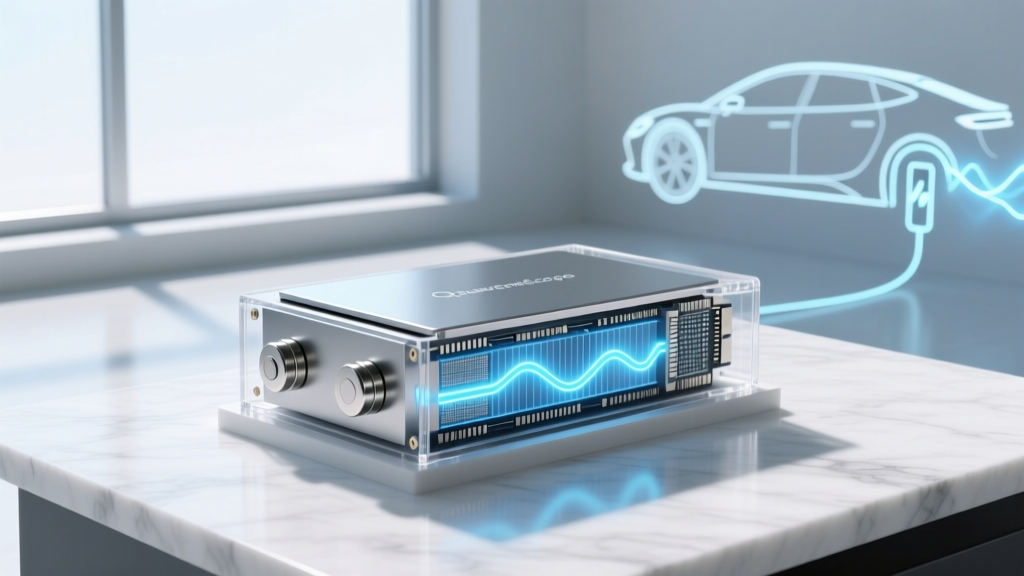
Now to the technology generating significant industry attention. QuantumScape's solid-state cells use a ceramic separator in place of the liquid electrolyte found in conventional lithium-ion batteries. PowerCo, Volkswagen Group's battery company, has been a key development partner and investor.
What Solid-State Promises
- Higher energy density: QuantumScape has demonstrated cells exceeding 350 Wh/kg at the cell level — roughly 40-50% more than current NMC cells. This translates to more range in the same physical battery volume.
- Faster charging: Prototype cells have shown the ability to charge from 10% to 80% in under 15 minutes with less degradation, thanks to the solid electrolyte's resistance to lithium plating at high charge rates.
- Improved safety: No flammable liquid electrolyte means dramatically reduced thermal runaway risk.
- Longer cycle life: QuantumScape has published test data showing cells retaining over 80% capacity after 1,000+ cycles — competitive with current NMC and approaching LFP territory.
Where Development Stands
As of 2026, PowerCo has completed testing of QuantumScape A-sample cells and is working toward B-sample validation — a critical step that tests cells in conditions mimicking real automotive use, including vibration, thermal cycling, and high-current charge/discharge profiles. QuantumScape's published roadmap targets initial low-volume production in the late 2020s, with broader automotive deployment expected in the 2028-2030 timeframe.
Important context: Solid-state battery development is notoriously difficult to scale from lab to mass production. Toyota, Samsung SDI, and other firms have also announced solid-state programs with timelines that have shifted multiple times. The technology is promising but not imminent. No solid-state EV is available for purchase in 2026.
Other Emerging Technologies
Beyond solid-state, two other developments merit attention:
- Silicon-dominant anodes: Companies like Sila Nanotechnologies and Group14 are replacing graphite anodes with silicon composites, boosting energy density 10-20% in near-term applications. Some 2025-2026 model-year vehicles already incorporate silicon-blend anodes.
- Sodium-ion batteries: CATL and BYD have begun producing sodium-ion cells for lower-cost, shorter-range EVs. These avoid lithium entirely, trading energy density for dramatically lower raw material cost and excellent cold-weather performance. Expect these in budget EV segments by 2027-2028.
Frequently Asked Questions
How long do EV batteries last in years and miles?
Most modern EV batteries are designed to last 150,000 to 200,000+ miles before dropping below 80% of original capacity. In years, that typically translates to 12-18 years of average use (12,000-15,000 miles/year). Fleet data from Geotab and Recurrent Auto consistently shows that the majority of EV batteries outlast the vehicle they're installed in.
How much does an EV battery cost to replace?
Full pack replacement costs range from approximately $8,000 for smaller LFP packs (like a Tesla Model 3 RWD) to $25,000 for large premium NMC packs (like a BMW iX). However, most replacements are due to physical damage rather than wear, and module-level repairs can cost $1,500-$4,000 at independent shops. Costs are trending downward as recycling scales up.
What does the EV battery warranty actually cover?
The standard warranty covers defects and capacity loss below 70% of original capacity over 8 years and 100,000 miles (some automakers extend to 10 years). It does not cover damage from accidents, improper equipment, flooding, or modifications. Always check your specific owner's manual for the exact terms, as thresholds and mileage caps vary by manufacturer and sometimes by trim level.
How do I check and maximize my battery's health?
Monitor State of Health through your vehicle's built-in diagnostics, an OBD-II app like Car Scanner, or a third-party service like Recurrent Auto. To maximize longevity: charge to 80% daily (NMC) or 100% (LFP), rely primarily on Level 2 home charging, precondition before DC fast charging, avoid leaving the car at extreme states of charge for extended periods, and park in shade during hot weather.
LFP vs NMC — which battery chemistry is better for me?
Choose LFP if you want lower cost, longer cycle life, the convenience of daily 100% charging, and don't need maximum range. Choose NMC/NCA if you need the longest possible EPA range per charge, better cold-weather performance, and are willing to manage state of charge (20-80% daily). Neither is universally "better" — the right choice depends on your driving patterns, climate, and budget.
Will PowerCo QuantumScape solid-state batteries be in VW vehicles soon?
Not imminently. As of 2026, PowerCo QuantumScape battery development is in the A-sample/B-sample validation phase. Low-volume production is targeted for the late 2020s, with meaningful deployment in consumer vehicles expected around 2028-2030 at the earliest. Current VW Group EVs (ID.4, ID.7, Porsche Macan Electric, Audi Q6 e-tron) use conventional NMC lithium-ion cells from established suppliers.
For official EV range and efficiency data, consult the EPA at fueleconomy.gov. For federal EV tax credit eligibility under IRS §30D, see IRS.gov clean vehicle credits. Battery technology and warranty terms evolve — always verify current specs with the manufacturer before purchasing.