If you've ever popped the hood of an electric vehicle and wondered whether to disconnect the positive or negative terminal first, you're not alone. The short answer for any vehicle — EV or gas — is negative first. But in an electric vehicle, that question opens a much larger conversation about two entirely different batteries, high-voltage safety, and the chemistry powering your daily commute.
This guide answers the terminal-disconnect question definitively, then walks you through everything a current or prospective EV owner needs to know about the high-voltage traction battery: LFP versus NMC chemistry, real-world degradation data, warranty coverage, replacement costs, and how to maximize the lifespan of the most expensive component in your car.
Positive or Negative First: The Definitive Answer
When disconnecting any automotive battery, including the 12V auxiliary battery in an EV, the rule is:
- Disconnect the negative (−) terminal first.
- Then disconnect the positive (+) terminal.
- When reconnecting, reverse the order: positive (+) first, then negative (−).
The reason is physics, not preference. Your wrench is metal and conductive. If you attack the positive terminal first and your wrench bridges to any grounded metal on the chassis (which is tied to the negative terminal), you create a dead short. Sparks fly, fuses blow, and in worst-case scenarios, the battery can vent or the vehicle's electronics can be fried. Removing the negative terminal first eliminates the ground path, so an accidental wrench-to-chassis contact on the negative side does nothing.
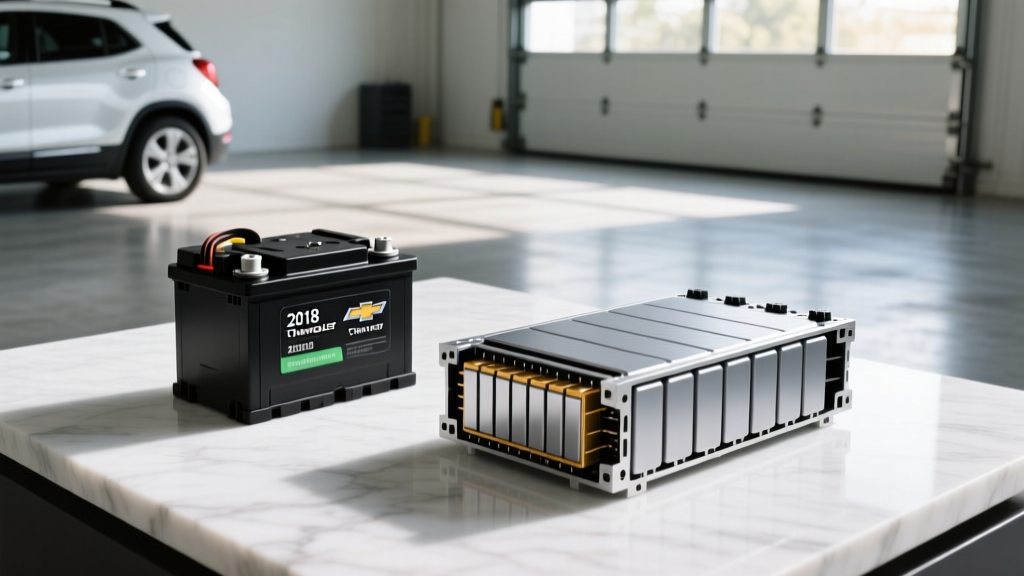
The rule above applies only to the standard 12V auxiliary battery — the small lead-acid or lithium-iron-phosphate unit that powers the vehicle's computers, lights, door locks, and infotainment. The high-voltage traction battery (typically 400V or 800V, storing 60–130 kWh of energy) is never a DIY disconnect. It is sealed, interlocked, and requires manufacturer-trained technicians with insulated tools and high-voltage PPE. Attempting to open or disconnect the traction battery yourself risks lethal electrocution and will void your warranty.
Why EVs Have Two Batteries — and What Each Does
Every modern EV carries two separate battery systems:
| Attribute | 12V Auxiliary Battery | High-Voltage Traction Battery |
|---|---|---|
| Voltage | ~12V (12.6V nominal) | 400V or 800V nominal |
| Capacity | ~0.5–1.0 kWh | 60–130+ kWh usable |
| Chemistry | Lead-acid or LFP | NMC, NCA, or LFP |
| Purpose | ECU, lights, locks, infotainment, safety systems | Propulsion, regenerative braking, HVAC compressor |
| DIY Disconnect? | Yes — negative first | Never — certified technician only |
| Typical Replacement Cost | $150–$400 | $5,000–$22,000+ |
The 12V battery exists because vehicle safety standards require a separate, always-available low-voltage system to power emergency flashers, airbag controllers, and door-unlock mechanisms even if the main traction pack is completely depleted or has been shut down by a crash-event pyrofuse. Tesla switched to a 16V LFP auxiliary battery in the refreshed Model 3 and Model Y to reduce 12V-related failures, but the disconnect rule remains the same: negative first.
Traction Battery Chemistry: LFP vs. NMC vs. NCA
The high-voltage traction battery is the heart of your EV. Its chemistry determines range, longevity, charging behavior, and even how you should charge it daily. In 2026, three chemistries dominate the market:
| Factor | LFP (Lithium Iron Phosphate) | NMC (Nickel Manganese Cobalt) | NCA (Nickel Cobalt Aluminum) |
|---|---|---|---|
| Energy Density | Lower (~160 Wh/kg cell-level) | Higher (~250–300 Wh/kg) | Highest (~260–300 Wh/kg) |
| Cycle Life | 3,000–5,000+ cycles | 1,000–2,000 cycles | 1,000–1,500 cycles |
| Daily Charge Limit | 100% recommended | 80% recommended | 80% recommended |
| Cold-Weather Performance | Weaker — more range loss below 32°F | Better cold performance | Good cold performance |
| Cost | Lower — no cobalt or nickel | Higher — commodity-sensitive | Higher |
| Thermal Stability | Excellent — very low thermal runaway risk | Good with active management | Good with active management |
| Common In (2026) | Tesla Model 3/Y RWD, Ford Mustang Mach-E Select, BYD, Rivian Standard | Hyundai Ioniq 5/6, Kia EV6/EV9, VW ID.4, BMW iX | Tesla Model S/X, Lucid Air |
Which is better? It depends on your use case. LFP wins on longevity, safety, and cost — ideal for daily commuters who charge at home and don't need maximum range. NMC and NCA win on energy density and cold-weather efficiency — better for road-trippers, those in northern climates, and buyers who want the longest possible range per charge.
How Long Do EV Batteries Actually Last?
The data from millions of EVs on the road is reassuring: most traction batteries significantly outlast their warranties and often outlive the vehicles they're installed in.
- Tesla Model 3/Y (NMC/NCA): Average ~5% capacity loss at 100,000 miles, per Tesla's 2025 Impact Report. Fleet data shows most retain 88–92% State of Health (SoH) at 150,000 miles.
- Hyundai/Kia E-GMP platform (NMC, 77.4 kWh): Owner-reported data on Ioniq 5 forums shows ~4–7% degradation at 60,000 miles with mixed Level 2 and DC fast charging.
- LFP-equipped vehicles (Tesla RWD, BYD): Early fleet data indicates <3% degradation at 100,000 miles, consistent with LFP's superior cycle life. Some fleet vehicles show <5% loss at 200,000 miles.
- Geotab fleet study (2024, 10,000+ EVs): Average annual degradation of ~1.8% across all chemistries, meaning a typical EV retains ~82% capacity after 10 years.
Source: Geotab EV Battery Health Study
At a 1.8% annual loss rate, a battery starting with 300 miles of EPA range would still deliver roughly 246 miles after 10 years — more than adequate for the vast majority of drivers. Catastrophic battery failure (sudden, total loss) is extremely rare and is typically covered under warranty.
Battery Warranty Coverage: What You're Protected Against
Federal law mandates a minimum EV battery warranty of 8 years / 100,000 miles (10 years / 150,000 miles in California Air Resources Board states including CA, CO, CT, ME, MA, NJ, NY, OR, RI, VT, WA). Most manufacturers exceed the minimum.
| Manufacturer | Warranty Term | Capacity Threshold | Notes |
|---|---|---|---|
| Tesla (Model 3/Y) | 8 yr / 100,000 mi (LFP RWD: 8 yr / 120,000 mi) | 70% retention | Long Range/Performance: 8 yr / 120,000 mi |
| Hyundai / Kia | 10 yr / 100,000 mi | 70% retention | Among the longest terms in the industry |
| Ford (Mach-E, F-150 Lightning) | 8 yr / 100,000 mi | 70% retention | Covers battery and hybrid/electric components |
| Volkswagen (ID.4) | 8 yr / 100,000 mi | 70% retention | Transferable to second owner |
| Rivian | 8 yr / 175,000 mi | 70% retention | Highest mileage threshold among major OEMs |
| BMW (iX, i4) | 8 yr / 100,000 mi | 70% retention | Includes battery management system |
The warranty covers defects and excessive capacity loss — meaning if your battery drops below the stated threshold (typically 70% of original capacity) within the term, the manufacturer must repair or replace it at no cost. It does not cover damage from accidents, flooding, improper modifications, or use of non-approved charging equipment.
EV Battery Replacement Cost: The Honest Numbers
This is where most fear-mongering lives. Let's look at real figures.
| Vehicle / Battery Size | Approximate Replacement Cost (2026) | Context |
|---|---|---|
| Tesla Model 3 RWD (60 kWh LFP) | $8,000–$12,000 | Refurbished packs available at lower cost |
| Tesla Model Y Long Range (82 kWh NMC) | $12,000–$16,000 | Structured pack; module-level repair sometimes possible |
| Hyundai Ioniq 5 (77.4 kWh NMC) | $10,000–$15,000 | Hyundai has replaced under warranty for verified defects |
| Ford F-150 Lightning Ext. Range (131 kWh NMC) | $18,000–$25,000+ | Largest pack in mainstream market; highest replacement cost |
| Chevrolet Bolt EV/EUV (65 kWh NMC) | $9,000–$14,000 | GM recalled and replaced entire packs for fire-risk modules |
| Porsche Taycan (93.4 kWh NMC) | $20,000–$30,000+ | Luxury-tier pricing; 800V architecture |
When is replacement actually needed? In practice, very rarely outside of warranty. Out-of-pocket replacements occur mostly after collision damage not fully covered by insurance, flood submersion, or on vehicles well past the 8–10-year warranty window with severe degradation. The vast majority of EVs sold between 2018 and 2026 have not needed a traction battery replacement. Prices are also declining: battery pack costs fell from ~$180/kWh in 2022 to roughly $115/kWh by late 2025, according to BloombergNEF, meaning replacement costs in 2028–2030 should be meaningfully lower than today's figures.
Factors That Accelerate — or Extend — Battery Life
Battery degradation isn't random. It's driven by measurable, controllable factors:
- Limit DC fast charging to road trips. Occasional use is fine, but daily 150–350 kW DC sessions accelerate degradation. A 2024 study by Idaho National Laboratory found that vehicles charged exclusively on DC fast chargers showed ~5% more degradation at 50,000 miles compared to Level 2-only charging.
- Follow the 80% rule for NMC/NCA. If your car has a nickel-based battery, set the daily charge limit to 80%. Charge to 100% only when you need full range for a trip. LFP owners should charge to 100% regularly — it helps the BMS calibrate.
- Avoid prolonged storage at 100% or 0%. If leaving the car for more than a week, aim for 50–60% SoC. Storage at 100% SoC in high heat is the single worst thing you can do to a lithium-ion cell.
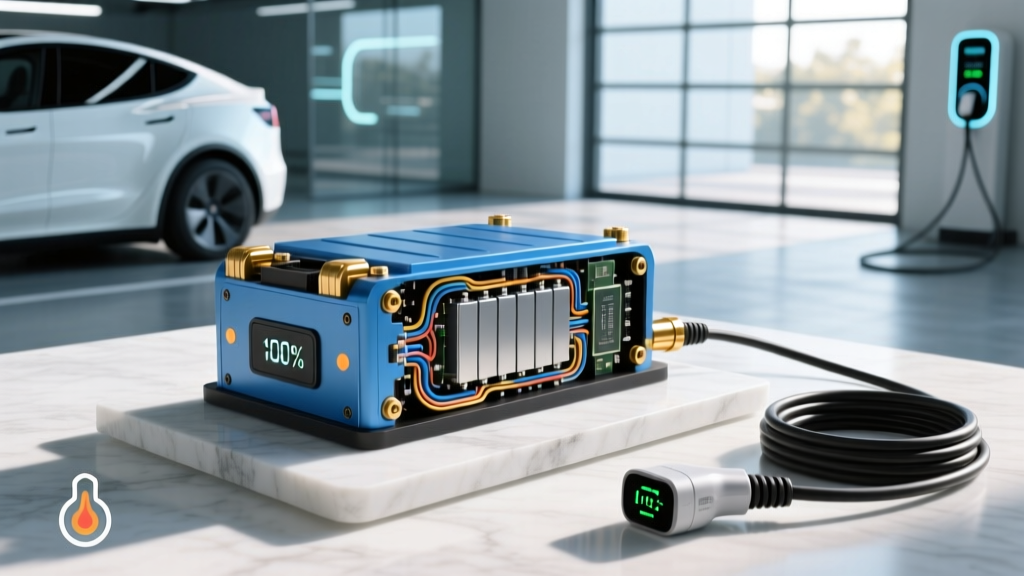
- Use preconditioning. When navigating to a DC fast charger, your EV's thermal management system will warm or cool the battery to the optimal temperature (typically 86–104°F / 30–40°C). This reduces charge time and prevents lithium plating on cold cells.
- Park in shade or a garage during extreme heat. Sustained battery temperatures above 104°F (40°C) accelerate calendar aging. A garage or shaded spot in Phoenix or Las Vegas summers makes a measurable difference over years.
- Don't baby it too much. Modern battery management systems (BMS) are sophisticated. They maintain a top and bottom buffer (typically ~5% on each end) that you can't access, protecting the cells from true 0% or true 100%. Drive your car normally.
How to Check Your Battery's State of Health (SoH)
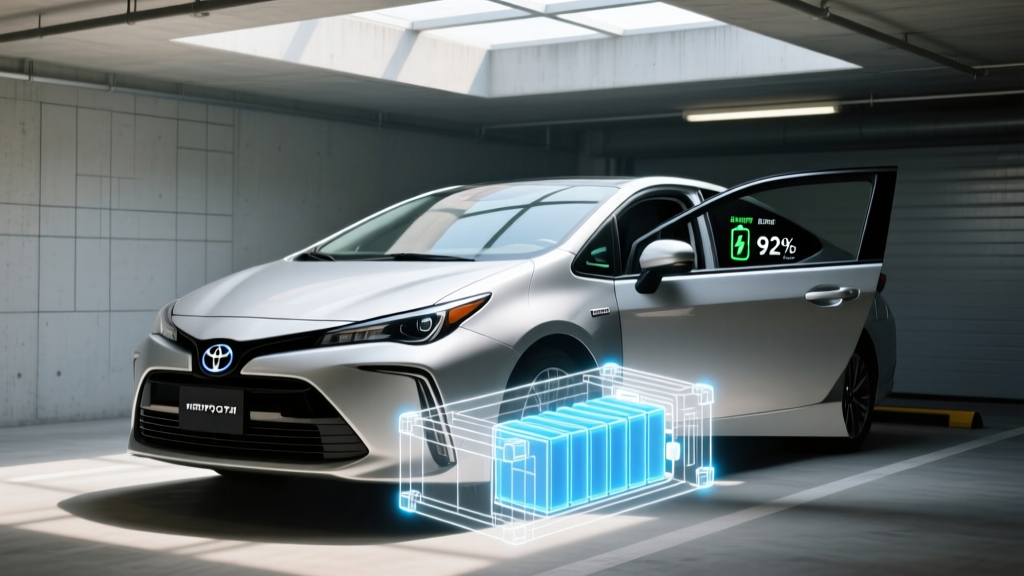
State of Health (SoH) is the percentage of original capacity your battery can still hold. A new battery is 100% SoH; a battery that held 75 kWh when new but now holds 67.5 kWh is at 90% SoH.
Here's how to check it:
- In-vehicle display: Some EVs (notably the Nissan Leaf with its 12-bar health indicator, and newer Hyundai/Kia models) show a battery health metric in the settings menu. Tesla does not natively display SoH in the vehicle UI.
- Third-party apps: Apps like Tessie (Tesla-specific), Rektron (Hyundai/Kia), and ABRP (A Better Route Planner) can estimate SoH by analyzing charge logs — comparing energy added during a known SoC range to the expected kWh for that range.
- OBD-II dongles: Devices like the OBDLink SX paired with apps such as EVNotify or Car Scanner can read the BMS-reported SoH value directly from the CAN bus on many EVs.
- Dealer diagnostic: A service center can run a full battery health report. Request this during routine service, especially before and after the warranty period to establish a baseline.
For a rough DIY estimate: charge your car from 10% to 90% on a Level 2 charger (noting the kWh delivered from your charger's app or display), then divide that kWh number by 0.80 (the 80 percentage points you filled). The result is your battery's current usable capacity. Compare that to the original spec to get SoH. For example, if your 77.4 kWh Ioniq 5 accepts 58 kWh from 10–90%, your estimated usable capacity is 58 ÷ 0.80 = 72.5 kWh, or about 93.7% SoH.
Emerging Battery Tech: What's Next (and When)
Several next-generation battery technologies are in development, but none are commercially available in production EVs as of 2026:
- Solid-state batteries: Replace the liquid electrolyte with a solid ceramic, polymer, or sulfide material. Promise: 2× energy density, faster charging, improved safety. Toyota, Samsung SDI, and QuantumScape are leading development. Toyota has announced a solid-state EV for ~2027–2028, but production volumes will be very limited initially. Widespread availability is realistically 2030+.
- Silicon-dominant anodes: Replace graphite anodes with silicon to boost energy density by 20–40%. Companies like Sila Nanotechnologies and Group14 are supplying early production cells. The 2026 Mercedes-Benz G-Class EV (announced) uses silicon-anode cells from Group14 for ~350 miles of range in a compact package. Expect broader adoption by 2028–2029.
- Sodium-ion batteries: Use abundant sodium instead of lithium. Lower energy density but dramatically cheaper. CATL has begun production for Chinese-market EVs. US-market availability is uncertain and likely 2028+ for budget-segment vehicles.
For buyers in 2026, today's LFP and NMC batteries are mature, well-understood, and backed by extensive warranty coverage. Waiting for solid-state is not a practical strategy unless your purchase timeline extends to 2030 or beyond.
Frequently Asked Questions
Do I disconnect positive or negative first on my EV's 12V battery?
Negative (−) first, always. This prevents accidental short circuits if your wrench contacts the grounded chassis. When reconnecting: positive (+) first, then negative (−). This applies to the 12V auxiliary battery only — never attempt to disconnect the high-voltage traction battery yourself.
How long do EV batteries last in years and miles?
Fleet data from Geotab and manufacturer reports show an average degradation rate of ~1.8% per year. Most EV batteries retain 80–90% of original capacity at 150,000 miles and can last 15–20 years before falling below 70% SoH. Many will outlive the vehicle itself.
How much does it cost to replace an EV battery?
Between $8,000 and $30,000+ depending on the vehicle and battery size, with most mainstream models (Tesla Model 3/Y, Ioniq 5, Mach-E) falling in the $10,000–$16,000 range. However, out-of-warranty replacements are rare — most batteries don't need replacement within the vehicle's useful life, and pack costs continue to decline annually.
What does the EV battery warranty cover?
Federal law requires a minimum of 8 years / 100,000 miles (10 years / 150,000 miles in CARB states). The warranty covers defects and capacity loss below a stated threshold (usually 70% of original capacity). It does not cover accident damage, flood damage, or unauthorized modifications.
Should I charge my EV to 100% every day?
If your EV has an LFP battery (check your owner's manual or window sticker), yes — manufacturers recommend regular 100% charges to help the BMS calibrate. If your EV has an NMC or NCA battery, set the daily limit to 80% and only charge to 100% when you need the full range for a trip.
Does fast charging damage my EV battery?
Occasional DC fast charging (road trips, a few times a month) has minimal impact. Daily DC fast charging does accelerate degradation — Idaho National Laboratory testing showed approximately 5% additional loss at 50,000 miles versus Level 2-only charging. For daily use, a home Level 2 charger (7–11.5 kW) is the best option for battery longevity.
Can extreme cold permanently damage my EV battery?
Cold weather temporarily reduces range (expect 20–30% loss at 20°F / −7°C) and slows charging speeds, but it does not cause permanent damage as long as the vehicle's thermal management system is active. Avoid DC fast charging a completely frozen battery without preconditioning — the BMS will limit charge rate automatically, but preconditioning ensures the cells are warm enough to accept charge safely.