Whether you're packing a power bank for a cross-country flight or evaluating the long-term health of your electric vehicle's traction battery, lithium-ion safety and longevity are top-of-mind for EV owners. The question "can you take a portable battery on a plane?" comes up constantly among EV drivers who also rely on high-capacity USB-C power banks for laptops and phones. The short answer is yes — with strict limits. But understanding why those limits exist requires a deeper look at lithium battery chemistry, energy density, and thermal behavior. This guide covers both the travel rules and the EV traction battery fundamentals every owner needs.
Flying With Portable Lithium Batteries: FAA Rules Explained
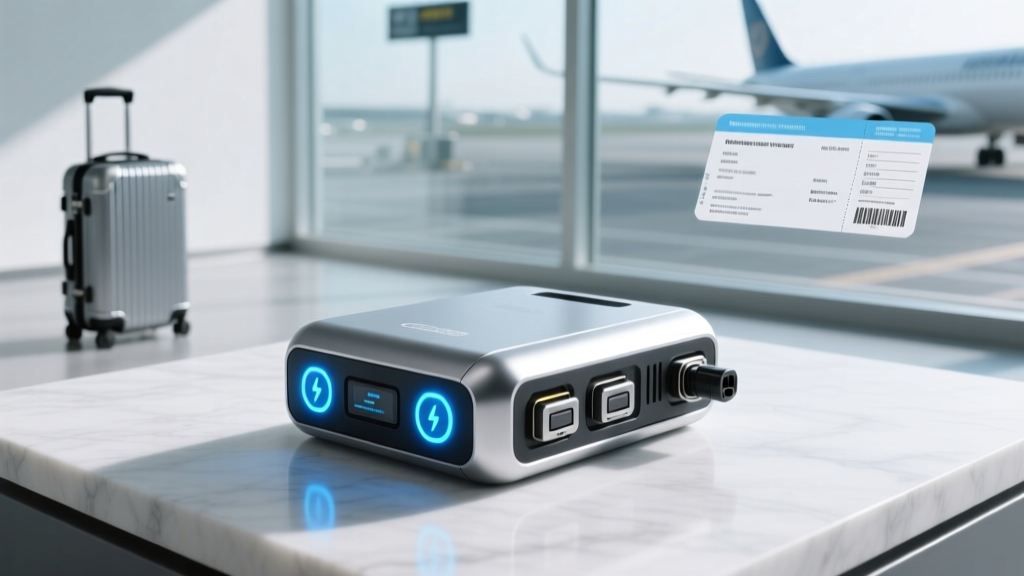
The Federal Aviation Administration permits portable lithium-ion batteries in carry-on luggage only — never in checked bags. The key threshold is 100 watt-hours (Wh) per battery. Most consumer power banks fall well below this:
- A typical 10,000 mAh USB power bank at 3.7V equals roughly 37 Wh — fully allowed.
- A 20,000 mAh power bank sits around 74 Wh — still under the limit.
- High-capacity laptop power banks (27,000 mAh / ~100 Wh) are at the ceiling.
With airline approval, you may carry up to two spare batteries between 101–160 Wh in carry-on. Anything above 160 Wh is prohibited on passenger aircraft. Terminals must be protected from short circuits (tape or original packaging). The FAA references PackSafe guidelines for the full regulatory framework.
Why carry-on only? If a lithium cell enters thermal runaway, cabin crew can access and suppress it with fire containment bags. A battery fire in the cargo hold is far more dangerous. This same thermal-management logic applies directly to EV traction batteries — which is why automakers invest heavily in cooling systems and cell-level fusing.
≤100 Wh: Allowed in carry-on (no limit on quantity for personal use)
101–160 Wh: Up to 2 spares with airline approval, carry-on only
>160 Wh: Forbidden on passenger aircraft
Always protect terminals; never check lithium batteries
EV Battery Chemistry: LFP vs NMC vs NCA
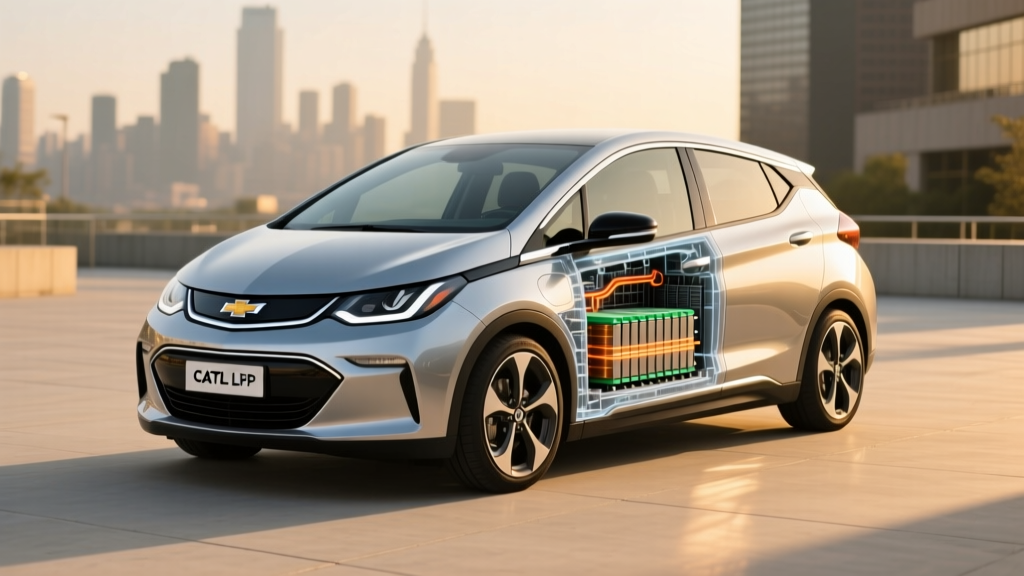
The same lithium-ion fundamentals that govern your carry-on power bank also determine your EV's range, longevity, and charging behavior. The two dominant chemistries in 2026 model-year EVs are LFP (Lithium Iron Phosphate) and NMC/NCA (Nickel Manganese Cobalt / Nickel Cobalt Aluminum). Here's how they compare:
| Attribute | LFP (LiFePO₄) | NMC / NCA |
|---|---|---|
| Energy Density | Lower (~160–180 Wh/kg cell-level) | Higher (~220–260 Wh/kg cell-level) |
| Cycle Life | 3,000–5,000+ cycles to 80% SoH | 1,000–2,500 cycles to 80% SoH |
| Cold-Weather Performance | Reduced charge acceptance below 32°F; needs preconditioning | Better low-temp charge/discharge characteristics |
| Thermal Stability | Superior — higher runaway threshold (~518°F) | Lower threshold (~410°F); requires more active cooling |
| Cost | Lower — no cobalt or nickel | Higher — commodity metal price exposure |
| Recommended Daily SoC | 100% OK (manufacturer-approved for daily use) | 80% recommended; 100% only before trips |
| Common In 2026 Models | Tesla Model 3 RWD, Model Y RWD, BYD, some Ford/Chrysler platforms | Tesla Long Range, Hyundai Ioniq 5/6, Rivian, GM Ultium vehicles |
Which is better? It depends on your usage. LFP excels for daily commuters who charge at home every night, want maximum cycle life, and don't regularly face sub-freezing temperatures without garage parking. NMC/NCA is the choice for long-range variants, cold-climate drivers, and anyone who prioritizes maximum energy density for road trips. Neither is universally superior — it's an engineering trade-off between longevity, range, and operating environment.
How Long Do EV Batteries Actually Last?
The fear that an EV battery will "die" at 60,000 miles is a myth unsupported by fleet data. According to long-term studies and manufacturer telemetry, most modern liquid-cooled EV batteries retain 85–92% of original capacity after 100,000 miles. Here's what the degradation curve looks like in practice:
• Year 1 / 15,000 mi: 2–4% capacity loss (initial formation loss)
• Year 3 / 45,000 mi: 5–8% total loss
• Year 5 / 75,000 mi: 7–11% total loss
• Year 8 / 120,000 mi: 10–15% total loss
• Year 10 / 150,000 mi: 12–18% total loss (varies heavily by climate/charging habits)
Source: Recurrent Auto battery health data from 10,000+ EV fleet; manufacturer warranty thresholds assume ≥70% retention at 8 years/100,000 miles.
"End of life" for an EV battery doesn't mean the car stops running. It means the pack has degraded to a point — typically 70–80% of original capacity — where range no longer meets the owner's daily needs. A 300-mile EPA-rated vehicle at 75% State of Health still delivers ~225 miles, which is sufficient for most drivers. Many packs are repurposed for stationary storage after automotive retirement.
EV Battery Warranty Terms: What's Covered
Federal law mandates a minimum 8-year / 100,000-mile warranty on EV batteries for emissions-related compliance, and every major automaker meets or exceeds this baseline. California Air Resources Board (CARB) states extend to 10 years / 150,000 miles. Here's how the major manufacturers structure coverage in 2026:
| Manufacturer | Coverage Period | Capacity Threshold | Notes |
|---|---|---|---|
| Tesla | 8 yr / 100,000–120,000 mi (varies by model) | 70% retention | 120k mi for Model S/X; 100k for Model 3/Y |
| Hyundai / Kia | 10 yr / 100,000 mi | 70% retention | Among the longest coverage |
| GM (Ultium) | 8 yr / 100,000 mi | 70% retention (60% for Bolt-era) | Covers module-level replacement |
| Ford | 8 yr / 100,000 mi | 70% retention | F-150 Lightning, Mustang Mach-E |
| Rivian | 8 yr / 175,000 mi | 70% retention | Higher mileage cap for R1T/R1S |
| BMW / Mercedes | 8 yr / 100,000 mi | 70% retention | Covers cell module replacement |
Warranties cover defects and abnormal degradation — they do not cover damage from collisions, flooding, or unauthorized modifications. If your battery drops below the stated retention threshold within the warranty period, the manufacturer will repair or replace it (often with a refurbished pack of equivalent capacity) at no cost. See fueleconomy.gov for EV incentive and compliance details.
EV Battery Replacement Cost: What to Expect
Out-of-warranty battery replacement is rare — most EVs are retired or sold before the pack fails catastrophically. But for used-EV buyers or high-mileage owners, here's the current cost landscape:
| Vehicle / Pack Size | Battery Capacity | Replacement Cost Range | Typical Need Timeline |
|---|---|---|---|
| Tesla Model 3 RWD (LFP) | ~60 kWh | $8,000 – $12,000 | Rarely needed; 200k+ mi expected |
| Tesla Model Y LR (NMC) | ~75 kWh | $12,000 – $16,000 | 150k–200k+ mi |
| Hyundai Ioniq 5 (NMC) | 77.4 kWh | $11,000 – $15,000 | 150k–200k+ mi |
| Ford F-150 Lightning Ext. | 131 kWh | $18,000 – $28,000 | 150k–200k mi; large pack = higher cost |
| Chevrolet Equinox EV | ~85 kWh (Ultium) | $12,000 – $17,000 | 150k–200k+ mi |
Several trends are driving costs down: cell prices have fallen from ~$1,200/kWh in 2010 to roughly $110–$130/kWh in 2026 at the pack level. Module-level repairs (replacing individual defective modules rather than the entire pack) are increasingly common and can cost $2,000–$6,000 depending on the failure. Third-party EV repair shops are expanding, offering refurbished packs at 40–60% of OEM pricing.
The realistic takeaway: most EV batteries outlive the vehicle's economic life. A 2026 EV with a 250+ mile range and 70% SoH at 200,000 miles still serves as a viable daily driver. Replacement is a contingency, not an expectation.
Maximizing Battery Health: What Actually Matters
Battery degradation is inevitable but manageable. The factors that accelerate capacity loss are well-documented:
- State of Charge habits: For NMC/NCA, keep daily SoC between 20–80%. For LFP, charge to 100% at least weekly (BMS calibration requires full charges). Avoid leaving any chemistry at 100% SoC for days in hot weather.
- DC Fast Charging: Occasional fast charging is fine. Daily 150+ kW sessions accelerate degradation by ~1–3% over 100,000 miles vs. Level 2 charging. Use DCFC for road trips, L2 for daily.
- Temperature management: Park in shade or garages during summer. Precondition the battery before fast charging in cold weather (most EVs do this automatically when you navigate to a charger). Avoid repeated 100% charges in 95°F+ heat.
- Storage: If storing for 2+ weeks, leave SoC at ~50%. Never store at 100% or below 10%.
- Regen braking: Standard regen is fine. Avoid max-regen settings in extreme cold, which can stress cells during high-current charge acceptance.
Monitoring Your Battery's State of Health
Most modern EVs provide SoH data through the infotainment system or companion app. Here's how to check it across platforms:
- Tesla: No native SoH display in-car. Use third-party apps like Tessie or scan via OBD-II with tools like Scan My Tesla. Tesla Service can pull detailed logs.
- Hyundai / Kia: SoH percentage available in the EV settings menu or via the Kia Connect / Hyundai Bluelink app.
- GM Ultium vehicles: Battery health accessible through the myChevrolet / myCadillac app diagnostics section.
- Ford: FordPass app shows estimated battery health; the in-car display shows range trend data.
- OBD-II scanners: Universal tools like the OBDeleven or dedicated EV scanners (e.g., CAN bus readers) can read BMS-reported SoH, cell voltage variance, and cycle counts.
A healthy pack shows cell voltage variance under 20–30 mV at rest. Variance above 50 mV may indicate a weak module worth investigating under warranty. Track your SoH quarterly — a sudden drop (e.g., 3% in one month) warrants a dealer diagnostic.
Emerging Battery Technology: Solid-State and Beyond
Looking ahead, two technologies promise step-change improvements:
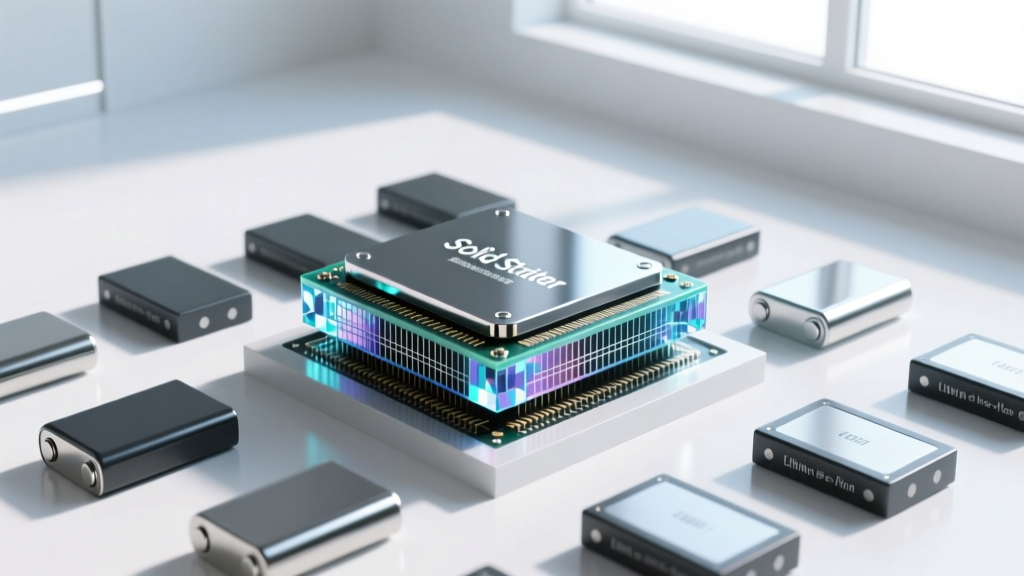
Solid-state batteries replace the liquid electrolyte with a solid conductor, offering higher energy density (potentially 400+ Wh/kg), faster charging, and improved safety. Toyota has announced a solid-state EV for 2027–2028 with a claimed 460-mile range and 10-minute 10–80% charge. Samsung SDI, QuantumScape, and Solid Power are also in pilot production. However, manufacturing scale-up remains the bottleneck — these cells are currently produced in small batches at costs 3–5x current lithium-ion. Realistic mass-market availability: 2029–2032.
Silicon anode batteries (used in limited capacity in current cells, expanding with companies like Sila Nanotechnologies) increase energy density by 20–40% over graphite anodes. These are closer to mainstream adoption, appearing in select 2026–2027 models. They improve range without requiring an entirely new manufacturing ecosystem.
Neither technology is available in a production EV you can buy today. Treat any "solid-state EV" announcement as preliminary until vehicles are in customer hands with verified EPA range data.
FAQ: EV Battery Ownership Questions
Can you take a portable battery on a plane?
Yes, if it's 100 Wh or less — that covers virtually all consumer power banks. Carry-on only, never checked. Batteries between 101–160 Wh require airline approval (max 2 spares). Anything over 160 Wh is prohibited. Always protect terminals from short circuits.
How long do EV batteries last in years and miles?
Most modern liquid-cooled EV batteries retain 85–92% capacity at 100,000 miles and 75–85% at 150,000 miles. In years, expect 12–20 years of usable service depending on climate, charging habits, and chemistry. LFP packs routinely exceed 3,000 charge cycles — that's 300,000+ miles on a 100-mile-per-charge-cycle basis.
How much does an EV battery cost to replace?
Full pack replacement ranges from $8,000 (smaller LFP packs) to $28,000 (large 130+ kWh packs like the F-150 Lightning Extended Range). Module-level repairs are $2,000–$6,000. Most batteries outlive the vehicle, making replacement an uncommon expense. Cell pricing continues to decline year over year.
What does the EV battery warranty cover?
Manufacturer warranties cover defects and abnormal degradation below a stated capacity threshold — typically 70% retention over 8 years / 100,000 miles (longer for Hyundai/Kia at 10 years, and Rivian at 175,000 miles). Warranties do not cover collision damage, flooding, or aftermarket modifications.
LFP vs NMC — which battery chemistry is better for me?
Choose LFP if you charge at home daily, want maximum cycle life (3,000–5,000 cycles), live in a moderate climate, and are comfortable with slightly less range for a lower price. Choose NMC/NCA if you need maximum range, drive in cold climates frequently, or take regular road trips where energy density matters. Both chemistries are proven and reliable — it's a use-case decision, not a quality decision.
Does fast charging damage my EV battery?
Occasional DC fast charging has minimal impact. Daily use of 150+ kW chargers can accelerate degradation by 1–3% over 100,000 miles compared to Level 2 charging. Modern battery management systems actively limit charge rates when cells are too cold or too warm, providing significant protection. Use DCFC for road trips; rely on Level 2 for daily needs.
How do I check my EV battery's State of Health?
Check your automaker's companion app (FordPass, Bluelink, myChevrolet) or in-car EV diagnostics menu. For deeper data, use OBD-II scanners designed for EVs that read BMS logs, cell voltage variance, and cycle counts. Tesla owners can use third-party apps like Tessie or request service center data pulls.
Sources: FAA PackSafe — Lithium Batteries; fueleconomy.gov (EPA efficiency data); manufacturer warranty documentation (Tesla, Hyundai, GM, Ford, Rivian). Tax credit eligibility under IRS §30D is subject to MSRP, income, and battery-sourcing requirements — consult a tax professional.