Why Porsche's Battery Strategy Is Making Headlines in 2026
Porsche's electrification roadmap has shifted meaningfully over the past 18 months, and the phrase Porsche EV battery plans change has become a genuine search trend among prospective buyers and industry watchers alike. The core of the story: Porsche, like much of the premium EV sector, is recalibrating its battery-chemistry mix in response to raw-material costs, evolving cell-supply chains, and the longer-term promise of solid-state cells developed with partners like QuantumScape and Cellforce Group.
For Taycan owners, upcoming Macan EV buyers, and anyone eyeing the electric 718 or Cayenne EV, these changes matter directly. Chemistry dictates range, charging speed, longevity, cold-weather performance, and ultimately replacement cost. This guide decodes what's actually happening with Porsche's battery plans — and puts those moves in the broader context of EV battery technology every buyer should understand.
The Chemistry Pivot: LFP vs NMC Explained
Porsche's current production EVs — the Taycan lineup and the new electric Macan — use NMC (nickel-manganese-cobalt) lithium-ion cells supplied primarily by LG Energy Solution and CATL. NMC delivers the high energy density that performance-oriented vehicles demand: the Taycan Turbo GT's 105 kWh (usable) pack enables an EPA-estimated 282 miles of range while supporting 320 kW peak DC fast charging.
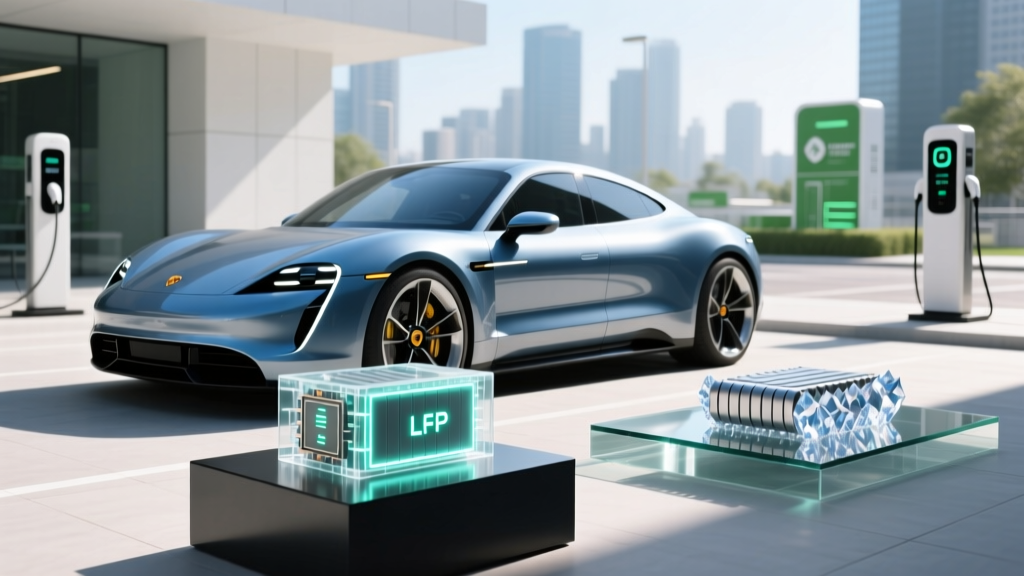
However, industry reports and Porsche's own supply-chain commentary indicate the brand is evaluating LFP (lithium iron phosphate) chemistry for future base-trim or entry-level EVs. LFP cells are cheaper to produce (no cobalt or nickel), offer dramatically longer cycle life, and are inherently more thermally stable. The trade-off: lower energy density, meaning heavier packs for the same range — a compromise that conflicts with Porsche's performance DNA but may be acceptable for SUVs or sedans targeting price-sensitive trims.
| Attribute | LFP (Lithium Iron Phosphate) | NMC / NCA (Nickel-based) |
|---|---|---|
| Energy Density (cell-level) | ~160–180 Wh/kg | ~230–300 Wh/kg |
| Typical Cycle Life | 3,000–5,000+ cycles to 80% SoH | 1,000–2,000 cycles to 80% SoH |
| Cold-Weather Performance | Weaker — greater range loss below 32°F | Better low-temp discharge capability |
| Cost per kWh (cell) | ~$60–$80 | ~$100–$130 |
| Thermal Stability | Excellent — higher runaway threshold | Good — requires more active management |
| Fast-Charge Tolerance | Handles frequent DCFC well | More degradation from repeated high-kW sessions |
| Best Suited For | Base trims, daily commuters, high-mileage fleets | Performance models, long-range trims, cold climates |
The bottom line: LFP is better for cost and longevity; NMC is better for range density and cold-weather driving. Porsche's high-performance positioning means NMC remains the primary chemistry for the foreseeable future, but LFP may appear in future entry-level models if the brand pursues a sub-$60,000 EV.
How Long Do EV Batteries Actually Last?
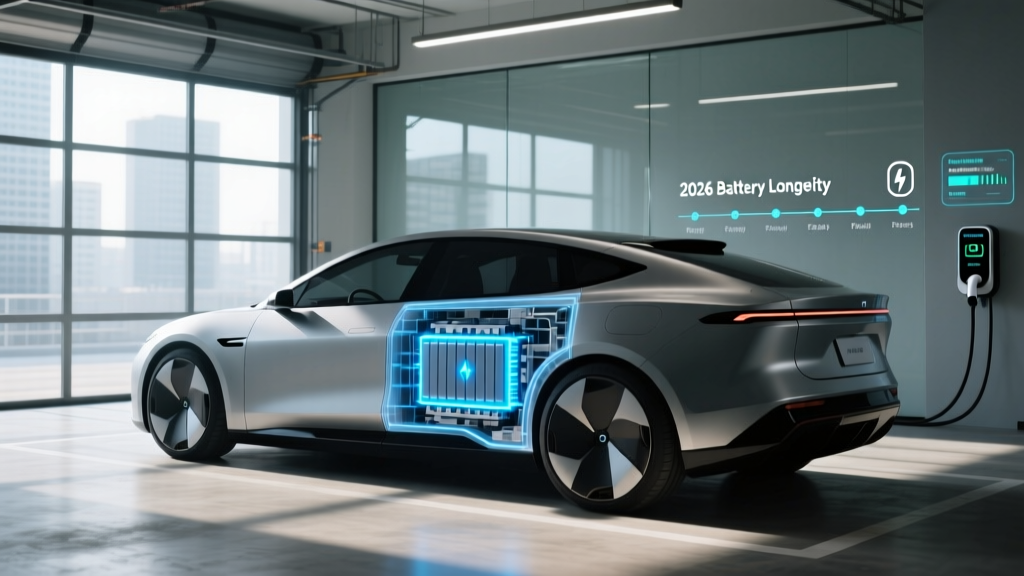
The most persistent fear among EV shoppers is premature battery failure. Real-world data tells a reassuring story. Modern liquid-cooled NMC packs — like those in the Taycan — typically lose between 5% and 12% of capacity over the first 100,000 miles, depending on charging habits and climate. After the initial "break-in" degradation (roughly 2–4% in year one), the curve flattens significantly.
Typical NMC Degradation Curve (Liquid-Cooled, Premium EV):
- Year 1 / 15,000 mi: ~2–4% capacity loss (initial SEI layer formation)
- Year 3 / 45,000 mi: ~5–8% total loss
- Year 5 / 75,000 mi: ~7–10% total loss
- Year 8 / 120,000 mi: ~10–15% total loss
- Year 10 / 150,000 mi: ~12–18% total loss (most packs still above 80% SoH)
Data synthesized from Recurrent Auto battery health reports and Geotab fleet telemetry studies. Individual results vary based on climate, DCFC frequency, and SoC habits.
For Porsche Taycan specifically, owner-reported data on forums and through OBD-II diagnostic tools suggests average degradation of approximately 6–9% after 60,000 miles for 2020–2024 model-year vehicles. The Taycan's sophisticated thermal management system — which actively preconditions and cools the 93.4 kWh (gross) / 83.7 kWh (usable, pre-2025 refresh) pack — is a significant factor in this above-average retention.
Porsche's Battery Warranty: What's Covered
Porsche provides a high-voltage battery warranty that meets and in some respects exceeds the industry standard. Understanding the exact terms matters before you sign a purchase agreement.
| Coverage Element | Term |
|---|---|
| Duration | 8 years |
| Mileage Limit | 100,000 miles (whichever comes first) |
| Capacity Retention Threshold | 70% of original usable capacity |
| What Triggers a Claim | Battery SoH drops below 70% as measured by Porsche diagnostic tools |
| Remedy | Repair, module replacement, or full pack replacement at Porsche's discretion |
| Transferable to Second Owner? | Yes — warranty follows the vehicle, not the original buyer |
| Voltage Converter (DC-DC) Coverage | Included under the HV battery warranty |
The 70% threshold is the industry norm — Tesla, BMW, Hyundai, and Ford use the same benchmark. What's worth noting: very few modern liquid-cooled packs actually breach this threshold within the warranty period. Based on current degradation data, a Taycan owner would need to see roughly 30% capacity loss within 8 years/100,000 miles to qualify for a warranty claim — a scenario that fleet data shows occurring in well under 2% of vehicles.
EV Battery Replacement Cost: The Real Numbers
If a battery does fail outside warranty — or if you plan to keep a Porsche EV for 15+ years — replacement cost is a legitimate budgeting consideration. Here's what the market looks like as of 2026:
| Vehicle / Pack Size | Battery Cost (Parts) | Labor | Total Estimated Range |
|---|---|---|---|
| Porsche Taycan (93.4 kWh gross / ~83.7 kWh usable, pre-2025) | $18,000–$24,000 | $2,500–$4,000 | $20,500–$28,000 |
| Porsche Taycan (105 kWh, 2025+ refresh) | $22,000–$28,000 | $2,500–$4,000 | $24,500–$32,000 |
| Porsche Macan EV (100 kWh) | $20,000–$26,000 | $2,500–$4,000 | $22,500–$30,000 |
| Industry Average — Mid-Size EV (75–85 kWh) | $12,000–$18,000 | $1,500–$3,000 | $13,500–$21,000 |
| Industry Average — Compact EV (50–65 kWh) | $8,000–$13,000 | $1,500–$2,500 | $9,500–$15,500 |
Important context: Battery cell prices have fallen roughly 80% since 2013 (from ~$500/kWh to approximately $110–$130/kWh at the pack level in 2025–2026, per BloombergNEF data). By the time a 2026 Taycan might need an out-of-warranty replacement in the 2036–2038 timeframe, pack costs are projected to be 40–60% lower than today. Additionally, module-level repair (replacing individual degraded cell modules rather than the entire pack) is increasingly viable and can cost $3,000–$8,000 depending on the number of modules affected.
What's Driving Porsche's Battery Plans Change?
Three converging forces explain why Porsche's battery strategy is evolving:
1. Cellforce Group and Silicon-Anode Development
Porsche's joint venture with Custom Cells — Cellforce Group — is developing high-silicon-anode cells that promise significantly higher energy density and faster charging than current NMC chemistry. These cells target motorsport and high-performance applications first, with a pilot production line in Baden-Württemberg. Porsche has signaled these cells could appear in production vehicles by 2028–2030, likely debuting in a next-generation 718 EV or a future GT-badged Taycan variant. Silicon-anode technology offers roughly 20–40% energy-density improvement over graphite anodes, but cycle-life and cost challenges remain under active development.
2. Solid-State Battery Timeline
Porsche has invested in QuantumScape, the solid-state battery developer, and has tested prototype cells. Solid-state batteries replace the liquid electrolyte with a solid ceramic or polymer separator, enabling lithium-metal anodes that could double energy density and dramatically reduce charging times. However, QuantumScape's own public disclosures and Porsche's statements indicate that commercial production-scale solid-state cells are not expected before 2029–2032. Any Porsche model featuring solid-state technology is, at this point, forward-looking and not available for purchase. Buyers should not delay a purchase in anticipation of solid-state availability.
3. Supply Chain and Critical-Mineral Diversification
European and U.S. battery regulations — including the EU Battery Regulation requiring battery passports and recycled-content minimums — are pushing Porsche to diversify its cell supply chain. This includes evaluating LFP for less performance-critical models, sourcing from additional cell manufacturers, and investing in recycling partnerships. These moves are as much about regulatory compliance and cost management as they are about performance.
How to Maximize Your Porsche EV Battery Health
Battery longevity is largely within the owner's control. The following practices, informed by cell-chemistry science and fleet-data analysis, will help preserve State of Health (SoH) over the life of the vehicle:
- Avoid sustained 100% SoC: For NMC packs, daily charging to 80–85% significantly reduces calendar degradation. Reserve 100% charges for road trips. Porsche's Taycan includes a configurable charge-limit setting — use it.
- Minimize DC fast charging above 150 kW when unnecessary: Occasional high-power DCFC is fine (Porsche's preconditioning system is excellent), but daily reliance on 270–320 kW charging accelerates electrolyte decomposition. Use Level 2 home charging for daily needs.
- Don't let SoC sit below 10% for extended periods: Deep discharge combined with storage causes copper-shunt dissolution. If storing the vehicle, leave it at ~50% SoC.
- Precondition before fast charging: The Taycan's navigation-to-charger preconditioning warms the pack to optimal temperature, reducing lithium plating risk during high-current charging. Always route through the car's nav system when heading to a DCFC station.
- Extreme heat is worse than extreme cold for degradation: Parking in shade or a garage during summer months matters more than winter range loss (which is temporary, not permanent degradation).
- Update vehicle software: Porsche periodically refines battery-management algorithms via OTA updates. Keep your Taycan or Macan EV current.
How to Check Battery State of Health (SoH)
Porsche does not display a direct SoH percentage in the Taycan's infotainment system — a common frustration among owners. However, there are three reliable methods:
- Porsche Dealer Diagnostic: Any authorized Porsche center can run a high-voltage battery health report via the PIWIS diagnostic system. This is free during scheduled maintenance or can be requested specifically.
- OBD-II Dongle + App: Third-party tools like Carista or OBDeleven (with VAG/Porsche-compatible adapters) can read HV battery SoH data from the BMS module. Accuracy varies, but these tools give a reasonable approximation between dealer visits.
- Manual Range-Test Method: Charge to a known SoC (e.g., 100%), drive a measured distance while logging energy consumed via the trip computer, and compare actual kWh used against the expected value for a new pack. This is imprecise but directionally useful over time.
Factors That Accelerate Battery Degradation
Understanding what hurts your battery is as important as knowing what helps. Based on fleet-telemetry data from sources including Geotab and Recurrent Auto, the following factors measurably accelerate capacity loss:
- Frequent DC fast charging (3+ sessions per week): Vehicles that DCFC more than three times weekly show approximately 2–3% additional degradation over 100,000 miles compared to primarily Level 2-charged vehicles.
- Hot-climate operation without garage parking: Sustained ambient temperatures above 95°F combined with high SoC storage accelerates electrolyte breakdown. Arizona and Texas fleet data shows ~2–4% more degradation over 5 years vs. temperate climates.
- Habitual 100% charging with prolonged storage: Keeping an NMC pack at 100% SoC for days or weeks at a time (e.g., charging to full on Friday and not driving until Monday) causes more calendar degradation than cycling between 20–80%.
- Aggressive track use without cooldown: Repeated high-discharge events (launch control, sustained high-speed driving) generate significant internal cell heat. The Taycan's thermal management is robust, but consecutive track sessions without cool-down laps will stress the pack.
Frequently Asked Questions
How long do Porsche EV batteries last in real-world use?
Based on owner data from 2020–2024 Taycan models, most packs retain 88–94% of original capacity after 60,000 miles and are projected to remain above 80% SoH well past 120,000 miles. With proper care, a Taycan battery should provide reliable service for 150,000–200,000+ miles before capacity drops to a level that noticeably impacts daily usability (below 75–80%). This aligns with the broader industry finding that modern liquid-cooled EV batteries typically outlast the vehicles they're installed in.
How much does it cost to replace a Porsche Taycan battery?
Out-of-warranty replacement for a Taycan battery currently ranges from approximately $20,500 to $32,000 depending on the model year and pack size (93.4 kWh pre-2025 vs. 105 kWh post-refresh). However, cell pricing continues to decline, and by the 2035–2040 timeframe when most 2026-model Taycans might need replacement, costs are projected to be 40–60% lower. Module-level repair (replacing individual cell groups rather than the full pack) can reduce costs to $3,000–$8,000.
What does the Porsche EV battery warranty actually cover?
Porsche covers the high-voltage traction battery for 8 years or 100,000 miles, guaranteeing that it will retain at least 70% of its original usable capacity. If SoH drops below this threshold during the warranty period, Porsche will repair, replace modules, or replace the full pack at its discretion. The warranty is fully transferable to subsequent owners. It does not cover damage from accidents, improper charging equipment, or unauthorized modifications.
Is LFP better than NMC for a Porsche?
It depends on your priorities. NMC offers the energy density and cold-weather performance that Porsche's performance-oriented vehicles require — it's why every current Taycan and Macan EV uses NMC. LFP offers superior cycle life (3,000–5,000+ cycles vs. 1,000–2,000), lower cost, and better thermal safety, but at the expense of range per kilogram and cold-climate efficiency. If Porsche introduces LFP in a future base-trim model, it would be a sound choice for daily commuting and high-mileage drivers who don't need maximum range. For performance trims and cold-climate buyers, NMC remains the better fit.
Will Porsche's solid-state battery plans affect current Taycan values?
Unlikely in the near term. Solid-state battery production at automotive scale is not expected before 2029–2032, and initial deployment will likely be limited to low-volume, high-performance applications. Current Taycan and Macan EV models will remain relevant and well-supported for years before solid-state becomes widely available. Depreciation is driven more by normal model-cycle turnover and mileage than by battery-technology announcements.
Does frequent Supercharging or DC fast charging damage my Taycan battery?
"Damage" is too strong, but accelerated degradation is measurable. Fleet data shows that vehicles DC fast-charging 3+ times per week experience roughly 2–3% additional capacity loss over 100,000 miles compared to primarily Level 2-charged vehicles. Porsche's battery preconditioning system — which warms the pack when you navigate to a charging station — mitigates this significantly. For daily driving, home Level 2 charging at 7–11 kW is the longevity-optimal strategy; use DCFC for road trips without concern.