For California EV owners eyeing utility incentives, the PG&E permanent battery storage rebate raises an interesting question: can the massive lithium-ion pack in your driveway qualify, or is this program strictly for stationary home systems? The short answer is that PG&E's current battery-storage incentives target dedicated residential and commercial stationary systems (like Tesla Powerwall or Enphase IQ), not the high-voltage traction battery inside your EV. But understanding how EV batteries store, deliver, and age is essential whether you're evaluating a home-storage rebate, planning an EV purchase, or simply trying to maximize your car's battery life over the next decade.
This guide breaks down the chemistry, degradation data, warranty coverage, replacement economics, and care habits that define real-world EV battery ownership in 2026 — context every EV buyer needs before chasing any storage incentive.
PG&E Permanent Battery Storage Rebate: What It Actually Covers
PG&E's battery-storage rebate programs — including the Self-Generation Incentive Program (SGIP) and various local equity-resilience rebates — are designed for permanently installed stationary energy storage systems wired to your home's electrical panel. These systems typically range from 10 kWh to 30 kWh of capacity and are intended for backup power, time-of-use shifting, and grid services.
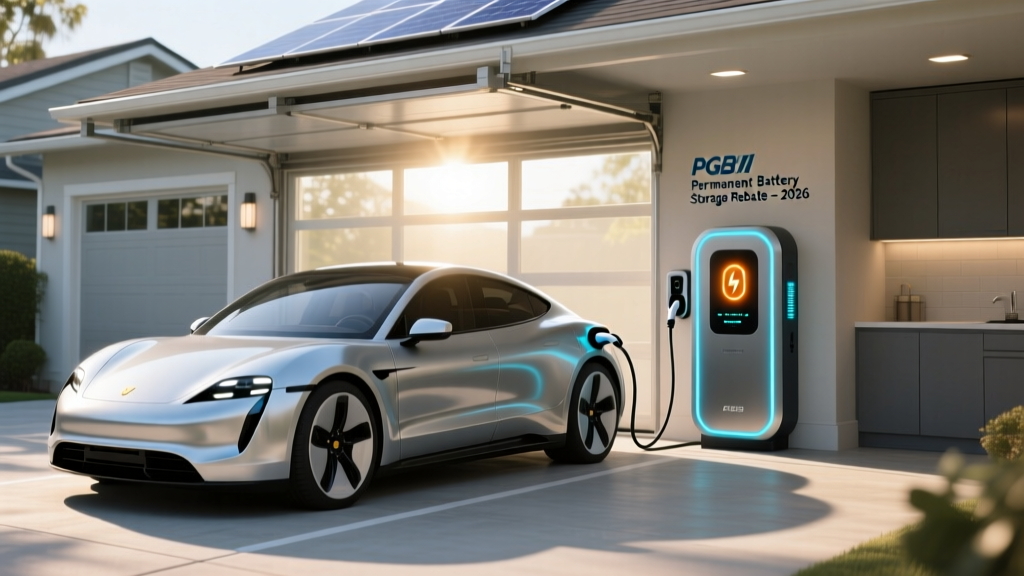
Your EV's traction battery (often 60–120 kWh) is a mobile, vehicle-integrated system and does not qualify under SGIP or PG&E's permanent storage rebate tiers. However, PG&E does offer separate EV-specific programs, including EV rate plans for off-peak charging savings, and some California utilities are piloting vehicle-to-home (V2H) integration that could blur this line in the future. For now, treat the two as separate purchases: your EV battery for transportation, a stationary system for home resilience.
EV Battery Chemistry: LFP vs NMC/NCA Explained
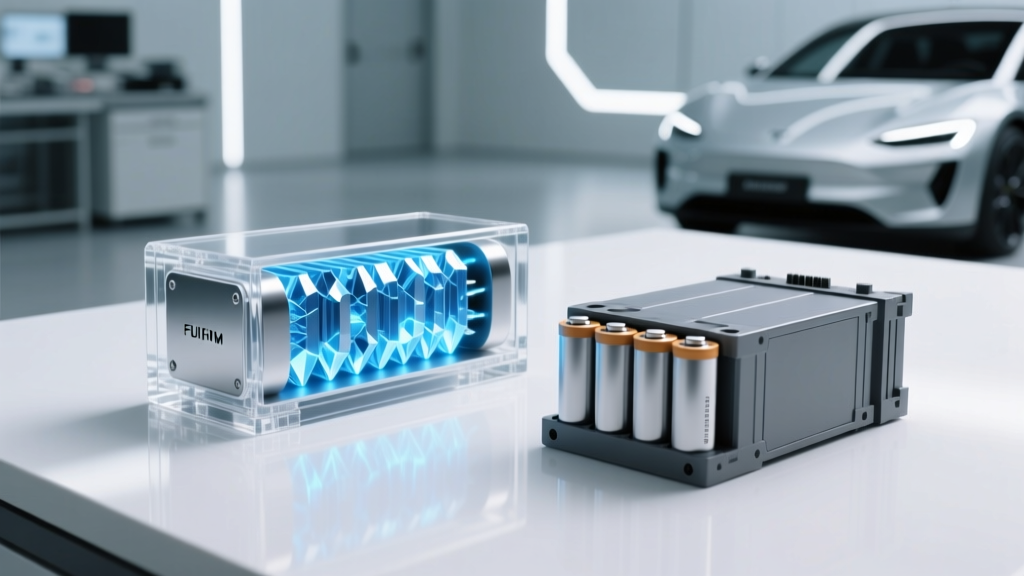
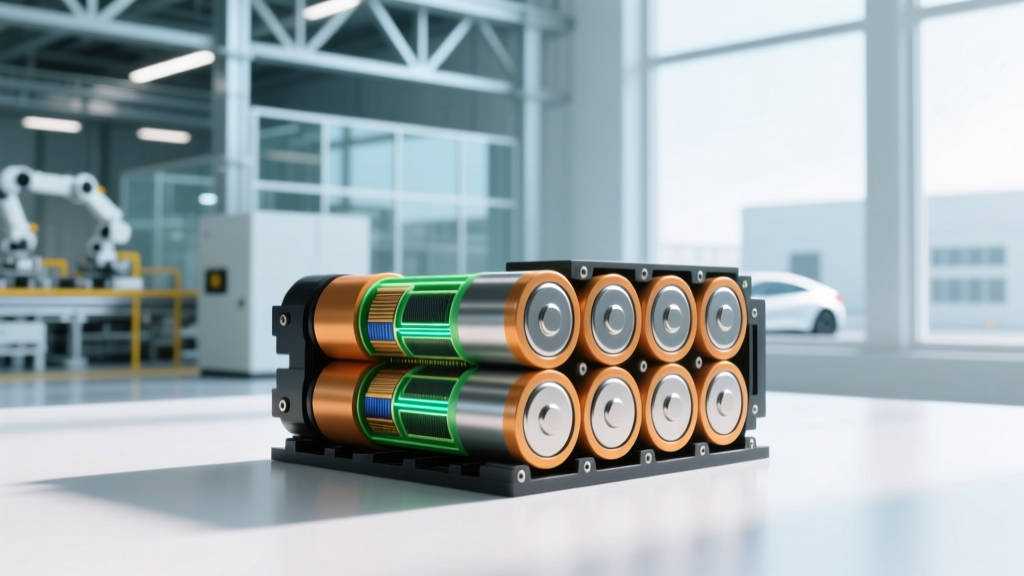
The two dominant lithium-ion chemistries in 2026 EVs are LFP (lithium iron phosphate) and NMC/NCA (nickel manganese cobalt / nickel cobalt aluminum). The choice affects your real-world range, charging habits, longevity, and even which PG&E rate plan makes the most financial sense.
| Attribute | LFP (LiFePO₄) | NMC / NCA |
|---|---|---|
| Energy Density | Lower (~160–180 Wh/kg cell-level) | Higher (~220–260 Wh/kg cell-level) |
| Cycle Life | 3,000–6,000+ cycles | 1,000–2,500 cycles |
| Cold-Weather Performance | More range loss below 32°F; slower cold charging | Better low-temp discharge; preconditioning helps both |
| Optimal Daily Charge Limit | 100% OK (recommended periodically for BMS calibration) | 80% daily; 100% only for trips |
| Cost per kWh | Lower (~$90–$110/kWh pack-level in 2026) | Higher (~$120–$145/kWh pack-level) |
| Cobalt / Ethical Sourcing | Cobalt-free; simpler §30D critical-mineral path | Cobalt content varies; sourcing under scrutiny |
| Typical Applications | Tesla Model 3/Y RWD, Ford Mustang Mach-E Select (LFP trims), BYD models | Long-range / performance trims; most Hyundai, Kia, Rivian, GM Ultium packs |
Which is better? If you prioritize maximum range per charge and live in a cold climate, NMC/NCA still wins on energy density. If you want a battery that can tolerate daily 100% charging, keep your car 10+ years, and minimize cost, LFP is the stronger choice. Many 2026 standard-range trims use LFP specifically because its cycle life advantage offsets the weight penalty.
How Long Do EV Batteries Last? Real Degradation Data
The fear that EV batteries need replacement every few years is not supported by fleet data. Modern liquid-cooled packs are engineered for the life of the vehicle. Here's what the numbers actually show:
- Tesla fleet data (2025 Impact Report): Model 3/Y packs retain approximately 85% capacity after 200,000 miles — roughly 15% degradation over 15+ years of average driving.
- Geotab fleet study (2024, ~6,300 EVs): Average observed degradation was 1.8% per year, meaning ~82% State of Health (SoH) at the 10-year mark.
- Taxi/commercial high-mileage data: Nissan Leaf (passive-cooled, older gen) showed 20–25% loss at 150,000 miles; newer liquid-cooled packs from Hyundai/Kia/GM show 10–15% at the same mileage.
Degradation is not linear. Most packs experience a steeper drop in the first 1–2 years (forming the solid electrolyte interphase layer), then plateau into a slow, linear decline. This means a battery that shows 5% loss at year two is not on track to be dead at year ten.
What Does the Battery Warranty Cover?
Federal law mandates a minimum 8 years / 100,000 miles warranty on EV batteries (10 years / 150,000 miles in California and states adopting CARB standards). But the details matter:
| Manufacturer | Coverage Period | Capacity Retention Threshold | Notes |
|---|---|---|---|
| Tesla | 8 yr / 100k–120k mi (varies by model) | 70% | Model 3 RWD: 100k; LR/Performance: 120k |
| Hyundai / Kia | 10 yr / 100,000 mi | 70% | Strongest standard coverage in US market |
| GM (Chevrolet, Cadillac) | 8 yr / 100,000 mi | 60% (Ultium packs) | Lower threshold — check fine print |
| Ford | 8 yr / 100,000 mi | 70% | Covers Mustang Mach-E, F-150 Lightning |
| Rivian | 8 yr / 175,000 mi | 70% | Highest mileage threshold for R1T/R1S |
| BMW / Mercedes | 8 yr / 100,000 mi | 70% | Standard Euro luxury terms |
What triggers a warranty claim? The battery must fall below the stated capacity retention threshold (typically 70% of original kWh) as measured by the manufacturer's diagnostic tool. Normal gradual degradation above that threshold is not covered. Damage from accidents, flooding, or unauthorized modifications voids coverage. A few manufacturers (notably early Nissan Leaf) offered capacity-bar guarantees with more generous replacement terms, but most warranties are defect-and-threshold based.
EV Battery Replacement Cost: What to Budget
Out-of-warranty battery replacement is the single biggest fear for prospective EV buyers. Here's the realistic cost landscape in 2026:
| Vehicle / Pack Size | Chemistry | Replacement Cost Range | When Typically Needed |
|---|---|---|---|
| Tesla Model 3 RWD (~60 kWh) | LFP | $8,000–$12,000 | Rarely; 300k+ mi projected |
| Tesla Model Y LR (~75 kWh) | NMC | $12,000–$16,000 | 200k–300k mi |
| Hyundai Ioniq 5 (~77.4 kWh) | NMC | $10,000–$15,000 | 200k+ mi |
| Ford F-150 Lightning Ext. (~131 kWh) | NMC | $20,000–$28,000 | 200k+ mi; large pack = higher cost |
| Chevrolet Equinox EV (~85 kWh) | NMC (Ultium) | $12,000–$18,000 | 200k+ mi |
| Nissan Ariya (~91 kWh) | NMC | $14,000–$19,000 | 200k+ mi |
Critical context: The vast majority of EV batteries are never replaced. Pack-level prices have fallen from ~$200/kWh in 2020 to roughly $110–$140/kWh in 2026, and individual module replacement (swapping only the degraded cells rather than the full pack) is increasingly available through specialized EV shops for $2,000–$6,000. Most batteries outlast the vehicle's body, suspension, and interior.
Factors That Accelerate Battery Degradation
Not all miles are equal when it comes to battery wear. These are the documented factors that shorten pack life:
- Frequent DC fast charging at high power: Regularly charging above 100 kW generates heat stress. Occasional road-trip fast charging is fine; daily 150 kW sessions without preconditioning accelerates degradation by an estimated 1–2% additional per year.
- Extreme heat exposure: Sustained ambient temperatures above 95°F with a high State of Charge (SoC) is the single worst condition for lithium-ion longevity. Garage parking matters in Phoenix and Sacramento summers.
- Extreme cold charging without preconditioning: Charging a frozen pack causes lithium plating on the anode. Always use your car's preconditioning feature before DC fast charging in sub-32°F weather.
- Sustained 100% SoC (NMC/NCA only): Storing an NMC pack at 100% for days stresses the cathode. LFP tolerates 100% far better.
- Deep discharge cycles: Regularly running the battery to 0% and leaving it there causes copper dissolution in the anode current collector. Keep above 10% when possible.
- High-mileage fast driving: Sustained high-speed driving (80+ mph) generates continuous high C-rate discharge heat. Moderate speeds extend pack life.
- Set daily charge limit to 80% (NMC/NCA) or 100% (LFP)
- Use Level 2 home charging as your primary method (~7–11 kW)
- Enable battery preconditioning before every DC fast charge
- Avoid leaving the car at 100% SoC for more than a few hours
- Park in shade or a garage during extreme heat
- Don't let the car sit at 0% SoC — charge within 24 hours if depleted
- Use your car's scheduled-departure feature to finish charging right before driving (reduces time at high SoC)
Monitoring Battery Health: How to Check State of Health
State of Health (SoH) is the percentage of original battery capacity remaining. Here's how 2026 EV owners track it:
- In-car displays: Tesla shows battery health percentage in the Service menu (added in 2024 software updates). Hyundai/Kia provide SoH via the dealer diagnostic tool — ask during service visits.
- OBD-II + app method: Apps like Leaf Spy (Nissan), TeslaFi, or ABRP (A Better Route Planner) OBD integration read the BMS-reported SoH directly. A $30 OBD-II dongle plus a $10/month subscription gives you continuous monitoring.
- Dealer diagnostic reports: Every manufacturer can pull a full battery health report during warranty service. Request one annually and keep it for resale documentation.
- Manual calculation: Track your kWh used per full charge (via the car's trip computer or charging app) and compare to the original usable capacity. If your 75 kWh pack now only accepts 64 kWh from 5% to 95%, you're at roughly 85% SoH.
For buyers of used EVs, a SoH reading is as important as a vehicle-history report. Several third-party services (Recurrent, CertiCharge) now offer battery health certifications for private-party sales.
Emerging Battery Tech: Solid-State and Silicon Anode
Looking beyond 2026, two technologies are advancing — but neither is available in a production EV you can buy today:
- Solid-state batteries: Toyota, Samsung SDI, and QuantumScape are targeting limited production in 2027–2028 vehicles. Promised benefits include 50%+ more energy density, 10-minute fast charging, and improved safety. Realistic mass-market availability: 2029–2031. Expect early adoption in luxury models first (Toyota has announced a Lexus pilot).
- Silicon-dominant anodes: Companies like Sila Nanotechnologies and Group14 are replacing graphite anodes with silicon composites, yielding 15–25% energy-density improvement. Mercedes-Benz's next-generation EQ models (expected 2027) are early candidates. This is an incremental evolution, not a revolution.
- Sodium-ion batteries: CATL and BYD are deploying sodium-ion packs in budget Chinese-market EVs. Energy density is 20–30% lower than LFP, but cost is significantly less. US-market adoption remains uncertain and likely limited to fleet/commercial vehicles initially.
None of these technologies should delay a 2026 EV purchase. Current LFP and NMC packs already deliver 250,000+ mile lifespans with proper care — well beyond what most owners will drive.
PG&E Storage Rebate vs EV Battery: Frequently Asked Questions
Does my EV battery qualify for the PG&E permanent battery storage rebate?
No. PG&E's permanent battery storage rebate (including SGIP) applies to dedicated stationary home battery systems like the Tesla Powerwall 3, Enphase IQ Battery 5P, or FranklinWH aPower. Your EV's traction battery is classified as mobile transportation equipment and is ineligible, even if parked in your garage and plugged in.
Can vehicle-to-home (V2H) change this in the future?
Potentially. The Ford F-150 Lightning with Ford Charge Station Pro and the Hyundai Ioniq 5 with V2H capability can power a home during outages. However, as of 2026, PG&E has not announced SGIP eligibility for V2H-capable EVs. If utility rules evolve, the EV could theoretically serve dual roles — but separate incentive frameworks are more likely.
How long do EV batteries last in years and miles?
Modern liquid-cooled EV batteries are lasting 15–20 years and 200,000–300,000+ miles before reaching 70–80% of original capacity. LFP chemistries are projecting even longer lifespans (300,000+ miles) based on cycle-life testing. Most batteries outlive the rest of the vehicle.
How much does an EV battery cost to replace out of warranty?
Between $8,000 and $28,000 depending on pack size and chemistry, with most mid-size sedan/crossover packs in the $10,000–$16,000 range. Prices are declining ~8–12% annually. Module-level repair (replacing individual degraded cell groups) is increasingly available for $2,000–$6,000.
What does the federal battery warranty mandate cover?
Federal law requires at least 8 years / 100,000 miles of coverage for capacity loss below the manufacturer's stated threshold (typically 70% of original capacity). California Air Resources Board (CARB) states require 10 years / 150,000 miles. The warranty covers defects and premature degradation, not normal gradual wear above the threshold.
LFP vs NMC — which battery should I choose?
Choose LFP if you plan to own the car 10+ years, charge daily to 100%, live in a moderate climate, and want the lowest cost per mile over the vehicle's life. Choose NMC/NCA if you need maximum range per charge, regularly drive in cold weather, or want the longest single-charge road-trip capability. Both chemistries are proven to 200,000+ miles with proper care.
How do I check my EV battery's State of Health?
Use your car's built-in health display (Tesla), request a dealer diagnostic report (all brands), or connect an OBD-II reader with an app like TeslaFi or Leaf Spy. Track kWh accepted per charge session versus the original usable capacity for a manual SoH estimate. Get a reading annually for resale documentation.
- PG&E EV Rate Plans & Programs
- California SGIP Program (CPUC)
- U.S. Department of Energy — fueleconomy.gov (EPA range, MPGe, and battery specs by model)