What EV Owners Need to Know About Battery Longevity and Utility Rebates
Electric vehicle batteries are the most expensive single component in your car, and understanding how they age, what they cost to replace, and where utility programs like a PG&E battery rebate fit into your ownership plan is essential for making a confident purchase. Most modern EV batteries are engineered to outlast the vehicles they power, but chemistry choices, charging habits, and climate all shape real-world outcomes.
This guide covers battery chemistry trade-offs, degradation data from real fleets, warranty terms across major manufacturers, replacement cost ranges, and the emerging technologies that may reshape the landscape — all with the exact numbers buyers need.
LFP vs NMC: Which Battery Chemistry Powers Your EV?
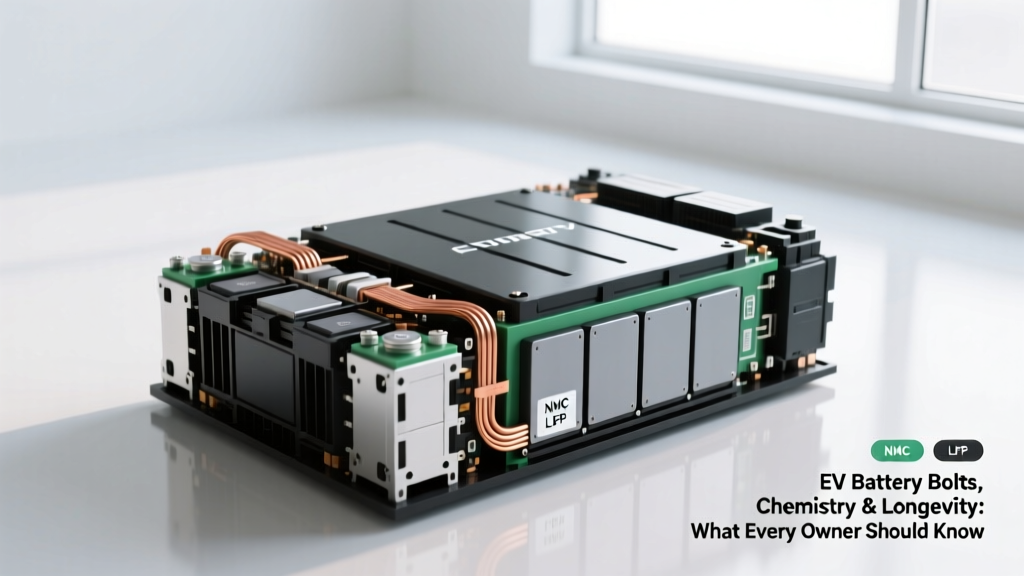
The two dominant lithium-ion chemistries in today's EV market are LFP (lithium iron phosphate) and NMC/NCA (nickel manganese cobalt / nickel cobalt aluminum). The choice affects your range, charging behavior, cold-weather performance, and long-term durability.
| Attribute | LFP (Lithium Iron Phosphate) | NMC / NCA (Nickel-Based) |
|---|---|---|
| Energy Density | Lower (~160 Wh/kg cell-level) | Higher (~250-300 Wh/kg cell-level) |
| Cycle Life | 3,000-5,000+ cycles | 1,000-2,000 cycles typical |
| Cold Performance | Reduced — slower charging below 32°F | Better low-temp charge acceptance |
| Cost | ~20-30% cheaper per kWh | Higher due to cobalt/nickel |
| Optimal SoC Range | Can charge to 100% regularly | Best kept 20-80% for daily use |
| Common In | Tesla Model 3 RWD, base Model Y, BYD, Rivian LFP trims | Long-range/performance trims, Hyundai, BMW, VW |
Which is better? It depends on your use case. LFP is the practical choice for daily commuting and drivers who want to charge to 100% without degradation worry. NMC/NCA delivers more range in a lighter, more compact pack — critical for long-range and performance models. Cold-climate drivers who rely on DC fast charging in winter may prefer NMC for its superior low-temperature charge acceptance.
How Long Do EV Batteries Actually Last?
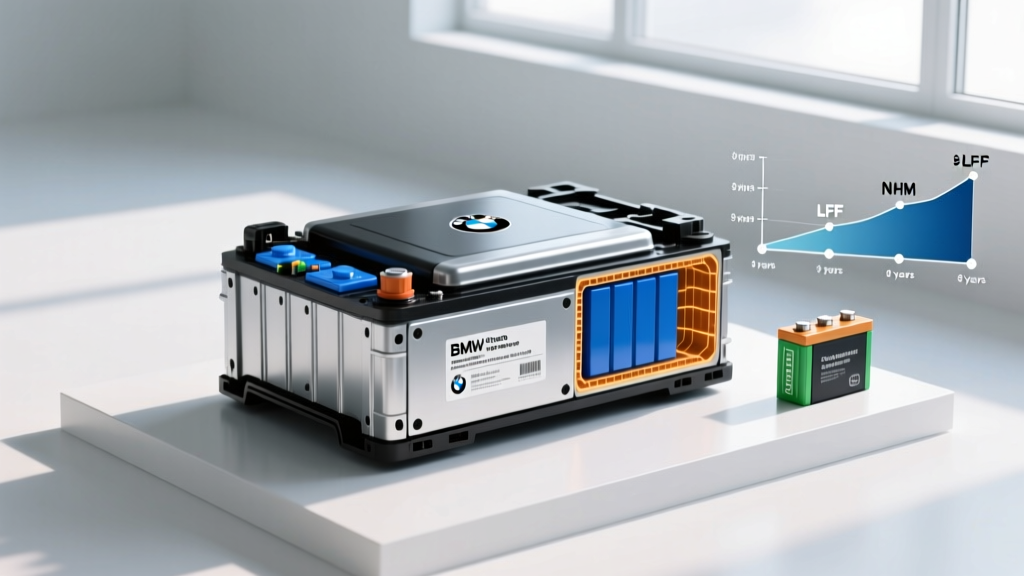
Based on fleet data from Tesla, real-world owner reports aggregated by sources like fueleconomy.gov, and long-term studies, the answer is reassuring: most EV batteries last 15-20 years or 200,000+ miles before reaching 70-80% of original capacity.
Typical Degradation Curve (NMC and LFP)
- Year 1 / 15,000 miles: ~2-5% capacity loss (initial formation loss)
- Year 3 / 45,000 miles: ~5-8% total loss
- Year 5 / 75,000 miles: ~8-12% total loss
- Year 8 / 120,000 miles: ~10-15% total loss (still above most warranty thresholds)
- Year 10+ / 150,000+ miles: ~12-20% total loss depending on chemistry and habits
LFP packs generally show slower mid-life degradation. Tesla's 2024 Impact Report noted their fleet averaged ~12% degradation at 200,000 miles — well within functional use. The steepest loss occurs in the first 12-18 months, then the curve flattens significantly.
Battery Warranty Terms: What Manufacturers Guarantee
Federal law mandates a minimum 8-year/100,000-mile warranty on EV battery packs (10 years/150,000 miles in California and states adopting CARB standards). Most manufacturers guarantee the pack will retain a specific percentage of original capacity.
| Manufacturer | Warranty Period | Capacity Threshold | Notes |
|---|---|---|---|
| Tesla (Model 3/Y LFP) | 8 yr / 100,000 mi | 70% | Module-level replacement possible |
| Tesla (Long Range/Perf) | 8 yr / 120,000 mi | 70% | Higher mileage cap |
| Hyundai / Kia | 10 yr / 100,000 mi | 70% | Among the longest coverage |
| Ford | 8 yr / 100,000 mi | 70% | Covers battery and hybrid components |
| BMW | 8 yr / 100,000 mi | 70% | Transferable to second owner |
| Rivian | 8 yr / 175,000 mi | 70% | Highest mileage cap in segment |
The warranty covers defects and abnormal degradation below the threshold. It does not cover damage from accidents, flooding, or unauthorized modifications. If your pack drops below the threshold within the warranty period, the manufacturer will repair or replace it — often with a refurbished unit that meets the capacity floor.
EV Battery Replacement Costs and When You'd Need One
Out-of-warranty battery replacement remains expensive, but the scenario is rare. Most packs outlive the vehicle's economic life. When replacement is needed — typically due to a manufacturing defect that manifests late, physical damage, or extreme high-mileage use — here's what it costs:
| Vehicle / Pack Size | Battery Cost (Parts) | Labor | Total Estimated |
|---|---|---|---|
| Tesla Model 3 (60 kWh LFP) | $8,000 - $12,000 | $1,500 - $3,000 | $9,500 - $15,000 |
| Tesla Model Y (75 kWh NMC) | $10,000 - $15,000 | $1,500 - $3,000 | $11,500 - $18,000 |
| Hyundai Ioniq 5 (77 kWh) | $12,000 - $16,000 | $2,000 - $3,500 | $14,000 - $19,500 |
| Ford F-150 Lightning (131 kWh) | $18,000 - $28,000 | $2,500 - $4,000 | $20,500 - $32,000 |
| Chevy Bolt (65 kWh) | $9,000 - $14,000 | $1,500 - $2,500 | $10,500 - $16,500 |
Battery cell prices have fallen from over $1,000/kWh in 2010 to roughly $100-130/kWh at the pack level in 2026, and continue declining. Third-party refurbishment shops are also emerging, offering module-level repairs for $3,000-$7,000 on common platforms — a fraction of a full pack swap.
Factors That Accelerate (or Preserve) Battery Health
Not all miles are equal when it comes to battery wear. These are the primary factors that influence how quickly your pack degrades:
What Hurts Battery Health
- Frequent DC fast charging above 150 kW: High charge rates generate heat; sustained sessions at peak kW stress cells. Occasional road-trip fast charging is fine — daily reliance accelerates wear.
- Sustained 100% SoC: Storing an NMC battery at full charge for days (especially in heat) promotes electrolyte decomposition. LFP is more tolerant of 100% storage.
- Deep discharges to 0%: Dropping below 5% regularly stresses the anode. Most EVs have a buffer, but habitually running the pack empty shortens life.
- Extreme heat exposure: Ambient temperatures above 95°F combined with high SoC is the worst-case scenario for calendar aging.
- Aggressive acceleration in cold weather: Drawing high current from a cold battery without preconditioning causes lithium plating on the anode.
What Preserves Battery Health
- Daily charging to 80% (NMC) or 100% (LFP): Stay in the chemistry's sweet spot.
- Use Level 2 home charging as your primary method: Slower charging at 7-11 kW generates minimal heat.
- Precondition before fast charging: Most EVs do this automatically when you navigate to a charger — it warms the battery to optimal charge-acceptance temperature.
- Garage parking in extreme climates: Reducing thermal extremes is the single highest-impact habit.
- Drive it: Batteries that cycle regularly (moderate depth) age more gracefully than those that sit at high SoC for weeks.
How to Monitor Your Battery's State of Health
State of Health (SoH) is the percentage of original capacity your battery currently holds. A new pack is 100% SoH; at 70-80%, you'll notice meaningful range reduction.
Built-in Methods
- Tesla: Navigate to Service Mode (hold the model name on the About screen for 3 seconds, enter "service") to view nominal full-pack energy vs. original capacity.
- Hyundai/Kia: The EV-specific menu in the infotainment system shows battery condition percentage on many 2023+ models.
- OBD-II Scanners: Third-party tools like OBDLink MX+ paired with apps such as EVNotify or LeafSpy (for Nissan) can read BMS-reported SoH on most brands.
- Dealer diagnostics: A service center can pull a full battery health report during routine maintenance.
For a quick at-home check: charge to 100%, note the displayed range, and compare it to the EPA-rated range when new. A 310-mile EPA vehicle now showing 265 miles at full charge suggests roughly 14-15% degradation — though display estimates can vary with recent driving patterns and temperature.
PG&E Battery Rebate Programs and How They Connect to EV Ownership
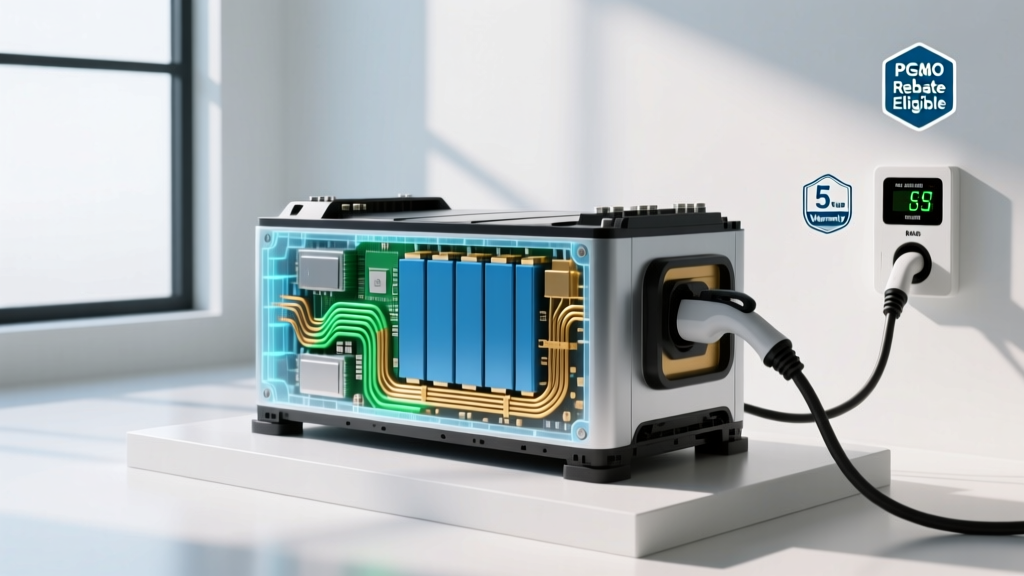
California utilities including Pacific Gas & Electric offer various incentive programs that intersect with EV battery ownership. While the PG&E battery rebate programs primarily target home energy storage systems (like the Tesla Powerwall or Enphase IQ Battery), they are part of a broader ecosystem of electrification incentives that EV owners should understand.
Current PG&E Programs Relevant to EV Owners
- Self-Generation Incentive Program (SGIP): Provides rebates for home battery storage systems — typically $200-$350/kWh for residential equity and non-equity storage. While this targets stationary batteries, EV owners pairing solar + home storage + EV charging can stack benefits.
- EV Rate Plans (EV2-A, EV-B): Time-of-use rates that dramatically reduce charging costs when you charge overnight (off-peak rates can be under $0.15/kWh vs. $0.40+/kWh peak).
- Clean Fuel Rebate: PG&E has historically offered a $800-$1,000 clean fuel rebate for EV owners in their service territory — check pge.com for current availability as programs update annually.
- Income-qualified programs: Enhanced rebates for customers in disadvantaged communities, sometimes covering home charger installation alongside storage incentives.
The strategic play for California EV owners: combine federal §30D tax credits (up to $7,500 with point-of-sale transfer, subject to MSRP caps, income limits, and battery sourcing requirements per IRS guidelines) with PG&E's off-peak rate plans and any available clean fuel or storage rebates to minimize total cost of ownership.
Emerging Battery Technology: What's Coming Next
Several next-generation battery technologies are in development, though none are available in production vehicles as of 2026.
Solid-State Batteries
Solid-state cells replace the liquid electrolyte with a solid conductor, promising higher energy density (potentially 400+ Wh/kg), faster charging, and improved safety. Toyota has announced a solid-state EV targeting 2027-2028 with a claimed 600+ mile range, while QuantumScape continues testing with Volkswagen. Realistic mass-market availability remains 2028-2030 at the earliest, with initial deployments likely in premium models at high cost.
Silicon Anode Technology
Companies like Sila Nanotechnologies and Group14 are replacing graphite anodes with silicon-dominant materials, boosting energy density by 20-40%. Early deployments are appearing in limited applications, but scaling to automotive volumes at competitive cost is the ongoing challenge. Expect incremental adoption in 2027+ model-year vehicles.
Sodium-Ion Batteries
CATL and BYD are producing sodium-ion cells for lower-cost, lower-range applications. While energy density trails lithium-ion significantly (~120-160 Wh/kg), the chemistry uses abundant, cheap materials. Best suited for urban EVs and stationary storage — not likely to appear in US-market long-range vehicles soon.
For buyers today, current lithium-ion technology (both LFP and NMC) is mature, reliable, and well-supported by warranties. Waiting for solid-state means waiting years and paying an early-adopter premium.
Frequently Asked Questions
How long do EV batteries last in years and miles?
Most modern EV batteries are designed to last 15-20 years or 200,000+ miles before degrading to 70-80% of original capacity. Fleet data from Tesla and independent studies confirm that the majority of packs outlive the vehicles they're installed in. The steepest degradation occurs in the first 1-2 years (2-5%), after which the curve flattens considerably.
How much does it cost to replace an EV battery?
Out-of-warranty replacement costs range from roughly $10,000 to $32,000 depending on pack size and vehicle. A Tesla Model 3 LFP pack runs $9,500-$15,000 installed, while a Ford F-150 Lightning's 131 kWh pack can exceed $20,000. However, most replacements are covered under the mandatory 8-year/100,000-mile warranty, and third-party module-level repairs are increasingly available for $3,000-$7,000.
What does the EV battery warranty actually cover?
Manufacturers guarantee the battery will retain a minimum capacity (typically 70% of original) over the warranty period (8-10 years / 100,000-175,000 miles depending on brand). If your pack degrades below the threshold, the manufacturer repairs or replaces it. Warranties do not cover accident damage, unauthorized modifications, or damage from improper charging equipment.
How do I check my EV battery health?
Many EVs display battery health information in service menus or infotainment settings. Tesla owners can access Service Mode for detailed SoH data. OBD-II scanners with EV-specific apps (EVNotify, LeafSpy, Car Scanner) read BMS data on most brands. Your dealer can also pull a comprehensive battery health report during service visits.
Is LFP or NMC better for my EV?
LFP is better for daily commuters who want to charge to 100% without worry, prioritize long cycle life (3,000-5,000 cycles), and want lower cost. NMC/NCA is better for drivers who need maximum range, live in cold climates (better low-temp performance), or want a performance-oriented vehicle. Neither is universally superior — the right choice depends on your driving patterns and climate.
Does the PG&E battery rebate apply to my EV battery?
PG&E battery rebate programs (primarily SGIP) target home energy storage systems like the Powerwall, not EV traction batteries. However, EV owners can benefit from PG&E's clean fuel rebates, time-of-use rate plans (EV2-A/EV-B), and income-qualified electrification programs. Check pge.com for current program availability and eligibility.
Will fast charging damage my EV battery?
Occasional DC fast charging on road trips has minimal impact on battery health. The concern arises from daily reliance on high-power DC charging (150+ kW) as your primary charging method, which generates sustained heat. For daily use, Level 2 home charging at 7-11 kW is ideal. When you do fast charge, preconditioning (which most EVs do automatically when navigating to a charger) significantly reduces stress.