Why Sodium-Ion Batteries Are Suddenly on Every EV Buyer's Radar
The lithium-ion battery has dominated electric vehicles for over a decade, but a challenger is emerging from the lab and into production lines. Peak energy sodium-ion batteries — cells that swap expensive lithium for abundant, cheap sodium — are being deployed in entry-level EVs in China and are drawing serious R&D investment globally. Companies like CATL, HiNa Battery, and Faradion have pushed sodium-ion energy density past 160 Wh/kg at the cell level, narrowing the gap with lithium iron phosphate (LFP) and making the chemistry viable for vehicles where cost matters more than maximum range.
For US-based EV shoppers in 2026, sodium-ion isn't yet available in a vehicle you can buy at a domestic dealership. But understanding where this technology sits relative to the LFP and NMC/NCA chemistries already powering your shortlist — and what battery ownership actually looks like in terms of degradation, warranty, and replacement — is essential context before you sign a purchase agreement.
This guide covers the chemistry landscape, real degradation data, warranty fine print, replacement economics, and daily habits that determine whether your pack lasts 150,000 miles or 300,000.
LFP vs NMC vs Sodium-Ion: The Chemistry Showdown
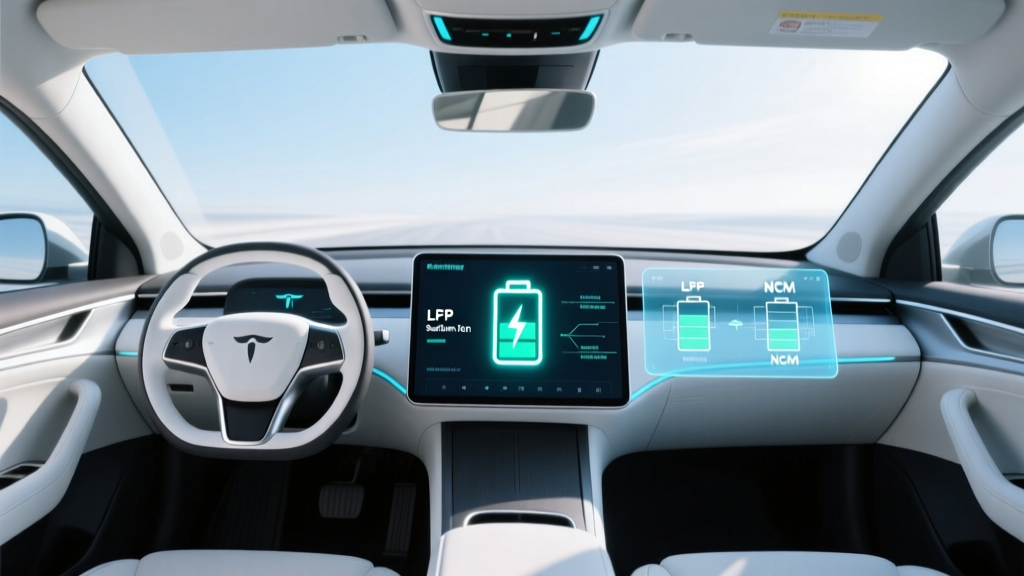
Three cathode chemistries define the current and near-future EV battery market. Each carries distinct trade-offs in energy density, longevity, cold-weather behavior, and raw-material cost.
| Attribute | NMC / NCA (Lithium) | LFP (Lithium Iron Phosphate) | Sodium-Ion (Emerging) |
|---|---|---|---|
| Cell-level energy density | 220–300 Wh/kg | 150–180 Wh/kg | 140–170 Wh/kg (peak lab: ~200) |
| Typical pack-level range (mid-size SUV) | 280–350 mi EPA | 230–300 mi EPA | 180–250 mi EPA (projected) |
| Cycle life (to 80% capacity) | 1,000–2,000 cycles | 3,000–6,000+ cycles | 2,000–4,000 cycles (early data) |
| Cold performance (−20°C / −4°F) | Moderate loss (~30%) | Higher loss (~35–40%) | Better retention (~25% loss) |
| Thermal runaway risk | Higher (requires robust BMS) | Very low | Very low |
| Raw-material cost pressure | High (cobalt, nickel, lithium) | Moderate (lithium, iron) | Low (sodium, iron, manganese) |
| Current US vehicle availability | Widely available | Widely available (Tesla, Ford, Rivian) | Not yet in US-market vehicles |
NMC/NCA (nickel manganese cobalt / nickel cobalt aluminum) delivers the highest energy density, which is why it powers long-range models like the Tesla Model 3 Long Range (82 kWh usable, NMC, EPA 341 mi) and the Hyundai Ioniq 5 (77.4 kWh, NMC, EPA 303 mi). The trade-off: higher material cost, lower cycle life, and greater thermal sensitivity.
LFP sacrifices roughly 15–25% energy density but gains dramatically in cycle life and safety. Tesla's Model 3 RWD uses a ~60 kWh LFP pack (EPA 272 mi) and recommends owners charge to 100% regularly — something you'd avoid with NMC. Ford's base Mustang Mach-E and standard-range F-150 Lightning also use LFP.
Sodium-ion sits closest to LFP in energy density but eliminates lithium entirely from the cathode. Early production cells from CATL (first-generation, 2023–2024) achieved ~160 Wh/kg. The company's announced second-generation cells target 200 Wh/kg, which would match current LFP. Sodium-ion's standout advantage is cold-weather performance: CATL reports 90%+ capacity retention at −20°C, a meaningful edge over LFP in northern climates. The chemistry also tolerates full discharge during storage and transport — a logistics benefit manufacturers value.
How Long Do EV Batteries Actually Last?
The short answer: longer than most buyers assume, and usually longer than the rest of the vehicle. But "how long" depends on what threshold you set and how the pack is treated.
Industry-standard warranty coverage defines end-of-life as the point where a battery drops below 70% of its original usable capacity. Under that definition, the vast majority of modern EV packs outlast their 8-year/100,000-mile warranty periods with capacity to spare.
Real-world degradation data from fleet studies and owner-reported telemetry tells a consistent story:
- Year 1–2: Most packs lose 2–5% capacity as the solid electrolyte interphase (SEI) layer stabilizes. This is normal and expected.
- Year 3–5: Degradation slows to roughly 1–2% per year under typical use.
- Year 8–10: Recurrent Energy's 2024 fleet analysis of over 15,000 EVs found that the median battery retained approximately 90% of original capacity at 100,000 miles. Tesla's own 2023 Impact Report showed Model 3/Y packs retaining an average of 88% capacity at 200,000 miles.
- Year 12+: Data is thinner here, but packs reaching 15+ years with 75–80% retention are increasingly common in LFP-equipped vehicles due to the chemistry's superior cycle life.
NMC packs in high-performance or frequent-DC-fast-charging scenarios may degrade faster. Geotab's 2024 analysis of 10,000+ EVs found that vehicles using DC fast charging more than three times per week showed an average of 1–2 percentage points additional capacity loss over five years compared to those primarily charging on Level 2.
| Milestone | NMC Median Retention | LFP Median Retention |
|---|---|---|
| 1 year / 12,000 mi | ~96% | ~97% |
| 3 years / 40,000 mi | ~93% | ~95% |
| 5 years / 75,000 mi | ~90% | ~93% |
| 8 years / 100,000 mi | ~87% | ~91% |
| 10 years / 150,000 mi | ~83% | ~89% |
Sources: Recurrent Auto fleet data, Geotab EV Battery Degradation Study 2024, Tesla 2023 Impact Report. Individual results vary based on climate, charging habits, and thermal management system quality.
What Does the Battery Warranty Actually Cover?
Federal law mandates a minimum 8-year/100,000-mile warranty on EV battery packs for emissions-related components, and every major automaker meets or exceeds this baseline. California and states adopting CARB standards require 10 years/150,000 miles. But the details matter enormously.
| Automaker | Duration / Mileage | Capacity Threshold | Coverage Details |
|---|---|---|---|
| Tesla (Model 3/Y LFP) | 8 yr / 120,000 mi | 70% retention | Repair or replace to meet threshold; may use refurbished pack |
| Tesla (Model 3/Y NMC Long Range) | 8 yr / 120,000 mi | 70% retention | Same as above |
| Hyundai / Kia | 10 yr / 100,000 mi | 70% retention | Full replacement or repair; among the most generous terms |
| Ford (Mustang Mach-E, F-150 Lightning) | 8 yr / 100,000 mi | 70% retention | Covers capacity loss beyond threshold; excludes abuse/neglect |
| Rivian | 8 yr / 175,000 mi | 70% retention | Higher mileage cap benefits high-use owners |
| GM (Ultium-based: Equinox EV, Blazer EV, Silverado EV) | 8 yr / 100,000 mi | 70% retention | Module-level replacement where possible to reduce cost |
Key warranty caveats:
- "Repair or replace" language: Automakers are not obligated to install a brand-new pack. Most warranties specify they may use a refurbished or remanufactured unit that meets the capacity threshold. This is standard practice and not a red flag.
- Capacity vs. defect: Warranties cover capacity degradation beyond the stated threshold AND manufacturing defects. They do not cover damage from collisions, flooding, improper charging equipment, or modifications.
- Transferability: Most factory battery warranties transfer to subsequent owners, which supports used-EV resale value. Verify this in your purchase agreement.
- The 70% threshold is conservative: As the degradation data above shows, most modern packs never reach 70% capacity under normal use within the warranty period. The warranty is a floor, not a forecast.
EV Battery Replacement Cost: What to Budget (and When)
Out-of-warranty battery replacement is the single largest potential ownership cost for an EV — and the one most likely to deter cautious buyers. Let's put actual numbers to it.
| Vehicle / Pack Size | Chemistry | Battery Cost (Parts) | Labor + Programming | Total Estimate |
|---|---|---|---|---|
| Tesla Model 3 RWD (~60 kWh) | LFP | $8,000–$11,000 | $1,500–$2,500 | $9,500–$13,500 |
| Tesla Model Y LR (~82 kWh) | NMC | $12,000–$16,000 | $1,500–$2,500 | $13,500–$18,500 |
| Hyundai Ioniq 5 (77.4 kWh) | NMC | $11,000–$15,000 | $2,000–$3,000 | $13,000–$18,000 |
| Ford F-150 Lightning Ext. Range (131 kWh) | NMC | $18,000–$25,000 | $2,500–$4,000 | $20,500–$29,000 |
| Chevrolet Equinox EV (~85 kWh) | NMC (Ultium) | $10,000–$14,000 | $2,000–$3,000 | $12,000–$17,000 |
When is replacement actually needed? For most owners, it isn't — at least not within the vehicle's practical lifespan. The median EV battery retains 83–91% capacity at 10 years depending on chemistry. A pack that drops to 70% still provides usable range; a 300-mile EPA vehicle at 70% health delivers ~210 miles, which covers most daily driving. Full replacement typically becomes relevant only after 15+ years or 200,000+ miles, and often coincides with the point where the rest of the vehicle (suspension, interior, electronics) is also aging out.
Cost trajectory: Pack-level pricing has fallen from ~$200/kWh in 2020 to approximately $110–$130/kWh in 2026 for NMC and below $90/kWh for LFP, according to BloombergNEF. Sodium-ion packs, when they reach US-market vehicles, are projected to land at $60–$80/kWh, which would meaningfully reduce replacement costs for entry-level models.
Module-level repair: Some packs (notably GM's Ultium architecture and certain BMW/Hyundai designs) allow individual module replacement rather than full-pack swaps. A single failed module might cost $1,500–$3,500 to replace versus $15,000+ for the entire pack. Ask your dealer whether the specific model you're considering supports modular repair.
Five Factors That Accelerate (or Slow) Battery Degradation
Not all miles are created equal when it comes to battery wear. These five variables have the largest measurable impact on long-term capacity retention:
1. DC Fast Charging Frequency
Occasional DC fast charging (1–2 sessions per week) has minimal impact. Daily DC fast charging, particularly at rates above 150 kW, increases cell stress through heat and lithium plating. Geotab's fleet data shows a measurable 1–2% additional degradation over 5 years for vehicles fast-charging 3+ times weekly versus those primarily on Level 2. If you rely on public fast charging, precondition your battery (most EVs do this automatically when you navigate to a charger) and avoid consistently charging past 80% on DC — the charge curve tapers sharply above 80% anyway, adding time and heat for diminishing range gains.
2. State of Charge Habits
For NMC/NCA packs, the 20–80% daily window minimizes stress on the cathode. Sustained storage at 100% SoC accelerates electrolyte decomposition. LFP chemistry is more tolerant — Tesla and Ford both recommend periodic 100% charges for LFP packs to support cell balancing and accurate state-of-charge estimation. Sodium-ion shares LFP's tolerance for higher SoC storage.
3. Extreme Temperatures
High ambient heat (sustained 95°F+) is the single worst environmental factor for lithium-ion longevity. Battery thermal management systems mitigate this, but vehicles parked outdoors in Phoenix or Riyadh for years will degrade faster than those in Seattle or Minneapolis — provided the Minneapolis owner preconditions before winter fast charging. Cold weather reduces range temporarily but doesn't cause permanent damage the way sustained heat does.
4. Depth of Discharge
Regularly draining the pack to 0% (or very near it) stresses cells more than shallow cycles. Running from 80% down to 30% and back is gentler than running from 100% to 5%. This is one reason the 20–80% guideline persists for NMC owners.
5. Calendar Aging
Batteries degrade even when not driven. A vehicle sitting at 50% SoC in a 70°F garage will lose roughly 1–2% capacity per year from calendar aging alone. High SoC + high temperature accelerates this. If you store an EV for weeks or months, set the charge limit to 50% and keep it in a cool location.
- Set daily charge limit to 80% for NMC/NCA; 100% is fine for LFP and sodium-ion
- Use Level 2 home charging as your primary routine; reserve DC fast charging for road trips
- Enable battery preconditioning before DC fast charging (navigation-based or manual)
- Avoid leaving the vehicle at 100% SoC for more than 24 hours
- In extreme heat, park in shade or a garage when possible
- For long-term storage (2+ weeks), set SoC to 50% and disable Sentry Mode / always-on features if not needed
- Keep tire pressure at spec — underinflated tires increase energy draw, forcing deeper discharge cycles
How to Check Your Battery's State of Health (SoH)
State of Health (SoH) is the percentage of original usable capacity your pack currently holds. A new battery is 100% SoH; one that has degraded to hold 60 kWh out of an original 77.4 kWh is at ~77.5% SoH.
In-vehicle tools: Some manufacturers provide SoH readouts directly. Tesla does not display a SoH percentage in the UI, but the car's estimated range at 100% SoC, compared to the original EPA figure, gives a reasonable proxy. Hyundai/Kia's infotainment system includes an EV battery diagnostics page showing SoH percentage. The Nissan Leaf has long displayed battery health bars (though imprecise).
OBD-II diagnostics: A Bluetooth OBD-II reader paired with apps like Leaf Spy (Nissan), ABRP's OBD integration, or Scan My Tesla can pull detailed cell-level voltage data, pack SoH estimates, and individual module balance information. These tools cost $30–$60 for the hardware and provide far more granular data than the dashboard.
Third-party testing: Services like Recurrent and AVILOO offer remote battery health reports based on telematics data. Some dealerships can run a full pack diagnostic during service visits — request this specifically, as it's not always part of a standard inspection.
When to be concerned: If your SoH drops more than 3–4% in a single year (outside the first year's SEI stabilization), or if you notice sudden range cliffs rather than gradual decline, schedule a dealer diagnostic. Sudden drops can indicate a failing module or cell imbalance rather than normal degradation.
What Comes After: Solid-State, Silicon Anode, and Sodium-Ion Timelines
The battery landscape in 2026 is dominated by incremental improvements to lithium-ion, but three next-generation technologies are progressing toward production:
Solid-state batteries replace the liquid electrolyte with a solid ceramic, polymer, or sulfide layer, promising 350–500 Wh/kg energy density, faster charging, and near-zero thermal runaway risk. Toyota has announced a 2027–2028 production timeline for a solid-state-equipped EV with ~750 km (WLTP, roughly 400+ miles EPA-equivalent) range and 10-minute 10–80% charging. Samsung SDI and QuantumScape are targeting similar windows. However, manufacturing yield challenges and cost remain significant barriers. Solid-state should be considered announced/preliminary — not available in any production vehicle you can buy today.
Silicon anode technology increases the silicon content in the graphite anode to boost energy density by 10–20% without changing the cathode chemistry. Sila Nanotechnologies and Group14 Technologies are supplying silicon-dominant anode materials to battery manufacturers, with initial automotive cells expected in 2027–2028 models. This is an evolution, not a revolution — it enhances existing NMC and NCA cells rather than replacing them.
Peak energy sodium-ion batteries are the closest to near-term production reality among the emerging chemistries. CATL's first-generation cells are already in Chinese-market vehicles (Chery, JAC, and select BYD entry models). Second-generation cells targeting 200 Wh/kg could make sodium-ion competitive with LFP for US-market compact and mid-size EVs by 2028–2029, assuming automakers certify and homologate packs for North American sale. The value proposition is compelling: eliminating lithium and cobalt from the supply chain reduces cost exposure and simplifies recycling. For cold-climate buyers, sodium-ion's superior low-temperature performance could make it the preferred chemistry for affordable EVs in the northern US and Canada.
LFP vs NMC: Which Should You Choose?
For 2026 US buyers, this is the chemistry decision that actually matters — sodium-ion remains a future option. Here's a practical framework:
- You want maximum battery lifespan (3,000–6,000+ cycles) and plan to keep the vehicle 10+ years
- You charge at home and can charge to 100% regularly without concern
- You prioritize lower upfront cost (LFP packs are 15–25% cheaper per kWh)
- Your daily driving needs are met by 230–300 miles of EPA range
- You live in a moderate or warm climate (LFP's cold-weather weakness is less relevant if you garage and precondition)
- You need 300+ miles of EPA range for frequent road trips or long commutes
- You tow (the extra energy density provides more buffer under load)
- You live in a cold climate and want slightly better winter range retention than LFP (though sodium-ion will eventually surpass both here)
- You prioritize maximum performance (NMC/NCA cells deliver higher peak discharge rates for acceleration)
Frequently Asked Questions
How long do EV batteries last in years and miles?
Most modern EV batteries retain 83–91% of original capacity at 10 years or 150,000 miles, depending on chemistry and use patterns. LFP packs tend toward the higher end of that range. Full replacement before 15 years or 200,000 miles is uncommon under normal use. The federal warranty mandates at least 8 years/100,000 miles with a 70% capacity retention threshold.
How much does it cost to replace an EV battery?
Out-of-warranty replacement costs range from approximately $9,500 for a smaller LFP pack (Tesla Model 3 RWD, ~60 kWh) to $29,000 for a large NMC pack (F-150 Lightning Extended Range, 131 kWh). Labor, programming, and diagnostics add $1,500–$4,000. Most owners never face this cost within the vehicle's practical lifespan. Pack-level pricing continues to decline, and modular repair options can reduce costs to $1,500–$3,500 for a single module failure.
What does the EV battery warranty cover?
Federal law requires a minimum 8-year/100,000-mile warranty (10 years/150,000 miles in CARB states) covering capacity loss below 70% of original capacity and manufacturing defects. Warranties typically allow the manufacturer to repair, replace, or recondition the pack — they are not required to install a brand-new unit. Damage from accidents, flooding, improper charging, or modifications is excluded. Most warranties transfer to second owners.
How do I check and maximize my EV battery health?
Monitor SoH through your vehicle's diagnostics menu, OBD-II apps (Leaf Spy, Scan My Tesla), or third-party services like Recurrent. To maximize longevity: use Level 2 charging as your daily routine, limit DC fast charging to road trips, keep NMC packs between 20–80% daily (LFP can go to 100%), precondition before fast charging, avoid prolonged storage at high SoC in hot weather, and maintain proper tire pressure.
Are sodium-ion batteries better than LFP?
Sodium-ion batteries offer comparable energy density to LFP (140–170 Wh/kg currently, targeting 200 Wh/kg), superior cold-weather performance, lower raw-material costs, and strong cycle life. However, they are not yet available in US-market vehicles. When they arrive (estimated 2028–2029 for North American models), they are likely to compete directly with LFP in entry-level and mid-range EVs, particularly in cold-climate regions where their low-temperature advantage matters most.
Will solid-state batteries make current EVs obsolete?
Not immediately. Solid-state technology promises significant energy density gains (350–500 Wh/kg) and faster charging, but production timelines from Toyota, Samsung SDI, and QuantumScape target 2027–2029 for initial limited-production vehicles. Costs will be high initially, and it will take years for solid-state to reach mainstream pricing. Current LFP and NMC EVs purchased today will remain practical, supported, and competitive for a decade or more.