What "Peak Energy Battery" Actually Means for Your EV
When engineers and automakers talk about a peak energy battery, they're referring to the cell chemistry and pack design that delivers the highest usable energy density (watt-hours per kilogram, Wh/kg) while still meeting safety, cost, and cycle-life targets. In today's EV market, that conversation narrows to two dominant lithium-ion chemistries: NMC (nickel-manganese-cobalt) / NCA (nickel-cobalt-aluminum) and LFP (lithium iron phosphate). Each trades off differently on range per kWh, longevity, cold-weather behavior, and price — and the right choice depends on how you drive, where you live, and how long you plan to keep the car.
This guide breaks down the real numbers behind EV battery chemistries, degradation curves, warranty thresholds, replacement economics, and the forward-looking solid-state and silicon-anode tech that's still in the pipeline as of 2026.
LFP vs NMC/NCA: The Chemistry Showdown
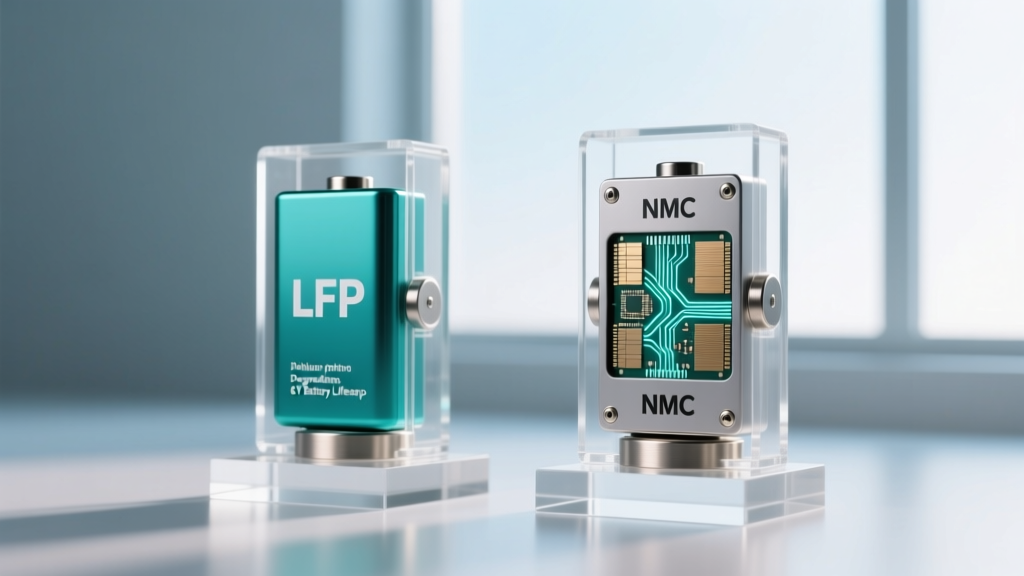
Every EV battery sold in the US in 2026 falls into one of two camps. NMC and NCA cells use nickel-rich cathodes to pack more energy into a lighter, smaller pack — that's why you see them in long-range sedans and performance SUVs. LFP cells use an iron-phosphate cathode that's cheaper to produce, inherently more thermally stable, and far more tolerant of deep cycling, but it stores roughly 20-30% less energy per kilogram.
| Attribute | LFP (LiFePO₄) | NMC 811 / NCA |
|---|---|---|
| Cell-level energy density | 160–180 Wh/kg | 250–300 Wh/kg |
| Typical pack-level energy density | 120–145 Wh/kg | 170–210 Wh/kg |
| Cycle life (80% retention) | 3,000–5,000+ cycles | 1,000–2,000 cycles |
| Cold-weather performance (−10 °C) | ~25–35% range loss | ~15–25% range loss |
| Thermal runaway onset | ~270 °C (very stable) | ~210 °C (requires more BMS safeguards) |
| Cost per kWh (cell, 2026 est.) | $70–$90 | $100–$130 |
| Cobalt/nickel content | None | Significant (supply-chain exposure) |
| Recommended daily SoC ceiling | 100% (periodic full charges help BMS calibration) | 80–90% for daily, 100% for trips |
| Typical applications | Tesla Model 3/Y RWD, standard-range BYD, Ford Mustang Mach-E Select (LFP option) | Tesla Long Range, Hyundai Ioniq 5/6, Rivian, Lucid, most 300+ mi EPA vehicles |
The headline trade-off is straightforward: NMC/NCA wins on peak energy density and cold-weather range, which is why it dominates 300+ mile EPA vehicles. LFP wins on cycle life, cost, and safety, and is the right call for drivers who plan to keep a car 10+ years, charge daily to 100%, or live in mild climates. Tesla's shift to LFP in its standard-range Model 3 and Model Y, and BYD's global Blade Cell platform, have made LFP the fastest-growing chemistry by volume.
How Long Do EV Batteries Actually Last?
The short answer: longer than most owners keep the car. Modern liquid-cooled EV battery packs routinely exceed 200,000 miles before reaching the 70% capacity-retention threshold that defines "end of life" for warranty purposes. Data from fleet operators like Tesla's Impact Reports and independent studies by Recurrent Auto show median degradation curves that flatten after the first 2–3 years.
Typical NMC Pack Degradation Curve (median, liquid-cooled, moderate climate):
- Year 1 / 15,000 mi: ~95–97% State of Health (SoH) — initial "formation" loss
- Year 3 / 45,000 mi: ~90–93% SoH — curve begins to flatten
- Year 5 / 75,000 mi: ~87–91% SoH
- Year 8 / 120,000 mi: ~82–88% SoH
- Year 10 / 150,000 mi: ~78–85% SoH
LFP packs degrade more slowly and linearly, often retaining 90%+ SoH at 150,000 miles in comparable conditions. Real-world data from Recurrent Auto's battery research (analyzing 15,000+ vehicles) confirms that very few modern packs — less than 2% — fall below 70% capacity within the 8-year/100,000-mile warranty window.
For context, a 2026 Hyundai Ioniq 5 with a 77.4 kWh NMC pack rated at 305 miles EPA would realistically deliver around 255–270 miles at 85% SoH after 8 years of typical use — still plenty for daily commuting, and a far cry from the "dead battery" scenario that dominates online fear threads.
EV Battery Warranty Terms: What's Covered (and What Isn't)
Federal law (via EPA emissions-related warranty precedent and CARB rules adopted by 17 states) effectively mandates an 8-year/100,000-mile minimum for EV battery capacity retention, though most automakers exceed this in the fine print. The key metric is the capacity retention threshold — the SoH percentage below which the manufacturer will repair or replace the pack.
| Vehicle | Battery Warranty | Capacity Threshold | Chemistry |
|---|---|---|---|
| Tesla Model 3/Y Long Range | 8 yr / 120,000 mi | 70% retention | NMC/NCA |
| Tesla Model 3/Y RWD | 8 yr / 100,000 mi | 70% retention | LFP |
| Hyundai Ioniq 5 / Ioniq 6 | 10 yr / 100,000 mi | 70% retention | NMC |
| Ford Mustang Mach-E | 8 yr / 100,000 mi | 70% retention | NMC (LFP on Select) |
| Rivian R1T / R1S | 8 yr / 175,000 mi | 70% retention | NMC |
| Chevrolet Equinox EV / Blazer EV | 8 yr / 100,000 mi | 60% retention (note: lower threshold) | NMC |
| BMW i4 / iX | 8 yr / 100,000 mi | 70% retention | NMC |
Critical fine print: Battery warranties cover capacity degradation and manufacturing defects — they do not cover damage from accidents, flooding, improper charging equipment, or modifications. If you drive for a rideshare fleet and exceed mileage limits early, you could void coverage. Always read the specific warranty booklet for your model year; terms shift between refreshes.
EV Battery Replacement Cost: The Real Numbers
Out-of-warranty battery replacement is the single biggest ownership fear, and it's where honest numbers matter most. The good news: most EVs will never need a full pack replacement. The packs that do fail tend to do so early (manufacturing defect, covered by warranty) or at extreme mileage (200,000+ miles) where the vehicle's residual value makes a full replacement uneconomical. Module-level repairs — replacing a handful of degraded cells rather than the whole pack — are increasingly common and far cheaper.
| Vehicle / Pack Size | Full Pack (parts + labor) | Module Repair (typical) |
|---|---|---|
| Tesla Model 3 RWD / 60 kWh LFP | $8,000–$11,000 | $2,500–$4,000 |
| Tesla Model Y LR / 82 kWh NMC | $12,000–$16,000 | $3,500–$5,500 |
| Hyundai Ioniq 5 / 77.4 kWh NMC | $11,000–$15,000 | $3,000–$5,000 |
| Ford F-150 Lightning Ext. Range / 131 kWh | $18,000–$25,000 | $5,000–$8,000 |
| Chevrolet Bolt EV (older, 65 kWh) | $7,000–$10,000 | $2,000–$3,500 |
| Lucid Air / 112 kWh NMC | $20,000–$28,000 | $6,000–$9,000 |
Cell prices have fallen roughly 80% since 2013 (per BloombergNEF's annual battery price survey), and that trend continues into 2026 with LFP cells now routinely below $80/kWh at the cell level. Third-party EV repair shops are increasingly offering module-level diagnostics and repairs, which can extend a pack's life for a fraction of a full replacement. For most buyers, the relevant question isn't "will I need a new battery?" — it's "will I still own this car when the pack reaches 70% SoH?" For the median owner who trades at 6–8 years, the answer is almost always no.
What Kills an EV Battery Early — and How to Prevent It
Lithium-ion cells degrade through well-understood electrochemical mechanisms: solid electrolyte interphase (SEI) growth, lithium plating, cathode structural fatigue, and electrolyte decomposition. You can't stop these processes entirely, but you can slow them significantly by avoiding a handful of high-stress conditions.
The 5 Biggest Battery-Life Killers (and the Fix):
- Chronic DC fast charging at high power. Repeated 150–350 kW sessions generate heat and accelerate SEI growth. Fix: Use DCFC for road trips; rely on Level 2 (7–11 kW) at home for 80%+ of your charging. Precondition the battery before fast charging (most EVs do this automatically when you navigate to a charger).
- Sitting at 100% SoC for extended periods. High voltage stresses NMC cathodes. Fix: Set daily charge limit to 80% (NMC) or don't worry about it (LFP, which benefits from periodic 100% sessions for cell balancing). Don't leave the car plugged in at 100% for weeks.
- Deep discharges below 10% SoC. Low voltage causes copper current-collector dissolution. Fix: Charge before you hit 10%; most EVs have a buffer (hidden capacity below 0% displayed), but don't rely on it regularly.
- Extreme heat exposure. Sustained battery temps above 40 °C (104 °F) accelerate all degradation mechanisms. Fix: Park in shade/garage when possible; liquid-cooled packs handle this well, but passive-cooled packs (older Nissan Leaf, some early models) are far more vulnerable.
- Extreme cold charging without preconditioning. Charging below 0 °C without warming the battery can cause lithium plating on the anode — permanent damage. Fix: Always precondition before charging in freezing weather; use scheduled departure features to warm the pack while plugged in.
Following these practices, a 2026 NMC-pack EV driven 15,000 miles/year should comfortably retain 85%+ SoH at the 10-year mark. LFP packs, with their inherent cycle-life advantage and tolerance for 100% SoC storage, often exceed 90% in the same timeframe.
How to Check Your EV Battery's State of Health
State of Health (SoH) is the percentage of original usable capacity your pack retains. Monitoring it lets you track degradation, plan for long trips, and document capacity for resale value.
Methods available in 2026:
- In-vehicle displays: Tesla, Hyundai/Kia, BMW, and Rivian now include battery health or degradation indicators in the service menu or companion app. Tesla's app shows estimated range at 100% SoC over time; Hyundai's diagnostic screen shows SoH as a percentage.
- OBD-II diagnostic tools: Devices like the OBDeleven (VW group), Scan My Tesla, or Car Scanner ELM OBD2 can read the BMS-reported SoH directly from the pack. Expect to pay $20–$80 for the dongle plus a free or low-cost app.
- Third-party services: Recurrent Auto offers free battery health reports by connecting to your vehicle's telematics data (with your permission). Some dealerships will run a full pack diagnostic on request — ask for a printout with SoH percentage and individual module voltage delta.
- The "full-charge range" method: Charge to 100%, note the displayed range, and compare it to the original EPA sticker adjusted for your typical efficiency. This is imprecise (displayed range varies with recent driving behavior) but gives a rough trend line.
For NMC owners, check SoH quarterly. For LFP owners, check semi-annually — the degradation is slower and more linear. If you see a sudden drop (more than 3–4% in a month), schedule a dealer diagnostic; it may indicate a failing module rather than normal wear.
Beyond Lithium-Ion: Solid-State and Silicon-Anode Batteries
The next generational leap in peak energy battery technology is solid-state batteries, which replace the liquid electrolyte with a solid ceramic, polymer, or sulfide separator. The promise is significant: 40–50% higher energy density (potentially 400+ Wh/kg at the cell level), faster charging without lithium-plating risk, and inherent fire resistance. Toyota, Samsung SDI, and QuantumScape have all demonstrated prototype cells with these characteristics.
Realistic timeline as of 2026: Toyota has announced limited solid-state production for a small run of vehicles in Japan, but widespread commercial availability in US-market EVs is not expected before 2028–2030. QuantumScape's cells are in validation with Volkswagen-group brands but have not reached mass production. Cost remains the primary barrier — solid-state cells are currently 2–4x the price of equivalent NMC cells, and manufacturing yields are still low.
Silicon-anode batteries are closer to market. Companies like Sila Nanotechnologies and Group14 are supplying silicon-dominant anode materials that boost energy density by 15–25% over graphite anodes. The Mercedes-Benz G-Class (2025+ refresh) and select high-performance applications are among the first adopters. Silicon anodes are a meaningful incremental improvement, not a revolution — expect them in premium models first, trickling down to mainstream EVs by 2028–2029.
Neither technology changes the buying decision in 2026. Today's NMC and LFP packs are mature, well-understood, and backed by robust warranties. If you're shopping now, buy on today's specs — not tomorrow's lab results.
Frequently Asked Questions
LFP vs NMC — which battery chemistry is better for me?
Choose LFP if you plan to keep your EV 8+ years, charge at home most nights, live in a mild climate, and value lowest cost of ownership. Choose NMC/NCA if you need maximum EPA range (300+ miles), regularly drive in sub-freezing temperatures, or want the lightest pack for performance handling. Neither is universally "better" — they optimize for different use cases.
How much does it cost to replace an EV battery in 2026?
Full pack replacement ranges from roughly $8,000 for a 60 kWh LFP pack (Tesla Model 3 RWD) to $25,000+ for a 131 kWh pack (F-150 Lightning Extended Range). Module-level repairs — which address localized cell degradation rather than the full pack — typically cost $2,500–$8,000. Most EVs never require either within normal ownership periods, as median packs retain 80%+ capacity at 150,000 miles.
Does DC fast charging damage my EV battery?
Occasional DC fast charging (road trips, a few times per month) has minimal impact on modern liquid-cooled packs with sophisticated thermal management. The concern is chronic high-power fast charging — daily 150+ kW sessions without preconditioning will accelerate degradation measurably over 5+ years. For daily use, Level 2 home charging at 7–11 kW is the lowest-stress, lowest-cost option.
What does the EV battery warranty actually cover?
The standard battery warranty covers capacity loss below a stated threshold (usually 70% SoH, though some manufacturers set it at 60%) and manufacturing defects for 8 years / 100,000 miles (10/100,000 for Hyundai/Kia, 8/175,000 for Rivian). It does not cover collision damage, flooding, aftermarket modifications, or use of non-certified charging equipment. Read your specific warranty booklet — terms vary by model year and trim.
Can I check my battery health myself?
Yes. Most 2026 EVs expose SoH data through the infotainment service menu, companion app, or via an OBD-II dongle paired with apps like Scan My Tesla or Car Scanner. Third-party services like Recurrent Auto also provide free battery health reports using your vehicle's telematics data. Check quarterly (NMC) or semi-annually (LFP) and document the readings for resale value.
Will solid-state batteries make current EVs obsolete?
Not anytime soon. As of 2026, solid-state batteries remain in limited pilot production with high per-cell costs and low manufacturing yields. Widespread US-market availability in affordable EVs is projected for 2029–2031 at the earliest. Current NMC and LFP packs are mature, cost-effective, and will remain the standard for the foreseeable future. Buy on today's technology; don't wait for lab promises.