Why PACCAR Battery Development Matters to the EV Ecosystem
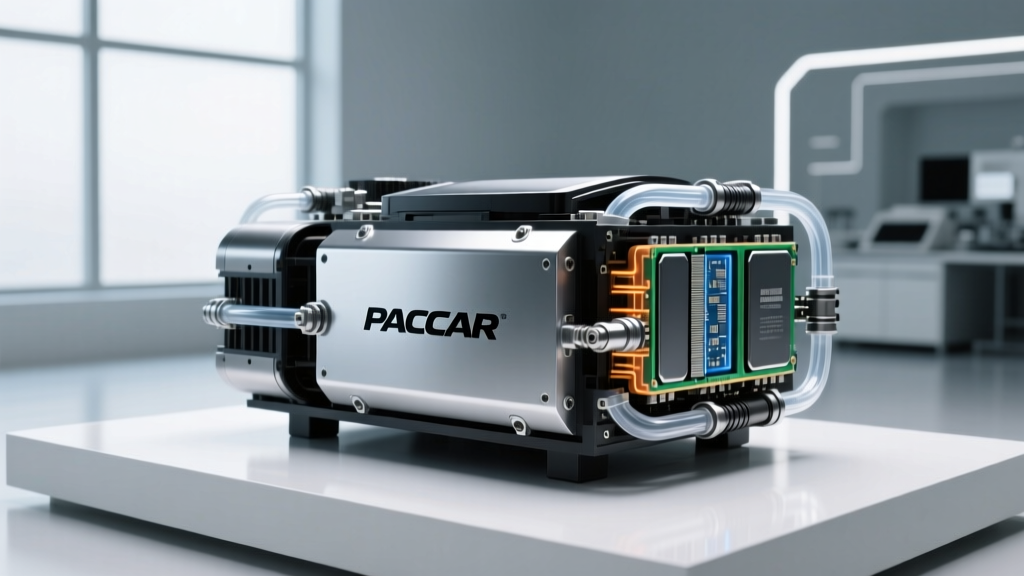
When most EV shoppers think about battery technology, they picture Tesla, CATL, or LG Energy Solution. But commercial-vehicle giants are quietly advancing pack engineering that eventually trickles down to consumer vehicles. PACCAR—the parent company of Kenworth, Peterbilt, and DAF—has invested heavily in battery-electric trucks through its PACCAR Powertrain division, including the development of proprietary battery packs for models like the Kenworth T680E and Peterbilt 579E. These PACCAR battery systems are designed for the punishing duty cycles of Class 8 trucking: high-energy throughput, extreme vibration resistance, and long calendar life.
Understanding how PACCAR approaches battery engineering gives consumer EV buyers a useful lens on the broader state of lithium-ion technology. The same fundamental chemistry trade-offs—energy density versus cycle life, fast-charge tolerance versus longevity—apply whether you're spec'ing a Peterbilt 520EV garbage truck or a Hyundai Ioniq 5 for your daily commute. This guide uses the PACCAR battery story as a jumping-off point for a comprehensive look at EV battery technology in 2026: chemistry, degradation, warranties, replacement costs, and how to monitor and maximize your pack's health.
LFP vs NMC: The Chemistry Decision That Defines Your Pack
Every EV battery on the road today uses some variant of lithium-ion chemistry, but the cathode material determines the pack's personality. In 2026, two chemistries dominate the market: LFP (lithium iron phosphate) and NMC (nickel manganese cobalt), with NCA (nickel cobalt aluminum) used by Tesla in some performance applications.
PACCAR's commercial battery systems for heavy-duty trucks have largely standardized on NMC chemistry because energy density is critical when you're trying to haul 80,000 pounds with a 150-mile electric range. But for consumer EVs, LFP has surged in popularity—Tesla's standard-range Model 3 and Model Y, the Ford Mustang Mach-E Select, and BYD's global lineup all use LFP cells.
| Attribute | LFP (Lithium Iron Phosphate) | NMC / NCA |
|---|---|---|
| Energy Density (cell-level) | 160–180 Wh/kg | 230–300 Wh/kg |
| Typical Cycle Life | 3,000–5,000+ cycles to 80% SoH | 1,000–2,000 cycles to 80% SoH |
| Cold-Weather Performance | Moderate; greater range loss below 20°F | Better low-temp discharge capability |
| Fast-Charge Tolerance | Excellent; less degradation at high C-rates | Moderate; sustained 250+ kW stresses cathode |
| Cost per kWh (2026) | ~$80–$100 | ~$110–$140 |
| Thermal Stability | Superior; higher thermal runaway threshold | Good, but requires robust BMS and cooling |
| Critical Mineral Exposure | No cobalt or nickel | Cobalt, nickel supply-chain risk |
The takeaway: If you drive a daily commute under 100 miles, charge mostly at home, and want maximum longevity, LFP is the better choice. If you need maximum range for road trips or live in a consistently cold climate where every mile of EPA range counts, NMC still holds the edge. PACCAR's choice of NMC for heavy trucks reflects the same calculus: when payload and range are non-negotiable, you pay the premium for energy density.
How Long Do EV Batteries Actually Last? Degradation Data
The fear of a dead battery pack at 80,000 miles is the single biggest barrier to EV adoption—and it's largely a myth based on early-generation packs. Modern thermal management systems, improved cell chemistry, and smarter battery management software have pushed real-world degradation far below early projections.
Here's what the data actually shows for consumer EVs in 2026:
- Tesla Model 3/Y (NMC, 2019–2023): Average 8–10% capacity loss at 100,000 miles based on fleet data aggregated by Recurrent Auto. Most packs retain 88–92% State of Health (SoH) at this mileage.
- Chevrolet Bolt EV/EUV (NMC, 2017–2023): Recurrent data shows approximately 6–8% degradation at 80,000 miles. GM's aggressive liquid-cooling system contributed to better-than-expected longevity.
- Tesla Model 3 Standard Range (LFP, 2021–2025): Early LFP packs show roughly 3–5% loss at 60,000 miles. The LFP chemistry's superior cycle life is bearing out in real-world use.
- Hyundai Ioniq 5 / Kia EV6 (NMC, 2022–2025): Limited long-term fleet data, but early indicators from European taxi fleets show ~5% loss at 70,000 miles with regular DC fast charging.
- Nissan Leaf (passive air-cooled, 2011–2017): The cautionary tale. First-generation Leafs without active thermal management showed 15–25% degradation at 80,000 miles, especially in hot climates. This is why modern packs all use liquid cooling.
For commercial applications, PACCAR designs its battery packs with even more conservative degradation targets. A Class 8 electric truck may see 2–3 charge cycles per day in drayage service, meaning the pack must withstand 1,500+ cycles per year. PACCAR's battery warranty for its electric powertrains typically covers 5 years or 300,000–500,000 miles depending on the application, reflecting the higher throughput demands of commercial use.
What the Battery Warranty Actually Covers (and What It Doesn't)
Federal law mandates that EV battery warranties cover a minimum of 8 years or 100,000 miles (whichever comes first) in most states, and 10 years or 150,000 miles in California Air Resources Board (CARB) states. But the details matter enormously.
| Manufacturer | Warranty Period | Mileage Cap | Capacity Retention Threshold | Notes |
|---|---|---|---|---|
| Tesla (Model 3/Y Long Range, NMC) | 8 years | 120,000 mi | 70% of original capacity | Covers defects and excess degradation |
| Tesla (Model 3 RWD, LFP) | 8 years | 100,000 mi | 70% of original capacity | Lower mileage cap reflects cost positioning |
| Hyundai / Kia (E-GMP platform) | 10 years | 100,000 mi | 70% of original capacity | Industry-leading duration |
| Ford (Mach-E, F-150 Lightning) | 8 years | 100,000 mi | 70% of original capacity | Standard across Ford EV lineup |
| GM (Ultium platform) | 8 years | 100,000 mi | 70% of original capacity | Covers battery and electric propulsion components |
| PACCAR (Kenworth/Peterbilt EV) | 5 years | 300,000–500,000 mi | Varies by application | Commercial duty-cycle specific |
Critical fine print: The 70% threshold means the manufacturer only owes you a repair or replacement if your battery degrades below 70% of its original capacity within the warranty period. A pack that drops to 72% at 95,000 miles is technically within spec—you won't get a free replacement. In practice, almost no modern liquid-cooled pack falls below 70% within the warranty window unless there's a manufacturing defect.
Warranties typically cover cell defects, module failures, and BMS (battery management system) malfunctions. They do not cover damage from collisions, flooding, improper charging equipment, or modifications. Check your specific owner's manual for exclusions.
EV Battery Replacement Cost: The Numbers Behind the Fear
Headlines about $20,000 battery replacements are technically accurate but contextually misleading. Here's the reality for 2026:
| Vehicle | Battery Capacity | Chemistry | Estimated Full Replacement Cost | When Typically Needed |
|---|---|---|---|---|
| Tesla Model 3 RWD | 60 kWh | LFP | $10,000–$13,000 | Rarely before 200,000+ mi |
| Tesla Model Y Long Range | 75 kWh | NMC | $13,000–$16,000 | Rarely before 180,000+ mi |
| Hyundai Ioniq 5 | 77.4 kWh | NMC | $14,000–$18,000 | Rarely before 180,000+ mi |
| Ford F-150 Lightning (Extended) | 131 kWh | NMC | $20,000–$28,000 | Rarely before 150,000+ mi |
| Chevrolet Equinox EV | 85 kWh | NMC (Ultium) | $14,000–$17,000 | Rarely before 180,000+ mi |
| Nissan Leaf (2018–2023, 62 kWh) | 62 kWh | NMC | $9,000–$12,000 | May need at 120,000–150,000 mi (air-cooled) |
Key context most coverage omits:
- Most EVs are scrapped or traded before the battery needs replacement. The average US vehicle age is 12.6 years. At 12,000 miles/year, that's ~150,000 miles—well within the healthy life of any modern liquid-cooled pack.
- Module-level repair is increasingly common. Many packs allow individual module replacement rather than a full pack swap. A single failed module might cost $1,500–$3,500 to replace, restoring full pack function.
- Battery costs continue to fall. Cell-level pricing has dropped from ~$1,200/kWh in 2010 to roughly $90–$110/kWh in 2026 (source: BloombergNEF). A replacement pack in 2032 will cost significantly less than today's prices.
- The used-EV market prices in battery health. A 6-year-old EV with a verified 88% SoH battery trades at a predictable discount—buyers aren't blindsided.
Factors That Accelerate (or Preserve) Battery Health
Battery degradation isn't random—it's driven by specific, measurable stressors. Understanding these lets you make informed trade-offs rather than operating on anxiety.
- Avoid sustained 100% State of Charge. For NMC batteries, daily charging to 80% is the sweet spot. LFP batteries are more tolerant of 100% SoC, and manufacturers like Tesla actually recommend periodic 100% charges for LFP to allow cell balancing.
- Minimize DC fast charging when possible. Occasional road-trip fast charging is fine. But daily reliance on 150+ kW DCFC accelerates cathode wear. Level 2 home charging at 7–11 kW is gentler on the cells.
- Precondition in cold weather. Charging a cold battery causes lithium plating on the anode—a permanent degradation mechanism. Use your car's preconditioning feature (scheduled departure or app-initiated) to warm the pack before charging in sub-40°F conditions.
- Avoid extreme heat exposure. Parking in direct sun in 100°F+ weather with a full battery accelerates calendar aging. If possible, park in shade or a garage, and avoid charging to 100% right before a multi-day park in heat.
- Don't baby it too much. Driving between 20% and 80% SoC is ideal, but occasionally using the full range won't cause meaningful harm. The BMS maintains top and bottom buffers (typically 2–5% of gross capacity) to protect cells even at the displayed 0% and 100%.
- Keep software updated. OTA updates often refine thermal management and charging algorithms. Tesla, Rivian, Ford, and GM have all pushed battery-management improvements via software.
PACCAR's commercial battery systems address these factors through active liquid cooling/heating and sophisticated BMS algorithms designed for high-throughput duty cycles. Consumer EVs use the same principles, scaled for different use patterns.
How to Check Your EV's Battery Health (State of Health)
State of Health (SoH) is expressed as a percentage of the battery's original usable capacity. A pack with 90% SoH that originally held 75 kWh now holds ~67.5 kWh of usable energy. Here's how to check it:
Built-In Vehicle Tools
- Hyundai/Kia: The infotainment system's EV menu shows a battery health indicator. Some model years display SoH percentage directly.
- Tesla: No native SoH readout in the car, but third-party apps like Tessie or Stats pull SoH data from the vehicle's API.
- Ford: The FordPass app provides a battery health estimate for the Mach-E and F-150 Lightning.
- GM (Ultium vehicles): The myChevrolet/myCadillac app surfaces battery health data.
- Nissan Leaf: The dashboard displays "capacity bars" out of 12—a crude but effective SoH proxy. A 12-bar Leaf is near factory capacity; an 8-bar Leaf has lost roughly 30%.
Third-Party Diagnostics
- OBD-II scanners with EV capability (such as the OBDeleven or dedicated EV scan tools) can read SoH directly from the BMS on most vehicles.
- Recurrent Auto offers a free battery health report for enrolled vehicles, comparing your pack's degradation to a fleet-wide baseline.
- Dealer service departments can run a full battery health check, typically as part of a scheduled service visit. Request a printout showing individual module voltages and overall SoH.
For used-EV buyers, requesting a battery health report before purchase is as essential as checking a CarFax. A vehicle with 85% SoH at 60,000 miles is tracking well; one at 78% at the same mileage warrants investigation.
What's Next: Solid-State, Silicon Anodes, and Realistic Timelines
The battery lab pipeline is full of promising technology, but the gap between lab demonstration and mass production is measured in years, not months. Here's a grounded look at what's coming:
Solid-State Batteries
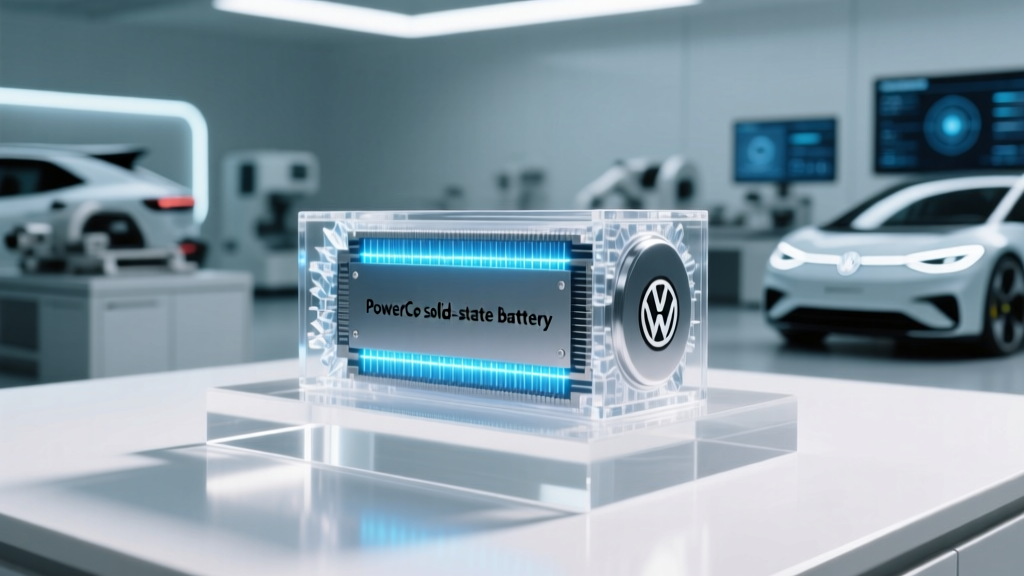
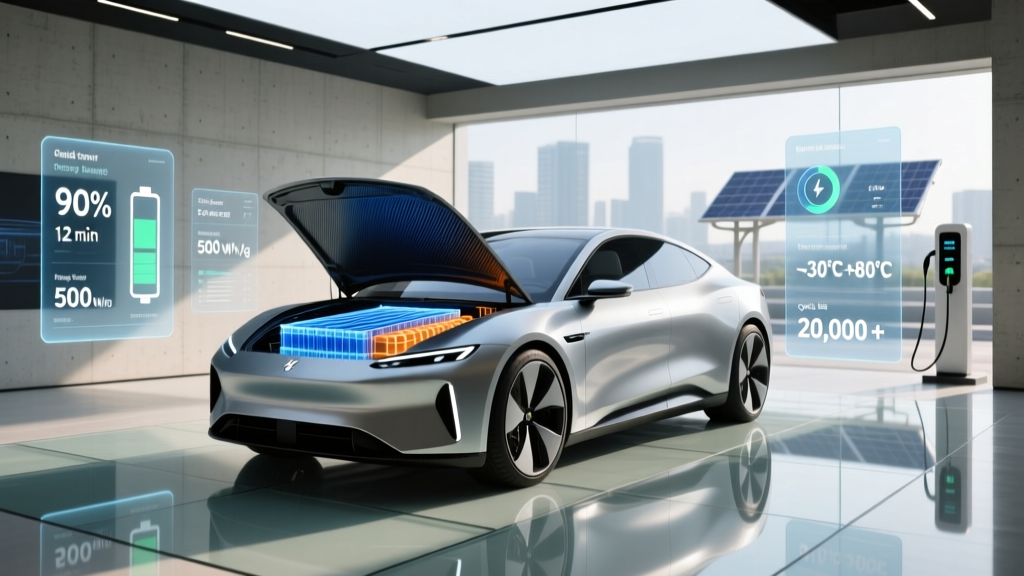
Solid-state cells replace the liquid electrolyte with a solid ceramic, polymer, or sulfide separator. The theoretical benefits are enormous: 40–60% higher energy density, faster charging (potentially 10–80% in under 10 minutes), and dramatically reduced fire risk. Toyota has announced a solid-state EV targeted for 2027–2028 production, and QuantumScape is working with Volkswagen on pilot production. However, manufacturing yield, cost, and durability challenges remain. Realistic mass-market timeline: 2029–2032 for consumer vehicles at scale.
Silicon Anode Technology
Replacing graphite anodes with silicon can boost energy density by 20–40%. Companies like Sila Nanotechnologies and Group14 are already shipping silicon-dominant anode materials for consumer electronics and early automotive applications. Mercedes-Benz's next-generation EQ models are expected to use silicon anode cells from Factorial Energy. Realistic timeline: already entering limited production in 2025–2026, with broader adoption by 2028.
Sodium-Ion Batteries
Sodium-ion chemistry eliminates lithium entirely, using abundant and cheap materials. Energy density is lower than LFP (~120–150 Wh/kg), making it suitable for budget city cars and stationary storage. CATL and BYD have begun producing sodium-ion cells. Realistic timeline: 2026–2028 for low-cost EVs, primarily in China and emerging markets.
PACCAR and other commercial vehicle manufacturers are monitoring all three technologies, but the conservative nature of the trucking industry means NMC and LFP will remain dominant in heavy-duty applications through at least 2030.
Frequently Asked Questions
How long do EV batteries last in years and miles?
Modern liquid-cooled EV batteries (2020 and later) typically retain 85–92% of their original capacity at 100,000 miles. Most will outlast 200,000 miles before dropping below the 70% threshold where replacement becomes worth considering. In calendar years, expect 15–20 years of functional service for a well-maintained pack. LFP batteries generally last longer in cycle life than NMC.
How much does an EV battery cost to replace?
Full pack replacement costs range from approximately $9,000 for a smaller pack (Nissan Leaf, 62 kWh) to $28,000 for a large pack (Ford F-150 Lightning Extended Range, 131 kWh). However, most modern packs never need full replacement within the vehicle's useful life. Module-level repairs ($1,500–$3,500) are increasingly common and far more affordable.
What does the EV battery warranty cover?
Federal law requires at minimum 8 years/100,000 miles of battery coverage (10 years/150,000 miles in CARB states). Coverage applies if capacity drops below a defined threshold (typically 70% of original capacity) or if a defect occurs. It does not cover damage from accidents, improper charging, or environmental events. Check IRS guidelines for related tax credit implications on battery sourcing.
LFP vs NMC — which battery chemistry is better?
Neither is universally better. LFP wins on longevity (3,000–5,000+ cycles), cost ($80–$100/kWh), fast-charge tolerance, and thermal safety. NMC wins on energy density (230–300 Wh/kg), cold-weather range retention, and weight. Choose LFP for daily commuting and maximum lifespan; choose NMC if you need maximum range for frequent road trips or live in extreme cold climates.
How do I check my EV's battery State of Health?
Use your vehicle's built-in battery health display (Hyundai, Kia, Ford, GM), a third-party app connected to the vehicle API (Tessie for Tesla), or an OBD-II EV scanner. For used-EV purchases, request a dealer battery health report showing SoH percentage and individual module voltages.
Does frequent DC fast charging damage the battery?
Occasional DC fast charging (road trips, a few times per month) causes negligible additional degradation in modern liquid-cooled packs. Daily DC fast charging at 150+ kW does accelerate wear over time. If you rely on public charging daily, try to use 50–100 kW chargers rather than 250–350 kW stations for routine fills, and reserve ultra-fast charging for when you actually need the speed.
What is a PACCAR battery and is it in consumer vehicles?
PACCAR batteries are proprietary lithium-ion packs developed by PACCAR's Powertrain division for Kenworth and Peterbilt electric trucks (e.g., T680E, 579E, 520EV). They use NMC chemistry optimized for heavy-duty commercial cycles. PACCAR battery technology is not used in consumer passenger vehicles, but the engineering principles—advanced thermal management, high cycle-life targets, robust BMS—mirror what you'll find in the best consumer EV packs.