The Real Cost of Replacing a Nissan Leaf Battery
If you own a Nissan Leaf — or are considering a used one — the high-voltage traction battery is the single most expensive component in the car. When it degrades beyond usable capacity or fails outright, a replacement battery for the Nissan Leaf can run anywhere from roughly $6,500 to over $15,000 depending on the pack size and source. That sticker shock is real, but context matters: the vast majority of Leaf batteries outlast the car itself, and degradation is typically gradual, not catastrophic.
This guide breaks down exactly what Leaf owners and prospective buyers need to know about battery longevity, replacement costs, warranty coverage, and how to keep a Leaf pack healthy for as long as possible. We'll also cover the chemistry behind the Leaf's battery and how it compares to modern alternatives.
Nissan Leaf Battery Packs: Sizes, Chemistry, and Specs
Across its production run (2011 through the final 2025 model year), the Nissan Leaf shipped with three main battery pack sizes. All use lithium manganese oxide (LMO) cathode chemistry in earlier models, transitioning to a blend that includes NMC (nickel manganese cobalt) in later 40 kWh and 62 kWh packs. Notably, the Leaf has never used LFP (lithium iron phosphate) chemistry — a critical distinction when comparing it to newer EVs from Tesla, BYD, and others.
| Generation | Usable Capacity | Chemistry | EPA Range (New) | Model Years |
|---|---|---|---|---|
| Gen 1 (24 kWh) | ~22 kWh usable | LMO | 73–84 mi | 2011–2015 |
| Gen 1.5 (30 kWh) | ~28 kWh usable | LMO/NMC blend | 107 mi | 2016–2017 |
| Gen 2 (40 kWh) | ~38 kWh usable | NMC | 149–151 mi | 2018–2025 |
| Gen 2 (62 kWh, Leaf Plus) | ~59 kWh usable | NMC | 212–226 mi | 2019–2025 |
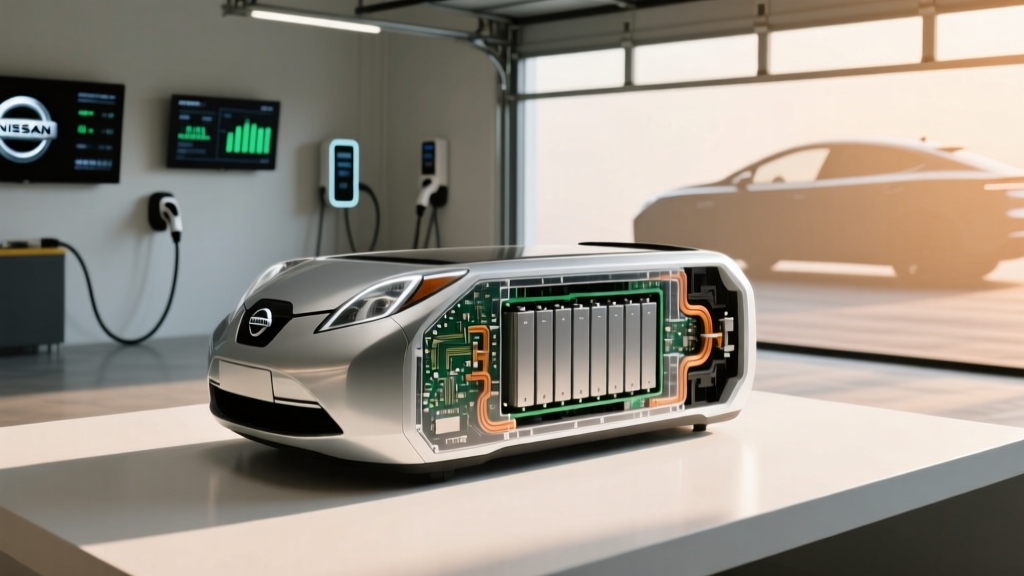
The Leaf's passive air-cooling system (rather than liquid thermal management) is a defining characteristic. It keeps costs down but makes the pack more susceptible to heat-related degradation, especially in hot climates or with frequent DC fast charging. This is the single biggest factor behind the Leaf's reputation for faster degradation compared to liquid-cooled competitors.
How Long Does a Nissan Leaf Battery Last? Degradation Data
Nissan Leaf battery degradation is well-documented thanks to the car's long production run and active owner community. Degradation is measured as capacity loss — a battery at 80% State of Health (SoH) holds only 80% of its original energy, directly reducing range.
Based on aggregated fleet data from sources like fueleconomy.gov and owner-reported databases such as Leaf Spy community logs, here's what typical degradation looks like:
Degradation Data Points (Nissan Leaf)
- Gen 1 (24 kWh): Average 20–30% capacity loss after 8–10 years / 80,000–100,000 miles. Some packs in hot climates (Arizona, Texas) lost 40%+ by year 8.
- Gen 2 (40 kWh): Average 8–15% capacity loss after 5 years / 50,000–60,000 miles. Improved chemistry and slightly better thermal management help.
- Gen 2 (62 kWh Leaf Plus): Average 5–12% capacity loss after 4–5 years. Larger buffer means usable range remains practical even with moderate degradation.
Note: Individual results vary significantly based on climate, charging habits, and DC fast-charging frequency. Air-cooled packs in Phoenix degrade faster than those in Seattle.
For context, a 40 kWh Leaf that originally delivered 150 miles of range might realistically provide 130–140 miles after five years of mixed use. That's noticeable but not debilitating for daily commuting. A 24 kWh pack from 2013, however, might now deliver only 50–55 miles — which is where replacement becomes a serious consideration.
How Much Does a Replacement Battery for Nissan Leaf Cost?
Replacement costs vary widely based on pack size, whether you choose a new OEM battery from Nissan or a refurbished/remanufactured unit, and labor rates in your area. Nissan discontinued the Leaf after the 2025 model year, which may affect long-term parts availability, though Nissan has committed to supporting EV battery service.
| Pack Size | New OEM (Parts + Labor) | Refurbished / Remanufactured | Typical When Needed |
|---|---|---|---|
| 24 kWh (2011–2015) | $6,500–$8,500 | $3,500–$5,500 | 8–12 years / 80k+ mi |
| 30 kWh (2016–2017) | $7,500–$9,500 | $4,000–$6,000 | 7–10 years / 70k+ mi |
| 40 kWh (2018–2025) | $9,000–$12,000 | $5,500–$8,000 | Rarely needed before 10+ yr |
| 62 kWh Leaf Plus (2019–2025) | $12,000–$16,000 | $7,000–$10,000 | Rarely needed before 10+ yr |
A few important caveats on these figures:
- Labor adds $500–$1,500 depending on shop rates and whether the battery requires module-level repair vs. full pack swap.
- Refurbished packs typically come with 1–3 year warranties (vs. the original 8-year OEM warranty) and may use a mix of new and tested modules.
- Battery upgrades are possible in some cases — for example, swapping a degraded 24 kWh pack for a 40 kWh unit — but this requires compatible hardware and dealer or specialist programming, adding cost.
- For early 24 kWh Leafs now worth $5,000–$8,000 on the used market, a full-price OEM replacement rarely makes economic sense. Refurbished packs or selling the vehicle are more common paths.
What Does the Nissan Leaf Battery Warranty Cover?
Nissan provides two layers of battery warranty coverage. Understanding both is essential before paying out of pocket for a replacement.
| Warranty Type | Duration | What It Covers | Capacity Threshold |
|---|---|---|---|
| Lithium-Ion Battery Capacity Coverage | 8 years / 100,000 miles | Capacity loss below threshold | Below 9 bars (of 12) on the capacity gauge — roughly 70% SoH |
| Lithium-Ion Battery Defect Coverage | 5 years / 60,000 miles | Manufacturing defects, material failures | N/A — covers defects regardless of capacity |
The capacity warranty is the one that matters most for degradation. Nissan's 12-bar capacity gauge on the dash is a simple SoH indicator: if your Leaf drops below 9 bars within 8 years or 100,000 miles, Nissan will replace or refurbish the battery at no cost. According to Nissan's owner documentation, the replacement pack will be restored to at least 9 bars — it may not be brand-new.
For 2018 and later Leafs still within the 8-year window (i.e., 2018 models covered through 2026), this warranty remains active and valuable. For 2011–2016 models, the capacity warranty has expired unless the vehicle has unusually low mileage.
LFP vs. NMC: Battery Chemistry Explained for Leaf Owners
Understanding battery chemistry helps explain why the Leaf degrades the way it does — and how it compares to newer EVs you might consider as a replacement or second vehicle.
| Factor | LFP (Lithium Iron Phosphate) | NMC (Nickel Manganese Cobalt) | Leaf's LMO/NMC |
|---|---|---|---|
| Energy Density | Lower (~160 Wh/kg cell) | Higher (~220–260 Wh/kg cell) | Moderate (~150–200 Wh/kg) |
| Cycle Life | Excellent (3,000–5,000+ cycles) | Good (1,000–2,000 cycles) | Moderate (800–1,500 cycles) |
| Cold Performance | Poor (significant range loss below 32°F) | Better (moderate cold loss) | Moderate cold loss |
| Thermal Stability | Excellent (very low thermal runaway risk) | Good (requires active thermal mgmt) | Reduced — air cooling is a weakness |
| Cost | Lower (no cobalt or nickel) | Higher (cobalt, nickel content) | Moderate |
| Typical Use (2026) | Tesla Model 3 RWD, BYD, base Ford Mustang Mach-E | Most long-range EVs, Hyundai Ioniq 5, Rivian | Nissan Leaf (discontinued 2025) |
The Leaf's LMO and NMC chemistry, paired with passive air cooling, sits at a disadvantage versus modern liquid-cooled NMC packs and the ultra-long-life LFP packs now common in standard-range EVs. This is the core reason Leaf owners see faster degradation — it's a system design limitation, not a defect.
If you're replacing a Leaf battery and plan to keep the car long-term, the replacement pack (whether OEM or refurbished) will still use NMC chemistry with air cooling. There is no LFP upgrade path for the Leaf.
Factors That Accelerate Leaf Battery Degradation
Not all Leafs degrade at the same rate. The following factors have the largest measurable impact on pack longevity:
Key Degradation Factors
- DC Fast Charging Frequency: The Leaf uses CHAdeMO for DC fast charging. Frequent use (multiple times per week) generates significant heat in an air-cooled pack. Owners who DC fast-charge daily show 2–3x the degradation rate of those who primarily use Level 2 home charging.
- Ambient Temperature: Sustained high temperatures are the Leaf battery's biggest enemy. Leafs in Phoenix, Las Vegas, and inland California show measurably faster capacity loss than identical cars in cooler climates. Parking in shade or a garage makes a real difference.
- State of Charge Habits: Regularly charging to 100% and leaving the car sitting at full charge accelerates degradation. Nissan's early Leafs lacked a charge-limit setting; 2018+ models allow setting an 80% charge limit, which significantly extends pack life.
- Depth of Discharge: Routinely driving the battery down below 10% SoH stresses cells. Keeping the pack between 20–80% SoC for daily use is ideal.
- Rapid Acceleration / High-Load Driving: Consistent high-current draws (towing, aggressive driving, steep mountain routes) generate internal heat that air cooling struggles to dissipate.
How to Check and Maximize Nissan Leaf Battery Health
Leaf owners have several tools for monitoring battery State of Health (SoH):
- Dashboard Capacity Bars: The 12-bar gauge on the far right of the instrument cluster shows long-term capacity retention. 12 bars = near-new; 9 bars = ~70% SoH (warranty threshold); 8 bars or below = significant range loss.
- Leaf Spy Pro (OBD-II app): The gold standard for Leaf owners. A $20 OBD-II dongle plus the Leaf Spy app (~$20) provides exact SoH percentage, individual cell voltages, battery temperature, and cycle count. This is far more precise than the dash bars.
- Nissan Dealer Diagnostic: A dealer can run a full battery health report, though this typically costs $100–$150 if not part of warranty service.
Battery Care Checklist for Leaf Owners
- ☐ Set charge limit to 80% for daily use (2018+ models via infotainment settings)
- ☐ Use Level 2 (240V) home charging as your primary method — limit DC fast charging to road trips
- ☐ Park in shade or a garage, especially in hot climates
- ☐ Avoid leaving the car at 100% SoC for more than a few hours
- ☐ Pre-condition the cabin while plugged in to reduce battery load from HVAC
- ☐ Monitor SoH monthly via Leaf Spy or dash bars — track the trend, not single readings
- ☐ Avoid routinely draining below 15–20% SoC
Future Battery Technology: What's Coming (and When)
While current Leaf owners are limited to NMC replacement packs, the broader EV battery landscape is evolving rapidly. Here's what's on the horizon — with realistic timelines, not marketing hype:
- Solid-State Batteries: Nissan has announced a pilot production line for solid-state cells targeting 2028–2029. These promise higher energy density, faster charging, and better thermal stability. However, commercial availability in production vehicles is unlikely before 2030, and retrofitting existing Leafs is not feasible.
- Silicon Anode Batteries: Companies like Sila Nanotechnologies and Group14 are shipping silicon-dominant anode materials to manufacturers now, with broader EV adoption expected 2027–2029. These improve energy density by 20–30% but don't address the Leaf's air-cooling limitation.
- Advanced LFP Variants: CATL's "Shenxing" LFP cells offer 4C charging rates and improved cold performance. These are appearing in 2025–2026 Chinese-market EVs but won't help current Leaf owners.
None of these technologies will be available as Leaf retrofit options. If battery longevity is a top priority for your next vehicle, consider a liquid-cooled EV with LFP chemistry (such as the Tesla Model 3 RWD or base Mustang Mach-E) or a modern NMC pack with active thermal management.
Frequently Asked Questions
Is it worth replacing the battery in an older Nissan Leaf?
It depends on the model year and your budget. For a 2018+ 40 kWh or 62 kWh Leaf in good condition, a refurbished pack at $5,500–$8,000 can extend the car's useful life by 8–10 years — solid economics. For a 2011–2015 24 kWh Leaf worth $5,000–$7,000, a full OEM replacement rarely makes financial sense. A refurbished pack or trading up to a newer EV is usually the better move.
Can I upgrade my 24 kWh Leaf to a 40 kWh or 62 kWh battery?
Technically, some specialty shops have performed these swaps, but Nissan does not officially support cross-generation battery upgrades. The process requires compatible battery management system (BMS) programming, potential wiring harness changes, and dashboard recalibration. Cost typically exceeds $8,000–$12,000 all-in, and it may void remaining warranty coverage. For most owners, selling the 24 kWh Leaf and purchasing a newer 40/62 kWh model is simpler and more reliable.
How do I know if my Leaf battery is covered under warranty?
Check two things: (1) your vehicle's age and mileage — the capacity warranty runs 8 years/100,000 miles from the original in-service date, and (2) your dashboard capacity bars — if you're below 9 bars within the warranty window, contact a Nissan dealer. The defect warranty runs 5 years/60,000 miles and covers failures regardless of capacity level.
Does the Nissan Leaf battery need regular maintenance?
No. Unlike a gas engine, the traction battery requires no fluid changes, filter replacements, or scheduled maintenance. The only ongoing care is behavioral: smart charging habits, thermal management (parking in shade), and periodic SoH monitoring. The 12V auxiliary battery, however, should be checked every 2–3 years and typically needs replacement every 4–5 years — same as any conventional car.
Where can I get a Nissan Leaf battery replaced?
Authorized Nissan dealers can perform OEM replacements. Independent EV specialists and shops like those listed on the My Nissan Leaf community forums often offer refurbished pack installations at lower cost. Always verify that any independent shop has specific Leaf high-voltage system experience — improper handling of a 360V+ pack is dangerous.
Sources: EPA fueleconomy.gov, Nissan Owner's Manuals & Warranty, NHTSA vehicle safety data.