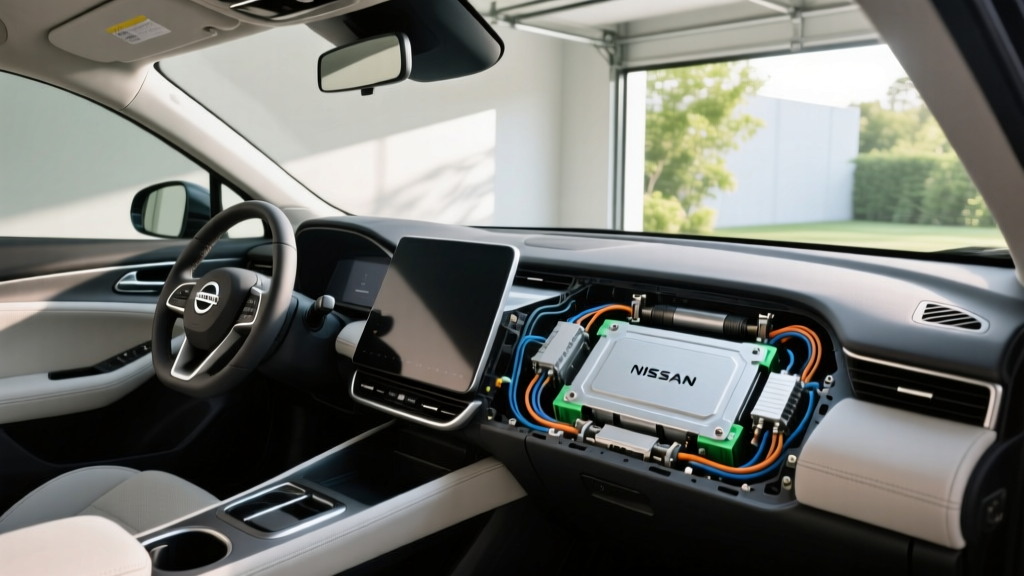
If you own a Nissan Leaf — or are considering buying one on the used market — the high-voltage traction battery is the single most important component to understand. Unlike the 12V auxiliary battery that powers lights and infotainment, the traction battery stores the energy that actually propels the car. When its capacity drops significantly, range shrinks, and eventually replacement becomes necessary. This guide covers everything current and prospective Leaf owners need to know about Nissan Leaf replacement batteries, from real-world degradation data and warranty coverage to chemistry trade-offs and emerging technology on the horizon.
How Long Do Nissan Leaf Batteries Actually Last?
The Nissan Leaf has been sold in the U.S. since 2011 across two generations and multiple battery sizes. Battery longevity depends heavily on chemistry, thermal management, and usage patterns — and the Leaf's history provides one of the most extensive real-world datasets in the EV industry.
Typical Nissan Leaf Battery Degradation by Generation:
- Gen 1 (2011–2017, 24 kWh / 30 kWh, passive air cooling): Average 20–35% capacity loss after 8 years / 100,000 miles. Units in hot climates (Arizona, Texas) degraded faster — some reporting 40%+ loss by year 7. The lack of active liquid cooling is the primary culprit.
- Gen 2 (2018–2023, 40 kWh / 62 kWh, passive air cooling): Improved cell chemistry yields ~10–18% loss after 5 years / 60,000 miles. Better than Gen 1, but still trails liquid-cooled competitors like the Chevrolet Bolt or Hyundai Ioniq 5.
- 2024–2026 models (40 kWh / 62 kWh, updated NMC cells): Early data suggests ~8–12% loss at 50,000 miles. Nissan has incrementally improved cell formulation, but the thermal management architecture remains passive.
For context, most modern EVs with liquid-cooled battery packs (Tesla Model 3, Hyundai Ioniq 5, Ford Mustang Mach-E) average 5–10% degradation over 100,000 miles, per data from Recurrent Auto's fleet analysis. The Leaf's passive cooling design means it will typically degrade faster than liquid-cooled rivals, especially in hot climates or with frequent DC fast charging.
The practical takeaway: a 2018 Leaf with a 40 kWh battery that originally delivered an EPA-estimated 151 miles of range may realistically deliver 120–135 miles after five years of moderate use. A 62 kWh Leaf Plus (EPA 212–226 miles new) may settle around 175–195 miles in the same timeframe.
Nissan Leaf Battery Warranty: What's Covered
Nissan provides a lithium-ion battery capacity warranty that is separate from the general powertrain warranty. Understanding the threshold is critical — the warranty doesn't cover gradual degradation; it covers excessive degradation below a defined capacity floor.
| Warranty Component | Coverage Period | Details |
|---|---|---|
| EV Battery Capacity Warranty | 8 years / 100,000 miles | Covers capacity loss below 9 bars (out of 12) on the battery health gauge — roughly equivalent to ~66–70% of original capacity |
| EV System Warranty | 5 years / 60,000 miles | Covers defects in the inverter, charger, and related high-voltage components |
| General Powertrain Warranty | 5 years / 60,000 miles | Motor and reduction gear coverage |
| Basic Vehicle Warranty | 3 years / 36,000 miles | Bumper-to-bumper coverage |
The 9-bar threshold is unique to Nissan's dashboard display system. The Leaf's instrument cluster shows battery health as a series of 12 bars on the right side of the dash. Dropping to 9 bars or below within the warranty period qualifies the owner for a battery repair or replacement at no cost. According to Nissan's official warranty documentation, this coverage transfers to subsequent owners if the vehicle is sold within the warranty window.
One important caveat: the warranty covers capacity loss due to normal aging and cell defects, but not damage from accidents, flooding, improper modifications, or use of non-approved charging equipment.
Nissan Leaf Replacement Battery Costs in 2026
When a Leaf battery degrades beyond acceptable levels — or falls outside the warranty period — owners face the replacement question directly. Costs vary by battery size, source (new OEM vs. refurbished), and labor rates.
| Battery Pack | OEM New (Dealer) | Refurbished / Aftermarket | Labor (Estimated) | Total Range |
|---|---|---|---|---|
| 24 kWh (2011–2017) | $5,500–$7,000 | $3,500–$5,000 | $1,000–$2,000 | $4,500–$9,000 |
| 30 kWh (2016–2017) | $6,000–$7,500 | $4,000–$5,500 | $1,000–$2,000 | $5,000–$9,500 |
| 40 kWh (2018–2026) | $6,500–$8,500 | $4,500–$6,500 | $1,200–$2,200 | $5,700–$10,700 |
| 62 kWh Leaf Plus (2019–2026) | $8,000–$10,500 | $5,500–$8,000 | $1,500–$2,500 | $7,000–$13,000 |
A few factors shape these numbers. First, Nissan OEM replacement batteries are sourced through certified dealers and must be programmed to the vehicle's battery management system (BMS). Second, the refurbished market has grown substantially — companies like Greentec Auto and independent EV shops offer rebuilt packs using tested cells at 30–40% lower cost. Third, labor times typically run 3–6 hours depending on shop familiarity with the Leaf platform.
When is replacement typically needed? For Gen 1 Leafs (24/30 kWh), many owners pursue replacement between years 8–12 or 100,000–140,000 miles, when range drops below 60–70% of original. For Gen 2 models, most batteries are lasting well beyond 100,000 miles before replacement becomes economically compelling. A degraded 62 kWh pack at 75% capacity still delivers roughly 160 miles of real-world range — adequate for many daily commutes.
Battery Chemistry: LFP vs NMC and Why It Matters for the Leaf
The Nissan Leaf has exclusively used NMC (nickel manganese cobalt) lithium-ion cells throughout its production run. Understanding how NMC compares to the increasingly popular LFP (lithium iron phosphate) chemistry helps explain the Leaf's degradation behavior and positions it relative to newer competitors.
| Attribute | NMC (Leaf's Chemistry) | LFP (Tesla Model 3 RWD, BYD, some Ford models) |
|---|---|---|
| Energy Density | Higher (~150–220 Wh/kg) — more range per pound | Lower (~90–160 Wh/kg) — heavier for same capacity |
| Cycle Life | 1,000–2,000 full cycles to 80% capacity | 3,000–5,000+ full cycles to 80% capacity |
| Cold-Weather Performance | Better low-temp discharge and charging | Reduced performance below 32°F; slower cold charging |
| Thermal Stability | Good, but more prone to thermal runaway at extreme SoC/temps | Excellent — inherently more stable chemistry |
| Cost (per kWh) | Higher (cobalt and nickel are expensive) | Lower (iron and phosphate are abundant) |
| Optimal Daily Charging | Best kept at 20–80% SoC for longevity | Can be charged to 100% regularly without significant harm |
For Leaf owners, the NMC chemistry means two things. First, the battery delivers better winter range than an equivalent LFP pack would. Second, NMC cells are more sensitive to sustained high states of charge and elevated temperatures — a combination that accelerates degradation. This is particularly relevant for the Leaf because its passive air-cooling system provides less thermal protection than liquid-cooled NMC packs in competing vehicles.
If Nissan were to introduce an LFP variant in future Leaf generations (a possibility given industry trends), owners could expect longer cycle life and the ability to charge to 100% daily without concern, at the cost of somewhat lower range per kilogram and reduced cold-weather performance.
Factors That Accelerate Leaf Battery Degradation
Not all Leafs age equally. The spread in real-world degradation data — from 8% to 35% over similar mileage — comes down to how the battery is used and what environment it operates in.
Battery Longevity Checklist for Leaf Owners:
- Limit DC fast charging. The Leaf uses CHAdeMO for DC fast charging (up to 100 kW on the 62 kWh model). Frequent DCFC sessions — especially in hot weather without liquid cooling — generate significant cell heat. Owners who DCFC more than 3 times per week show measurably faster degradation in fleet data.
- Avoid sustained 100% SoC. NMC cells experience the most stress at the top and bottom of their charge range. Set your charge timer or use the Leaf's 80% charge limit feature (available on most model years) for daily driving. Reserve 100% charges for road trips.
- Park in shade or garages when possible. Battery temperature matters even when the car is off. A Leaf parked in 100°F+ ambient heat for hours absorbs that thermal load into the pack. Garage parking in summer and covered parking in general meaningfully reduces calendar degradation.
- Use Level 2 (240V) charging as your primary method. Level 2 charging at 3.3 kW (Gen 1) or 6.6 kW (Gen 2+) generates far less heat than DC fast charging and is the optimal balance of speed and battery care for daily use.
- Don't let the battery sit at very low SoC. Storing a Leaf with the battery below 10–15% for extended periods (weeks) can cause cell imbalance and accelerate capacity loss. If storing the vehicle, aim for ~50% SoC.
- Precondition while plugged in. Using the Leaf's climate preconditioning feature while connected to a charger draws power from the grid rather than the battery, preserving range and reducing discharge stress on cold mornings.
The single biggest factor specific to the Leaf is the passive air-cooling system. Without liquid thermal management, the battery cannot actively shed heat during fast charging or hot-weather driving. This makes the Leaf more vulnerable to what enthusiasts call "Rapidgate" — a phenomenon where consecutive DC fast charges cause the BMS to throttle charging speed to protect the cells. Nissan addressed this partially with software updates and improved cell formulations, but the fundamental thermal architecture remains a limiting factor compared to liquid-cooled platforms.
How to Check Your Leaf's Battery Health (State of Health)
Monitoring battery State of Health (SoH) is essential whether you're a current owner tracking degradation or a used-car buyer evaluating a potential purchase.
The Dashboard Bar Method
The simplest check is the battery health gauge on the Leaf's instrument cluster — a vertical series of 12 bars located on the right side of the dash. A new Leaf shows 12 bars. Each bar lost represents roughly 5–6% capacity reduction. A Leaf showing 10 bars has approximately 88–90% of its original capacity. A Leaf at 9 bars sits near the warranty-replacement threshold at approximately 66–70% capacity.
The Leaf Spy Method
For precise data, the third-party app Leaf Spy Pro (paired with an OBD-II Bluetooth dongle, ~$30–$50 for the hardware) provides granular battery diagnostics including:
- State of Health (SoH) percentage — a more precise number than the bar display
- Ah (amp-hour) capacity — the measured capacity vs. the original rated capacity
- Cell voltage spread — shows whether individual cells are balanced (a wide spread indicates potential issues)
- Hx value — a Nissan-specific health metric that correlates with internal resistance
- Battery temperature — critical for understanding thermal state before and after charging
Leaf Spy is widely considered the gold standard for used Leaf evaluation. Any buyer considering a pre-owned Leaf should request a Leaf Spy screenshot from the seller or bring an OBD-II dongle to the inspection.
Dealer Diagnostic Reports
Nissan dealers can run a battery health check that produces a printout with SoH percentage and individual module data. This is often free or low-cost and provides an official record useful for warranty claims.
Real-World Range Expectations: EPA vs. Reality
The Leaf's EPA range figures assume moderate temperatures, mixed driving, and a fully healthy battery. Real-world range varies based on battery age, weather, speed, and terrain.
2024–2026 Nissan Leaf Range: EPA vs. Real World
- Leaf S/SV (40 kWh): EPA 149–151 miles → Expect ~125–140 mi highway, ~110–125 mi in cold weather (below 32°F)
- Leaf Plus SL (62 kWh): EPA 212 miles → Expect ~180–200 mi highway, ~155–175 mi in cold weather
Cold-weather range loss of 15–30% is typical for the Leaf due to battery chemistry behavior at low temperatures and cabin heating energy draw. The Leaf uses a resistive PTC heater (not a heat pump), which consumes significant energy in winter. Source: fueleconomy.gov
For a Leaf with a degraded battery, multiply these figures by the SoH percentage. A 62 kWh Leaf Plus at 80% SoH would realistically deliver around 145–160 miles in mixed driving — still viable for many commuters but a meaningful reduction from the original 212-mile EPA sticker.
Emerging Battery Technology: What's on the Horizon
While current Leaf owners are working with NMC cells and passive cooling, the broader battery industry is advancing rapidly. Here's what's coming — with realistic timelines.
Solid-state batteries promise higher energy density, faster charging, and improved safety by replacing the liquid electrolyte with a solid material. Toyota, Nissan, and Samsung SDI have all announced solid-state development programs. Nissan has stated it aims to have solid-state batteries in production vehicles by the late 2020s, with a pilot plant operational in Yokohama. However, as of early 2026, no solid-state EV is commercially available at scale. Industry analysts project meaningful consumer availability in the 2028–2032 timeframe, initially in premium vehicles due to manufacturing costs.
Silicon anode technology replaces graphite anodes with silicon-dominant materials, potentially increasing energy density by 20–40%. Companies like Sila Nanotechnologies and Group14 are supplying early production cells. This technology is beginning to appear in limited applications and could extend range without increasing pack size within the next 2–4 years.
Sodium-ion batteries use abundant sodium instead of lithium, offering lower cost and good cycle life at the expense of energy density. CATL and BYD are producing sodium-ion cells for entry-level EVs in China. U.S. availability remains limited, but the technology could eventually offer ultra-affordable replacement packs for economy EVs.
For current Leaf owners, these technologies won't directly apply to existing vehicles — replacement batteries must match the original pack form factor and BMS protocols. But they signal that future Nissan EVs will likely benefit from substantially longer-lasting, faster-charging battery systems.
Frequently Asked Questions
How long do Nissan Leaf batteries last before needing replacement?
Most Gen 2 Leaf batteries (2018+, 40 kWh and 62 kWh) last 10–15 years or 120,000–150,000 miles before capacity drops to a level where replacement is compelling (~70% SoH). Gen 1 Leafs (2011–2017) with passive cooling and earlier cell chemistry often need replacement sooner — typically between 8–12 years — especially in hot climates.
How much does it cost to replace a Nissan Leaf battery?
Expect $4,500–$9,000 for a 24/30 kWh pack (2011–2017) and $5,700–$13,000 for a 40/62 kWh pack (2018–2026), including parts and labor. Refurbished batteries from aftermarket suppliers can reduce costs by 30–40% compared to new OEM packs from Nissan dealers.
What does the Nissan Leaf battery warranty cover?
Nissan covers the lithium-ion battery for 8 years or 100,000 miles against excessive capacity loss — defined as dropping below 9 out of 12 bars on the dashboard health gauge (approximately 66–70% of original capacity). This warranty transfers to subsequent owners.
Can I upgrade my older Leaf to a larger battery?
Some aftermarket shops offer battery upgrades — for example, swapping a 24 kWh pack for a 40 kWh or 62 kWh unit. However, this requires BMS reprogramming, potential wiring harness modifications, and may void remaining warranty coverage. It's technically possible but should only be done by experienced EV specialists.
Is it worth replacing the battery in an older Nissan Leaf?
It depends on the vehicle's overall condition and your needs. A $7,000–$10,000 battery replacement in a 2015 Leaf with a current market value of $6,000–$8,000 rarely makes financial sense. For a well-maintained 2019+ Leaf Plus with good tires, brakes, and interior, a replacement battery can extend the vehicle's useful life by another 8–10 years and may be a sound investment.
How do I check the battery health on a used Leaf before buying?
Check the 12-bar health gauge on the dashboard (12 bars = excellent, 10–11 = good, 9 or below = warranty territory). For a precise reading, use the Leaf Spy Pro app with an OBD-II dongle to get the exact State of Health percentage and cell voltage balance data. A dealer diagnostic report is also an option.
Does frequent DC fast charging damage the Leaf battery?
Frequent DC fast charging accelerates degradation in the Leaf more than in liquid-cooled EVs because the passive air-cooling system cannot effectively manage the heat generated during high-power charging. Occasional DCFC use (1–2 times per week) has modest impact, but daily DCFC reliance — especially in hot climates — can add 5–10% additional capacity loss over the battery's life compared to primarily Level 2 charging.
The Nissan Leaf remains one of the most affordable entry points into EV ownership, and its battery replacement ecosystem is among the most mature in the industry. While the passive cooling architecture means faster degradation than liquid-cooled competitors, the availability of refurbished packs, extensive third-party diagnostic tools like Leaf Spy, and Nissan's 8-year warranty provide a reasonable safety net. For buyers evaluating a used Leaf or current owners planning long-term, the data is clear: monitor your SoH, minimize unnecessary DC fast charging, and budget for a potential replacement in the $5,000–$10,000 range once you cross the 100,000-mile mark on Gen 2 models.