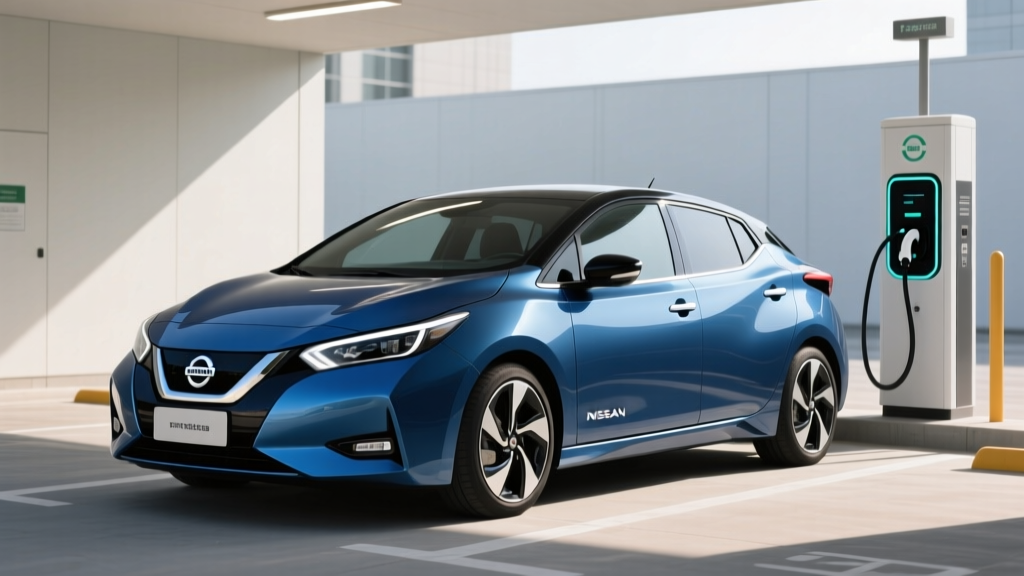
The Nissan Leaf holds a unique place in EV history. Launched in the U.S. for the 2011 model year, it was the first mass-market battery-electric vehicle many Americans ever drove. Over more than a decade of production, hundreds of thousands of Leafs hit the road — and now, a significant number of those early and mid-generation models are facing a critical question: What happens when the high-voltage traction battery degrades to the point of needing replacement?
If you own a Leaf with 80,000+ miles on the odometer, or you're considering buying a used Leaf and want to understand the long-term battery risk, this guide covers everything you need to know. We'll break down real degradation data, replacement costs across model years and battery sizes, warranty protections, and the battery chemistry differences that matter for longevity. We'll also look at how Leaf battery ownership compares to the broader EV landscape in 2026.
How Long Do Nissan Leaf Batteries Actually Last?
The short answer: most Leaf batteries outlast the car's economic life — but with important caveats tied to model year, battery size, and climate.
The Nissan Leaf has been sold with three primary battery pack sizes over its lifetime:
- 24 kWh (2011–2017 models) — the original pack, EPA-rated for 73–107 miles depending on model year
- 30 kWh (2016–2018 models) — a modest bump offering roughly 107 miles EPA
- 40 kWh (2018–present) — the standard pack in the current generation, EPA-rated at 149 miles
- 62 kWh (2019–present, Leaf Plus) — the larger pack, EPA-rated at up to 212 miles
Based on aggregated owner reports and fleet data, here's what typical degradation looks like across these packs:
- 24 kWh pack (2011–2015): ~20–35% capacity loss at 100,000 miles / 8–10 years. These early air-cooled packs in hot climates degraded fastest — some Arizona and Texas owners reported 40%+ loss.
- 30 kWh pack (2016–2018): ~15–25% loss at 80,000–100,000 miles. Better chemistry but still passively cooled.
- 40 kWh pack (2018+): ~8–15% loss at 60,000–80,000 miles. Improved thermal management helps, though still air-cooled (no active liquid cooling).
- 62 kWh pack (2019+ Leaf Plus): ~7–12% loss at 60,000 miles reported so far. Larger buffer means usable capacity remains adequate longer.
The critical insight for Leaf owners: Nissan's battery packs use passive air cooling, unlike the active liquid thermal management systems in vehicles from Tesla, Hyundai, Kia, and GM. This makes the Leaf more susceptible to heat-driven degradation, particularly in southern U.S. climates and with frequent DC fast charging. A 2013 Leaf in Phoenix will degrade noticeably faster than the same car in Seattle — and the data bears this out.
Nissan Leaf Battery Replacement Cost in 2026
When a Leaf battery degrades to the point where range is no longer practical — typically below 60–70% of original capacity — replacement is the main option. Here's what that costs depending on your model:
| Battery Pack | Applicable Models | Parts Cost | Labor | Total Estimate |
|---|---|---|---|---|
| 24 kWh | 2011–2017 Leaf | $5,000–$6,500 | $1,500–$2,500 | $6,500–$9,000 |
| 30 kWh | 2016–2018 Leaf | $5,500–$7,000 | $1,500–$2,500 | $7,000–$9,500 |
| 40 kWh | 2018–2026 Leaf | $6,500–$8,500 | $1,500–$2,500 | $8,000–$11,000 |
| 62 kWh (Plus) | 2019–2026 Leaf Plus | $8,000–$11,000 | $1,800–$3,000 | $9,800–$14,000 |
Important context: These are out-of-warranty replacement costs at Nissan dealerships using new OEM packs. Independent EV shops sometimes offer refurbished or salvaged packs at 30–50% lower parts cost, though availability varies and warranty coverage is shorter. A refurbished 24 kWh pack might run $3,000–$4,500 installed — a viable option for an older Leaf with low resale value.
For perspective, a 2015 Leaf with a degraded 24 kWh battery might have a current market value of $5,000–$8,000. A $7,500 battery replacement approaches or exceeds the car's worth — which is why many owners of early Leafs choose to sell or trade in rather than replace. The math is more favorable for 2019+ Leaf Plus owners, where the vehicle retains more value.
What Does the Nissan Leaf Battery Warranty Cover?
Nissan provides two layers of battery warranty protection, and understanding the difference is essential:
| Warranty Type | Coverage Period | What It Covers | Capacity Threshold |
|---|---|---|---|
| Lithium-Ion Battery Coverage | 8 years / 100,000 miles | Battery capacity loss below threshold | Below ~66% (varies — Nissan uses a capacity bar system) |
| EV System Coverage | 5 years / 60,000 miles | Inverter, charger, reducer, and related EV components | N/A — defect/malfunction coverage |
The capacity warranty is the one that matters most. Nissan's approach uses a 12-bar capacity indicator on the dashboard (visible on the instrument cluster). Each bar represents roughly 8.3% of original capacity. When the battery drops below 9 bars (approximately 75%) — or in some interpretations, below 8 bars (~66%) — within the 8-year/100,000-mile window, Nissan will repair or replace the battery. The exact threshold has shifted slightly by model year, so check your specific owner's manual or contact a Nissan dealer with your VIN.
Key limitation: The warranty does not cover gradual degradation that stays above the threshold. A battery at 68% capacity at year 9 is not covered — you'd need the loss to occur within the warranty window and cross the defined bar threshold. According to Nissan's owner resources, warranty terms are specific to the model year, so confirm your exact coverage.
Leaf Battery Chemistry: NMC and the LFP Question
All Nissan Leaf models sold in the U.S. use NMC (Nickel Manganese Cobalt) lithium-ion cells — specifically laminated-type cells originally manufactured by NEC (later Envision AESC). NMC chemistry was the dominant EV battery choice through the 2010s and remains widely used for its strong energy density.
However, the broader EV industry has shifted significantly since 2022, with many manufacturers adopting LFP (Lithium Iron Phosphate) chemistry for standard-range models. Here's how the two compare and why it matters for Leaf owners:
| Attribute | NMC (Leaf uses this) | LFP (Tesla Model 3 Std, BYD, others) |
|---|---|---|
| Energy Density | Higher — more range per kg | Lower — heavier pack for same kWh |
| Cycle Life | ~1,000–1,500 full cycles | ~2,000–3,000+ full cycles |
| Heat Tolerance | Moderate — degrades faster in high heat | Stronger — better thermal stability |
| Cold Performance | Better low-temp discharge | Reduced range in freezing temps |
| Cost per kWh | Higher (cobalt/nickel costs) | Lower — no cobalt or nickel |
| Charging to 100% | Recommended to stay below 80–90% daily | Can charge to 100% regularly without harm |
Why this matters for Leaf owners: The Leaf's NMC chemistry, combined with passive air cooling, makes it more sensitive to the habits and conditions that accelerate degradation — frequent DC fast charging, hot climates, and regularly charging to 100%. An LFP-equipped vehicle (like a base Tesla Model 3 or certain BYD models) would tolerate these conditions with less long-term capacity loss. This is a genuine competitive disadvantage for the Leaf platform, not a reason to panic, but a factor to weigh if you're buying new or used.
As of 2026, Nissan has not announced a switch to LFP chemistry for the Leaf. The next-generation Leaf (expected to ride on a new platform) may adopt different cell chemistry, but current-production models remain NMC.
Factors That Accelerate (or Preserve) Leaf Battery Life
Battery degradation isn't random — it follows predictable electrochemical patterns. Here are the factors with the largest measurable impact on Leaf battery longevity:
- Frequent DC fast charging: Every CHAdeMO fast-charge session generates significant heat in the Leaf's passively cooled pack. Owners who DC fast-charge 3+ times per week show measurably higher degradation than those who primarily use Level 2 home charging.
- High ambient temperatures: Sustained exposure to 90°F+ ambient heat (common in Arizona, Texas, Florida summers) accelerates electrolyte decomposition. Leaf batteries in Phoenix degrade roughly 1.5–2x faster than identical cars in Portland, based on owner-reported capacity bar data.
- Prolonged 100% state of charge: NMC cells held at 100% SoC for extended periods (days, not hours) experience elevated stress. Setting your Leaf to charge to 80% for daily use significantly reduces calendar degradation.
- Deep discharge cycles: Regularly running the battery below 10–15% SoC stresses the cells. Try to keep the pack above 20% for routine driving.
- Install a Level 2 home charger (240V, 6.6 kW for the Leaf's onboard charger) and use it as your primary charging method
- Set daily charge limit to 80% — use the Leaf's built-in charge timer or a smart charger with SoC targeting
- Reserve DC fast charging for road trips, not daily use
- In hot climates, park in shade or a garage whenever possible — every degree of pack temperature reduction helps
- Avoid leaving the car at 100% SoC for more than a few hours — plan charging to finish shortly before you drive
- In winter, use the Leaf's charge timer to finish charging just before departure, which warms the pack slightly
How to Check Your Leaf's Battery Health (State of Health)
Nissan provides a basic but useful battery health indicator, and there are also third-party methods for more precise data:
Dashboard capacity bars: On the instrument cluster, look for the battery capacity indicator — a series of up to 12 bars on the far right. A new Leaf shows 12 bars. Each lost bar represents roughly 8.3% capacity loss. If your 2018 Leaf shows 10 bars, the battery retains approximately 83% of its original capacity.
Leaf Spy Pro (third-party app): This is the gold standard for Leaf owners who want granular battery data. Using an OBD-II Bluetooth adapter (the ELM327-type works well, ~$15–25), Leaf Spy reads the battery management system directly and displays:
- State of Health (SoH) percentage — more precise than the bar system
- Individual cell voltages and voltage spread (large spread indicates cell imbalance)
- Battery temperature in real time
- Charge/discharge power in kW
- Total charge cycles and lifetime energy throughput
If you're buying a used Leaf, running Leaf Spy before purchase is strongly recommended. An SoH reading of 85%+ on a 4–5-year-old Leaf is healthy. Below 75% on any Leaf still within the 8-year warranty window may qualify for a warranty replacement.
Dealer diagnostic: Any Nissan dealer can run a battery health check, which produces a printed report with capacity data. Request this as part of a pre-purchase inspection on a used Leaf. According to fueleconomy.gov, the 2024 Leaf S (40 kWh) carries a 149-mile EPA range — if your real-world range has dropped below 100 miles, the SoH is likely below 70%.
Emerging Battery Technology: What's Next Beyond NMC
The battery landscape is evolving rapidly, though most advances won't directly help current Leaf owners with a replacement decision today. Here's where the technology stands:
Solid-state batteries: Nissan has been actively researching solid-state cells and has announced plans for a pilot production line. Solid-state technology promises higher energy density, faster charging, and improved safety compared to liquid-electrolyte lithium-ion cells. However, mass production for consumer vehicles is not expected before 2028–2030 at the earliest, and initial costs will be high. This is forward-looking technology — no current-production vehicle uses solid-state traction batteries.
Silicon-anode cells: Companies like Sila Nanotechnologies and Group14 are developing silicon-dominant anode materials that can increase energy density by 20–40% compared to graphite anodes. These are beginning to appear in limited applications but are not yet in mainstream EV packs at scale.
Sodium-ion batteries: A lower-cost alternative to lithium-ion, sodium-ion cells are entering production primarily in China (CATL, BYD). They offer lower energy density but excellent cycle life and no lithium or cobalt dependency. These may appear in budget EV segments by 2027–2028.
For a Leaf owner deciding on a battery replacement today, these technologies are context, not options. The replacement decision hinges on current economics: the cost of a new OEM or refurbished pack versus the vehicle's remaining value and your driving needs.
Should You Replace, Refurbish, or Trade In?
Here's a practical decision framework for Leaf owners facing significant battery degradation:
- Your Leaf is a 2018+ model (40 or 62 kWh) with good overall condition and you plan to keep it 3+ more years
- The replacement cost is less than 50% of the vehicle's current market value
- You have reliable home Level 2 charging and the Leaf serves your daily commute well
- You own a 2013–2017 Leaf and want to extend its life at minimum cost
- A reputable EV shop offers a refurbished pack with at least a 1–2 year warranty
- You're comfortable with slightly less capacity than a new pack
- Your early-model Leaf (2011–2015, 24 kWh) has degraded below 60% capacity
- The replacement cost exceeds the car's market value
- You want to move to a vehicle with active liquid battery cooling and modern range (250+ miles)
- You qualify for the federal §30D clean vehicle credit on a new EV purchase (up to $7,500, subject to MSRP caps, income limits, and battery sourcing requirements — consult a tax professional for eligibility)
Frequently Asked Questions
How long do Nissan Leaf batteries last in years and miles?
Most Leaf batteries retain 70–85% of original capacity at 100,000 miles or 8–10 years, depending on climate and charging habits. Early 24 kWh packs in hot climates degraded faster (some dropping below 70% by year 7), while 40 kWh and 62 kWh packs in moderate climates often retain 80%+ at 80,000 miles. With proper care, a Leaf battery can functionally last 12–15 years before capacity loss makes the car impractical for daily use.
How much does a Nissan Leaf battery replacement cost?
Out-of-warranty replacement at a Nissan dealer costs approximately $6,500–$9,000 for a 24 kWh pack, $8,000–$11,000 for a 40 kWh pack, and $9,800–$14,000 for a 62 kWh Leaf Plus pack, including parts and labor. Refurbished packs from independent shops can reduce parts cost by 30–50%.
Is the Nissan Leaf battery covered under warranty?
Yes. Nissan covers the Leaf battery for 8 years or 100,000 miles against capacity loss below a defined threshold (approximately 66–75% of original capacity, indicated by dashboard capacity bars). If your battery drops below this threshold within the warranty period, Nissan will repair or replace it at no charge.
Can I upgrade my 24 kWh Leaf to a 40 kWh or 62 kWh battery?
Technically, some shops have performed battery upgrades on older Leafs, but this is not supported by Nissan and involves significant compatibility challenges (BMS programming, physical fitment, charging system differences). It's generally not cost-effective compared to trading in for a newer Leaf with a larger factory pack.
Does fast charging damage the Leaf battery?
Frequent DC fast charging accelerates degradation in the Leaf specifically because the pack is passively air-cooled and cannot shed heat as effectively as liquid-cooled systems. Occasional fast charging on road trips is fine, but relying on CHAdeMO DC charging as your primary method will measurably reduce battery lifespan. Level 2 home charging at 6.6 kW is far gentler on the cells.
LFP vs NMC — which battery chemistry is better for daily use?
For daily commuting with frequent charging, LFP has advantages: longer cycle life (2,000–3,000+ cycles vs 1,000–1,500 for NMC), tolerance for 100% SoC charging, and lower cost. NMC wins on energy density (more range in a lighter pack) and cold-weather performance. The Leaf uses NMC. If battery longevity is your top priority and you're shopping across brands, LFP-equipped vehicles offer a meaningful advantage in cycle life.