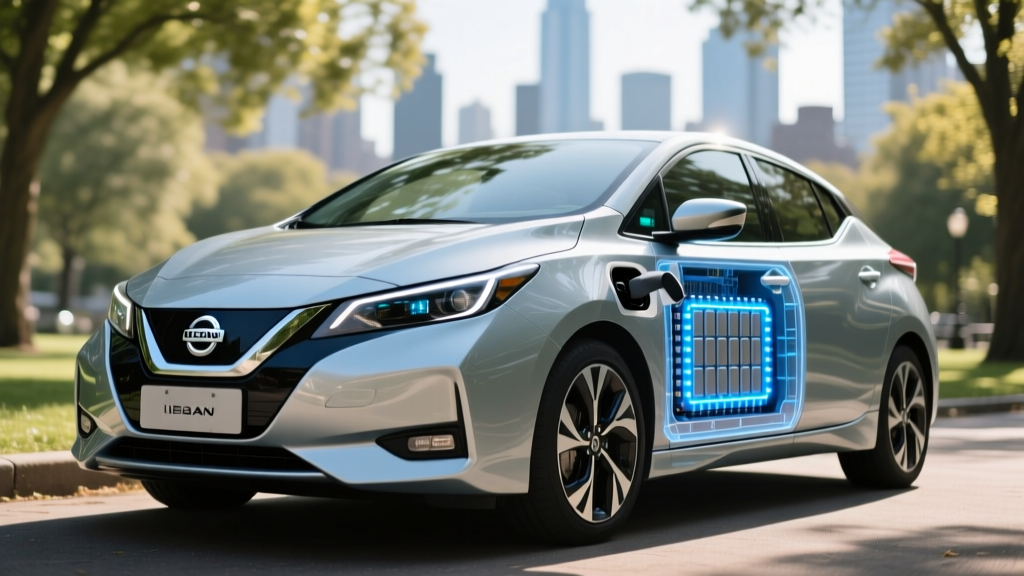
The Nissan LEAF holds a unique place in EV history: it's the mass-market electric car that proved battery-electric propulsion could work for everyday drivers. But with some LEAFs now exceeding a decade on the road, prospective buyers and current owners share one pressing question — how long will the battery actually last?
The short answer: Nissan LEAF batteries typically retain 80-85% of their original capacity after 8-10 years of normal use, and most will outlast the vehicle itself. But the LEAF's passive (air-cooled) battery thermal management system makes it behave differently than liquid-cooled competitors, especially in hot climates and under frequent DC fast charging. Understanding those nuances is the difference between a pack that lasts 150,000 miles and one that needs attention at 100,000.
How Long Do Nissan LEAF Batteries Actually Last?
Based on aggregated owner data, fleet reports, and testing by organizations like Geotab, the average LEAF battery loses roughly 1.5% to 2.5% of capacity per year under typical driving conditions. That translates to the following real-world expectations:
- Years 1-3: ~3-6% total degradation (minimal, often stabilizing after initial break-in loss)
- Years 4-6: ~8-14% total degradation (linear, predictable loss)
- Years 7-10: ~14-22% total degradation (gradual taper in loss rate)
- Years 10-15: ~20-30% total degradation (pack still functional but range noticeably reduced)
For context, a 2024 LEAF SV PLUS with its 62 kWh battery and EPA-rated 212 miles of range would realistically deliver around 170-180 miles after 8 years, assuming moderate use. The 40 kWh LEAF S (EPA 149 miles) would drop to roughly 120-130 miles over the same period.
Why the LEAF's Air-Cooled Battery Changes the Equation
Unlike Tesla, Hyundai, Ford, and most other modern EV makers that use liquid-cooled battery packs, Nissan has stuck with passive air cooling for the LEAF since its 2011 debut. This design choice keeps costs down and reduces mechanical complexity, but it comes with a thermal trade-off that directly affects longevity.
Lithium-ion cells degrade faster at elevated temperatures. Liquid cooling actively manages cell temperature during fast charging, hard acceleration, and hot-weather operation. The LEAF's air-cooled design means the pack absorbs and retains heat from:
- Repeated DC fast charging sessions (especially 50 kW CHAdeMO or the newer 100 kW capability on 62 kWh models)
- Sustained highway driving in ambient temperatures above 90°F
- Regenerative braking on long downhill descents
- Parking in direct sunlight on hot pavement
This phenomenon — sometimes called "Rapidgate" by the LEAF community — means the car's battery management system (BMS) will throttle charging speeds when the pack gets too warm. It's a protective measure, and it works, but it also signals that the cells are under thermal stress. Over years, that stress accumulates as accelerated capacity loss.
Nissan LEAF Battery Warranty: What's Covered
Nissan provides two distinct battery warranties on the LEAF. Understanding the difference is critical before you buy or before you file a claim.
| Warranty Type | Coverage Period | What It Covers | Threshold |
|---|---|---|---|
| Lithium-Ion Battery Capacity Coverage | 8 years / 100,000 miles | Capacity drops below 9 bars out of 12 on the capacity gauge (roughly 70-75% SoH) | Below 9/12 bars |
| Lithium-Ion Battery Defect Coverage | 8 years / 100,000 miles | Manufacturing defects, material failures, BMS faults | Any defect |
The capacity warranty's 9-bar threshold is important. On the LEAF's dashboard, you'll see a battery capacity gauge with 12 bars. If your pack drops to 8 bars or fewer within the warranty period, Nissan will replace or refurbish the battery at no cost. In practice, very few LEAFs fall below 9 bars within 8 years unless subjected to extreme conditions — which is precisely why this threshold was chosen. It protects against catastrophic degradation while excluding normal, gradual capacity loss.
For reference, the Nissan LEAF specification page details current warranty terms, and the federal minimum mandate under EPA rules requires at least 8 years/100,000 miles of battery defect coverage for all EVs sold in the US. Some states with CARB adoption (California and states following its standards) may enforce longer requirements.
How Much Does a Nissan LEAF Battery Replacement Cost?
Out-of-warranty battery replacement is the concern that keeps potential EV buyers up at night. For the LEAF, the reality is more manageable than the headlines suggest — and the need is far less common than most assume.
| Battery Pack | Capacity | New OEM Replacement | Refurbished/Aftermarket | Typical Need Timeline |
|---|---|---|---|---|
| LEAF S (40 kWh) | 40 kWh | $6,500 – $8,000 | $4,000 – $5,500 | Rarely before 150,000+ mi |
| LEAF SV PLUS (62 kWh) | 62 kWh | $8,000 – $10,000 | $5,500 – $7,500 | Rarely before 150,000+ mi |
A few critical points about these figures:
- Most LEAFs never need a full replacement. At 70-80% capacity retention, a 62 kWh LEAF still offers 140-170 real-world miles — perfectly adequate for daily commuting. The car typically gets totaled in a collision, traded in, or retired for other reasons before the battery becomes unusable.
- Refurbished packs from companies like ReJoule or independent EV shops replace degraded modules rather than the entire pack, reducing cost significantly.
- Labor adds $500-$1,500 depending on the shop. Nissan dealerships charge more; independent EV specialists charge less.
- Prices are trending downward. Battery pack costs have fallen roughly 80-90% since 2010 on a per-kWh basis, and aftermarket support for the LEAF continues to grow given its 15-year production run.
Battery Chemistry: What's Inside the LEAF (and Why It Matters)
The Nissan LEAF uses NMC (nickel manganese cobalt) lithium-ion cells, specifically laminated pouch-type cells manufactured by companies including AESC (Automotive Energy Supply Corporation, originally a Nissan-NEC joint venture) and more recently Envision AESC. NMC chemistry offers a strong balance of energy density and performance, but it's one of two dominant chemistries in the EV market today.
Understanding the LFP vs. NMC trade-off helps explain why the LEAF's battery behaves the way it does — and why some competitors degrade differently.
| Attribute | NMC (Nissan LEAF) | LFP (Tesla Model 3 RWD, BYD) |
|---|---|---|
| Energy Density | Higher (~200-250 Wh/kg cell-level) | Lower (~150-180 Wh/kg cell-level) |
| Cycle Life | ~1,000-2,000 full cycles to 80% SoH | ~3,000-5,000+ full cycles to 80% SoH |
| Thermal Stability | Moderate — degrades faster at high temps | Excellent — more heat-resistant chemistry |
| Cold Performance | Better low-temp range retention | More range loss in freezing weather |
| Cost | Higher (cobalt and nickel are expensive) | Lower (iron and phosphate are abundant) |
| Charging to 100% Regularly | Not recommended — accelerates degradation | Recommended by manufacturers — no harm |
The LEAF's NMC chemistry gives it more range per kilogram of battery — essential for a compact car with limited under-floor space. But NMC is more sensitive to heat and high state-of-charge stress, which is precisely why the LEAF's lack of liquid cooling amplifies degradation in hot climates. An LFP-equipped LEAF would likely last longer in Arizona, but it would also be heavier and offer less range in the same physical pack size.
Factors That Accelerate (or Preserve) LEAF Battery Health
Battery degradation is not a single variable — it's a combination of chemistry, temperature, charging behavior, and time. Here's what the data shows matters most for the LEAF:
The Biggest Degradation Accelerators
- Frequent DC fast charging in hot weather. The LEAF's air-cooled pack can reach 100-110°F internally during a 50 kW CHAdeMO session on a 95°F day. Repeated thermal cycling at these temperatures is the single largest longevity risk. Owners who DC fast-charge daily in Southern states report 2-3% faster annual degradation than Level-2-only chargers in cooler climates.
- Sustained high state of charge. Leaving a LEAF plugged in at 100% for days or weeks — especially in heat — stresses NMC cells. The battery management system maintains a small top-buffer, but sitting at full charge accelerates calendar aging.
- Extreme cold without preconditioning. While cold doesn't permanently damage cells the way heat does, charging a frozen LEAF battery at high power without preconditioning can cause lithium plating on the anode, which is irreversible capacity loss.
- Deep discharges to 0%. Regularly draining the pack to zero and leaving it there stresses the cells. The LEAF's BMS reserves a bottom buffer, but habitually running to near-empty isn't ideal.
Best Practices to Maximize LEAF Battery Longevity
- Charge to 80% for daily use; use the LEAF's built-in charge timer or limit setting
- Reserve 100% charges for road trips when you'll drive immediately after
- Use Level 2 (240V, 6.6 kW) home charging as your primary method
- Limit DC fast charging to road trips or when genuinely needed — avoid daily CHAdeMO sessions
- Park in a garage or shaded area in hot climates; use a sunshade at minimum
- In cold weather, precondition the battery while plugged in before driving
- Avoid leaving the car at 0% or 100% SoC for extended periods (days/weeks)
- Drive the car regularly — prolonged storage at any SoC is worse than moderate daily cycling
How to Check Your LEAF's Battery Health (State of Health)
Nissan provides a built-in battery health indicator, but it's crude by modern standards. Here are the methods available to LEAF owners, from simplest to most detailed:
1. Dashboard Capacity Bars
The LEAF's instrument cluster shows a battery capacity gauge with 12 bars. A brand-new LEAF shows 12/12 bars. As the pack degrades, bars drop. Each bar represents roughly 6-8% of original capacity. This is what Nissan's warranty monitors (9 bars = ~70-75% remaining capacity). The limitation: it's coarse, and it updates infrequently — sometimes months pass between bar drops.
2. LeafSpy (Third-Party OBD-II App)
The gold standard for LEAF owners. LeafSpy (available for iOS and Android) connects via an OBD-II Bluetooth dongle and reads detailed battery data directly from the car's CAN bus, including:
- State of Health (SoH) percentage — precise to one decimal place
- Ah (amp-hour) capacity — the actual measured capacity vs. factory spec
- Individual cell voltages — reveals if any cell group is imbalanced
- Battery temperature — real-time internal pack temp, critical before fast charging
- Hx value — a relative health metric Nissan uses internally
For $20 (app) + $15-25 (OBD-II dongle), LeafSpy gives you far more actionable data than the dashboard gauge. Most serious LEAF owners consider it essential.
3. Nissan Dealer Diagnostic
A Nissan service center can run a full battery health report using the CONSULT diagnostic tool. This provides SoH percentage and cell balance data. It's free under warranty; out of warranty, expect a $100-$150 diagnostic fee unless bundled with other service.
What About Solid-State and Future Battery Tech?
Nissan has been vocal about its solid-state battery development, announcing prototype cells and targeting production by the late 2020s. The promise is compelling: solid-state batteries replace the liquid electrolyte with a solid material, potentially offering:
- 2x energy density (more range in the same pack size)
- Faster charging without thermal degradation concerns
- Longer cycle life (5,000+ cycles)
- Better thermal stability (reduced fire risk, less cooling needed)
However, solid-state batteries are not currently available in any production vehicle as of 2026. Nissan's announced timeline targets commercialization around 2028-2030, and even then, initial deployment will likely be in premium models before reaching a LEAF-class vehicle. Current LEAF owners and buyers should make decisions based on today's NMC technology, not future promises.
Similarly, silicon-anode technology (being developed by companies like Sila Nanotechnologies and Group14) promises 20-40% energy density improvements and is entering production in limited applications. But widespread, affordable deployment in compact EVs remains 3-5 years away at minimum.
Buying a Used LEAF? Here's What to Check
The used LEAF market offers some of the most affordable EV entry points available — a 2019-2021 LEAF SV with the 40 kWh pack can be found for $10,000-$15,000, and it may qualify for the federal used-EV tax credit (up to $4,000 under §25E, subject to income limits and the $25,000 price cap). But battery condition is everything.
Before purchasing any used LEAF:
- Check the capacity bars. A 5-year-old LEAF should show 11 or 12 bars. If it shows 10 or fewer, the pack has degraded more than expected — negotiate price accordingly or walk away.
- Use LeafSpy if possible. Ask the seller to let you plug in an OBD-II reader. An SoH above 85% on a 4-6 year old LEAF is healthy. Below 80% warrants caution.
- Check for warranty transfer. Nissan's battery warranty follows the VIN, not the owner. A 2020 LEAF still has battery capacity coverage through 2028 or 100,000 miles.
- Look at charging history. If the previous owner DC fast-charged daily in a hot climate, expect accelerated degradation even if current bars look acceptable.
- Verify recall status. Some early LEAFs had battery-related recalls. Check the VIN at NHTSA.gov for open recalls.
Frequently Asked Questions
How long do Nissan LEAF batteries last in miles?
Most LEAF batteries remain functional well past 150,000 miles. At that mileage, expect 70-85% of original capacity depending on climate and charging habits. The battery doesn't "die" at a specific mileage — it gradually loses capacity, reducing range. A 62 kWh LEAF at 80% SoH still delivers roughly 170 real-world miles, which is usable for most daily driving.
Is it worth replacing a Nissan LEAF battery?
It depends on the car's overall condition and the replacement cost. A $7,000-$9,000 replacement on a LEAF worth $8,000 is hard to justify. But if the car is otherwise in excellent shape and the replacement extends its life by 8-10 more years, the math works — especially compared to buying a new $30,000+ EV. Refurbished packs at $4,000-$6,000 make the economics more favorable.
Does fast charging damage the LEAF battery?
Occasional DC fast charging is fine. The damage comes from frequent fast charging in hot conditions, which the LEAF's air-cooled system struggles to manage. If you fast-charge once a week on a road trip, the impact is minimal. If you fast-charge daily in Texas summers, expect noticeably faster degradation. The LEAF's BMS will throttle charge speed when the pack is hot — that's a protective feature, not a flaw.
What does the Nissan LEAF battery warranty cover?
Two things: manufacturing defects (8 years/100,000 miles, any defect) and capacity loss below 9 out of 12 bars on the dashboard gauge (8 years/100,000 miles). Normal gradual degradation that stays above 9 bars is not covered. The warranty transfers to subsequent owners automatically.
How do I maximize my LEAF battery's lifespan?
Charge to 80% daily using Level 2, minimize DC fast charging, park in shade or a garage, precondition in cold weather, avoid leaving the car at 0% or 100% for extended periods, and drive it regularly. Following these practices, a LEAF battery should comfortably last 10-15 years with gradual, manageable capacity loss.
Can I upgrade my LEAF to a bigger battery?
Nissan has offered battery upgrades for some LEAF model years (e.g., upgrading a 24 kWh pack to 30 kWh or 40 kWh), but availability is limited, expensive ($5,000-$8,000+), and handled on a case-by-case basis through dealerships. Third-party upgrades exist but are rare, costly, and may void remaining warranty. For most owners, trading in for a newer LEAF with a larger pack is more practical than upgrading an existing battery.