Real-World Nissan Leaf Battery Longevity: What the Data Shows
If you own or are considering a used Nissan Leaf, the high-voltage traction battery is the single most expensive component in the vehicle. The good news: most Leaf batteries outlast the car itself. The nuanced reality is that the Leaf's air-cooled battery architecture creates a unique degradation profile compared to liquid-cooled competitors, and understanding that profile is the difference between a 10-year daily driver and a costly surprise.
This guide examines Nissan Leaf battery lifetime using degradation data, warranty specifics, replacement economics, and actionable care strategies. We also contextualize the Leaf's lithium manganese oxide (LMO) and NMC chemistries against the broader EV landscape, including LFP alternatives now common in competitors.
Nissan Leaf Battery Chemistry Explained
The Nissan Leaf has used two primary cell chemistries across its production run (2011–present):
- 2011–2017 (first generation): Lithium Manganese Oxide (LMO) cells in 24 kWh and 30 kWh packs.
- 2018–present (second generation): NMC (Nickel Manganese Cobalt) laminate cells in 40 kWh and 62 kWh packs.
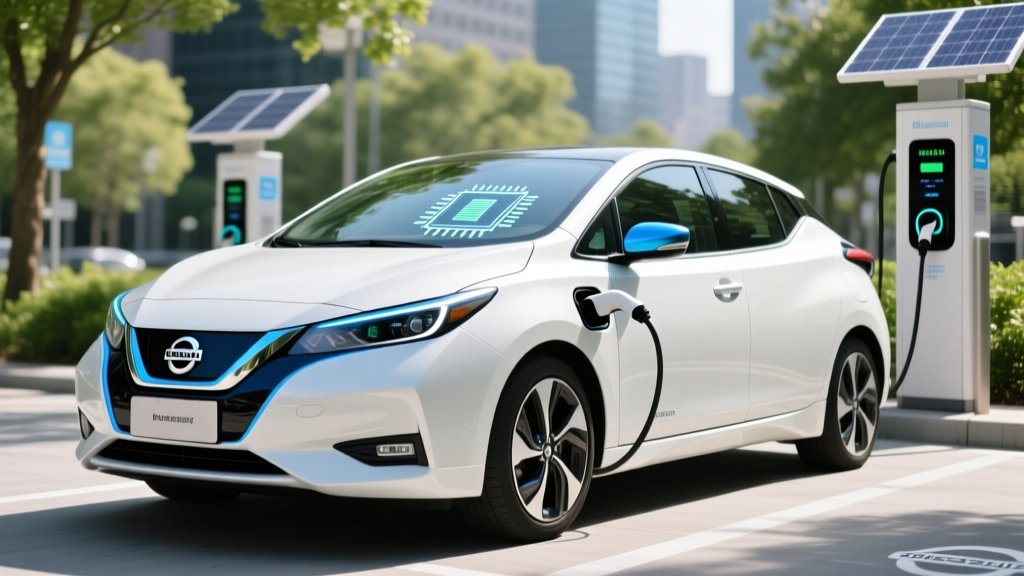
Neither generation uses liquid thermal management. The Leaf relies on passive air cooling, which keeps weight and cost down but makes the pack more susceptible to heat-driven degradation — a critical factor in hot climates or for drivers who DC fast-charge frequently.
| Attribute | LMO (Early Leaf) | NMC (Current Leaf) | LFP (Tesla, BYD, Ford) |
|---|---|---|---|
| Energy density | Moderate (~120 Wh/kg) | High (~200–260 Wh/kg) | Lower (~160 Wh/kg) |
| Cycle life | ~1,000–1,500 cycles | ~1,500–2,500 cycles | ~3,000–5,000 cycles |
| Cold performance | Adequate | Good | Reduced below freezing |
| Heat tolerance | Moderate | Moderate (needs cooling) | Excellent |
| Cost per kWh | Low | Higher (cobalt content) | Lowest |
| Typical degradation rate | Faster without thermal mgmt | Moderate | Slowest |
The Leaf's NMC packs deliver more range per kilogram than LFP, but LFP's superior cycle life and heat tolerance explain why Tesla, Ford, and BYD have adopted it for standard-range models. If you're shopping for a used Leaf, the 2018+ NMC packs are demonstrably more durable than the original 24 kWh LMO packs, which showed accelerated capacity loss in some hot-climate markets.
Nissan Leaf Battery Degradation: The Numbers
Battery degradation is measured as a percentage loss of original usable capacity, tracked via State of Health (SoH). A new Leaf battery starts at 100% SoH; when it drops below ~70%, range loss becomes noticeable in daily driving.
Typical Nissan Leaf Degradation Curve (aggregated owner data):
- Year 1 (~12,000 mi): 2–4% loss (rapid initial settling)
- Year 3 (~36,000 mi): 6–10% total loss
- Year 5 (~60,000 mi): 10–15% total loss
- Year 8 (~96,000 mi): 14–22% total loss (varies heavily by climate and charging habits)
- Year 10 (~120,000 mi): 18–30% total loss
Sources: PushMyLeaf owner database, fueleconomy.gov, Nissan warranty documentation.
Key observation: the Leaf's air-cooled design means degradation accelerates in sustained high-temperature environments. Owners in Arizona, Texas, and the Middle East report SoH losses 30–50% faster than those in temperate Pacific Northwest climates. A 2013 Leaf in Phoenix might sit at 68% SoH after 8 years, while an identical model in Portland could retain 82%.
For the 40 kWh Leaf (2018+), a 15% loss means roughly 127 miles of range remaining from the EPA-estimated 149 miles. For the 62 kWh Leaf SV/SL Plus (EPA 212–226 miles), a 15% loss still leaves ~180–192 miles — adequate for most commutes.
Nissan Leaf Battery Warranty: What's Covered
Nissan provides two layers of battery protection on the Leaf. Understanding both is essential before purchasing used or filing a claim.
| Warranty Type | Coverage Period | Threshold | What It Covers |
|---|---|---|---|
| Lithium-Ion Battery Capacity Warranty | 8 years / 100,000 miles | Below 9 bars (out of 12) on capacity gauge — approximately <70% SoH | Battery replacement or repair to restore above threshold |
| Lithium-Ion Battery Defect Warranty | 8 years / 100,000 miles | Any manufacturing defect | Full replacement for defects (cell failure, BMS malfunction) |
The capacity warranty is the one that matters for degradation. Nissan's 12-bar capacity gauge on the dash is the owner-facing SoH indicator. If you lose a 9th bar within the warranty window, Nissan will replace or refurbish the pack at no cost. Outside that window, you're paying out of pocket — which brings us to replacement economics.
Nissan Leaf Battery Replacement Cost: 2026 Pricing
Battery replacement is rare — most Leaf packs last 10–15 years before dropping below practical usability — but it's the single biggest financial risk of EV ownership. Here's what it costs in 2026:
| Pack Size | Model Years | OEM Replacement (Dealer) | Refurbished / Aftermarket | Typical Replacement Trigger |
|---|---|---|---|---|
| 24 kWh | 2011–2017 | $6,500–$8,000 | $3,500–$5,000 | SoH below 65% (~80 mi range remaining) |
| 30 kWh | 2016–2017 | $7,000–$8,500 | $4,000–$5,500 | SoH below 65% (~90 mi range) |
| 40 kWh | 2018–2026 | $8,000–$10,000 | $5,000–$7,000 | SoH below 65% (~100 mi range) |
| 62 kWh | 2019–2026 | $9,000–$12,000 | $6,500–$9,000 | SoH below 65% (~145 mi range) |
These figures include the battery pack and dealer labor. Independent EV shops and refurbished-pack suppliers like Repower Automotive or regional specialists can shave 30–40% off OEM pricing. For a 2013 Leaf with a $4,000 resale value, a $7,000 OEM replacement rarely makes financial sense — which is why the used Leaf market prices in battery SoH so aggressively.
When is replacement actually needed? Most Leafs reach end-of-first-owner life (trade-in, sale, or scrap) before the battery drops below 70% SoH. The vehicles that need replacement are typically high-mileage fleet cars, hot-climate daily drivers exceeding 150,000 miles, or first-gen 24 kWh models that experienced accelerated early degradation.
Factors That Accelerate (or Preserve) Leaf Battery Life
The Leaf's air-cooled pack makes it more sensitive to owner behavior than liquid-cooled EVs. These factors have the largest measured impact on long-term SoH:
Fast-Charging Frequency
DC fast charging (CHAdeMO on the Leaf) generates significant heat. Without liquid cooling, repeated DCFC sessions — especially in summer — bake the cells. Data from Leaf owner communities shows that vehicles fast-charging more than 3 times per week degrade 20–30% faster than those primarily using Level 2 home charging. If you rely on DCFC daily, expect the high end of the degradation range.
Ambient Temperature Exposure
Sustained exposure to ambient temperatures above 90°F accelerates electrolyte decomposition. Parking in shade or a garage in hot climates measurably extends pack life. Cold climates are less damaging to long-term SoH, though winter range loss of 25–40% is normal due to reduced electrochemical efficiency and cabin heating demand.
State of Charge Habits
Regularly charging to 100% and leaving the Leaf at full SoC for days stresses NMC and LMO cells. The Leaf's built-in charge timer and 80% charge-limit setting (available on most model years) exist for this reason. Owners who charge to 80% daily and only hit 100% before long trips see measurably better SoH retention over 5+ years.
Depth of Discharge
Frequently draining the battery below 10% SoC is as stressful as holding it at 100%. Keeping the Leaf between 20–80% SoC for daily use — the so-called "middle 60%" strategy — is the single most effective habit for long-term health.
Nissan Leaf Battery Care Checklist:
- ✅ Use Level 2 home charging (6.6 kW) as your primary method
- ✅ Set charge limit to 80% for daily driving; 100% only before road trips
- ✅ Limit DC fast charging to 1–2 sessions per week when possible
- ✅ Park in shade or a garage in hot climates
- ✅ Avoid leaving the Leaf at 100% SoC for more than 24 hours
- ✅ Avoid draining below 10% SoC regularly
- ✅ Use the Leaf's battery preheat function in sub-freezing weather before charging
- ✅ Monitor capacity bars monthly; track SoH with Leaf Spy (see below)
How to Check Nissan Leaf Battery Health (SoH)
Nissan provides two ways to monitor battery health, plus a powerful third-party option:
1. Dashboard Capacity Bars
The 12-bar capacity gauge (located near the charge-level gauge on the instrument cluster) shows long-term SoH. A new Leaf shows 12 bars. Losing the first bar typically takes 2–3 years; subsequent bars may drop faster. Below 9 bars, you're within warranty-replacement territory.
2. NissanConnect / MyNISSAN App
On 2018+ models, the NissanConnect telematics system provides battery health data through the connected app. It's less granular than third-party tools but offers a convenient check without extra hardware.
3. Leaf Spy Pro (Third-Party OBD-II Tool)
Leaf Spy is the gold standard for Leaf battery diagnostics. A $20–30 OBD-II dongle paired with the Leaf Spy app (iOS/Android) reveals:
- Exact SoH percentage (not just bars)
- Individual cell voltages and voltage spread (a sign of cell imbalance)
- Battery temperature in real time
- Charge/discharge cycle count
- Hx value (a Nissan-specific health index)
If you're buying a used Leaf, running Leaf Spy before purchase is non-negotiable. A car showing 12 bars on the dash could still be at 85% SoH or 92% — Leaf Spy tells you exactly where it stands.
Beyond the Leaf: LFP vs NMC and Emerging Battery Tech
The Leaf's NMC chemistry represents one end of the current battery spectrum. The other is LFP (Lithium Iron Phosphate), now used in the Tesla Model 3 Standard Range, Ford Mustang Mach-E Select, and many BYD models. LFP sacrifices energy density for dramatically longer cycle life and better thermal stability — a trade-off that makes sense for daily commuters who don't need 300+ miles of range.
If Nissan were to redesign the Leaf with an LFP pack and liquid cooling, it would likely address the two biggest criticisms of the current platform: heat-driven degradation and DCFC limitations. As of 2026, Nissan has not announced such a change for the Leaf, though the company has committed to LFP adoption in future global models.
Solid-State Batteries: The Horizon
Nissan has announced a solid-state battery pilot program targeting 2028 production, with claims of doubled energy density and 15-minute fast charging. However, this technology remains in pre-production as of 2026. Solid-state cells have not yet reached cost parity with NMC or LFP, and commercial availability in affordable vehicles like the Leaf is realistically a 2029–2031 timeframe. Don't delay a purchase waiting for solid-state — it won't arrive in the Leaf's price segment this decade.
Silicon-anode batteries (used in limited form in the Mercedes EQG and upcoming GM Ultium updates) offer incremental energy-density gains and faster charging but are not yet in mass-market vehicles. These represent evolutionary, not revolutionary, improvements over current NMC and LFP chemistries.
Frequently Asked Questions
How long do Nissan Leaf batteries last in years and miles?
Most Nissan Leaf batteries retain 70–85% of original capacity after 10 years and 100,000–120,000 miles, depending on climate and charging habits. The air-cooled design means hot-climate Leafs degrade faster. At 70% SoH, a 40 kWh Leaf still delivers ~105 miles of range — sufficient for many daily commutes. Complete failure (requiring replacement) is uncommon before 150,000 miles.
How much does it cost to replace a Nissan Leaf battery in 2026?
OEM dealer replacement ranges from $6,500 (24 kWh) to $12,000 (62 kWh). Refurbished packs from independent EV shops cost $3,500–$9,000 depending on capacity. Most Leaf owners never need a replacement — the battery typically outlasts the vehicle's economic life, especially on first-generation models with lower resale values.
What does the Nissan Leaf battery warranty cover?
Nissan covers the Leaf battery for 8 years/100,000 miles against both defects and capacity loss below approximately 70% (indicated by fewer than 9 of 12 capacity bars on the dash). If your battery drops below that threshold within the warranty period, Nissan replaces or refurbishes it at no cost. The warranty transfers to subsequent owners.
How do I check my Nissan Leaf battery health?
Use the 12-bar capacity gauge on the dashboard for a quick check, or invest in a Leaf Spy Pro OBD-II adapter ($20–30) for precise SoH percentage, cell voltage data, and battery temperature. Leaf Spy is essential when buying a used Leaf — it reveals health data the dashboard hides.
Is LFP or NMC better for an EV battery?
It depends on your priorities. LFP offers longer cycle life (3,000–5,000 vs 1,500–2,500 cycles), better heat tolerance, and lower cost — ideal for daily commuters and hot climates. NMC delivers higher energy density (more range per kilogram) and better cold-weather performance — better for long-range vehicles and cold regions. The Leaf uses NMC; competitors like the base Tesla Model 3 use LFP.
Does DC fast charging damage the Leaf battery?
Occasional DC fast charging (1–2 times per week) has minimal impact on long-term health. Daily DCFC, especially in hot weather, accelerates degradation measurably because the Leaf's air-cooled pack cannot dissipate charge-generated heat as effectively as liquid-cooled EVs. Use Level 2 home charging as your primary method and reserve DCFC for road trips.
Can I upgrade my older Leaf to a larger battery?
Aftermarket battery upgrades exist for some Leaf model years — for example, fitting a 40 kWh or 62 kWh pack into a 2013–2017 Leaf — but these are performed by specialized shops, void any remaining Nissan warranty, and cost $8,000–$15,000. For most owners, trading in for a newer, larger-battery Leaf is more practical and cost-effective.