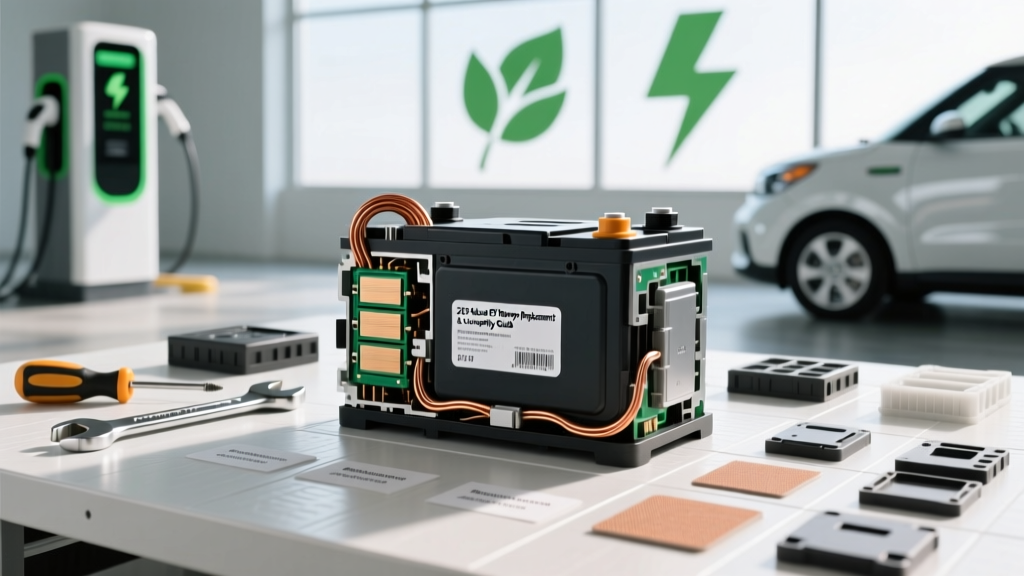
If you own or are considering buying a first-generation Nissan Leaf from the 2011–2015 era, the 24 kWh lithium-ion traction battery is likely the single biggest variable in the car's remaining usefulness. The 2013 model year sits right in the middle of Nissan's early air-cooled battery generation, and by 2026, most of these packs are 12–13 years old. Understanding what a Nissan Leaf 2013 battery replacement actually entails — the cost, the options, the degradation you can expect, and how this compares to modern EV battery technology — is essential before you commit money to a car or a new pack.
This guide uses the 2013 Leaf as a practical case study to explain EV battery chemistry, degradation mechanics, warranty coverage, replacement economics, and care strategies that apply across the broader EV market. We'll also look at where battery technology is headed.
The 2013 Nissan Leaf Battery: Specs and Chemistry
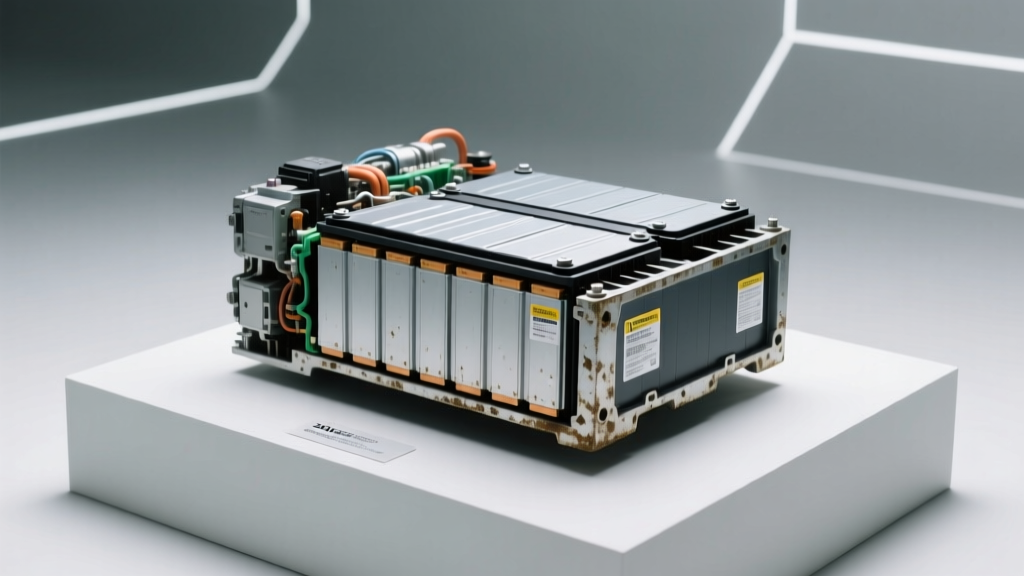
The 2013 Nissan Leaf uses a 24 kWh (gross) lithium-ion battery pack composed of laminated cells manufactured by AESC (Automotive Energy Supply Corporation), a joint venture between Nissan and NEC. The chemistry is LiMn2O4 (lithium manganese oxide, or LMO) with some NMC (nickel manganese cobalt) blended into later revisions. This is a fundamentally different chemistry from the NMC 811 or LFP (lithium iron phosphate) packs common in 2026-era EVs.
| Specification | 2013 Nissan Leaf |
|---|---|
| Battery capacity (gross) | 24 kWh |
| Battery capacity (usable) | ~21.3 kWh |
| Cell chemistry | LMO / NMC blend (AESC) |
| Thermal management | Passive air cooling (no active liquid) |
| EPA range (new) | 75 miles |
| Real-world range (new) | 60–70 miles (highway/cold weather lower) |
| DC fast charge (CHAdeMO) | ~50 kW peak |
| Level 2 charge rate | 6.6 kW (with upgraded OBC; 3.3 kW base) |
| Original battery warranty | 8 years / 100,000 miles |
The passive air-cooling design is the defining characteristic of early Leaf packs and the primary reason they degrade faster than liquid-cooled competitors. Without active thermal management, the cells experience wider temperature swings, accelerating chemical degradation — especially in hot climates like Arizona, Texas, or Southern California.
How Long Do EV Batteries Last? Degradation Data
EV batteries don't suddenly fail — they gradually lose capacity over time and charge cycles. The industry standard for "end of life" is 70–80% of original capacity, at which point the pack still functions but delivers noticeably reduced range.
Typical degradation curves by chemistry (industry data):
- LMO/NMC (2013 Leaf, air-cooled): 15–30% capacity loss by year 10, depending heavily on climate. Hot-climate Leafs have shown 35–40%+ loss. (fueleconomy.gov)
- NMC (liquid-cooled, e.g., Tesla, Hyundai, BMW): 8–15% loss by year 10 / 150,000 miles under normal use.
- LFP (liquid-cooled, e.g., Tesla Model 3 RWD, BYD): 5–10% loss by year 10; LFP's longer cycle life (3,000+ cycles vs. ~1,000–1,500 for NMC) translates to slower degradation.
For the 2013 Leaf specifically, Nissan's own capacity bar display (the 12-bar gauge on the dash) provides a rough State of Health indicator. Owners commonly report dropping to 9–10 bars by years 6–8 in moderate climates and 7–8 bars in hot climates. Each bar represents roughly 6.25% of original capacity. A 2013 Leaf showing 8 bars has approximately 50% of its original capacity — meaning real-world range has dropped from ~65 miles to roughly 30–35 miles.
Data aggregated from Leaf owner communities and third-party OBD-II tools like LeafSpy shows a median capacity retention of approximately 72–78% at 100,000 miles for Leafs in temperate climates, and 58–68% for those in hot climates. These numbers are significantly worse than liquid-cooled NMC packs from the same era (e.g., the 2013 Tesla Model S, which averages ~88–92% retention at 100k miles).
LFP vs NMC vs LMO: Battery Chemistry Trade-Offs
The 2013 Leaf's LMO chemistry is largely obsolete in 2026. Modern EVs use either NMC or LFP. Here's how they compare:
| Factor | LFP (LiFePO4) | NMC (LiNiMnCoO2) | LMO (2013 Leaf) |
|---|---|---|---|
| Energy density (Wh/kg) | 140–180 | 200–300 | 100–150 |
| Cycle life | 3,000–6,000+ | 1,000–2,000 | 500–1,000 |
| Cold-weather performance | Moderate (improved with heat pumps) | Good | Moderate |
| Thermal stability / safety | Excellent | Good | Good |
| Cost (per kWh, 2026) | ~$80–$100 | ~$100–$130 | N/A (discontinued) |
| Typical use (2026) | Tesla Model 3 RWD, BYD, Ford LFP variants | Long-range EVs, performance models | Legacy only |
| Recommended SoC for daily use | 100% (LFP prefers full charges) | 80% (to minimize degradation) | 80% (Nissan recommendation) |
The practical takeaway: LFP is the better choice for daily commuting and long-term ownership due to its vastly superior cycle life and lower cost, though it sacrifices some energy density (meaning slightly less range for the same pack weight). NMC is better for buyers who prioritize maximum range and cold-weather performance. The LMO chemistry in your 2013 Leaf was a reasonable choice in 2011 but is outclassed by both modern options.
2013 Nissan Leaf Battery Replacement: Cost and Options
If your 2013 Leaf's battery has degraded to the point where the remaining range is impractical, you have several replacement paths. Here's the current cost landscape as of 2026:
| Option | Battery Size | Approx. Cost (Parts + Labor) | Resulting Range |
|---|---|---|---|
| Nissan OEM 24 kWh (remanufactured) | 24 kWh | $5,500–$6,500 | ~70 miles (EPA) |
| Nissan 40 kWh upgrade (from 2018+ Leaf) | 40 kWh | $7,000–$9,000 | ~130–140 miles |
| Nissan 62 kWh upgrade (from Leaf Plus) | 62 kWh | $9,000–$12,000 | ~190–210 miles |
| Aftermarket refurbished 24 kWh | 24 kWh | $4,000–$5,500 | ~60–70 miles |
| Used/salvage 24 kWh pack | 24 kWh | $2,500–$4,000 | Varies (check SoH) |
Key considerations for the 40 kWh and 62 kWh upgrades: These require compatible battery management system (BMS) programming and, in some cases, CAN bus adapter modules. Several specialty EV shops (e.g., EVs Enhanced, Dala's EV Repair) offer these upgrades, but they are not performed at standard Nissan dealerships. The 40 kWh swap is generally considered the best value proposition — it roughly doubles your range for a moderate cost increase over a like-for-like 24 kWh replacement.
When is replacement typically needed? Most 2013 Leafs reach a practical replacement threshold (below 50% SoH, or roughly 30 miles of real-world range) between 10–14 years and 80,000–130,000 miles, depending on climate and charging habits. If you're in a cool climate and charged mostly on Level 2, your pack may still be usable. If you're in Phoenix and used CHAdeMO fast charging regularly, you may have hit this threshold years ago.
What Does the Battery Warranty Cover?
The 2013 Leaf's original battery warranty has expired for nearly all examples by 2026. Here's what it covered and how modern warranties compare:
| Warranty | Duration | Coverage Threshold | Notes |
|---|---|---|---|
| 2013 Leaf Capacity Warranty | 5 years / 60,000 mi | Below 9 of 12 bars (~75% SoH) | Expired for virtually all 2013 Leafs |
| 2013 Leaf Defect Warranty | 8 years / 100,000 mi | Material defect or total failure | Expired for most by 2021–2023 |
| 2026 typical NMC warranty (e.g., Hyundai, VW) | 8 years / 100,000 mi | Below 70% SoH | Liquid-cooled packs rarely hit this threshold |
| 2026 Tesla battery warranty | 8 years / 100,000–150,000 mi (varies by model) | Below 70% SoH | Strong real-world retention data |
The critical distinction is capacity warranty vs. defect warranty. The capacity warranty covers gradual degradation below a threshold (e.g., losing more than 30% capacity). The defect warranty covers sudden failures, manufacturing defects, or module-level faults. For the 2013 Leaf, both are now expired, meaning any replacement is out-of-pocket.
How to Check and Maximize Battery Health
Whether you own a 2013 Leaf or a modern EV, monitoring and preserving battery health follows the same principles.
Checking State of Health (SoH)
2013 Leaf specific: The dashboard capacity bars give a rough estimate, but for precise data, use an OBD-II dongle with the LeafSpy Pro app. This reads the battery's actual Ah (amp-hour) capacity, internal resistance, individual cell voltages, and temperature. A new 24 kWh Leaf battery reads approximately 66.25 Ah; a degraded pack might read 40–50 Ah.
Modern EVs: Most 2026-era EVs display SoH through the infotainment system or manufacturer app. Tesla owners can check via the service menu or third-party tools. Hyundai/Kia provides battery health data through the Bluelink/UVO connected services.
Battery longevity best practices (all chemistries):
- Avoid frequent DC fast charging: Limit CHAdeMO/CCS sessions to road trips. Daily Level 2 (240V) charging at 6.6 kW or below is far gentler on cells.
- Manage State of Charge (SoC): For NMC/LMO packs, keep daily SoC between 20–80%. For LFP, charging to 100% regularly is fine (and recommended for BMS calibration).
- Avoid extreme heat exposure: Park in shade or garages when possible. The 2013 Leaf's air-cooled pack is especially vulnerable to sustained heat above 95°F.
- Don't store at 100% or 0%: If leaving the car unused for weeks, aim for ~50% SoC.
- Precondition in cold weather: If your EV supports it, precondition the battery while plugged in before driving. The 2013 Leaf has limited preconditioning — use the timer function to warm the cabin while plugged in, which indirectly helps the pack.
- Drive smoothly: Aggressive acceleration generates more heat in the cells. Moderate driving extends pack life.
Factors That Accelerate Degradation
The three biggest factors, ranked by impact:
- Temperature extremes (especially heat): Sustained ambient temperatures above 90°F combined with high SoC is the worst-case scenario. A 2013 Leaf in Phoenix degrades roughly 2x faster than one in Portland or Seattle.
- Frequent DC fast charging: The high currents (up to 125A on CHAdeMO) generate significant internal heat. Without liquid cooling, the Leaf's pack absorbs this thermal stress directly. Owners who fast-charge more than 3x per week show measurably higher degradation.
- High State of Charge storage: Sitting at 100% SoC for days or weeks accelerates electrolyte decomposition. This is compounded by heat.
Emerging Battery Technology: What's Coming
If you're deciding whether to invest in a 2013 Leaf battery replacement or put that money toward a newer EV, it's worth understanding where the technology is heading:
Solid-state batteries: Toyota, Nissan, Samsung SDI, and QuantumScape are all developing solid-state cells that promise 2x energy density, faster charging, and improved safety. Nissan has announced plans for a solid-state pilot production line by 2028, with commercial vehicles expected around 2029–2030. These are not available in any production vehicle as of 2026. (Nissan Global)
Silicon anode batteries: Companies like Sila Nanotechnologies and Group14 are replacing graphite anodes with silicon-dominant composites, boosting energy density by 20–40%. These are beginning to appear in limited production (e.g., Mercedes-Benz G-Class EV) but are not yet mainstream.
Sodium-ion batteries: CATL and BYD have begun producing sodium-ion packs for lower-cost, shorter-range applications. These eliminate lithium and cobalt entirely but offer lower energy density (~120–160 Wh/kg). Expected in budget EVs by 2027–2028.
Practical implication for 2013 Leaf owners: These technologies won't be retrofittable into your Leaf. If you need a reliable daily driver with modern range and charging, a newer EV (even a used 2020+ Leaf with a 40 or 62 kWh liquid-managed pack) may be a better investment than spending $6,000–$9,000 on a replacement for a 13-year-old vehicle.
Should You Replace the Battery or Upgrade to a Newer EV?
This is fundamentally an economic decision. Here's a framework:
Replace the 2013 Leaf battery if:
- The rest of the car is in excellent condition (body, interior, suspension).
- Your daily driving needs are under 60 miles (even a degraded 24 kWh pack may suffice).
- You have home Level 2 charging and rarely need public fast charging.
- The replacement cost ($4,500–$9,000) is significantly less than the alternative vehicle you'd buy.
- You value keeping a known, paid-off vehicle over gaining modern tech.
Upgrade to a newer EV if:
- You need 200+ miles of range regularly.
- You take road trips requiring DC fast charging (modern CCS/NACS is 3–5x faster than the Leaf's 50 kW CHAdeMO).
- You want modern ADAS features (the 2013 Leaf has none beyond ABS and stability control).
- You live in a hot climate where a replacement air-cooled pack will degrade similarly.
- You can access the §30D federal tax credit on a new EV (up to $7,500, subject to MSRP, income, and battery sourcing requirements — consult a tax professional).
For context, a 2026 Nissan Leaf (if still sold in your market) or a comparable modern EV like the Chevrolet Equinox EV or Hyundai Kona Electric offers 240+ miles of EPA range, liquid-cooled batteries with 8-year/100,000-mile warranties, 150+ kW DC fast charging, and Level 2 ADAS — all starting around $30,000–$38,000 before incentives.
Frequently Asked Questions
How long do EV batteries last in years and miles?
Modern liquid-cooled EV batteries (NMC or LFP) typically last 15–20 years or 150,000–200,000+ miles before dropping below 70% capacity. Air-cooled packs like the 2013 Leaf's degrade faster — typically 10–14 years in moderate climates, 7–10 years in hot climates. (fueleconomy.gov)
How much does a 2013 Nissan Leaf battery replacement cost?
A like-for-like 24 kWh replacement costs $4,000–$6,500. A 40 kWh upgrade (from a 2018+ Leaf) costs $7,000–$9,000 and roughly doubles your range to ~130–140 miles. A 62 kWh Leaf Plus pack costs $9,000–$12,000 for ~200 miles of range.
What does the Nissan Leaf battery warranty cover?
The original 2013 Leaf warranty included a 5-year/60,000-mile capacity warranty (covering drops below 9 of 12 bars) and an 8-year/100,000-mile defect warranty. Both have expired for virtually all 2013 Leafs by 2026. Any replacement is now out-of-pocket.
How do I check my Leaf's battery health?
The dashboard capacity bars give a rough estimate (12 bars = new, fewer bars = degraded). For precise data, use an OBD-II dongle with LeafSpy Pro to read actual Ah capacity, cell voltages, and temperature. A healthy new pack reads ~66.25 Ah.
Is LFP or NMC better for long-term ownership?
LFP is better for daily commuting and longevity — it offers 3,000–6,000+ cycle life vs. 1,000–2,000 for NMC, at lower cost per kWh. NMC offers higher energy density (more range per pound) and better cold-weather performance. For most buyers who charge at home daily, LFP is the more durable choice in 2026.
Can I put a newer Leaf battery in my 2013 model?
Yes. The 40 kWh (2018+) and 62 kWh (Leaf Plus) packs can be retrofitted into 2011–2017 Leaf models with BMS reprogramming and, in some cases, adapter modules. This is done by specialty EV shops, not Nissan dealerships.
Does fast charging damage the 2013 Leaf battery?
Frequent DC fast charging accelerates degradation in the air-cooled Leaf pack because there's no liquid cooling to manage the heat generated by high-current charging. Occasional fast charging (a few times per month on road trips) is fine, but daily CHAdeMO use will noticeably shorten pack life.