Why 2012 Nissan Leaf Owners Are Facing Battery Decisions in 2026
The 2012 Nissan Leaf was the vehicle that launched the modern mass-market EV era in the United States. With a 24 kWh lithium-ion pack and an EPA-rated 73 miles of range, it proved that a practical, affordable electric car was possible. But more than a decade later, many of those original batteries are showing their age — and owners are confronting the reality of Nissan Leaf 2012 battery replacement.
Here's the good news: EV battery replacement is not the financial catastrophe that headlines sometimes suggest. Most modern EV batteries outlast the vehicles they're installed in. But the first-generation Leaf used an early NMC (nickel manganese cobalt) chemistry with passive air cooling — a design that accelerated degradation compared to today's liquid-cooled packs. If you own a 2012 Leaf or are considering buying one, this guide covers exactly what to expect, what it costs, and what your options are.
Battery: 24 kWh (usable ~21 kWh) | Chemistry: NMC (laminated, air-cooled)
EPA Range (new): 73 miles | Real-world range with 30% degradation: ~50 miles
Max DC charge rate: ~50 kW (CHAdeMO) | Level 2: 3.3 kW (6.6 kW on SL trim)
Original MSRP: $35,200 (before $7,500 federal credit)
How Long Do EV Batteries Actually Last?
Across the EV industry, modern lithium-ion traction batteries are designed to retain 70–80% of their original capacity after 150,000–200,000 miles or 10–15 years. Data from fleet operators, fueleconomy.gov, and long-term owner surveys consistently show that catastrophic battery failure is rare. Most packs lose capacity gradually rather than dying suddenly.
However, the 2012 Leaf is an outlier. Its air-cooled battery management system struggled to keep cell temperatures stable during fast charging and in hot climates. Owners in Arizona, Texas, and Southern California reported accelerated degradation — some losing 30–40% of capacity within the first 5–7 years. A NHTSA-monitored 2012 Leaf battery study found that packs in moderate climates retained roughly 80% capacity after 60,000 miles, while those in hot climates dipped below 75% over the same period.
By 2026, a 2012 Leaf with its original battery and 100,000+ miles on the odometer will typically show 60–75% State of Health (SoH) — translating to roughly 44–55 miles of real-world range. That's enough for short commutes but a far cry from the original 73-mile EPA sticker.
2012 Nissan Leaf Battery Replacement Cost Breakdown
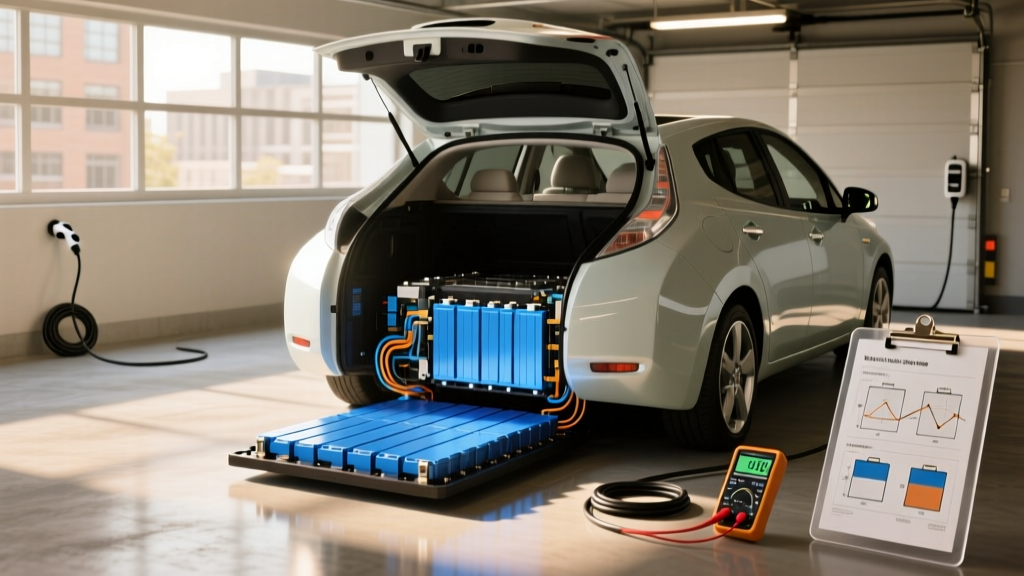
Replacement costs vary significantly depending on whether you choose a refurbished original 24 kWh pack, a newer 40 kWh upgrade (from the 2018+ Leaf), or the 62 kWh pack from the Leaf Plus. Here's what the market looks like in 2026:
| Option | Battery Size | Part Cost (2026) | Labor | Total Range | Est. Range (EPA) |
|---|---|---|---|---|---|
| Refurbished 24 kWh (OEM) | 24 kWh | $4,000–$5,500 | $1,500–$2,500 | $5,500–$8,000 | ~73 mi (when new-condition) |
| New OEM 24 kWh (if available) | 24 kWh | $6,000–$7,500 | $1,500–$2,500 | $7,500–$10,000 | ~73 mi |
| Upgraded 40 kWh (2018+ Leaf pack) | 40 kWh | $6,500–$9,000 | $2,000–$3,500 | $8,500–$12,500 | ~150 mi* |
| Upgraded 62 kWh (Leaf Plus pack) | 62 kWh | $9,000–$12,000 | $2,500–$4,000 | $11,500–$16,000 | ~212 mi* |
*Upgrade estimates assume compatibility adapters and ECU reprogramming by a qualified EV shop. Not all installers support 40/62 kWh swaps into 2011–2015 Leaf chassis. Verify with your installer.
Nissan's official battery replacement program through dealerships has historically priced the 24 kWh pack at around $6,500 for the part alone, though availability of brand-new OEM 24 kWh packs has become inconsistent as the first-generation Leaf ages out of production. Independent EV shops and third-party refurbishers have become the primary source, often offering packs rebuilt with tested, graded cells at lower cost.
Nissan Leaf Battery Warranty: What Was Covered and What Remains
Nissan provided two layers of battery warranty coverage on the 2012 Leaf:
| Warranty Type | Duration | Coverage | Status in 2026 |
|---|---|---|---|
| Lithium-Ion Battery Capacity Warranty | 5 years / 60,000 miles | Guaranteed above 4 bars (of 5) on the dashboard capacity gauge — roughly ~70% SoH | Expired for all 2012 models |
| Battery Defect Warranty | 8 years / 100,000 miles | Covers manufacturing defects, not gradual degradation | Expired for all 2012 models |
Both warranties expired no later than 2020 for any 2012 Leaf. This means all replacement costs in 2026 fall entirely on the owner. For comparison, most 2026 model-year EVs carry 8-year/100,000-mile battery warranties with a 70% capacity retention threshold, per federal emissions warranty requirements — and some manufacturers go further.
If you're shopping for a newer EV and want to avoid this situation, look for vehicles with liquid-cooled battery systems and at minimum an 8-year/100,000-mile battery capacity warranty.
Battery Chemistry: Why the 2012 Leaf Degraded Faster Than Modern EVs
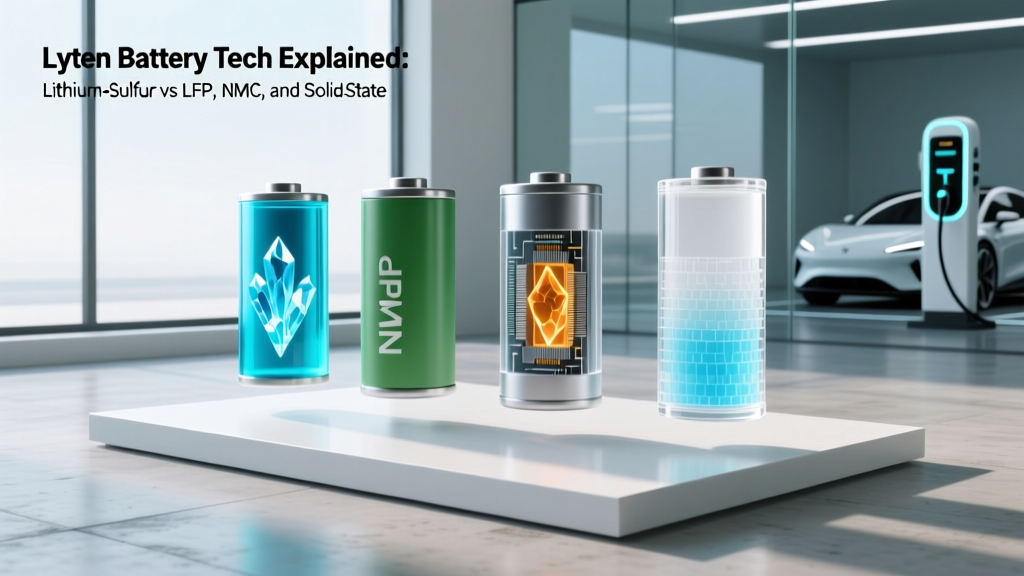
Understanding why the 2012 Leaf's battery struggled requires a brief look at battery chemistry and thermal management. The Leaf used an NMC (nickel manganese cobalt) lithium-ion chemistry in a laminated pouch-cell format. NMC offers strong energy density — critical for fitting enough capacity into a compact car in 2012 — but it's more thermally sensitive than the LFP (lithium iron phosphate) chemistry that has become common in 2026-era EVs.
| Attribute | NMC / NCA | LFP |
|---|---|---|
| Energy Density | Higher (~250 Wh/kg cell-level) | Lower (~160–180 Wh/kg) |
| Cycle Life | 1,000–2,000 cycles to 80% SoH | 3,000–5,000+ cycles to 80% SoH |
| Cold Performance | Better at low temps | Reduced range in freezing weather |
| Thermal Stability | Moderate — needs active cooling | Excellent — inherently stable |
| Cost (2026) | $120–$140/kWh (pack-level) | $90–$110/kWh (pack-level) |
| SoC Recommendation | 20–80% daily; 100% only for trips | Can charge to 100% regularly |
| Common 2026 Vehicles | Tesla Model 3 LR, Hyundai Ioniq 5, BMW i4 | Tesla Model 3 RWD, Ford Mustang Mach-E Select, BYD models |
The 2012 Leaf's biggest weakness wasn't the NMC chemistry itself — it was the passive air-cooling system. Modern EVs use liquid thermal management to keep cells within an optimal 15–35°C range. The Leaf relied on ambient air circulation, which meant cells baked during summer fast-charging sessions and froze during winter charging. This thermal stress is the primary reason first-generation Leaf batteries degraded faster than contemporaries like the Tesla Model S, which launched the same year with liquid cooling.
How to Check Your 2012 Leaf's Battery Health (State of Health)
Nissan built a basic but effective battery health indicator into the Leaf's dashboard: the capacity bars. Located on the far right of the instrument cluster, this gauge shows 12 bars when the battery is new. As the battery degrades, bars disappear.
- 12 bars: ~100% SoH — full original capacity
- 11 bars: ~85–92% SoH — noticeable but manageable loss
- 10 bars: ~78–84% SoH — range noticeably reduced
- 9 bars: ~72–77% SoH — approaching warranty threshold (original 5-yr warranty covered below 4 of 5 capacity bars)
- 8 bars or fewer: Below ~70% SoH — replacement strongly recommended for practical daily use
For a more precise reading, owners can use an OBD-II Bluetooth dongle paired with the LeafSpy Pro app (available for iOS and Android). LeafSpy reads the battery management system's internal State of Health percentage, individual cell voltages, battery temperature, and charge/discharge history. This is the gold standard for Leaf battery diagnostics and costs roughly $20–$40 for the hardware plus a small app fee.
When evaluating a used 2012 Leaf for purchase, always check the capacity bars and request a LeafSpy report. A car showing 10+ bars with consistent cell voltages (within 50 mV of each other) is a healthier candidate than one showing 9 bars with wide cell-voltage variance, which indicates individual weak cells.
Factors That Accelerate (or Slow) EV Battery Degradation
Battery longevity is not purely a function of age or mileage. How you charge, drive, and store your EV has a measurable impact on cell health. Here's what the data shows:
Factors that accelerate degradation:
- Frequent DC fast charging: Every session at 50 kW pushes the Leaf's air-cooled cells above 40°C. Studies show that exclusive DC fast charging can increase degradation rates by 10–15% compared to Level 2 charging over the same mileage.
- High ambient temperatures: Sustained exposure to 90°F+ ambient temperatures — especially when the car is parked at high SoC — causes electrolyte breakdown. Phoenix and Las Vegas Leaf owners have historically seen the worst degradation curves in the US.
- Storing at 100% SoC: Keeping an NMC battery at full charge for days or weeks accelerates calendar aging. The high cell voltage stresses the cathode material.
- Deep discharges to 0%: Regularly draining the pack below 10% increases stress on the anode and can trigger copper dissolution in extreme cases.
Practices that extend battery life:
- Level 2 home charging as primary method: Slower charging generates less heat. A 3.3 kW or 6.6 kW Level 2 session is ideal for the Leaf's pack.
- Maintain 20–80% SoC for daily use: This is the sweet spot for NMC chemistry. Charge to 100% only before longer trips.
- Park in shade or a garage during summer: Reducing ambient heat exposure when parked makes a measurable difference over years.
- Use the Leaf's built-in charge timer: Set charging to complete just before you leave, rather than sitting at 100% for hours.
- Precondition the cabin while plugged in: This draws power from the grid rather than the battery, reducing unnecessary discharge cycles.
Is a 40 kWh or 62 kWh Upgrade Worth It?
One of the most compelling options for 2012 Leaf owners is upgrading to a larger battery from a later-model Leaf. The 2018+ second-generation Leaf uses a 40 kWh pack (150 miles EPA), and the Leaf Plus uses a 62 kWh pack (up to 212 miles EPA in the 2019–2023 model years). Several specialized EV shops across the US now offer these swaps.
The upgrade path isn't plug-and-play. It typically requires:
- A compatible battery pack (sourced from a salvaged or parted-out newer Leaf)
- Adapter brackets or mounting modifications
- BMS (battery management system) reprogramming or module replacement
- Potential OBC (onboard charger) compatibility verification
The total cost for a 40 kWh upgrade typically runs $8,500–$12,500 installed, while a 62 kWh swap can reach $11,500–$16,000. Whether this makes financial sense depends on your vehicle's condition and your needs. A 2012 Leaf in good shape with a solid motor and suspension could justify the investment — you'd essentially gain a 150–212 mile EV for a fraction of the cost of a new vehicle. But if the car has other aging components (suspension, brakes, HVAC compressor), the total investment may approach the value of a used second-generation Leaf.
Looking Ahead: Solid-State and Next-Generation Battery Tech
Nissan has been one of the most vocal automakers about solid-state battery development. The company has announced prototype solid-state cells at its Yokohama R&D facility, targeting production in the late 2020s. Solid-state batteries replace the liquid electrolyte with a solid ceramic or polymer layer, promising higher energy density (potentially 400–500 Wh/kg at the cell level), faster charging, improved safety, and longer cycle life.
However, solid-state batteries are not yet commercially available in any production vehicle as of 2026. Toyota, Nissan, Samsung SDI, and QuantumScape are all targeting limited production between 2027–2030, with costs initially far exceeding current lithium-ion packs. For a 2012 Leaf owner making a replacement decision today, solid-state is not a practical option to wait for.
More immediately relevant is the continued decline in lithium-ion pack pricing. Pack-level costs have fallen from roughly $300/kWh in 2012 to $100–$140/kWh in 2026, and are projected to dip below $80/kWh by 2028–2030. This means replacement batteries will continue to get cheaper, and refurbished packs will become more available as newer Leafs enter the salvage market.
Frequently Asked Questions
How much does it cost to replace a 2012 Nissan Leaf battery in 2026?
A refurbished 24 kWh OEM replacement typically costs $5,500–$8,000 installed. A brand-new OEM pack (if available) runs $7,500–$10,000. Upgrading to a 40 kWh pack from a newer Leaf costs $8,500–$12,500, while a 62 kWh Leaf Plus swap reaches $11,500–$16,000 including labor and reprogramming.
How long do 2012 Nissan Leaf batteries last?
With the original air-cooled 24 kWh NMC pack, most 2012 Leafs have reached 60–75% State of Health by 2026, depending on climate and charging habits. In moderate climates with primarily Level 2 charging, some packs still show 75–80% SoH at 100,000 miles. In hot climates with frequent DC fast charging, packs have dropped below 65% SoH within 80,000 miles.
Is it worth replacing the battery in a 2012 Leaf?
It depends on the car's overall condition and your needs. If the vehicle is mechanically sound and you need a short-range commuter, a $6,000–$8,000 refurbished pack restores the original 73-mile range at a fraction of a new EV's cost. If you want more range, a 40 kWh upgrade (~$10,000) transforms the car into a 150-mile EV. However, compare total investment against the used price of a 2018+ Leaf (typically $12,000–$18,000 in 2026) before deciding.
Can I upgrade my 2012 Leaf to a larger battery?
Yes. Several independent EV shops offer 40 kWh and 62 kWh battery swaps using packs from 2018+ Leafs. This requires adapter hardware, BMS reprogramming, and specialized labor. Verify compatibility with your specific model year and trim before committing.
How do I check the battery health on my 2012 Leaf?
The simplest method is checking the 12-bar capacity gauge on the instrument cluster — 12 bars is new, and each lost bar represents roughly 6–8% degradation. For precise diagnostics, use a LeafSpy Pro OBD-II adapter, which reads exact State of Health percentage, individual cell voltages, and battery temperature directly from the BMS.
Does the 2012 Leaf battery warranty still apply?
No. Nissan's 5-year/60,000-mile capacity warranty and 8-year/100,000-mile defect warranty have both expired for all 2012 Leaf vehicles. All battery replacement costs are the owner's responsibility.
LFP vs NMC — which battery chemistry is better?
Neither is universally better. LFP (lithium iron phosphate) offers superior cycle life (3,000–5,000+ cycles), lower cost, better thermal stability, and can be charged to 100% daily without harm — making it ideal for standard-range commuter vehicles. NMC (nickel manganese cobalt) provides higher energy density and better cold-weather performance, making it the choice for long-range and performance EVs. The 2012 Leaf's NMC pack degraded partly because of its air-cooling design, not the chemistry itself — modern liquid-cooled NMC packs last significantly longer.
Sources: EPA range data from fueleconomy.gov; warranty terms from Nissan USA historical documentation; battery degradation patterns from LeafSpy community data aggregations and long-term owner reporting. Battery replacement pricing reflects 2026 market rates from independent EV service providers and should be verified with local installers.