Understanding the Nissan Battery Car: What Powers Today's Leaf and Ariya
Nissan has been building battery-electric vehicles longer than almost any other mainstream automaker. The Leaf, launched in the U.S. for the 2011 model year, put Nissan on the EV map, and the Ariya crossover (introduced for 2023) expanded the lineup into the lucrative compact SUV segment. If you're researching a Nissan battery car — whether a used Leaf or a new Ariya — the traction battery is the single most expensive and most misunderstood component in the vehicle.
This guide covers exactly what's inside Nissan's EV batteries, how they degrade over time, what the warranty actually covers, what replacement costs look like in 2026, and how to monitor and maximize your battery's State of Health (SoH). We'll also compare the two dominant chemistries — LFP and NMC — and look at where solid-state technology realistically stands.
One critical distinction up front: when we say "battery" in this article, we mean the high-voltage traction battery (the large pack that drives the wheels and stores energy for propulsion), not the 12V auxiliary battery that powers accessories and electronics. The 12V battery in a Nissan EV is a conventional lead-acid or lithium unit that may need replacement every 3–5 years, just like in any car. The traction battery is a completely different system with its own chemistry, warranty, and cost profile.
Nissan's Battery Chemistry: NMC in the Leaf and Ariya
Both the current Nissan Leaf and the Nissan Ariya use lithium-ion batteries with NMC (nickel manganese cobalt) cathode chemistry. This is the same chemistry family used by most legacy automakers — Hyundai, Kia, Ford, Volkswagen — because NMC offers a strong balance of energy density, power delivery, and cycle life.
The 2026 Nissan Leaf (now in its refreshed generation with CCS/NACS charging capability) uses an NMC pack available in two capacities: a 40 kWh usable pack (standard range) and a 60 kWh usable pack (extended range). The Ariya offers a 63 kWh usable pack (standard range, FWD) and an 87 kWh usable pack (long range, FWD or e-4ORCE AWD).
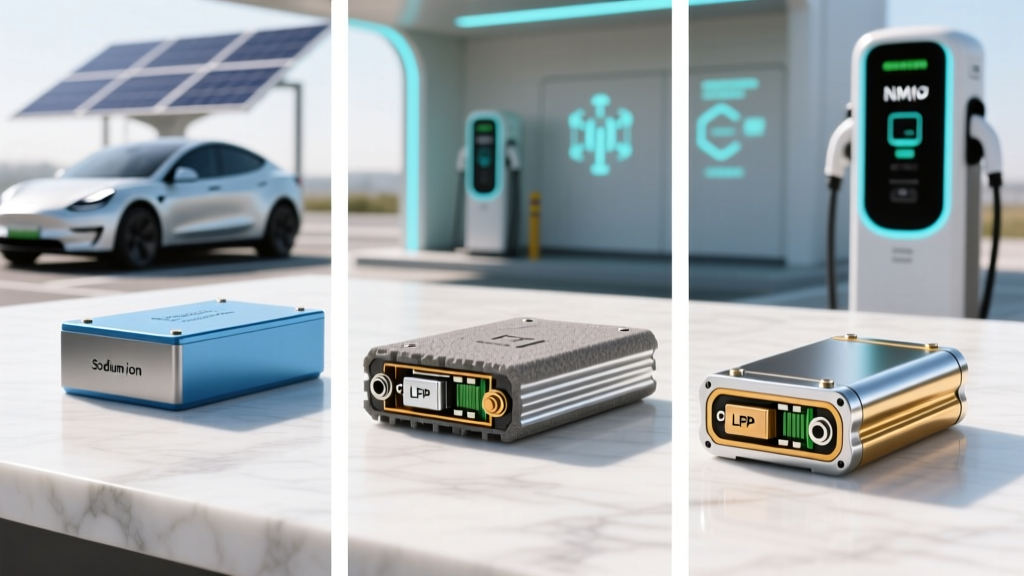
Here's how NMC stacks up against LFP, the chemistry increasingly used by Tesla, BYD, and some Ford models:
| Attribute | NMC (Nissan Leaf / Ariya) | LFP (Tesla Model 3 RWD, Ford Mustang Mach-E Select) |
|---|---|---|
| Energy Density | Higher (~200–260 Wh/kg cell-level) | Lower (~160–200 Wh/kg cell-level) |
| Weight for Same Range | Lighter pack | Heavier pack for equivalent kWh |
| Cycle Life | ~1,500–2,500 cycles to 80% SoH | ~3,000–5,000 cycles to 80% SoH |
| Cold-Weather Performance | Better low-temp power delivery | More range loss in freezing conditions |
| Thermal Stability | Good, but more susceptible to thermal runaway at high SoC | Excellent — inherently more stable chemistry |
| Cost per kWh | Higher (cobalt and nickel add cost) | Lower (no cobalt, abundant iron) |
| Recommended SoC for Daily Use | 20–80% for longevity | Can be charged to 100% regularly without harm |
| Calendar Aging Sensitivity | Moderate — high SoC + heat accelerates loss | Lower — tolerates high SoC storage better |
Which is better? It depends on your use case. NMC is the right choice for Nissan's packaging constraints — the Leaf's compact platform benefits from NMC's higher energy density, which means more range in a smaller, lighter pack. LFP's longer cycle life and 100% SoC tolerance make it ideal for high-mileage drivers and fleet use, but the heavier pack weight reduces vehicle efficiency. Neither chemistry is universally superior; the trade-offs are engineering decisions, not quality differences.
Battery Degradation: Real Data from Nissan EVs
EV batteries do not "die" suddenly like a phone battery might. They gradually lose capacity over time and miles — a process measured as State of Health (SoH). A new battery starts at 100% SoH; when it drops below roughly 70–80%, you'll notice meaningful range reduction.
Nissan has one of the largest real-world datasets of any automaker thanks to the Leaf's 14+ years on the road. Here's what the data shows:
Nissan Battery Degradation: Typical Loss Rates
- Year 1–2: 2–4% capacity loss (initial "break-in" drop is normal for all lithium-ion cells)
- Year 3–5: Additional 1–2% loss per year (roughly 1–2% annually under moderate use)
- Year 5–8: Cumulative loss of approximately 10–18% depending on climate and charging habits
- Year 8–10: Many Leafs still retain 75–85% SoH; high-mileage or hot-climate vehicles may drop to 70%
- Year 10+: First-generation Leafs (2011–2017, air-cooled packs) showed 20–30% loss; liquid-cooled packs in newer models degrade significantly slower
Sources: Nissan owner forums, Recurrent Auto battery data studies, fueleconomy.gov EV technology overview
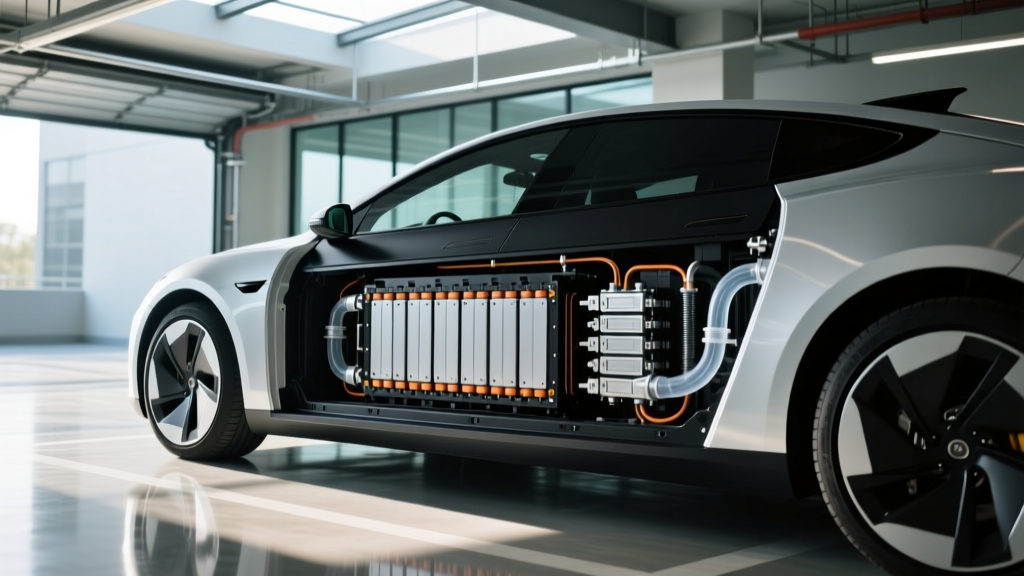
A critical factor specific to older Nissan Leafs: the 2011–2017 models used passive air cooling for the battery pack, which led to faster degradation in hot climates (Arizona, Texas, Southern California). Nissan moved to liquid-cooled thermal management in later model years and in the Ariya, which dramatically improved longevity. If you're buying a used Nissan battery car from this era, checking the SoH is essential — a 2013 Leaf in Phoenix may have lost 30%+ of its original capacity, while the same model year in Seattle might still be above 85%.
For the Ariya (introduced 2023), degradation data is still limited, but the liquid-cooled NMC pack and more sophisticated thermal management system put it on par with industry benchmarks: expect roughly 8–12% loss over the first 100,000 miles under normal conditions.
Nissan EV Battery Warranty: What's Covered and What's Not
Nissan provides a dedicated lithium-ion battery capacity warranty that is separate from the general powertrain warranty. Here are the current terms for U.S.-spec vehicles:
| Model | Warranty Duration | Mileage Limit | Capacity Retention Threshold | What Triggers a Claim |
|---|---|---|---|---|
| 2026 Nissan Leaf | 8 years | 100,000 miles | Below ~66–70% (varies by model year; check owner's manual for exact bar/capacity threshold) | Battery SoH drops below the stated threshold as measured by Nissan's diagnostic tool |
| 2026 Nissan Ariya | 8 years | 100,000 miles | Below 70% capacity retention | Verified capacity below threshold via dealer diagnostic scan |
Key details Nissan owners should understand:
- The warranty covers capacity loss, not just total failure. If your 60 kWh Leaf battery drops below approximately 40 kWh of usable capacity (roughly 66–70%), Nissan is obligated to repair or replace it.
- Nissan's remedy may involve replacing individual battery modules rather than the entire pack, which restores capacity without a full pack swap.
- The warranty is transferable to subsequent owners — important if you're buying a used Nissan battery car.
- Damage from accidents, flooding, improper modifications, or unauthorized repairs is excluded.
- Normal gradual degradation that remains above the threshold is not a warranty event. A battery at 72% SoH at year 7 is functioning within warranty specifications even though range has noticeably decreased.
Nissan's warranty terms are consistent with the industry standard. Hyundai offers 10 years/100,000 miles, and Tesla offers 8 years with thresholds of 70% — so Nissan's coverage is in line with most competitors, though Hyundai's extra two years stands out. For detailed warranty language, refer to your vehicle's Nissan warranty information booklet.
EV Battery Replacement Cost: Nissan Leaf and Ariya
If your Nissan EV battery falls outside warranty coverage — either due to age, mileage, or an excluded event — replacement is a significant expense. Here's what Nissan battery car owners can expect in 2026:
| Model / Pack Size | Battery Cost (Part) | Labor | Total Estimated Cost | Typical Replacement Scenario |
|---|---|---|---|---|
| Leaf 40 kWh (standard range) | $6,500–$8,500 | $1,500–$2,500 | $8,000–$11,000 | Out-of-warranty older Leaf (2011–2017) with severe degradation or cell failure |
| Leaf 60 kWh (extended range) | $9,000–$12,000 | $1,500–$2,500 | $10,500–$14,500 | High-mileage 2018+ Leaf outside warranty window |
| Ariya 63 kWh (standard range) | $10,000–$14,000 | $2,000–$3,000 | $12,000–$17,000 | Collision damage, flood, or post-warranty failure (unlikely before 2031+) |
| Ariya 87 kWh (long range) | $13,000–$18,000 | $2,000–$3,000 | $15,000–$21,000 | Same as above; larger pack = higher cost |
Important context to prevent sticker shock: Most Nissan EV batteries never need replacement during the vehicle's normal ownership life. Data from Recurrent Auto and other battery analytics firms consistently show that the vast majority of modern liquid-cooled EV batteries retain 80%+ capacity at 150,000 miles. The vehicles that do need out-of-warranty replacements are predominantly early-generation Leafs with air-cooled packs driven in extreme heat.
If you own a 2023+ Ariya or a 2018+ liquid-cooled Leaf, the probability of needing a full battery replacement before 200,000 miles is low. Budget for it as a tail risk, not an expectation.
Factors That Affect Nissan EV Battery Life (and What You Can Control)
Battery degradation is driven by three main stressors: heat, high state of charge, and high charge/discharge rates. Here's a practical breakdown for Nissan battery car owners:
Battery Care Checklist for Nissan Leaf & Ariya Owners
- Limit DC fast charging frequency. Occasional road-trip fast charging is fine, but daily use of DC fast chargers (50 kW+) accelerates degradation. Aim for Level 2 home charging as your primary method.
- Avoid prolonged 100% SoC. For NMC batteries (Leaf and Ariya), set your charge limit to 80–90% for daily driving. Charge to 100% only when you need the full range for a trip. Unlike LFP batteries, NMC chemistry degrades faster when held at 100%.
- Don't let the battery sit at very low SoC. Storing your Nissan EV below 10% SoC for extended periods (weeks) stresses the cells. If storing the car for a vacation, leave it at roughly 50% SoC.
- Precondition in extreme temperatures. Use the Ariya's or Leaf's climate preconditioning feature (available via the NissanConnect app) to warm or cool the battery while still plugged in. This reduces stress on the pack and improves charging speed.
- Park in shade or a garage when possible. Prolonged exposure to ambient temperatures above 95°F accelerates calendar aging, especially at high SoC. This was the primary degradation driver for early Leafs in the Southwest.
- Use regenerative braking wisely. Moderate regen settings are fine; maximum regen on every stop generates heat in the pack. In stop-and-go traffic, moderate regen is actually better for long-term SoH.
How to Check Your Nissan EV Battery Health (SoH)
Nissan provides several ways to monitor your traction battery's State of Health:
1. Dashboard Capacity Bars (Leaf)
The Nissan Leaf displays a series of capacity bars on the right side of the instrument cluster (next to the state-of-charge gauge). A new Leaf shows 12 bars. Each bar lost represents roughly 6–8% capacity degradation. If your 2015 Leaf shows 9 bars, you're looking at approximately 75–82% SoH. This is a rough indicator, not a precise measurement, but it's useful for quick checks and for evaluating used Leafs before purchase.
2. NissanConnect App / In-Vehicle Display (Ariya)
The Ariya provides more granular battery health information through the infotainment system's EV settings menu. While it doesn't display an exact SoH percentage by default, dealer diagnostic tools can pull a precise capacity reading. Some third-party OBD-II apps (such as Leaf Spy for the Leaf) can read the battery management system (BMS) data and display exact SoH percentages, internal resistance, and individual cell voltages.
3. Dealer Diagnostic Scan
Any Nissan dealer can perform a battery health check using the CONSULT diagnostic tool. This gives you an official SoH reading that can be used for warranty claims. If you're approaching the 8-year/100,000-mile warranty threshold and suspect your battery is near the capacity retention limit, schedule this check proactively.
4. Third-Party Battery Reports
Services like Recurrent and Geotab offer battery health reports that compare your pack's degradation to a fleet of similar vehicles. These are particularly useful when buying a used Nissan battery car, as they provide context on whether a specific vehicle's degradation is typical or concerning.
What's Next: Solid-State Batteries and Nissan's Roadmap
Nissan has been vocal about its solid-state battery development. The company has announced plans to bring solid-state cells to production vehicles, targeting a pilot production line and initial vehicle integration. Here's what's realistic versus what's hype:
Solid-State Battery Reality Check (as of 2026)
- What solid-state promises: Higher energy density (potentially 2× current NMC), faster charging, improved safety (no liquid electrolyte = lower fire risk), and longer cycle life.
- Where Nissan stands: Nissan has demonstrated prototype solid-state cells at its research facilities and has announced a timeline for commercialization. However, no Nissan production vehicle currently on sale uses solid-state batteries.
- Realistic timeline: Limited production vehicles with solid-state packs are expected from various automakers in the 2028–2030 timeframe. Mass-market affordability is likely 2030+.
- Silicon anode technology: A nearer-term improvement, silicon-dominant anodes are being adopted incrementally (already in some cells from suppliers like Sila Nanotechnologies). These offer 10–20% energy density improvements and may appear in Nissan EVs before full solid-state packs.
- Bottom line: If you're shopping for a Nissan battery car today, buy based on current NMC technology. Solid-state is promising but not a reason to delay a purchase — today's liquid-cooled NMC packs are proven, well-warrantied, and cost-effective.
Frequently Asked Questions: Nissan EV Batteries
How long do Nissan EV batteries last in years and miles?
Modern liquid-cooled Nissan EV batteries (2018+ Leaf, all Ariya model years) are designed to retain 70–85% of their original capacity at 150,000–200,000 miles and 10–15 years of use. Many first-generation Leafs have exceeded 150,000 miles, though the air-cooled early models degraded faster in hot climates. Expect a modern Nissan EV battery to outlast the vehicle's typical ownership cycle.
How much does it cost to replace a Nissan Leaf or Ariya battery?
Full replacement costs range from approximately $8,000 for a 40 kWh Leaf pack to $21,000 for an 87 kWh Ariya long-range pack, including parts and labor. However, most batteries never require replacement during normal ownership. Module-level repairs (replacing individual degraded cell groups) can cost significantly less — often $2,000–$5,000 depending on the number of modules replaced.
What does the Nissan EV battery warranty actually cover?
Nissan covers the traction battery against capacity loss below a defined threshold (approximately 66–70% SoH, depending on model and year) for 8 years or 100,000 miles, whichever comes first. This covers defects and premature degradation, but not damage from accidents, flooding, or unauthorized modifications. The remedy may be module replacement rather than a full pack swap.
How do I maximize my Nissan EV battery's lifespan?
Charge to 80–90% for daily use (not 100%), rely on Level 2 home charging rather than daily DC fast charging, precondition the battery in extreme temperatures, avoid storing the vehicle at very low or very high SoC for extended periods, and park in shaded or covered areas when possible in hot climates.
Is LFP or NMC better for a Nissan battery car?
Nissan currently uses NMC in both the Leaf and Ariya. NMC offers higher energy density (more range in a lighter pack) and better cold-weather performance, making it well-suited to Nissan's vehicle platforms. LFP offers longer cycle life and the ability to charge to 100% daily without degradation concerns, but requires a heavier pack for equivalent range. For most Nissan EV buyers, the NMC pack with proper charging habits (80% daily limit) provides excellent longevity.
Can I charge my Nissan Ariya or Leaf to 100% regularly?
Because both vehicles use NMC chemistry, routinely charging to 100% and letting the car sit at full charge accelerates calendar aging. Set your charge limit to 80–90% for daily driving and save 100% charges for road trips or days when you need maximum range. This is the single most impactful habit for long-term SoH preservation.
Does fast charging damage my Nissan EV battery?
DC fast charging generates significant heat in the battery pack, which accelerates degradation over time. Occasional fast charging (road trips, a few times per month) has a minimal impact on modern liquid-cooled packs. Daily fast charging, however, measurably increases degradation rates. For the best battery longevity, make Level 2 home charging (6.6–7.2 kW for the Leaf, up to 7.2 kW for the Ariya) your primary charging method. Refer to Nissan's official EV pages for your vehicle's specific charging specifications.
Note: Battery specifications, warranty terms, and replacement costs are based on 2026 model-year data and current market pricing. Federal tax credit eligibility under IRS §30D depends on MSRP caps, buyer income limits, and battery component/critical mineral sourcing requirements that change periodically. Consult a tax professional for your specific eligibility.