Why Nio Battery Swapping Stations Matter for Battery Longevity
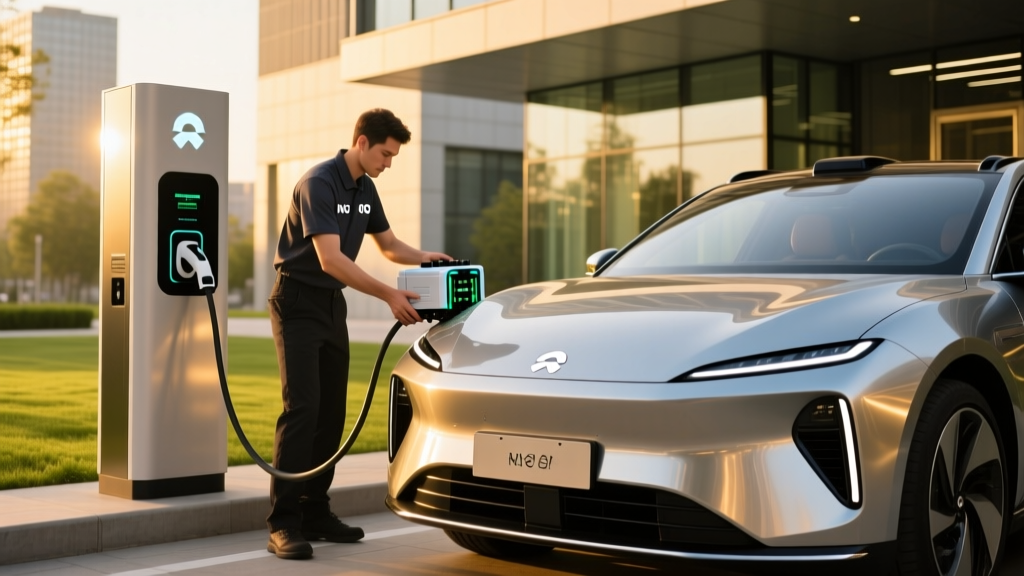
Most EV owners plug in and forget. Nio owners drive into a swap station and roll out with a fully charged pack in roughly five minutes — no DC fast-charging session, no 80% taper wait, no thermal stress from a 250 kW charging curve. As of early 2026, Nio operates over 3,000 battery swapping stations globally, the vast majority in China, with a growing footprint in Europe. The model is unlike anything else in the EV ecosystem: you don't just charge a battery — you trade it for another one.
This has enormous implications for battery health, degradation anxiety, and total cost of ownership. If your battery degrades, you simply swap into a healthier one. If Nio upgrades pack chemistry, you can access it without buying a new car. But to understand whether swapping is a genuine longevity advantage, you first need to understand what's inside the pack, how it degrades, and what the real replacement economics look like — whether you swap or plug in.
LFP vs NMC vs NCA: The Chemistry Inside Your Pack
Nio has used multiple chemistries across its battery lineup. The 75 kWh standard-range pack uses LFP (lithium iron phosphate) cells, while the 100 kWh long-range and 150 kWh semi-solid-state packs rely on NMC (nickel manganese cobalt) and hybrid chemistries. The trade-offs between these chemistries define how your battery ages, performs in cold weather, and holds energy density.
| Attribute | LFP (LiFePO₄) | NMC / NCA |
|---|---|---|
| Energy density | ~160–180 Wh/kg (lower) | ~220–300 Wh/kg (higher) |
| Cycle life | 3,000–6,000+ cycles | 1,000–2,500 cycles |
| Cold-weather performance | Moderate loss (~25–35% range drop below 20°F) | Better low-temp conductivity (~15–25% loss) |
| Thermal stability | Excellent — less prone to thermal runaway | Good, but requires more active thermal management |
| Cost per kWh | Lower (~$80–100/kWh at cell level) | Higher (~$110–140/kWh at cell level) |
| State-of-charge calibration | Flat voltage curve — harder to gauge SoC precisely | Linear voltage curve — easier SoC estimation |
| Recommended daily SoC | Can charge to 100% regularly | Best kept at 80% for daily use |
For Nio swap-station users, this matters in a specific way: Nio's Power Swap network manages battery health centrally. LFP packs in the 75 kWh tier are cycled and monitored by Nio's Battery Asset Management system, meaning you're less likely to receive a heavily degraded pack at a swap station. NMC packs in the 100 kWh tier offer more range but require stricter SoC management — something Nio's software handles automatically when the pack is in the swap ecosystem.
How Long Do EV Batteries Actually Last?
The short answer: longer than most buyers expect. The long answer depends on chemistry, usage patterns, and thermal management.
Industry-wide degradation data from sources like Geotab's fleet analysis of over 10,000 EVs shows an average capacity loss of roughly 1.8% per year across all chemistries and brands. That means after eight years, a typical EV battery retains approximately 85–88% of its original capacity. LFP packs tend to outperform this average; NMC packs in high-performance applications may degrade slightly faster, particularly if subjected to frequent DC fast charging and high ambient temperatures.
| Years in Service | Average Capacity Retained | Approximate Range Loss (on a 300-mi EPA pack) |
|---|---|---|
| Year 1 | ~97–98% | ~6–9 miles |
| Year 3 | ~94–95% | ~15–18 miles |
| Year 5 | ~90–92% | ~24–30 miles |
| Year 8 | ~85–88% | ~36–45 miles |
| Year 10 | ~80–85% | ~45–60 miles |
For Nio swap users, degradation is partially decoupled from the vehicle. Because Nio circulates packs through its network and retires those falling below a health threshold (reportedly around 80% SoH), a Nio owner may never experience the tail-end degradation curve that a conventional EV owner faces at year 8 or 10. The pack you swap into is maintained to a fleet standard, not a single-owner usage pattern.
What the Battery Warranty Covers — Nio vs the Industry
Every major EV manufacturer offers a high-voltage battery warranty. Under U.S. federal emissions-related warranty guidelines and typical manufacturer terms, most warranties cover 8 years or 100,000 miles (whichever comes first), with a capacity retention threshold of 70%. California and states adopting CARB standards may require 10 years/150,000 miles.
| Manufacturer | Warranty Term | Capacity Threshold | Notes |
|---|---|---|---|
| Nio (Battery-as-a-Service / BaaS) | Ongoing — covered by subscription | Nio replaces packs below ~80% SoH | No separate battery purchase; swap access included |
| Tesla (Model Y / 3) | 8 yr / 120,000 mi | 70% retention | Varies by model; LFP packs in Standard Range |
| Hyundai / Kia (EVs) | 10 yr / 100,000 mi | 70% retention | Among the longest standard warranties |
| Ford (Mustang Mach-E, F-150 Lightning) | 8 yr / 100,000 mi | 70% retention | Covers battery and hybrid components |
| BMW (iX / i4) | 8 yr / 100,000 mi | 70% retention | Includes thermal management system |
Nio's BaaS (Battery as a Service) model fundamentally rewrites the warranty equation. If you subscribe to BaaS rather than purchasing the battery outright, Nio retains ownership of the pack. Degradation becomes Nio's problem, not yours. You pay a monthly fee (roughly ¥980–1,280/month in China, varying by pack size) and gain access to the swap network plus ongoing battery health management. If a pack falls below Nio's health threshold, it's pulled from circulation. You never face a replacement bill.
If you buy a Nio with the battery outright (available in certain markets), standard warranty terms apply — typically 8 years/160,000 km in China, with a 70% capacity threshold.
EV Battery Replacement Cost: The Numbers
For non-swap EV owners, battery replacement is the nightmare scenario — but it's also rare. Most traction batteries outlast the vehicle's useful life. When replacement is needed (typically due to a manufacturing defect, physical damage, or extreme degradation past year 10), costs are significant.
| Vehicle / Pack Size | Battery Capacity | Estimated Replacement Cost (Parts + Labor) | When Typically Needed |
|---|---|---|---|
| Tesla Model 3 / Y (LFP) | ~60 kWh | $12,000–$16,000 | Rarely — most outlive vehicle |
| Tesla Model S / X (NMC) | ~100 kWh | $18,000–$22,000 | Year 10+ if at all |
| Ford F-150 Lightning (Extended) | ~131 kWh | $22,000–$30,000 | Rare — covered under warranty in most cases |
| Hyundai Ioniq 5 | ~77.4 kWh | $14,000–$18,000 | Rarely before 150,000+ miles |
| Nio (75 kWh LFP) | 75 kWh | N/A under BaaS — covered by subscription | Swap network handles replacement |
| Nio (100 kWh NMC) | 100 kWh | N/A under BaaS; ~$18,000–$22,000 if owned | Swap network handles replacement |
The critical context: according to warranty claim data across major manufacturers, fewer than 2–3% of EV batteries require full replacement within the warranty period. Most degradation is gradual, and a pack at 75% capacity after 12 years still provides usable daily range for the majority of drivers. The fear of a sudden $20,000 bill is largely overblown — but it's a fear that Nio's swap model eliminates entirely for BaaS subscribers.
Factors That Accelerate Battery Degradation
Whether you charge at home or use Nio battery swapping stations, the physics of lithium-ion cells remain the same. Here's what actually moves the degradation needle:
- DC fast-charging frequency: Repeated sessions at 150–350 kW generate significant heat. Data from IDTechEx research suggests that exclusive DC fast charging can increase annual degradation by 0.5–1.0% compared to Level 2 home charging. Nio swap stations charge packs at controlled rates in a thermally managed environment — a potential advantage over roadside 350 kW chargers.
- Extreme temperatures: Sustained operation above 95°F or below 10°F accelerates chemical aging. Active thermal management (liquid cooling/heating) mitigates this, and most modern EVs including Nio's lineup use it. Parking in shade or a garage in summer helps.
- State-of-charge habits: For NMC packs, regularly holding at 100% SoC or dropping below 10% stresses the cells. The 20–80% window is the longevity sweet spot. LFP packs are more tolerant of 100% SoC and Nio actually recommends periodic full charges for LFP calibration.
- Calendar aging: Even a parked EV battery degrades over time. Storing at ~50% SoC in moderate temperatures minimizes calendar aging. Nio's swap fleet keeps packs in active rotation, reducing prolonged idle storage.
- High-discharge loads: Repeated hard acceleration and sustained high-speed driving generate internal cell heat. This is a minor factor compared to charging habits but relevant for performance-oriented drivers.
How to Monitor and Maximize Battery Health
Every modern EV provides some form of State of Health (SoH) monitoring. Here's how to check yours and what to do with the data:
For Nio owners: The Nio app displays battery health metrics, and because swap-station packs are centrally managed, Nio's Battery Asset Management system tracks SoH continuously. If you receive a pack at a swap station that feels degraded (noticeable range reduction vs. expected), you can flag it through the app, and Nio will pull that pack for inspection. BaaS subscribers have the strongest position here — pack health is Nio's operational responsibility.
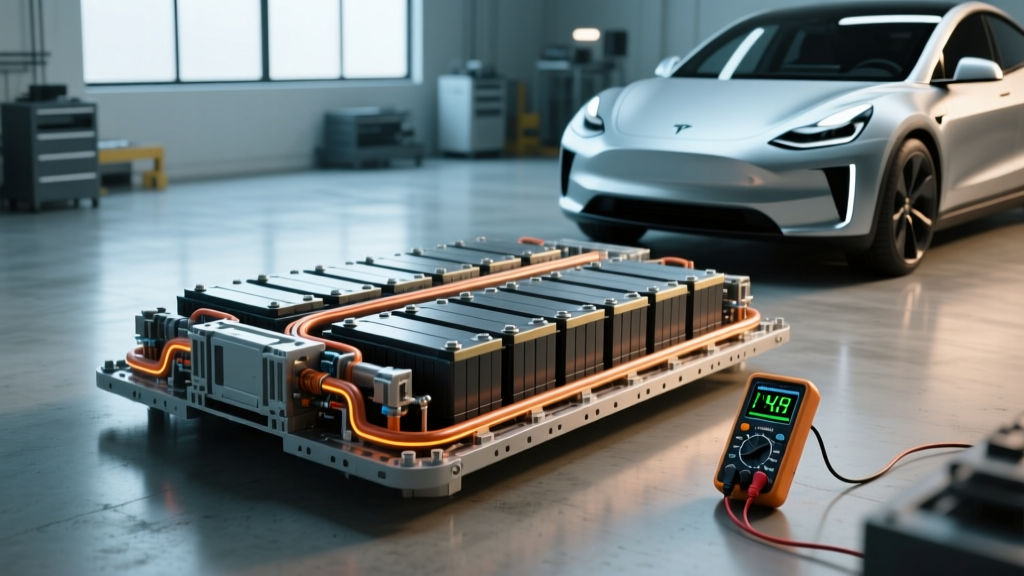
For non-Nio EV owners: Most manufacturers provide SoH data through the vehicle's infotainment system or companion app. Third-party tools like OBD-II dongles paired with apps such as Car Scanner or EV Battery Health can pull detailed cell-level voltage data. Some dealerships will run a battery health report on request. Track your SoH annually — if you see a drop exceeding 3% in a single year, it may indicate a thermal management issue or a defective module worth investigating under warranty.
Maximizing longevity — the practical checklist:
- Default to Level 2 home charging (7–11 kW) for daily use. Reserve DC fast charging for road trips.
- Set your charge limit to 80% for NMC packs. For LFP, charge to 100% at least once per month for calibration but don't leave it sitting at 100% for days.
- Precondition your battery before fast charging — most EVs including Nio models do this automatically when a charger is navigated to.
- Avoid letting SoC drop below 10% for extended periods. Charge soon after hitting low SoC.
- In extreme heat, park in shade or a garage. In extreme cold, use scheduled departure preconditioning.
The Swap Advantage: How Nio Battery Swapping Stations Reduce Degradation Risk
Here's the structural argument for Nio's model, stripped of marketing language:
Controlled charging environment. Packs at Nio battery swapping stations are charged in a climate-controlled bay at optimized rates — not at the mercy of a 350 kW public charger on a 100°F day. This reduces thermal stress per charge cycle, which is the single largest controllable degradation factor.
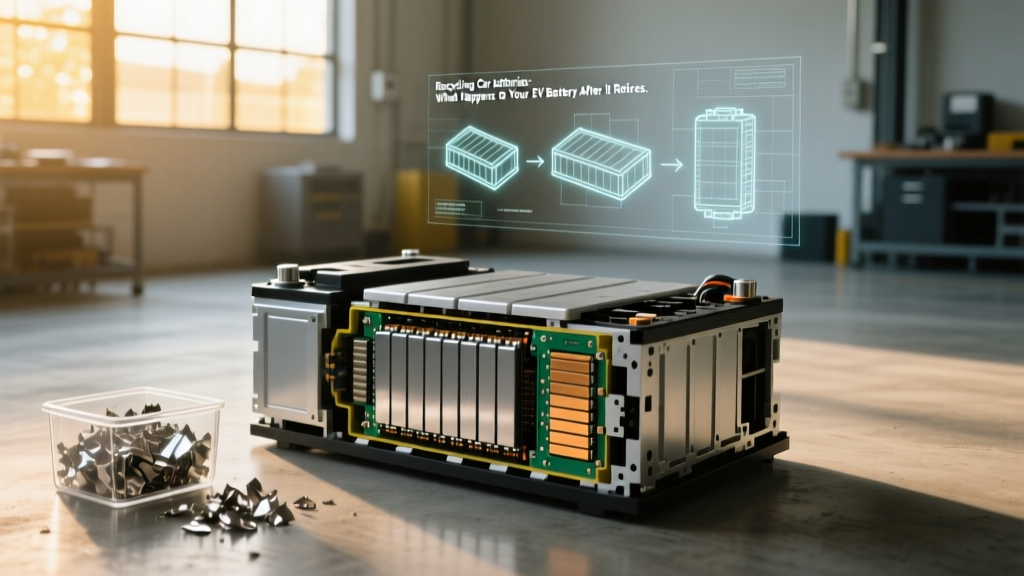
Fleet-level health management. Nio monitors every pack in its swap network. Packs that fall below the SoH threshold are retired from circulation and sent to Nio's second-life or recycling partners. As a user, you're insulated from owning a degraded asset. In a conventional EV, you bear 100% of the degradation risk after the warranty expires.
Upgrade path without a new car. Nio owners who started with a 70 kWh pack can upgrade to a 100 kWh or (where available) a 150 kWh semi-solid-state pack through the swap network. This is a form of future-proofing that no plug-in EV offers. Your 2020 Nio ES8 can accept a 2026-spec battery — something impossible with a fixed-pack EV.
Reduced fast-charging dependence. A five-minute swap eliminates the need for DC fast charging in daily life. For urban Nio owners with access to swap stations, the pack never sees the thermal stress of a 250 kW charging curve. Over five years and 600+ charge cycles, this meaningfully extends usable pack life.
The trade-off is geographic: Nio battery swapping stations remain concentrated in China, with limited European deployment (Norway, Germany, Netherlands, and a handful of other markets). U.S. availability is nonexistent as of 2026. If you can't access a swap station, the model's advantages are theoretical.
Emerging Battery Tech: What's Next After NMC and LFP
Nio's 150 kWh semi-solid-state pack, available in limited deployment in China since late 2024, represents the leading edge of near-term battery tech. It uses a semi-solid electrolyte with a silicon-carbon anode, achieving an energy density of approximately 360 Wh/kg — enough to push the Nio ET7 sedan past 1,000 km (621 miles) on the CLTC cycle (expect roughly 450–480 miles EPA-equivalent in real-world use).
True solid-state batteries — using a fully solid electrolyte with lithium metal anodes — remain in development. Toyota, Samsung SDI, and QuantumScape have announced production timelines targeting 2027–2029 for initial low-volume deployment. These promise energy densities of 400–500 Wh/kg, faster charging (potentially 10–80% in under 10 minutes), and improved safety. However, manufacturing scale and cost remain unsolved challenges. Expect solid-state packs to appear first in premium vehicles at significant cost premiums before reaching mainstream pricing in the early 2030s.
Silicon anode technology — adding silicon to the graphite anode to increase lithium storage capacity — is already in limited production (the Nio 150 kWh pack uses it). Companies like Sila Nanotechnologies and Group14 are scaling production for broader EV adoption by 2027–2028. Silicon anodes can boost energy density by 20–40% over conventional graphite without requiring a full chemistry change.
For Nio swap users, these advances are directly accessible: as Nio introduces new pack chemistries, they enter the swap pool. Early adopters of the swap model may be driving a 2022 vehicle with a 2027 battery — a compelling argument for the platform's longevity.
Frequently Asked Questions
How long do EV batteries last in years and miles?
Most modern EV batteries are designed to last 15–20 years or 200,000+ miles before falling below 70% capacity. Fleet data shows average degradation of ~1.8% per year. LFP chemistry packs typically outlast NMC packs by a significant margin in cycle life (3,000–6,000+ cycles vs. 1,000–2,500). In practice, the vehicle's body, suspension, and electronics are more likely to reach end-of-life before the traction battery fails entirely.
How much does an EV battery cost to replace?
Replacement costs range from approximately $12,000 for a ~60 kWh pack (Tesla Model 3 LFP) to $30,000+ for a ~131 kWh pack (Ford F-150 Lightning Extended Range), including parts and labor. However, full replacement is rare — fewer than 2–3% of packs require it within the warranty period. Nio BaaS subscribers pay nothing for replacement; it's covered by the monthly subscription fee.
What does the EV battery warranty cover?
Standard industry warranties cover 8 years/100,000 miles (10 years/150,000 miles in CARB states) with a capacity retention threshold of 70%. If your battery drops below 70% of original capacity within the warranty term, the manufacturer must repair or replace it at no cost. This covers defects and abnormal degradation, not physical damage from collisions or flooding. Nio BaaS subscribers have a different model — battery health is managed continuously by Nio, and degraded packs are swapped out proactively.
How do I check my EV battery's State of Health?
Check your vehicle's companion app or infotainment system for a battery health/SoH indicator. For more granular data, use an OBD-II scanner with an EV-compatible app (Car Scanner, EV Battery Health) to read cell voltage delta and capacity estimates. Nio owners can view pack health in the Nio app and report concerns about swap-station packs directly. Track SoH annually and investigate any single-year drop exceeding 3%.
LFP vs NMC — which battery chemistry is better?
Neither is universally better; it depends on your priorities. LFP offers longer cycle life (3,000–6,000+ cycles), lower cost, superior thermal stability, and tolerance for daily 100% charging — making it ideal for standard-range daily drivers. NMC delivers higher energy density (more range in a smaller, lighter pack) and better cold-weather performance, making it the choice for long-range and performance applications. If you prioritize longevity and cost, LFP wins. If you need maximum range per charge, NMC is the better fit.
Are Nio battery swapping stations available in the United States?
As of 2026, Nio battery swapping stations are not available in the United States. The network is concentrated in China (3,000+ stations) with a growing but limited presence in Europe (Norway, Germany, Netherlands, Denmark, Sweden). Nio has not announced a U.S. market entry timeline. American EV owners rely on plug-in charging infrastructure (Tesla Supercharger, Electrify America, EVgo, and home Level 2 setups).