Why NIO Battery Swapping Changes the Battery Ownership Equation
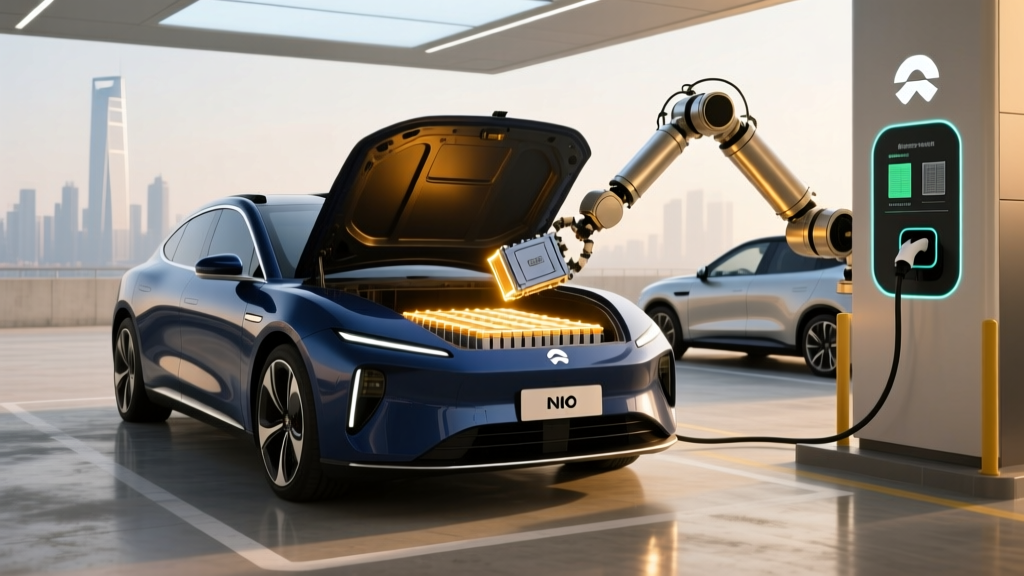
For most EV buyers, the high-voltage traction battery is the single biggest source of long-term anxiety. How long will it last? What happens when it degrades? And what does replacement actually cost? NIO battery swapping reframes all three questions by decoupling the battery from the vehicle itself — owners can exchange a depleted pack for a fully charged one at a swap station in under five minutes, or subscribe to a Battery-as-a-Service (BaaS) plan that shifts degradation risk away from the driver entirely.
But swapping is only one model in a broader EV battery landscape. Whether you drive a NIO, a Tesla, a Hyundai, or a Ford, the underlying cell chemistry, degradation physics, and warranty structures follow the same rules. This guide breaks down exactly how modern EV batteries age, what they cost to replace, and how NIO's swap ecosystem fits into the bigger picture.
LFP vs. NMC/NCA: The Chemistry Trade-Off That Defines Your Pack
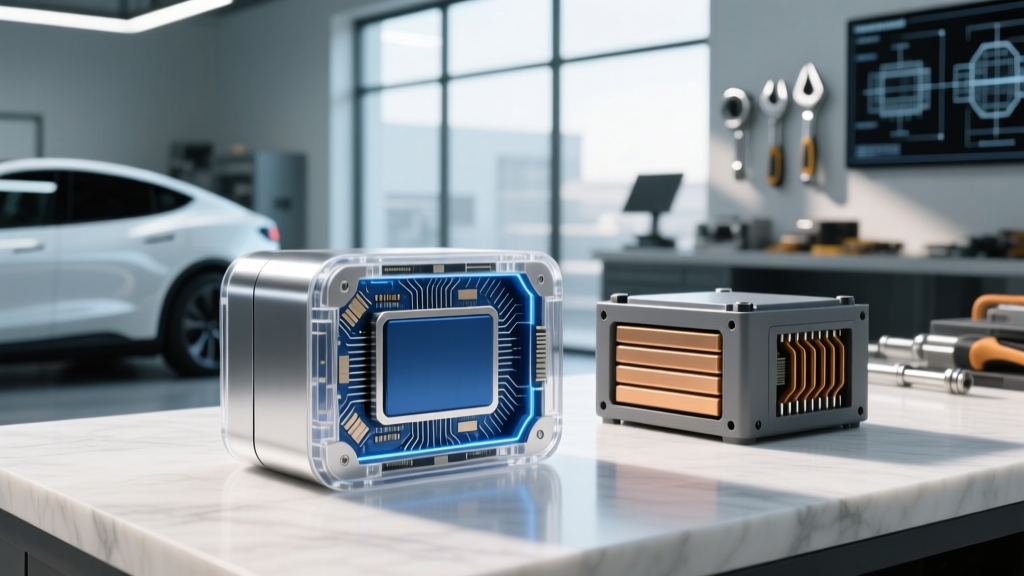
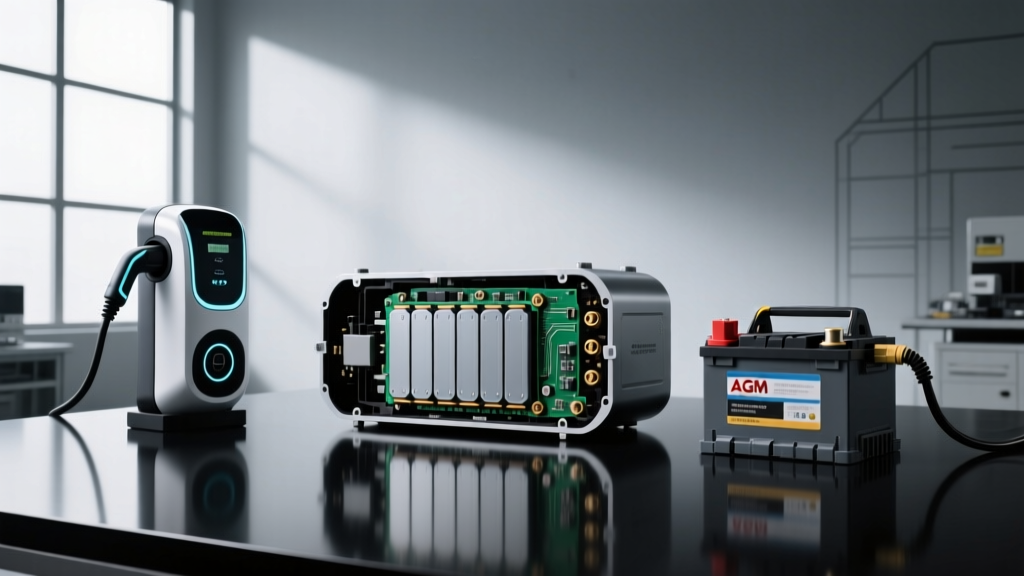
Every EV battery on the road today uses one of two dominant lithium-ion chemistries: LFP (lithium iron phosphate) or NMC/NCA (nickel manganese cobalt / nickel cobalt aluminum). The choice affects range, longevity, cold-weather behavior, and price.
| Attribute | LFP (Lithium Iron Phosphate) | NMC / NCA (Nickel-based) |
|---|---|---|
| Energy Density | Lower (~160–180 Wh/kg cell-level) | Higher (~220–300 Wh/kg cell-level) |
| Cycle Life | 3,000–5,000+ full cycles | 1,000–2,000 full cycles |
| Cold-Weather Performance | Weaker; more range loss below 32°F | Better low-temp discharge efficiency |
| Thermal Stability | Excellent; less prone to thermal runaway | Good but requires more active cooling |
| Cost (per kWh) | Lower; no cobalt or nickel | Higher; commodity-sensitive metals |
| Typical Use | Standard-range models (Tesla Model 3 RWD, BYD) | Long-range / performance trims |
| Recommended SoC for Daily Use | Can charge to 100% regularly | Best kept 20–80% for daily driving |
NIO offers both chemistries across its lineup. The 75 kWh pack uses LFP cells (supplied by CATL), while the 100 kWh and 150 kWh packs use NMC chemistry for the extra energy density needed to push the ET7 sedan past 370 miles of range on the CLTC cycle (roughly 280–310 miles EPA-equivalent). The swap-compatible design means an owner can start with a 75 kWh LFP pack for daily commuting and temporarily upgrade to a 100 kWh NMC pack for a road trip — a flexibility no fixed-battery EV offers.
How Long Do EV Batteries Actually Last? Degradation Data
The short answer: most modern EV traction batteries will outlast the vehicle they're installed in. But "outlast" doesn't mean "no degradation." Every lithium-ion cell loses capacity over time and charge cycles.
Typical Degradation Curve (NMC packs, moderate climate):
- Year 1 / 15,000 miles: ~2–4% capacity loss (initial formation drop)
- Year 3 / 45,000 miles: ~6–8% total loss
- Year 5 / 75,000 miles: ~8–12% total loss
- Year 8 / 120,000 miles: ~12–18% total loss
- Year 10+ / 150,000+ miles: ~15–22% total loss (varies heavily by usage)
Sources: Geotab fleet data analysis, Recurrent Auto battery health reports, manufacturer warranty thresholds.
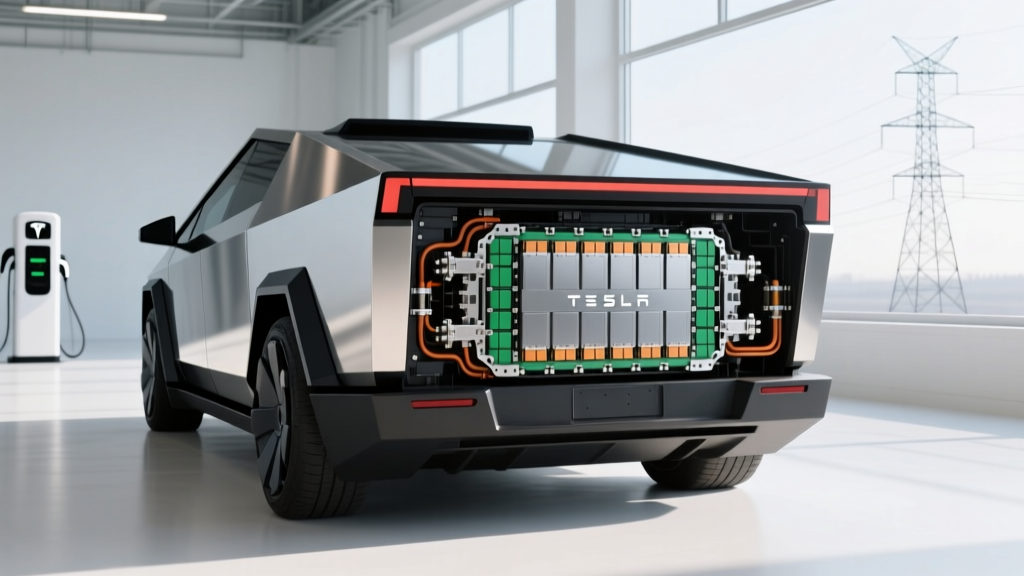
LFP packs tend to degrade more slowly in terms of cycle life — Tesla's LFP-equipped Model 3 RWD units have shown less than 10% degradation at 100,000 miles in fleet data aggregated by Recurrent Auto. NMC packs degrade slightly faster per cycle but start with more capacity, so the practical range impact narrows.
For NIO swap subscribers, degradation is largely abstracted away. Because the battery pool is managed centrally, NIO rotates packs through health checks and retires cells that fall below threshold — meaning the pack you swap in may be healthier than the one you swapped out. This is a fundamentally different ownership model from a fixed-battery EV, where degradation is your problem alone.
Battery Warranty Terms: What's Actually Covered
Federal law in the U.S. mandates that EV batteries carry a minimum warranty of 8 years or 100,000 miles (whichever comes first), and California Air Resources Board (CARB) states extend that to 10 years / 150,000 miles. Most manufacturers set a capacity-retention threshold between 60% and 70% — if your battery falls below that level within the warranty period, the manufacturer replaces or refurbishes it at no cost.
| Manufacturer | Warranty Period | Capacity Threshold | Notes |
|---|---|---|---|
| Tesla (Model 3/Y LFP) | 8 yr / 120,000 mi | 70% | Long-range NMC: 8 yr / 120,000 mi |
| Hyundai / Kia (E-GMP) | 10 yr / 100,000 mi | 70% | Among the longest coverage in the U.S. |
| Ford (Mustang Mach-E) | 8 yr / 100,000 mi | 70% | Covers battery and hybrid components |
| GM (Ultium platform) | 8 yr / 100,000 mi | 70% | Includes Cadillac, Chevrolet EVs |
| NIO (China market) | 8 yr / 160,000 km (~100k mi) | 70% | BaaS subscribers: pack health managed by NIO |
The critical nuance: warranty coverage applies to defects and abnormal degradation, not normal wear. If your pack hits 72% capacity at year seven, you're technically still within spec — even though you've lost nearly a third of your original range. This is where NIO's BaaS model has a structural advantage: the company absorbs that tail risk.
EV Battery Replacement Cost: The Numbers Most Buyers Fear
Out-of-warranty battery replacement remains expensive, but context matters. Most EV batteries never need replacement during typical ownership, and costs have fallen significantly since the early 2010s.
| Vehicle / Pack Size | Battery Capacity | Estimated Replacement Cost | Typical Replacement Trigger |
|---|---|---|---|
| Tesla Model 3 RWD (LFP) | ~60 kWh | $10,000–$14,000 | Rare before 200k+ mi |
| Tesla Model Y LR (NMC) | ~75 kWh | $13,000–$18,000 | Rare before 180k+ mi |
| Hyundai Ioniq 5 (NMC) | ~77.4 kWh | $14,000–$20,000 | Rare before 150k+ mi |
| Ford F-150 Lightning Ext. Range | ~131 kWh | $22,000–$30,000 | Very rare; largest consumer pack |
| NIO 75 kWh (LFP, BaaS) | 75 kWh | N/A (NIO retains ownership) | Swap subscriber; no direct cost |
| NIO 100 kWh (NMC, purchased) | 100 kWh | ¥128,000 (~$17,500 USD) | Under warranty for most owners |
For NIO owners who purchase their battery outright, replacement costs are comparable to other premium EVs. For BaaS subscribers — who pay a monthly fee (roughly ¥980–¥1,280/month in China, or ~$135–$175 USD) — the battery is NIO's property and its replacement is NIO's cost. This is the core economic argument for swapping: you trade a potential five-figure future liability for a predictable monthly expense.
According to IRS §30D rules, a replacement battery purchased separately may qualify for the federal clean vehicle credit under certain conditions, though income caps, sourcing requirements, and MSRP thresholds apply. Consult a tax professional before assuming eligibility.
What Kills an EV Battery Early? Five Degradation Accelerators
Batteries don't die from age alone — they die from stress. The five biggest factors that accelerate capacity loss:
- Frequent DC fast charging above 150 kW: High-current charging generates internal heat and accelerates electrolyte decomposition. Occasional fast charging is fine; daily use on 250–350 kW chargers measurably speeds degradation. NIO's swap model sidesteps this entirely — the station charges the pool of batteries at controlled rates.
- Sustained 100% State of Charge (SoC): Sitting at full charge stresses NMC cathodes. LFP tolerates 100% SoC far better, which is why Tesla recommends daily 100% charging for its LFP vehicles. For NMC, keep daily driving between 20–80%.
- Deep discharges to 0%: Letting the pack drain fully (not just the displayed 0%, but true cell-level depletion after the buffer is exhausted) causes copper dissolution on the anode. Always keep a small reserve.
- Extreme heat exposure: Ambient temperatures above 95°F combined with high SoC is the most damaging combination. Park in shade, use preconditioning, and avoid leaving the car at 100% in a hot garage for days.
- Cold-weather fast charging without preconditioning: Charging a cold NMC or LFP pack at high power causes lithium plating on the anode — a permanent, irreversible capacity loss. Always use the vehicle's navigation-based preconditioning (or manually warm the battery) before DC fast charging in sub-40°F weather.
Monitoring Battery Health: How to Check State of Health (SoH)
State of Health (SoH) is the percentage of your battery's original capacity that remains accessible. A new pack is 100% SoH; at 80% SoH, you've lost 20% of your original range.
Most EVs expose SoH indirectly through the vehicle's infotainment or mobile app. Tesla owners can pull detailed battery health data via third-party tools like Tessie or TeslaFi, which read the vehicle's API. Hyundai and Kia's Bluelink app shows estimated range trends over time. OBD-II dongles paired with apps like Car Scanner or LeafSpy (for Nissan) can read cell-level voltage data for a granular view.
For NIO owners, the NIO app displays battery health status directly, and BaaS subscribers benefit from NIO's internal diagnostics — every swap station runs a health check on each pack before returning it to circulation. If a pack falls below NIO's internal SoH threshold (reportedly around 80%), it's pulled from the rotation for refurbishment or second-life stationary storage use.
Independent verification is also possible: services like Recurrent Auto offer battery health reports based on telematics data, which can be valuable when buying a used EV or documenting warranty claims.
Emerging Battery Tech: Solid-State and Silicon Anodes on the Horizon
NIO has been one of the most aggressive automakers in deploying next-generation cell technology. Its 150 kWh semi-solid-state battery, developed in partnership with WeLion, entered limited circulation in 2024–2025 and is available through the swap network for long-range trips. This pack uses a semi-solid electrolyte and a silicon-carbon anode, achieving an energy density of ~360 Wh/kg — enough to push the ET7 past 620 miles on the CLTC cycle.
However, important caveats apply:
- Semi-solid-state is not fully solid-state. It still contains a small amount of liquid electrolyte. True all-solid-state batteries (from Toyota, Samsung SDI, and others) are projected for limited production around 2028–2030.
- Cost remains prohibitive for mass adoption. NIO's 150 kWh pack reportedly costs roughly ¥300,000 (~$41,000 USD) — more than some entire vehicles. It's offered as a short-term rental through swap stations, not a permanent purchase.
- Silicon anode technology (used by startups like Sila Nanotechnologies and Group14) promises 20–40% energy density gains over graphite anodes and is entering production in select 2026–2027 model-year vehicles. Expect gradual rollout, not a sudden revolution.
For buyers today, NMC and LFP remain the practical choices. The swap-compatible architecture NIO uses does, however, future-proof owners: when next-gen packs become cost-viable, they can simply swap one in without trading vehicles.
NIO Battery Swapping vs. Fixed-Battery Ownership: Which Model Wins?
The swap model isn't for everyone — and NIO remains the only major automaker offering it at scale (with over 2,500 swap stations operational as of early 2026, primarily in China and expanding into Europe). Here's the practical decision framework:
Choose NIO battery swapping (BaaS) if:
- You want to eliminate long-term degradation risk entirely
- You lack reliable home charging and need fast "refuels" (a swap takes ~3–5 minutes)
- You want the flexibility to upgrade pack size for road trips
- You plan to keep the vehicle 5+ years and want predictable battery costs
Choose a traditional fixed-battery EV if:
- You have reliable Level 2 home charging (the cheapest and gentlest way to charge)
- You prefer owning the full vehicle outright with no recurring battery subscription
- You live in a market without swap infrastructure (the U.S. has no NIO swap stations as of 2026)
- You drive less than 12,000 miles/year, making degradation a minimal concern over a typical ownership period
Frequently Asked Questions
How long do EV batteries last in years and miles?
Most modern EV batteries (both LFP and NMC) retain 70–85% of original capacity at 150,000 miles or 10 years. LFP packs tend to last longer in cycle count — 3,000–5,000 full cycles vs. 1,000–2,000 for NMC. In practical terms, that translates to roughly 300,000–500,000 miles of total throughput for LFP before hitting 80% SoH, and 150,000–300,000 miles for NMC. Most batteries are never replaced during the vehicle's usable life.
How much does an EV battery cost to replace?
Out-of-warranty replacement costs range from roughly $10,000 for a 60 kWh pack (Tesla Model 3 RWD) to $30,000 for a 131 kWh pack (Ford F-150 Lightning Extended Range). However, the vast majority of EV batteries never require replacement — degradation is gradual, and most packs still function (with reduced range) well past 150,000 miles. NIO BaaS subscribers pay nothing for replacement; it's included in the subscription.
What does the EV battery warranty actually cover?
Federal minimum is 8 years / 100,000 miles with a 70% capacity retention threshold (60% for some manufacturers). CARB states extend this to 10 years / 150,000 miles. The warranty covers defects and abnormal degradation — not damage from accidents, flooding, or unauthorized modifications. If your battery drops below the threshold within the warranty window, the manufacturer replaces or refurbishes it at no charge.
How do I check and maximize my EV battery health?
Check SoH through your vehicle's app, third-party telematics tools (TeslaFi, Recurrent), or an OBD-II scanner. To maximize longevity: keep NMC packs between 20–80% SoC for daily use (LFP can go to 100%), minimize DC fast charging frequency, precondition before cold-weather charging, avoid leaving the car at full charge in extreme heat, and use Level 2 home charging as your primary method.
LFP vs. NMC — which battery chemistry is better?
Neither is universally better; they serve different needs. LFP wins on cycle life, cost, thermal safety, and daily charging convenience (100% SoC is fine). NMC wins on energy density (more range in the same physical space) and cold-weather performance. If you prioritize long-term durability and lower cost, LFP is the choice. If you need maximum range in a performance or long-range trim, NMC is still the standard. NIO's swap model uniquely lets you choose per trip.
Is NIO battery swapping available in the United States?
As of 2026, NIO does not sell vehicles or operate swap stations in the U.S. market. The swap network is concentrated in China (2,500+ stations) with a growing European presence (Norway, Germany, Netherlands, Denmark, Sweden). U.S. buyers interested in the swap concept should monitor NIO's market entry announcements, but no timeline has been confirmed.