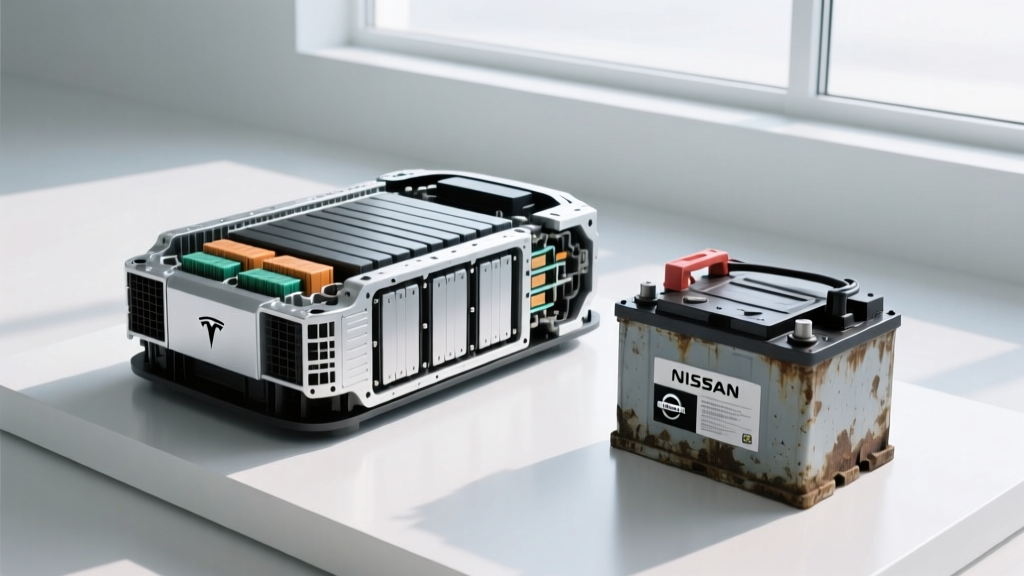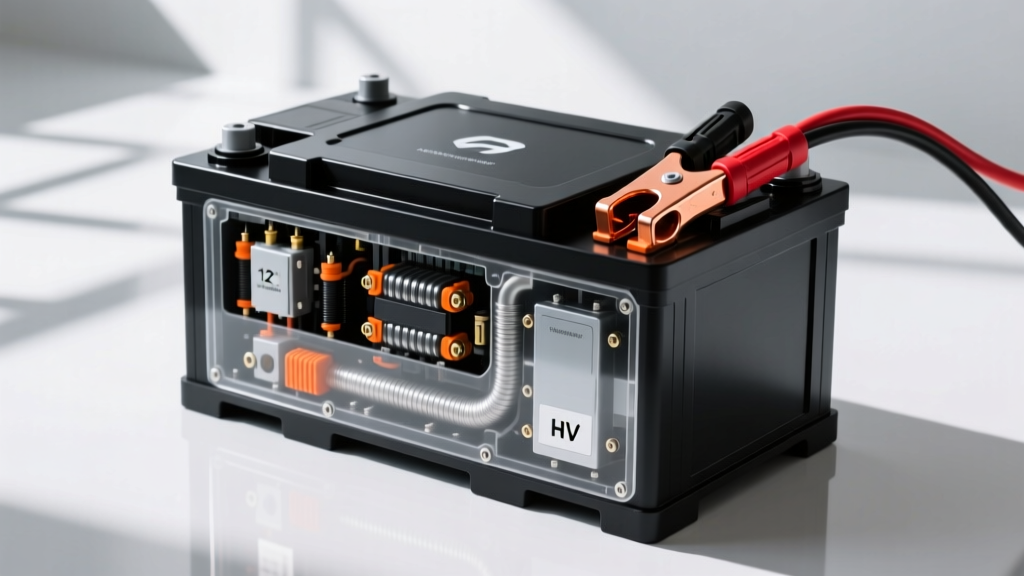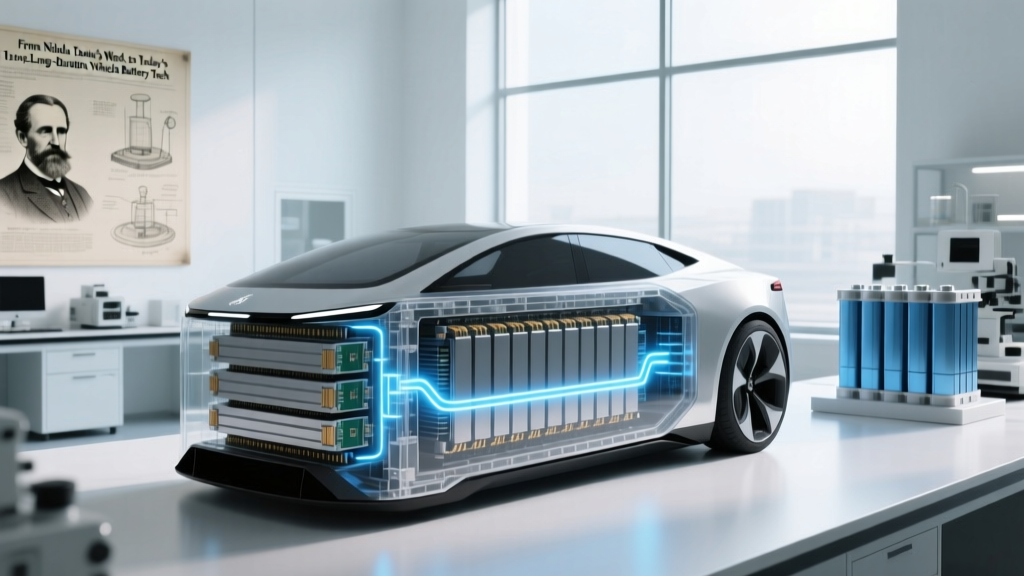
Search for "nikola tesla's work on a long duration vehicle battery" and you will encounter a tangle of history, myth, and modern branding. Nikola Tesla himself never built a car battery — his pioneering work in alternating current, induction motors, and high-frequency electrical systems laid the foundational physics that make today's electric vehicles possible, but the lithium-ion cells powering a 2026 Tesla Model Y or Ford F-150 Lightning are the product of a completely different lineage: John Goodenough's cathode research, Akira Yoshino's first viable lithium-ion cell in 1985, and decades of incremental chemistry refinement. The "Nikola" brand now attached to a hydrogen-truck company only deepens the confusion. What matters for today's EV buyer is not the origin story but the current state of long-duration battery technology — how long these packs actually last, what degrades them, what replacement costs, and what is realistically on the horizon.
How Long Do EV Batteries Actually Last?
Modern EV traction batteries are engineered to outlast the vehicle they are installed in. The typical design target is 1,500 to 2,000 full charge cycles before reaching 80% of original capacity. For a vehicle with 300 miles of EPA range, that translates to roughly 450,000 to 600,000 miles of theoretical use — far beyond the lifespan of most car bodies, suspensions, and interiors.
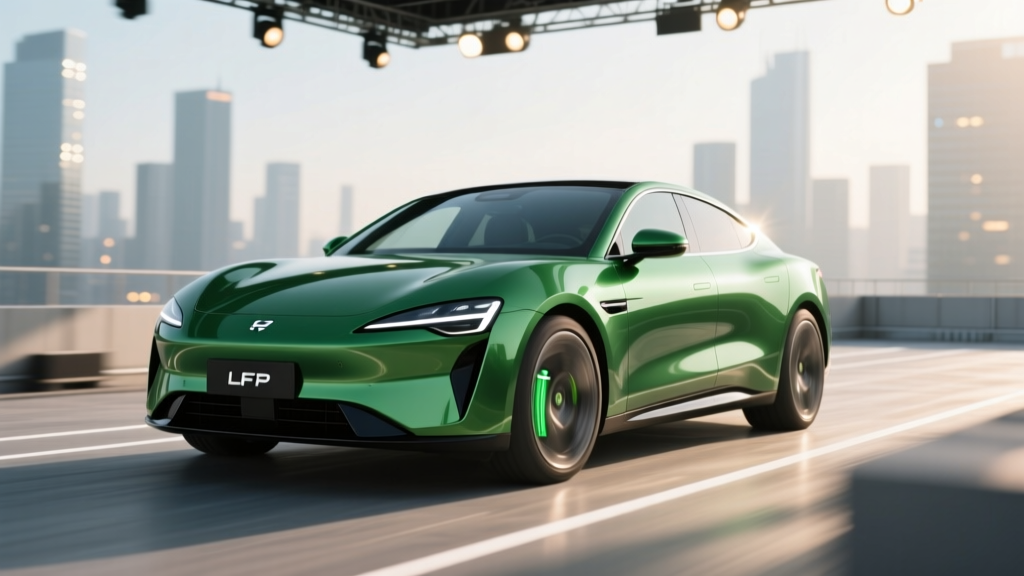
Real-world data from fleet operators and long-term owners tells a more nuanced story. Fueleconomy.gov efficiency data combined with owner-reported degradation logs show that most NMC (nickel-manganese-cobalt) packs lose approximately 5–8% of capacity in the first two years, then settle into a slower degradation curve of roughly 1–2% per year. LFP (lithium iron phosphate) packs, now used in the base Tesla Model 3, Model Y Standard Range, and several Chinese-market vehicles sold globally, tend to show 3–5% loss in year one and then flatten even further.
By year eight, a well-maintained NMC pack typically retains 85–92% of its original capacity. An LFP pack in similar conditions often holds 90–95%. These figures assume moderate climates and reasonable charging habits — extreme heat, habitual DC fast charging to 100%, and deep discharges accelerate the decline.
LFP vs NMC/NCA: The Chemistry Trade-Offs That Matter
The two dominant cathode chemistries in 2026 EVs are NMC (and its close cousin NCA, nickel-cobalt-aluminum) and LFP. Neither is universally "better" — each optimizes for different priorities.
| Attribute | NMC / NCA | LFP |
|---|---|---|
| Energy density | 220–300 Wh/kg (cell level) | 150–200 Wh/kg (cell level) |
| Typical cycle life | 1,000–2,000 cycles to 80% SoH | 2,500–5,000+ cycles to 80% SoH |
| Cold-weather performance | Better low-temp capacity retention | Reduced range in sub-freezing temps; preconditioning critical |
| Cost per kWh (cell) | ~$110–$130 (2026 estimates) | ~$75–$95 (2026 estimates) |
| Thermal stability | Good, but requires robust BMS | Excellent — inherently more resistant to thermal runaway |
| Recommended daily charge limit | 80% for longevity | 100% is acceptable and recommended for SoC calibration |
| Common 2026 applications | Long-range and performance trims (Tesla LR, Hyundai Ioniq 5 LR, Rivian) | Standard-range trims (Tesla Model 3 SR, BYD, base Ford Mustang Mach-E SR) |
Choose NMC/NCA if: You need maximum range per charge, live in a cold climate, or prioritize performance. The higher energy density means a smaller, lighter pack for the same kWh capacity.
Choose LFP if: You charge at home nightly, prioritize longevity and lower replacement risk, live in a moderate or warm climate, and do not need the absolute longest single-charge range. The cycle-life advantage is substantial — LFP packs are realistically a lifetime component for most original owners.
Degradation Data: What the Numbers Show
Degradation is not linear. The pattern across both chemistries is a steeper initial drop (often called "formation loss") followed by a long, gradual decline. Here is a representative degradation trajectory based on aggregated fleet data and long-term owner tracking:
| Time / Mileage | Typical Capacity Retained | Notes |
|---|---|---|
| Year 1 / ~12,000 mi | 94–96% | Initial formation loss; steepest part of the curve |
| Year 2 / ~24,000 mi | 92–94% | Curve begins to flatten |
| Year 4 / ~48,000 mi | 89–92% | Steady-state degradation; ~1–1.5% per year |
| Year 6 / ~72,000 mi | 87–90% | Most packs well within warranty threshold |
| Year 8 / ~96,000 mi | 85–89% | Warranty period ends for most manufacturers |
| Year 10 / ~120,000 mi | 83–87% | Still functional; noticeable range reduction but usable |
LFP packs shift this entire curve upward by roughly 3–5 percentage points. Packs subjected to frequent DC fast charging (more than 3–4 times per week), sustained high ambient temperatures (above 95°F/35°C), or habitual storage at 100% or near-0% state of charge can degrade 2–4% faster over the same period.
Battery Warranty Terms: What Manufacturers Actually Cover
Federal law in the United States mandates that EV battery warranties meet minimum emissions-related coverage standards, and most manufacturers exceed them. Here is how the major brands structure their coverage in the 2026 model year:
| Manufacturer | Warranty Duration | Mileage Limit | Capacity Retention Threshold |
|---|---|---|---|
| Tesla (Model 3/Y) | 8 years | 100,000–120,000 mi (varies by trim) | 70% |
| Hyundai / Kia | 10 years | 100,000 mi | 70% |
| Ford (Mustang Mach-E, F-150 Lightning) | 8 years | 100,000 mi | 70% |
| General Motors (Ultium platform) | 8 years | 100,000 mi | 70% (some models 60% for E-Transit commercial) |
| Rivian | 8 years | 175,000 mi (R1T/R1S) | 70% |
| BMW | 8 years | 100,000 mi | 70% |
The critical detail is the retention threshold. A 70% threshold means the manufacturer will repair or replace the battery only if its capacity drops below 70% within the warranty period. Since typical degradation at 8 years is 11–15%, very few packs actually trigger a warranty claim. The warranty is a safety net, not an expected service event.
Note that warranties cover defects and excessive degradation — they do not cover damage from accidents, flooding, or aftermarket modifications. Some manufacturers also void the warranty if the vehicle is used for rideshare or commercial fleet duty beyond stated limits.
EV Battery Replacement Costs: The Reality in 2026
This is the single most feared number in EV ownership, and it deserves honest, contextualized treatment. Yes, a full battery pack replacement is expensive. No, most owners will never need one.
| Vehicle / Pack Size | Battery Chemistry | Estimated Replacement Cost (Parts + Labor) | Typical Replacement Trigger |
|---|---|---|---|
| Tesla Model 3 SR (~60 kWh) | LFP | $8,000–$12,000 | Rare before 200,000+ mi |
| Tesla Model Y LR (~75 kWh) | NMC | $12,000–$16,000 | Rare before 200,000+ mi |
| Hyundai Ioniq 5 (~77.4 kWh) | NMC | $13,000–$18,000 | Rare before 150,000+ mi |
| Ford F-150 Lightning Ext. Range (~131 kWh) | NMC | $20,000–$30,000 | Very large pack; rare before 200,000+ mi |
| Chevrolet Equinox EV (~85 kWh) | NMC (Ultium) | $14,000–$19,000 | Rare before 150,000+ mi |
| Rivian R1T (~128 kWh Max Pack) | NMC | $20,000–$28,000 | Rare before 175,000+ mi |
These figures come from manufacturer service bulletins, third-party repair shops specializing in EVs, and aggregated insurance claim data. Costs have declined roughly 30–40% since 2020 as cell prices have fallen and module-level repair (replacing individual cell modules rather than the entire pack) has become more common. Many out-of-warranty replacements now involve refurbished or remanufactured packs at a 20–35% discount versus new.
Context matters: the average age of a scrapped passenger vehicle in the US is approximately 12 years and 150,000 miles. Most EV batteries will retain 80%+ capacity at that point. The battery is statistically one of the most durable components in the vehicle — more likely to outlast the infotainment system, suspension, and body panels than to require replacement.
Factors That Accelerate or Extend Battery Life
Battery longevity is not random. The physics of lithium-ion degradation are well understood, and owner behavior meaningfully shifts the curve.
Battery Care Checklist for Maximum Longevity
- Minimize DC fast charging frequency. Occasional road-trip DCFC is fine. Daily DCFC (3+ times per week) accelerates degradation by an estimated 1–3% over the pack's life due to sustained high-current heat stress.
- Avoid extreme state-of-charge storage. For NMC packs, store between 20% and 80% when the vehicle will sit unused for more than a few days. LFP packs can be stored at 100% without significant penalty, but 50–60% remains optimal for multi-week storage.
- Use a Level 2 home charger as your primary charging method. Level 2 charging (7–11 kW, 240V) generates far less heat than DC fast charging and is gentler on cell chemistry.
- Precondition in cold weather. Most EVs allow you to schedule departure preconditioning while plugged in. This warms the battery to optimal operating temperature before driving, reducing the lithium-plating risk that occurs when charging a cold pack.
- Avoid sustained exposure to extreme heat. Parking in shade or a garage in climates where ambient temperatures regularly exceed 95°F (35°C) measurably slows calendar degradation. Battery thermal management systems help but cannot fully offset sustained heat soak.
- Do not habitually discharge to 0%. Occasional low-SoC driving is harmless, but regularly running the pack below 10% stresses the cells and can trigger low-voltage cutoff protections that prevent charging without dealer service.
How to Check and Monitor Battery Health
State of Health (SoH) is the metric that tells you how much of your battery's original capacity remains. Most 2026 EVs surface this data in one of three ways:
- In-vehicle battery health screen. Tesla, Hyundai, BMW, and Rivian provide a battery health indicator in the vehicle settings menu, typically expressed as a percentage. This is calculated by the battery management system (BMS) based on charge/discharge cycle analysis and internal resistance measurements.
- Third-party OBD-II diagnostics. Tools like the OBDLink SX paired with apps such as EV Battery Health or Car Scanner can read BMS-reported SoH, cell voltage variance, and total energy throughput. This is the most detailed method available to consumers.
- Dealer diagnostic report. Any authorized service center can run a full battery diagnostic that provides module-level voltage balance, capacity test results, and a printout suitable for warranty claims. Request this before purchasing any used EV.
For used-EV buyers, a pre-purchase battery health check is the single most important inspection step. A 2022 model with 40,000 miles and 94% SoH is a far better buy than the same model with 90% SoH, even if the price is slightly higher. The 4% difference represents roughly 12–15 miles of range and years of additional useful life.
Emerging Battery Technology: Solid-State and Beyond
The next generational leap in EV batteries is solid-state technology, which replaces the liquid electrolyte in current lithium-ion cells with a solid material (ceramic, sulfide, or polymer). The theoretical advantages are significant: higher energy density (potentially 400–500 Wh/kg at the cell level), faster charging (10–80% in under 10 minutes), improved safety (no flammable electrolyte), and longer cycle life.
However, the gap between laboratory demonstration and mass production remains substantial. As of early 2026:
- Toyota has announced a solid-state battery pilot for limited-production vehicles expected in 2027–2028, with volumes under 10,000 units initially. Mass-market availability is not projected before 2030.
- Samsung SDI is in the pilot-line stage for sulfide-based solid-state cells, targeting 2027 production start for select Hyundai/Kia applications.
- QuantumScape (backed by Volkswagen) continues pre-production validation but has not announced a firm vehicle integration timeline.
- Silicon anode technology (used in the 2026 Tesla Cybertruck and some Porsche Taycan variants) is already in production. It increases energy density by 10–20% over graphite anodes and is the most impactful near-term improvement actually available to buyers today.
Solid-state batteries are real, the engineering progress is genuine, and they will eventually reach production vehicles. But for anyone buying an EV in 2026, current lithium-ion technology — particularly LFP for longevity and NMC for range — is mature, well-understood, and backed by warranty protections that make the replacement-cost fear largely theoretical for original owners.
Frequently Asked Questions
Did Nikola Tesla invent the electric car battery?
No. Nikola Tesla's contributions were in alternating current systems, induction motors, and electromagnetic theory — foundational to electrical engineering but not directly related to electrochemical battery design. The lithium-ion battery was developed by John Goodenough, M. Stanley Whittingham, and Akira Yoshino, who shared the 2019 Nobel Prize in Chemistry for this work. The "Nikola" name in modern EV context is used by Nikola Corporation, a hydrogen and electric truck manufacturer, and by Tesla, Inc. — neither of which was founded by or uses technology directly from Nikola Tesla.
How long do EV batteries last in real-world use?
Most modern EV batteries retain 85–92% of their original capacity at 8 years / 100,000 miles (NMC) or 90–95% (LFP). Full failure requiring replacement before 150,000 miles is statistically rare — well under 2% of vehicles based on fleet data. The battery typically outlasts other major vehicle components.
Is LFP better than NMC?
LFP is better for longevity, cost, and safety. NMC is better for energy density, cold-weather performance, and maximum range per charge. Neither is universally superior — the right choice depends on your climate, driving patterns, and charging access. If you charge at home every night and do not need 350+ miles of range, LFP is the more durable, economical option.
Does frequent fast charging damage the battery?
Occasional DC fast charging (road trips, 1–2 times per week) has minimal measurable impact on modern batteries with active thermal management. Habitual daily DCFC (3+ sessions per week) can accelerate degradation by an estimated 1–3% over the pack's lifetime. Level 2 home charging remains the recommended daily method.
What voids an EV battery warranty?
Common warranty-voiding actions include: unauthorized modifications to the battery or BMS, flood or accident damage, use of non-approved charging equipment that causes damage, and exceeding commercial-use mileage limits stated in the warranty terms. Normal charging, including DC fast charging on public networks, does not void the warranty.
Can I replace just one battery module instead of the whole pack?
Yes, in many vehicles. Module-level repair is increasingly common and significantly cheaper than full-pack replacement — typically $1,500–$4,000 per module depending on the vehicle. This requires a qualified EV technician and is not a DIY procedure due to the high-voltage hazard.