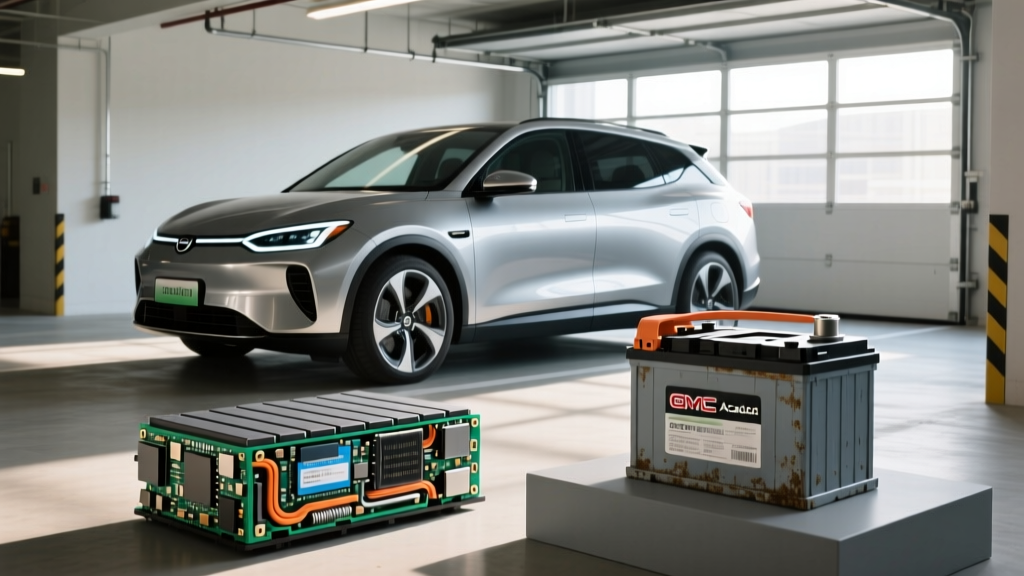
If you follow EV news, you've seen the headlines: solid-state cells promising 600 miles of range, silicon anodes that charge in ten minutes, and sodium-ion packs that ditch expensive lithium entirely. These next gen battery technologies are real — in labs and limited pilot production — but they are not yet in the vehicle sitting on a dealer lot today. What is available right now represents a mature, data-proven ecosystem of lithium-ion chemistries that reliably outlast most owners' time with the car.
This guide cuts through the hype to give you the exact numbers on today's EV battery chemistries, degradation curves, warranty coverage, replacement costs, and care practices — plus a grounded look at what next gen battery breakthroughs might realistically mean for buyers in the late 2020s and beyond.
LFP vs NMC/NCA: The Chemistry Decision You're Already Making
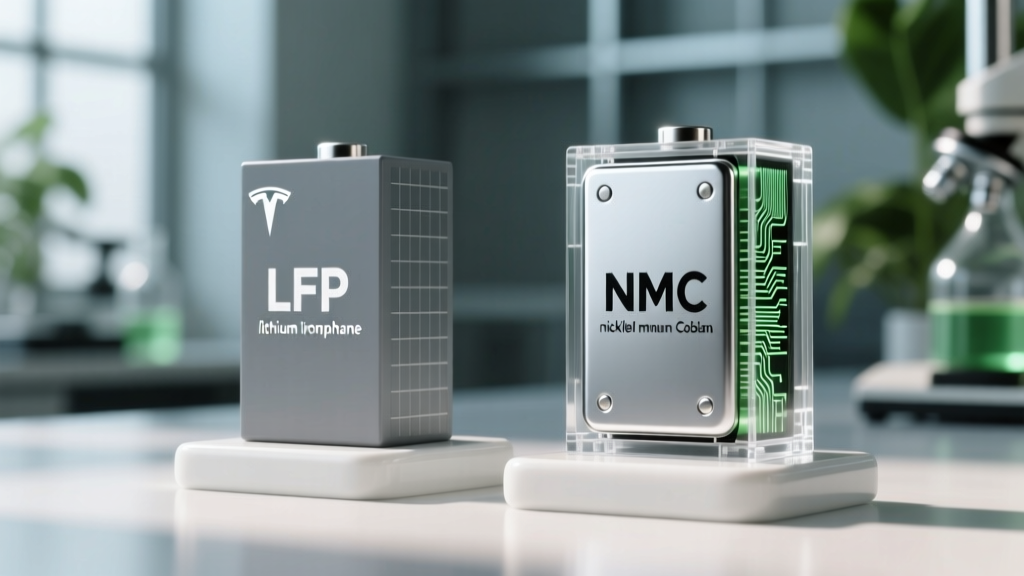
Every EV sold in the US today uses one of two dominant lithium-ion cathode chemistries: LFP (lithium iron phosphate) or NMC/NCA (nickel manganese cobalt / nickel cobalt aluminum). The choice affects your range, charging habits, cold-weather performance, and long-term durability. Most buyers don't realize they're making this decision — but it shows up in the spec sheet.
| Attribute | LFP (Lithium Iron Phosphate) | NMC / NCA (Nickel-based) |
|---|---|---|
| Energy Density | ~160–180 Wh/kg (lower) | ~220–280 Wh/kg (higher) |
| Cycle Life | 3,000–5,000+ cycles | 1,000–2,000 cycles |
| Cold-Weather Performance | Reduced — greater range loss below 32°F | Better low-temp conductivity |
| Cost per kWh | ~$80–100 (lower) | ~$110–140 (higher) |
| Recommended Charge Habit | Can charge to 100% regularly | Best kept 20–80% for daily use |
| Typical Applications (2026) | Tesla Model 3/Y RWD, Ford Mustang Mach-E Select (LFP option), BYD models | Long-range/AWD trims, Hyundai Ioniq 5/6, Rivian, GM Ultium vehicles |
| Thermal Stability | Excellent — less prone to thermal runaway | Good — requires more active thermal management |
Which is better? It depends on your driving pattern. If you commute under 60 miles daily, have home charging, and want maximum calendar life with minimal babysitting, LFP is the pragmatic winner. Charge it to 100% every night and don't worry. If you need 300+ miles of EPA range for frequent road trips, tow a trailer, or live in a sub-freezing climate where every mile counts, NMC/NCA's higher energy density is worth the extra care (keeping state of charge between 20–80% for daily use).
Neither chemistry is fragile. Both are proven across millions of vehicles on the road. The "better" choice is the one that matches how you actually drive.
How Long Do EV Batteries Actually Last? Real Degradation Data
The most common question from prospective EV buyers: "Will I need a new battery in five years?" The data says almost certainly not. Modern EV batteries are engineered to outlast the typical ownership period of the vehicle itself.
Here's what real-world degradation looks like based on fleet data, owner surveys, and manufacturer testing:
Typical EV Battery Degradation Curve
- Year 1 / 15,000 mi: 2–5% capacity loss (initial break-in)
- Year 3 / 45,000 mi: 5–8% total loss
- Year 5 / 75,000 mi: 7–12% total loss
- Year 8 / 120,000 mi: 10–17% total loss
- Year 10 / 150,000 mi: 12–22% total loss (varies significantly by chemistry and thermal management)
Sources: Geotab fleet data analysis, Tesla Impact Reports, Recurrent Auto battery health studies.
Key observations from the data:
- Degradation is non-linear. The steepest drop occurs in the first 12–18 months, then the curve flattens considerably. A battery that's lost 5% in year one might only lose another 5% over the next four years.
- LFP batteries tend to degrade more slowly in cycle life terms, though their lower starting energy density means the absolute range loss may feel similar.
- Liquid-cooled thermal management (standard on Tesla, Hyundai E-GMP, GM Ultium, Rivian) significantly reduces degradation compared to older passive-cooled designs (early Nissan Leaf).
- A 2026 EV with 300 miles of EPA range losing 15% over 8 years still delivers ~255 miles — more than adequate for the vast majority of drivers.
What Does the Battery Warranty Actually Cover?
Federal law mandates a minimum 8-year/100,000-mile warranty on EV battery packs for emissions-related compliance, and every major manufacturer meets or exceeds this baseline. But the details matter — particularly the capacity retention threshold that triggers a warranty claim.
| Manufacturer | Warranty Period | Mileage Limit | Capacity Retention Threshold |
|---|---|---|---|
| Tesla (Model 3/Y) | 8 years | 100,000–120,000 mi (varies by trim) | 70% |
| Hyundai / Kia (E-GMP) | 10 years | 100,000 mi | 70% |
| GM (Ultium platform) | 8 years | 100,000 mi | 70% |
| Ford (Mach-E, F-150 Lightning) | 8 years | 100,000 mi | 70% |
| Rivian (R1T, R1S) | 8 years | 175,000 mi | 70% |
| BMW (i4, iX, i7) | 8 years | 100,000 mi | 70% |
What the 70% threshold means in practice: If your battery's usable capacity drops below 70% of its original value within the warranty period, the manufacturer will repair or replace modules (or the full pack) to bring it back above that threshold. In reality, warranty claims for capacity loss are rare — Recurrent Auto's analysis of over 15,000 EVs found that fewer than 2% of vehicles needed battery replacement under warranty for degradation.
What's typically NOT covered: Cosmetic issues, damage from accidents or flooding, modifications to the battery system, or capacity loss from consistent abuse (e.g., repeatedly leaving the vehicle at 100% SoC in extreme heat for extended periods). Normal degradation is covered; neglect is not.
EV Battery Replacement Cost: What the Numbers Really Show
This is where fear-mongering runs rampant. Yes, a full battery pack replacement is expensive. But the context most headlines omit is that the vast majority of EV batteries never need replacement during the vehicle's useful life.
| Vehicle / Pack Size | Battery Capacity | Estimated Replacement Cost | When Typically Needed |
|---|---|---|---|
| Tesla Model 3 RWD (LFP) | ~60 kWh | $12,000–$16,000 | Rarely before 200,000+ mi |
| Hyundai Ioniq 5 Long Range | 77.4 kWh | $15,000–$20,000 | Rarely before 200,000+ mi |
| Ford F-150 Lightning Ext. Range | ~131 kWh | $25,000–$35,000 | Rarely before 200,000+ mi |
| Rivian R1T Large Pack | ~135 kWh | $25,000–$30,000 | Rarely before 200,000+ mi |
| Chevrolet Equinox EV | ~85 kWh | $16,000–$22,000 | Rarely before 200,000+ mi |
Critical context: Battery replacement costs have been declining steadily — roughly 8–12% per year over the past decade, according to BloombergNEF battery price surveys. By the time a 2026 EV actually needs a new pack (likely 2038–2040+), replacement costs will be substantially lower. Additionally, most failures that do occur involve individual module replacement rather than the entire pack, reducing costs to $2,000–$8,000 depending on the vehicle.
The comparison that matters: a gasoline vehicle's engine and transmission replacement at $5,000–$10,000+ is roughly analogous — and ICE powertrains fail far more frequently than EV battery packs within the first 150,000 miles.
Factors That Accelerate (or Preserve) Battery Life
Battery degradation isn't random. It's driven by measurable, controllable factors. Understanding these lets you maximize your pack's useful life — and your resale value.
Battery Care Best Practices
- Limit DC fast charging to road trips. Occasional fast charging (1–2x per week) has minimal impact. Daily DC fast charging at 150+ kW accelerates degradation by an estimated 1–3% additional loss over 5 years compared to Level 2 home charging. The heat generated during high-C-rate charging stresses cells.
- Avoid extreme state-of-charge storage. Don't leave your EV sitting at 100% SoC for days, especially in hot weather. For NMC/NCA batteries, set your daily charge limit to 80%. LFP batteries tolerate 100% better and actually benefit from periodic full charges for cell balancing.
- Precondition before fast charging. Most modern EVs automatically precondition the battery when you navigate to a DC fast charger. This brings cells to optimal temperature (~95–104°F) and reduces stress. If your vehicle has manual preconditioning, use it.
- Park in shade or garages during extreme heat. Sustained battery temperatures above 104°F (40°C) accelerate calendar degradation. A garage in Phoenix summer can be 20°F cooler than an exposed driveway.
- Don't baby it excessively. Modern battery management systems (BMS) are sophisticated. They maintain buffers (typically 3–5% at the top and bottom), manage thermal conditioning, and balance cells automatically. Drive the car normally — the engineering protects you.
What About Cold Weather?
Cold temperatures don't permanently damage batteries, but they temporarily reduce available capacity and increase internal resistance. Expect 20–35% range reduction at 20°F compared to 70°F, per fueleconomy.gov testing data. This range loss is fully reversible when temperatures rise. The long-term degradation impact of cold-weather operation is actually less than hot-weather operation — heat is the primary enemy of lithium-ion chemistry.
How to Check and Monitor Your Battery's State of Health
State of Health (SoH) is the percentage of your battery's current maximum capacity relative to its original capacity. A new EV has 100% SoH; at 85% SoH, your 300-mile EV effectively has ~255 miles of range.
How to check SoH:
- In-vehicle displays: Tesla, Hyundai, Kia, BMW, and Rivian provide battery health indicators in the vehicle settings menu. These show estimated remaining capacity as a percentage or bar graph.
- OBD-II diagnostic tools: Devices like the OBDLink MX+ paired with apps such as LeafSpy (Nissan), Scan My Tesla, or ABRP's battery health feature can read the BMS-reported SoH directly.
- Third-party services: Companies like Recurrent Auto offer free battery health reports that compare your pack's degradation to a fleet of identical vehicles. You connect via the vehicle's telematics API — no hardware needed.
- Dealer diagnostics: Any authorized service center can pull a detailed battery health report during routine service. Request this when buying a used EV.
When to be concerned: If your SoH drops more than 3% in a single year after the initial break-in period, or if you notice sudden range drops that don't correlate with temperature, schedule a diagnostic. Isolated cell or module failures can sometimes be repaired without full pack replacement.
Next Gen Battery Technologies: Solid-State, Silicon Anode, and What's Real
The "next gen battery" label gets applied to several distinct technologies at very different stages of maturity. Here's a grounded assessment of each — what they promise, where they stand, and when (or whether) they'll reach your driveway.
Solid-State Batteries
Solid-state cells replace the liquid electrolyte with a solid conductor (ceramic, sulfide, or polymer). The theoretical benefits are substantial: higher energy density (potentially 400–500 Wh/kg vs. today's 250–280 Wh/kg for NMC), faster charging without lithium plating risk, improved safety (no flammable electrolyte), and longer cycle life.
Current status (2026): Toyota has announced limited production of solid-state-equipped vehicles for 2027–2028, initially in small volumes for the Japanese market. Samsung SDI and QuantumScape continue pilot production with automotive partners. No mass-market US vehicle currently offers solid-state cells. Realistic widespread availability: 2029–2032, initially in premium segments at significant cost premiums.
Silicon Anode Batteries
Replacing graphite anodes with silicon increases theoretical capacity by up to 10x at the anode level. Companies like Sila Nanotechnologies and Group14 Technologies have begun shipping silicon-dominant anode materials to battery manufacturers.
Current status (2026): Silicon anode blends (5–15% silicon content) are already in production cells from Panasonic and others, providing modest energy density gains. High-silicon-content anodes (50%+) remain in validation. Expect incremental improvements rather than a sudden leap — a 10–20% energy density gain over the next 3–5 years is plausible.
Sodium-Ion Batteries
Sodium-ion chemistry eliminates lithium and cobalt entirely, using abundant sodium instead. Energy density is lower (~120–160 Wh/kg), but cost is significantly cheaper.
Current status (2026): BYD and CATL are producing sodium-ion cells in China for low-cost city EVs with 150–200 mile range. These are unlikely to reach US-market vehicles before 2028–2029, and will likely be limited to budget segments where range is secondary to price.
The honest takeaway: Today's lithium-ion batteries — both LFP and NMC — are already excellent. Next gen battery tech will improve energy density and reduce cost incrementally, but it will not make current EVs obsolete. Buy based on today's proven technology; the improvements coming are evolutionary, not revolutionary.
Frequently Asked Questions
How long do EV batteries last in years and miles?
Based on fleet data from Geotab, Recurrent Auto, and manufacturer reports, the average EV battery retains 80–88% of its original capacity at 8 years / 100,000 miles. Most modern packs are projected to deliver usable service for 15–20 years or 200,000+ miles before capacity drops below 70%. Complete failure is rare; gradual degradation is the norm.
How much does an EV battery cost to replace in 2026?
Full pack replacement ranges from approximately $12,000 for a ~60 kWh LFP pack (Tesla Model 3 RWD) to $35,000 for a ~131 kWh pack (F-150 Lightning Extended Range). However, most replacements needed are individual module repairs at $2,000–$8,000. Under 2% of EVs require full pack replacement within the warranty period, according to Recurrent Auto data.
What does the EV battery warranty cover?
Federal law requires a minimum 8-year/100,000-mile warranty. Most manufacturers guarantee the battery will retain at least 70% of its original capacity during this period. If it drops below 70%, the manufacturer repairs or replaces modules or the full pack. Hyundai and Kia extend this to 10 years/100,000 miles. Coverage applies to normal-use degradation — not accident damage, flooding, or extreme abuse.
How do I check my EV battery's health?
Most 2026 EVs include a battery health indicator in the vehicle settings. For more detailed data, use an OBD-II scanner with an EV-compatible app (Scan My Tesla, LeafSpy), or sign up for a free service like Recurrent Auto that reads SoH via your vehicle's connected telematics. Always request a battery health report when purchasing a used EV.
LFP vs NMC — which battery chemistry is better for me?
Choose LFP if: you commute under 60 miles daily, want to charge to 100% without worry, prioritize maximum cycle life, and don't regularly drive in sub-freezing weather. Choose NMC/NCA if: you need 300+ miles of range, tow frequently, live in cold climates, or take regular road trips where energy density matters. Both chemistries are proven and durable — the right choice depends on your driving pattern, not which is objectively "superior."
Will next gen battery tech make my current EV obsolete?
No. Solid-state, silicon anode, and sodium-ion technologies will bring incremental improvements in energy density and cost over the next 5–8 years, but they will debut in premium or niche segments first. Current lithium-ion batteries already deliver 250–350+ miles of range, 15–20 year lifespans, and declining costs. The vehicle you buy today will remain practical and competitive for its entire useful life regardless of what comes next in the lab.