If you're researching new Tesla batteries — whether you're about to take delivery of a Model 3, considering a used Model Y, or simply trying to understand what's inside the pack — the chemistry, degradation behavior, and long-term cost picture matter far more than the sticker range number. Tesla currently deploys two distinct battery chemistries across its lineup, each with measurable trade-offs in energy density, cycle life, cold-weather performance, and cost. This guide breaks down exactly what's inside a 2026 Tesla, how those batteries age, what the warranty actually covers, and what a replacement would cost if you ever need one.
What Chemistry Is Inside New Tesla Batteries?
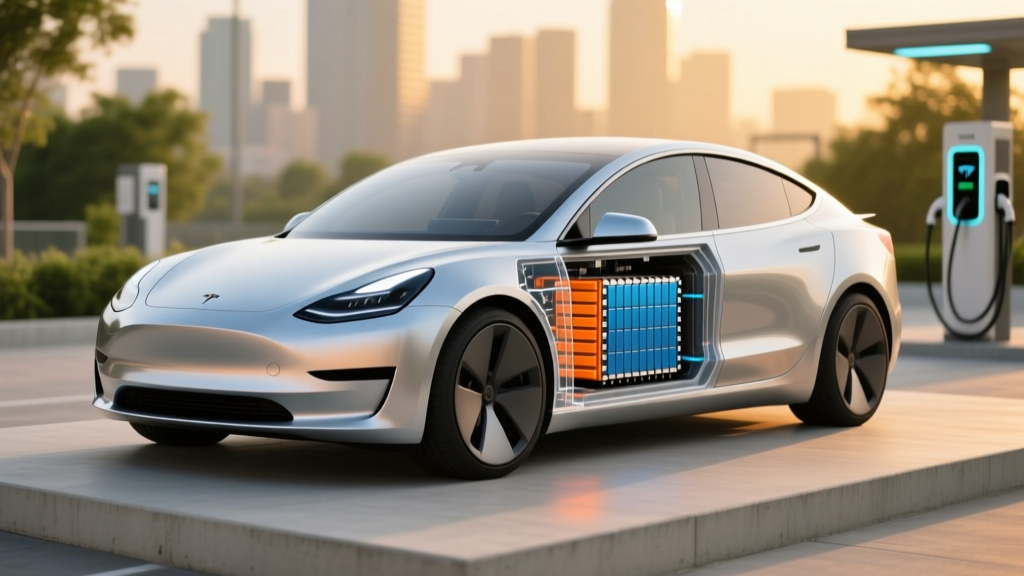
Tesla sources cells from multiple suppliers — primarily CATL and Panasonic — and uses two chemistries depending on the trim and model. Understanding the difference is the single most important factor in predicting how your battery will perform over a decade of ownership.
LFP (Lithium Iron Phosphate) powers the standard-range, rear-wheel-drive variants of the Model 3 and Model Y. These are the most affordable trims and use prismatic cells manufactured primarily by CATL. LFP chemistry is known for exceptional cycle life, thermal stability, and lower raw-material cost, but it sacrifices energy density and cold-weather efficiency.
NMC (Nickel Manganese Cobalt) / NCA (Nickel Cobalt Aluminum) is used in Long Range and Performance variants across the Model 3, Model Y, Model S, and Model X. These cylindrical cells (including Panasonic's 4680 format in select Model Y builds) prioritize energy density and cold-weather performance, enabling the longer EPA range figures on higher trims.
| Attribute | LFP (Standard Range) | NMC/NCA (Long Range / Performance) |
|---|---|---|
| Energy Density | ~160 Wh/kg (cell level) | ~250–300 Wh/kg (cell level) |
| Typical Cycle Life | 3,000–5,000+ cycles | 1,000–2,000 cycles |
| Cold-Weather Performance | Greater range loss below 32°F (~15–25% reduction) | Better cold tolerance (~10–18% reduction) |
| Recommended Daily SoC | 100% (Tesla recommends weekly full charge) | 80% daily; 100% for trips only |
| Cost to Manufacture | Lower (no cobalt or nickel) | Higher (nickel and cobalt dependent) |
| Models Using (2026) | Model 3 RWD, Model Y RWD | Model 3 LR/Perf, Model Y LR/Perf, Model S, Model X |
| Thermal Stability | Higher (less prone to thermal runaway) | Lower (requires robust BMS and cooling) |
The practical implication: if you buy a Standard Range Model 3 or Model Y, you're getting a battery that will likely outlast the vehicle itself in terms of cycle life, but you'll see more range compression in winter and a slightly lower total pack energy (typically ~57–60 kWh usable). Long Range buyers get more range per charge and better winter behavior from a ~75–82 kWh usable pack, but the chemistry degrades faster per cycle — though still slowly enough that most owners will never see a problematic loss.
How Long Do Tesla Batteries Actually Last?
Tesla's own 2024 Impact Report (the most recent published dataset) showed that Model 3 and Model Y batteries retained an average of 85% of original capacity after 200,000 miles. That translates to roughly 15% degradation over what is, for most owners, 13–17 years of driving at the US average of 12,000–15,000 miles per year.
Real-world degradation is not linear. Most owners experience a steeper initial drop — roughly 2–4% in the first year or 10,000–20,000 miles — followed by a much slower, nearly linear decline of about 1–1.5% per year thereafter. Here's what that curve looks like in practice:
Typical Tesla Battery Degradation Curve (NMC Long Range, average use):
- Year 1 / 15,000 mi: ~3–4% loss (96–97% SoH)
- Year 3 / 45,000 mi: ~6–8% loss (92–94% SoH)
- Year 5 / 75,000 mi: ~9–11% loss (89–91% SoH)
- Year 8 / 120,000 mi: ~12–15% loss (85–88% SoH)
- Year 10 / 150,000 mi: ~14–17% loss (83–86% SoH)
LFP packs in Standard Range models typically show 1–3% less degradation at equivalent mileage due to higher cycle-life chemistry. Data synthesized from Tesla Impact Reports, Recurrent Auto battery studies, and owner fleet tracking. Individual results vary based on charging habits and climate.
For context, a Model Y Long Range with an EPA-estimated 310 miles of range when new would still show roughly 260–270 miles of range at the 8-year mark under typical use. That's still sufficient for the vast majority of daily driving and road trips with planned charging stops.
Tesla's Battery Warranty: What's Actually Covered
Tesla's battery and drive unit warranty is one of the more straightforward in the industry, but the details matter — especially the capacity retention threshold.
| Model / Trim | Warranty Period | Mileage Limit | Minimum Capacity Retention |
|---|---|---|---|
| Model 3 RWD (LFP) | 8 years | 100,000 miles | 70% |
| Model 3 Long Range / Performance | 8 years | 120,000 miles | 70% |
| Model Y (all trims) | 8 years | 120,000 miles | 70% |
| Model S / Model X | 8 years | 150,000 miles | 70% |
The warranty guarantees that your high-voltage traction battery will retain at least 70% of its original usable capacity for the stated period or mileage, whichever comes first. If degradation drops below 70% within that window, Tesla will repair or replace the pack at no cost. This is a capacity-based warranty — it does not cover damage from accidents, flooding, or unauthorized modifications.
It's worth noting: based on current fleet data, warranty claims for excessive degradation are rare. The vast majority of Tesla batteries never fall below the 70% threshold within the warranty period. According to data aggregated by Recurrent Auto, fewer than 1.5% of EV batteries across all brands have required warranty replacement for degradation.
Tesla Battery Replacement Cost: What to Budget For
This is the question that generates the most anxiety, and it deserves an honest answer with real numbers. Battery replacement is expensive — but it's also increasingly rare, and costs have been declining as cell prices fall and refurbishment programs expand.
| Model | Battery Size (Usable) | Chemistry | Estimated Replacement Cost (2026) | Typical Replacement Timeline |
|---|---|---|---|---|
| Model 3 RWD | ~57 kWh | LFP | $10,000–$13,000 | Rarely needed within 15+ years |
| Model 3 Long Range / Perf | ~75 kWh | NMC/NCA | $13,000–$16,000 | Rarely needed within 12–15 years |
| Model Y (all trims) | ~60–75 kWh | LFP or NMC | $12,000–$16,000 | Rarely needed within 12–15 years |
| Model S | ~95 kWh | NMC/NCA | $18,000–$22,000 | Rarely needed within 10–14 years |
| Model X | ~95 kWh | NMC/NCA | $18,000–$23,000 | Rarely needed within 10–14 years |
These figures include the battery pack and labor but can vary by region and service center. Tesla also offers remanufactured packs at a lower cost than brand-new units, and third-party EV repair shops are beginning to offer module-level repairs (replacing only the degraded modules within the pack) for $5,000–$8,000 in some cases.
The critical context: at current degradation rates, most Tesla batteries will retain 80%+ capacity at 200,000 miles. The vehicle is far more likely to be retired for other reasons (body damage, electronics failure, owner upgrade) before the battery requires replacement. As Tesla's own warranty documentation notes, the battery is designed to outlast the vehicle's typical ownership lifecycle.
What Degrades a Tesla Battery — and What Doesn't
Not all miles and charges are created equal. Battery degradation is driven by a combination of factors, and understanding them lets you make informed trade-offs rather than living in fear of every Supercharger session.
Factors That Accelerate Degradation
- Sustained high State of Charge (SoC): Regularly parking at 100% SoC (especially for NMC/NCA batteries) stresses the cathode. Tesla's own recommendation is 80% daily for NMC, 100% only before trips.
- Frequent DC fast charging to high SoC: Occasional Supercharging is fine; daily fast-charging to 100% generates sustained heat and accelerates electrolyte breakdown. Tesla's thermal management system mitigates this significantly, but physics still applies.
- Extreme heat exposure: Prolonged parking in 100°F+ ambient temperatures without thermal management active can cause calendar degradation. Tesla's Sentry Mode and cabin overheat protection help, but a garage is better.
- Deep discharge cycles: Regularly driving the battery below 10% SoC and leaving it there stresses the anode. Charge promptly after reaching low SoC.
- High-mileage fast-charge patterns: Fleet data shows vehicles that fast-charge more than 3x per week show ~1–2% additional degradation at 100,000 miles vs. primarily Level 2-charged vehicles.
Factors That Are Less Impactful Than Feared
- Occasional Supercharging: Road-trip fast charging a few times per month has minimal measurable impact thanks to Tesla's active liquid cooling during charging.
- Cold weather use: Cold reduces available range temporarily (the ions move slower) but does not cause permanent degradation as long as you don't fast-charge a frozen battery — Tesla's preconditioning prevents this.
- Regenerative braking: Regen returns energy at relatively low C-rates and does not meaningfully accelerate wear.
For LFP owners, the rules are simpler: Tesla recommends charging to 100% at least once per week to allow the battery management system (BMS) to calibrate accurately. LFP's voltage curve is very flat, so the BMS needs full-charge events to estimate remaining capacity correctly. This is the opposite of NMC best practices and confuses many new owners.
How to Check Your Tesla's Battery Health (SoH)
Tesla does not expose a direct State of Health (SoH) percentage in the vehicle's interface, but there are several reliable methods to estimate it:
Method 1: Range Comparison at Full Charge. Charge your NMC vehicle to 100% (or your LFP vehicle to 100% after a calibration cycle) and note the displayed range. Compare this to the original EPA-rated range for your model. A Model Y Long Range that showed 310 miles when new but now displays 275 miles at 100% has roughly 88.7% SoH. Note that displayed range is affected by driving style and temperature — perform this check at moderate temperatures (60–75°F) for accuracy.
Method 2: Third-Party Apps. Services like Tessie, Stats (for Tesla), and Recurrent Auto connect to your Tesla's API and track estimated SoH over time using charge/discharge data. These provide more granular trend lines than a single full-charge check.
Method 3: Service Center Diagnostic. If you suspect abnormal degradation (e.g., a sudden range drop or a warranty claim situation), a Tesla Service Center can run a full pack diagnostic that measures actual usable kWh capacity against the original spec. This is the definitive measurement.
Method 4: OBD-II Scanners. Devices like the OBDeleven or Tesla-specific diagnostic tools can read pack voltage, individual module balance, and estimated capacity — though this requires technical knowledge to interpret correctly.
Beyond Today's Cells: Solid-State and Silicon Anode Timelines
If you're wondering whether to wait for next-generation battery technology, here's a grounded assessment of what's on the horizon and when it might actually reach production Tesla vehicles.
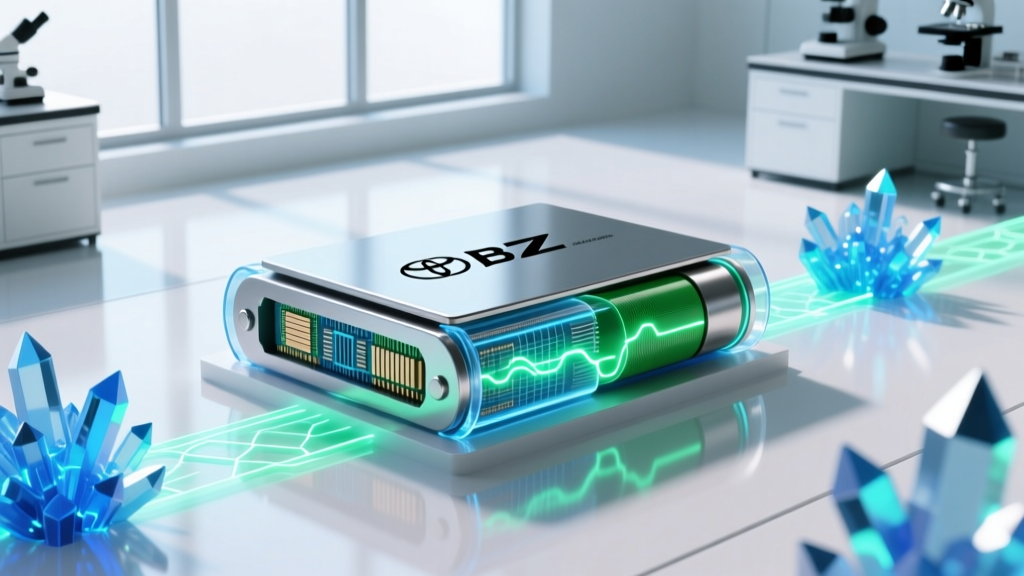
Solid-State Batteries. Solid-state cells replace the liquid electrolyte with a solid material, promising higher energy density (~400+ Wh/kg at cell level), faster charging, and improved safety. Companies like QuantumScape, Toyota, and Samsung SDI have demonstrated working prototypes, but manufacturing at automotive scale remains the primary bottleneck. Realistic timeline for commercial availability in a production Tesla: 2029–2032 at the earliest, and likely in limited, premium-tier models first.
Silicon Anode Cells. Replacing graphite anodes with silicon can boost energy density by 20–40%. Companies like Sila Nanotechnologies and Group14 are already supplying silicon-dominant anode materials to some manufacturers. Tesla's 4680 cells are expected to incorporate increasing silicon content in coming revisions. Timeline: incremental improvements through 2027–2028, not a single breakthrough moment.
Sodium-Ion Batteries. CATL has begun shipping sodium-ion packs in Chinese-market vehicles. These offer lower cost and better cold performance than LFP but significantly lower energy density (~120–140 Wh/kg). Potential use case in Tesla: future ultra-affordable models or stationary storage. Timeline for US Tesla vehicles: uncertain, likely post-2028 if at all.
The honest take: today's new Tesla batteries — both LFP and NMC — are mature, well-understood products with proven longevity. Waiting for solid-state is waiting for a technology that is at least 3–5 years from your driveway, and when it arrives, it will debut at a premium price. For buyers purchasing in 2026, current chemistry is the rational choice.
LFP vs NMC: Which New Tesla Battery Is Right for You?
Choose LFP (Standard Range) if:
- You want the lowest purchase price ($38,990 Model 3 RWD, $44,990 Model Y RWD as of early 2026)
- You can charge at home daily and don't need maximum range per charge
- You prefer simpler charging habits (charge to 100% freely)
- You live in a moderate climate or can garage your vehicle in winter
- You plan to keep the car 10+ years and want maximum cycle life
Choose NMC/NCA (Long Range / Performance) if:
- You regularly drive 200+ miles between charging opportunities
- You live in a cold climate where LFP's winter range loss would be painful
- You want AWD (standard on all Long Range and Performance trims)
- You need the quickest acceleration (Performance trims: 3.1–3.5 sec 0–60 mph)
- You frequently road-trip and value fewer charging stops
Neither chemistry is universally "better." LFP wins on longevity, cost, and simplicity. NMC wins on range, cold-weather capability, and performance. The right choice depends entirely on your driving patterns, climate, and budget.
Frequently Asked Questions
How long do new Tesla batteries last in years and miles?
Based on fleet data, most Tesla batteries retain 80–85% of original capacity at 200,000 miles, which equates to roughly 13–17 years of average US driving. LFP packs in Standard Range models may retain even more. Catastrophic failure (requiring replacement) is rare — fewer than 1.5% of EV batteries across all brands have needed warranty replacement according to Recurrent Auto data.
How much does a Tesla battery replacement cost in 2026?
Out-of-warranty replacement costs range from approximately $10,000 for a Model 3 RWD (LFP, ~57 kWh) to $22,000+ for a Model S or Model X (~95 kWh). Remanufactured packs and module-level repairs can reduce costs. However, the vast majority of Tesla batteries never need replacement during the vehicle's useful life.
What does the Tesla battery warranty actually cover?
Tesla warrants the high-voltage traction battery for 8 years and 100,000–150,000 miles (depending on model) against capacity loss below 70% of original. This covers degradation but not physical damage from accidents, flooding, or unauthorized modifications. The warranty is transferable to subsequent owners.
How do I check my Tesla battery's State of Health?
The simplest method is to charge to 100% and compare displayed range to the original EPA figure. Third-party apps like Tessie or Recurrent Auto provide more detailed SoH tracking via Tesla's API. For a definitive measurement, a Tesla Service Center can run a full pack capacity diagnostic.
Is LFP better than NMC for Tesla batteries?
Neither is universally better. LFP offers longer cycle life (3,000–5,000+ cycles vs. 1,000–2,000), lower cost, and simpler charging habits (100% OK). NMC offers higher energy density (more range per kWh), better cold-weather performance, and enables AWD and Performance trims. Choose based on your climate, range needs, and budget.
Does frequent Supercharging damage my Tesla battery?
Occasional Supercharging for road trips has negligible impact thanks to Tesla's active liquid thermal management. However, fleet data shows that vehicles fast-charging 3+ times per week show approximately 1–2% additional degradation at 100,000 miles compared to primarily Level 2 home-charged vehicles. For daily charging, a home Level 2 charger remains the gentler option.
Will solid-state batteries make my Tesla obsolete?
Solid-state batteries remain in pre-commercial development for automotive-scale production. Realistic availability in a Tesla vehicle is 2029–2032 at the earliest, likely at a premium price. Current LFP and NMC batteries are mature, well-understood technology with proven 200,000+ mile lifespans. Waiting for solid-state is not a practical purchase strategy in 2026.
For official Tesla warranty terms and specifications, see Tesla's Battery Warranty page. For EPA range and efficiency data by model and trim, consult fueleconomy.gov.