Today's EV Battery Landscape: Beyond a Single Chemistry
If you shopped for an electric vehicle five years ago, nearly every pack used the same nickel-manganese-cobalt (NMC) formula. In 2026, that's no longer true. Automakers now offer new types of batteries tailored to different priorities — from the lithium iron phosphate (LFP) packs in the Tesla Model 3 Standard Range and Ford Mustang Mach-E Select to the high-nickel NMC cells in the Hyundai Ioniq 5 and Rivian R1T. Understanding what's inside the pack matters because chemistry dictates range, charging speed, longevity, and cold-weather behavior — and it's the single biggest factor in whether your EV holds value over a decade.
This guide breaks down the chemistries you can actually buy today, the degradation data behind them, what warranties really cover, and which emerging technologies are worth watching versus which remain years from your driveway.
LFP vs NMC vs NCA: Chemistry Trade-Offs Explained
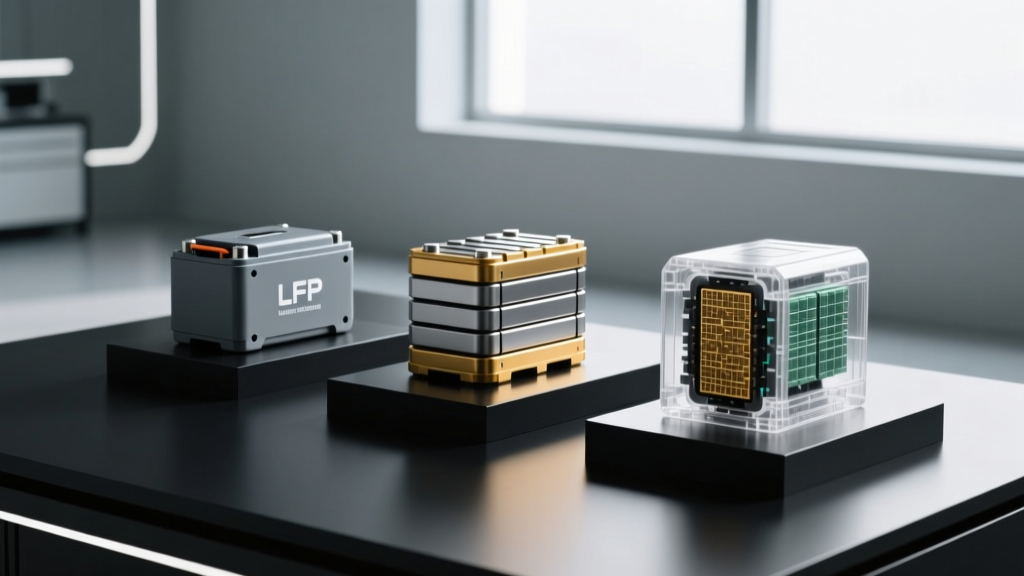
The two dominant cathode chemistries in 2026 consumer EVs are LFP (lithium iron phosphate) and NMC (nickel-manganese-cobalt), with NCA (nickel-cobalt-aluminum) appearing in some Tesla and Panasonic-built packs. Each has distinct physics-level trade-offs.
| Attribute | LFP (LiFePO₄) | NMC / NCA |
|---|---|---|
| Energy Density | ~160–180 Wh/kg (lower) | ~220–300 Wh/kg (higher) |
| Typical Cycle Life | 3,000–6,000+ cycles | 1,000–2,000 cycles |
| Cold Performance (below 20°F) | Noticeable range loss, slower charging | Better low-temp discharge, preconditioning helps |
| Cost per kWh | ~$90–$110 (lower) | ~$130–$160 (higher) |
| Recommended SoC for Daily Use | Can charge to 100% regularly | Best kept at 80% daily, 100% for trips |
| Thermal Stability | Excellent — very low thermal runaway risk | Good with active BMS management |
| Notable 2026 Applications | Tesla Model 3 RWD, Ford Mach-E Select, Rivian Standard | Hyundai Ioniq 5, Chevy Equinox EV, BMW iX, Tesla Long Range |
Which Chemistry Is Better — LFP or NMC?
Neither is universally superior; the answer depends on your driving pattern. Choose LFP if you charge at home daily, drive under 250 miles between charges, want maximum cycle life, and don't regularly face sub-freezing winters. LFP's tolerance for 100% daily charging means you can keep the pack full without accelerated degradation — a significant practical advantage. Choose NMC if you need maximum range per charge, frequently road-trip in cold climates, or tow heavy loads. NMC's higher energy density translates directly to more miles in the same physical pack size, and it handles cold-weather discharge more gracefully.
How Long Do EV Batteries Actually Last?
The short answer: far longer than most buyers assume. Data aggregated from fleet operators, manufacturer reports, and owner tracking platforms like Recurrent shows that the average modern EV battery loses roughly 5–8% of its original capacity in the first 100,000 miles, with degradation curving gently afterward. Packs are engineered with a usable buffer — a 77.4 kWh NMC pack in the Ioniq 5 might have 82+ kWh of gross capacity, with the bottom and top ~3% locked off by the battery management system (BMS) to protect cell health.
Typical Degradation Curve (NMC, Liquid-Cooled)
| Mileage | Avg Capacity Retention | Real-World Example |
|---|---|---|
| New | 100% | EPA 310 mi → 310 mi usable |
| 30,000 mi | ~96–97% | ~300 mi usable |
| 60,000 mi | ~94–95% | ~293 mi usable |
| 100,000 mi | ~92–94% | ~287 mi usable |
| 150,000 mi | ~88–91% | ~276 mi usable |
| 200,000 mi | ~85–89% | ~268 mi usable |
Data reflects liquid-cooled NMC packs in moderate climates. LFP packs often show even slower degradation. Source: Recurrent fleet data, manufacturer warranty thresholds.
Most EV batteries will outlast the vehicle's body, interior, and suspension components. Catastrophic pack failure (sudden, total loss) is exceedingly rare in liquid-cooled systems — degradation is a slow, predictable slope.
Battery Warranty Terms: What's Actually Covered
Federal law mandates that EV battery warranties cover a minimum of 8 years / 100,000 miles (10 years / 150,000 miles in CARB states like California, New York, and Massachusetts). But the critical detail is the capacity retention threshold — the point at which the manufacturer must repair or replace the pack.
| Automaker | Warranty Period | Capacity Threshold | Notes |
|---|---|---|---|
| Tesla (Model 3/Y LFP) | 8 yr / 120,000 mi | 70% retention | LFP packs on Standard Range |
| Tesla (Long Range/Performance) | 8 yr / 120,000 mi | 70% retention | NMC/NCA packs |
| Hyundai / Kia | 10 yr / 100,000 mi | 70% retention | Among the longest coverage |
| Ford (Mach-E, F-150 Lightning) | 8 yr / 100,000 mi | 70% retention | LFP on Select, NMC on GT/Extended |
| GM (Ultium platform) | 8 yr / 100,000 mi | 70% retention | Covers Bolt EV/EUV, Equinox EV, Blazer EV |
| Rivian | 8 yr / 175,000 mi | 70% retention | Higher mileage cap for R1 fleet |
| BMW | 8 yr / 100,000 mi | 70% retention | Covers i4, iX, i7 |
The 70% threshold means that if your 310-mile EPA-rated EV drops below ~217 miles of range under standard test conditions within the warranty window, the manufacturer must remedy it — typically by replacing defective modules, not the full pack. Warranty claims for gradual degradation below 70% remain uncommon; the vast majority of packs retain well above that mark.
EV Battery Replacement Cost: When and How Much
Full pack replacement is rarely needed during a vehicle's first ownership cycle, but it's a legitimate concern for high-mileage drivers and used-EV buyers. Costs vary enormously by pack size, chemistry, and whether you need a new, remanufactured, or salvaged unit.
| Vehicle / Pack Size | Chemistry | New OEM Pack | Remanufactured / Module Repair | Typical Need Timeline |
|---|---|---|---|---|
| Tesla Model 3 RWD (~60 kWh) | LFP | $12,000–$15,000 | $7,000–$10,000 | 200,000+ mi (if ever) |
| Hyundai Ioniq 5 (~77.4 kWh) | NMC | $16,000–$20,000 | $9,000–$13,000 | 180,000+ mi |
| Ford F-150 Lightning Ext. (~131 kWh) | NMC | $25,000–$32,000 | $14,000–$20,000 | 150,000+ mi |
| Chevy Equinox EV (~85 kWh) | NMC (Ultium) | $17,000–$22,000 | $10,000–$14,000 | 180,000+ mi |
| BMW iX xDrive50 (~111.5 kWh) | NMC | $22,000–$28,000 | $13,000–$18,000 | 175,000+ mi |
Two important caveats: First, many failures involve individual modules, not the entire pack — a single module swap can cost $1,500–$4,000 and restore full capacity. Second, as battery manufacturing scales and the IRS §30D clean vehicle credit incentivizes domestic battery sourcing, replacement pack prices have trended downward roughly 8–12% per year since 2023.
What Actually Degrades an EV Battery — and What Doesn't
EV batteries degrade from two mechanisms: calendar aging (time and temperature) and cycle aging (charge-discharge use). Here's what the data shows about the factors that matter most.
Factors That Accelerate Degradation
- Frequent DC fast charging above 150 kW — Sustained high-current sessions generate heat that stresses cells. Occasional road-trip fast-charging is fine; daily 250 kW sessions will measurably accelerate wear over 100,000+ miles.
- Storing at 100% SoC in hot weather — A fully charged pack sitting in 95°F+ ambient heat experiences the fastest calendar aging. This is the single worst habit for NMC packs.
- Repeated deep discharges below 10% — Running the pack to near-empty regularly stresses the anode. The BMS buffer protects against true zero, but habitual low-SoC driving adds cycle wear.
- Extreme cold charging without preconditioning — Forcing high kW into a cold battery (below 32°F) can cause lithium plating on the anode, a permanent capacity loss mechanism.
Factors With Minimal Impact (Myth-Busting)
- Daily Level 2 home charging — Slow 7–11 kW charging generates negligible heat and is the healthiest routine for any pack.
- Regenerative braking — The charge pulses from regen are well within safe C-rates and don't meaningfully affect longevity.
- Partial charges (e.g., 40% to 70%) — Shallow cycles are actually gentler than full 0–100% cycles.
Battery Care Best Practices
- Set daily charge limit to 80% for NMC; 100% is fine for LFP
- Use DC fast charging for road trips, not daily commuting
- Enable battery preconditioning when navigating to a charger (Tesla, Hyundai, Ford all offer this)
- Avoid leaving the car at 100% SoC for more than 24 hours in hot weather
- Plug in during extreme cold to let the thermal management system maintain pack temperature
- Charge to 100% at least once per month on NMC to allow the BMS to balance cells
How to Monitor Your Battery's State of Health (SoH)
State of Health (SoH) is the percentage of original capacity your pack currently holds. Most owners never need to worry about it, but monitoring SoH is valuable for peace of mind and for used-EV transactions.
Built-In Tools
- Tesla: The Service menu (hold the model badge on the About screen) displays a battery health test that runs over ~24 hours and reports SoH as a percentage.
- Hyundai / Kia: The EV battery health indicator appears in the cluster or infotainment system on 2024+ models; dealers can pull a detailed SoH report via the KDS diagnostic tool.
- GM (Ultium): The myChevrolet / myCadillac app surfaces a battery health indicator; OnStar can provide detailed diagnostics.
- Ford: FordPass shows a battery health status; dealers can run a full SoH scan.
Third-Party and DIY Methods
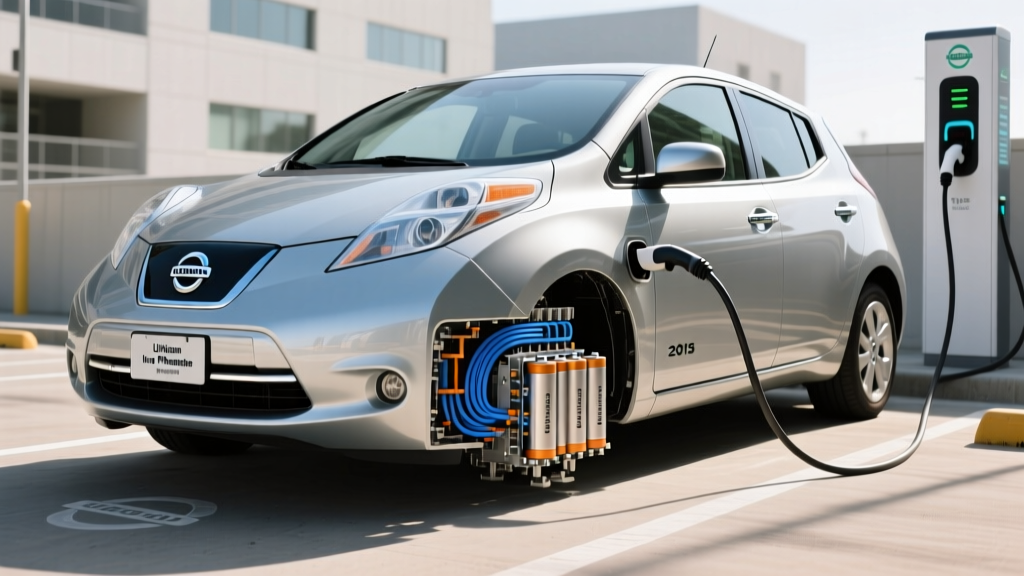
OBD-II dongles paired with apps like Car Scanner or LeafSpy (for Nissan Leaf) can read BMS-reported SoH directly. The most accurate DIY method is a controlled test: charge to 100%, note the kWh drawn from your charger (accounting for ~10% charging loss), and compare it to the pack's original usable capacity. According to fueleconomy.gov, you can also track your real-world efficiency over time — a consistent drop in miles per kWh at the same ambient temperature can indicate degradation.
Emerging Battery Tech: Solid-State, Silicon Anode, and Beyond
Several next-generation battery technologies are in active development, but it's critical to separate laboratory milestones from production reality.
Solid-State Batteries
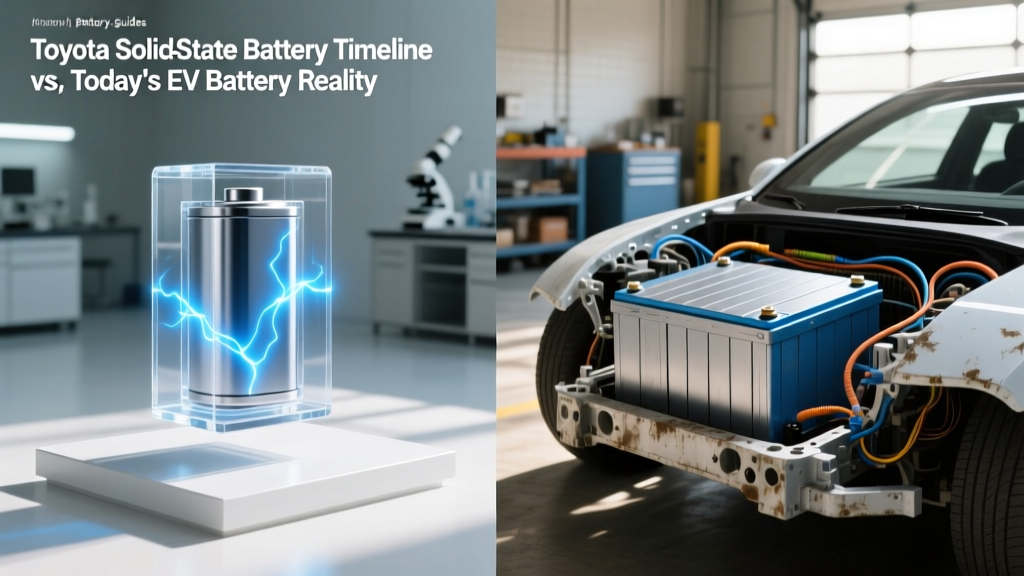
Solid-state cells replace the liquid electrolyte with a solid conductor, promising higher energy density (~400+ Wh/kg), faster charging, and improved safety. Toyota has announced a 2027–2028 production timeline for a solid-state EV with ~750 km (466 mi) of range and 10-minute 10–80% charging. QuantumScape is supplying prototype cells to Volkswagen's PowerCo division. However, no solid-state battery is currently available in any consumer EV as of 2026. Manufacturing yield, cost (currently 3–5× NMC per kWh), and cell-scale production remain unsolved challenges. Realistic consumer availability: 2028–2030 at the earliest, likely in limited, premium-segment vehicles first.
Silicon Anode Technology
Replacing graphite anodes with silicon can boost energy density by 20–40%. Companies like Sila Nanotechnologies and Group14 are supplying silicon-dominant anode materials to battery manufacturers. Mercedes-Benz's upcoming G-Class EV is expected to use silicon anode cells from Factorial Energy. This technology is closer to market than solid-state, with initial production vehicles appearing in 2026–2027. The trade-off is cycle life — silicon expands significantly during charging, which has historically limited longevity, though recent composite solutions have improved durability.
Sodium-Ion Batteries
Sodium-ion chemistry eliminates lithium and cobalt entirely, using abundant sodium instead. CATL has begun mass production for Chinese-market vehicles, with energy density around 140–160 Wh/kg — suitable for short-range city EVs but not long-range highway vehicles. US availability is uncertain and likely 2028+. The advantage is cost and supply chain independence, not performance.
Frequently Asked Questions
How long do EV batteries last in years and miles?
Modern liquid-cooled EV batteries are designed to last 15–20 years or 200,000+ miles before reaching 70–80% of original capacity. Fleet data from Recurrent shows most packs retain 90%+ capacity at 100,000 miles. Full replacement during the first ownership cycle is uncommon.
How much does it cost to replace an EV battery in 2026?
A full OEM replacement pack costs $12,000–$32,000 depending on capacity and chemistry. However, most out-of-warranty repairs involve individual module replacement at $1,500–$4,000 per module. Prices continue to decline as manufacturing scales and domestic production expands under IRA incentives.
What does the EV battery warranty actually cover?
Federal law requires a minimum of 8 years / 100,000 miles of coverage (10/150,000 in CARB states). The warranty covers defects and capacity loss below a threshold — typically 70% of original capacity. If your pack drops below this mark within the warranty period, the manufacturer must repair or replace it at no cost.
How can I check my EV battery health at home?
Many 2024+ EVs include a battery health indicator in the infotainment system or companion app. You can also use an OBD-II scanner with EV-specific software to read BMS-reported State of Health. For a manual check, charge to 100% and compare the kWh consumed (minus ~10% charging loss) to your pack's rated usable capacity.
Is LFP better than NMC for daily driving?
For most daily-driving scenarios — commuting, errands, home charging — LFP is the more durable and lower-maintenance choice. It tolerates 100% daily charging, offers 3–5× more cycle life, and costs less. NMC remains the better choice for buyers who need maximum range, regularly drive in cold climates, or tow frequently.
Will solid-state batteries make current EVs obsolete?
Not in the near term. Solid-state batteries remain in pre-production as of 2026, with realistic consumer availability in 2028–2030. Even then, they'll debut in premium vehicles at high prices. Current NMC and LFP packs offer excellent longevity and performance for the vast majority of drivers, and the used-EV market won't be disrupted overnight.