Why Battery Chemistry Matters More Than Range Stickers
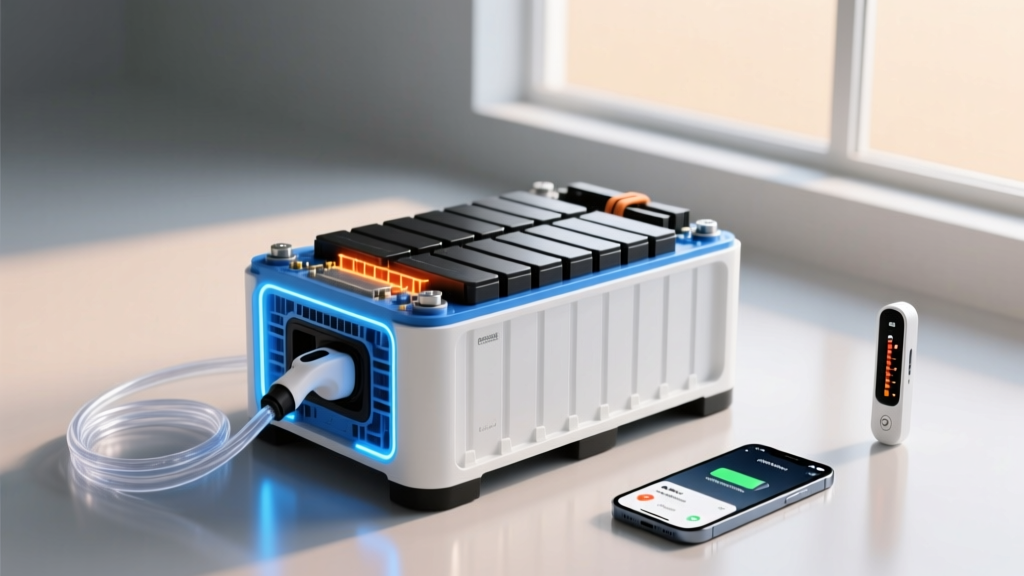
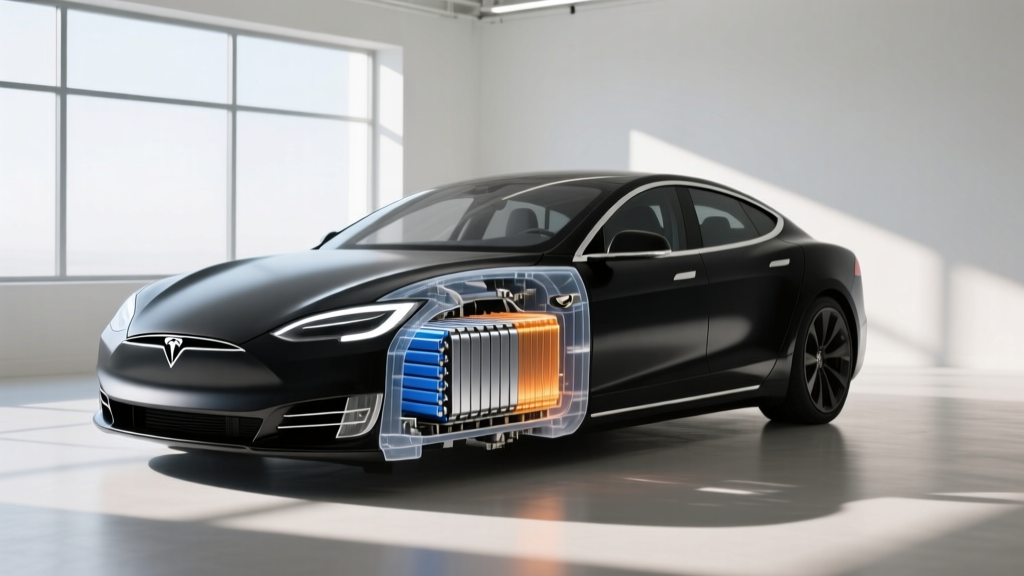
When shopping for an electric vehicle in 2026, the single most consequential spec isn't the EPA range number on the window sticker — it's the battery chemistry underneath the floor. The new battery technology entering showrooms this year spans two dominant lithium-ion chemistries (LFP and NMC/NCA), each with fundamentally different trade-offs in energy density, longevity, cold-weather performance, and cost. Understanding these differences will determine how your EV ages over the next decade, how much range you'll retain at 100,000 miles, and whether you'll ever face a five-figure replacement bill.
This guide breaks down exactly what's available now, what's on the horizon, and how to protect the most expensive component in your vehicle.
LFP vs NMC/NCA: The Chemistry Showdown
Every EV sold in the US in 2026 uses one of two cathode chemistries: Lithium Iron Phosphate (LFP) or Nickel Manganese Cobalt / Nickel Cobalt Aluminum (NMC/NCA). Both are lithium-ion, but their performance characteristics diverge sharply.
| Attribute | LFP (Lithium Iron Phosphate) | NMC/NCA (Nickel-based) |
|---|---|---|
| Energy Density (Wh/kg, cell-level) | 160–200 Wh/kg | 220–300 Wh/kg |
| Typical Cycle Life (to 80% SoH) | 2,000–5,000+ cycles | 1,000–2,000 cycles |
| Cold-Weather Performance | Reduced; slower charging below 32°F | Better low-temp conductivity |
| Thermal Stability | Excellent; higher onset temp for thermal runaway (~270°C) | Good; lower onset (~210°C) |
| Cost (per kWh, pack-level, 2026) | ~$90–$110/kWh | ~$120–$150/kWh |
| Cobalt Content | None | Varies; low-cobalt NMC trending |
| Recommended Charge Habit | Can charge to 100% regularly | Best kept 20–80% daily; 100% for trips |
| Notable 2026 US Models | Tesla Model 3/Y RWD, Ford Mustang Mach-E Select (LFP), Chevrolet Equinox EV (base) | Hyundai Ioniq 5, Kia EV6, Tesla Model 3/Y Long Range, Ford F-150 Lightning Extended |
Which is better? It depends on your use case. If you charge at home daily, want maximum longevity, and don't need 350+ miles of range, LFP is the pragmatic choice. If you need maximum range in a single charge, drive frequently in sub-freezing climates, or want the fastest DC charging speeds, NMC/NCA delivers. Neither chemistry is universally superior — but LFP's cost advantage and cycle-life dominance are shifting the market. According to IEA Global EV Outlook data, LFP's global share in EV batteries rose from ~35% in 2022 to over 50% by 2025.
How Long Do EV Batteries Actually Last?
The short answer: most EV batteries outlast the vehicles they power. Real-world fleet data from 2024–2026 consistently shows average degradation of 1–2% per year for liquid-cooled packs under normal use. Here's what the data actually shows:
Typical Degradation Curve (Liquid-Cooled Packs, Normal Use):
- Year 1 / 15,000 mi: ~2–3% loss (initial "formation" drop)
- Year 3 / 45,000 mi: ~5–7% total loss from new
- Year 5 / 75,000 mi: ~8–10% total loss
- Year 8 / 120,000 mi: ~12–16% total loss
- Year 10+ / 150,000+ mi: ~15–20% total loss (still above 80% SoH)
Tesla's 2024 Impact Report showed that Model 3/Y batteries retain approximately 85% of original capacity at 200,000 miles — well beyond the typical vehicle lifespan. Hyundai and Kia's NMC packs have shown similar trajectories in fleet data, with most Ioniq 5 owners reporting 90%+ State of Health (SoH) at 50,000 miles.
The critical insight: battery degradation is not linear. You'll see a steeper drop in the first year or two (the "formation" phase where the solid electrolyte interphase layer stabilizes), then a long, gradual decline. Catastrophic failure — where a battery suddenly dies — is extraordinarily rare in liquid-cooled packs. What you'll experience instead is a slow reduction in usable range: a 310-mile EPA-rated vehicle might deliver 275 miles at 100,000 miles.
What Does the Battery Warranty Actually Cover?
Federal law mandates a minimum battery warranty of 8 years / 100,000 miles (or 10 years / 150,000 miles in CARB states like California, New York, and Massachusetts). Here's how major manufacturers structure coverage in 2026:
| Manufacturer | Warranty Period | Capacity Threshold | Notes |
|---|---|---|---|
| Tesla | 8 yr / 100,000 mi (LR: 8 yr / 120,000 mi) | 70% retention | Covers defects + degradation below threshold |
| Hyundai / Kia | 10 yr / 100,000 mi | 70% retention | Among the longest standard coverage |
| Ford | 8 yr / 100,000 mi | 70% retention | Covers battery + electric drive components |
| General Motors (Chevy/Cadillac) | 8 yr / 100,000 mi | 70% retention | Ultium platform coverage |
| BMW | 8 yr / 100,000 mi | 70% retention | Transferable to second owner |
| Rivian | 8 yr / 175,000 mi | 70% retention | Extended mileage coverage for adventure use |
The 70% retention threshold is industry standard. If your battery drops below 70% of original capacity within the warranty period, the manufacturer must repair or replace it at no cost. In practice, very few owners ever hit this threshold under normal use — it's designed as a safety net against defective cells or premature degradation, not routine aging.
Important caveat: warranties typically exclude damage from aftermarket modifications, flooding, fire, or improper charging equipment. They also generally do not cover gradual range loss above the 70% threshold. Always read the specific warranty booklet for your model.
How Much Does an EV Battery Cost to Replace?
This is the question that haunts prospective EV buyers. The honest answer: most owners will never need a full battery replacement. But if you do — whether from a defect outside warranty, accident damage, or buying a high-mileage used EV — here are realistic 2026 replacement costs:
| Vehicle / Battery Size | Battery Chemistry | Approx. Replacement Cost (parts + labor) | When Typically Needed |
|---|---|---|---|
| Tesla Model 3 RWD (60 kWh, LFP) | LFP | $8,000–$12,000 | Rarely; LFP packs show 85%+ SoH at 200k mi |
| Tesla Model Y Long Range (82 kWh, NMC) | NMC | $12,000–$16,000 | Typically 200,000+ mi if at all |
| Hyundai Ioniq 5 (77.4 kWh, NMC) | NMC | $10,000–$15,000 | Rarely before 150,000 mi |
| Ford F-150 Lightning Ext. Range (131 kWh, NMC) | NMC | $18,000–$28,000 | Largest packs cost most; still rare before 150k mi |
| Chevrolet Equinox EV (85 kWh, NMC) | NMC | $10,000–$14,000 | GM Ultium modular design allows partial replacement |
| Nissan Ariya (91 kWh, NMC) | NMC | $12,000–$16,000 | Passive air cooling may accelerate long-term degradation |
Two trends are driving costs down: pack-level costs have fallen roughly 10–15% since 2023, and modular pack designs (like GM's Ultium) allow technicians to replace individual modules rather than the entire battery. A single degraded module replacement might cost $2,000–$4,000 instead of a full pack swap.
For context: at $12,000 for a replacement at 200,000 miles, that's $0.06 per mile in battery cost — far less than the cumulative fuel, oil, and transmission maintenance a comparable gas car would consume over the same distance.
What Actually Kills an EV Battery (And How to Prevent It)
Battery degradation is driven by five primary factors. Understanding them is the difference between a pack that lasts 250,000 miles and one that needs attention at 120,000.
Battery Care Best Practices
- Avoid chronic DC fast charging: Occasional road-trip fast charging is fine, but daily 150+ kW DC sessions accelerate degradation by ~30–50% compared to Level 2 home charging. Use DCFC for trips; charge at home on Level 2 (7–11 kW) for daily needs.
- Keep State of Charge between 20–80% for NMC/NCA: Sustained storage at 100% SoH stresses nickel-based cathodes. Set your charge limit to 80% for daily driving. LFP batteries are an exception — manufacturers like Tesla and Ford recommend charging LFP to 100% at least weekly for accurate BMS calibration.
- Minimize extreme-temperature exposure: Battery degradation accelerates above 95°F and below 15°F. Park in shade or a garage when possible. Use preconditioning (available on most 2026 EVs) to warm or cool the battery while plugged in before driving.
- Don't let the battery sit at 0% or 100% for extended periods: If storing your EV for more than a week, aim for ~50% SoC. Deep discharge (0%) is more damaging than full charge for long-term storage.
- Use regenerative braking moderately in extreme cold: In sub-20°F conditions, high regen settings can stress cold cells. Most 2026 EVs automatically limit regen in cold temps, but manually reducing it on older models helps.
How to Check Your Battery's State of Health
State of Health (SoH) is the percentage of original capacity your battery retains. Monitoring it is essential — especially if you're buying a used EV or approaching a warranty threshold.
Methods for checking SoH in 2026:
- In-vehicle displays: Tesla (under Service > Battery Health), Hyundai/Kia (via the infotainment engineering menu or dealer scan), and BMW provide SoH readouts directly in the car.
- OBD-II scanners with EV support: Devices like the OBDLink SX paired with apps such as EV Health or Leaf Spy (for Nissan) can read battery SoH, cell voltage variance, and pack temperature from the vehicle's CAN bus.
- Dealer diagnostics: Any authorized service center can pull a full battery health report. Request this before purchasing a used EV — it's the most authoritative source.
- Charge-tracking apps: Tools like Tessie (for Tesla) or Recurrent estimate SoH by tracking charge sessions and range over time. Less precise than a direct BMS readout, but useful for trend monitoring.
A healthy battery should show cell voltage variance of less than 20–30 mV across all modules. Variance above 50 mV suggests an imbalanced or degraded cell group that may need module-level service.
New Battery Technology on the Horizon: Solid-State and Silicon Anodes
The most discussed new battery technology in 2026 is solid-state batteries, which replace the liquid electrolyte with a solid ceramic or polymer conductor. The theoretical benefits are significant: 40–50% higher energy density, faster charging (potential 10–80% in under 10 minutes), and improved thermal safety. However, the reality is more measured.
Current status (2026):
- Toyota has announced a solid-state battery for a limited-production EV expected in 2027–2028, targeting 750 km (~465 mi) WLTP range. This is not yet available for purchase and production volumes will be extremely limited initially.
- Samsung SDI is piloting solid-state cells with select automakers but has not announced a production vehicle timeline.
- QuantumScape continues testing with Volkswagen Group, with prototype cells showing 800+ cycle retention, but commercial availability remains projected for 2028–2030.
Silicon anode technology is closer to market. Companies like Sila Nanotechnologies and Group14 are supplying silicon-dominant anode materials to battery manufacturers, enabling 10–20% energy density improvements over graphite anodes. Mercedes-Benz's upcoming G-Class EV (announced for late 2026) is expected to feature a silicon anode battery from Group14. This is incremental improvement, not a revolution — but it's real and shipping.
Sodium-ion batteries are also entering the conversation for budget EVs. CATL has begun shipping sodium-ion packs in Chinese-market vehicles, with energy densities around 140–160 Wh/kg. These are lower-cost and cobalt-free but currently too energy-dense-limited for US long-range vehicles. Watch for sodium-ion in entry-level urban EVs by 2028–2029.
The honest timeline: solid-state batteries will not meaningfully affect the US EV market before 2029–2030. If you're buying an EV in 2026, today's LFP and NMC chemistries are mature, well-understood, and backed by extensive warranty coverage. Waiting for solid-state means waiting 4+ years for limited availability at premium prices.
Frequently Asked Questions
How long do EV batteries last in years and miles?
Based on 2024–2026 fleet data, most liquid-cooled EV batteries retain 80–85% of original capacity at 200,000 miles or 12–15 years. Many packs exceed 250,000 miles before dropping below the 70% warranty threshold. LFP batteries in particular show exceptional longevity, with some Tesla Model 3 RWD fleet vehicles retaining 88%+ SoH at 150,000 miles. The battery will almost certainly outlast the rest of the vehicle's mechanical and cosmetic life.
How much does an EV battery cost to replace in 2026?
Full pack replacement costs range from $8,000 to $28,000 depending on battery size and chemistry. A Tesla Model 3 LFP pack runs $8,000–$12,000; a Ford F-150 Lightning's 131 kWh NMC pack runs $18,000–$28,000. However, most replacements are covered under the 8-year/100,000-mile federal warranty, and modular pack designs increasingly allow $2,000–$4,000 module-level repairs instead of full swaps. The vast majority of EV owners never pay for a battery replacement.
What does the EV battery warranty actually cover?
Federal law requires a minimum 8 years / 100,000 miles of battery warranty coverage (10 years / 150,000 miles in CARB states). Coverage includes defects in materials or workmanship and capacity loss below a specified threshold — typically 70% of original capacity. If your battery drops below 70% SoH within the warranty period, the manufacturer replaces or repairs it at no cost. Warranties are generally transferable to second owners. Exclusions typically include accident damage, flood, fire, and aftermarket modifications.
How do I check and maximize my EV battery health?
Check SoH through your vehicle's built-in display (Tesla, BMW), an OBD-II EV scanner app, or a dealer diagnostic report. To maximize longevity: charge primarily on Level 2 at home, set daily charge limits to 80% for NMC or 100% for LFP, avoid daily DC fast charging, precondition the battery in extreme temperatures, and don't store the vehicle at 0% or 100% SoC for extended periods. Following these practices, degradation typically stays within 1–2% per year.
LFP vs NMC — which battery chemistry is better?
Neither is universally better. LFP wins on longevity and cost: 2,000–5,000+ cycle life, no cobalt, lower per-kWh cost, and you can charge to 100% daily without accelerated degradation. It's ideal for daily commuters with home charging. NMC/NCA wins on range and cold performance: higher energy density means more miles per kWh, better DC charging speeds, and better conductivity in sub-freezing temperatures. If you need 350+ miles of range, tow frequently, or live in cold climates, NMC is the stronger choice. For most buyers who charge at home and drive under 50 miles daily, LFP offers the better long-term value proposition.
Sources: EPA fuel economy data via fueleconomy.gov; IRS §30D tax credit rules via irs.gov; manufacturer warranty documentation from Tesla, Hyundai, Ford, and GM press sites (2026 model year).