If you're shopping for an electric vehicle or trying to understand what powers the one in your driveway, the battery pack is the single most expensive and consequential component. New EV batteries in 2026 span a wider range of chemistries, capacities, and price points than ever before — and the gap between marketing claims and real-world longevity is narrowing fast. This guide cuts through the noise with hard data on chemistry trade-offs, degradation curves, warranty coverage, replacement economics, and the habits that keep your pack healthy for 200,000+ miles.
LFP vs NMC vs NCA: Choosing the Right Chemistry
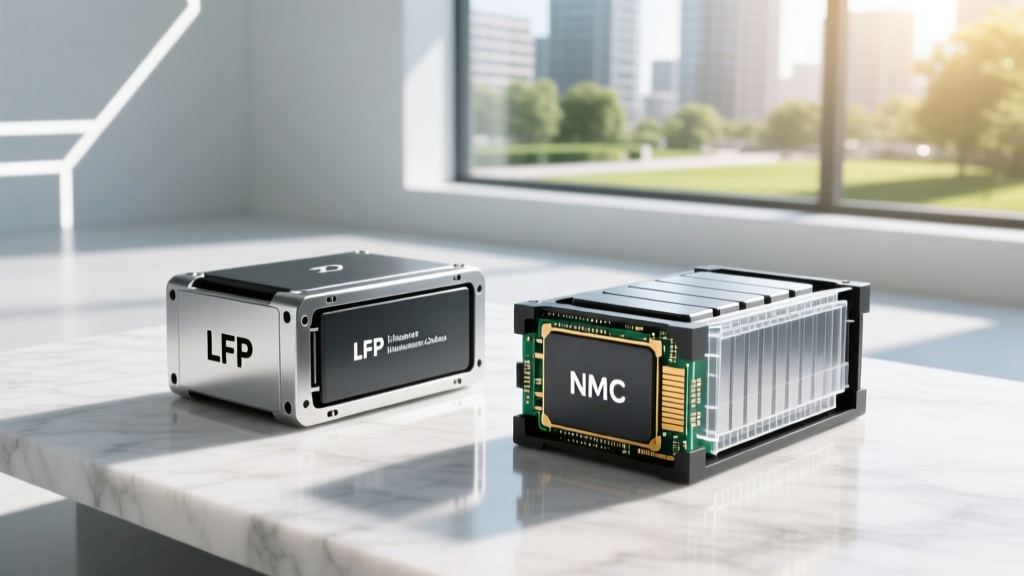
The two dominant lithium-ion chemistries in new EV batteries today are LFP (lithium iron phosphate) and NMC/NCA (nickel manganese cobalt / nickel cobalt aluminum). The choice isn't about which is universally "better" — it's about which trade-offs match your driving pattern.
LFP cells use an iron-phosphate cathode. They're cheaper to produce, tolerate repeated 100% charges without accelerated wear, offer longer cycle life (3,000+ full cycles before hitting 80% capacity), and carry lower thermal-runaway risk. The trade-off: lower energy density (roughly 160–180 Wh/kg at the cell level vs. 250–300 Wh/kg for NMC), which means heavier packs for the same range, and steeper performance loss in sub-freezing temperatures. Tesla's Standard Range Model 3 and Model Y, the base Ford Mustang Mach-E Select, and most BYD models sold globally use LFP.
NMC and NCA cells pack more energy per kilogram, making them the choice for long-range and performance trims where maximizing miles without adding mass matters. They also handle cold-weather range better. The downsides: higher cost, shorter cycle life (roughly 1,500–2,000 full cycles to 80%), sensitivity to sustained high state-of-charge storage, and reliance on cobalt and nickel with associated supply-chain and ethical concerns. The Hyundai Ioniq 5 Long Range, BMW iX, Rivian R1T Dual-Motor, and most 300+ mile EVs use NMC or NCA.
| Attribute | LFP (LiFePO₄) | NMC / NCA |
|---|---|---|
| Energy Density (cell-level) | 160–180 Wh/kg | 250–300 Wh/kg |
| Typical Cycle Life (to 80% SoH) | 3,000–5,000 cycles | 1,500–2,000 cycles |
| Cold-Weather Range Loss (~20°F) | 30–40% reduction | 20–30% reduction |
| 100% Charge Tolerance | Excellent — daily 100% OK | Poor — best kept 20–80% daily |
| Thermal Stability | Very high (low runaway risk) | Moderate (requires active cooling) |
| Cost per kWh (pack-level, 2026) | ~$85–$100 | ~$115–$140 |
| Common Applications | Standard-range, fleet, budget EVs | Long-range, performance, large SUVs |
| Example Vehicles (2026) | Tesla Model 3 RWD, BYD Seal, base Mach-E | Ioniq 5 LR, BMW iX, Rivian R1T, Model S |
How Long Do New EV Batteries Actually Last?
The short answer: far longer than most buyers fear. Data aggregated by Geotab from over 10,000 EVs shows that the average lithium-ion EV battery loses approximately 1.8% of its capacity per year under typical mixed-use conditions. That translates to roughly 82–85% State of Health (SoH) at 100,000 miles and 70–78% SoH at 200,000 miles, depending on climate, charging habits, and chemistry.
Here's what the data looks like across real-world fleets and owner-reported measurements:
| Milestone | Average SoH (NMC) | Average SoH (LFP) | Source / Context |
|---|---|---|---|
| Year 1 / 15,000 mi | 97–98% | 98–99% | Geotab fleet data, owner reports |
| Year 3 / 45,000 mi | 93–95% | 95–97% | Geotab, Recurrent Auto |
| Year 5 / 75,000 mi | 89–92% | 92–95% | Recurrent Auto 2025 report |
| Year 8 / 120,000 mi | 83–87% | 88–92% | Warranty threshold period |
| Year 10 / 150,000 mi | 78–83% | 85–90% | Projected from fleet curves |
| Year 15 / 200,000+ mi | 70–78% | 80–87% | High-mileage owner data (Tesla, Leaf) |
Several things are clear from this data. First, the steepest degradation happens in the first 12–24 months (roughly 2–5% loss), after which the curve flattens considerably. Second, LFP packs degrade measurably slower than NMC, largely because they tolerate full charges and deeper cycles better. Third, a battery at 75% SoH still holds substantial range — a vehicle originally rated for 300 EPA miles would still deliver roughly 225 miles, which remains practical for most daily driving.
The key insight for buyers: most EV batteries will outlast the vehicle's useful economic life. Catastrophic battery failure (sudden cell or module death) is rare, affecting well under 1% of packs according to manufacturer warranty claim data.
What Does the EV Battery Warranty Actually Cover?
Federal law in the U.S. mandates that EV battery warranties last a minimum of 8 years or 100,000 miles (whichever comes first). In California and states that follow CARB (California Air Resources Board) emissions standards — which include Colorado, Maine, Massachusetts, New York, Oregon, Vermont, and Washington — the mandate extends to 10 years or 150,000 miles.
But the details matter enormously. Here's how major manufacturers structure their coverage in 2026:
| Manufacturer | Warranty Term | Capacity Threshold | What Triggers a Claim |
|---|---|---|---|
| Tesla (Model 3/Y RWD, LFP) | 8 yr / 100,000 mi | 70% retention | SoH drops below 70% as measured by Tesla diagnostics |
| Tesla (Model 3/Y LR, S, X) | 8 yr / 120,000 mi | 70% retention | Same threshold, longer mileage coverage |
| Hyundai / Kia | 10 yr / 100,000 mi | 70% retention | Measured via dealer diagnostic scan |
| Ford (Mustang Mach-E, F-150 Lightning) | 8 yr / 100,000 mi | 70% retention | Battery control module diagnostic report |
| BMW | 8 yr / 100,000 mi | 70% retention | Dealer high-voltage battery test |
| Rivian | 8 yr / 120,000 mi | 70% retention | Remote diagnostic + service center validation |
| CARB-state vehicles (all brands) | 10 yr / 150,000 mi | 70% retention | Extended term applies in CARB states |
Critical caveats: the warranty covers capacity degradation below the threshold, not gradual range loss above it. If your 300-mile EV degrades to 215 miles (72% SoH) at year 7, you're above the 70% line and the warranty won't trigger. Warranties also exclude damage from accidents, flooding, improper charging equipment, or unauthorized modifications. Most manufacturers require that the vehicle's battery thermal management system remain functional and that no aftermarket modifications have been made to the high-voltage system.
EV Battery Replacement Cost: What to Budget
If your battery does fall below the warranty threshold — or if you're keeping an EV well past the warranty window — replacement is the nuclear option. Here's what it costs in 2026:
| Vehicle / Pack Size | Battery Capacity | Chemistry | Replacement Cost (Parts + Labor) |
|---|---|---|---|
| Tesla Model 3 RWD | ~60 kWh | LFP | $8,000 – $12,000 |
| Tesla Model Y Long Range | ~82 kWh | NMC | $12,000 – $16,000 |
| Hyundai Ioniq 5 Long Range | ~77.4 kWh | NMC | $11,000 – $15,000 |
| Ford Mustang Mach-E Extended Range | ~91 kWh | NMC | $14,000 – $18,000 |
| Ford F-150 Lightning Extended Range | ~131 kWh | NMC | $18,000 – $25,000 |
| Chevrolet Silverado EV | ~200 kWh | NMC (Ultium) | $25,000 – $35,000 |
| Rivian R1T Dual-Motor Max | ~149 kWh | NMC | $20,000 – $28,000 |
| BMW iX xDrive50 | ~111.5 kWh | NMC | $16,000 – $22,000 |
Several factors shape these numbers. LFP packs cost less per kWh to replace, which is why smaller standard-range packs can be swapped for under $12,000. Large packs in trucks and luxury SUVs push costs higher simply due to raw capacity. Labor typically adds $1,500–$3,000 depending on the vehicle's pack architecture — some packs are modular (individual modules can be replaced for $2,000–$5,000 each), while others require full-pack swaps.
The reality check: according to Recurrent Auto's 2025 longevity study, fewer than 1.5% of EVs in their dataset of 15,000+ vehicles required a battery replacement within the first 10 years. Most packs retain enough capacity at 150,000+ miles to remain functional, even if range has shrunk. For most owners, the battery will never need replacing — the car will be retired, traded, or sold before the pack reaches end-of-life.
Five Factors That Accelerate (or Preserve) Battery Life
Not all miles are equal when it comes to battery wear. These five factors have the largest measurable impact on long-term State of Health:
1. State of Charge Habits (Biggest Daily Impact)
For NMC/NCA batteries, routinely charging to 100% and letting the car sit accelerates calendar degradation. The ideal daily window is 20–80% SoC. Charge to 100% only when you need the full range for a trip, and try to time it so you depart shortly after reaching full. LFP batteries are the exception — manufacturers like Tesla and BYD recommend charging to 100% at least weekly to allow the BMS (battery management system) to calibrate cell balancing.
2. DC Fast-Charging Frequency
Exclusive reliance on DC fast charging (50–350 kW) generates sustained high heat in the cells, which accelerates degradation over time. Data from fueleconomy.gov and independent testing shows that EVs charged primarily on Level 2 (home/work) lose roughly 0.5–1% less capacity per year compared to those that fast-charge daily. Fast charging is fine for road trips and occasional use — just don't make it your only routine if you can avoid it.
3. Extreme Temperature Exposure
Batteries degrade faster when exposed to sustained heat above 95°F or cold below 10°F. Active thermal management systems (liquid cooling/heating) mitigate this significantly — most 2026 EVs have them — but parking in shade or a garage in hot climates and using preconditioning in cold climates measurably helps. A vehicle regularly parked outdoors in Phoenix summers will show 2–4% more degradation at year 5 than an identical vehicle garaged in a temperate climate.
4. Depth of Discharge Patterns
Regularly draining the battery to very low SoC (below 10%) before recharging stresses cells more than shallow, frequent top-ups. Plug in when you can — even a partial charge is better than letting the pack sit near empty for days.
5. Preconditioning Before Fast Charging
If your EV supports battery preconditioning (most do when you navigate to a DC fast charger), use it. Warming the battery to its optimal charging temperature (typically 85–95°F / 30–35°C) before a high-power session reduces internal resistance, improves charge speed, and reduces heat-related cell stress. This is especially critical in cold weather, where a cold battery may accept only 20–40 kW initially instead of its rated peak.
How to Check and Monitor Your Battery's State of Health
Knowing your battery's SoH lets you plan ahead and catch unusual degradation early. Here's how to check it:
- In-vehicle displays: Tesla provides a battery health estimate in the service menu (software 2025.8+). Hyundai/Kia displays SoH through the dealer diagnostic tool but not natively in the dash. BMW's iDrive shows a battery health percentage under Vehicle Settings → Battery.
- OBD-II apps: Third-party tools like LeafSpy (Nissan Leaf), TeslaFi, and ABRP (A Better Route Planner) with OBD integration can read cell-level voltage data and calculate SoH from the BMS.
- Dealer diagnostics: Any authorized service center can run a full battery health report, typically measuring capacity via a controlled discharge cycle or BMS interrogation. Request this during routine service visits.
- Recurrent Auto (free service): If you enroll your vehicle in Recurrent's data-sharing program, you receive monthly SoH reports benchmarked against similar vehicles in your climate zone — a genuinely useful tool for tracking trends over time.
- Manual calculation: Charge to a known SoC (say 100%), note the displayed range, and compare it to the EPA-rated range when new. If your 300-mile EV shows 260 miles at 100% in moderate weather, that's roughly 87% SoH. This method is approximate (displayed range is affected by temperature and recent driving style) but useful for spotting trends.
Emerging Battery Tech: Solid-State and Silicon Anodes
Several next-generation battery technologies are advancing toward production, but none are available in consumer EVs as of 2026. Here's where they stand:
Solid-state batteries replace the liquid electrolyte with a solid ceramic, polymer, or sulfide material. The theoretical benefits are significant: 40–50% higher energy density (enabling 500+ mile ranges without larger packs), faster charging (potential for 10–80% in under 10 minutes), improved safety (no flammable electrolyte), and longer cycle life. Toyota has announced a solid-state battery for a limited-production vehicle expected in 2027–2028, and Samsung SDI is targeting 2027 for initial production. However, manufacturing yield challenges and cost remain significant barriers. Realistically, solid-state batteries will debut in low-volume, premium applications before reaching mainstream price points — expect broad availability no earlier than 2030.
Silicon anode technology replaces or supplements the graphite anode with silicon, which can store roughly 10x more lithium ions per gram. Companies like Sila Nanotechnologies and Group14 are supplying silicon-dominant anode materials to battery manufacturers now, and the technology is appearing in some 2026 model-year cells in small percentages (5–10% silicon blend). The benefit is incremental but real: 10–20% higher energy density in near-term applications, with the potential for more as silicon swelling issues are further resolved. This is the most likely near-term improvement buyers will see.
Sodium-ion batteries are entering production for low-cost, short-range EVs (primarily in China via CATL and BYD). They offer lower energy density than LFP but eliminate lithium entirely, reducing cost and supply-chain risk. Don't expect these in U.S.-market long-range vehicles, but they may appear in urban commuter EVs or stationary storage.
The bottom line: current LFP and NMC chemistries are mature, well-understood, and more than adequate for 150,000+ mile lifespans. If you're buying in 2026, don't wait for solid-state — the batteries on sale today will serve you well for the life of the vehicle.
Frequently Asked Questions
How long do new EV batteries last in years and miles?
Based on fleet data from Geotab and Recurrent Auto, the average EV battery retains 82–85% capacity at 100,000 miles and 70–78% at 200,000 miles. In practical terms, most batteries remain functional for 15–20 years or 200,000+ miles before degrading to a point where range loss becomes limiting. LFP chemistries tend to outlast NMC by 5–10% over the same mileage.
How much does it cost to replace an EV battery?
Replacement costs in 2026 range from approximately $8,000 for a small LFP pack (Tesla Model 3 RWD, ~60 kWh) to $25,000–$35,000 for large packs in trucks like the F-150 Lightning Extended Range (~131 kWh) or Silverado EV (~200 kWh). Labor adds $1,500–$3,000. However, fewer than 1.5% of EVs require replacement within the first decade — most packs outlast the vehicle.
What does the EV battery warranty cover?
Federal law requires a minimum 8-year / 100,000-mile battery warranty. In CARB states, this extends to 10 years / 150,000 miles. Coverage applies when battery capacity drops below a specified threshold (typically 70% of original capacity) as measured by manufacturer diagnostics. The warranty covers defects and abnormal degradation but excludes accident damage, flood damage, and unauthorized modifications.
LFP vs NMC — which battery chemistry is better?
Neither is universally better. LFP wins on cost, cycle life, safety, and daily charging convenience (you can charge to 100% regularly). NMC wins on energy density (more range per pound), cold-weather performance, and suitability for long-range vehicles. If you prioritize budget and longevity and don't need 300+ miles of range, LFP is the smarter choice. If you need maximum range and drive in cold climates, NMC is preferable.
Does frequent DC fast charging damage the battery?
Exclusive reliance on DC fast charging adds roughly 0.5–1% additional capacity loss per year compared to primarily Level 2 charging, according to fleet data. Occasional fast charging for road trips causes negligible additional wear. The bigger risk is heat buildup during repeated high-power sessions — using your vehicle's preconditioning feature and avoiding fast charging in extreme heat when possible helps mitigate this.
How do I maximize my EV battery's lifespan?
For NMC/NCA: keep daily SoC between 20–80%, charge to 100% only when needed, use Level 2 charging as your primary method, precondition before fast charging, and park in shade or a garage in hot climates. For LFP: charge to 100% at least weekly for BMS calibration, follow the same temperature and fast-charging guidelines, and don't let the pack sit near 0% for extended periods.
Can I check my battery health myself?
Yes. Some vehicles (Tesla, BMW) display SoH in the infotainment system. Third-party OBD-II tools like TeslaFi, LeafSpy, and ABRP can read BMS data directly. You can also estimate SoH by comparing your displayed range at 100% charge (in moderate temperatures) to the original EPA-rated range. For the most thorough assessment, request a battery health report at your dealer's service department.