Why Battery Chemistry Matters More Than You Think
The single most expensive component in any electric vehicle is the high-voltage traction battery — the large lithium-ion pack that stores and delivers energy to the motors. As of 2026, automakers are deploying a wider variety of battery chemistries than ever before, and the differences between them affect range, charging speed, longevity, cold-weather performance, and ultimately the price you pay at the dealership.
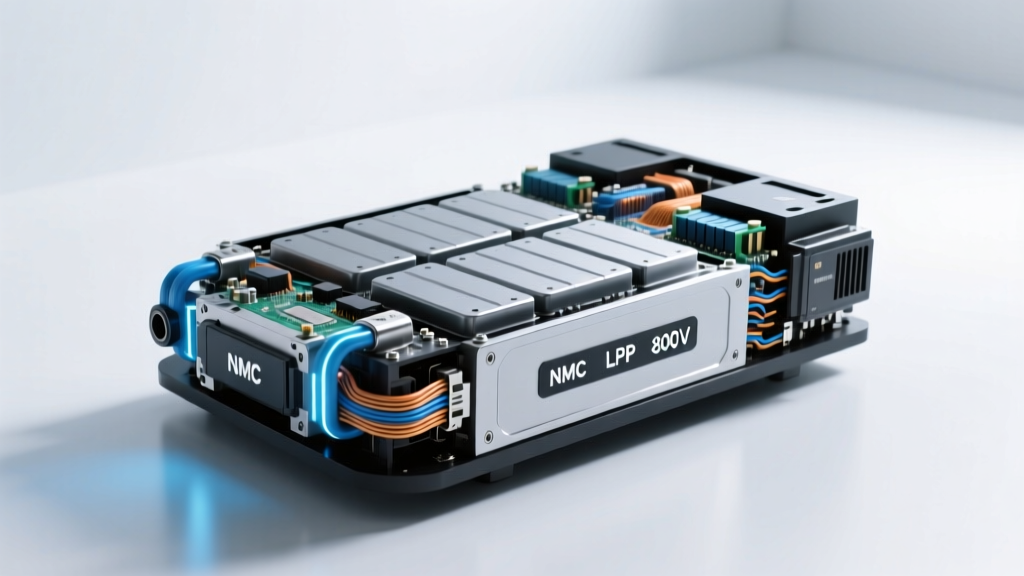
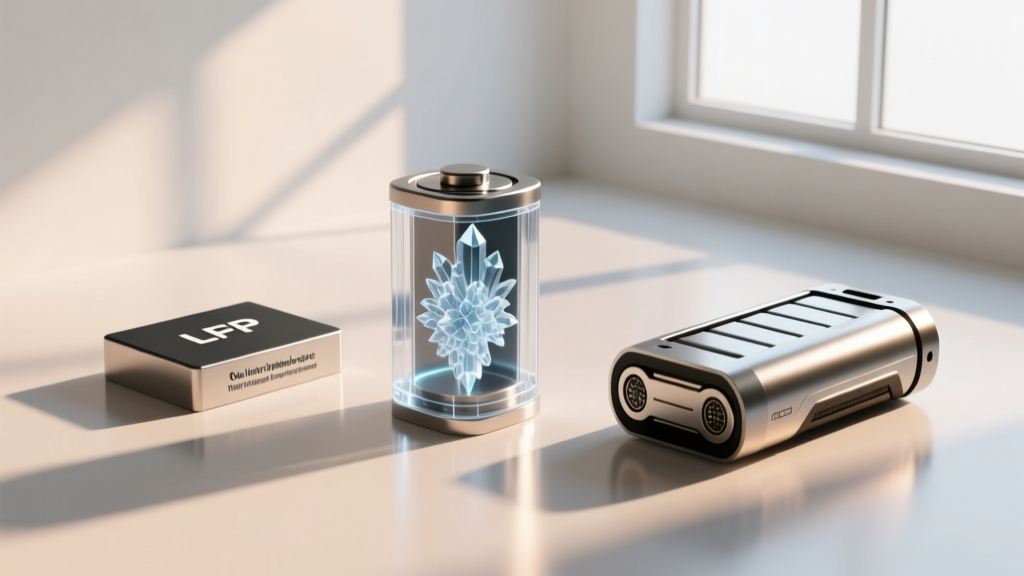
If you're evaluating a new EV purchase or trying to understand new electric battery technology, the two dominant chemistries you'll encounter are NMC (nickel manganese cobalt) and LFP (lithium iron phosphate). Each has distinct engineering trade-offs, and neither is universally "better." The right choice depends on your driving patterns, climate, and budget.
| Attribute | LFP (Lithium Iron Phosphate) | NMC / NCA (Nickel-based) |
|---|---|---|
| Energy Density | Lower (~160–180 Wh/kg cell-level) | Higher (~230–290 Wh/kg cell-level) |
| Typical EPA Range | 220–310 mi (smaller packs) | 280–400+ mi (larger packs) |
| Cycle Life | 3,000–5,000+ full cycles | 1,000–2,000 full cycles |
| Cold-Weather Performance | More range loss in freezing temps (~30–40%) | Better cold retention (~20–30% loss) |
| Charging Speed Tolerance | Tolerates frequent DC fast charging well | Degrades faster with frequent high-kW charging |
| State-of-Charge Flexibility | Can be charged to 100% daily without harm | Best kept 20–80% for longevity |
| Cost (per kWh, pack-level) | ~$90–$110 | ~$120–$155 |
| Cobalt Content | None | Varies (reduced in newer formulations) |
| Notable 2026 Applications | Tesla Model 3 RWD, Ford Mustang Mach-E Select, Rivian Standard pack | Hyundai Ioniq 5 Long Range, Tesla Model Y LR, Chevy Equinox EV RS |
The practical takeaway: LFP batteries are the longevity and cost champions, ideal for daily commuters who charge at home and don't need maximum range. NMC batteries deliver more range per pound, making them the choice for road-trippers and buyers in cold climates where energy density directly translates to usable winter miles.
How Long Do EV Batteries Actually Last?
This is the question every prospective EV buyer asks, and the answer in 2026 is more reassuring than early-EV-era fear would suggest. Modern liquid-cooled battery packs with advanced thermal management systems are lasting significantly longer than their predecessors.
Real-World Degradation Data Points
Based on aggregated fleet data from sources including Recurrent Auto and manufacturer-reported warranty claims:
- Tesla Model 3/Y (NMC, 2019–2023): Average ~5–7% capacity loss at 100,000 miles; ~8–12% at 150,000 miles.
- Chevrolet Bolt EV/EUV (NMC, 2017–2023): ~6–10% loss at 80,000 miles. (Note: 2017–2019 models were subject to a recall and battery replacement program due to manufacturing defects — not representative of chemistry-limited degradation.)
- Hyundai Ioniq 5 (NMC, 2022–2025): Early fleet data suggests ~3–5% loss at 50,000 miles.
- Tesla Model 3 RWD (LFP, 2022–2025): ~2–4% loss at 60,000 miles — LFP's superior cycle life is evident in early data.
- Nissan Leaf (passive air-cooled, 2011–2017): 15–25% loss at 80,000 miles — a cautionary example of why active thermal management matters.
Most EVs on the road in 2026 with liquid-cooled packs will retain 85–92% of original capacity at 100,000 miles. Complete battery failure before 150,000 miles is statistically rare in modern packs.
Translation: for the average American driver covering ~13,500 miles per year (per FHWA data), a modern EV battery should comfortably last 12–15 years before degradation reaches a level where range becomes noticeably inconvenient — and even then, the battery isn't "dead," it simply holds less energy.
What Does the Battery Warranty Cover?
Federal law mandates that all EVs sold in the United States carry a battery warranty of at least 8 years or 100,000 miles (whichever comes first). In CARB states (California and states that follow California emissions standards), that minimum extends to 10 years or 150,000 miles. Most automakers meet or exceed these floors.
| Vehicle | Warranty Term | Capacity Retention Threshold | Notes |
|---|---|---|---|
| Tesla Model 3 RWD (LFP) | 8 yr / 100,000 mi | 70% | Standard federal minimum |
| Tesla Model Y Long Range (NMC) | 8 yr / 120,000 mi | 70% | Higher mileage cap than RWD |
| Hyundai Ioniq 5 | 10 yr / 100,000 mi | 70% | Stronger year coverage |
| Ford Mustang Mach-E | 8 yr / 100,000 mi | 70% | Standard |
| Chevrolet Equinox EV | 8 yr / 100,000 mi | 60% | Lower threshold — read fine print |
| Rivian R1S / R1T | 8 yr / 175,000 mi | 70% | Industry-leading mileage cap |
| BMW iX | 8 yr / 100,000 mi | 70% | Includes battery cell replacement option |
Critical detail: The capacity retention threshold is the trigger for a warranty claim. If your battery drops below that percentage within the warranty window, the manufacturer must repair or replace it at no cost. A 70% threshold is standard; Chevrolet's 60% threshold on some models means you'd need significantly more degradation before qualifying. Always check the specific threshold for the exact model and model year you're considering.
EV Battery Replacement Cost: Numbers and Context
Out-of-warranty battery replacement is the scenario that generates the most anxiety. Here are the actual figures for 2026, with the important caveat that most EV batteries never need full replacement during the vehicle's useful life.
| Vehicle | Battery Capacity (Usable) | Chemistry | Estimated Replacement Cost |
|---|---|---|---|
| Tesla Model 3 RWD | ~57 kWh | LFP | $8,000–$12,000 |
| Tesla Model Y Long Range | ~75 kWh | NMC | $12,000–$16,000 |
| Hyundai Ioniq 5 Long Range | ~77.4 kWh | NMC | $11,000–$15,000 |
| Ford Mustang Mach-E Extended Range | ~91 kWh | NMC | $14,000–$18,000 |
| Chevrolet Equinox EV | ~85 kWh | NMC | $12,000–$16,000 |
| Rivian R1T (Large Pack) | ~128 kWh | NMC | $18,000–$25,000 |
| Mercedes EQS | ~107.8 kWh | NMC | $20,000–$30,000 |
These costs include the battery pack and labor but vary by region and dealership. A few important contextual points:
- Module-level repair is often possible. Many modern packs are composed of modules. If only a few modules degrade or fail, a specialist can replace individual modules for $2,000–$5,000 rather than swapping the entire pack.
- Refurbished packs are increasingly available from OEMs and third-party suppliers at 30–50% below new-pack pricing.
- Battery costs continue to decline. Pack-level pricing has fallen from ~$200/kWh in 2020 to roughly $100–$130/kWh in 2026, meaning a replacement in 2032 will likely cost less than today's estimates.
What Actually Affects Battery Longevity?
Battery degradation isn't random — it's driven by specific, measurable factors. Understanding these lets you make informed choices about how you charge and drive.
Battery Care Best Practices
- Minimize DC fast charging when possible. Frequent use of 150+ kW DC fast chargers accelerates degradation by ~1–2% over 100,000 miles compared to predominantly Level 2 home charging. Occasional fast charging on road trips is fine — it's daily reliance that adds up.
- Avoid sustained 100% state of charge. For NMC batteries, keeping SoC between 20–80% for daily use significantly reduces stress. LFP batteries are an exception — they benefit from periodic 100% charges for cell balancing and don't degrade as quickly at high SoC.
- Use preconditioning before fast charging. Most modern EVs will warm or cool the battery to optimal temperature before you arrive at a DC fast charger. This protects the cells and maximizes charge speed. If your EV has a "navigate to charger" preconditioning feature, use it.
- Extreme heat is worse than extreme cold for degradation. Sustained exposure to ambient temperatures above 95°F accelerates calendar aging. Parking in shade or a garage matters in hot climates. Cold temperatures reduce range temporarily but don't cause permanent damage.
- Don't let the battery sit at 0% or 100% for extended periods. If storing an EV for weeks, set the charge limit to ~50% and leave it plugged in to a Level 1 or Level 2 charger so the battery management system can maintain thermal equilibrium.
- Regenerative braking settings have negligible impact on battery health. The current from regen is well within safe C-rates for modern packs.
How to Monitor Your Battery's State of Health
State of Health (SoH) is the metric that tells you how much capacity your battery retains compared to when it was new. A battery at 90% SoH holds 90% of its original energy — meaning a 75 kWh pack effectively delivers ~67.5 kWh.
Here's how owners can check and track SoH in 2026:
- In-vehicle diagnostics: Tesla provides a battery health estimate in the service menu. Hyundai/Kia models display SoH through the infotainment engineering menu (accessible via a diagnostic code sequence). BMW and Mercedes include SoH in their connected-car apps.
- OBD-II diagnostic tools: Devices like the OBDLink MX+ paired with apps such as EV Health or Leaf Spy (for Nissan Leaf) can read detailed cell-level voltage data, internal resistance, and SoH percentage. This works on most EVs with a standard OBD-II port.
- Third-party services: Companies like Recurrent offer battery health reports that compare your pack's degradation curve against a fleet of identical vehicles. Some used-EV marketplaces (Carvana, CarMax) now include battery health scores in listings.
- Manual tracking: Charge to 100% (on an LFP, or occasionally on NMC), note the displayed range estimate, and compare it to the EPA-rated range when new. A consistent 10% drop in displayed range at full charge roughly correlates to ~10% SoH loss — though the displayed estimate can vary with recent driving patterns and temperature.
New Electric Battery Technology on the Horizon
The battery landscape is evolving rapidly, but it's essential to separate laboratory breakthroughs from production-ready technology available at a dealership today.
Solid-State Batteries
Solid-state batteries replace the liquid electrolyte in conventional lithium-ion cells with a solid material (ceramic, sulfide, or polymer), promising higher energy density (~400+ Wh/kg cell-level), faster charging, and improved safety (no flammable electrolyte).
- Current status (2026): Toyota has announced limited production of solid-state-equipped vehicles for the Japanese market, with U.S. availability projected for 2028–2030. Samsung SDI and QuantumScape are supplying prototype cells to automakers but have not reached mass-production volumes.
- Realistic timeline for U.S. buyers: Expect solid-state EVs in limited, premium-segment availability by 2029–2031, with broader market penetration not until the mid-2030s.
- Cost challenge: Current solid-state cells cost 3–5x more than equivalent NMC cells to manufacture. Scaling production to bring costs below $100/kWh is the primary barrier.
Silicon Anode Technology
Replacing the graphite anode with silicon can increase energy density by 20–40%. Companies like Sila Nanotechnologies and Group14 Technologies are supplying silicon-composite anode materials to battery manufacturers.
- Current status: Silicon anodes are already in limited production use in some premium cells, offering modest energy density gains. Mercedes and GM have announced partnerships for silicon-anode batteries in upcoming models.
- Realistic timeline: Incremental adoption through 2026–2030, primarily in high-performance and long-range trims where the cost premium is justified.
Sodium-Ion Batteries
Sodium-ion chemistry eliminates lithium entirely, using abundant and cheap sodium instead. Energy density is lower (~120–150 Wh/kg), but cost is significantly less.
- Current status: CATL and BYD are producing sodium-ion cells in China for low-cost city EVs. No U.S.-market vehicles currently use sodium-ion packs.
- Realistic timeline: Possible entry into the U.S. market in budget EV segments by 2028–2030, primarily for urban commuter vehicles with 150–200 mile range.
None of these technologies are available in a vehicle you can buy in the U.S. today. For 2026 buyers, optimized NMC and LFP chemistries remain the practical options — and both are excellent.
Frequently Asked Questions
LFP vs NMC — which battery chemistry is better for me?
If you charge at home nightly, drive under 250 miles per day, live in a moderate climate, and prioritize long-term durability and lower cost, LFP is the better choice. If you need maximum range for road trips, live in a cold climate where energy density translates to winter usability, or want the longest single-charge distance, NMC is the better fit. Neither chemistry is "bad" — they solve different problems.
How long do EV batteries last in years and miles?
Modern liquid-cooled EV batteries typically retain 85–92% capacity at 100,000 miles and can last 150,000–200,000+ miles before degradation makes the vehicle impractical for its original use case. In years, that's roughly 12–15 years for the average driver. LFP batteries are tracking toward even longer lifespans, with early fleet data suggesting 200,000+ miles with minimal degradation.
How much does an EV battery cost to replace?
Out-of-warranty replacement costs range from approximately $8,000 for a smaller LFP pack (Tesla Model 3 RWD) to $25,000+ for a large premium pack (Rivian R1T, Mercedes EQS). However, most EV batteries never need replacement during the vehicle's useful life, and module-level repairs are often possible at a fraction of full-pack cost. Battery prices are also declining year over year.
What does the EV battery warranty actually cover?
Federal minimum is 8 years / 100,000 miles (10 yr / 150,000 mi in CARB states). The warranty guarantees that the battery will retain a specified percentage of its original capacity — typically 70%. If degradation exceeds that threshold within the warranty period, the manufacturer repairs or replaces the battery at no cost. Some warranties also cover manufacturing defects and sudden failure regardless of capacity retention.
How do I maximize my EV battery's health?
Charge primarily on Level 2 at home; use DC fast charging for road trips rather than daily commuting. For NMC batteries, set your charge limit to 80% for daily use. For LFP, charging to 100% is fine and recommended periodically. Enable preconditioning when navigating to fast chargers. Avoid leaving the vehicle at 0% or 100% SoC for extended periods. Park in shade or a garage in extreme heat.
Is solid-state battery technology available now?
No. As of 2026, solid-state batteries remain in limited pilot production, primarily in Japan. U.S.-market vehicles with solid-state packs are not expected before 2029–2031, and widespread affordability will take longer. Current NMC and LFP chemistries are mature, reliable, and continuously improving.
Sources: fueleconomy.gov (EPA range and efficiency data), Recurrent Auto battery degradation research, manufacturer specification pages for 2026 model-year vehicles.