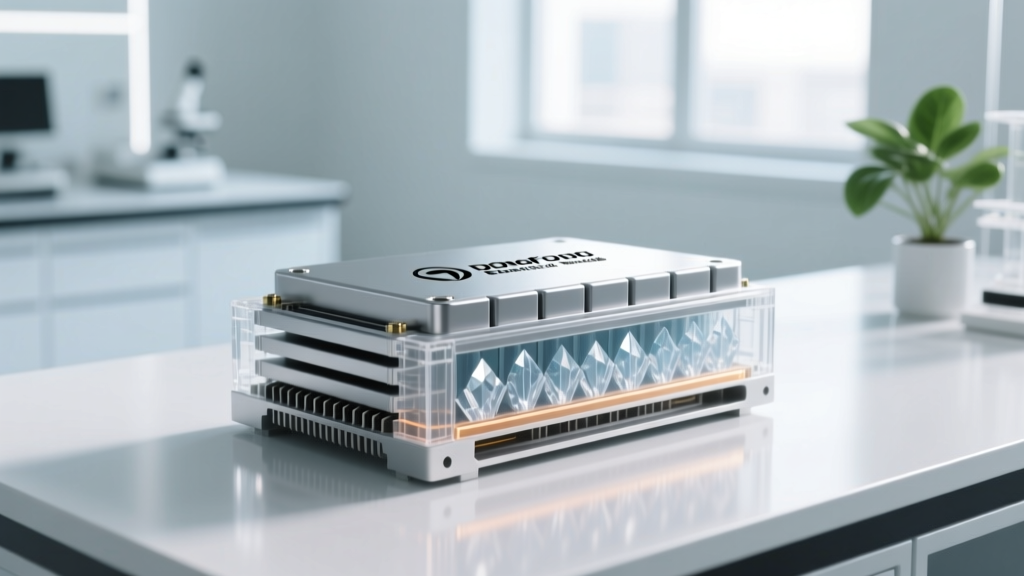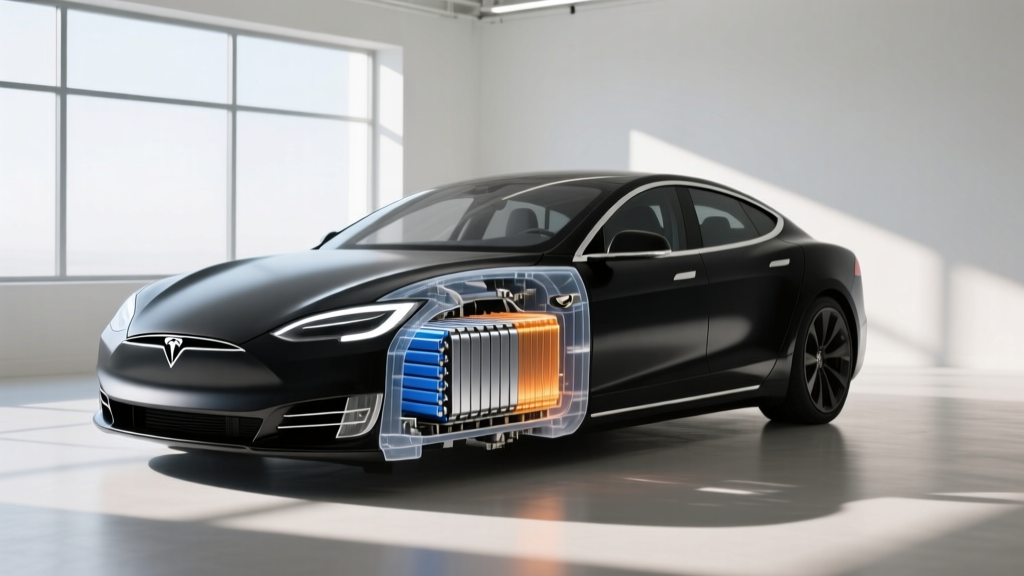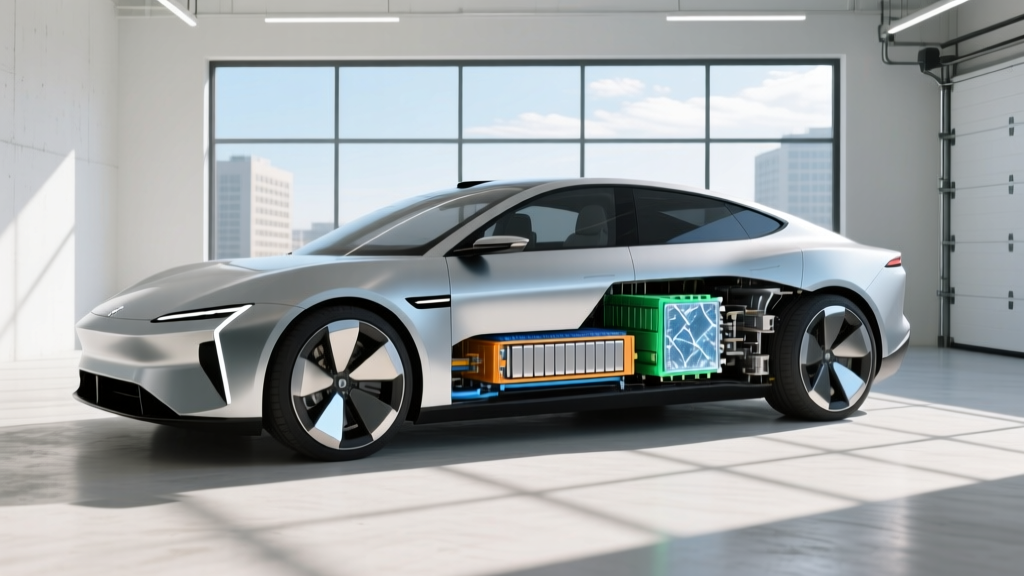
The traction battery is the single most expensive component in any electric vehicle, and its chemistry dictates everything from daily range to long-term resale value. Yet most buyers still choose a car based on the EPA range sticker without understanding what's actually inside the pack. As new battery technology for cars accelerates — from lithium iron phosphate (LFP) going mainstream to silicon-anode and solid-state prototypes entering pilot production — knowing the difference between chemistries, realistic degradation curves, and actual replacement economics is the edge that separates informed buyers from anxious ones.
This guide breaks down every battery technology available in production EVs today, the forward-looking chemistries on the horizon, and the ownership data you need to make a confident purchase decision.
LFP vs NMC vs NCA: The Chemistry Decision That Shapes Your EV
Every battery-electric and plug-in hybrid vehicle on the U.S. market in 2026 uses one of three lithium-ion cathode chemistries: LFP (lithium iron phosphate), NMC (nickel manganese cobalt), or NCA (nickel cobalt aluminum). The anode is almost universally graphite, though silicon-blend anodes are beginning to appear. The cathode chemistry is what determines energy density, cycle life, thermal stability, cost, and cold-weather behavior.
Here is how the three main chemistries compare across the metrics that matter to owners:
| Attribute | LFP (Lithium Iron Phosphate) | NMC (Nickel Manganese Cobalt) | NCA (Nickel Cobalt Aluminum) |
|---|---|---|---|
| Cell-level energy density | ~160–180 Wh/kg | ~220–260 Wh/kg | ~250–280 Wh/kg |
| Pack-level energy density | ~130–160 Wh/kg | ~160–200 Wh/kg | ~180–210 Wh/kg |
| Typical cycle life (to 80% SoH) | 3,000–5,000+ cycles | 1,500–2,500 cycles | 1,200–2,000 cycles |
| Calendar life expectation | 15–20+ years | 12–15 years | 10–15 years |
| Cost per kWh (cell level, 2025–2026) | ~$70–$90 | ~$100–$130 | ~$110–$140 |
| Cold-weather range retention (at 20°F) | ~60–70% of EPA | ~70–80% of EPA | |
| Thermal runaway risk | Very low (most stable cathode) | Moderate (managed by BMS/cooling) | Moderate–higher (requires robust thermal mgmt) |
| Recommended daily charge limit | 100% (no degradation penalty) | 80–90% for daily; 100% for trips | 80–90% for daily; 100% for trips |
| Cobalt/critical mineral concern | None (cobalt-free, nickel-free) | Yes (cobalt + nickel) | Yes (cobalt + nickel) |
| Notable 2026 vehicles using this chemistry | Tesla Model 3/Y RWD, Ford Mustang Mach-E Select (LFP option), Chevrolet Equinox EV (some trims), BYD models | Hyundai Ioniq 5/6, Kia EV6/EV9, Ford F-150 Lightning Extended Range, VW ID.4, BMW iX | Tesla Model S/X/3/Y Long Range & Performance (Panasonic cells), Lucid Air, Rivian R1T/R1S (max pack) |
LFP: The Value and Longevity Play
LFP has moved from a budget alternative to a mainstream choice. Its lower energy density means automakers need more cells (and therefore a heavier, larger pack) to achieve the same range as NMC — which is why LFP typically appears in standard-range or rear-wheel-drive trims. But LFP's advantages are substantial: you can charge to 100% daily without accelerating degradation, the cycle life is roughly double that of NMC, and the absence of cobalt and nickel makes it cheaper and less geopolitically constrained.
For a commuter who charges at home every night and rarely road-trips, LFP is arguably the better chemistry in 2026. The trade-off is ~30–50 fewer miles of EPA range in comparable vehicles and more pronounced range loss in sub-freezing temperatures due to LFP's higher internal resistance in cold conditions.
NMC/NCA: The Range and Performance Play
NMC and NCA chemistries dominate the long-range and performance segments because their higher energy density allows more kWh in the same physical pack volume. A Hyundai Ioniq 5 Long Range packs 77.4 kWh (usable) of NMC into a midsize crossover and achieves 305 miles EPA; an equivalently sized LFP pack would likely deliver 250–270 miles.
The trade-off is a lower cycle-life ceiling and sensitivity to sustained high states of charge. NMC/NCA owners should target 80–90% daily charge and reserve 100% for road trips — a habit that meaningfully extends pack life. Modern battery management systems (BMS) and liquid thermal management have narrowed the longevity gap, but physics still favors LFP for calendar life.
How Long Do EV Batteries Actually Last? Degradation Data
The most persistent myth in EV ownership is that batteries "need replacing every few years like a phone." Real-world fleet data tells a different story. Most modern EV batteries are engineered to outlast the vehicle's economic life.
Typical Degradation Curve (Fleet-Averaged Data, Liquid-Cooled Packs):
- Year 1 / 15,000 miles: ~2–4% capacity loss (initial formation drop)
- Year 3 / 45,000 miles: ~5–8% total loss
- Year 5 / 75,000 miles: ~7–10% total loss
- Year 8 / 120,000 miles: ~10–15% total loss
- Year 10 / 150,000 miles: ~12–18% total loss (NMC/NCA); ~8–12% (LFP)
Sources: Geotab fleet battery health studies, Recurrent Auto battery data reports, manufacturer warranty data. Degradation rates vary significantly by climate, charging habits, and thermal management quality.
Several important nuances shape these numbers:
- Calendar aging vs cycle aging: Batteries degrade from time (calendar aging) and from use (cycle aging). A garage-kept EV with low mileage still loses ~1–2% capacity per year from chemical processes alone. A high-mileage driver might see faster initial loss that then plateaus.
- The degradation curve is non-linear: Most packs lose capacity fastest in the first year or two, then the curve flattens considerably. This is why a 5-year-old EV with 8% loss is unlikely to hit 20% loss by year 10.
- LFP degrades more slowly but starts with less range: An LFP Model 3 RWD with 272 miles EPA that loses 8% over 10 years still has ~250 usable miles. An NMC Long Range with 358 miles EPA losing 12% retains ~315 miles — more absolute range, but a larger percentage loss.
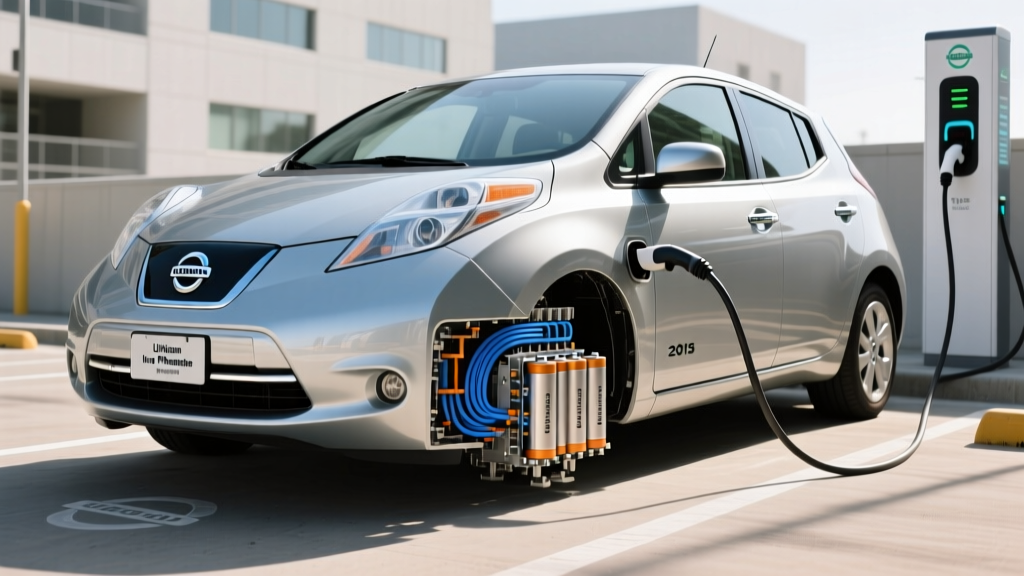
- Thermal management matters enormously: Liquid-cooled packs (standard on nearly all 2026 EVs from Tesla, Hyundai/Kia, Ford, GM, BMW, Rivian, Lucid) degrade far more slowly than passively cooled packs. The Nissan Leaf's air-cooled pack was a notorious outlier for accelerated degradation in hot climates — a design that has been abandoned industry-wide.
Battery Warranty Terms: What's Covered and What's Not
Federal law mandates a minimum battery warranty of 8 years / 100,000 miles for EVs sold in the U.S. (California and states adopting CARB standards require 10 years / 150,000 miles). Most automakers meet or exceed these minimums, but the capacity retention threshold — the SoH percentage at which the manufacturer considers the battery "failed" — varies.
| Manufacturer | Warranty Period | Mileage Limit | Capacity Retention Threshold |
|---|---|---|---|
| Tesla (Model 3/Y RWD — LFP) | 8 years | 100,000 miles | 70% |
| Tesla (Model 3/Y LR/Performance) | 8 years | 120,000 miles | 70% |
| Hyundai / Kia | 10 years | 100,000 miles | 70% |
| Ford | 8 years | 100,000 miles | 70% |
| GM (Chevrolet/Cadillac) | 8 years | 100,000 miles | 70% (some Ultium models: 60% for PHEV) |
| BMW | 8 years | 100,000 miles | 70% |
| Rivian | 8 years | 175,000 miles | 70% |
| Lucid | 8 years | 100,000 miles | 70% |
Key details buyers often miss:
- The 70% threshold is conservative. Most liquid-cooled packs in 2026 will retain 85–90% capacity at 8 years. Hitting 70% within the warranty period requires either a manufacturing defect or extreme abuse (repeated 100% charges in desert heat with daily DC fast charging).
- Warranty covers defects AND excessive degradation. If your pack drops below the threshold under normal use, the manufacturer must repair or replace it — typically with a refurbished or remanufactured unit, not necessarily a brand-new pack.
- Opening the pack voids the warranty. Third-party battery repairs or modifications will almost certainly void coverage. Always go through the manufacturer's service network for battery-related issues.
- CARB-state owners get longer coverage. If you register your EV in California, New York, Massachusetts, or other CARB-adopting states, the warranty extends to 10 years / 150,000 miles regardless of the manufacturer's base policy.
EV Battery Replacement Cost: The Numbers Behind the Fear
Replacement cost is the most fear-mongered topic in EV ownership, often cited as "$20,000+" without context. The reality is more nuanced — and critically, most EVs will never need a full battery replacement during their first ownership cycle.
| Vehicle / Pack Size | Battery Capacity (kWh) | Chemistry | Estimated Replacement Cost |
|---|---|---|---|
| Tesla Model 3 RWD | ~60 kWh | LFP | $10,000–$13,000 |
| Tesla Model Y Long Range | ~75 kWh | NCA/NMC | $13,000–$16,000 |
| Hyundai Ioniq 5 Long Range | 77.4 kWh | NMC | $14,000–$18,000 |
| Ford F-150 Lightning Extended Range | ~131 kWh | NMC | $20,000–$28,000 |
| Chevrolet Silverado EV (Max Range) | ~200 kWh | NMC (Ultium) | $28,000–$38,000 |
| BMW iX xDrive50 | ~105 kWh | NMC | $18,000–$24,000 |
| Rivian R1T (Max Pack) | ~149 kWh | NMC | $22,000–$30,000 |
| Lucid Air Grand Touring | ~112 kWh | NMC | $18,000–$25,000 |
Context that defuses the sticker shock:
- Full replacements are rare. According to data from Recurrent Auto and Consumer Reports EV battery surveys, fewer than 2% of EVs require a battery replacement outside of warranty, and the vast majority of those are due to manufacturing defects caught within the warranty period.
- Module-level repair is increasingly viable. Many packs are built from 8–16 modules. If a single module degrades prematurely, a qualified service center can replace just that module for $2,000–$5,000 rather than swapping the entire pack.
- Prices are declining. Pack-level battery costs fell from ~$200/kWh in 2020 to roughly $100–$130/kWh by 2025–2026 (source: BloombergNEF). As LFP adoption grows and manufacturing scales, out-of-warranty replacement costs will continue to drop.
- The car is usually totaled first. A 10-year-old EV with 150,000 miles might be worth $12,000–$18,000 on the used market. At that point, a $15,000 battery replacement rarely makes economic sense — but the battery likely won't need one. The pack should still retain 82–88% of original capacity.
Factors That Accelerate (or Preserve) Battery Life
Not all miles are created equal. How you charge, drive, and store your EV has a measurable impact on long-term State of Health (SoH). Here is the hierarchy of degradation factors, ranked by impact based on fleet data:
Battery Life Killers (Avoid These)
- Exclusive DC fast charging: Vehicles that DC fast-charge >90% of the time show 2–3x the degradation rate of home-charged vehicles over 100,000 miles. The heat and high C-rates stress the cathode. Use DCFC for road trips, not daily commuting.
- Sustained 100% SoC in heat: Leaving an NMC/NCA vehicle at 100% charge in 95°F+ ambient temperatures for days accelerates calendar aging. If you need a full charge for a trip, time it to finish just before departure.
- Deep discharge (below 10% SoC): Regularly running the battery to near-zero stresses the anode and can trigger copper dissolution in the cells. Charge before you hit 10%.
- Repeated high-temperature operation: Track days, heavy towing in desert heat, or consistent fast charging without adequate cool-down periods compound thermal stress.
Battery Life Preservers (Do These)
- Level 2 home charging as primary: Charging at 7–11 kW (Level 2) generates far less heat than 150+ kW DC fast charging. This is the single biggest longevity factor within your control.
- 20–80% SoC window for NMC/NCA: Set your charge limit to 80% for daily use. LFP owners can ignore this — charge to 100% freely.
- Precondition before fast charging: Most EVs automatically precondition the battery when you navigate to a DC fast charger. This brings the pack to optimal temperature (~95–104°F), enabling faster charging AND reducing stress. Always use the car's built-in navigation to the charger to trigger preconditioning.
- Park in shade or a garage in summer: Calendar aging roughly doubles for every 18°F increase in sustained temperature. A garage in Phoenix vs. a sun-baked driveway makes a measurable 5-year difference.
- Keep the car plugged in during extreme cold: The BMS will use grid power to maintain battery temperature, preserving range and preventing lithium plating on the anode during cold charging.
How to Monitor Your Battery's State of Health
State of Health (SoH) is the percentage of original capacity your battery can still hold. A new EV starts at 100% SoH; at 70% SoH, a 75 kWh pack effectively holds ~52.5 kWh, which translates directly to reduced range.
Here is how to check and track SoH on most 2026 EVs:
- In-car displays: Tesla shows battery health indirectly through range estimates. Hyundai/Kia's infotainment includes an EV battery diagnostics page. BMW's iDrive displays SoH percentage directly in the service menu.
- OBD-II dongles + apps: Devices like the OBDLink CX paired with apps such as EV Health or Car Scanner can read the BMS-reported SoH directly. This is the most accurate consumer-accessible method and works on most EVs with a standard OBD-II port (note: Tesla requires a proprietary adapter).
- Dealer diagnostic reports: Request a battery health report during routine service. The dealer can pull a detailed log showing capacity, internal resistance, cell balancing, and module-level variance.
- Third-party services: Companies like Recurrent Auto offer free battery health reports that compare your pack's degradation to a fleet average of the same model, factoring in climate and mileage.
When to be concerned: If your SoH drops more than 3% in a single year after the initial break-in period, or if you notice sudden range drops (not attributable to cold weather), schedule a dealer diagnostic. Sudden capacity loss can indicate a failing module, which is often covered under warranty.
Emerging Battery Technologies: Solid-State, Silicon Anode, and Beyond
The next generation of battery technology promises step-changes in energy density, charge speed, and safety — but the timeline from lab to production vehicle is measured in years, not months. Here is where the most promising technologies stand as of 2026:
Solid-State Batteries
Solid-state batteries replace the liquid electrolyte with a solid ceramic, polymer, or glass material. The theoretical benefits are substantial: 40–60% higher energy density (enabling 400+ mile ranges in smaller packs), faster charging (potential 10–80% in under 10 minutes), and dramatically lower fire risk since there is no flammable liquid electrolyte.
Current status (2026): Toyota has announced limited solid-state production for select models beginning in 2027–2028, initially in small quantities for the Japanese market. Samsung SDI is targeting 2027 for mass production. Nissan and Honda have pilot lines running. No solid-state EV is currently available for purchase in the U.S.
Realistic timeline for U.S. buyers: Expect solid-state EVs to reach U.S. showrooms in meaningful volumes (multiple models, available nationwide) no earlier than 2029–2031. Initial offerings will likely be premium-priced and limited to flagship trims. The technology will not be affordable in mainstream $35,000–$45,000 EVs until the early-to-mid 2030s.
Silicon-Anode Batteries
Replacing the graphite anode with silicon (or a silicon-carbon blend) can increase energy density by 20–40% because silicon stores roughly 10x more lithium ions per gram than graphite. The challenge has been that silicon expands ~300% during charging, causing the anode to crack and degrade rapidly.
Current status (2026): Sila Nanotechnologies has begun supplying silicon-anode materials for the Mercedes-Benz G-Class electric SUV. Group14 Technologies (backed by Porsche) is scaling production for 2026–2027 model-year vehicles. Several premium EVs now use silicon-blend anodes (5–15% silicon content) to extract modest energy density gains without the full expansion problem.
Realistic timeline: Silicon-blend anodes are already here in limited applications. Full silicon-dominant anodes with 40%+ energy density gains are expected in production vehicles by 2028–2030.
Sodium-Ion Batteries
Sodium-ion (Na-ion) batteries use abundant, cheap sodium instead of lithium. They offer lower energy density (~120–160 Wh/kg at the cell level) but dramatically lower cost and excellent cold-weather performance. CATL has begun mass-producing Na-ion cells in China for use in small, affordable EVs.
Realistic timeline for U.S. buyers: Na-ion is unlikely to appear in U.S.-market EVs before 2028–2029, and initially only in entry-level models or as auxiliary range-extender packs. This chemistry is best suited for city cars and fleet vehicles where cost matters more than maximum range.
LFP vs NMC: Which Battery Should You Choose?
The answer depends on your driving pattern, climate, and ownership horizon. Here is a practical decision framework:
Choose LFP if:
- You charge primarily at home (Level 2) and want the simplicity of charging to 100% daily
- Your daily commute is under 60 miles round-trip and you rarely need 250+ miles in a single day
- You live in a mild or warm climate (LFP's cold-weather penalty matters less)
- You plan to keep the vehicle 8+ years and want maximum cycle life and calendar life
- You want the lowest purchase price and are not paying for range you won't use
Choose NMC/NCA if:
- You regularly drive 200+ miles in a single day or take frequent road trips
- You live in a cold climate where every mile of EPA range counts (NMC retains range better in freezing temps)
- You need maximum towing range (heavy loads consume kWh rapidly)
- You value performance (NMC/NCA cells typically deliver higher peak discharge rates for acceleration)
- You're buying a large SUV or truck where pack size is already pushing weight limits
For most U.S. households — where the average daily drive is ~37 miles according to the FHWA — LFP's range is more than sufficient, and its longevity advantage compounds over years of ownership. NMC/NCA remains the right call for road-trippers, cold-climate drivers, and anyone who regularly needs 300+ miles between charges.
Frequently Asked Questions
How long do EV batteries last in years and miles?
Most modern liquid-cooled EV batteries will retain 80–90% of original capacity at 10 years / 150,000 miles. LFP chemistries typically outperform NMC/NCA in longevity, with fleet data showing 85–92% retention at the same interval. Full failure before 200,000 miles is rare — well under 2% of packs based on Recurrent Auto fleet data. Many EVs will be retired (due to body/interior wear, technology obsolescence, or accident) before the battery reaches end-of-life.
How much does it cost to replace an EV battery?
Out-of-warranty replacement costs range from ~$10,000 for a small LFP pack (Tesla Model 3 RWD, ~60 kWh) to $28,000–$38,000 for large NMC packs (Ford F-150 Lightning Extended Range, Chevrolet Silverado EV Max Range). However, the vast majority of replacements occur under warranty at no cost to the owner. Module-level repairs, when possible, cost $2,000–$5,000. Battery prices continue to decline ~8–12% annually as manufacturing scales.
What does the EV battery warranty actually cover?
Federal law requires a minimum 8-year/100,000-mile battery warranty covering defects and capacity loss below a specified threshold (typically 70% of original capacity). CARB states extend this to 10 years / 150,000 miles. The warranty covers both manufacturing defects (bad cells, BMS failures) and premature degradation — if your SoH drops below the threshold within the warranty period, the manufacturer must repair or replace the battery at no charge.
How can I check my EV battery health?
Use your vehicle's built-in diagnostics menu, an OBD-II scanner with EV-specific software (such as OBDLink CX + Car Scanner app), or request a battery health report from your dealer. Third-party services like Recurrent Auto also provide comparative degradation analysis. Track SoH every 6–12 months to establish a baseline and catch anomalies early.
Is DC fast charging bad for my battery?
Exclusive DC fast charging (more than 90% of charges) accelerates degradation by roughly 2–3x compared to Level 2 home charging over 100,000 miles, according to fleet studies. However, occasional DC fast charging during road trips has minimal impact. The key is to use Level 2 (7–11 kW) for daily charging and reserve DC fast charging for trips. Always enable battery preconditioning by navigating to the charger through the car's built-in system.
Will solid-state batteries make current EVs obsolete?
Not for years. Solid-state batteries are expected to reach U.S. production vehicles in limited quantities around 2028–2030, initially at premium price points. Current NMC and LFP chemistries, paired with modern thermal management, already deliver 250–400 miles of range with 80%+ capacity retention over a decade. Buying a well-engineered 2026 EV is not a risk of near-term obsolescence — the technology is mature enough for long-term ownership confidence.
Does cold weather permanently damage my EV battery?
No. Cold weather reduces range temporarily (expect 60–80% of EPA range at 20°F, depending on chemistry and whether the pack is preconditioned), but the capacity returns when temperatures rise. The real risk is charging a cold battery at high power, which can cause lithium plating on the anode. Modern BMS systems prevent this by limiting charge speed until the pack warms — another reason to always precondition before DC fast charging in winter.
Understanding battery technology is the highest-leverage knowledge an EV buyer can have. The chemistry inside your pack determines not just how far you can drive today, but how far you'll drive in year eight — and whether the car will hold its value when it's time to sell. LFP and NMC are both proven, long-lasting chemistries in 2026; the right choice depends on your miles, your climate, and your patience for charging. Solid-state and silicon-anode batteries will arrive, but they'll arrive on a timeline measured in model years, not press releases. Buy the battery that fits your life now, maintain it with informed habits, and it will very likely outlast the rest of the car.