If you own a hybrid, plug-in hybrid (PHEV), or are considering one, the high-voltage traction battery is likely the single biggest "what if" hanging over your ownership experience. The question isn't whether the battery will degrade — all lithium-ion cells do — but whether you'll ever actually need to buy a new battery for your hybrid car, and what that would cost if you did.
The short answer: most hybrid and EV batteries outlast the vehicles they're installed in. Real-world degradation data shows typical capacity loss of 10–15% over 100,000 miles, and federal warranty mandates protect you for at least 8 years or 100,000 miles (10 years/150,000 miles in CARB states). But when a replacement is needed — usually on higher-mileage vehicles well past warranty — the price varies enormously depending on battery size and chemistry.
This guide covers exactly what you need to know about hybrid and EV battery longevity, replacement costs, chemistry trade-offs, and how to maximize the life of the pack you already have.
How Long Do Hybrid and EV Batteries Actually Last?
Hybrid batteries (the smaller 1–2 kWh packs in conventional HEVs like the Toyota Prius) and EV/PHEV traction batteries (the larger 15–100+ kWh packs) share lithium-ion chemistry but experience very different stress profiles. Hybrids cycle their batteries frequently but within a narrow state-of-charge window, while EVs and PHEVs use deeper discharge cycles.
Here's what the data shows for typical capacity retention across vehicle types:
| Vehicle Type | Battery Size | Avg. Loss at 100k Miles | Avg. Loss at 150k Miles | Typical Replacement Trigger |
|---|---|---|---|---|
| HEV (e.g., Toyota Prius) | 1.3–1.8 kWh NiMH or Li-ion | 10–15% | 15–25% | Rarely before 200k mi; cell-level repair often possible |
| PHEV (e.g., RAV4 Prime) | 18–22 kWh | 8–12% | 12–18% | Usually outlasts vehicle; 150k–250k mi lifespan |
| BEV (e.g., Model Y, Ioniq 5) | 60–84 kWh | 5–10% | 10–15% | Rarely needed; 200k–300k+ mi before pack swap |
| BEV with LFP (e.g., Model 3 RWD) | 55–60 kWh LFP | 3–6% | 6–10% | Extremely rare; LFP degrades slower |
Sources: fueleconomy.gov, Geotab fleet battery health studies, manufacturer warranty data. Individual results vary with climate, charging habits, and thermal management.
The key takeaway: battery failure requiring a full pack replacement is uncommon before 150,000–200,000 miles. When it does occur, it's often a single degraded cell module rather than the entire pack — and on many hybrids, individual modules can be replaced for a fraction of a full-pack cost.
How Much Does a New Battery for a Hybrid Car Cost?
Replacement cost is the question that drives the most anxiety — and the most misinformation. Here's a realistic breakdown based on 2026 parts pricing and labor rates:
| Vehicle / Pack Size | Battery Type | Parts Cost | Labor (2–5 hrs) | Total Range |
|---|---|---|---|---|
| Toyota Prius (1.3 kWh NiMH) | HEV | $1,800–$2,800 | $300–$600 | $2,100–$3,400 |
| Honda Accord Hybrid (1.3 kWh) | HEV | $2,000–$3,200 | $300–$600 | $2,300–$3,800 |
| Toyota RAV4 Prime (18.1 kWh) | PHEV | $6,000–$9,000 | $500–$900 | $6,500–$9,900 |
| Ford Escape PHEV (14.4 kWh) | PHEV | $5,500–$8,000 | $500–$800 | $6,000–$8,800 |
| Tesla Model 3/Y (75–82 kWh NMC) | BEV | $10,000–$14,000 | $800–$1,500 | $10,800–$15,500 |
| Hyundai Ioniq 5 (77.4 kWh) | BEV | $9,000–$13,000 | $700–$1,200 | $9,700–$14,200 |
| Chevy Bolt EV (65 kWh) | BEV | $8,000–$11,000 | $600–$1,000 | $8,600–$12,000 |
Prices reflect OEM new packs. Refurbished or aftermarket packs can reduce costs by 30–50%. Labor rates vary by region and dealer vs. independent shop.
Important context: for conventional hybrids like the Prius, you often don't need to replace the entire pack. Individual NiMH modules (there are 28 in a Prius pack) can be tested and swapped for $200–$500 each. Many independent hybrid specialists offer this service, bringing a "new battery" repair down to $1,000–$2,000 for a few bad modules.
For larger PHEV and BEV packs, full replacement is more common when needed, but the likelihood of needing one is low. Most batteries retain 80–90% capacity at 150,000 miles — still perfectly functional, just with reduced electric-only range.
What Does the Battery Warranty Actually Cover?
Federal law mandates that hybrid, PHEV, and EV batteries carry a minimum warranty of 8 years or 100,000 miles (whichever comes first). In states that follow California's CARB standards — including California, New York, Massachusetts, Oregon, Washington, and over a dozen others — that extends to 10 years or 150,000 miles.
| Manufacturer | Warranty Period | Capacity Threshold | What's Covered |
|---|---|---|---|
| Toyota (HEV/PHEV) | 10 yr / 150,000 mi | Below 70% of original capacity | Repair or replacement of defective or degraded pack |
| Hyundai / Kia | 10 yr / 100,000 mi | Below 70% of original capacity | Full pack replacement if SoH drops below threshold |
| Tesla | 8 yr / 100,000–120,000 mi (varies by model) | Below 70% of original capacity | Repair or replacement at Tesla's discretion |
| Ford (PHEV/BEV) | 8 yr / 100,000 mi | Below 70% of original capacity | Components and battery capacity retention |
| Honda (HEV/PHEV) | 8 yr / 100,000 mi (10/150k in CARB states) | Below 70% of original capacity | Hybrid system including battery pack |
| Chevrolet (BEV/PHEV) | 8 yr / 100,000 mi | Below 60–70% (varies by model) | Battery capacity and defect coverage |
The critical number is the capacity retention threshold — most manufacturers set this at 70% of original capacity. If your 18 kWh PHEV battery drops below 12.6 kWh of usable capacity within the warranty period, you're entitled to a repair or replacement at no cost. This threshold exists because gradual degradation is expected and normal; the warranty protects against excessive loss.
What's not covered: physical damage (accidents, flooding), unauthorized modifications, or damage from using non-approved charging equipment. Always keep records of your charging practices and service history.
LFP vs NMC Battery Chemistry: Which Is Better for Your Hybrid or EV?
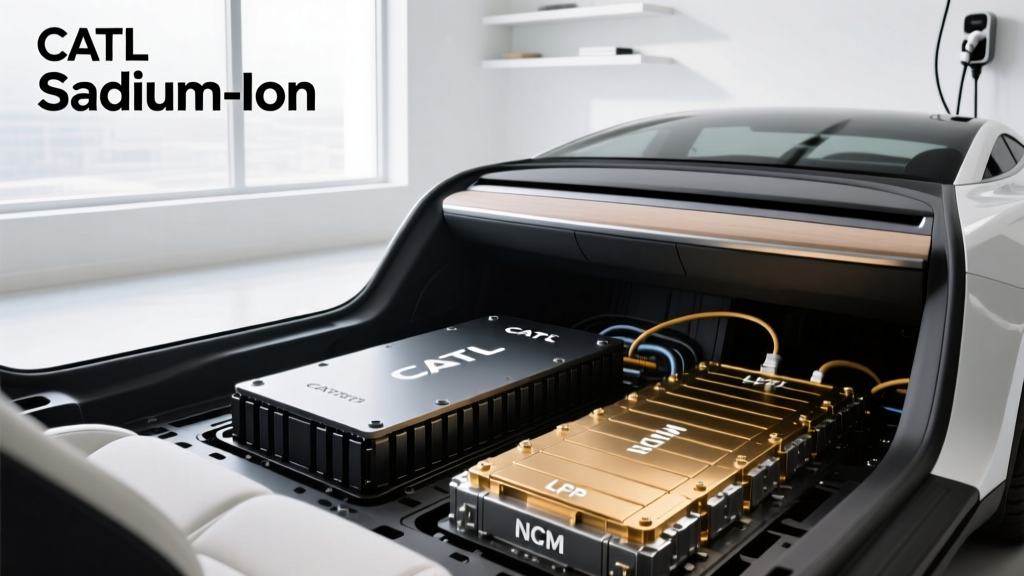
The two dominant lithium-ion chemistries in 2026 electrified vehicles are NMC (nickel manganese cobalt) and LFP (lithium iron phosphate). Your hybrid or EV likely uses one or the other, and the choice affects energy density, longevity, cold-weather performance, and cost.
| Attribute | LFP (Lithium Iron Phosphate) | NMC/NCA (Nickel-based) |
|---|---|---|
| Energy Density | Lower (~160 Wh/kg cell-level) | Higher (~220–260 Wh/kg cell-level) |
| Cycle Life | Excellent: 3,000–5,000+ cycles | Good: 1,000–2,000 cycles |
| Calendar Life | Longer: slower degradation over time | Moderate: more sensitive to high SoC storage |
| Cold-Weather Performance | Weaker: more range loss below 32°F | Better: retains more capacity in cold |
| Cost per kWh | Lower (~$80–100/kWh at pack level) | Higher (~$110–140/kWh at pack level) |
| Charging to 100% | Safe for daily 100% charging | Recommended to stay at 80% daily; 100% for trips only |
| Thermal Stability | Superior: less prone to thermal runaway | Good but requires more active thermal management |
| Common In | Tesla Model 3/Y RWD, BYD models, Ford Mustang Mach-E Select (2025+) | Most long-range/AWD models, Hyundai Ioniq 5/6, VW ID.4 |
Which is better? It depends on your use case. If you want maximum range in a lighter package and don't mind managing your state of charge (keeping it at 80% for daily driving), NMC delivers more miles per kilogram. If you want a battery you can charge to 100% every day without worry, that will likely outlast the car itself, and you don't need the absolute maximum range — LFP is the longevity winner.
For conventional hybrids (HEVs), the battery is small enough that chemistry choice matters less for daily driving. The Toyota Prius uses either NiMH or lithium-ion depending on trim, and both have proven extremely durable in the 1.3 kWh application because the car's computer keeps the pack in a narrow, battery-friendly SoC window (roughly 40–80%).
What Kills a Hybrid Battery? Factors That Accelerate Degradation
Batteries don't just "die" — they degrade based on how they're used. Understanding these factors helps you protect your investment:
Battery Care Checklist: Maximize Your Pack's Lifespan
- Avoid sustained 100% state of charge (NMC batteries): If your PHEV or EV has an NMC pack, set the charge limit to 80% for daily use. Reserve 100% for road trips. LFP packs can handle daily 100% charges without accelerated wear.
- Minimize DC fast charging frequency: Occasional fast charging is fine, but daily 150+ kW DC sessions accelerate degradation. Research from the Idaho National Lab showed packs that exclusively DC fast-charged lost roughly 10% more capacity over 50,000 miles compared to Level 2 charging. Use Level 2 (home/workplace) as your primary charging method.
- Don't store at 0% or 100% SoC: If you're leaving your vehicle for more than a week, aim for 50–60% state of charge. Extended storage at very high or very low SoC causes calendar degradation.
- Let the thermal management system work: Modern hybrids and EVs have active battery cooling/heating. Don't block air intakes, and in extreme heat, park in shade or a garage when possible. Preconditioning your battery before fast charging (most EVs do this automatically when a charger is navigated to) reduces stress.
- Extreme cold reduces range, not battery life: Cold weather temporarily reduces available capacity (expect 15–30% range loss below freezing), but it doesn't cause permanent damage. The battery recovers when temperatures rise.
- Drive it regularly: Lithium-ion batteries prefer moderate, regular use over long periods of inactivity. A hybrid that's driven 30 minutes daily will typically see less degradation than one parked for weeks at a time.
The biggest misconception: fast charging "fries" your battery. Modern battery management systems (BMS) carefully regulate charge rates, temperature, and voltage at the cell level. Fast charging does cause slightly more wear, but the effect is modest for occasional use. The real degradation accelerators are sustained high SoC (for NMC), extreme heat exposure, and deep cycling to very low SoC repeatedly.
How to Check Your Battery's State of Health (SoH)
State of Health (SoH) is the percentage of your battery's original capacity that remains usable. A new battery is 100% SoH; a battery that's degraded to hold only 85% of its original energy is at 85% SoH.
Here's how to monitor yours:
- Manufacturer apps and in-dash displays: Many modern EVs and PHEVs show battery health information directly. The Hyundai/Kia EV app displays SoH percentage. Tesla owners can check via the service menu or third-party tools. Toyota's hybrid system doesn't expose SoH directly, but dealers can pull the data via OBD-II diagnostics.
- OBD-II diagnostic tools: Devices like the OBDeleven, Carly, or dedicated hybrid battery scanners (e.g., the Dr. Prius app with a compatible OBD-II adapter) can read individual cell voltages and overall SoH. For Prius owners, Dr. Prius ($10 app + $30 adapter) is the gold standard for DIY battery health checks.
- Dealer diagnostic reports: Any authorized dealer can run a full battery health report during a service visit. Request this specifically — it's not always included in standard maintenance. Ask for the printout showing SoH percentage and individual module/block voltages.
- Real-world range tracking: The simplest method. If your PHEV used to deliver 38 miles of electric range and now consistently delivers only 30, that's roughly a 21% loss — a useful proxy for SoH. Track this over months, not individual drives (weather and terrain cause daily variation).
When should you be concerned? If SoH drops below 80% while still under warranty, file a claim immediately. Below 70%, you're almost certainly covered for replacement. Below 60% on an out-of-warranty hybrid, the vehicle may throw a hybrid system warning light and limit performance — that's when replacement becomes necessary rather than optional.
Emerging Battery Tech: Solid-State and Silicon Anodes
The battery landscape is evolving, but it's important to separate laboratory progress from showroom reality.
Solid-state batteries replace the liquid electrolyte in current lithium-ion cells with a solid material, promising higher energy density (~400+ Wh/kg), faster charging, and improved safety. Toyota has announced solid-state production for 2027–2028, initially in limited-run vehicles. Samsung SDI and QuantumScape are targeting similar timelines. Realistically, solid-state packs won't appear in mainstream, affordable hybrids or EVs before 2029–2030, and initial costs will be high.
Silicon anode technology (used in cells from companies like Sila Nanotechnologies and Amprius) increases the amount of lithium the anode can store, boosting energy density by 20–40%. This technology is beginning to appear in premium EV cells in 2025–2026 and will gradually trickle down. It doesn't require a full cell redesign, so adoption will be faster than solid-state.
Sodium-ion batteries are emerging as a low-cost alternative for smaller, shorter-range vehicles. CATL has begun production, and these cells trade energy density for dramatically lower material costs. Expect them in budget EVs and possibly some hybrid applications by 2027–2028.
None of these technologies are available in current-production vehicles as of 2026. If you're buying a hybrid or EV today, you're choosing between proven LFP and NMC chemistries — both of which will serve you well for 150,000+ miles.
Frequently Asked Questions
How long do hybrid car batteries last before needing replacement?
Most hybrid batteries (HEV and PHEV) last 150,000–250,000 miles before degradation becomes significant enough to consider replacement. Conventional hybrids like the Prius often exceed 200,000 miles on the original pack. Full battery failure before 100,000 miles is rare and typically covered under the mandatory 8-year/100,000-mile federal warranty.
Is it worth replacing the battery in an older hybrid?
It depends on the vehicle's overall condition and value. For a Prius with 180,000 miles that's otherwise in good shape, a $2,000–$3,000 battery replacement (or $800–$1,500 for module-level repair) can extend the car's life by another 5–7 years — strong economics. For a higher-mileage PHEV needing a $7,000+ pack, weigh the replacement cost against the vehicle's residual value and consider whether a newer model makes more financial sense.
Can I replace a hybrid battery myself?
Conventional hybrid packs (Prius, Accord Hybrid) have been replaced by DIYers, but the high-voltage system (200–650V depending on the vehicle) carries serious shock risk if handled improperly. Module-level repair on a Prius is a documented DIY procedure with proper safety equipment and training. Full pack replacement on PHEVs and EVs involves 400V+ systems and should be left to certified technicians. Always disconnect the 12V auxiliary battery and follow the manufacturer's high-voltage safety protocol before any work.
Does fast charging damage my hybrid or EV battery?
Occasional DC fast charging causes minimal additional wear thanks to modern battery management systems. However, exclusive reliance on DC fast charging (150+ kW) does accelerate degradation modestly — studies show roughly 5–10% additional capacity loss over 50,000 miles compared to Level 2 charging. The practical recommendation: use Level 2 as your primary charging method and save DC fast charging for road trips.
What's the difference between the hybrid battery and the 12V battery?
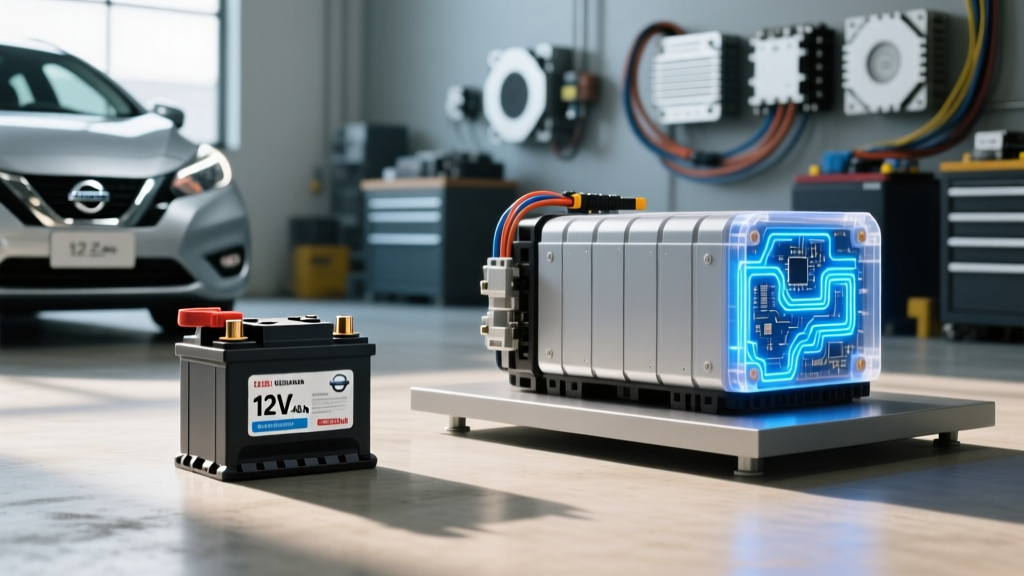
Your hybrid or EV has two batteries. The high-voltage traction battery (1.3–100+ kWh) powers the electric motor(s) and is the subject of this article. The 12V auxiliary battery is a standard lead-acid or lithium 12-volt battery that powers accessories, lights, and the computer systems — just like in a conventional car. The 12V battery typically needs replacement every 3–5 years and costs $150–$300. It's a routine maintenance item, not the expensive pack that hybrid warranties cover.
Do LFP batteries really last longer than NMC?
Yes, in terms of cycle life and calendar longevity. LFP cells typically handle 3,000–5,000+ charge cycles before reaching 80% capacity, compared to 1,000–2,000 cycles for NMC. LFP also tolerates daily 100% charging without accelerated degradation, whereas NMC prefers an 80% daily limit. The trade-off is lower energy density (more weight for the same range) and weaker cold-weather performance. For most hybrid and daily-driver EV applications, LFP is the better longevity choice.
The bottom line: if you're shopping for a hybrid or already own one, the battery should be a source of confidence, not anxiety. Federal warranties protect you for at least 8 years, real-world data shows these packs lasting well past 150,000 miles, and even worst-case replacement costs for conventional hybrids are manageable. Check your SoH periodically, follow basic care practices, and drive without worry.