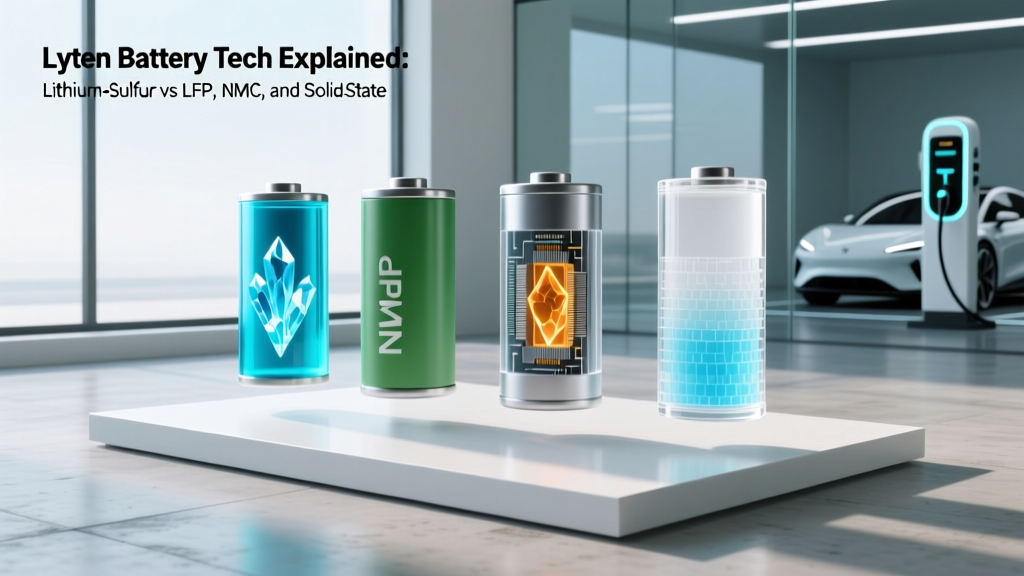
The Chemistry Split Defining 2026 EVs
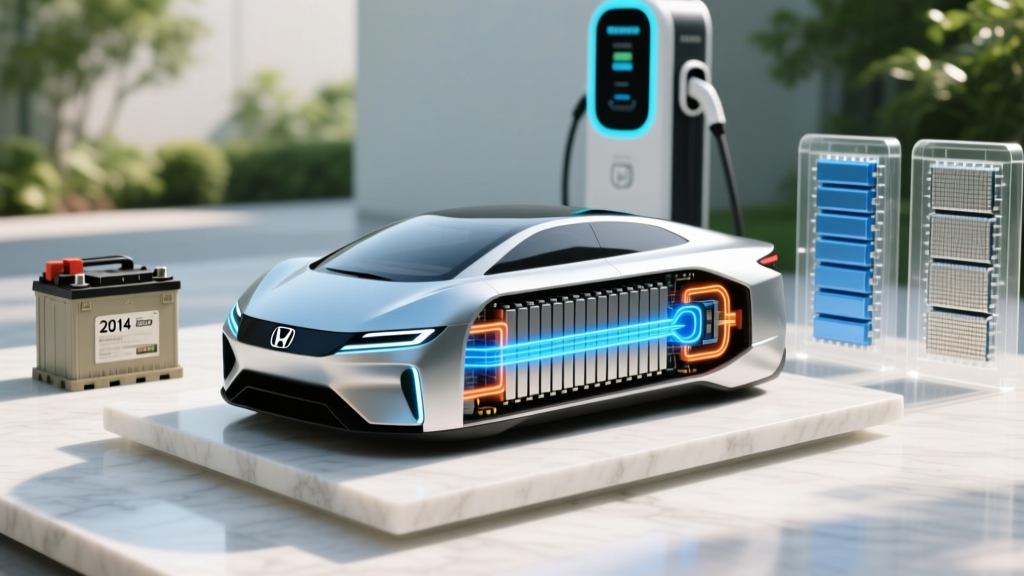
If you shopped for an electric vehicle five years ago, nearly every pack used the same recipe: nickel-manganese-cobalt (NMC) or nickel-cobalt-aluminum (NCA) cathodes tuned for maximum range per kilogram. That monoculture is over. The single biggest shift in new automotive battery technology is the mainstream arrival of lithium iron phosphate (LFP) chemistry in mass-market vehicles, led by Tesla's Model 3/Y Standard Range, BYD's Blade architecture, and the Ford Mustang Mach-E Select LFP option. Buyers now face a genuine chemistry choice — and the right answer depends on how you drive, where you live, and how long you plan to keep the car.
| Attribute | LFP (LiFePO₄) | NMC / NCA |
|---|---|---|
| Energy density (cell-level) | ~160–180 Wh/kg | ~230–300 Wh/kg |
| Typical cycle life | 3,000–5,000+ cycles | 1,000–2,000 cycles |
| Cold-weather range retention | Worse (~30–40% loss at -10°C) | Better (~20–30% loss at -10°C) |
| Peak DC fast-charge rate | Moderate (typically 170–250 kW) | High (up to 350 kW on 800V packs) |
| Thermal runaway risk | Very low | Low, but higher than LFP |
| Cost per kWh (pack-level, 2026) | ~$95–$115 | ~$130–$160 |
| Cobalt / nickel content | None | Yes — sourcing/supply risk |
| State of Charge (SoC) recommendation | 100% OK regularly | 80% daily, 100% for trips |
| Best fit | Daily commuters, long ownership, warm climates | Long-range, cold climates, towing, performance |
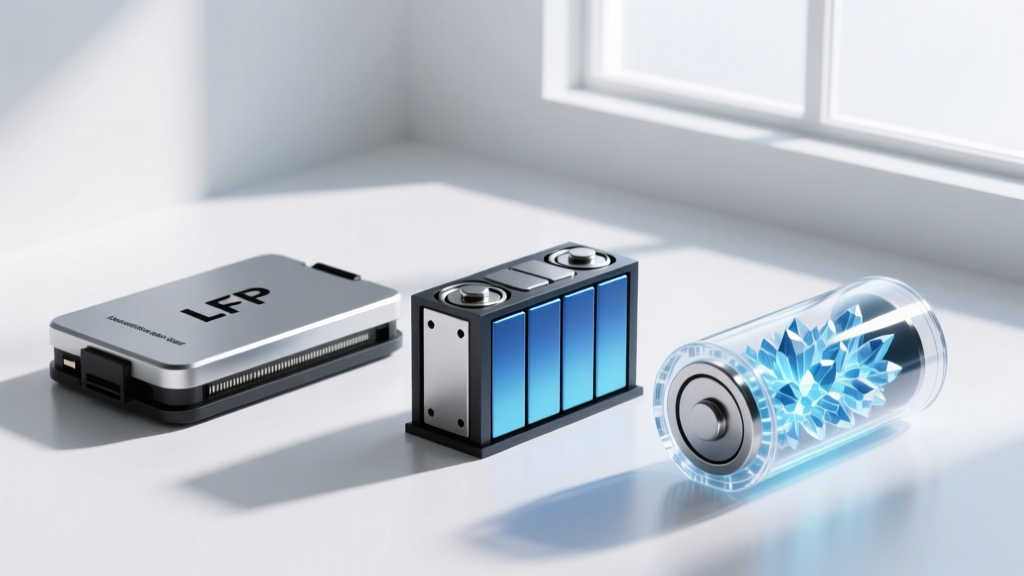
The short version: LFP wins on longevity, cost, and safety; NMC/NCA wins on range density, cold-weather performance, and peak charge speed. Neither is universally superior — which is why automakers now offer both on the same model line.
How Long Do EV Batteries Actually Last?
The honest answer, based on fleet data published by Recurrent Auto and long-term owner telemetry: most modern EV traction batteries outlast the car they're installed in. Catastrophic failure is rare; gradual capacity loss is the real story.
Typical degradation curves (2020–2025 model-year packs, 2026 data):
- Year 1 / 15,000 mi: ~2–5% capacity loss (initial "break-in" drop)
- Year 3 / 45,000 mi: ~6–9% total loss
- Year 5 / 75,000 mi: ~8–12% total loss
- Year 8 / 120,000 mi: ~10–15% total loss (NMC); ~7–10% (LFP)
- Year 12 / 180,000 mi: ~15–22% (NMC); ~10–14% (LFP)
Source context: Recurrent's aggregated dataset of 15,000+ vehicles, plus Tesla's 2025 Impact Report citing ~12% average degradation at 200,000 miles across Model S/X fleets.
Two nuances matter. First, degradation is non-linear — the steepest drop happens in year one, then the curve flattens dramatically. Second, "end of life" in industry terms means 70–80% of original capacity retained, not a dead pack. A 300-mile EPA EV at 80% SoH still delivers ~240 real-world miles — plenty for most drivers.
What the Battery Warranty Actually Covers (and Doesn't)
Federal regulation mandates a minimum 8-year / 100,000-mile warranty on EV traction batteries (10 years / 150,000 miles in California Air Resources Board states). But the fine print matters more than the headline.
| Brand | Term | Capacity retention threshold | Notes |
|---|---|---|---|
| Tesla (Model 3/Y LFP) | 8 yr / 120,000 mi | 70% | Applies to RWD Standard Range |
| Tesla (Model 3/Y Long Range) | 8 yr / 120,000 mi | 70% | NMC pack |
| Hyundai / Kia (E-GMP) | 10 yr / 100,000 mi | 70% | Among longest terms in US |
| Ford (Mach-E, F-150 Lightning) | 8 yr / 100,000 mi | 70% | LFP and NMC variants covered |
| GM (Ultium-based) | 8 yr / 100,000 mi | 70% (60% on Silverado EV) | Varies by model — check window sticker |
| Rivian (R1T/R1S) | 8 yr / 175,000 mi | 70% | Higher mileage cap reflects truck use |
| BMW (iX/i4/Neue Klasse) | 8 yr / 100,000 mi | 70% | Includes 12V lithium aux on some trims |
Critical exclusions across nearly every warranty: damage from collisions, flooding, improper charging equipment, aftermarket modifications, or using the pack as stationary storage (V2H) outside manufacturer-approved programs. Track use and commercial ride-hailing can also void coverage. The warranty covers defects and excessive degradation, not normal wear below the threshold.
Replacement Cost: The Number That Scares People (and Why It Shouldn't)
Out-of-warranty traction battery replacement is genuinely expensive — but it's also genuinely rare within a vehicle's useful life. Here's what 2026 replacement pricing looks like for common models:
| Model | Pack size / chemistry | Approximate replacement cost |
|---|---|---|
| Tesla Model 3 RWD (LFP) | ~60 kWh LFP | $12,000–$16,000 |
| Tesla Model Y Long Range | ~75 kWh NMC | $16,000–$22,000 |
| Hyundai Ioniq 5 / Kia EV6 | 77.4 kWh NMC | $18,000–$24,000 |
| Ford F-150 Lightning Extended | ~131 kWh NMC | $28,000–$38,000 |
| Chevrolet Silverado EV | ~200 kWh Ultium NMC | $35,000–$48,000 |
| Nissan Ariya | 91 kWh NMC | $20,000–$26,000 |
Two things reframe the sticker shock. First, pack-level costs have fallen roughly 85% since 2010 per BloombergNEF data, and continue declining. Second, module-level repair is increasingly viable — many shops can replace a single failed module for $2,000–$5,000 rather than swapping the entire pack. Independent EV specialists ( Electrified Garage, EVs Enhanced, and brand-certified collision centers) now routinely do partial-pack work that didn't exist in 2020.
The practical reality: according to Consumer Reports' long-term reliability surveys, fewer than 3% of EVs from model years 2015–2022 have required a full pack replacement outside warranty. Most EVs will be scrapped for unrelated reasons (collision, corrosion, electronics obsolescence) before the pack wears out.
Five Factors That Accelerate (or Preserve) Battery Life
What actually moves the needle on longevity
- Avoid chronic DC fast-charging. Occasional road-trip fast charges are fine. Daily reliance on 150–350 kW DCFC — especially without pack preconditioning — measurably accelerates degradation. Home Level 2 (7–11.5 kW) is the longevity sweet spot.
- Respect the SoC window. For NMC/NCA packs, 20–80% daily is ideal; 100% only before long trips. LFP packs are the exception — periodic 100% charges actually help the BMS recalibrate cell balance.
- Manage thermal extremes. Hot climates degrade faster than cold ones. If you live in Phoenix, Las Vegas, or Houston, a garage and preconditioned charging matter more than in Seattle. Cold itself doesn't damage the pack — it just temporarily reduces range and slows charge acceptance.
- Don't let the car sit at 0% or 100% for weeks. Storage at ~50% SoC in a cool place is the gold standard for a car you won't drive for a month.
- Use the manufacturer's scheduled software updates. OTA thermal-management and charge-curve refinements have demonstrably extended pack life on Tesla, Hyundai, and GM vehicles across successive model years.
Monitoring State of Health: What Owners Can Actually See
State of Health (SoH) is the percentage of original usable capacity the pack currently holds. Unlike a gas car's compression test, you can't measure it with a single tool — but you can triangulate it.
- In-car displays: Tesla shows rated range vs. new; Hyundai/Kia's EV-specific menu shows SoH percentage on 2024+ models; Rivian displays it in the service menu.
- OBD-II dongles + apps: Tools like Scan My Tesla, LeafSpy (Nissan), and Car Scanner ELM OBD2 read BMS-reported SoH directly.
- Third-party reports: Companies like Recurrent and Geotab provide fleet-grade SoH reports; some dealerships now include a certified SoH printout with CPO EV sales.
- The manual math check: Charge to 100%, note the displayed range, and compare to the original EPA figure adjusted for pack size. A 2022 Model 3 Long Range showing 285 miles at 100% vs. its original 358-mile EPA sticker suggests roughly ~80% SoH — consistent with typical degradation at ~60,000 miles.
For used-EV buyers, SoH is the single most important number on the window sticker. Insist on seeing it before signing.
What's Next: Solid-State, Silicon Anodes, and Realistic Timelines
Headlines promise solid-state batteries every year. The reality is more measured — and more interesting.
Solid-state batteries (replacing liquid electrolyte with a solid conductor) offer theoretical gains: ~40% higher energy density, faster charging, and reduced fire risk. Toyota has announced limited production in its Lexus lineup for 2027–2028 model years with a claimed 750+ km WLTP range and 10-minute 10–80% charges. Nissan, Samsung SDI, and QuantumScape (with VW backing) are targeting 2028–2030 volume production. These are announced timelines, not shipping products; solid-state manufacturing yield and cost remain unsolved at scale.
Silicon-dominant anodes are closer. Sila Nanotechnologies' silicon-carbon anode material is already shipping in the Mercedes G 580 EQG (2025 model year), enabling higher energy density without the full solid-state leap. Expect silicon-blend anodes in mainstream NMC packs by 2027–2028.
Sodium-ion batteries are the quiet wildcard — cheaper than LFP, cobalt-free, and excellent in cold weather, but with lower energy density. CATL and BYD are deploying them in Chinese-market sub-$20,000 EVs; US-market arrival depends on tariff and sourcing policy under the Inflation Reduction Act's §30D credit rules.
For a 2026 buyer: none of these technologies should delay a purchase. Today's LFP and NMC packs are mature, well-warrantied, and proven to 200,000+ miles. The "wait for solid-state" advice has been given since 2015 and has cost early adopters a decade of gas savings.
Choosing the Right Chemistry for Your Situation
Choose LFP if: you commute under 80 miles daily, plan to keep the car 10+ years, live in a mild or warm climate, can charge at home on Level 2, and want the lowest cost-per-mile over ownership.
Choose NMC/NCA if: you regularly drive 250+ mile highway trips, live in a sub-freezing winter climate, tow a trailer, need the fastest DC charge times, or prioritize maximum range in a single-charge day.
Wait for next-gen tech only if: your current vehicle meets your needs and you can afford to defer — the gains will be incremental, not transformational, for most drivers.
Frequently Asked Questions
How long do EV batteries last in years and miles?
Modern packs routinely reach 200,000+ miles with 80–85% of original capacity retained. In years, 12–15 years of normal use is typical before capacity falls below the 70% warranty threshold. LFP packs generally outlast NMC packs by a meaningful margin at high cycle counts.
How much does an EV battery cost to replace out of warranty?
Between $12,000 for a small LFP pack (Tesla Model 3 RWD) and $48,000 for the largest truck packs (Silverado EV 200 kWh). Most replacements, when needed, fall in the $16,000–$26,000 range. Module-level repairs can cut that to $2,000–$5,000.
What does the battery warranty actually cover?
Defects and capacity loss below a stated threshold (typically 70% retention) within 8 years / 100,000 miles (10/150,000 in CARB states). It does not cover collision damage, flooding, abuse, unauthorized modifications, or gradual wear above the threshold.
How do I check my EV's battery health?
Use the in-car SoH display where available, an OBD-II app like Scan My Tesla or LeafSpy, a third-party report from Recurrent, or compare displayed range at 100% SoC to the original EPA figure. For used purchases, demand a documented SoH reading.
LFP vs NMC — which chemistry is better?
Neither is universally better. LFP wins on longevity, cost, safety, and daily-charge convenience; NMC wins on energy density, cold-weather range, and peak charge speed. Match the chemistry to your driving pattern, not the marketing headline.
Will solid-state batteries make today's EVs obsolete?
Not in any near-term timeframe. Volume production is announced for 2027–2030, initially in premium models at high prices. Current LFP and NMC packs will remain competitive through the 2030s, and existing vehicles won't lose functionality when solid-state arrives.
Does fast charging really hurt the battery?
Chronic daily DCFC use measurably accelerates degradation — Recurrent's data shows roughly 1–2 percentage points more capacity loss over 100,000 miles vs. primarily Level 2 charging. Occasional fast charging on road trips has negligible long-term impact, especially when the pack is preconditioned.
For official warranty and safety reference points, see fueleconomy.gov for EPA-rated range and efficiency data, and IRS §30D guidance if your battery chemistry choice intersects with clean-vehicle credit eligibility — LFP packs sourced from China currently face critical-mineral sourcing restrictions that affect credit qualification.