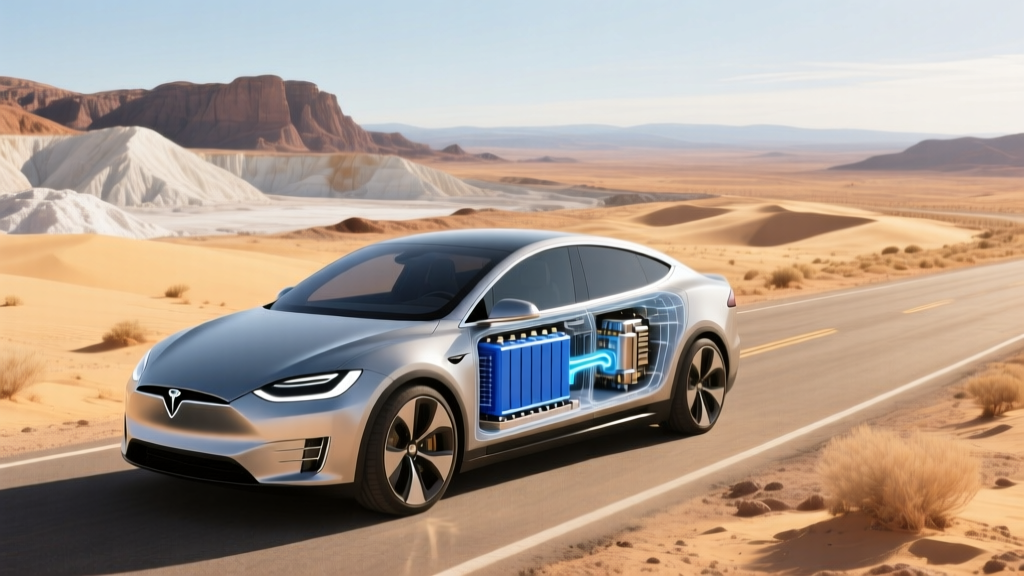
The Thacker Pass project in northern Nevada represents the largest known lithium deposit in the United States and one of the largest globally. For EV buyers and owners, this matters directly: domestic lithium supply influences battery chemistry availability, cell pricing, and ultimately whether your next EV runs on LFP or NMC cells. As of 2026, the mine is in advanced development stages with initial production expected later this decade, and its output will feed into the North American battery supply chain that underpins both the §30D federal tax credit's critical-minerals requirement and the long-term cost trajectory of EV battery packs.
But raw lithium is only the starting point. The battery pack in your EV is a complex electrochemical system, and understanding its chemistry, degradation behavior, warranty coverage, and care requirements is the single most important thing you can do as an EV owner or prospective buyer. This guide covers the full picture — grounded in real data, not marketing claims.
Why Nevada's Lithium Matters for EV Battery Chemistry
Lithium is a foundational element in every modern EV traction battery, regardless of cathode chemistry. Whether your pack uses lithium iron phosphate (LFP) or nickel manganese cobalt (NMC), lithium ions shuttle between the anode and cathode during every charge and discharge cycle. The U.S. Geological Survey has tracked the rapid escalation of global lithium demand, driven almost entirely by EV production.
The Thacker Pass Nevada lithium deposit, being developed by Lithium Americas (with General Motors as a major investor), is projected to produce up to 40,000 metric tons of lithium carbonate equivalent annually at full capacity. That volume is significant enough to supply hundreds of thousands of EV battery packs per year, reducing reliance on imports from Australia, Chile, and China.
For buyers, the practical implication is twofold:
- Tax credit eligibility: The §30D federal tax credit's critical-minerals sourcing requirement increasingly favors vehicles whose battery supply chains draw from U.S. or free-trade-agreement partner sources. Domestic Nevada lithium helps automakers meet these thresholds, as outlined by the IRS clean vehicle credit rules.
- Cost pressure: Increased domestic supply contributes to the steady decline in per-kWh battery cell costs, which have fallen from roughly $140/kWh in 2023 toward sub-$100/kWh for some cell formats by 2026, according to BloombergNEF tracking.
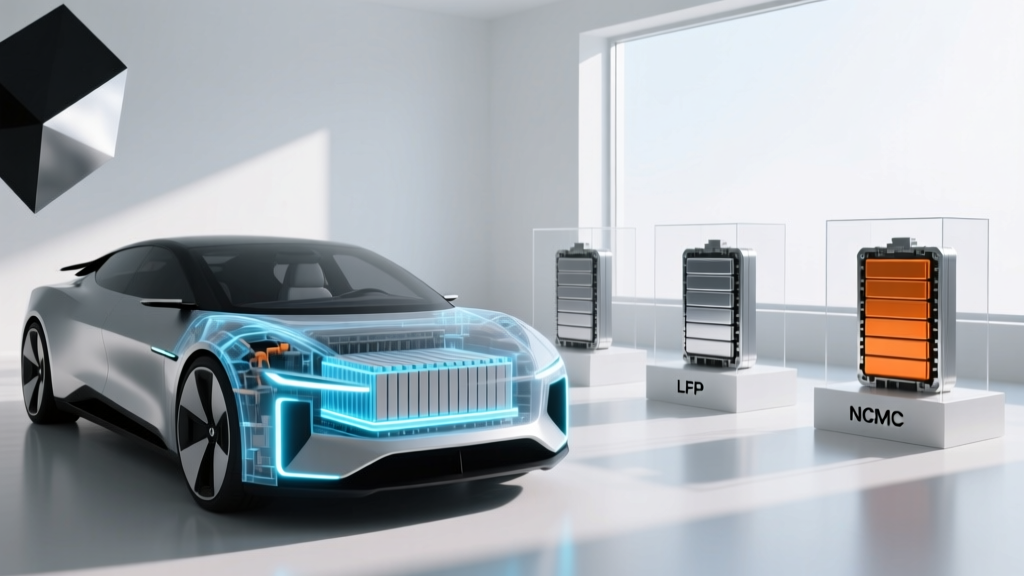
LFP vs. NMC: Battery Chemistry Trade-Offs Explained
Two dominant cathode chemistries power today's EVs, and the choice between them affects your range, charging behavior, longevity, and cost. Here is a direct comparison:
| Attribute | LFP (Lithium Iron Phosphate) | NMC / NCA (Nickel-based) |
|---|---|---|
| Energy density (cell-level) | ~160–180 Wh/kg | ~220–300 Wh/kg |
| Typical cycle life | 3,000–5,000+ cycles | 1,000–2,000 cycles |
| Cold-weather performance | Moderate — greater range loss below 32°F | Better low-temp conductivity |
| Thermal stability | Excellent — lower runaway risk | Good — requires more active thermal management |
| Cost (per kWh, 2026) | ~$70–90/kWh at cell level | ~$90–120/kWh at cell level |
| Recommended charge habit | Can charge to 100% regularly | Best kept at 80% daily; 100% for trips only |
| Common vehicles (2026) | Tesla Model 3/Y RWD, Ford Mustang Mach-E Select (some), BYD models | Tesla Model 3/Y Long Range, Hyundai Ioniq 5/6, Ford F-150 Lightning Extended, most luxury EVs |
| Cobalt/nickel content | None — iron and phosphate only | Contains nickel, manganese, and/or cobalt |
The practical takeaway: If you prioritize maximum range and performance and don't mind managing your state of charge, NMC delivers higher energy density in a lighter, more compact pack. If you want longevity, lower cost, and the simplicity of charging to 100% without worry, LFP is the stronger choice — provided you can accept slightly lower range per kilogram and somewhat worse cold-weather efficiency.
Nevada's lithium feedstock can be refined into battery-grade lithium hydroxide (preferred for NMC) or lithium carbonate (commonly used for LFP), meaning domestic supply supports both chemistries as automakers diversify their cell sourcing.
How Long Do EV Batteries Actually Last?
The short answer: almost certainly longer than you'll own the car. Real-world degradation data from high-mileage fleets and owner tracking studies consistently show that modern EV battery packs retain 85–95% of their original capacity after 100,000 miles, depending on chemistry and usage patterns.
- Tesla fleet data (2025 impact report): Model S/X packs showed ~12% average degradation at 150,000 miles; Model 3/Y (mix of NMC and LFP) showed ~10% at 100,000 miles.
- Geotab fleet study (2024 update, 10,000+ vehicles): Average annual degradation across all EV brands was 1.8% per year, implying ~82% retention at 10 years.
- Recurrent Auto data (2025): Chevrolet Bolt owners averaged 90% capacity retention at 60,000 miles; Hyundai Kona Electric averaged 92% at 50,000 miles.
- LFP-specific: Tesla Model 3 RWD (LFP) owners reported ~5% degradation at 50,000 miles in Recurrent's dataset, consistent with LFP's superior cycle life.
Most EV batteries will outlast the vehicle's useful economic life. Catastrophic failure (sudden, total pack death) is rare — degradation is gradual and linear for most of the pack's life, with a slow taper rather than a cliff. The concern isn't whether the battery will die; it's whether the gradual range loss becomes inconvenient for your needs 10–15 years from now.
Battery Warranty Coverage: What's Protected and for How Long
Federal law mandates a minimum 8-year / 100,000-mile warranty on EV battery packs (10 years / 150,000 miles in California and states that follow CARB standards). Most automakers meet or slightly exceed this floor. The critical detail is the capacity retention threshold — the point at which the manufacturer considers the pack degraded enough to warrant repair or replacement.
| Manufacturer | Warranty Period | Mileage Cap | Capacity Retention Threshold |
|---|---|---|---|
| Tesla (Model 3/Y RWD — LFP) | 8 years | 120,000 miles | 70% |
| Tesla (Model 3/Y LR, Model S/X) | 8 years | 120,000–150,000 mi | 70% |
| Hyundai / Kia | 10 years | 100,000 miles | 70% |
| Ford | 8 years | 100,000 miles | 70% |
| GM (Chevrolet, Cadillac) | 8 years | 100,000 miles | 70% |
| BMW | 8 years | 100,000 miles | 70% |
| Rivian | 8 years | 175,000 miles (R1T/R1S) | 70% |
Key warranty nuances:
- Warranty covers defects and capacity loss below the threshold — not just sudden failures.
- Some manufacturers replace with a refurbished or remanufactured pack, not necessarily a brand-new one. The replacement pack will meet or exceed the threshold but may not restore 100% capacity.
- Opening the pack at an unauthorized shop, physical damage, or improper charging equipment can void coverage.
- Warranty is tied to the vehicle, not the owner — it transfers on resale, which supports used-EV values.
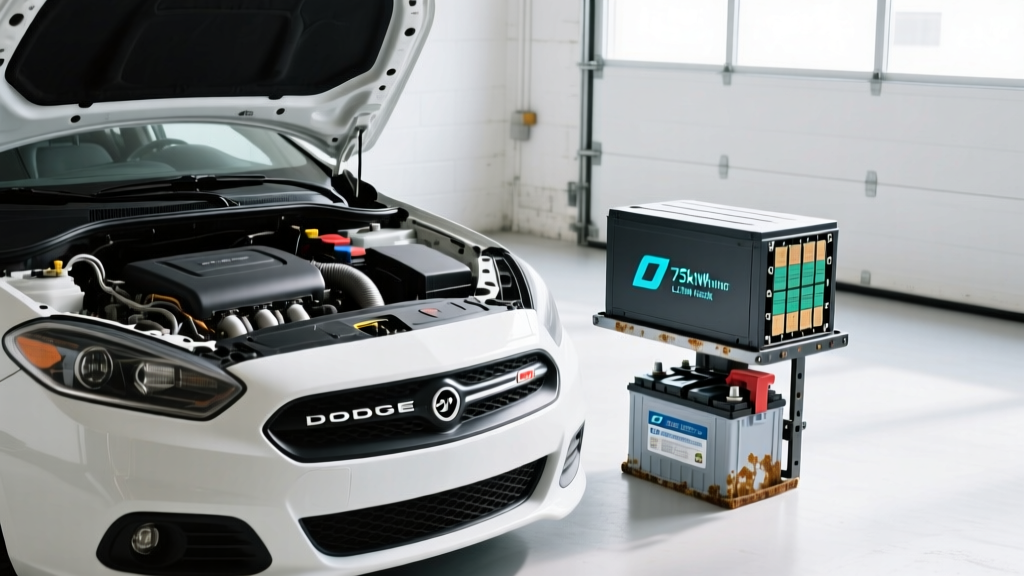
EV Battery Replacement Costs: When and How Much
Most owners will never need an out-of-warranty battery replacement. The pack typically outlasts the vehicle's economic life, and many EVs are retired or totaled in accidents before the battery reaches end-of-life. That said, if you plan to keep an EV for 15+ years or buy a used EV well past warranty coverage, replacement cost is a legitimate planning factor.
| Vehicle / Pack Size | Battery Capacity | Replacement Cost Range (Parts + Labor) | Typical Replacement Timeline |
|---|---|---|---|
| Tesla Model 3 RWD (LFP) | ~60 kWh | $8,000–$12,000 | Rarely needed before 200,000+ mi |
| Tesla Model Y Long Range | ~75 kWh | $12,000–$16,000 | Rarely needed before 200,000+ mi |
| Hyundai Ioniq 5 | ~77.4 kWh | $11,000–$15,000 | Rarely needed before 180,000+ mi |
| Ford F-150 Lightning Ext. Range | ~131 kWh | $18,000–$25,000 | Large pack; degradation slower in practice |
| Chevrolet Bolt EV/EUV | ~65 kWh | $9,000–$13,000 | Post-recall packs showing strong longevity |
| Luxury EVs (BMW iX, Mercedes EQS) | 100–108 kWh | $20,000–$30,000+ | Complex packs; labor-intensive access |
Context on these numbers:
- Prices have been declining steadily. A Model 3 pack replacement that might have cost $16,000+ in 2022 is closer to $10,000–12,000 in 2026 due to cell cost reductions and growing third-party refurbishment options.
- Module-level repair is increasingly available: independent EV shops can replace individual degraded modules within a pack for $2,000–$5,000 rather than swapping the entire pack.
- Domestic lithium supply from sources like Nevada's Thacker Pass contributes to long-term cost reduction by stabilizing raw material pricing and shortening supply chains.
Factors That Affect Battery Life (and What You Can Control)
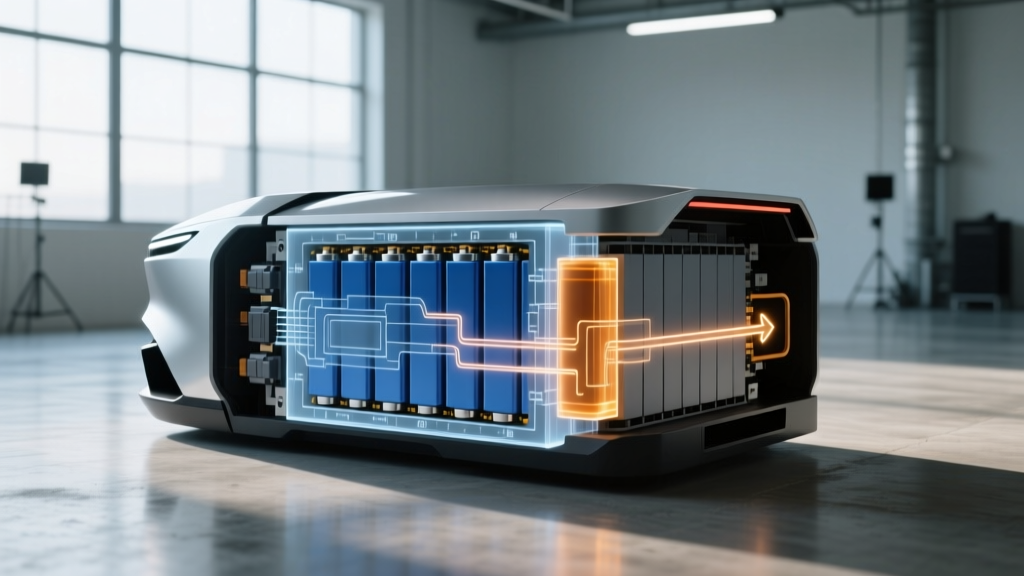
Battery degradation is driven by a combination of electrochemical stress factors. Not all miles and charges are equal:
- Limit DC fast charging frequency. Occasional road-trip fast charging is fine. Daily reliance on 150+ kW DC charging accelerates degradation by 1–3% over the pack's life compared to primarily Level 2 home charging. The heat generated at high charge rates stresses cell chemistry.
- Avoid extreme states of charge (NMC). For NMC/NCA packs, keeping daily charge between 20–80% reduces stress. LFP packs are an exception — manufacturers like Tesla and Ford recommend periodic 100% charges for LFP to allow the BMS to calibrate cell balancing accurately.
- Use preconditioning. Most EVs let you precondition (warm or cool) the battery before charging or driving. A cold battery charged at high power suffers lithium plating on the anode — a permanent capacity loss mechanism. Preconditioning to ~70–80°F before fast charging is the single most impactful habit for longevity.
- Minimize prolonged high-SoC storage in heat. Leaving an NMC pack at 100% SoC parked in 95°F+ heat for days is one of the most damaging scenarios. If storing the vehicle, set charge to 50% and park in shade or a garage.
- Don't baby it excessively. Modern battery management systems (BMS) are sophisticated. They maintain thermal buffers, limit charge rates when cells are cold, and balance cells automatically. Normal daily use — including occasional 100% charges for road trips — will not meaningfully harm your pack.
Monitoring Battery Health: How to Check State of Health (SoH)
State of Health (SoH) is the percentage of your battery's original usable capacity that remains. A new pack is at 100% SoH; a pack that has degraded to hold only 85% of its original energy is at 85% SoH. Here's how to monitor it:
- In-vehicle displays: Some manufacturers (notably Tesla, via the service menu in recent software updates, and Hyundai/Kia via the infotainment system) provide a battery health estimate directly. This is a BMS-calculated approximation and may lag behind actual degradation.
- OBD-II dongle + app: Devices like the OBDLink MX+ paired with apps such as ABRP (A Better Route Planner) or LeafSpy (for Nissan Leaf) or Tessie (for Tesla) can pull detailed BMS data including estimated SoH, individual cell voltages, and cycle counts.
- Third-party diagnostics: Companies like Recurrent Auto offer battery health reports based on telematics data, and some independent EV shops can perform a controlled discharge test to measure actual capacity.
- DIY calculation: Track your energy consumption over a full charge cycle. If your 75 kWh pack consistently accepts only 66 kWh from 0–100% (adjusted for charging losses of ~5–8%), your SoH is approximately 90–92%.
For used-EV buyers, requesting a battery health report before purchase is as essential as a pre-purchase inspection on a gas car. A vehicle at 93% SoH with 40,000 miles is in far better shape than one at 88% SoH with the same mileage — and the difference compounds over the remaining life of the pack.
Emerging Battery Technology: What's Next Beyond Today's Cells
While today's LFP and NMC chemistries are mature and reliable, several next-generation technologies are in development. None are widely available in production vehicles as of 2026, but they represent the trajectory of the industry:
- Solid-state batteries: Replace the liquid electrolyte with a solid material, promising higher energy density (potentially 400+ Wh/kg at cell level), faster charging, and improved safety. Toyota has announced limited production in select models for the late 2020s, and Samsung SDI targets mass production by 2028–2029. Realistic timeline for widespread availability: 2029–2032+.
- Silicon-dominant anodes: Replacing graphite anodes with silicon can increase energy density by 20–40%. Companies like Sila Nanotechnologies and Group14 are supplying early production cells, but silicon anodes swell during cycling, and long-term durability remains the engineering challenge. Expect incremental adoption in premium models by 2027–2028.
- Sodium-ion batteries: Use abundant sodium instead of lithium, trading energy density for dramatically lower cost. CATL and BYD have begun production for Chinese-market EVs. U.S. availability is unlikely before 2028 at the earliest, and initial applications will likely be in lower-range, budget-focused vehicles.
For today's buyers, the practical advice is straightforward: current-generation LFP and NMC batteries are proven, well-warrantied, and cost-effective. Waiting for solid-state means waiting years for limited availability at premium pricing. Buy what works for your needs now, and the supply chain — anchored by domestic resources like Nevada's lithium deposits — will continue driving costs down and capability up across all chemistries.
Frequently Asked Questions
How long do EV batteries last in years and miles?
Most modern EV battery packs will retain 80–90% of their original capacity after 10 years or 150,000 miles of normal use. LFP chemistries typically last longer — 15+ years or 200,000+ miles before reaching 80% retention. Catastrophic failure is rare; degradation is gradual. Many packs will outlast the vehicle itself.
How much does an EV battery cost to replace?
Out-of-warranty replacement costs range from approximately $8,000 for a ~60 kWh pack (Tesla Model 3 RWD, Chevrolet Bolt) to $25,000+ for a 130+ kWh pack (Ford F-150 Lightning Extended Range, luxury EVs). Prices have been declining, and module-level repair offers a lower-cost alternative for partial degradation. Most owners never need a replacement.
What does the EV battery warranty actually cover?
Federal minimum is 8 years / 100,000 miles covering both defects and capacity loss below a defined threshold (typically 70% of original capacity). Some manufacturers, like Hyundai/Kia, offer 10 years / 100,000 miles. The warranty covers repair or replacement of the pack if it falls below the threshold, and it transfers to subsequent owners.
How do I check and maximize my EV battery health?
Monitor State of Health (SoH) via in-vehicle displays, OBD-II diagnostic apps, or third-party services. To maximize longevity: rely primarily on Level 2 home charging, precondition the battery before fast charging, avoid prolonged storage at 100% SoC in heat (for NMC), and follow manufacturer-specific charge recommendations (LFP owners should charge to 100% periodically for BMS calibration).
LFP vs. NMC — which battery chemistry is better?
Neither is universally better; they serve different priorities. LFP offers longer cycle life, lower cost, better thermal safety, and the simplicity of 100% daily charging — but with lower energy density and worse cold-weather performance. NMC provides higher range per kilogram and better cold-weather efficiency, suited for long-range and performance vehicles, but requires more careful state-of-charge management. Your ideal chemistry depends on your driving patterns, climate, and whether you prioritize range or longevity.
Will Nevada's Thacker Pass lithium mine lower EV battery prices?
Over time, yes — modestly. Domestic lithium supply reduces reliance on volatile international markets, shortens supply chains, and helps automakers qualify for §30D tax credit critical-minerals requirements. The effect on per-vehicle pricing is indirect and gradual, contributing to the broader trend of declining battery cell costs rather than causing a sudden price drop.