Understanding NCM Battery Chemistry in Modern EVs
If you've been researching electric vehicles, you've likely encountered the term NCM battery — shorthand for nickel-cobalt-manganese lithium-ion cells. This chemistry powers some of the longest-range EVs on the road in 2026, from the Hyundai Ioniq 6 to the Ford Mustang Mach-E Extended Range. But NCM isn't the only game in town. Lithium iron phosphate (LFP) cells have gained significant market share in standard-range models from Tesla, BYD, and others. The chemistry inside your EV's traction battery determines not just how far you can drive on a charge, but how that range holds up over a decade of ownership, how the pack handles cold weather, and what you'll pay if something goes wrong out of warranty.
This guide breaks down NCM battery technology against its primary competitor (LFP), provides real degradation data from vehicles in the field, explains what your warranty actually covers, and gives you a practical framework for maximizing battery lifespan. We'll also touch on what's coming next — solid-state and silicon-anode cells — with realistic timelines rather than hype.
NCM vs LFP: The Chemistry Trade-Offs That Matter
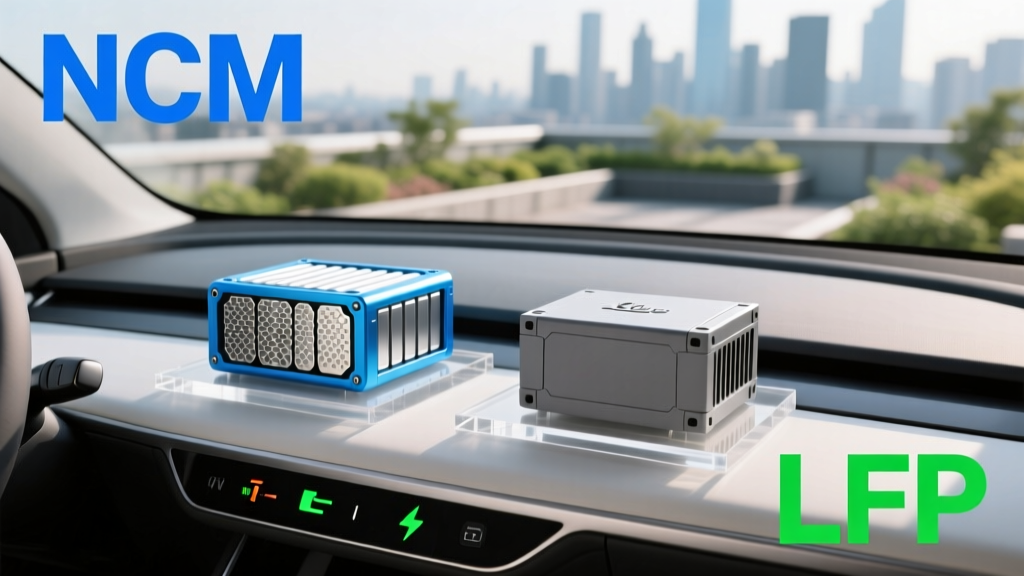
An NCM battery uses a cathode composed of varying ratios of nickel, cobalt, and manganese. The exact ratio matters: an NCM 811 cell (80% nickel, 10% cobalt, 10% manganese) offers higher energy density than an NCM 622 or NCM 532, but trades some thermal stability. Automakers and cell suppliers like LG Energy Solution, SK On, Samsung SDI, and CATL tune these ratios for specific applications — prioritizing range in a flagship sedan or longevity in a fleet vehicle.
LFP (lithium iron phosphate) cells use an iron-phosphate cathode with no nickel or cobalt. This makes them cheaper to produce, more thermally stable, and longer-lasting in terms of cycle life — but they sacrifice energy density, meaning a larger, heavier pack is needed for the same range.
| Attribute | NCM (Nickel-Cobalt-Manganese) | LFP (Lithium Iron Phosphate) |
|---|---|---|
| Energy Density (cell-level) | 220–300 Wh/kg | 150–200 Wh/kg |
| Typical Cycle Life | 1,000–2,000 cycles to 80% SoH | 2,500–5,000+ cycles to 80% SoH |
| Cold-Weather Performance | Better low-temp conductivity; ~15–25% range loss at 20°F | More affected by cold; ~20–35% range loss at 20°F without heat pump |
| Cost per kWh (pack-level) | $110–$140/kWh | $80–$105/kWh |
| Thermal Stability | Good (improved with higher Mn content); requires active BMS | Excellent; inherently more stable cathode |
| Recommended Charging Habit | Daily charge to 80%; 100% for trips only | Can charge to 100% daily; benefits from periodic full charges for BMS calibration |
| Common Applications (2026) | Long-range/extended-range trims; performance models | Standard-range trims; fleet/commercial; home storage |
| Key Raw Materials | Nickel, cobalt, manganese, lithium | Iron, phosphate, lithium |
The practical takeaway: If you need maximum range in a lighter package — for road trips, cold climates, or performance driving — an NCM battery is the stronger choice. If you primarily commute locally, can charge at home every night, and want the longest possible cycle life with lower cost, LFP is compelling. Neither is universally "better." The right chemistry depends on your driving pattern.
How Long Do NCM Batteries Actually Last? Degradation Data
One of the most persistent concerns among EV buyers is battery longevity. The good news, backed by fleet data and long-term owner reports, is that modern NCM packs are lasting significantly longer than early-generation cells. Catastrophic failure is rare; gradual capacity loss is the norm.
Here's what real-world degradation looks like for NMC-based packs based on aggregated fleet data and long-term testing:
| Timeframe | Mileage | Average Capacity Retained (SoH) | Notes |
|---|---|---|---|
| Year 1 | ~12,000 mi | 95–97% | Initial formation loss; steepest drop in first few months |
| Year 3 | ~36,000 mi | 91–94% | Degradation curve flattens significantly |
| Year 5 | ~60,000 mi | 88–92% | Most packs well above warranty threshold |
| Year 8 | ~100,000 mi | 84–90% | Warranty period ends; majority still above 70–80% threshold |
| Year 10+ | ~120,000–150,000 mi | 80–87% | Pack still functional; reduced range noticeable but manageable |
According to data compiled by Geotab's fleet analysis of over 10,000 EVs, the average annual degradation rate for modern lithium-ion packs is approximately 1.8% per year — meaning a 10-year-old pack could still retain roughly 82% of its original capacity. NCM cells with advanced thermal management systems (liquid cooling, heat pumps) tend to cluster at the better end of this range.
The key insight is that degradation is non-linear. You'll see the fastest capacity drop in the first 6–12 months (formation losses and SEI layer stabilization), after which the curve flattens considerably. A pack that retains 94% after year two is very likely to retain 88%+ at year eight.
What Does the EV Battery Warranty Actually Cover?
Federal law mandates that EV batteries carry a minimum warranty of 8 years or 100,000 miles (whichever comes first). In California Air Resources Board (CARB) states — which include California, New York, Massachusetts, Oregon, Washington, and several others — that requirement extends to 10 years or 150,000 miles for PZEV/AT-PZEV classified vehicles.
But the warranty doesn't guarantee your battery will be like new. It guarantees a minimum capacity retention threshold, typically 70% of original capacity. If your 80 kWh NCM pack drops below 56 kWh of usable capacity within the warranty period, the manufacturer must repair or replace it. In practice, very few packs fall below this threshold during the warranty window.
| Manufacturer | Warranty Period | Capacity Threshold | Notable Details |
|---|---|---|---|
| Hyundai / Kia (E-GMP: Ioniq 5/6, EV6) | 10 yr / 100,000 mi | 70% | Among the most generous terms; covers battery management system |
| Tesla (Model 3/Y Long Range — NCM) | 8 yr / 120,000 mi (LR) | 70% | Standard Range (LFP) is 8 yr / 100,000 mi |
| Ford (Mach-E Extended Range) | 8 yr / 100,000 mi | 70% | Covers battery and hybrid/electric components |
| GM (Ultium: Blazer EV, Equinox EV, Silverado EV) | 8 yr / 100,000 mi | 70% | Ultium packs use NMC chemistry across trims |
| BMW (i4, iX, i7) | 8 yr / 100,000 mi | 70% | Gen5 eDrive with Samsung SDI NCM cells |
| Volkswagen (ID.4, ID.7) | 8 yr / 100,000 mi | 70% | MEB platform; SK On and CATL NCM supply |
What's typically covered: Cell failures causing capacity below the threshold, battery management system (BMS) malfunctions, cooling system defects affecting the pack, and manufacturing defects in modules or wiring.
What's typically NOT covered: Capacity loss from normal use that stays above the threshold, damage from accidents or flooding, modifications to the battery or charging system, and failure to follow the manufacturer's recommended maintenance (coolant service intervals, for example).
EV Battery Replacement Cost: What to Expect in 2026
Here's the number that causes the most anxiety — and the one most often misrepresented in sensational headlines. Yes, an out-of-warranty EV battery replacement is expensive. But context matters enormously: the vast majority of NCM packs outlast the vehicle's first and second ownership cycles, and prices per kWh continue to decline.
| Vehicle | Battery Capacity | Estimated Parts Cost | Estimated Labor | Total Range |
|---|---|---|---|---|
| Tesla Model 3 Long Range | ~75 kWh (NCM) | $9,000–$12,000 | $1,500–$3,000 | $10,500–$15,000 |
| Hyundai Ioniq 5 Long Range | 77.4 kWh (NCM) | $10,000–$14,000 | $2,000–$3,500 | $12,000–$17,500 |
| Ford Mustang Mach-E ER | 91 kWh (NCM) | $14,000–$18,000 | $2,000–$4,000 | $16,000–$22,000 |
| Chevrolet Silverado EV | ~200 kWh (Ultium NMC) | $25,000–$35,000 | $3,000–$5,000 | $28,000–$40,000 |
| BMW iX xDrive50 | ~105 kWh (NCM) | $16,000–$22,000 | $2,500–$4,000 | $18,500–$26,000 |
Several factors are working in your favor. First, module-level repair is increasingly available. Many NCM packs (GM's Ultium, VW's MEB, Hyundai's E-GMP) are designed with individually replaceable modules. If a single module group degrades or fails, a technician can swap just that module rather than the entire pack — reducing cost to $2,000–$6,000 depending on the module count.
Second, the growing EV battery refurbishment and aftermarket is driving prices down. Companies like Redwood Materials and Li-Cycle are recovering and reprocessing cathode materials, and third-party repair shops specializing in EV battery diagnostics and module replacement are emerging in major metro areas.
Third — and this is critical — most EV owners never need a full battery replacement. According to data from Consumer Reports and long-term fleet studies, the percentage of EVs requiring a full pack replacement under or just outside warranty is estimated at under 5%. The more common scenario is gradual capacity loss that reduces range by 15–20% over a decade, which most owners find acceptable or offset by upgrading to a newer vehicle.
Factors That Accelerate (or Slow) NCM Battery Degradation
Your charging habits, driving environment, and climate have a measurable impact on how quickly your NCM battery loses capacity. Here are the factors ranked by impact, based on battery research and fleet telemetry data:
High-Impact Factors
- Extreme State of Charge (SoC) habits: Regularly charging to 100% and leaving the vehicle sitting at full charge accelerates cathode degradation in NCM cells. The lithium plating risk increases above 90% SoC, especially in warm conditions. Best practice: Set daily charge limit to 80%; charge to 100% only when you'll drive immediately.
- High ambient temperatures + high SoC: An NCM battery sitting at 95% SoC in 100°F heat is under maximum stress. Thermal management systems mitigate this, but they can't eliminate it. Best practice: Avoid parking at full charge in extreme heat; use scheduled departure charging to minimize time at high SoC.
- Frequent DC fast charging at high power: Repeated use of 150+ kW DC fast chargers generates significant heat within cells. While modern BMS systems manage charge curves to protect the pack, daily fast-charging will accelerate degradation compared to Level 2 home charging. Best practice: Use DC fast charging for road trips; rely on Level 2 (7–11 kW) for daily needs.
Moderate-Impact Factors
- Deep discharges below 10%: Regularly draining the pack to near-zero stresses the anode. The BMS reserves a buffer (typically 3–5% at the bottom), but habitually arriving at 0% isn't ideal. Best practice: Charge before dropping below 15–20%.
- Cold-weather charging without preconditioning: Charging an NCM battery in sub-freezing temperatures without warming it first can cause lithium plating on the anode. Most modern EVs precondition the battery when you navigate to a charger. Best practice: Always use the vehicle's navigation to route to a DC charger, triggering thermal preconditioning.
Lower-Impact Factors
- Mileage alone: Calendar aging (time-based degradation) often matters as much as cycle count. A garage-kept EV driven 6,000 miles/year will still degrade from time-based chemical processes, though more slowly than a high-mileage vehicle.
- Aggressive acceleration: High discharge rates generate heat, but this is a secondary factor compared to SoC and temperature management.
How to Monitor Your NCM Battery's State of Health
State of Health (SoH) is the metric that tells you how much capacity your battery retains compared to its original specification. A new pack is at 100% SoH; a pack that originally held 77.4 kWh and now holds 69.7 kWh is at 90% SoH.
Here's how to check it:
- In-vehicle displays: Some manufacturers (BMW, Hyundai/Kia) provide a battery health indicator in the infotainment system or instrument cluster, though it may be simplified (a bar graph rather than an exact percentage).
- OBD-II diagnostic apps: Tools like LeafSpy (originally for Nissan Leaf but expanded), OBDeleven (for VW/Audi group vehicles), and manufacturer-specific apps can read the BMS directly and report SoH as a percentage. An OBD-II Bluetooth dongle costs $15–$50.
- Charging-session analysis: Apps like TeslaFi, Stats (for Tesla), and EVNotify track your charge sessions over time. By comparing how many kWh it takes to charge from, say, 20% to 80% today versus a year ago, you can estimate your SoH trend.
- Dealer diagnostic reports: During service visits, dealerships can run a full battery health report. Request this at every annual service — it's often free and gives you a documented SoH record useful for resale.
Pro tip for used-EV buyers: Before purchasing a used EV with an NCM pack, ask the seller for a recent battery health report from the dealer or a screenshot from an OBD-II app. A vehicle at 92% SoH with 35,000 miles is a much better bet than one at 85% SoH at the same mileage — that gap suggests the previous owner's charging habits were harder on the pack.
Beyond NCM: What's Coming in Battery Technology
NCM chemistry in 2026 is already a mature, well-optimized technology. But the pipeline includes several advances worth understanding — with realistic timelines, not marketing hype.
Silicon-dominant anodes: Replacing the graphite anode with silicon can increase energy density by 20–40%. Companies like Sila Nanotechnologies and Group14 are supplying silicon-composite anode materials to cell manufacturers now. Expect to see silicon-enhanced NCM cells in production EVs starting in 2027–2028, with gradual adoption through 2030. This is an incremental improvement to existing NCM chemistry, not a replacement.
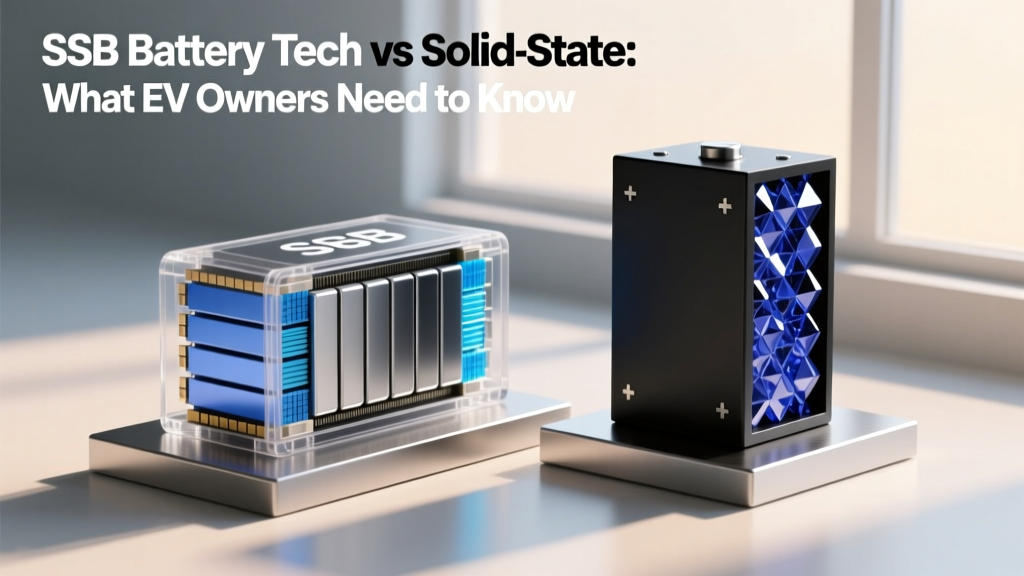
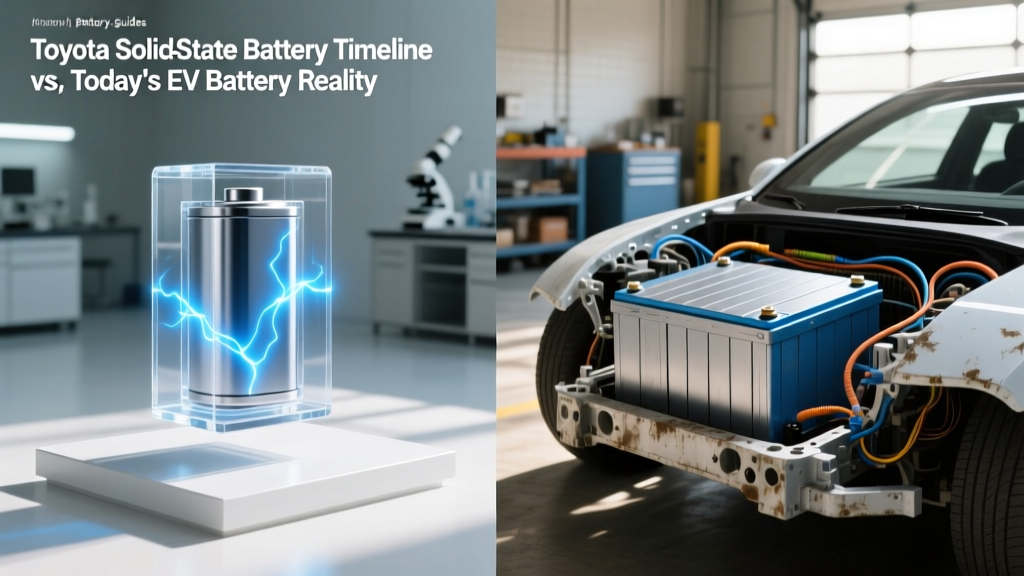
Solid-state batteries: These replace the liquid electrolyte with a solid conductor, promising higher energy density, faster charging, and improved safety. Toyota, Samsung SDI, and QuantumScape are the most vocal developers. Toyota has announced a solid-state battery for a limited-production vehicle, but mass-market availability at competitive pricing remains a 2029–2032 prospect at the earliest. Solid-state is not available in any consumer EV as of 2026.
LMFP (lithium manganese iron phosphate): A hybrid chemistry that adds manganese to LFP, boosting energy density by roughly 15–20% while retaining LFP's cost and safety advantages. CATL and other suppliers are beginning production. LMFP may displace some NCM applications in mid-range vehicles by 2028, but high-performance and maximum-range applications will likely remain NCM-dominant.
Sodium-ion batteries: Using abundant sodium instead of lithium, these cells are cheaper but have lower energy density. They're suitable for city cars and stationary storage. CATL and BYD are producing sodium-ion cells, but they are not expected to appear in US-market long-range EVs in the near term.
NMC Battery FAQ: Answers to the Most Common Questions
How long do NCM EV batteries last in years and miles?
Based on fleet data, modern NCM batteries typically retain 84–90% of their original capacity after 8 years and 100,000 miles. Many packs continue functioning with acceptable range at 150,000+ miles and 10–12 years. Complete failure is rare; gradual capacity loss is the norm. The federal warranty mandates coverage for at least 8 years/100,000 miles with a 70% capacity retention threshold.
How much does it cost to replace an NCM EV battery?
Out-of-warranty replacement costs range from approximately $10,500 for a Tesla Model 3 Long Range pack to $40,000 for a large-pack vehicle like the Chevrolet Silverado EV. However, most NCM packs outlast the vehicle's useful life, and module-level repairs ($2,000–$6,000) are increasingly available as an alternative to full pack replacement. Under 5% of EVs require a full pack replacement based on current fleet data.
Is LFP better than NCM for daily commuting?
For daily commuting with home charging, LFP offers advantages: longer cycle life, lower cost, and the ability to charge to 100% daily without degradation concerns. However, NCM provides better cold-weather performance, higher energy density (more range in a lighter pack), and faster DC charging speeds. If your commute is under 50 miles and you live in a moderate climate, LFP is an excellent choice. If you need 300+ miles of range or drive in cold winters, NCM is the better fit.
Does frequent DC fast charging damage an NCM battery?
Exclusively relying on DC fast charging (150+ kW) will accelerate degradation compared to primarily using Level 2 home charging (7–11 kW). However, modern battery management systems actively manage charge curves and thermal loads to minimize damage. Occasional fast charging on road trips is not a concern. The issue arises when DC fast charging is the only charging method used daily. Aim for 80%+ of your charging to be Level 2 for optimal longevity.
Should I charge my NCM battery to 100% every night?
No. NCM cells experience accelerated degradation when held at high states of charge for extended periods. Set your daily charge limit to 80% and only charge to 100% when you need maximum range for a trip — ideally timing it so you depart shortly after reaching full charge. This is the single most impactful habit for extending NCM battery life.
How do I check my EV battery's State of Health?
Use an OBD-II Bluetooth adapter with an app like OBDeleven (VW/Audi), LeafSpy, or manufacturer-specific tools to read SoH directly from the BMS. Alternatively, track your charging sessions over time — if it takes fewer kWh to charge from 20% to 80% than it did when the vehicle was new, that reduction approximates your capacity loss. Request a dealer diagnostic report at annual service visits for an official record.
Are solid-state batteries going to make NCM obsolete?
Not in the near term. Solid-state batteries remain in limited production as of 2026 and are not available in any mass-market consumer EV. Realistic mass-market availability is 2029–2032 at the earliest. NCM chemistry continues to improve with silicon-anode enhancements and manufacturing refinements. If you're buying an EV in the next 3–4 years, NCM will remain the dominant chemistry for long-range applications.
Sources: Battery degradation data aggregated from Geotab fleet analytics; warranty terms verified against manufacturer specification pages and fueleconomy.gov; replacement cost estimates based on dealer service bulletins and third-party repair networks. Battery chemistry specifications reference IEA Global EV Outlook data. Federal warranty minimums per EPA/CARB requirements. Tax credit eligibility for EV purchases is subject to IRS §30D rules including MSRP caps, income limits, and battery sourcing requirements — consult irs.gov or a tax professional for your specific situation.