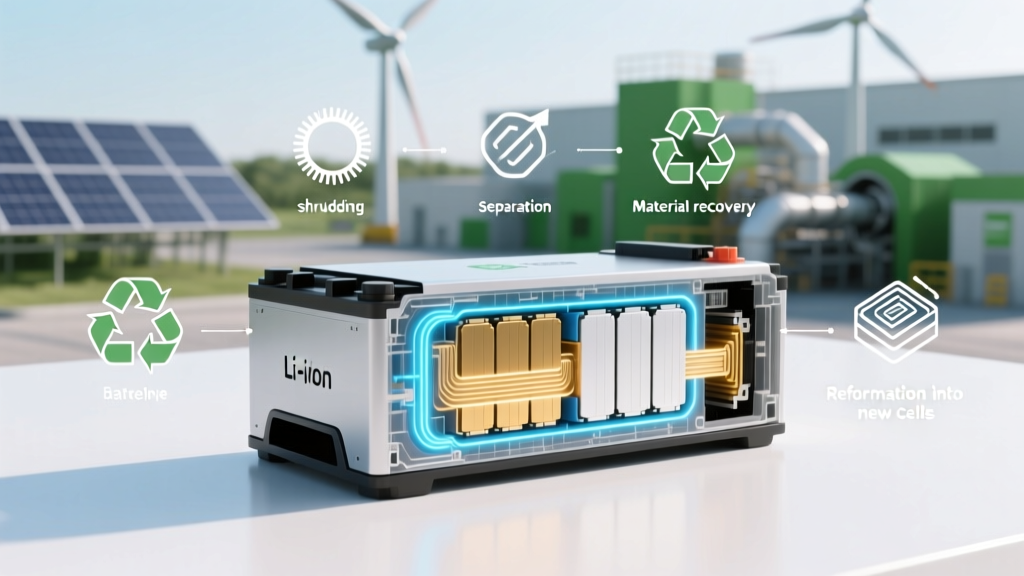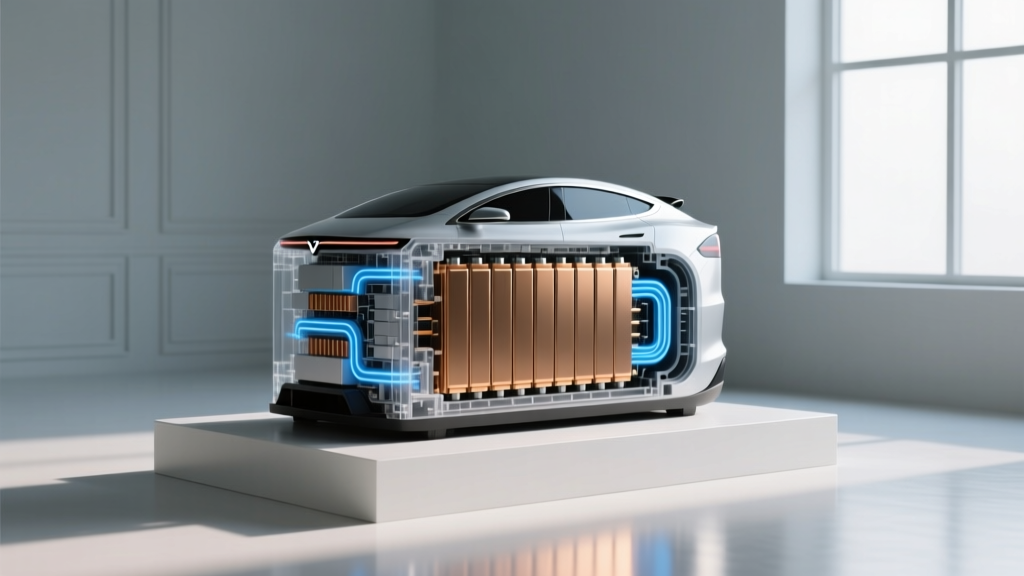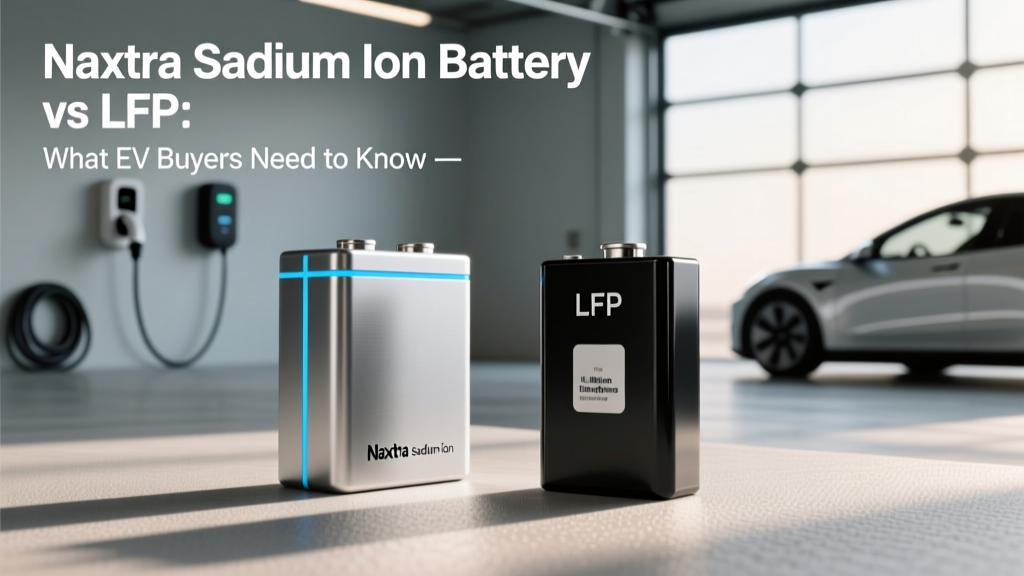
Sodium-ion batteries have moved from lab curiosity to production reality, and CATL's Naxtra sodium-ion cell is the chemistry leading the charge. Announced in late 2024 and entering volume production through 2025–2026, Naxtra promises lower material costs, exceptional cold-weather performance, and a supply chain free of lithium and cobalt. But how does it actually stack up against the LFP (lithium iron phosphate) and NMC (nickel manganese cobalt) packs that dominate today's EV market?
This guide breaks down Naxtra's real-world positioning alongside proven lithium chemistries, with hard numbers on degradation, warranty coverage, replacement costs, and the care habits that extend pack life. Whether you're evaluating a 2026 model-year EV or planning your next purchase, understanding what's inside the battery case matters as much as what's on the window sticker.
Sodium-Ion vs Lithium: The Chemistry Landscape in 2026
Before evaluating Naxtra specifically, it helps to understand the three main EV battery chemistries buyers encounter today — and the trade-offs each one makes between energy density, longevity, cost, and temperature resilience.
NMC/NCA (Nickel Manganese Cobalt / Nickel Cobalt Aluminum) remains the high-energy-density choice. Used in vehicles like the Tesla Model Y Long Range, Hyundai Ioniq 5, and Ford Mustang Mach-E Extended Range, NMC packs deliver 200–260 Wh/kg at the cell level. That translates to more EPA-rated miles in a smaller, lighter package. The trade-off: higher material cost, cobalt supply-chain exposure, and a somewhat shorter cycle life compared to LFP.
LFP (Lithium Iron Phosphate) has become the volume champion. Tesla's Standard Range models, the base Rivian R1T, and BYD's entire lineup use LFP. Energy density is lower — roughly 150–180 Wh/kg — but LFP cells tolerate thousands more charge cycles, cost less to produce, contain no cobalt or nickel, and can safely be charged to 100% State of Charge (SoC) daily without accelerating degradation. The downside: reduced range per kilogram and historically poor cold-weather performance, though modern thermal management has narrowed that gap.
Sodium-Ion (CATL Naxtra) is the newcomer. Naxtra cells use sodium — abundant, cheap, and geopolitically unconstrained — in place of lithium. CATL has published a cell-level energy density of approximately 160 Wh/kg for the first-generation Naxtra, with a roadmap targeting 200 Wh/kg in subsequent iterations. The headline advantage is cold performance: CATL reports Naxtra retains over 90% of its capacity at −20°C (−4°F), a figure that significantly outperforms both LFP and NMC at those temperatures. Production costs are projected 20–30% below LFP at scale, which could unlock sub-$25,000 EVs.
| Attribute | Naxtra (Sodium-Ion) | LFP | NMC/NCA |
|---|---|---|---|
| Cell Energy Density | ~160 Wh/kg (Gen 1) | 150–180 Wh/kg | 200–260 Wh/kg |
| Cycle Life (to 80% SoH) | 3,000–5,000+ (projected) | 3,000–6,000 | 1,000–2,500 |
| Cold Performance (−20°C retention) | >90% | ~60–70% | ~70–80% |
| Cost Trend (2026) | Lowest (at scale) | Low | Highest |
| Critical Minerals | None (sodium, iron) | Lithium, iron | Lithium, nickel, cobalt |
| 100% SoC Daily Charging | Yes (recommended) | Yes (recommended) | No (80% daily recommended) |
| DC Fast Charge Peak | ~150–180 kW (est.) | 150–250 kW | 200–350 kW |
| Current EV Availability | Limited (China-market models; announced for global) | Wide | Wide |
How Long Do EV Batteries Actually Last?
The most persistent fear among EV shoppers is catastrophic battery failure. The data tells a reassuring story: the vast majority of EV traction batteries outlast the vehicles they're installed in.
Real-World Degradation Benchmarks:
- Tesla fleet data (2024 Impact Report): Model S/X packs show approximately 12% capacity loss at 150,000 miles, with the curve flattening significantly after the initial 30,000-mile break-in period.
- Geotab analysis of 10,000+ EVs: Average annual degradation across all chemistries is 1.8% per year. At that rate, a pack retains roughly 82% State of Health (SoH) after 10 years.
- LFP-specific data (BYD, Tesla Standard Range): Owners report 3–5% loss over the first 50,000 miles, then a near-flat degradation curve. Many LFP packs project to 85%+ SoH at 200,000 miles.
- Naxtra projections: CATL's published cycle-life data (5,000+ cycles to 80% SoH at standard C-rates) suggests sodium-ion packs could match or exceed LFP longevity, though independent fleet data is not yet available as of early 2026.
For context, the average American drives 13,500 miles per year according to the FHWA. A battery that lasts 200,000 miles serves nearly 15 years of average use — well beyond the typical ownership period and approaching the vehicle's structural lifespan.
EV Battery Warranty Terms: What's Actually Covered
Federal law mandates that EV battery warranties cover a minimum of 8 years or 100,000 miles (whichever comes first) in most states, and 10 years/150,000 miles in California Air Resources Board (CARB) states. Most manufacturers meet or exceed this floor.
| Manufacturer | Warranty Term | Capacity Retention Threshold | Chemistry |
|---|---|---|---|
| Tesla (Model Y Long Range) | 8 yr / 120,000 mi | 70% SoH | NMC |
| Tesla (Model 3 RWD) | 8 yr / 100,000 mi | 70% SoH | LFP |
| Hyundai / Kia (Ioniq 5, EV6) | 10 yr / 100,000 mi | 70% SoH | NMC |
| Ford (Mach-E, F-150 Lightning) | 8 yr / 100,000 mi | 70% SoH | NMC |
| BYD (Seal, Atto 3) | 8 yr / 100,000 mi (some markets: unlimited mileage) | 70% SoH | LFP (Blade) |
| Rivian (R1T, R1S) | 8 yr / 175,000 mi | 70% SoH | NMC / LFP (Standard) |
| CATL Naxtra-equipped vehicles (projected) | Expected 8 yr / 100,000+ mi | Expected 70% SoH | Sodium-Ion |
The critical detail is the capacity retention threshold. A warranty that guarantees 70% SoH means the manufacturer will repair or replace the pack if it degrades below 70% of its original capacity within the warranty window. A pack that starts at 80 kWh usable and drops to 55 kWh triggers a claim — but a pack at 57 kWh (71.25% SoH) does not, even if the owner notices meaningful range loss.
Warranties cover defects and abnormal degradation. They do not cover damage from accidents, flooding, improper charging equipment, or unauthorized modifications. Always read the specific warranty booklet for your vehicle — terms vary, and some manufacturers pro-rate coverage in later years.
EV Battery Replacement Cost: What to Budget and When
Out-of-warranty battery replacement is the nightmare scenario EV critics cite most often. Here's what the numbers actually look like in 2026.
| Vehicle Class | Battery Size | Replacement Cost Range | Typical Need Trigger |
|---|---|---|---|
| Compact EV (Chevy Bolt, Nissan Leaf) | 40–65 kWh | $6,000–$10,000 | Rare before 150K mi; usually post-warranty |
| Midsize sedan/crossover (Tesla Model 3, Ioniq 5) | 60–80 kWh | $8,000–$15,000 | Rare before 180K mi |
| Large SUV/truck (F-150 Lightning, Rivian R1T) | 100–135 kWh | $12,000–$22,000 | Rare before 200K mi |
| Luxury (Tesla Model S, Porsche Taycan) | 80–100 kWh | $15,000–$25,000 | Rare before 150K mi |
Several factors are driving replacement costs down over time. Battery pack prices have fallen from over $1,000/kWh in 2010 to approximately $115–140/kWh at the pack level in 2025–2026, according to BloombergNEF annual surveys. Sodium-ion packs like Naxtra are projected to push below $80/kWh at scale, which would reduce a 60 kWh replacement pack to roughly $4,800 in parts alone.
Module-level repair is another cost mitigant. Many modern packs (BMW, Hyundai, Rivian) are designed for individual module replacement rather than full-pack swaps. A single degraded module might cost $500–$1,500 to replace, restoring the pack to functional health without the full-pack expense.
The honest reality: most EV owners never need a battery replacement. The pack typically outlasts the vehicle's economic life. When replacements do occur, they're overwhelmingly covered under warranty.
Factors That Accelerate Battery Degradation
While modern battery management systems (BMS) protect against the worst abuse, owner habits still influence how quickly a pack loses capacity. Understanding these factors helps you maximize longevity — whether your pack is NMC, LFP, or Naxtra sodium-ion.
Battery Care Best Practices for Maximum Longevity:
- Avoid sustained 100% SoC (NMC/NCA only): Store NMC packs between 20–80% SoC for daily use. Charge to 100% only when you'll drive immediately. LFP and sodium-ion tolerate 100% SoC without meaningful penalty — in fact, periodic 100% charges help LFP cell balancing.
- Minimize DC fast charging frequency: Frequent use of 150+ kW DC fast charging generates sustained high temperatures that accelerate electrolyte breakdown. For daily needs, Level 2 home charging (7–11 kW) is gentler. Reserve DC fast charging for road trips.
- Precondition before fast charging: Most EVs automatically precondition the battery when a DC fast charger is set as the navigation destination. This brings the pack to optimal temperature (~25–35°C), enabling faster charging and reducing thermal stress. If your EV offers manual preconditioning, use it.
- Avoid extreme SoC in extreme temperatures: Don't leave an EV sitting at 100% SoC in 100°F+ heat for days. Similarly, avoid storing a near-empty pack (<5% SoC) in sub-zero cold for extended periods. If storing an EV for weeks, target 50% SoC in a moderate-temperature environment.
- Use regenerative braking moderately in cold weather: Many EVs limit regen when the battery is cold to prevent lithium plating. Let the pack warm up through driving before expecting full one-pedal behavior.
- Keep the thermal management system healthy: EV battery cooling systems use coolant loops that may require periodic service. Follow the manufacturer's maintenance schedule — a failing thermal system accelerates degradation.
For Naxtra sodium-ion packs specifically, the chemistry's inherent stability reduces some of these concerns. Sodium-ion cells are less susceptible to thermal runaway and tolerate a wider SoC window without degradation penalties. CATL's published data suggests Naxtra can handle frequent DC fast charging with less cycle-life impact than NMC, though independent verification is still pending as of early 2026.
How to Check and Monitor Battery Health (State of Health)
State of Health (SoH) is the percentage of a battery's original capacity that remains usable. A new 80 kWh pack at 95% SoH holds 76 kWh. Monitoring SoH helps you track degradation, plan for warranty claims, and assess a used EV's condition.
Built-in vehicle tools:
- Tesla: The Service menu (accessed via the software screen) displays current battery health percentage on recent software versions. The Tesla app also shows rated range, which indirectly reflects SoH.
- Hyundai/Kia: The EV-specific menu in the infotainment system shows battery state and estimated range. The Bluelink/Kia Connect app provides battery condition reports.
- Ford: The FordPass app includes a battery health indicator for the Mach-E and F-150 Lightning.
- BMW: The iDrive system includes a battery health diagnostic accessible through the service menu or via a dealer OBD-II scan.
Third-party tools and OBD-II scanners:
- OBD-II dongles + apps: Devices like the OBDLink SX combined with apps such as EVNotify, LeafSpy (Nissan), or ABRP (A Better Route Planner) can read battery SoH, cell voltage variance, and temperature data directly from the BMS.
- Dealer diagnostics: Any authorized dealer can run a full battery health report. Request this during routine service visits, especially as the vehicle approaches warranty mileage thresholds.
- Pre-purchase inspections: When buying a used EV, always request a battery health report. A pack at 90%+ SoH with 50,000 miles is typical and healthy. Below 85% SoH at that mileage warrants investigation.
Emerging Battery Technologies: What's Next Beyond Naxtra
Sodium-ion is one of several next-generation chemistries in development. Here's a realistic assessment of what's coming — and when.
Solid-state batteries promise energy densities of 350–500 Wh/kg, faster charging, and inherent safety (no liquid electrolyte to ignite). Toyota, Samsung SDI, and QuantumScape have all demonstrated prototype cells. However, manufacturing yield, cost, and scalability remain unsolved challenges. Realistic timeline for production EVs: 2028–2032 for limited applications (luxury/performance models), with mainstream adoption unlikely before 2033–2035.
Silicon-dominant anodes replace graphite with silicon to boost energy density by 20–40%. Sila Nanotechnologies and Group14 Technologies are supplying silicon-anode materials to battery makers now, and the Mercedes-Benz G-Class electric (2025) was among the first production vehicles to incorporate silicon-anode cells. Expect wider adoption through 2026–2028 as costs decrease.
Lithium-sulfur (Li-S) offers theoretical energy densities above 500 Wh/kg at very low material cost. The challenge is cycle life — sulfur cathodes degrade rapidly. Companies like Lyten are targeting 2028–2030 for initial commercial applications, likely in aviation and heavy-duty before passenger EVs.
Naxtra's near-term role: CATL has indicated that Naxtra sodium-ion packs will initially target entry-level EVs, energy storage systems, and cold-climate markets where energy density is secondary to cost and temperature resilience. A blended approach — Naxtra cells for the buffer/low-SoC range and LFP or NMC for the main energy store — is one architecture CATL has patented, potentially combining sodium-ion's cold-weather advantage with lithium's energy density in a single pack.
Frequently Asked Questions
How long do EV batteries last in years and miles?
Most modern EV batteries are designed to last 15–20 years or 150,000–200,000+ miles before degrading below 70% of original capacity. Fleet data from Tesla, Geotab, and manufacturer warranty claims support this range. LFP and sodium-ion chemistries project even longer service lives due to higher cycle counts. The battery typically outlasts the vehicle's economic lifespan.
How much does it cost to replace an EV battery?
Replacement costs range from approximately $6,000 for a compact EV (40–65 kWh pack) to $22,000+ for a large truck or SUV (100–135 kWh pack), including parts and labor. However, most replacements are covered under the 8–10 year / 100,000–175,000 mile warranty. Out-of-warranty replacements are rare because most packs outlast the vehicle. Module-level repairs can reduce costs to $500–$1,500 when only specific cells have degraded.
What does the EV battery warranty actually cover?
Federally mandated minimum coverage is 8 years/100,000 miles (10 years/150,000 miles in CARB states). The warranty guarantees the pack will retain a specified percentage of original capacity — typically 70% SoH. If degradation exceeds that threshold within the warranty period, the manufacturer repairs or replaces the pack at no cost. Warranties do not cover accident damage, improper charging, or unauthorized modifications. Refer to the IRS §30D guidelines for how battery sourcing also affects federal tax credit eligibility.
How do I check my EV battery's State of Health?
Most EVs provide battery health data through the infotainment system or companion app (Tesla, FordPass, Bluelink). For more detailed data — cell-level voltage, temperature, and precise SoH percentage — use an OBD-II scanner with an EV-compatible app like EVNotify or LeafSpy. Request a battery health report from your dealer during service visits, especially before the warranty expires.
Is LFP or NMC better for my EV?
It depends on your priorities. Choose LFP if you want maximum cycle life, lower cost, the ability to charge to 100% daily, and you can accept slightly lower range per kWh. Choose NMC if you need maximum range and performance in a lighter pack and are willing to manage SoC (20–80% daily). For cold-climate buyers watching the market, Naxtra sodium-ion may offer the best cold-weather performance of all three — but availability in the US market remains limited as of 2026.
Will Naxtra sodium-ion batteries be available in US-market EVs?
As of early 2026, Naxtra-equipped vehicles are primarily sold in the Chinese market (Chery, JAC, and other CATL partners). CATL has announced plans for global expansion, and partnerships with automakers like Tesla and Ford (for LFP) suggest sodium-ion could follow. US availability depends on meeting IRS §30D critical mineral and battery component sourcing requirements, which currently favor North American and free-trade-agreement-partner supply chains. Expect announcements through 2026–2027.