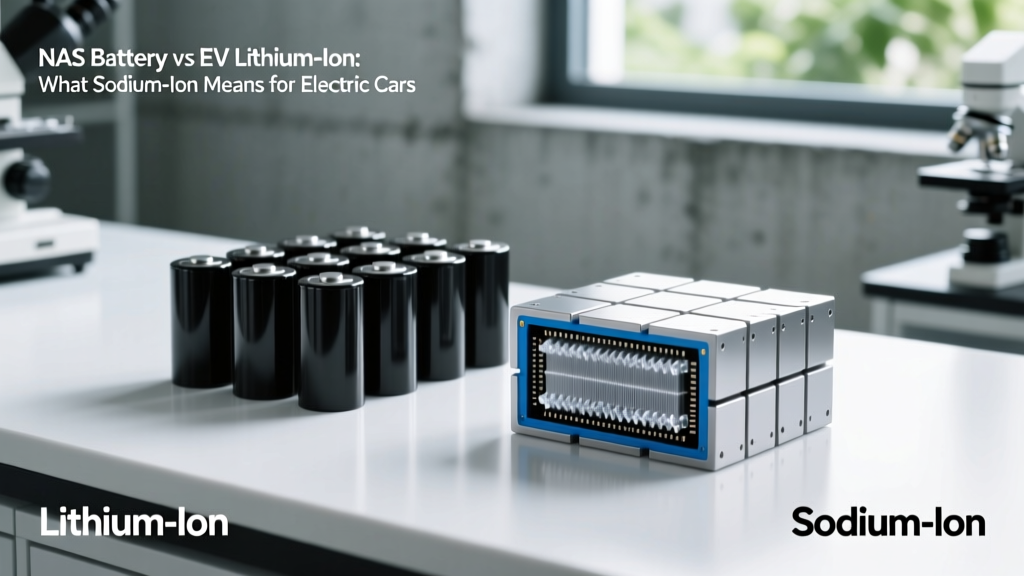
Sodium-ion batteries — sometimes referred to as NAS batteries (Na-S, where Na is the chemical symbol for sodium) — have become one of the most discussed alternatives to lithium-ion in the electric vehicle space. With CATL shipping its first sodium-ion cells to Chinese automakers and multiple startups targeting grid and EV applications, buyers are starting to ask: will a NAS battery power my next EV, and should I wait?
The short answer: not yet in the U.S. market, and not for long-range applications. But sodium-ion chemistry fills a specific and growing niche — low-cost, cold-tolerant, LFP-adjacent energy storage — that could reshape the entry-level EV segment by the late 2020s. Here's what the data actually shows, how sodium-ion compares to the lithium chemistries you can buy today, and what it means for your current EV's battery health and long-term value.
What Is a NAS (Sodium-Ion) Battery?
A NAS battery uses sodium ions (Na⁺) as the charge carrier instead of lithium ions (Li⁺). The electrochemistry is broadly similar — ions shuttle between cathode and anode through an electrolyte during charge and discharge — but the material science is fundamentally different:
- Cathode materials: Prussian blue analogues, layered transition metal oxides, or polyanionic compounds — all cheaper and more abundant than lithium cobalt or nickel manganese chemistries.
- Anode: Hard carbon (derived from biomass or coal) rather than graphite, because sodium ions are too large to intercalate efficiently into graphite.
- Electrolyte: Sodium salts in organic solvents, compatible with aluminum foil current collectors on both sides (unlike lithium, which requires copper on the anode — a major cost driver).
The result is a cell that avoids lithium, cobalt, nickel, and copper entirely. That's the core economic proposition, and it's why automakers and battery giants are investing heavily even though the energy density lags behind lithium-ion.
How Sodium-Ion Stacks Up Against LFP and NMC
Before evaluating sodium-ion on its own merits, it helps to understand the two lithium chemistries that dominate today's EV market. Most U.S.-market EVs in 2026 use either NMC/NCA (nickel manganese cobalt / nickel cobalt aluminum) for maximum range or LFP (lithium iron phosphate) for cost and longevity.
| Attribute | NMC / NCA (Lithium) | LFP (Lithium) | Na-Ion (NAS Battery) |
|---|---|---|---|
| Cell-level energy density | 220–300 Wh/kg | 160–200 Wh/kg | 120–160 Wh/kg (CATL Gen 2: ~160) |
| Typical pack-level range | 250–400+ mi EPA | 200–310 mi EPA | 150–250 mi (projected, smaller packs) |
| Cycle life (to 80% capacity) | 1,000–2,000 cycles | 3,000–5,000+ cycles | 2,000–4,000 cycles (lab data) |
| Cold-weather performance (-20°C) | ~70–80% capacity retention | ~60–70% retention (improved w/ heat pump) | ~85–90% retention (key advantage) |
| Fast-charge capability | Up to 350 kW peak | Up to 250 kW peak | ~150–200 kW (early cells) |
| Raw material risk | High (Li, Co, Ni, Cu) | Moderate (Li, Fe, P) | Low (Na, Fe, hard carbon, Al) |
| Cell cost (2026 est.) | $100–130/kWh | $65–85/kWh | $50–70/kWh (projected at scale) |
| Current EV availability (U.S.) | Wide (Tesla, Hyundai, BMW, etc.) | Growing (Tesla Model 3 RWD, BYD, Ford) | None yet (China-market only) |
The critical takeaway: sodium-ion does not compete with NMC on energy density or range. It competes with LFP on cost, and it beats both lithium chemistries in sub-zero conditions. If you live in Minnesota or Maine and drive a modest daily commute, a sodium-ion pack could be ideal — if and when it reaches U.S. showrooms.
How Long Do EV Batteries Last? Real Degradation Data
Whether your EV uses NMC, LFP, or eventually sodium-ion, degradation is governed by similar physics: calendar aging (time and temperature) and cycle aging (charge/discharge stress). The good news is that modern thermal management has pushed real-world degradation well below early-EV fears.
Typical degradation curves by chemistry (aggregated fleet data, 2020–2025 models):
- NMC (e.g., Tesla Model 3 Long Range, Hyundai Ioniq 5): ~5–8% loss at 100,000 miles / 5 years; ~10–14% at 200,000 miles. Recurrent's fleet data shows most NMC packs retaining 88–92% capacity at the 100k-mile mark.
- LFP (e.g., Tesla Model 3 RWD, BYD Atto 3): ~3–5% loss at 100,000 miles; slower long-term fade. LFP's flatter degradation curve means many packs are projected to exceed 300,000 miles before hitting 80% State of Health.
- Na-Ion (projected from CATL/HiNa lab and early fleet data): Lab cycle life of 2,000–4,000 cycles to 80% SoH suggests comparable or slightly better longevity than NMC, though long-term fleet data does not yet exist.
For context, the average American drives ~13,500 miles per year (FHWA data). A 200,000-mile battery lifespan translates to roughly 15 years of use — meaning most EV batteries will outlast the vehicle they're installed in.
What Does the EV Battery Warranty Actually Cover?
Federal law mandates a minimum 8-year / 100,000-mile warranty on EV battery packs (10 years / 150,000 miles in CARB states like California, New York, and Massachusetts). But the details matter — specifically the capacity retention threshold that triggers a warranty claim.
| Manufacturer | Warranty Period | Capacity Threshold | Chemistry |
|---|---|---|---|
| Tesla (Model 3/Y LFP) | 8 yr / 120,000 mi | 70% retention | LFP |
| Tesla (Model 3/Y LR/Perf) | 8 yr / 120,000 mi | 70% retention | NMC/NCA |
| Hyundai / Kia | 10 yr / 100,000 mi | 70% retention | NMC |
| Ford (Mustang Mach-E) | 8 yr / 100,000 mi | 70% retention | NMC |
| GM (Ultium platform) | 8 yr / 100,000 mi | 70% retention | NMC |
| BMW (iX / i4) | 8 yr / 100,000 mi | 70% retention | NMC |
Note that every major automaker uses the 70% threshold — meaning you'd need to lose more than 30% of your original capacity within the warranty period to qualify for a free replacement or repair. Given the degradation data above, very few owners ever hit this threshold under normal use. According to Recurrent's fleet analysis, fewer than 1.5% of EVs in their dataset have required a warranty battery replacement.
How Much Does an EV Battery Replacement Cost?
This is the question that generates the most anxiety — and the most misinformation. Let's ground it in actual numbers.
| Vehicle / Pack Size | Battery Chemistry | Replacement Cost (Parts + Labor) | Typical Replacement Trigger |
|---|---|---|---|
| Tesla Model 3 RWD (~60 kWh) | LFP | $12,000–$16,000 | Collision damage; rare degradation |
| Tesla Model Y LR (~82 kWh) | NMC | $16,000–$22,000 | Collision damage; rare degradation |
| Hyundai Ioniq 5 (~77 kWh) | NMC | $14,000–$20,000 | Collision or manufacturing defect |
| Ford Mustang Mach-E ER (~91 kWh) | NMC | $18,000–$25,000 | Collision; some early recall replacements |
| Chevrolet Bolt EV (~65 kWh) | NMC | $14,000–$17,000 | Recall-related (2022 fire recall) |
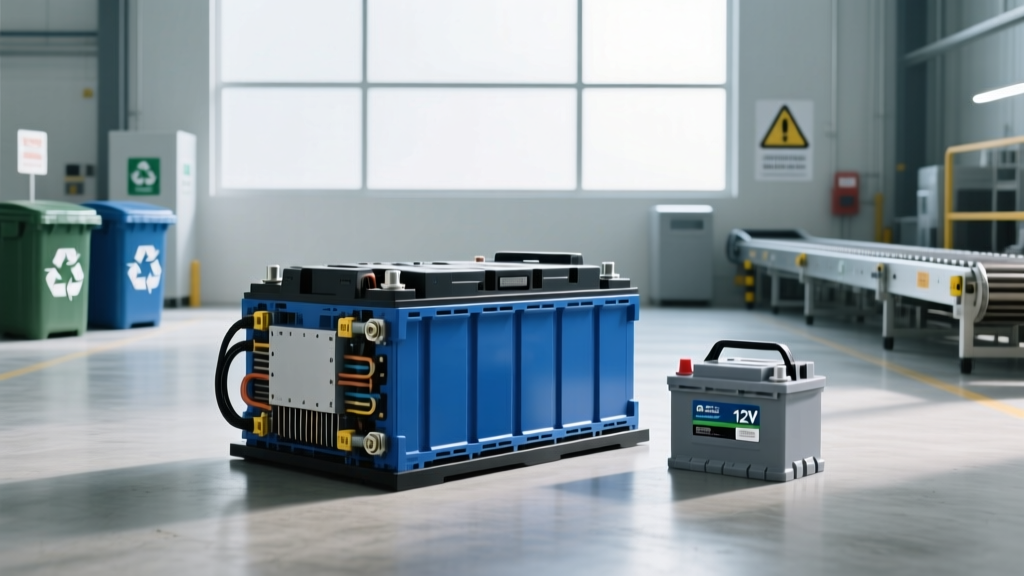
Important context: degradation alone almost never necessitates a full pack replacement. When replacements do occur, they're typically due to collision damage, manufacturing defects caught under warranty, or (in rare cases like the Bolt recall) safety-related issues. Module-level repairs — replacing individual cell groups rather than the entire pack — are increasingly common and cost $2,000–$6,000 depending on the vehicle.
If sodium-ion batteries reach the U.S. market, their lower material cost could push replacement pricing down significantly. A 60 kWh Na-ion pack at projected cell costs of $50–70/kWh could translate to a full replacement in the $8,000–$12,000 range — a meaningful reduction for budget-conscious owners.
Factors That Affect Battery Life (and How to Minimize Them)
Whether you're driving an NMC, LFP, or future sodium-ion EV, the same core principles govern longevity. Here's a practical checklist based on what fleet data and battery engineering research actually show:
- Avoid sustained 100% State of Charge. For NMC/NCA packs, daily charging to 80% significantly reduces stress. LFP packs tolerate 100% better (and Tesla recommends periodic 100% charges for LFP to calibrate the BMS), but even LFP benefits from not sitting at 100% for days.
- Minimize DC fast charging in extreme heat. Occasional Supercharging or Electrify America stops are fine — modern thermal management handles it. But daily 350 kW charging in Phoenix summer will accelerate degradation more than Level 2 home charging.
- Precondition in cold weather. Whether you're charging or just driving, preconditioning warms the battery to its optimal operating temperature (~25–35°C). This protects the anode from lithium plating (in Li-ion cells) and improves charge acceptance. Most EVs do this automatically when you set a departure time or navigate to a charger.
- Don't store at 0% or 100% for extended periods. If you're leaving your EV for a week or more, aim for 40–60% SoC. This is especially important for NMC chemistry.
- Use a Level 2 home charger for daily needs. A 7–11 kW Level 2 charger adds 25–44 miles of range per hour and generates far less thermal stress than repeated DC fast charging. See our EPA EV technology guide for charging efficiency data.
How to Check Your EV Battery's State of Health
State of Health (SoH) is a percentage representing your battery's current maximum capacity relative to its original capacity. A new EV starts at 100% SoH; a pack at 85% SoH holds 85% of its original kWh.
Here's how to monitor it:
- In-vehicle displays: Tesla's app shows estimated range degradation over time but does not display a raw SoH percentage. Some Hyundai/Kia models show a battery health indicator in the diagnostics menu.
- OBD-II diagnostic tools: Devices like the OBDLink SX paired with apps such as EV-BatMon or Car Scanner can read the BMS-reported SoH directly from your car's CAN bus. This is the most accurate consumer-accessible method.
- Third-party fleet analytics: Services like Recurrent offer free battery health reports that compare your degradation curve against thousands of identical vehicles.
- Dealer diagnostics: Any authorized service center can pull a detailed SoH report. Request this during routine service visits, especially before your warranty expires.
For sodium-ion batteries when they arrive, SoH monitoring will work identically — the BMS architecture is chemistry-agnostic. The degradation curve may look different (potentially flatter in early cycles, steeper at end-of-life), but the monitoring tools will be the same.
Emerging Battery Tech: Solid-State, Silicon Anode, and Beyond
Sodium-ion isn't the only next-generation chemistry in development. Here's a realistic timeline for the technologies most likely to reach production EVs:
- Sodium-ion (NAS battery): Already in limited production in China (CATL, HiNa Battery, JAC Motors). U.S. market entry is plausible by 2028–2030, most likely in entry-level models and commercial fleet vehicles where range requirements are modest. Energy density improvements (Gen 2 cells targeting 200 Wh/kg at the cell level) could expand viability to mid-range compact SUVs.
- Silicon-dominant anodes: Companies like Sila Nanotechnologies and Group14 are replacing graphite with silicon composites, boosting energy density by 20–40%. Early production applications (Mercedes G-Class EV, 2025) are limited to premium segments. Broader adoption expected 2027–2029.
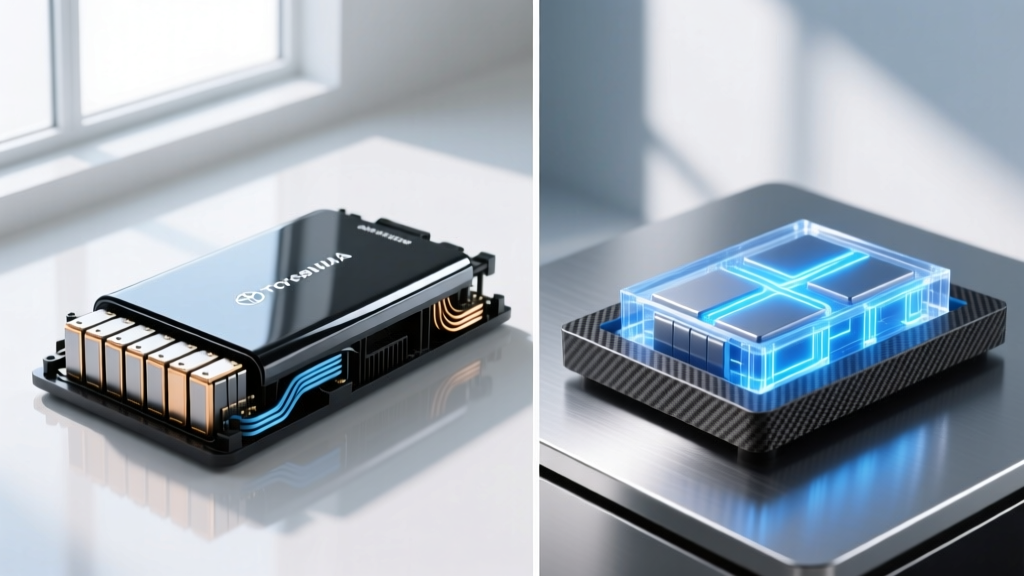
- Solid-state batteries: Toyota, Samsung SDI, and QuantumScape target 2027–2029 for initial production, but at very low volumes and high cost. Solid-state promises 400+ Wh/kg cell density and faster charging, but manufacturing scalability remains the primary bottleneck. Realistic mass-market availability: 2030–2033.
- Lithium-sulfur (Li-S): Lab demonstrations show 500+ Wh/kg, but cycle life (currently ~100–200 cycles) makes this a 2035+ technology for automotive use.
The practical advice: don't delay an EV purchase waiting for next-generation batteries. Today's LFP and NMC packs are proven, well-warrantied, and cost-competitive. Sodium-ion will complement these chemistries — not replace them — and will likely debut in the U.S. as a budget option in vehicles where 200 miles of range is sufficient.
Should You Care About NAS Batteries Today?
If you're buying an EV in 2026, your choice is between NMC and LFP — and both are excellent. NMC gives you maximum range for road trips and towing; LFP gives you lower cost, longer cycle life, and cobalt-free sourcing. Sodium-ion (NAS battery) technology is a legitimate development worth watching, particularly if you prioritize low cost, cold-weather performance, and supply-chain ethics over maximum range.
For current owners, the chemistry inside your pack doesn't change the fundamentals: charge smart, precondition in extreme temperatures, monitor your SoH periodically, and trust that your warranty has you covered. The data is clear — EV batteries are lasting longer than most buyers expect, and replacement costs are falling, not rising.
How long do EV batteries last in real-world use?
Most modern EV batteries (NMC and LFP) retain 85–92% capacity at 100,000 miles and are projected to exceed 200,000 miles before reaching the 70% warranty threshold. At the U.S. average of 13,500 miles/year, that's 15+ years of usable life.
How much does it cost to replace an EV battery out of warranty?
Full pack replacements range from $12,000 to $25,000 depending on the vehicle and pack size. However, degradation-driven replacements are extremely rare — most replacements are due to collision damage or manufacturing defects covered under warranty.
What does the federal battery warranty require?
Federal law mandates 8 years / 100,000 miles minimum coverage (10/150k in CARB states). The warranty covers capacity loss below 70% of original capacity, as well as defects and failures. Check your specific manufacturer's terms, as some offer longer coverage.
LFP vs NMC — which battery chemistry is better?
It depends on your priorities. NMC offers higher energy density (more range in a smaller pack) and faster charging. LFP offers longer cycle life, lower cost, better thermal stability, and no cobalt. For daily commuting and home charging, LFP is increasingly the preferred choice. For road trips and cold climates with range demands, NMC remains advantageous.
Will sodium-ion (NAS) batteries replace lithium in EVs?
Not entirely. Sodium-ion is expected to complement lithium chemistries, targeting budget and fleet segments where lower cost and cold-weather performance outweigh the need for maximum range. NMC and LFP will continue to dominate mid-range and long-range EVs through at least 2035.
How can I check my EV battery's State of Health?
Use an OBD-II scanner with an EV-compatible app (EV-BatMon, Car Scanner) to read BMS-reported SoH data. You can also request a health report from your dealer or use a service like Recurrent for fleet-comparison analytics.
Does frequent DC fast charging damage my battery?
Occasional DC fast charging has minimal impact thanks to modern thermal management. However, exclusive reliance on DC fast charging — especially in extreme heat — can accelerate degradation by 1–3% over the battery's lifetime compared to predominantly Level 2 home charging. For daily use, a home Level 2 charger is gentler and cheaper.