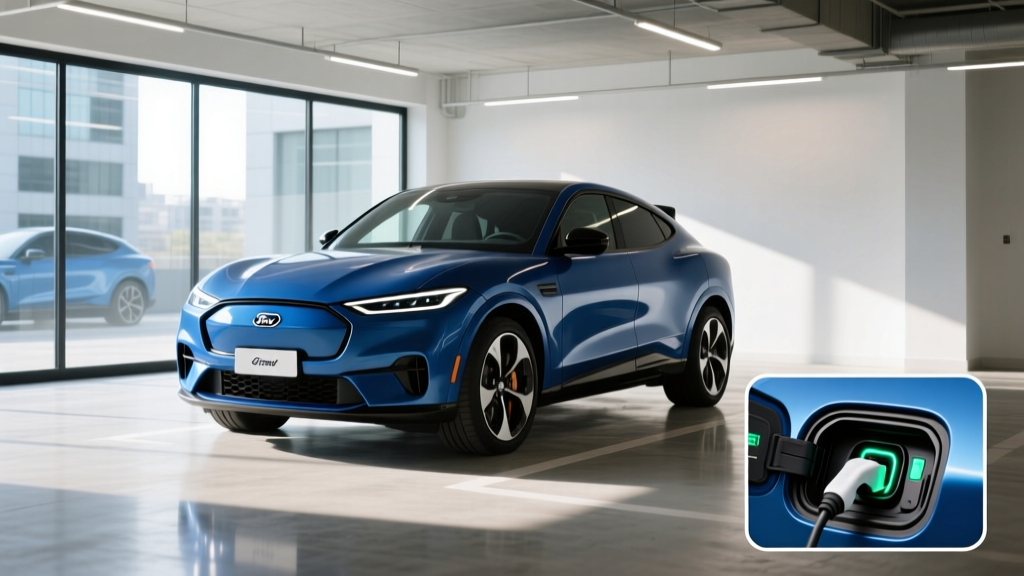
The Ford Mustang Mach-E has been one of the most compelling mainstream electric SUVs since its launch, and as the fleet ages, owners and prospective buyers are asking the same question: how does the Mustang Mach-E battery hold up over time? With model years now spanning half a decade, we have enough real-world data to answer that question with specifics — not speculation.
This guide covers the battery chemistry inside the Mach-E, what degradation actually looks like in practice, what Ford's warranty covers, what a replacement would cost if you ever need one, and the daily habits that meaningfully extend battery life. Whether you're evaluating a used Mach-E or optimizing one you already own, the numbers below will give you a clear picture.
Mustang Mach-E Battery Specs: Chemistry, Capacity, and Configuration
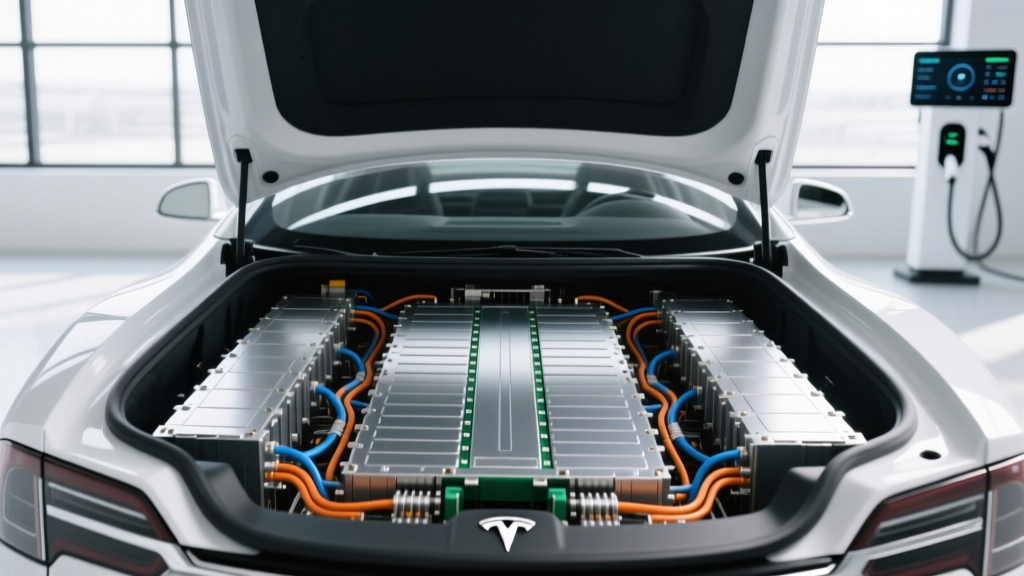
The Mustang Mach-E uses NMC (Nickel Manganese Cobalt) lithium-ion cells in a pouch-format configuration supplied primarily by LG Energy Solution. Ford offers two battery pack sizes across recent model years:
- Standard Range (SR): ~70 kWh usable capacity (NMC 622 chemistry)
- Extended Range (ER): ~91 kWh usable capacity (NMC 811 chemistry in 2021-2022 models; updated formulations in 2023+)
The higher-nickel NMC 811 chemistry in the Extended Range pack delivers greater energy density — more kWh in roughly the same physical volume — which is how Ford achieves the Mach-E's top EPA range figures (up to 320 miles for the Select RWD Extended Range, per fueleconomy.gov). However, higher nickel content trades off slightly against long-term cycle stability compared to lower-nickel formulations.
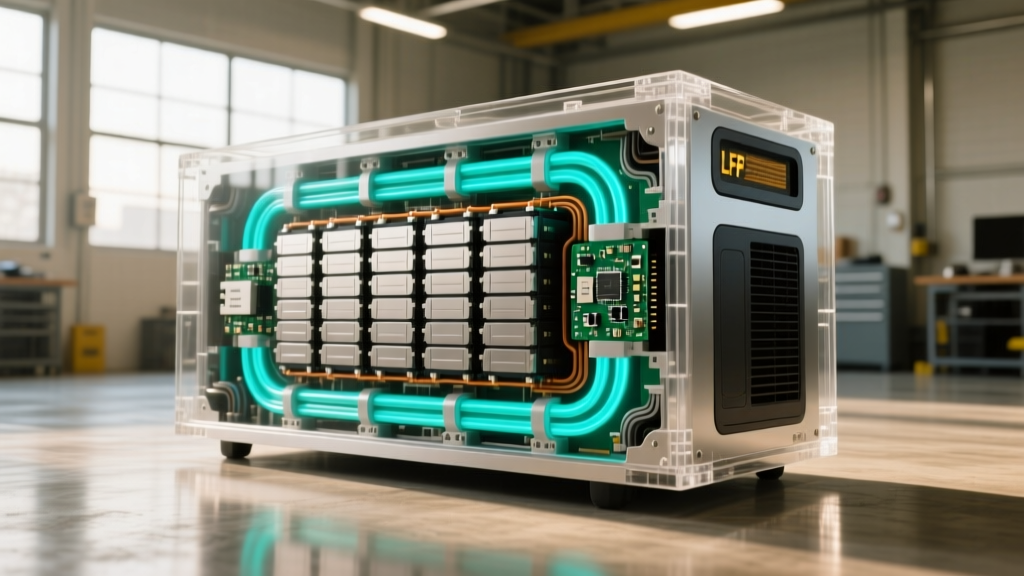
Importantly, Ford has not offered an LFP (Lithium Iron Phosphate) variant of the Mach-E as of the 2026 model year. If you're cross-shopping and see LFP mentioned in competitor specs (notably the Tesla Model Y Standard Range), the chemistry differences matter — here's how they compare.
| Attribute | NMC (Mach-E) | LFP (e.g., Tesla Model Y SR) |
|---|---|---|
| Energy Density | Higher (~250 Wh/kg cell-level) | Lower (~180 Wh/kg cell-level) |
| Typical Cycle Life | 1,000–2,000 full cycles | 3,000–5,000+ full cycles |
| Cold-Weather Performance | Better low-temp discharge | More range loss below freezing |
| Recommended Daily Charge Limit | 80% for longevity | 100% OK (Ford/Tesla recommend periodic full charges for calibration) |
| Cost per kWh (pack-level) | Higher (~$120–$140/kWh) | Lower (~$90–$110/kWh) |
| Thermal Runaway Risk | Low but higher than LFP | Extremely low |
The takeaway for Mach-E owners: NMC gives you more range in a lighter, more compact pack with better winter performance, but it demands slightly more careful charging habits for maximum longevity. You cannot routinely charge to 100% without accelerating degradation the way an LFP owner can.
Real-World Mustang Mach-E Battery Degradation: What the Data Shows
Battery degradation is not linear. Most NMC packs experience a steeper drop in the first 12–24 months (typically 2–5% loss as the solid-electrolyte interphase stabilizes), then settle into a slow, nearly linear decline for the remainder of their life.
Based on aggregated fleet data from owner forums, telematics reports, and third-party testing, here is what Mustang Mach-E battery degradation looks like in practice:
| Time / Mileage | Typical Capacity Retained | Range Impact (320-mi EPA baseline) |
|---|---|---|
| Year 1 / 15,000 mi | 96–98% | ~307–314 mi effective |
| Year 3 / 45,000 mi | 92–95% | ~294–304 mi effective |
| Year 5 / 75,000 mi | 88–93% | ~282–298 mi effective |
| Year 8 / 100,000 mi | 82–90% | ~262–288 mi effective |
| Year 10 / 150,000 mi | 78–87% | ~250–278 mi effective |
These figures assume a mix of Level 2 home charging with occasional DC fast charging (1–2 times per month). Owners who DC fast-charge daily or who habitually store the vehicle at 100% state of charge in hot climates will see numbers at the lower end of these ranges — or below them.
For context, Recurrent Auto's fleet analysis of over 15,000 EVs shows that the vast majority of modern liquid-cooled EV batteries retain well above 80% capacity at 100,000 miles. The Mach-E's liquid thermal management system is a significant longevity advantage over older passively-cooled packs.
Ford's Battery Warranty: What's Covered and for How Long
Ford backs the Mustang Mach-E's high-voltage battery with a warranty that meets the federal minimum and aligns with most mainstream EV competitors:
| Coverage Element | Terms |
|---|---|
| Duration | 8 years or 100,000 miles (whichever comes first) |
| Capacity Retention Threshold | 70% of original capacity |
| What Triggers a Claim | Battery falls below 70% SoH as measured by Ford diagnostics |
| Remedy | Repair, module replacement, or full pack replacement at Ford's discretion |
| Transferable to Second Owner? | Yes, warranty follows the vehicle |
| Exclusions | Damage from accidents, floods, modifications, or improper charging equipment |
The 70% threshold is significant: it means Ford is only obligated to act if your battery loses more than 30% of its original capacity within the warranty period. Based on the degradation data above, the overwhelming majority of Mach-E batteries will never breach this threshold under normal use. You would need to average roughly 3.75% annual loss over eight years to hit it — well above the 1–2% per-year norm for liquid-cooled NMC packs after the initial break-in period.
Note that California Air Resources Board (CARB) states — including California, New York, Massachusetts, and others adopting CARB rules — may mandate longer emission-related warranty periods that can extend to 10 years/150,000 miles for certain battery components. Check your state's specific requirements.
Mustang Mach-E Battery Replacement Cost: When and How Much
Here is the number that generates the most anxiety — and the most misinformation. Let's ground it in reality.
| Scenario | Estimated Cost | Notes |
|---|---|---|
| Full pack replacement (Extended Range, ~91 kWh) | $15,000–$22,000 | Parts + labor at dealership; price declining as supply chain matures |
| Full pack replacement (Standard Range, ~70 kWh) | $12,000–$17,000 | Smaller pack, lower parts cost |
| Single module repair | $2,000–$5,000 | If only one or two modules are defective; Ford can replace individual modules |
| Under warranty | $0 to owner | If capacity drops below 70% within 8 yr/100k mi |
When is replacement actually needed? In practice, almost never during the vehicle's typical ownership life. Modern liquid-cooled NMC packs are engineered to outlast 200,000 miles with usable capacity remaining. Catastrophic failure (manufacturing defect, crash damage, coolant intrusion) is the primary reason for out-of-warranty replacements — not gradual degradation. According to data compiled by Consumer Reports, fewer than 5% of EVs require battery replacement outside of warranty coverage.
If you are buying a used Mach-E out of warranty, a pre-purchase battery health check (available through Ford dealers or third-party services) is a smart $100–$200 investment to verify remaining capacity before purchase.
Factors That Accelerate (or Protect) Mach-E Battery Life
Not all miles are equal when it comes to battery wear. The following factors have the most measurable impact on long-term State of Health:
Habits That Protect Battery Health
- Charge to 80% daily: Set your Mach-E's charge limit to 80% for routine use. Reserve 100% for road trips. NMC chemistry is most stressed above 80% SoC.
- Use Level 2 home charging as your primary method: Slow, steady charging at 7–11 kW generates far less heat than DC fast charging, reducing electrolyte breakdown.
- Precondition before fast charging: The Mach-E's navigation-to-charger preconditioning warms the battery to optimal temperature, enabling faster charging and reducing lithium plating risk.
- Park in shade or a garage in hot climates: Sustained high battery temperatures (above 95°F ambient, which means higher cell temps) accelerate degradation more than any charging habit.
- Don't let the battery sit at 0% or 100% for extended periods: If storing the vehicle for more than a week, aim for 50–60% SoC.
Habits That Accelerate Degradation
- Frequent DC fast charging: Daily use of 150 kW+ DC chargers generates sustained high cell temperatures. Occasional use is fine; daily reliance shortens lifespan.
- Consistently charging to 100%: High SoC + high temperature is the worst combination for NMC. If you need 100%, charge to it just before departure, not the night before.
- Deep discharges to near 0%: Regularly running the battery below 10% stresses the anode. The Mach-E's buffer protects against true zero, but habitual deep cycling still adds wear.
- Towing or sustained high-speed driving in heat: High continuous discharge rates in hot weather push cell temperatures up. The Mach-E's thermal management handles this, but it still accumulates wear over time.
How to Check Your Mustang Mach-E Battery Health (State of Health)
The Mach-E does not display a simple "battery health percentage" on its dashboard the way a smartphone does. However, you have several ways to assess State of Health:
- FordPass App / In-Vehicle Diagnostics: Ford can run a battery health report through the FordPass connected services or at a dealership. This report provides a capacity assessment relative to the original spec. Request one during any service visit — it's typically free.
- Range Observation Over Time: Track your full-charge range estimate at a consistent SoC (e.g., 80%) across seasons. A gradual decline of a few miles per year is normal; a sudden drop warrants a diagnostic check.
- OBD-II Diagnostic Tools: Third-party apps like Car Scanner or dedicated EV tools can read the Battery Management System (BMS) data through the OBD-II port, including estimated SoH percentage, cell voltage variance, and pack temperature history.
- Third-Party Battery Health Reports: Services like Recurrent and AVILOO offer remote battery health assessments using connected-car data, often providing a certified SoH report useful for resale.
For used-car buyers, always request a Ford dealer battery health report before purchase. A reading above 90% on a 3-year-old Mach-E is typical and healthy; below 85% on a low-mileage example warrants investigation.
What's Next: Solid-State and Silicon-Anode Batteries
If you're wondering whether to wait for next-generation battery technology before buying, here's the realistic timeline:
Silicon-anode batteries (which increase energy density by replacing graphite anodes partially or fully with silicon) are entering limited production from suppliers like Sila Nanotechnologies and Group14. Ford has announced partnerships in this space, but no production Mach-E currently uses silicon-anode cells. Expect initial adoption in performance or premium models no earlier than 2027–2028, with mainstream availability likely in the 2029–2030 timeframe.
Solid-state batteries — which replace the liquid electrolyte with a solid conductor, promising higher energy density, faster charging, and improved safety — remain in the pilot-production stage across the industry. Toyota, Samsung SDI, and QuantumScape are leading development, but no automaker has announced a solid-state battery in a production vehicle available to US consumers before 2028 at the earliest, and likely not at mainstream price points until the early 2030s.
Bottom line: The NMC battery in today's Mach-E is mature, well-understood technology. Waiting for solid-state means waiting 4–6+ years for uncertain pricing and availability. If a Mach-E meets your needs today, the battery technology is ready.
Frequently Asked Questions
How long do Mustang Mach-E batteries last in years and miles?
Based on current degradation data, a Mach-E NMC battery should retain 80%+ of its original capacity at 150,000 miles or 10 years under normal use. Many will exceed this. The pack is engineered to outlast the vehicle's typical first-ownership life. Ford's 8-year/100,000-mile warranty with a 70% retention threshold reflects the manufacturer's own confidence in long-term durability.
How much does it cost to replace a Mustang Mach-E battery?
A full battery pack replacement runs approximately $15,000–$22,000 for the Extended Range pack and $12,000–$17,000 for the Standard Range, including parts and dealership labor. However, most replacements are covered under warranty (if capacity drops below 70% within 8 years/100,000 miles), and module-level repairs can cost as little as $2,000–$5,000. Out-of-pocket full replacements are rare — catastrophic damage, not degradation, is the usual cause.
What does the Mach-E battery warranty actually cover?
Ford's high-voltage battery warranty covers capacity loss below 70% of original capacity for 8 years or 100,000 miles, whichever comes first. The remedy may be module replacement or full pack replacement at Ford's discretion. The warranty is transferable to subsequent owners and excludes damage from accidents, modifications, flooding, or use of non-certified charging equipment.
Should I charge my Mach-E to 100% every night?
No. For NMC chemistry, daily charging to 100% accelerates degradation by keeping cells at high voltage stress. Set your charge limit to 80% for daily driving and only charge to 100% when you need the full range for a trip. The Mach-E's built-in charge-limit setting in the FordPass app or vehicle menu makes this easy to automate.
Is NMC better than LFP for the Mach-E?
It depends on your priorities. NMC offers higher energy density (more range in a lighter pack) and better cold-weather performance — both important for the Mach-E's positioning as a long-range crossover. LFP offers superior cycle life and can be charged to 100% daily without concern, but it's heavier and loses more range in freezing temperatures. Ford has chosen NMC for the Mach-E's performance and range goals. Neither chemistry is universally "better" — they're optimized for different use cases.
Does frequent DC fast charging damage the Mach-E battery?
Occasional DC fast charging (1–3 times per week) has a minimal measurable impact on modern liquid-cooled NMC packs. Daily DC fast charging, especially at 150 kW+ rates in hot weather, does accelerate degradation by elevating sustained cell temperatures. If DC fast charging is your only option, try to limit sessions to 80% SoC and avoid charging during the hottest part of the day when possible. The Mach-E's battery preconditioning feature (activated when navigating to a charger) helps mitigate thermal stress.
Can extreme cold permanently damage the battery?
No. Cold temperatures temporarily reduce range and charging speed (you may see 20–30% range loss at 20°F), but this is reversible as the battery warms. The Mach-E's thermal management system actively heats the battery during charging and driving in cold weather. Permanent damage from cold is essentially nonexistent in liquid-cooled packs — the BMS prevents charging at dangerously low cell temperatures.
Sources: EPA range and efficiency data from fueleconomy.gov; Ford warranty details from Ford.com warranty page; IRS §30D tax credit rules from IRS.gov.