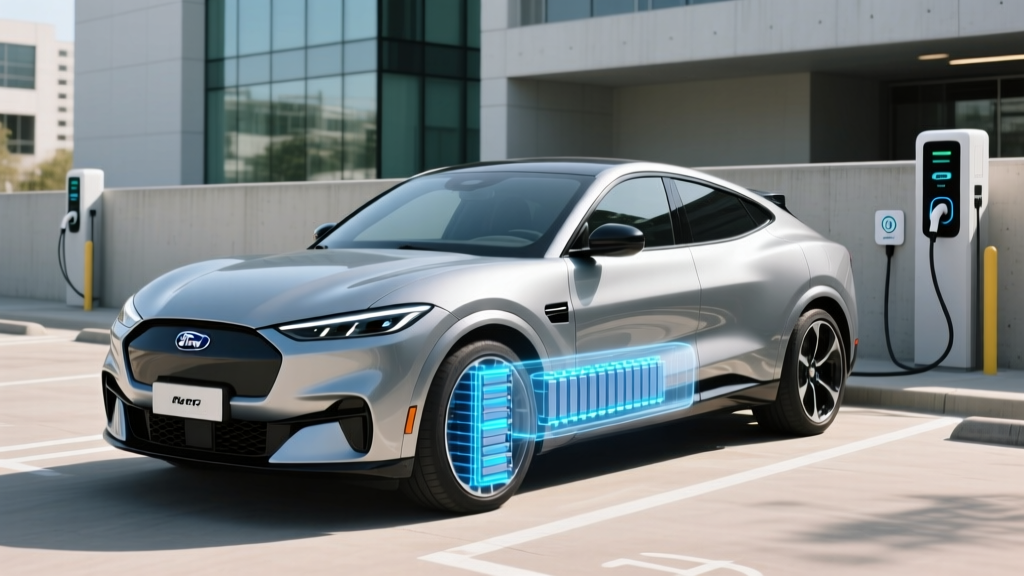
If you're evaluating the Mustang Mach-E battery life — whether you're shopping for a new 2026 model or assessing a used example — the real question isn't whether the battery will fail. It's how much capacity it will retain over 100,000+ miles and what that means for your daily range. The Mach-E has been on sale since the 2021 model year, giving us enough real-world data to move past speculation and look at actual degradation curves, warranty protections, and ownership economics.
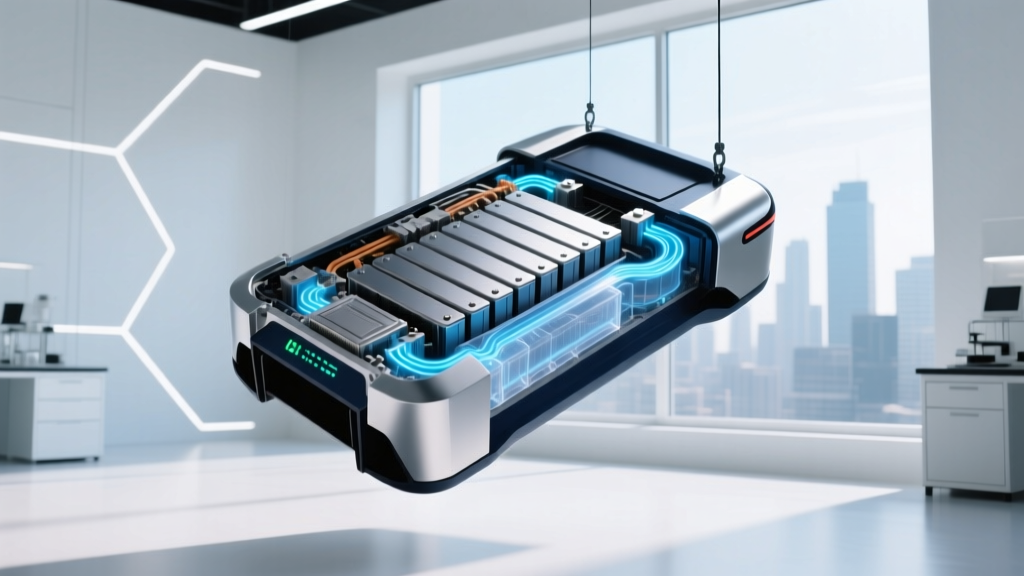
This guide breaks down the Mach-E's high-voltage traction battery (not the standard 12V auxiliary battery that powers accessories) — its chemistry, how it ages, what Ford warrants, what replacement costs, and how to monitor and maximize its State of Health (SoH) over the vehicle's life.
Mustang Mach-E Battery Chemistry: NMC vs. LFP Explained
The 2026 Ford Mustang Mach-E uses NMC (Nickel Manganese Cobalt) lithium-ion cells in its high-voltage battery pack across all trims. Ford offers two pack sizes:
- Standard Range: ~75.7 kWh usable capacity (NMC)
- Extended Range: ~91.0 kWh usable capacity (NMC)
Neither pack uses LFP (Lithium Iron Phosphate) chemistry as of the 2026 model year. This matters because chemistry dictates the fundamental trade-offs between energy density, cycle life, cold-weather performance, and cost.
| Attribute | NMC (Mach-E uses this) | LFP (Tesla Model 3 RWD, some BYD) |
|---|---|---|
| Energy Density | Higher — more range per kg | Lower — heavier pack for same kWh |
| Cycle Life | ~1,000–1,500 full cycles before 80% SoH | ~2,500–4,000+ full cycles before 80% SoH |
| Cold Performance | Better low-temp discharge | Greater range loss below 32°F |
| Cost per kWh | Higher (cobalt, nickel) | Lower (iron, phosphate) |
| Recommended SoC Range | 20%–80% daily; 100% for trips | Can sit at 100% daily without harm |
| Thermal Runaway Risk | Higher (but still very low in practice) | Lower — more chemically stable |
What this means for Mach-E owners: NMC delivers the range and cold-weather performance Ford targets for a crossover competing with the Tesla Model Y and Hyundai Ioniq 5. The trade-off is that you should avoid routinely charging to 100% unless you're heading out on a road trip. Ford's infotainment system lets you set a charge limit (typically 80% or 90%) to support daily-use best practices.
Real-World Degradation: What the Data Shows
EV battery degradation follows a predictable pattern: a steeper drop in the first 1–2 years (typically 2%–5%), then a slow, linear decline. The Mach-E's liquid-cooled thermal management system actively regulates cell temperature, which significantly slows degradation compared to older, passively-cooled packs.
Mach-E Degradation Estimates Based on Industry Data & Owner Reports:
| Time / Mileage | Expected Capacity Retention (SoH) | Effective Range Impact (ER Ext., EPA 290 mi baseline) |
|---|---|---|
| Year 1 / ~12,000 mi | 97%–98% | ~281–284 mi |
| Year 3 / ~36,000 mi | 94%–96% | ~273–278 mi |
| Year 5 / ~60,000 mi | 90%–94% | ~261–273 mi |
| Year 8 / ~100,000 mi | 85%–90% | ~247–261 mi |
| Year 10+ / ~150,000 mi | 80%–87% | ~232–252 mi |
Sources: fueleconomy.gov EV technology overview, Recurrent Auto battery degradation studies, Mach-E owner forum aggregated data. Actual results vary by climate, charging habits, and DC fast-charge frequency.
According to Recurrent Auto's battery degradation research, most modern liquid-cooled EVs retain 90%+ capacity at 50,000 miles. The Mach-E's active thermal management puts it in this favorable category. A 2021 Mach-E Extended Range with 60,000 miles would typically still deliver 260+ miles of real-world range — more than adequate for 95% of daily driving.
Key context: EPA range for the 2026 Mach-E Extended Range RWD is 290 miles. In real-world highway driving at 70+ mph, expect ~250–265 miles. In sub-freezing temperatures, expect an additional 15%–25% reduction, bringing effective winter highway range to ~200–225 miles on a full charge. These reductions are temporary and do not reflect permanent degradation.
Ford's Battery Warranty: Coverage Terms & Thresholds
Ford provides a high-voltage battery warranty that is federally mandated to meet minimum standards but is competitive within the segment. Here's exactly what's covered for the 2026 Mach-E:
| Component | Coverage Period | Mileage Limit | Capacity Threshold |
|---|---|---|---|
| High-Voltage Battery | 8 years | 100,000 miles | Below 70% of original capacity |
| Battery Components (BMS, contactors) | 8 years | 100,000 miles | Defect or malfunction |
| Electric Powertrain (motor, inverter) | 5 years | 60,000 miles | Defect or malfunction |
The 70% threshold is critical. Ford will repair or replace the battery if diagnostic testing confirms capacity has fallen below 70% of its original usable kWh within 8 years or 100,000 miles (whichever comes first). In practice, hitting 70% SoH within that window would require extreme use patterns — daily DC fast charging in hot climates with repeated 0%–100% cycles. The vast majority of Mach-E owners will never approach this threshold during the warranty period.
Note that California Air Resources Board (CARB) states mandate extended emissions-related warranties. If you registered your Mach-E in California or a CARB-adopting state, battery warranty may extend to 10 years / 150,000 miles. Check your state's specific requirements with your dealer or at arb.ca.gov.
Mustang Mach-E Battery Replacement Cost: What to Expect
The question of replacement cost generates outsized anxiety. Let's put it in perspective: based on current degradation data, most Mach-E batteries will retain 80%+ capacity at 150,000 miles — meaning replacement is rarely needed during typical first-owner tenure, and often not during the vehicle's full operational life.
That said, out-of-warranty replacement costs are real and significant:
| Pack Size | Battery Part Cost (est.) | Labor & Programming | Total Out-of-Pocket Range |
|---|---|---|---|
| Standard Range (~75.7 kWh) | $12,000–$16,000 | $2,000–$3,500 | $14,000–$19,500 |
| Extended Range (~91.0 kWh) | $15,000–$20,000 | $2,000–$3,500 | $17,000–$23,500 |
Estimates based on industry replacement pricing for liquid-cooled NMC packs of comparable size. Ford does not publish retail battery pricing. Actual costs depend on dealer, region, and whether module-level repair is possible (often, only specific modules are replaced rather than the full pack, reducing cost by 40%–60%).
Module-level repair is the norm, not full-pack replacement. Modern EV battery packs are composed of individual modules (the Mach-E's pack contains multiple modules wired in series). If degradation is uneven or a single module fails, dealers can often replace just the affected module(s) for a fraction of full-pack cost — typically $3,000–$7,000 including labor.
When is replacement actually needed? Typically only after 200,000+ miles, after a collision that damages the pack enclosure, or if the battery suffers a manufacturing defect that manifests outside the warranty window. For most owners, the battery will outlast the vehicle's economic life.
Factors That Accelerate (or Preserve) Mach-E Battery Life
Not all miles age a battery equally. The following factors have the largest measured impact on long-term capacity retention:
Charging Habits That Reduce Degradation
- Set daily charge limit to 80%–90%. NMC cells experience the most stress above 90% SoC and below 10% SoC. Use 100% only for road trips.
- Prefer Level 2 home charging over DC fast charging. Daily DCFC generates more heat and accelerates calendar aging. Occasional DCFC on road trips has negligible impact.
- Use preconditioning. The Mach-E's "Scheduled Departure" feature warms or cools the battery while still plugged in, reducing stress during the first miles of driving and improving regen efficiency.
- Avoid prolonged storage at 100% or 0% SoC. If storing for 2+ weeks, aim for ~50% SoC and plug in to a Level 1 or Level 2 charger to maintain it.
Environmental & Usage Factors
- Extreme heat is more damaging than extreme cold. Sustained ambient temperatures above 95°F accelerate electrolyte decomposition. The Mach-E's liquid cooling mitigates this, but parking in shade or a garage helps.
- Cold weather temporarily reduces range but does NOT permanently degrade the battery. The Mach-E's battery heater protects cells from charging damage in sub-freezing temps. Expect 15%–30% range loss at 20°F, fully recoverable when temperatures rise.
- Frequent DC fast charging adds up. Data from Recurrent Auto suggests that EVs DC-fast-charged more than 3 times per week show ~1%–2% additional degradation at 50,000 miles compared to those primarily Level 2 charged. For Mach-E owners with home charging, this is easily avoided.
- Aggressive driving has minimal battery impact. Unlike gas engines, EV motors don't suffer from hard acceleration. High-power discharge does generate heat, but the thermal management system handles it. Your tires and brakes will wear faster than your battery from spirited driving.
How to Check Your Mach-E Battery State of Health (SoH)
Ford does not currently display a direct SoH percentage in the Mach-E's infotainment system (unlike some Nissan Leaf models). Here are the methods available to owners:
Method 1: FordPass App & Diagnostic Reports
The FordPass app provides vehicle health reports that include high-voltage battery status. While it may not show a raw SoH percentage, it flags any anomalies or capacity concerns. You can also request a detailed battery health report through your Ford dealer's service department, which uses Ford's diagnostic tool (FDRS) to read the Battery Management System (BMS) directly.
Method 2: Dealer Diagnostic Scan
Any Ford EV-certified dealer can run a full battery diagnostic that reports individual module voltages, internal resistance, and overall pack capacity vs. original spec. This is the most authoritative method. Request it during routine service visits — most dealers will run it at no charge if you ask.
Method 3: Third-Party OBD-II Tools
Apps like OBDLink paired with EV-specific diagnostic software can read BMS data from the Mach-E's OBD-II port, including estimated SoH, cell voltage spread, and charge/discharge cycle count. Results vary in accuracy but give engaged owners a between-visit check on pack health.
Method 4: Real-World Range Tracking
The simplest approach: track your miles-per-kWh over time using the trip computer. If your Mach-E Extended Range consistently delivered 3.2 mi/kWh (≈290 mi range) when new and now averages 2.9 mi/kWh after 40,000 miles, that suggests ~90% SoH. Control for weather and driving style when comparing.
Looking Ahead: Solid-State & Next-Gen Battery Tech
The battery landscape is evolving, but it's important to separate announced research from showroom reality:
- Solid-state batteries (replacing liquid electrolyte with a solid conductor) promise higher energy density, faster charging, and improved safety. Toyota, Samsung SDI, and QuantumScape have demonstrated prototypes, but mass production for consumer vehicles is not expected before 2028–2030 at the earliest, and initial deployment will likely be in limited, premium models.
- Silicon-dominant anodes (replacing graphite) can increase energy density by 20%–40%. Companies like Sila Nanotechnologies and Group14 are scaling production, with first automotive applications appearing in 2026–2027 model-year vehicles from select OEMs. Ford has not announced silicon-anode adoption for the Mach-E.
- Sodium-ion batteries are emerging as a low-cost alternative for shorter-range, budget EVs. CATL and BYD are producing them at scale in China, but energy density remains too low for a 290-mile crossover like the Mach-E. Expect sodium-ion in urban runabouts and energy storage before long-range EVs.
Practical takeaway: If you're buying a Mach-E now, you're getting mature, proven NMC technology with excellent real-world track records. Waiting for solid-state means waiting 3–5+ years with no guarantee of cost parity or availability in your preferred vehicle segment.
Mustang Mach-E Battery FAQ
How long do Mustang Mach-E batteries last in years and miles?
Based on current degradation data from 2021–2025 model-year Mach-E owners, the high-voltage battery should retain 80%–87% of original capacity at 150,000 miles / 10 years. Many packs will exceed 200,000 miles before dropping below 70% SoH. The battery is designed to outlast the vehicle's typical first-ownership period.
How much does a Mustang Mach-E battery replacement cost?
A full out-of-warranty pack replacement runs $14,000–$23,500 depending on pack size. However, most replacements involve module-level repair at $3,000–$7,000. Full-pack replacement is rare and typically only needed after collision damage or extreme mileage (200,000+ miles).
What does Ford's Mach-E battery warranty cover?
Ford warrants the high-voltage battery for 8 years / 100,000 miles against capacity loss below 70% of original spec, plus defects in battery components. In CARB states, coverage may extend to 10 years / 150,000 miles. The warranty is transferable to subsequent owners.
How do I check my Mach-E battery health?
Request a BMS diagnostic report from your Ford EV-certified dealer, check vehicle health reports in the FordPass app, use a third-party OBD-II scanner with EV software, or manually track your miles-per-kWh efficiency over time to estimate capacity retention.
Is NMC or LFP better for the Mach-E?
For the Mach-E's use case — a 290-mile crossover with cold-weather capability — NMC is the right choice. It provides higher energy density (more range in a lighter pack) and better cold-weather discharge performance. LFP excels in cycle life and cost but would require a heavier pack to match range and loses more capacity in freezing temperatures. LFP is better suited to shorter-range, warm-climate vehicles.
Does frequent DC fast charging damage the Mach-E battery?
Occasional DC fast charging (road trips, a few times per month) has minimal measurable impact. Daily DC fast charging, particularly in hot climates, can add 1%–2% additional degradation over 50,000 miles. The Mach-E's liquid cooling system actively manages charge temperature to mitigate this. For daily charging, Level 2 at home (7–11 kW) is optimal for longevity.
Can I charge my Mach-E to 100% every day?
You can, but you shouldn't with NMC chemistry. Routinely charging to 100% and letting the car sit at full SoC accelerates calendar aging. Set your charge limit to 80%–90% for daily use and reserve 100% for trips where you need maximum range. Ford's charge-limit setting in the infotainment system makes this easy to manage.
Battery technology and warranty terms evolve. Always confirm current specs with your Ford dealer and review the official Ford Mustang Mach-E specifications page for the latest model-year details. Tax credit eligibility for new EV purchases is governed by IRS §30D rules — consult irs.gov or a tax professional for your specific situation.