What Are Molten Salt Batteries — And Why Are EV Owners Asking About Them?
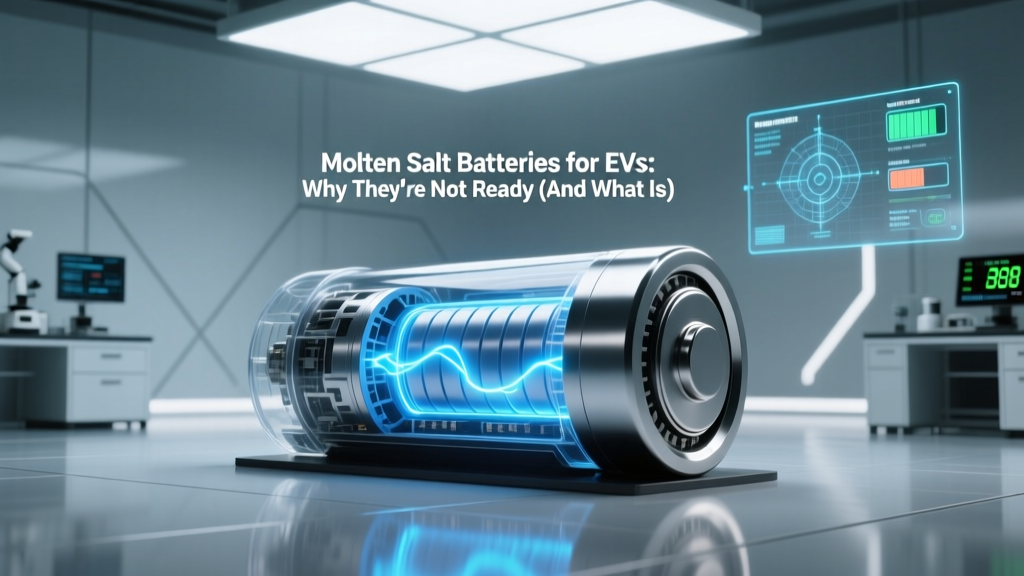
If you have been following battery-headline news in 2025 and 2026, you have probably seen the term molten salt batteries surface alongside phrases like "breakthrough" and "cheap storage." The idea is tantalizing: sodium is abundant, cheap, and geopolitically boring compared to lithium, cobalt, and nickel. So why is your next EV almost certainly not going to ship with a sodium-based pack?
The short answer is physics. Molten salt (or liquid metal) batteries — most notably the sodium-sulfur (NaS) and sodium-metal-halide (ZEBRA) chemistries — only function at operating temperatures between 270°C and 350°C. The electrolyte is a ceramic tube (typically beta-alumina), and the electrodes are liquid at operating temperature. This gives them excellent cycle life and raw-material cost advantages, but it also means they must be continuously heated to remain functional.
For stationary grid storage — where a well-insulated container can retain heat and the battery is never asked to cold-start on a Minnesota morning — that is manageable. Companies like NGK Insulators have deployed multi-megawatt NaS installations for utility-scale storage in Japan and the UAE. But for a passenger EV that must deliver 300+ kW peak power, operate from -20°F to 115°F, and weigh under 1,200 lbs for the pack alone, molten salt chemistry is a non-starter in the near term.
What is closer to your driveway is a cousin: sodium-ion (Na-ion) batteries, which operate at ambient temperature. CATL began shipping first-generation Na-ion packs in Chinese-market Chery vehicles in 2024, and second-generation cells are expected to reach energy densities around 160 Wh/kg by 2027-2028. Still well below NMC, but viable for urban runabouts.
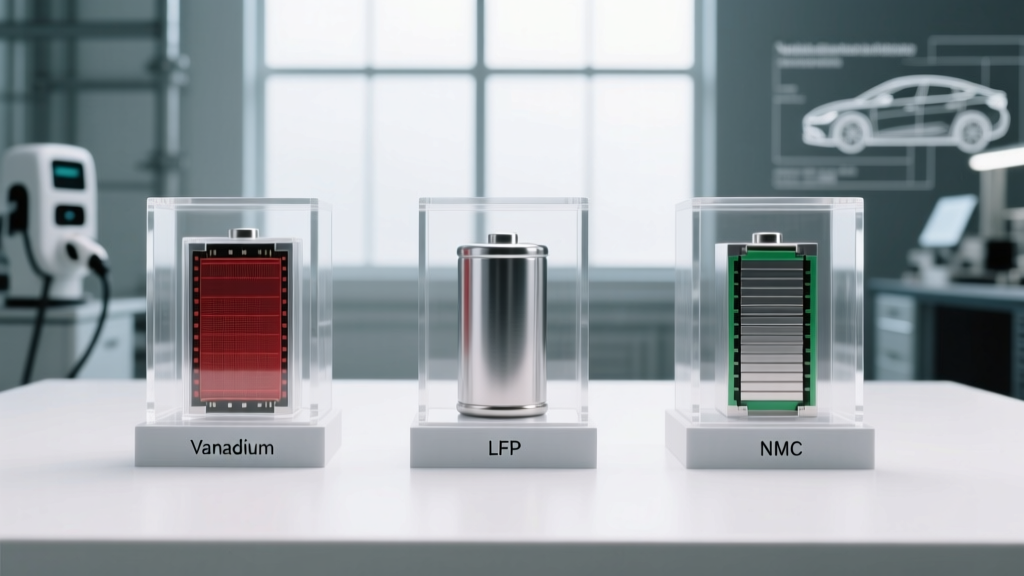
The Chemistry That Actually Powers Your 2026 EV: LFP vs NMC/NCA
Every mainstream EV sold in the U.S. in 2026 uses a lithium-ion battery. The meaningful split is between two cathode chemistries, and the choice affects your range, charging speed, longevity, and price.
| Attribute | LFP (Lithium Iron Phosphate) | NMC / NCA (Nickel-based) |
|---|---|---|
| Energy Density | ~140-170 Wh/kg (cell) | ~220-300 Wh/kg (cell) |
| Typical Cycle Life | 3,000-5,000+ cycles | 1,000-2,000 cycles |
| Cold-Weather Performance | Weaker — more range loss below freezing | Better — less resistance at low temps |
| Peak DC Fast Charge | Generally lower (150-220 kW typical) | Higher (250-350 kW possible) |
| SoC Recommendation | 100% daily is fine (and recommended for BMS calibration) | 80% daily; 100% only before trips |
| Raw-Material Cost | Lower — no nickel or cobalt | Higher — exposed to Ni/Co markets |
| Thermal Stability | Excellent — less prone to thermal runaway | Good, but requires more active management |
| Common 2026 Applications | Tesla Model 3/Y RWD, Ford Mustang Mach-E Select, base Chevy Equinox EV | Tesla Long Range, Hyundai Ioniq 5/6, Rivian, Lucid, BMW iX |
The trade-off is straightforward: LFP trades energy density for longevity and cost. If you need 350+ miles of EPA range in a midsize sedan, NMC is still the answer. If you are buying a commuter EV you plan to keep for 10 years and 150,000+ miles, LFP's cycle-life advantage becomes the dominant economic factor.
How Long Do EV Batteries Actually Last?
The fear that EV batteries "need replacing every few years like a phone" is a decade out of date. Real-world fleet data from Tesla, high-mileage taxi studies, and independent testing from groups like Recurrent paint a consistent picture: most modern EV batteries outlast the vehicles they are installed in.
- Year 1 / 15,000 mi: ~2-4% capacity loss (initial "break-in" drop)
- Year 3 / 45,000 mi: ~6-8% total loss
- Year 5 / 75,000 mi: ~8-12% total loss
- Year 8 / 120,000 mi: ~10-15% total loss
- Year 10 / 150,000 mi: ~12-18% total loss (many packs still above warranty threshold)
LFP packs typically show 2-5% less degradation at equivalent mileage, largely due to superior cycle life. Tesla's 2024 Impact Report noted that Model 3/Y packs retained an average of 85% capacity after 200,000 miles — well above the 70% warranty floor.
According to fueleconomy.gov, federally mandated battery labeling now includes expected degradation ranges, and most manufacturers engineer packs to retain at least 70% of original capacity over the warranty period. In practice, the vast majority of packs never need replacement under normal ownership.
Battery Warranty Terms: What Is Actually Covered?
Federal law (via EPA/CARB-aligned requirements) mandates a minimum battery warranty of 8 years / 100,000 miles for EVs sold in the U.S., with California-emissions-state vehicles often covered for 10 years / 150,000 miles. Here is how major manufacturers stack up in 2026:
| Manufacturer | Coverage Period | Capacity Threshold | Notes |
|---|---|---|---|
| Tesla | 8 yr / 120,000 mi (LR) | 70% retention | RWD models: 8 yr / 100,000 mi |
| Hyundai / Kia | 10 yr / 100,000 mi | 70% retention | Among the longest in the industry |
| Ford | 8 yr / 100,000 mi | 70% retention | Covers battery and hybrid components |
| GM (Chevy/Cadillac) | 8 yr / 100,000 mi | 70% retention (60% for Bolt-era) | Ultium platform: 8/100k standard |
| BMW | 8 yr / 100,000 mi | 70% retention | Transferable to second owner |
| Rivian | 8 yr / 175,000 mi | 70% retention | Higher mileage cap for truck use |
What the warranty covers: Capacity loss beyond the stated threshold, manufacturing defects, and cell/module failures. It does not cover damage from accidents, flooding, or aftermarket modifications. Importantly, the warranty applies to the high-voltage traction battery — not the 12V auxiliary battery that powers accessories and computers, which is covered under the standard bumper-to-bumper warranty (typically 3 yr / 36,000 mi).
EV Battery Replacement Cost: The Numbers Behind the Headlines
Replacement cost is the single biggest source of EV anxiety, and the figures are genuinely large. But context matters: the vast majority of EV owners never replace their battery. It is a contingency, not a scheduled maintenance item.
| Vehicle / Pack Size | Battery Capacity | Out-of-Warranty Replacement (Parts + Labor) | Typical Trigger |
|---|---|---|---|
| Tesla Model 3 RWD | ~60 kWh (LFP) | $12,000 - $16,000 | Rare before 200k+ mi |
| Tesla Model Y LR | ~75 kWh (NMC) | $14,000 - $20,000 | Rare before 200k+ mi |
| Hyundai Ioniq 5 | 77.4 kWh (NMC) | $15,000 - $22,000 | Rare before 180k+ mi |
| Ford F-150 Lightning Ext. | ~131 kWh (NMC) | $25,000 - $35,000 | Very large pack; rare early failure |
| Chevrolet Bolt EV (legacy) | 65 kWh (NMC) | $14,000 - $16,000 | Recall-replaced packs now stable |
| Rivian R1T / R1S | ~128 kWh (NMC) | $22,000 - $30,000 | Modular design may allow partial swap |
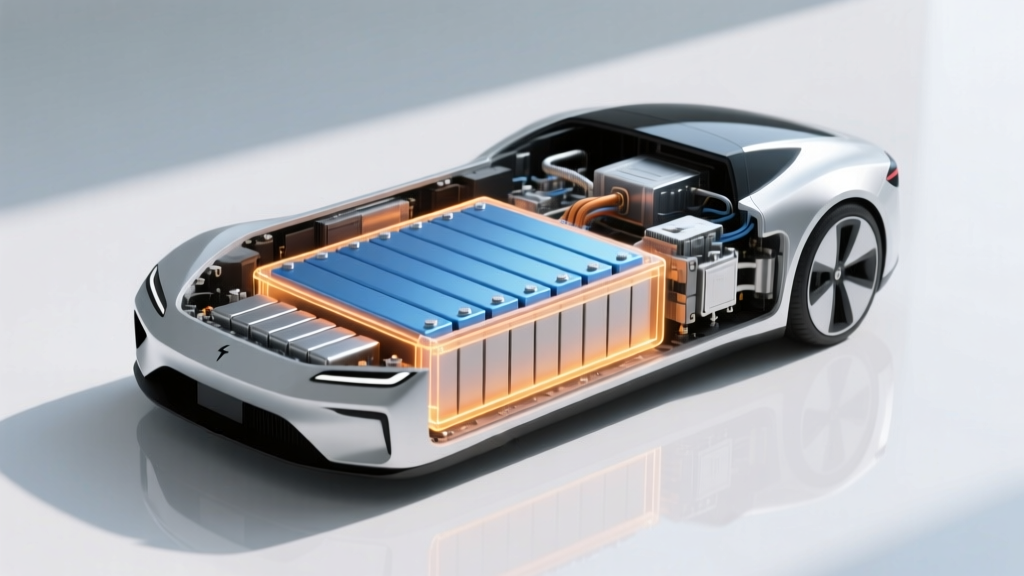
Two trends are working in owners' favor: cell-level prices have fallen roughly 80% since 2013 (per BloombergNEF data), and modular pack designs increasingly allow individual module replacement rather than a full pack swap — cutting costs by 40-60% when only a subset of cells degrade unevenly. Rivian, GM's Ultium platform, and newer Hyundai/Kia packs all use modular architectures.
What Actually Degrades Your EV Battery — and What Doesn't
Battery degradation is driven by a small number of well-understood stressors. Here is what the data shows, ranked by impact:
- Repeated 100% SoC storage: Keeping an NMC pack at 100% for days or weeks accelerates electrolyte decomposition. Charge to 100% only when you will drive within a few hours.
- Frequent DC fast charging above 150 kW: Every fast-charge session generates internal heat. Occasional road-trip use is fine; daily 350 kW sessions will measurably accelerate wear. Tesla's own data shows vehicles that fast-charge >90% of the time lose ~2-3% more capacity at 100k miles vs. primarily L2-charged vehicles.
- Deep discharge below 10% SoC: Storing a pack near 0% for extended periods can cause copper dissolution in the anode current collector. If storing, leave at ~50% SoC.
- Extreme heat exposure: Sustained battery temps above 45°C (113°F) — think Arizona summers with no thermal preconditioning — accelerate degradation. This is why liquid-cooled packs outperform passively cooled ones.
Lower-Impact Than Commonly Believed:
- Cold weather: Cold reduces available range temporarily (20-30% loss at 20°F is normal) but does not cause permanent damage. The battery management system (BMS) limits charging speed when cold to protect cells.
- Regenerative braking: Regen current is well within cell charge-rate limits. It does not "stress" the battery beyond normal use.
- Calendar aging: Even a parked EV degrades slowly, but modern chemistries lose only ~1-2% per year from calendar aging alone if stored at moderate SoC.
How to Monitor Your Battery's State of Health (SoH)
State of Health (SoH) is the percentage of original capacity your battery can still hold. A new pack is 100% SoH; a pack that held 75 kWh when new and now holds 66 kWh is at 88% SoH. Here is how to check it:
- In-vehicle displays: Tesla shows battery health in the Service menu (Software > Service). Hyundai/Kia provides a battery-condition readout in the EV settings. BMW iDrive includes a battery health percentage under vehicle status.
- OBD-II dongles + apps: Tools like OBDLink SX paired with apps such as EV Health or Scan My Tesla can read the BMS-reported SoH directly. This is the most reliable owner-accessible method.
- Manual calculation: Charge to 100% (on LFP) or a known SoC (on NMC), note the displayed range, and compare to the EPA original. If your 310-mile EPA car shows 265 miles at 100% after 3 years, that is roughly 85% SoH — though this method is imprecise because displayed range also factors in driving style and temperature.
- Dealer diagnostics: Any authorized service center can pull a full battery health report during routine service. Request this if you are approaching the warranty mileage threshold and want documentation.
Emerging Battery Tech: Solid-State, Silicon Anodes, and Sodium-Ion
Beyond molten salt and today's LFP/NMC, several next-generation technologies are in development. Here is where they actually stand as of 2026 — with honest timelines:
Solid-State Batteries: Toyota has announced production intent for solid-state cells by 2027-2028, targeting 750 km (~466 mi) range with 10-minute fast charging. Samsung SDI and QuantumScape are also in pilot production. However, manufacturing yield and cost remain significant barriers. Realistic availability in a U.S.-market vehicle at scale: 2029-2031 at the earliest. These will debut in premium vehicles at high price points.
Silicon-Dominant Anodes: Companies like Sila Nanotechnologies and Group14 are replacing graphite anodes with silicon-composite materials, boosting energy density by 20-40%. Mercedes-Benz's EQG (G-Class EV) uses Sila cells, and the tech is expected to proliferate through 2027-2028 model-year vehicles. This is the nearest-term meaningful upgrade to watch.
Sodium-Ion (Ambient Temperature): As mentioned, CATL's first-gen Na-ion cells are in Chinese-market vehicles now. Second-generation cells targeting 160 Wh/kg could make sodium viable for U.S.-market urban EVs (150-200 mi range) by 2028-2029. The cost advantage is significant — sodium is 100x more abundant than lithium — but energy density limits sodium to smaller, lighter vehicles.
EV Battery Questions, Answered Directly
How long do EV batteries last in years and miles?
Most modern liquid-cooled EV batteries are engineered to retain at least 70% of original capacity for 8-10 years or 100,000-150,000 miles (the federal minimum warranty). Real-world data from Recurrent and manufacturer fleet reports show many packs retain 85%+ capacity at 150,000 miles. It is common for EV batteries to outlast the vehicle's useful economic life.
How much does it cost to replace an EV battery?
Out-of-warranty replacement costs range from roughly $12,000 for a 60 kWh LFP pack (e.g., Tesla Model 3 RWD) to $35,000 for a 131 kWh NMC pack (e.g., F-150 Lightning Extended Range). However, most replacements are covered under warranty, and modular pack designs increasingly allow partial (module-level) repairs at 40-60% lower cost. Cell prices continue to decline year over year.
What does the EV battery warranty actually cover?
Federal law requires a minimum of 8 years / 100,000 miles of battery warranty coverage. Most manufacturers guarantee the pack will retain at least 70% of original capacity during that period. If your battery degrades below that threshold, the manufacturer will repair or replace it at no cost. The warranty covers defects and abnormal degradation but not accident damage, flooding, or unauthorized modifications. Per IRS guidelines, battery replacement with a new unit does not affect your original §30D tax credit eligibility.
How do I check and maximize my EV battery health?
Check SoH through your vehicle's built-in diagnostics menu, an OBD-II scanner with an EV-compatible app, or a dealer diagnostic report. To maximize longevity: keep NMC packs between 20-80% SoC for daily use (LFP can be charged to 100% daily), minimize consecutive DC fast-charging sessions, avoid storing the vehicle at very high or very low SoC for extended periods, and use preconditioning before fast charging to bring the battery to optimal temperature.
LFP vs NMC — which battery chemistry is better?
Neither is universally "better" — it depends on your use case. Choose LFP if you prioritize longevity (3,000-5,000 cycles), lower cost, daily 100% charging convenience, and plan to keep the vehicle 8+ years. Choose NMC/NCA if you need maximum range (300+ mi EPA), faster DC charging (250-350 kW peak), better cold-weather performance, or are buying a larger vehicle where energy density matters for packaging. For most 2026 buyers, LFP is the rational choice for commuters and NMC for road-trippers and performance-oriented buyers.
Will molten salt or sodium-ion batteries replace lithium in EVs?
Not in the foreseeable future for passenger vehicles. Molten salt (NaS/ZEBRA) batteries require 270-350°C operating temperatures and are suited only for stationary grid storage. Sodium-ion batteries (ambient temperature) are a more realistic lithium alternative but currently offer only ~120-160 Wh/kg — roughly half the energy density of NMC. Expect sodium-ion in budget urban EVs by 2028-2029, but lithium-ion (LFP and NMC) will dominate the mainstream market through at least 2030.