If you have been following battery research headlines, you may have encountered the term molten battery — a high-temperature energy storage concept that periodically surfaces in tech media as a potential breakthrough for electric vehicles. The reality in 2026 is that molten-metal and molten-salt battery designs remain confined to grid-scale stationary storage and laboratory prototypes. No production EV uses a molten battery, and none is slated for one in the near term.
What EV buyers actually need to understand are the chemistries powering today's vehicles — primarily lithium iron phosphate (LFP) and nickel manganese cobalt (NMC) — along with the real data on degradation, warranty coverage, replacement costs, and the emerging technologies that may eventually reach production cars. This guide covers all of it with exact numbers, sourced data, and practical ownership advice.
What Is a Molten Battery, and Why Is It Not in Your EV?
A molten battery uses electrodes or electrolytes that operate at temperatures high enough to keep materials in a liquid state — typically 300°C to 700°C. The most well-known example is the sodium-sulfur (NaS) battery, which uses molten sodium and molten sulfur separated by a solid ceramic electrolyte. These batteries offer high energy density and long cycle life at grid scale, and companies like NGK Insulators have deployed them for utility-scale energy storage for decades.
The problem for automotive use is straightforward: maintaining 300°C+ operating temperatures requires constant thermal energy input, heavy insulation, and poses safety risks in a crash. A parked molten battery would cool and solidify, rendering it inoperable until reheated — a dealbreaker for a vehicle that may sit for days between uses. Research into lower-temperature liquid-metal batteries (such as those explored at MIT) continues, but these remain years away from any automotive application, if they ever reach one.
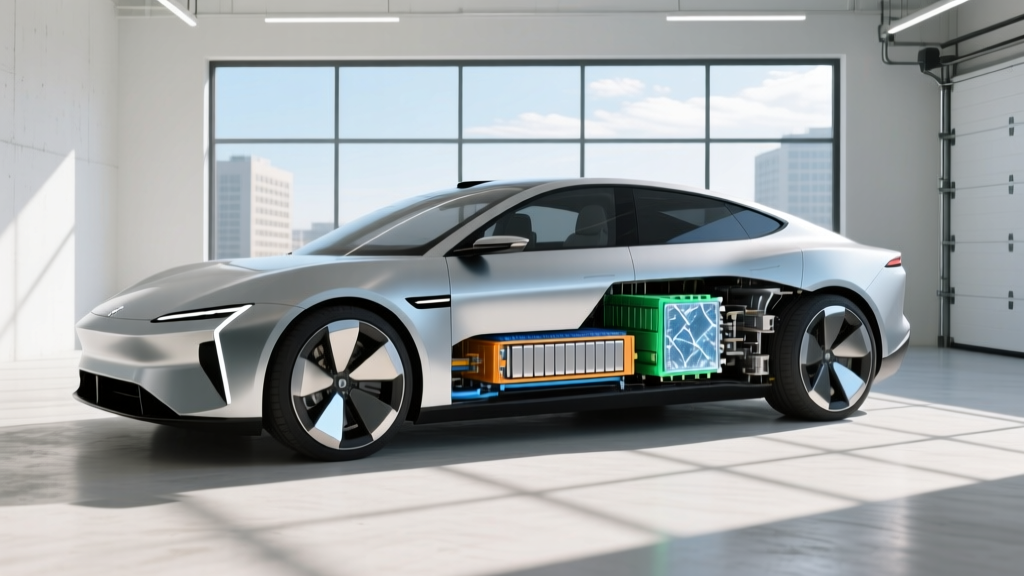
For now, and for the foreseeable future, your EV will use a lithium-ion battery with either LFP or NMC/NCA chemistry. Let's break down what that means.
LFP vs NMC/NCA: The Chemistry Decision That Affects Your EV
Every EV sold in the US in 2026 uses one of two dominant cathode chemistries. Your choice of chemistry affects range, charging behavior, longevity, cold-weather performance, and price.
| Attribute | LFP (Lithium Iron Phosphate) | NMC / NCA (Nickel-based) |
|---|---|---|
| Energy Density | ~160-180 Wh/kg (lower) | ~220-300 Wh/kg (higher) |
| Typical Cycle Life | 3,000-6,000+ cycles | 1,000-2,500 cycles |
| Cold-Weather Performance | Reduced — slower charging below 32°F, ~15-25% range loss | Better — ~10-20% range loss in cold |
| Recommended Daily SoC | 100% (no degradation penalty) | 80% daily; 100% only for trips |
| Cost per kWh | Lower (~$80-100/kWh pack-level) | Higher (~$110-140/kWh pack-level) |
| Thermal Stability | Excellent — less prone to thermal runaway | Good — requires more active cooling |
| Common Applications (2026) | Tesla Model 3/Y RWD, Ford Mustang Mach-E Select, many Chinese-market EVs | Tesla Long Range/Performance, Hyundai Ioniq 5/6, Rivian, most AWD/Long Range trims |
| Cobalt Content | None | Varies; NCA uses minimal, NMC uses some |
Which is better? Neither is universally superior. If you prioritize maximum range and can charge to 80% daily, NMC/NCA delivers more miles per kilogram of battery. If you want a battery you can charge to 100% every day without worry, plan to keep the car 10+ years, or want a lower purchase price, LFP is the stronger choice. Standard-range and RWD trims increasingly ship with LFP; long-range and performance trims still rely on NMC/NCA for energy density.
How Long Do EV Batteries Actually Last?
The short answer: longer than most buyers expect. Data from fleet operators, manufacturer reports, and independent testing consistently shows that modern lithium-ion EV batteries lose roughly 5-10% of total capacity in the first 100,000 miles, with degradation slowing significantly after the initial break-in period.
- Tesla Impact Report (2023-2025 data): Model 3/Y batteries retain approximately 85% of original capacity at 200,000 miles. Model S/X retain roughly 88% at 150,000 miles.
- Geotab fleet study (6,300 EVs): Average annual degradation of 1.8% across all chemistries, meaning ~90% capacity retention after 5 years under typical use.
- Recurrent Auto data (2024-2025): Chevrolet Bolt EV (NMC) showed ~8% degradation at 80,000 miles; Tesla Model 3 LFP showed ~5% at 60,000 miles.
Sources: Tesla Impact Report, Geotab EV Battery Health Study
Most EV batteries will outlast the vehicle they are installed in. The average American keeps a car for about 8.4 years and drives roughly 14,000 miles per year. At 1.8% annual degradation, that owner would see roughly 85% capacity retention at trade-in — well above the 70% threshold that triggers a warranty claim.
What Does the EV Battery Warranty Actually Cover?
Federal law mandates a minimum battery warranty of 8 years / 100,000 miles (whichever comes first) for all EVs sold in the US, with California Air Resources Board (CARB) states requiring 10 years / 150,000 miles. Most manufacturers exceed these minimums.
| Manufacturer | Warranty Period | Capacity Retention Threshold | Notes |
|---|---|---|---|
| Tesla (Model 3/Y RWD — LFP) | 8 yr / 100,000 mi | 70% | Covers defects + capacity below threshold |
| Tesla (Model 3/Y Long Range) | 8 yr / 120,000 mi | 70% | Longer mileage for LR/Performance trims |
| Hyundai / Kia | 10 yr / 100,000 mi | 70% | Among the longest time-period coverage |
| Ford (Mach-E, F-150 Lightning) | 8 yr / 100,000 mi | 70% | Covers excessive capacity loss + defects |
| GM (Ultium platform) | 8 yr / 100,000 mi | 70% | Applies to Blazer EV, Equinox EV, Silverado EV |
| Rivian | 8 yr / 175,000 mi | 70% | Higher mileage cap reflects adventure-use positioning |
| BMW (i4, iX, i7) | 8 yr / 100,000 mi | 70% | Standard across BMW EV lineup |
Critical detail: The warranty triggers only when capacity drops below the stated threshold (typically 70%). A battery at 72% capacity after 8 years has technically not failed — it simply has reduced range. This is not a defect; it is normal electrochemical aging. If your 300-mile EPA-rated EV drops to 215 miles of range, you are still above the warranty threshold, and that is by design.
How Much Does an EV Battery Replacement Cost?
Battery replacement is the single biggest fear among prospective EV buyers — and the most overstated. Here are the actual numbers.
| Vehicle | Battery Size (kWh usable) | Chemistry | Estimated Replacement Cost | When Typically Needed |
|---|---|---|---|---|
| Tesla Model 3 RWD | 57.5 kWh | LFP | $8,000 - $12,000 | 300,000+ mi (if ever) |
| Tesla Model Y Long Range | 75 kWh | NMC | $12,000 - $16,000 | 250,000+ mi (if ever) |
| Hyundai Ioniq 5 | 77.4 kWh | NMC | $11,000 - $15,000 | 200,000+ mi (if ever) |
| Ford F-150 Lightning Ext. Range | 131 kWh | NMC | $18,000 - $28,000 | 200,000+ mi (if ever) |
| Chevrolet Bolt EV/EUV | 65 kWh | NMC | $9,000 - $14,000 | 200,000+ mi (if ever) |
| Rivian R1T (Large Pack) | 128.9 kWh | NMC | $20,000 - $27,000 | 200,000+ mi (if ever) |
The honest context: Catastrophic battery failure (a complete, sudden loss) is extremely rare. When batteries do require service, it is often a single module replacement — not the entire pack. A module swap on a modular pack (like the Ultium platform or older Bolt) can cost $2,000-$5,000 instead of a full pack replacement. And because most batteries retain 80%+ capacity at 200,000 miles, the vast majority of EVs are scrapped for other reasons (collision, rust, electronics failure) before the battery needs full replacement.
Factors That Accelerate Battery Degradation (and How to Minimize Them)
Lithium-ion batteries degrade through two mechanisms: calendar aging (time-based chemical changes regardless of use) and cycle aging (wear from charge/discharge cycles). You cannot stop calendar aging, but you can significantly reduce cycle aging.
- Avoid chronic 100% charges (NMC/NCA only): Set your daily charge limit to 80%. Charge to 100% only when you need the full range for a trip. LFP batteries are exempt — charge to 100% regularly for accurate BMS calibration.
- Minimize DC fast charging when possible: Occasional DCFC is fine, but daily 150-350 kW sessions increase degradation by ~1-2% annually versus Level 2-only charging. Use home Level 2 as your primary method.
- Avoid extreme state-of-charge storage: If leaving the car for weeks, set SoC to ~50%. Never store at 100% or near 0% in hot weather.
- Precondition before fast charging: Use the car's navigation-to-charger feature (Tesla, Hyundai, Ford, BMW all offer this) to warm the battery. Cold batteries charge slower and experience more lithium plating stress.
- Park in shade or a garage in summer: Sustained battery temperatures above 95°F accelerate calendar aging. A garage can reduce battery temperature by 10-15°F versus outdoor parking.
- Don't obsess over 0%: Occasional use down to 5-10% SoC is fine. Just don't let the car sit at very low SoC for extended periods — charge it back to 50%+ promptly.
How to Check Your EV's Battery State of Health (SoH)
State of Health (SoH) is the percentage of original capacity your battery currently holds. A new battery is 100% SoH; a battery that has lost 8% of capacity is at 92% SoH. Here is how to monitor it:
- In-car displays: Tesla shows battery health estimates in the service menu (accessible via the touchscreen). Hyundai/Kia provides SoH readouts through the infotainment system on many models.
- OBD-II diagnostics: Third-party tools like OBDeleven, LeafSpy (for Nissan Leaf), or Scan My Tesla can read detailed battery telemetry including individual cell voltages, internal resistance, and SoH percentage.
- Telematics services: Recurrent Auto offers free battery health tracking for many EV models by connecting to your car's telematics data, providing range estimates and degradation curves over time.
- Dealer diagnostics: Request a battery health report during routine service. Most manufacturers can pull a full SoH report that documents capacity retention for warranty purposes.
If you are buying a used EV, always request the SoH report before purchase. A car at 92% SoH with 50,000 miles has plenty of life left. A car at 78% SoH with 80,000 miles may approach warranty territory and should be priced accordingly.
Emerging Battery Technologies: What Comes After LFP and NMC?
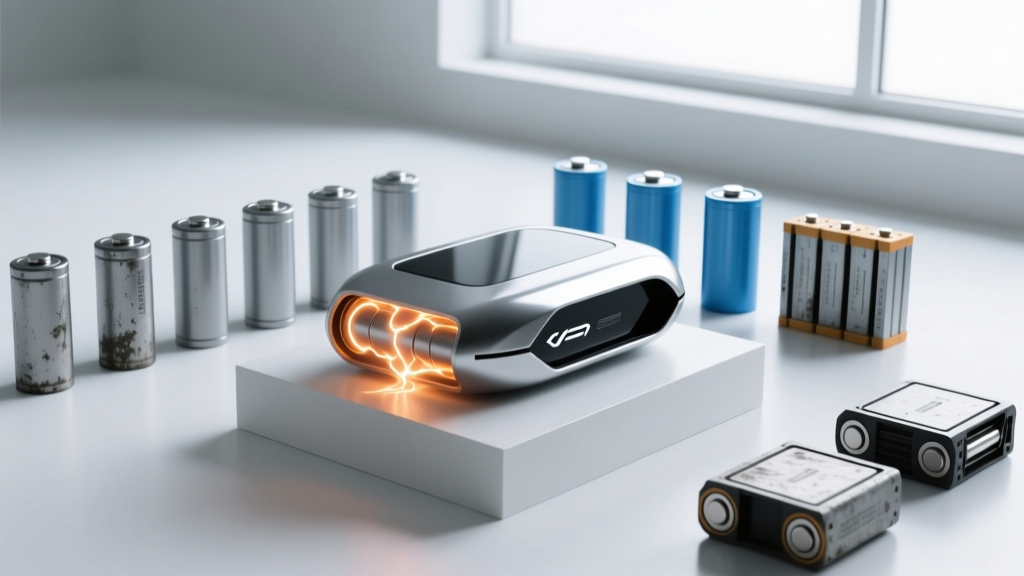
While molten batteries remain impractical for vehicles, several next-generation technologies are advancing toward production — though timelines are longer than headlines suggest.
Solid-State Batteries
Solid-state batteries replace the liquid electrolyte with a solid material (ceramic, sulfide, or polymer), promising higher energy density (400-500 Wh/kg), faster charging, and improved safety. Toyota has announced a solid-state EV for 2027-2028 with a claimed 750 km (~466 mi) range, though production volume and pricing remain unconfirmed. Samsung SDI targets 2027 for mass production. QuantumScape continues pre-commercial validation with Volkswagen. Realistic timeline for meaningful US market availability: 2028-2030 in limited, premium applications.
Silicon Anode Batteries
Replacing graphite anodes with silicon can increase energy density by 20-40%. Sila Nanotechnologies (partnering with Mercedes-Benz and Panasonic) and Group14 Technologies (supplying Porsche) are the leaders. The Mercedes G-Class electric SUV (expected 2026-2027) is slated to use Sila's silicon anode cells. This technology is closer to production than solid-state and may appear in 2026-2027 models.
Sodium-Ion Batteries
Sodium-ion chemistry uses abundant, cheap materials and performs well in cold weather, but offers lower energy density (~140-160 Wh/kg). CATL has begun production in China for small EVs and energy storage. US availability in passenger EVs is unlikely before 2028 and may be limited to entry-level or commercial applications due to range constraints.
None of these technologies are available in production EVs sold in the US today. Treat any article claiming otherwise as speculative.
Frequently Asked Questions
How long do EV batteries last in years and miles?
Based on fleet data, most modern EV batteries retain 80-90% capacity at 150,000-200,000 miles (roughly 10-15 years of average driving). Catastrophic failure is rare. The battery will typically outlast the rest of the vehicle.
How much does an EV battery cost to replace?
Full pack replacement ranges from $8,000 to $28,000 depending on battery size and chemistry. However, most batteries never need full replacement — module-level repairs cost $2,000-$5,000, and the majority of EVs are retired for other reasons before the battery fails.
What does the EV battery warranty cover?
Federal minimum is 8 years/100,000 miles; CARB states require 10 years/150,000 miles. Coverage includes manufacturing defects and capacity loss below a threshold (typically 70% of original capacity). Normal degradation above that threshold is not covered because it is expected behavior.
How do I check and maximize my EV battery health?
Monitor SoH through in-car displays, OBD-II tools, or services like Recurrent Auto. Maximize lifespan by avoiding chronic 100% charges on NMC/NCA batteries, minimizing daily DC fast charging, preconditioning before fast charges, and avoiding long-term storage at extreme SoC levels.
LFP vs NMC — which battery chemistry should I choose?
Choose LFP if you want lower cost, longer cycle life, the ability to charge to 100% daily, and don't need maximum range. Choose NMC/NCA if you need the longest possible range per charge, better cold-weather performance, or are buying a long-range/AWD trim. Both chemistries will outlast the car under normal use.
Will molten batteries ever be used in EVs?
Not in any foreseeable timeline. Molten batteries require operating temperatures of 300°C+ and are designed for stationary grid storage where continuous thermal management is practical. Automotive applications would require solving fundamental challenges around cold-start operation, crash safety, insulation weight, and energy consumed by thermal maintenance. Current research focuses on lowering operating temperatures, but these efforts remain in early-stage laboratory work.