The Tesla Model Y remains the best-selling electric vehicle in the United States through the 2026 model year, and its battery pack is the single most expensive component in the car. Understanding what's inside that pack, how it degrades, and what replacement actually costs separates informed buyers from anxious ones. The data tells a reassuring story — but only if you know where to look.
This guide breaks down every layer of the Model Y battery pack: the chemistry split between Standard Range and Long Range trims, real-world degradation curves pulled from fleet data, exact warranty terms, and the cold-hard numbers on replacement pricing. Whether you're evaluating a new purchase or optimizing a car you already own, these are the figures that matter.
LFP vs NMC: Which Chemistry Is in Your Model Y?
Tesla uses two distinct battery chemistries across the Model Y lineup, and the difference has real implications for how you charge, drive, and maintain the pack over time.
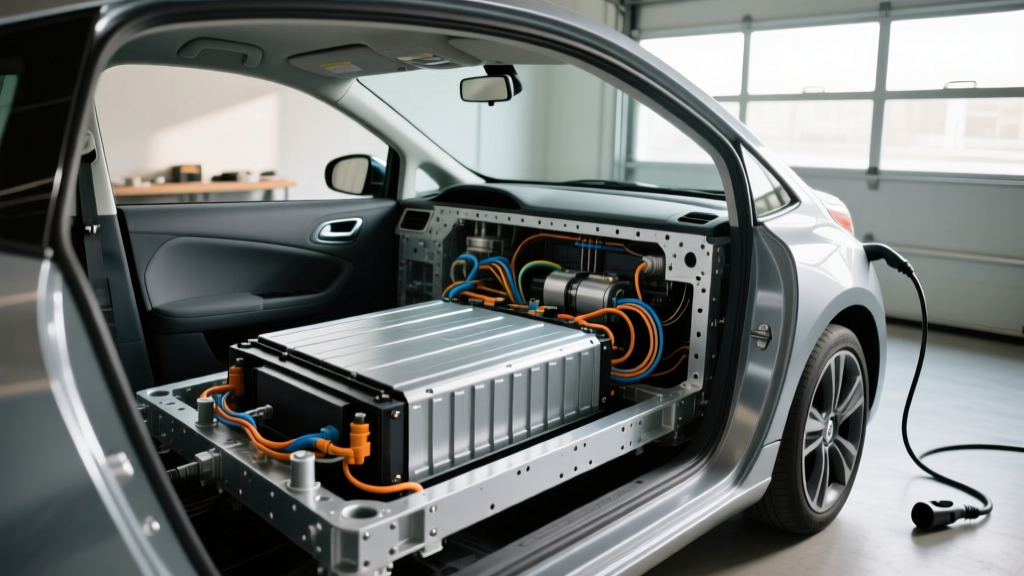
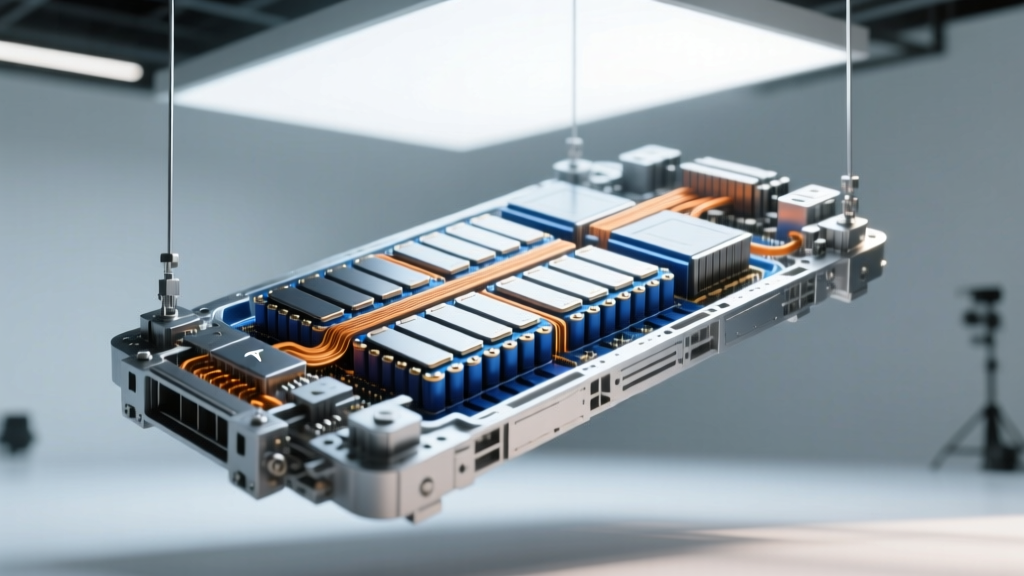
The Model Y Standard Range (badged as the "Rear-Wheel Drive" in recent years) uses a lithium iron phosphate (LFP) battery pack with approximately 60 kWh of usable capacity, supplied primarily by CATL. The Model Y Long Range and Performance variants use nickel manganese cobalt (NMC) packs with roughly 75-82 kWh usable, sourced from Panasonic (and increasingly LG Energy Solution for 2026 production).
| Attribute | LFP (Standard Range) | NMC (Long Range / Performance) |
|---|---|---|
| Usable Capacity | ~60 kWh | ~75-82 kWh |
| EPA Range (2026) | 279 miles | 320-310 miles |
| Energy Density | Lower (~160 Wh/kg cell) | Higher (~250 Wh/kg cell) |
| Cycle Life | 3,000+ cycles to 80% SoH | 1,500-2,000 cycles to 80% SoH |
| Cold-Weather Performance | Greater range loss (~35-40% at 20°F) | Better cold retention (~25-30% loss at 20°F) |
| Daily Charging Recommendation | 100% SoC daily is fine | 80% SoC daily; 100% for trips only |
| Cost Advantage | ~20-30% cheaper per kWh | Higher material cost (nickel, cobalt) |
| Thermal Stability | Excellent — less prone to thermal runaway | Good — requires robust BMS management |
The critical trade-off: LFP lasts longer in cycle count and tolerates daily 100% charging, making it ideal for commuters who can charge at home every night. NMC delivers more range per kilogram and performs better in freezing temperatures, making it the better pick for road-trippers and cold-climate drivers. Neither chemistry is universally "better" — the right choice depends on your driving pattern.
How Long Does a Model Y Battery Pack Actually Last?
The honest answer, backed by fleet data: most Model Y battery packs will outlast the car's useful economic life. But "outlast" doesn't mean zero degradation. Here's what the numbers show.
Tesla's own 2024 Impact Report (the most recent with granular fleet data) showed that Model 3 and Model Y packs collectively retained approximately 88% of original capacity at 100,000 miles and roughly 85% at 150,000 miles. The degradation curve is steepest in the first 10,000-20,000 miles (typically 2-4% loss as the SEI layer stabilizes), then flattens to a slow linear decline of roughly 1% per 10,000-15,000 miles thereafter.
- 0-10,000 miles: ~2-3% loss (initial SEI formation)
- 10,000-50,000 miles: Additional ~3-5% loss (total ~5-8% from new)
- 50,000-100,000 miles: Additional ~4-6% loss (total ~10-14% from new)
- 100,000-200,000 miles: Additional ~5-8% loss (total ~15-20% from new)
LFP packs in the Standard Range model show slower degradation in the mid-life range, with fleet data suggesting ~90%+ retention at 100,000 miles for vehicles primarily charged at home on Level 2.
At 200,000 miles, an NMC pack retaining 80-85% of its original 75 kWh would still hold roughly 60-64 kWh — translating to approximately 260 miles of EPA-equivalent range. That's still more daily range than most drivers use. The pack isn't dead at 80% capacity; it's simply reduced.
Tesla's Battery Warranty: What's Actually Covered
Tesla provides one of the more straightforward battery warranties in the EV market, but the details matter when you're reading the fine print.
| Trim | Warranty Period | Mileage Limit | Minimum Capacity Retention |
|---|---|---|---|
| Standard Range (RWD) | 8 years | 100,000 miles | 70% |
| Long Range AWD | 8 years | 120,000 miles | 70% |
| Performance | 8 years | 120,000 miles | 70% |
The warranty covers the high-voltage traction battery pack and drive unit(s) against defects and capacity loss below 70% of original capacity within the stated time and mileage window (whichever comes first). If your pack drops below 70% within 8 years or 120,000 miles on a Long Range, Tesla will repair or replace it to bring retention back above the threshold. The warranty also covers the drive unit, which is mechanically simpler but not immune to failure.
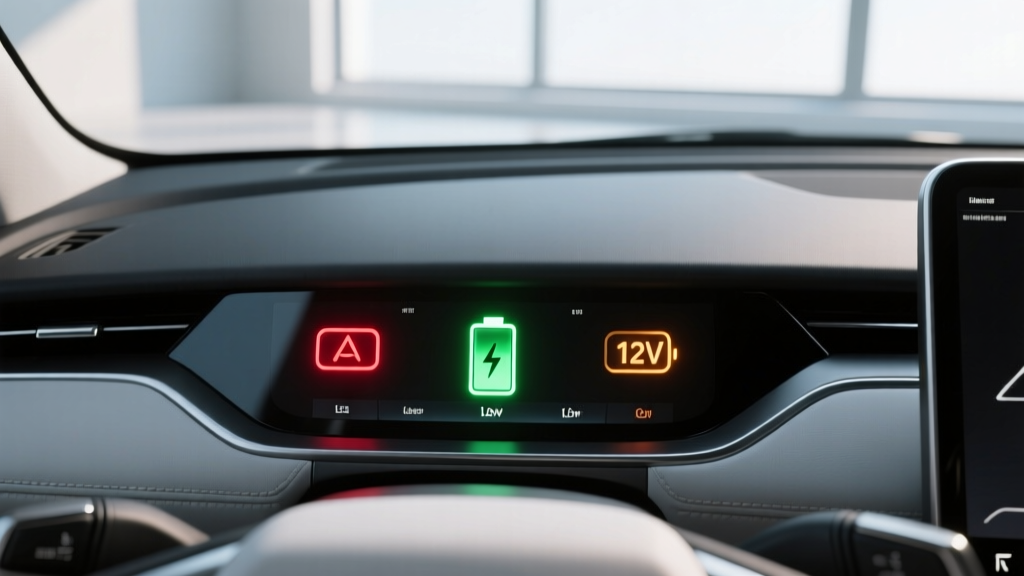
What the warranty does not cover: cosmetic issues, damage from accidents or flooding, degradation from ignoring Tesla's charging recommendations (though this is difficult for Tesla to prove), or the 12V auxiliary lithium battery, which carries its own separate warranty. Note that the 12V battery powers accessories and the computer — it is not the traction battery and should never be confused with it.
Model Y Battery Replacement Cost: The Real Numbers
This is the question that generates the most anxiety — and the most misinformation. Here are the actual figures based on service-center reports, Tesla out-of-warranty quotes, and third-party EV repair data through early 2026.
| Scenario | Estimated Cost Range | Notes |
|---|---|---|
| Full pack replacement (out of warranty, NMC Long Range) | $15,000 - $20,000 | Inclusive of parts, labor, diagnostics at Tesla Service |
| Full pack replacement (out of warranty, LFP Standard Range) | $12,000 - $16,000 | LFP cells are cheaper; labor similar |
| Module-level repair (partial pack, out of warranty) | $5,000 - $9,000 | Available when only specific modules have failed; not all service centers offer this |
| Under warranty replacement | $0 to owner | Covered if below 70% SoH within 8 yr / 100-120k mi |
| Refurbished/remanufactured pack (third-party) | $8,000 - $12,000 | Growing market; quality varies by provider |
Context that matters: the vast majority of Model Y owners will never pay for a battery replacement. Fleet data shows that fewer than 1-2% of Tesla packs have required full replacement due to premature failure. The degradation curve is gradual — a 10-year-old Model Y with 80% battery health is still a perfectly functional vehicle with 250+ miles of range. Full replacement typically only becomes necessary due to manufacturing defects (covered under warranty), physical damage, or extreme high-mileage use well past 200,000 miles.
For comparison, a gasoline vehicle's engine or transmission replacement at similar mileage often costs $4,000-$8,000, and major powertrain work is far more common at 150,000 miles than EV battery failure.
What Degrades a Model Y Battery — and What Doesn't
Battery degradation is driven by a small number of well-understood electrochemical factors. Here's what actually moves the needle on your pack's State of Health (SoH), ranked by impact.
High Impact Factors
- Sustained high State of Charge: Storing an NMC pack at 100% SoC for days or weeks accelerates cathode degradation. Tesla recommends 80% daily for NMC packs for this reason. LFP packs are more tolerant of 100% SoC storage.
- Extreme heat exposure: Prolonged ambient temperatures above 95°F, especially combined with high SoC, accelerates electrolyte decomposition. This is why vehicles in Arizona and Texas show slightly faster degradation than those in cooler climates.
- Deep discharge cycles: Regularly running the pack below 10% SoC stresses the anode. Occasional low-SoC events are fine; habitual deep cycling is not.
Moderate Impact Factors
- Frequent DC fast charging: Exclusively using 250 kW Superchargers daily generates more heat and lithium-plating risk than Level 2 home charging. Occasional Supercharging (a few times per week or on road trips) has negligible impact. Daily Supercharging exclusively can add ~1-3% additional degradation over 100,000 miles compared to Level 2 charging.
- Cold-weather fast charging without preconditioning: Charging a cold NMC pack at high power can cause lithium plating on the anode. Always use Tesla's navigation-based preconditioning (the car warms the battery en route to a Supercharger when you navigate there).
Low or No Impact
- Total mileage alone: A pack that's been driven 150,000 miles on gentle Level 2 charging will often show less degradation than a 50,000-mile pack that sat at 100% SoC in a hot garage for months.
- Regenerative braking: The brief regen pulses during driving do not meaningfully stress the pack.
- ✅ Set daily charge limit to 80% for NMC (Long Range/Performance); 100% is fine for LFP (Standard Range)
- ✅ Charge at home on Level 2 (7-11.5 kW / 240V) whenever possible — this is the gentlest charging method
- ✅ Plug in regularly; don't let the car sit at very low SoC (below 10%) for extended periods
- ✅ Use Tesla navigation to Superchargers to trigger automatic battery preconditioning
- ✅ In extreme heat, park in shade or a garage when possible
- ✅ Don't stress about occasional 100% charges for road trips — that's what the pack is designed for
- ❌ Avoid storing the car at 100% SoC for more than a day or two (NMC packs)
- ❌ Avoid habitual deep discharges below 5% SoC
- ❌ Don't DC fast-charge a freezing-cold pack without preconditioning
How to Check Your Model Y Battery Health
Tesla doesn't expose a direct State of Health (SoH) percentage in the car's native interface the way some manufacturers do. But there are reliable methods to assess your pack's condition.
Method 1: The Manual Range Calculation. Charge your Model Y to 100% and note the displayed rated range. Compare this to the EPA-rated range for your trim when new (279 mi for Standard Range, 320 mi for Long Range). If your Long Range shows 290 rated miles at 100% SoC, that's roughly 90% retention — meaning approximately 10% degradation. This isn't perfectly precise (the BMS can drift), but it's a strong directional indicator.
Method 2: Third-Party Apps. Services like Tessie and TeslaFi track your charging sessions and can estimate SoH by comparing energy added during a full charge cycle to the pack's original capacity. Over multiple full-charge events, these tools converge on a reliable SoH estimate within 1-2% accuracy.
Method 3: Tesla Service Diagnostic. If you suspect abnormal degradation (e.g., a sudden range drop or a cell imbalance warning), Tesla Service can run a full pack diagnostic that reads individual module voltages, internal resistance, and precise capacity. This is the most accurate method and is typically performed during warranty claims.
Tesla's Battery Management System (BMS) actively balances cells, manages thermal limits, and buffers the top and bottom of the pack (typically ~2-3 kWh of buffer at each end) to prevent the cells from ever seeing true 0% or 100% at the chemistry level. This engineering is a major reason Tesla packs show strong longevity in fleet data.
Charging Performance: What the Model Y Pack Can Handle
Understanding your pack's charging capability is as important as understanding its range.
| Charging Method | Standard Range (LFP) | Long Range / Performance (NMC) |
|---|---|---|
| Level 1 (120V, 12A) | ~1 kW / ~3-4 mi/hr | ~1 kW / ~3-4 mi/hr |
| Level 2 (240V, 48A) | ~11.5 kW / ~37 mi/hr | ~11.5 kW / ~37 mi/hr |
| DC Fast Charge (peak) | ~170 kW | ~250 kW |
| 10-80% DC Fast Charge Time | ~28 minutes | ~22 minutes |
| Connector | NACS (native Tesla) | NACS (native Tesla) |
Real-world charging-curve context: the 250 kW peak on the Long Range NMC pack is a brief maximum reached between approximately 10-25% SoC. The rate then tapers progressively — dropping to roughly 150 kW by 50%, 100 kW by 65%, and 50 kW by 80%. This is why the 10-80% time (22 minutes) is a more useful metric than peak kW. Charging from 80-100% can add another 15-20 minutes as the BMS carefully tops off the cells. Plan road-trip stops around the 10-80% window for maximum efficiency.
Emerging Battery Tech: What's Next (and When)
The battery landscape is evolving, but it's critical to separate announced research from production reality.
Solid-state batteries — which replace the liquid electrolyte with a solid conductor — promise higher energy density, faster charging, and improved safety. Toyota, Samsung SDI, and QuantumScape have all announced pilot production timelines in the 2027-2030 window. However, no solid-state pack is currently in mass production for any consumer EV, and cost-per-kWh remains significantly higher than current lithium-ion. Realistic expectation: limited deployment in premium models by 2029-2030, mainstream adoption not before 2032.
Silicon anode technology — which replaces graphite with silicon to increase energy density — is closer to market. Companies like Sila Nanotechnologies and Amprius are shipping cells in limited applications. Tesla's own 4680 cell program has explored silicon-rich anodes. Expect incremental adoption in NMC-type cells through 2027-2028, offering 5-10% energy density gains rather than a step-change revolution.
Sodium-ion batteries are emerging as a low-cost alternative to LFP for entry-level EVs, with CATL already producing them in China. They offer lower energy density but excellent cycle life and no lithium or cobalt dependency. A sodium-ion Model Y variant is not confirmed for the US market as of 2026, but the chemistry is being watched closely for future base-trim applications.
For current Model Y owners and buyers: today's LFP and NMC packs are mature, well-understood technologies with proven longevity. Waiting for next-generation chemistry is not a compelling reason to delay a purchase, given that current packs already outlast most ownership cycles.
How long do Tesla Model Y batteries last in years and miles?
Based on fleet data, Model Y battery packs retain approximately 85-90% capacity at 150,000 miles and 80-85% at 200,000 miles. In years, most packs will function well past the 8-year warranty period. Tesla's own data shows packs retaining 88% at 100,000 miles. Complete failure is rare — fewer than 2% of packs have required replacement. The battery is designed to last the life of the vehicle for typical ownership patterns.
How much does it cost to replace a Model Y battery pack?
Out-of-warranty full replacement costs range from approximately $12,000-$16,000 for the Standard Range LFP pack and $15,000-$20,000 for the Long Range NMC pack, including parts and labor at a Tesla Service Center. Module-level repairs (when only a section of the pack has failed) can cost $5,000-$9,000. Under warranty, replacement is $0 if capacity drops below 70% within 8 years or the applicable mileage limit. Third-party refurbished packs are emerging at $8,000-$12,000.
What does the Tesla battery warranty actually cover?
Tesla covers the high-voltage battery pack and drive unit for 8 years / 100,000 miles (Standard Range) or 8 years / 120,000 miles (Long Range and Performance). If the pack's usable capacity falls below 70% of original within that window, Tesla will repair or replace it. The warranty covers manufacturing defects and abnormal degradation. It does not cover damage from accidents, modifications, or the separate 12V auxiliary battery.
Is LFP or NMC better for the Model Y?
It depends on your use case. LFP (Standard Range) offers longer cycle life, lower cost, and the ability to charge to 100% daily without accelerated degradation — ideal for commuters with home charging. NMC (Long Range) provides more range, better cold-weather performance, and faster DC charging — better for road-trippers and cold-climate drivers. Neither is universally superior; the choice should match your driving pattern.
Does frequent Supercharging damage the Model Y battery?
Occasional Supercharging has negligible impact on battery health. However, exclusively using DC fast charging (250 kW) daily — with no Level 2 charging — can add approximately 1-3% additional degradation over 100,000 miles compared to primarily Level 2 home charging. The main risk is lithium plating when fast-charging a cold pack without preconditioning. Tesla's navigation-based preconditioning mitigates this significantly. For optimal longevity, use Level 2 at home as your primary charging method and Supercharge for road trips.
How do I check my Model Y battery's State of Health?
Charge to 100% and compare displayed rated range to the EPA rating when new (279 mi for Standard Range, 320 mi for Long Range). The ratio gives a rough SoH estimate. For more precise tracking, third-party apps like Tessie or TeslaFi analyze charging sessions to estimate capacity over time. Tesla Service can run a full diagnostic with module-level detail if you suspect abnormal degradation.