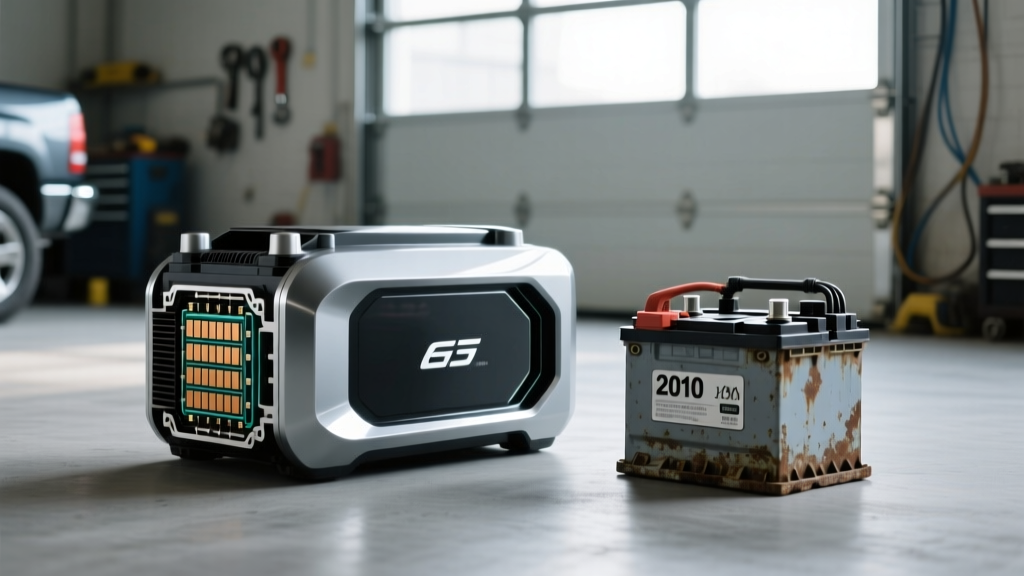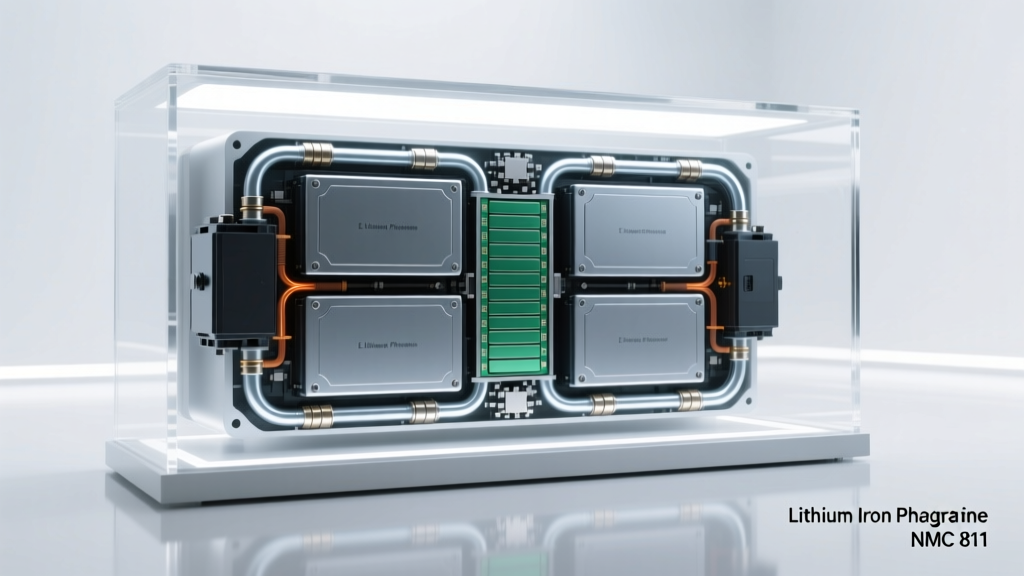
If you've stumbled across the term "miner oil battery" while researching electric vehicles, you're not alone. The phrase often surfaces in forums and search queries from buyers trying to reconcile legacy automotive maintenance concepts — like mineral oil used in engines and gearboxes — with the high-voltage traction batteries that actually power modern EVs. Let's clear this up immediately: EV traction batteries do not use mineral oil as an electrolyte or primary chemistry. Today's battery electric vehicles (BEVs) rely on lithium-ion chemistries — primarily lithium iron phosphate (LFP) and nickel manganese cobalt (NMC) — with liquid thermal management systems that may use glycol-based coolants, not mineral oil.
What this guide will do is address the real questions behind that search: How do EV batteries actually work? How long do they last? What do they cost to replace? And which chemistry should you choose? We'll answer all of it with hard numbers, real degradation data, and 2026 model-year context.
LFP vs NMC/NCA: The Two Chemistries Powering Today's EVs
Every mainstream EV sold in the US in 2026 uses one of two dominant lithium-ion cathode chemistries. Understanding the trade-offs between them is the single most important battery decision you'll make as a buyer.
| Attribute | LFP (Lithium Iron Phosphate) | NMC / NCA (Nickel-based) |
|---|---|---|
| Energy Density | Lower (~160–200 Wh/kg cell-level) | Higher (~220–300 Wh/kg cell-level) |
| Typical Range Fit | Standard-range trims (200–280 mi EPA) | Long-range / performance trims (300–400+ mi EPA) |
| Cycle Life | 3,000–5,000+ full cycles | 1,000–2,000 full cycles |
| Cold-Weather Performance | Weaker — more range loss below 32°F | Better low-temp discharge efficiency |
| Cost (per kWh) | Lower — no cobalt or nickel | Higher — commodity-sensitive pricing |
| Thermal Stability | Excellent — higher runaway threshold | Good — requires more active management |
| Recommended SoC Daily | 100% OK for daily use | 80% recommended for daily; 100% for trips |
| Notable 2026 Applications | Tesla Model 3 RWD, Ford Mustang Mach-E Select, base Hyundai Ioniq 5 | Tesla Model Y LR, Chevy Equinox EV RS, Hyundai Ioniq 5 LR, Rivian R1T |
The bottom line: If you prioritize maximum range, tow frequently, or live in a cold climate, NMC/NCA is the better fit. If you want a lower purchase price, plan to own the vehicle for 10+ years, and mostly commute in moderate temperatures, LFP's superior cycle life makes it the smarter long-haul choice.
How Long Do EV Batteries Actually Last?
The persistent fear that EV batteries need replacement every few years is not supported by fleet data. According to analysis from fueleconomy.gov and long-term fleet studies by Geotab (tracking over 10,000 EVs), the average lithium-ion EV battery loses roughly 1.8% to 2.3% of its original capacity per year under typical ownership conditions.
Typical Capacity Retention Over Time (Fleet Average Data)
- Year 1: ~98–99% State of Health (SoH)
- Year 3: ~94–96% SoH
- Year 5: ~90–93% SoH
- Year 8: ~85–89% SoH
- Year 10: ~80–86% SoH
- Year 15: ~73–80% SoH (projected based on current curve)
Source: Geotab fleet battery health study; NREL battery lifecycle modeling. Individual results vary based on climate, charging habits, and chemistry.
What this means in practice: A 2026 Tesla Model Y Long Range with an EPA-rated 320 miles and an NMC battery will likely still deliver roughly 270–285 miles of real-world range at year eight. That's still more than enough for the average American's 37-mile daily round-trip commute, with a comfortable buffer.
LFP batteries, as found in the Tesla Model 3 RWD and standard-range offerings from Ford and Hyundai, tend to degrade even more slowly — often retaining 90%+ capacity at year eight — thanks to their inherently stable chemistry. The trade-off is that they start with less total range.
What Does the EV Battery Warranty Actually Cover?
Federal law mandates that all EV batteries carry a minimum warranty of 8 years or 100,000 miles (whichever comes first). In California Air Resources Board (CARB) states — which include California, New York, Massachusetts, Washington, Oregon, and several others — that mandate extends to 10 years or 150,000 miles for PZEV/TZEV classified components.
| Manufacturer | Warranty Period | Mileage Limit | Capacity Retention Threshold |
|---|---|---|---|
| Tesla (Model 3/Y LFP) | 8 years | 100,000 mi | 70% minimum SoH |
| Tesla (Model 3/Y LR NMC) | 8 years | 120,000 mi | 70% minimum SoH |
| Hyundai / Kia | 10 years | 100,000 mi | 70% minimum SoH |
| Ford (Mach-E, F-150 Lightning) | 8 years | 100,000 mi | 70% minimum SoH |
| Chevrolet (Equinox EV, Blazer EV) | 8 years | 100,000 mi | 70% minimum SoH |
| Rivian (R1T, R1S) | 8 years | 175,000 mi | 70% minimum SoH |
| BMW (i4, iX) | 8 years | 100,000 mi | 70% minimum SoH |
The critical detail: the warranty triggers when capacity drops below the stated threshold — typically 70% of original capacity. If your 80 kWh battery can no longer hold at least 56 kWh, you have a valid claim. In practice, very few batteries hit this threshold within the warranty period under normal use. According to data cited by NREL, fewer than 1.5% of EV batteries require warranty replacement before 100,000 miles.
EV Battery Replacement Costs: What to Budget and When
Here's where the "miner oil battery" search anxiety often peaks — but context matters enormously. The vast majority of EV batteries outlive the useful economic life of the vehicle itself. You are statistically more likely to total the car in an accident or trade it in for a new model than to need a full battery pack replacement.
That said, if you're buying a used EV well out of warranty or planning a 20-year ownership run, here's what replacement looks like in 2026:
| Vehicle / Pack Size | Battery Chemistry | Pack Cost (Parts) | Labor + Total Estimate |
|---|---|---|---|
| Tesla Model 3 RWD (~60 kWh) | LFP | $8,000–$10,000 | $10,000–$13,000 |
| Tesla Model Y LR (~75 kWh) | NMC | $10,000–$13,000 | $13,000–$16,000 |
| Hyundai Ioniq 5 Std Range (~58 kWh) | LFP/NMC | $7,500–$9,500 | $10,000–$12,500 |
| Ford F-150 Lightning Ext Range (~131 kWh) | NMC | $18,000–$22,000 | $22,000–$28,000 |
| Chevy Equinox EV (~85 kWh) | NMC (Ultium) | $11,000–$14,000 | $14,000–$18,000 |
| Rivian R1T Max Pack (~149 kWh) | NMC | $20,000–$25,000 | $25,000–$32,000 |
Important nuance: These costs have been declining roughly 8–12% per year as cell manufacturing scales. By the time a 2026 EV actually needs a replacement (likely 2036–2040), prices will almost certainly be substantially lower. Additionally, module-level repairs — replacing individual cell modules rather than the entire pack — are increasingly common and can cost $2,000–$5,000 for a targeted fix.
Five Factors That Accelerate (or Preserve) Battery Life
Not all miles are created equal. The rate at which your battery degrades depends heavily on how you charge, drive, and store the vehicle. Here's what the data shows:
Battery Health Best Practices
- Avoid chronic DC fast charging. Occasional road-trip fast charging is fine, but daily use of 150+ kW DC chargers generates sustained heat that accelerates electrolyte breakdown. Studies show vehicles that DC fast-charge more than 3x per week degrade roughly 1–2% faster over 5 years compared to Level 2-only charging.
- Mind your State of Charge (SoC) ceiling. For NMC/NCA batteries, set your daily charge limit to 80%. Reserve 100% for road trips. LFP batteries tolerate 100% daily charging without meaningful penalty — Tesla and Ford explicitly recommend periodic 100% charges for LFP to maintain cell-balancing accuracy.
- Don't let the battery sit at extremes. Storing an EV at 100% SoC in 95°F+ heat for weeks is among the most damaging scenarios. If leaving the car unused, set the charge limit to 50–60% and plug in so the thermal management system can maintain safe temperatures.
- Use preconditioning. When navigating to a DC fast charger, most modern EVs (Tesla, Hyundai, Ford, BMW) will precondition the battery — warming or cooling it to the optimal temperature for accepting a fast charge. This reduces stress and improves charge speed. Always use the car's built-in navigation to chargers to trigger this automatically.
- Cold-climate owners: invest in a garage or Level 2 charger. Repeated deep discharges in sub-freezing temperatures without battery warming cause lithium plating on the anode, a primary degradation mechanism. A Level 2 home charger allows the vehicle's thermal management to keep the pack in a healthy range even when parked.
How to Check Your Battery's State of Health (SoH)
Unlike the "miner oil battery" concept from internal combustion maintenance — where you might check oil level and condition with a dipstick — monitoring EV battery health is a software-driven process.
Native vehicle displays: Tesla provides a battery health estimate in the Service menu (added in 2023 software updates and refined through 2026). Some Hyundai/Kia models display SoH in the EV-specific settings cluster. BMW's iDrive includes a battery condition report.
OBD-II diagnostic tools: Third-party OBD-II dongles paired with apps like LeafSpy (Nissan Leaf), Scan My Tesla, or Car Scanner ELM OBD2 can read detailed battery telemetry including individual cell voltages, pack impedance, and estimated SoH percentage. These tools cost $20–$50 for the hardware and are invaluable for used-EV buyers.
Dealer diagnostic reports: Any authorized service center can pull a full battery health report, often for free during routine service. If you're evaluating a used EV purchase, requesting this report should be non-negotiable — it's the EV equivalent of a compression test on a gas engine.
Range-based estimation: If your vehicle's displayed full-charge range has dropped from 320 miles (original EPA) to 285 miles at 100% SoC after three years, that's roughly an 11% degradation — slightly above average but within normal variance. Cross-check this with an OBD tool for precision, as displayed range estimates are affected by driving style and temperature averaging.
What About Mineral Oil, Coolants, and Battery Thermal Management?
To directly address the "miner oil battery" search: EV battery packs use glycol-water-based coolant loops (similar to ICE radiator coolant but formulated for EV thermal ranges) to maintain cell temperatures between roughly 59°F and 95°F during charging and discharging. This is not mineral oil.
Some early experimental and niche applications — including certain transformer-cooling and immersion-cooling prototypes from companies like Shell and Castrol — have explored dielectric mineral oils and engineered fluids for direct battery-cell immersion cooling. However, no mass-market EV in 2026 uses mineral oil as its primary battery thermal management fluid. The glycol-loop approach remains dominant due to its proven reliability, serviceability, and lower environmental risk in the event of a leak.
What you should maintain: check your EV's coolant level at recommended service intervals (typically every 4–5 years or 50,000–75,000 miles, per your owner's manual). The coolant itself is usually replaced at 100,000–150,000 miles. This is a $150–$300 service and is the closest EV analog to the "oil change" maintenance ritual of gas cars.
Emerging Battery Tech: Solid-State, Silicon Anodes, and What's Real
The battery landscape is evolving, but it's critical to separate announced milestones from showroom availability.
Solid-state batteries — which replace the liquid electrolyte with a solid ceramic or polymer conductor — promise higher energy density (potentially 400+ Wh/kg), faster charging, and improved safety. Toyota has announced a solid-state EV prototype targeting 2027–2028 production, and Samsung SDI has begun limited sample production. However, manufacturing scale, cost, and cycle-life validation remain unsolved for mass-market vehicles. Realistic timeline for mainstream availability: 2029–2032.
Silicon-dominant anodes — which replace graphite with silicon to increase lithium storage capacity — are already entering production. Companies like Sila Nanotechnologies (supplying Mercedes-Benz for the G-Class electric) and Group14 (supplying Porsche) have begun limited commercialization in 2025–2026. Expect 10–20% energy-density improvements in premium models first, with broader adoption by 2028–2030.
Sodium-ion batteries — using abundant sodium instead of lithium — are being deployed by CATL in Chinese-market vehicles and are being evaluated for US-market entry-level EVs. They offer lower cost and good cold performance but significantly lower energy density. Best suited for urban commuter vehicles with 150–200 mile range targets.
None of these technologies change the buying calculus for a 2026 EV purchase. Today's LFP and NMC chemistries, paired with modern thermal management, are proven to last 15–20 years with gradual, manageable degradation.
Frequently Asked Questions
How long do EV batteries last in years and miles?
Based on fleet data, most EV batteries retain 80–86% of their original capacity after 10 years. At an average degradation rate of ~2% per year, a battery should remain functional (above 70% SoH) for 15–20 years or 200,000+ miles. Many will outlast the vehicle's body and interior.
How much does it cost to replace an EV battery?
In 2026, full pack replacement ranges from roughly $10,000 for a 60 kWh LFP pack (Tesla Model 3 RWD) to $28,000+ for a 131 kWh NMC pack (F-150 Lightning Extended Range). Module-level repairs are often $2,000–$5,000. Costs continue to decline annually. Per IRS rules, a battery replacement may qualify for certain tax treatments, but consult a tax professional for specifics.
What does the EV battery warranty cover?
All manufacturers cover the high-voltage traction battery for a minimum of 8 years/100,000 miles (10 years/150,000 miles in CARB states) against capacity loss below 70% of original. This covers defective cells, excessive degradation, and BMS failures. It does not cover damage from accidents, flooding, or unauthorized modifications.
LFP vs NMC — which battery chemistry is better for me?
Choose LFP if you want lower cost, longer cycle life (3,000–5,000+ cycles), don't need 300+ miles of range, and live in a moderate climate. Choose NMC/NCA if you need maximum range, tow regularly, drive in cold winters, or want the longest possible single-charge road trips. Neither is universally "better" — it's a use-case decision.
Does frequent DC fast charging damage my battery?
Occasional DC fast charging (road trips, 1–2 times per week) causes negligible additional degradation. Daily DC fast charging at 150+ kW, especially without preconditioning, can add 1–2% additional capacity loss over 5 years compared to Level 2 home charging. If DC fast charging is your only option, try to limit sessions to 80% SoC and use your vehicle's preconditioning feature.
Can I check my EV battery health myself?
Yes. Many modern EVs display a battery health estimate in the vehicle settings. For more detailed data, an OBD-II dongle ($20–$50) paired with a compatible app can read cell-level voltages and estimated State of Health. A dealer diagnostic report provides the most comprehensive picture and is recommended when buying a used EV.