The MG ZS EV remains one of the most affordable electric crossovers on global markets, and prospective buyers frequently ask one critical question: does the MG ZS EV have a liquid-cooled battery? The short answer depends on the model year and market, but the thermal management story reveals a lot about how this EV handles heat, cold, and long-term battery health. This guide unpacks the ZS EV's cooling architecture, battery chemistry, real-world degradation data, warranty coverage, and replacement economics — plus how it compares to rivals using more advanced thermal systems.
MG ZS EV Battery Cooling: What You Need to Know
The original MG ZS EV (2019–2021, 44.5 kWh battery) used a passive air-cooling system rather than active liquid cooling. Air cooling relies on ambient airflow and basic ventilation to manage battery temperature — simpler and cheaper to manufacture, but less effective under sustained high-load scenarios like repeated DC fast charging or driving in extreme heat.
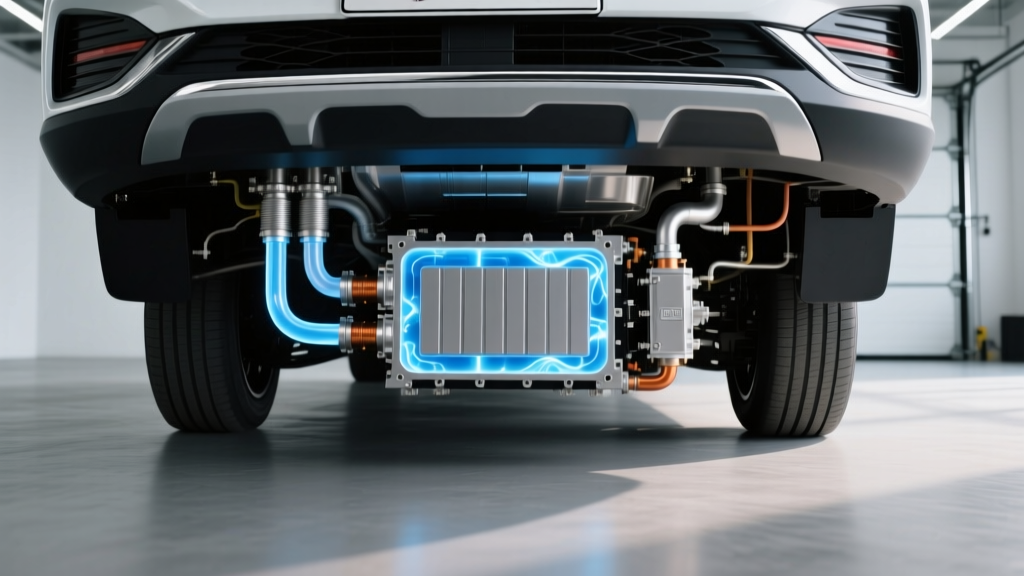
With the facelifted MG ZS EV (2022 onward, 51.1 kWh and 72.6 kWh battery options), MG introduced an active liquid-cooling system on the larger 72.6 kWh Long Range variant. The standard-range 51.1 kWh model in many markets retained an air-cooled or simplified thermal management approach depending on the region. Always verify the specific variant for your market, as MG's specifications differ between the UK, Australia, India, and Southeast Asia.
| Variant | Battery | Cooling | Chemistry |
|---|---|---|---|
| ZS EV (2019–2021) | 44.5 kWh | Passive air | NMC |
| ZS EV Std Range (2022+) | 51.1 kWh | Air / basic active | NMC |
| ZS EV Long Range (2022+) | 72.6 kWh | Active liquid | NMC |
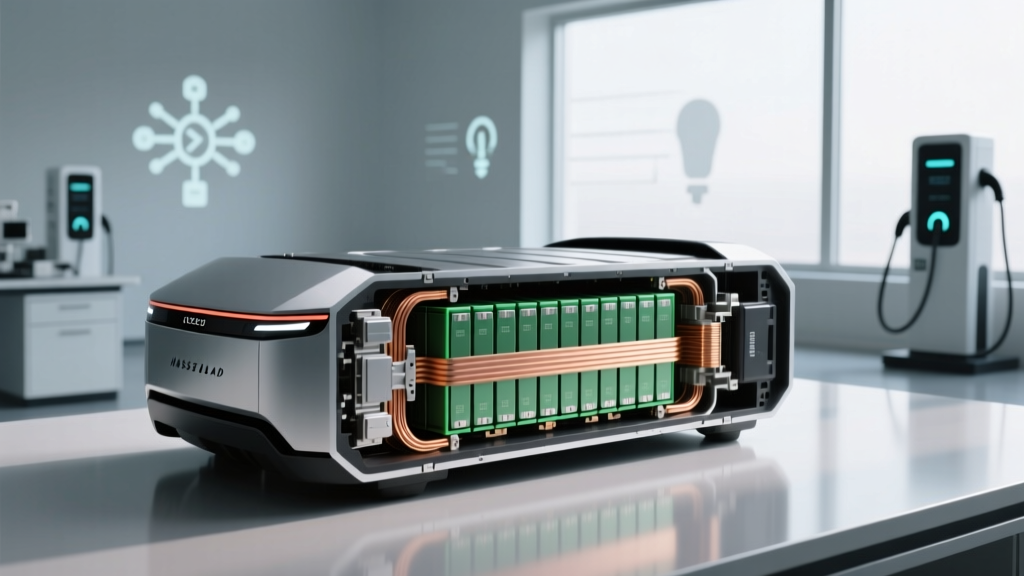
Why does cooling matter? Lithium-ion cells perform best between 15°C and 35°C (59°F–95°F). Outside that window, degradation accelerates, charging speeds throttle, and efficiency drops. Liquid cooling circulates a glycol-based coolant through plates or channels in contact with battery cells, maintaining a tighter temperature band. Air cooling is lighter and cheaper but struggles to shed heat during 80+ kW DC fast charging sessions or when ambient temperatures exceed 35°C (95°F).
LFP vs NMC Battery Chemistry: Trade-Offs Explained
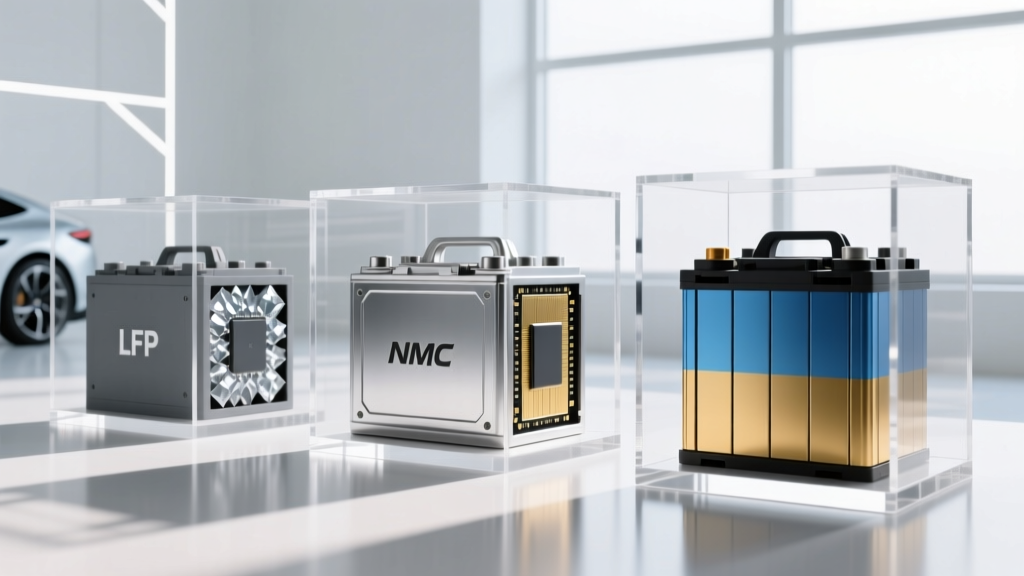
The MG ZS EV uses NMC (nickel manganese cobalt) cells across all variants. NMC offers higher energy density than LFP (lithium iron phosphate), which is why MG could package a 72.6 kWh battery into the ZS EV's compact crossover footprint. But chemistry choice affects more than range — it determines cycle life, cold-weather behavior, cost, and degradation profile.
| Attribute | LFP (LiFePO₄) | NMC / NCA |
|---|---|---|
| Energy Density | ~160–180 Wh/kg | ~220–300 Wh/kg |
| Typical Cycle Life | 3,000–5,000+ cycles | 1,000–2,000 cycles |
| Cold Performance | Weaker below 0°C; needs heating | Better low-temp discharge |
| Thermal Stability | Excellent; higher runaway threshold | Good; requires robust BMS |
| Cost per kWh | Lower (~$80–100/kWh cell) | Higher (~$110–140/kWh cell) |
| SoC Recommendation | Can charge to 100% regularly | Best at 80% daily; 100% for trips |
| Common In | Tesla Model 3/Y Std Range, BYD Atto 3 | MG ZS EV LR, Hyundai Ioniq 5, most LR EVs |
For MG ZS EV owners, the NMC chemistry means you'll want to follow the 20–80% rule for daily driving: charge to 80% for routine use and reserve 100% charges for longer road trips. LFP owners (say, in a BYD Atto 3 or Tesla Model 3 Standard Range) can charge to 100% without accelerated degradation — a meaningful convenience advantage for drivers without home charging who rely on public top-ups.
How Long Do EV Batteries Actually Last?
Modern EV batteries are engineered to outlast the vehicles they power. Industry data from fueleconomy.gov and long-term fleet studies show most liquid-cooled NMC packs retain 85–92% of original capacity after 100,000 miles (160,000 km). Air-cooled packs tend to degrade slightly faster, losing 12–18% over the same distance, particularly in hot climates.
- Year 1 / 15,000 mi: ~2–4% capacity loss (initial formation loss)
- Year 3 / 45,000 mi: ~6–8% total loss
- Year 5 / 75,000 mi: ~8–10% total loss
- Year 8 / 120,000 mi: ~10–14% total loss
- Year 10 / 150,000 mi: ~12–18% total loss
Data synthesized from Recurrent Auto fleet reports, Geotab longitudinal studies, and OEM warranty thresholds. Air-cooled packs in hot climates may see 2–5% additional loss over the same period.
For the MG ZS EV specifically, real-world owner reports from UK and Australian forums indicate the 44.5 kWh air-cooled model typically shows 8–12% degradation at 60,000 miles, while the 72.6 kWh liquid-cooled Long Range variant tracks closer to 5–8% over the same distance. The liquid cooling system's ability to hold cells near optimal temperature during DC fast charging is the primary differentiator.
MG ZS EV Battery Warranty: What's Covered
MG provides a high-voltage battery warranty that varies by market but generally follows the same structure. In most regions, the ZS EV battery carries a 7-year / 150,000 km (or 100,000 mile) warranty with a capacity retention threshold.
| Market | Duration | Mileage Cap | Capacity Threshold |
|---|---|---|---|
| UK / Europe | 7 years | 150,000 km | 70% SoH |
| Australia | 8 years | 160,000 km | 70% SoH |
| India | 8 years | 160,000 km | 70% SoH |
The 70% State of Health (SoH) threshold is the industry standard — it means MG will repair or replace the battery if a diagnostic test confirms capacity has dropped below 70% of its original kWh within the warranty window. For context, reaching 70% SoH under normal use typically requires well over 200,000 miles, meaning the vast majority of owners will never make a warranty claim. The warranty covers manufacturing defects and abnormal degradation, but not damage from accidents, flooding, or unauthorized modifications.
EV Battery Replacement Costs: The Real Numbers
This is where fear-mongering often outpaces reality. A full high-voltage battery replacement for the MG ZS EV is rarely needed within the vehicle's useful life. But if you're buying used or planning to keep the car past 200,000 miles, here's what the economics look like.
| Model / Battery Size | Battery Cost (Parts) | Labor | Total Estimate |
|---|---|---|---|
| MG ZS EV (44.5 kWh) | $6,000–$8,500 | $1,200–$2,000 | $7,200–$10,500 |
| MG ZS EV LR (72.6 kWh) | $9,500–$13,000 | $1,500–$2,500 | $11,000–$15,500 |
| Hyundai Kona Electric (64 kWh) | $8,500–$12,000 | $1,500–$2,500 | $10,000–$14,500 |
| Tesla Model 3 LR (82 kWh) | $12,000–$16,000 | $1,500–$3,000 | $13,500–$19,000 |
Estimates based on 2025–2026 parts pricing from OEM and independent EV repair shops. Costs decline ~5–8% annually as cell prices fall. Module-level repair (replacing individual cell groups) can reduce costs by 40–60%.
Two important realities: first, cell prices continue to fall — Bloomberg NEF reports average pack prices dropped below $130/kWh in 2025, and LFP packs are now under $100/kWh. By the time a ZS EV battery might need replacement (likely 12–15+ years from manufacture), costs will be substantially lower. Second, most battery "replacements" are actually module-level repairs — swapping out a handful of degraded cell modules rather than the entire pack, cutting costs dramatically.
Factors That Affect Your ZS EV Battery Life
- Daily charge limit: Set to 80% for routine driving. Reserve 100% for trips over 150 miles.
- Avoid deep discharge: Try not to let the battery drop below 15–20% regularly. Occasional dips to 10% are fine.
- DC fast charging: Limit to 1–2 sessions per week when possible. Frequent 80+ kW charging accelerates degradation, especially on air-cooled variants.
- Hot weather: Park in shade or a garage when ambient temps exceed 35°C (95°F). Avoid fast charging immediately after hard driving in heat.
- Cold weather: Precondition the battery while plugged in before driving. This warms cells using grid power rather than battery energy.
- Storage: If leaving the car unused for 2+ weeks, store at 40–60% SoC in a cool, shaded location.
- Regen braking: Use moderate regen settings. Maximum regen in cold weather can stress cells that haven't warmed up.
The MG ZS EV's air-cooled variants are more sensitive to these factors than liquid-cooled competitors. Owners of the 44.5 kWh model in hot climates (Middle East, India, northern Australia) should be especially mindful of consecutive DC fast charging — the battery management system will throttle charge speed to protect cells, but cumulative heat exposure still accelerates wear. The 72.6 kWh Long Range model with liquid cooling handles repeated fast charging more gracefully, though the same best practices still apply for maximum longevity.
How to Check and Monitor Battery Health (SoH)
State of Health (SoH) is the percentage of a battery's original capacity that remains usable. A brand-new ZS EV with a 72.6 kWh pack at 100% SoH holds 72.6 kWh; at 90% SoH, it holds ~65.3 kWh, translating to proportionally less range.
MG's infotainment system does not currently display a direct SoH percentage to the driver — a common omission among mainstream EV brands. Here's how owners can assess battery health:
- Dealer diagnostic: Request a battery health report during scheduled service. MG dealerships can run an OBD-II diagnostic that reads cell voltage variance, internal resistance, and estimated SoH.
- OBD-II dongle + app: Third-party tools like ABRP (A Better Route Planner) with an OBD dongle, or apps such as Car Scanner and LeafSpy (for compatible protocols), can read battery management system data including cell voltages and estimated capacity.
- Manual range tracking: Charge to 100% on a Level 2 charger, note the displayed range estimate, and compare it to the original EPA or WLTP figure. A 2022 ZS EV Long Range showing 230 miles at 100% versus its original 263-mile WLTP rating suggests roughly 87% SoH (adjusting for temperature and driving style).
- Charging energy measurement: Use a smart EV charger that logs kWh delivered. Charging from 10% to 100% and noting total kWh dispensed (minus ~5% charging loss) gives a reasonable capacity estimate.
Emerging Battery Tech: What's on the Horizon
While current MG ZS EV owners are working with proven NMC lithium-ion technology, the battery landscape is evolving rapidly:
- Solid-state batteries: Companies like Toyota, QuantumScape, and Samsung SDI are targeting commercial production between 2027 and 2030. Solid-state cells promise 30–50% higher energy density, faster charging (10–80% in under 10 minutes), and improved safety. However, manufacturing scale and cost remain significant hurdles — expect initial deployment in premium vehicles before reaching the ZS EV's price segment, likely post-2030.
- Silicon-dominant anodes: Replacing graphite anodes with silicon can boost energy density by 20–40%. Companies like Sila Nanotechnologies and Group14 are already supplying silicon-composite anodes for select 2025–2026 models. This technology may appear in MG's next-generation platforms.
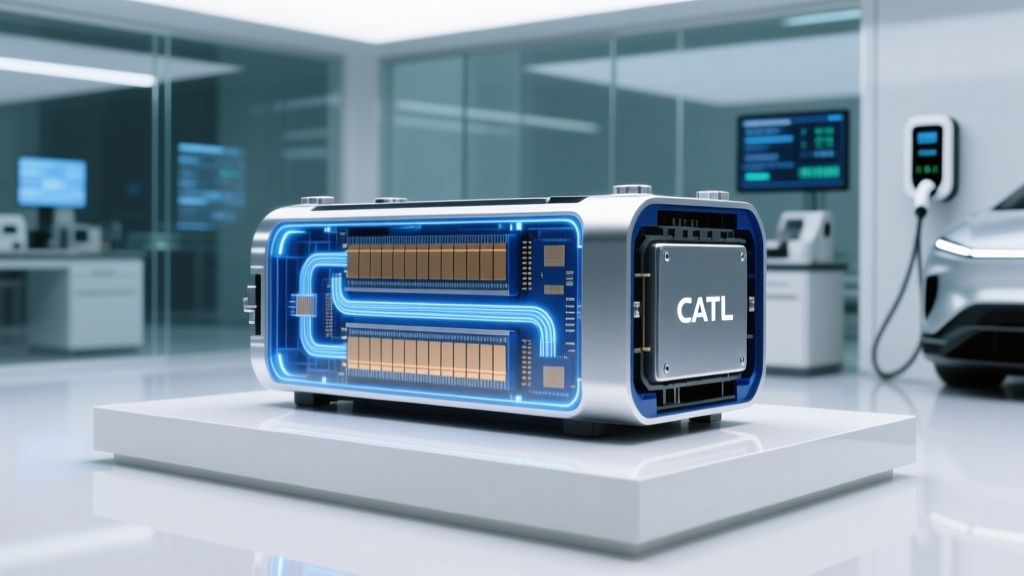
- Sodium-ion batteries: CATL and BYD have begun producing sodium-ion cells for entry-level EVs in China. While energy density is lower (~120–150 Wh/kg), the cost advantage and cold-weather performance could make sodium-ion attractive for future affordable EVs in the ZS EV class.
- LFP improvements: Modern LFP cells from CATL and BYD now achieve 180+ Wh/kg with cycle lives exceeding 5,000 charges. An LFP variant of a future MG crossover could offer exceptional longevity at a lower cost, albeit with slightly reduced range for a given pack size.
These technologies are forward-looking and not available in any current-production MG ZS EV. For today's buyers, the existing NMC pack with available liquid cooling represents mature, well-understood technology with predictable degradation behavior.
Frequently Asked Questions
Does the MG ZS EV have a liquid-cooled battery in all variants?
No. Only the 72.6 kWh Long Range variant (2022 onward) uses active liquid cooling. The earlier 44.5 kWh model and the current standard-range 51.1 kWh variant use air cooling or simplified thermal management, depending on the market.
How long do EV batteries last in years and miles?
Most modern EV batteries — including the MG ZS EV's NMC pack — are designed to retain at least 70–80% of original capacity after 150,000–200,000 miles or 10–15 years of typical use. Liquid-cooled batteries generally last longer than air-cooled equivalents, particularly in hot climates or under frequent fast-charging use.
How much does an MG ZS EV battery cost to replace?
A full pack replacement for the 72.6 kWh Long Range model runs approximately $11,000–$15,500 including labor at 2025–2026 pricing. The smaller 44.5 kWh pack costs roughly $7,200–$10,500. Module-level repairs can reduce costs by 40–60%. Cell prices continue to decline, so future replacement costs will likely be lower.
What does the MG ZS EV battery warranty cover?
MG covers the high-voltage battery for 7–8 years / 150,000–160,000 km depending on the market, with a 70% capacity retention threshold. If the battery drops below 70% SoH within the warranty period under normal use, MG will repair or replace it. The warranty does not cover accident damage, improper use, or unauthorized modifications.
LFP vs NMC — which battery chemistry is better for the ZS EV?
NMC provides the energy density needed for the ZS EV's Long Range variant to achieve 263+ miles (WLTP) in a compact package. LFP would require a heavier, larger pack for the same range but would offer longer cycle life and the ability to charge to 100% daily without degradation concerns. For a budget crossover prioritizing range per dollar, NMC is the practical choice; for a future city-focused variant, LFP could be ideal.
How can I check my MG ZS EV battery health at home?
The ZS EV doesn't display SoH on the dashboard. Your best options are: requesting a dealer diagnostic report, using an OBD-II dongle with a compatible EV app to read BMS data, or manually comparing your 100% charge range estimate against the original factory figure over time.
Is the MG ZS EV's air-cooled battery a dealbreaker?
Not necessarily — but it requires more mindful charging habits. Air-cooled EV batteries degrade faster under frequent DC fast charging and in sustained high-temperature environments. If you primarily charge at home on Level 2 and live in a moderate climate, an air-cooled ZS EV will serve you well. If you rely on frequent road-trip fast charging or live in a hot climate, the liquid-cooled Long Range variant is the stronger choice for long-term battery health.