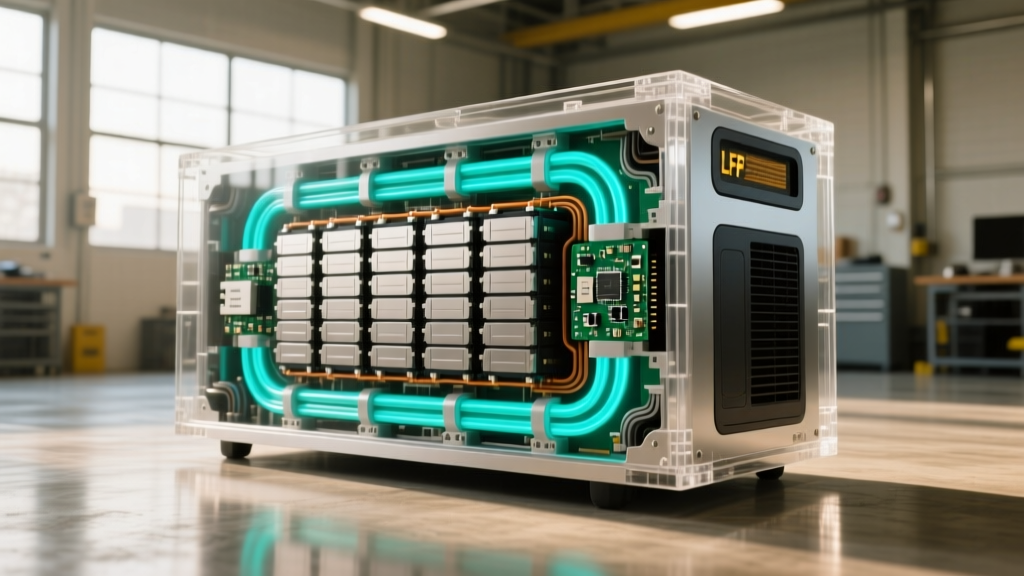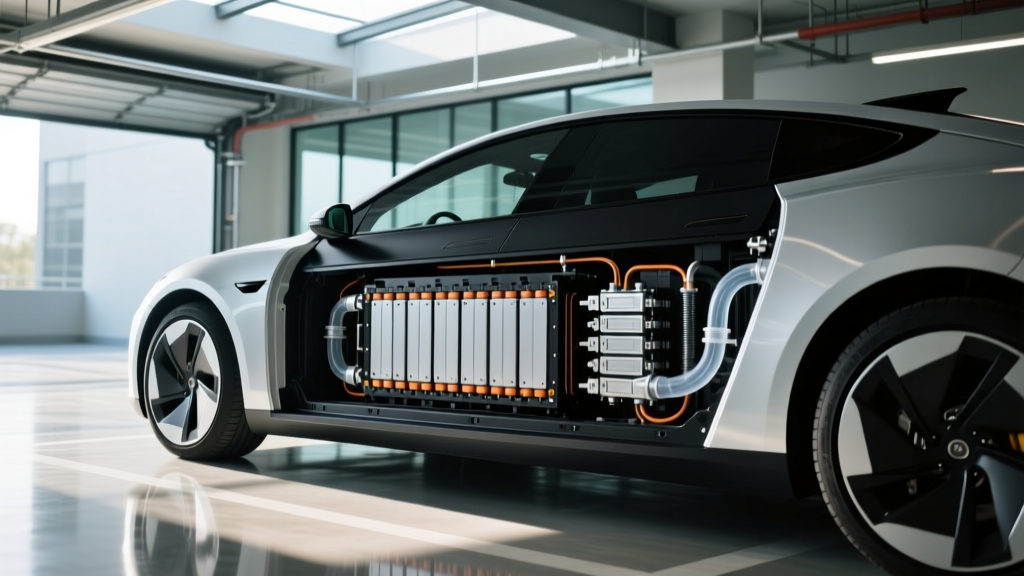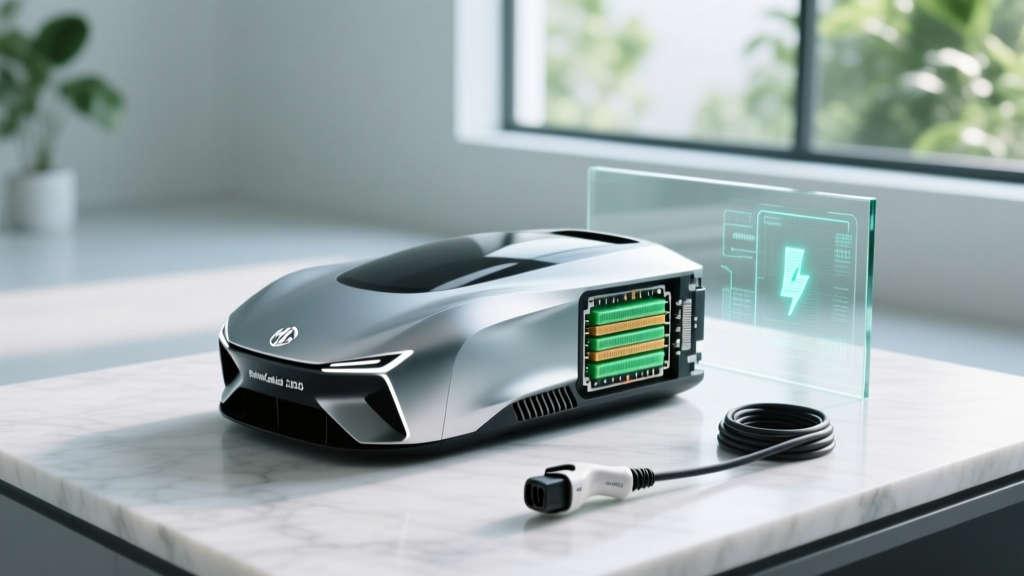
The Promise of Semi Solid State Batteries in EVs
When MG (SAIC Motor) began teasing its semi solid state battery technology for the European and Asian markets, it reignited a familiar question among EV shoppers: is the next big leap in battery chemistry finally arriving in a production car you can actually buy? As of early 2026, the MG semi solid state battery remains in limited deployment — primarily in the MG4 EV variant sold in China and select right-hand-drive markets — and is not yet available in the United States. But understanding what this technology offers, and how it stacks up against the LFP and NMC cells powering most EVs on American roads today, is essential for any buyer weighing a near-term purchase against waiting for next-generation packs.
This guide dissects the chemistry, degradation behavior, warranty coverage, and replacement economics of modern EV batteries, with a focused look at where semi solid state technology fits into the timeline.
Battery Chemistry Explained: LFP vs NMC vs Semi Solid State
Every EV battery pack is built from individual cells, and the chemical recipe inside those cells determines energy density, longevity, cost, and cold-weather behavior. The three chemistries most relevant to today's buyers are lithium iron phosphate (LFP), nickel manganese cobalt (NMC/NCA), and the emerging semi solid state designs that companies like MG, NIO, and Toyota are developing.
| Attribute | LFP (LiFePO₄) | NMC / NCA | Semi Solid State (Emerging) |
|---|---|---|---|
| Energy Density (Wh/kg, cell-level) | 160–200 | 230–300 | 300–360 (projected) |
| Typical Cycle Life | 3,000–5,000+ | 1,000–2,500 | 2,000–3,500 (projected) |
| Cold-Weather Performance (−10 °C range loss) | ~25–35% | ~20–30% | ~15–25% (projected) |
| Cobalt / Nickel Content | None | High (NMC) / Moderate (NCA) | Reduced or none |
| Cost per kWh (pack-level, 2026) | $90–$115 | $120–$155 | $180–$250+ (limited production) |
| Fast-Charging Tolerance | Excellent (LFP loves 100% SoC) | Good (best kept 20–80%) | Excellent (lower dendrite risk) |
| Current US Availability | Tesla Model 3/Y RWD, Ford Mustang Mach-E SR, Rivian Standard | Most long-range EVs (Hyundai Ioniq 5, BMW iX, Chevy Equinox EV) | Not available in US |
LFP dominates the value-EV segment because it is cheaper, lasts longer in cycle count, and avoids conflict minerals entirely. The trade-off is lower energy density, which means a heavier pack for the same range, and greater range loss in freezing temperatures. NMC/NCA cells pack more energy per kilogram, making them the default for long-range and performance trims, but they degrade faster if routinely charged to 100% or exposed to high ambient heat. Semi solid state batteries replace the liquid electrolyte with a gel or partial ceramic separator, theoretically reducing fire risk, improving energy density, and enabling faster charging — but at a steep manufacturing cost that has so far limited them to low-volume production runs.
The MG Semi Solid State Battery: Where It Stands
SAIC Motor, MG's parent company, has partnered with QingTao Energy to develop semi solid state cells for the MG brand. The first application appeared in a China-market variant of the MG4 EV (sold as the MG Mulan domestically), where the pack reportedly uses a hybrid gel-polymer electrolyte rather than a fully solid ceramic separator. This distinction matters: "semi" solid state means the cell still contains some liquid electrolyte, just far less than a conventional lithium-ion cell.
Claimed advantages of the MG semi solid state pack include:
- Higher energy density: SAIC has cited cell-level figures around 300 Wh/kg, which would translate to roughly 15–20% more range in the same physical pack volume compared to the MG4's current NMC pack.
- Improved thermal stability: The reduced liquid electrolyte lowers the risk of thermal runaway, a key safety selling point in densely packed urban EVs.
- Wider operating temperature range: Semi solid state chemistry typically retains more capacity below 0 °C, addressing one of the biggest real-world pain points for EV owners in northern climates.
However, these are manufacturer-claimed specifications from limited production batches. Independent third-party testing data from bodies like the U.S. Department of Energy's Argonne National Laboratory or European testing consortia has not yet been published for the MG semi solid state cell as of early 2026. Production volumes remain small, and SAIC has not announced a timeline for bringing this pack to US-market MG vehicles — a moot point in any case, since MG does not currently sell vehicles in the United States.
How Long Do EV Batteries Last? Real Degradation Data
The most persistent fear among prospective EV buyers is that the battery will fail prematurely, leaving them with a $10,000–$20,000 replacement bill. The data tells a more reassuring story: the vast majority of modern EV batteries outlast the vehicle itself.
Typical EV Battery Degradation by Chemistry (Aggregate Fleet Data):
- Year 1: 2–5% capacity loss (initial formation loss, all chemistries)
- Year 3 / ~45,000 miles: LFP averages ~5–7% total loss; NMC averages ~7–10% total loss
- Year 5 / ~75,000 miles: LFP averages ~7–9% total loss; NMC averages ~10–14% total loss
- Year 8 / ~120,000 miles: LFP averages ~10–13% total loss; NMC averages ~14–18% total loss
- Year 10 / ~150,000 miles: LFP averages ~12–16% total loss; NMC averages ~17–22% total loss
Sources: Recurrent Auto fleet data (2025 report), Geotab longitudinal study of 10,000+ EVs, manufacturer warranty claims data. Individual results vary based on climate, charging habits, and thermal management system quality.
For context, a Tesla Model 3 Long Range with its 82 kWh NMC pack that loses 15% capacity over 10 years would still deliver roughly 270 miles of real-world range from an original ~320-mile EPA estimate — a meaningful reduction but far from a bricked vehicle. An LFP-equipped Model 3 RWD starting at 272 miles EPA might retain around 235 miles over the same period.
The degradation curve is not linear. Most capacity loss occurs in the first 12–24 months as the solid electrolyte interphase (SEI) layer forms and stabilizes on the anode. After that, degradation slows considerably, often plateauing for years before a gradual decline resumes in the pack's later life.
What Does the Battery Warranty Actually Cover?
Federal law in the United States mandates that EV battery packs carry a minimum warranty of 8 years or 100,000 miles (whichever comes first) for emissions-related components, and most manufacturers exceed this baseline. California Air Resources Board (CARB) states require an even longer 10 years / 150,000 miles warranty.
| Manufacturer | Warranty Period | Capacity Retention Threshold | Chemistry |
|---|---|---|---|
| Tesla (Model 3/Y LFP) | 8 yr / 100,000 mi | 70% | LFP |
| Tesla (Model 3/Y LR, S, X) | 8 yr / 120,000 mi | 70% | NMC/NCA |
| Hyundai / Kia (Ioniq 5, EV6) | 10 yr / 100,000 mi | 70% | NMC |
| Ford (Mach-E, F-150 Lightning) | 8 yr / 100,000 mi | 70% | NMC / LFP |
| Chevrolet (Equinox EV, Blazer EV) | 8 yr / 100,000 mi | 70% | NMC |
| BMW (iX, i4) | 8 yr / 100,000 mi | 70% | NMC |
| Rivian (R1T, R1S) | 8 yr / 175,000 mi | 70% | NMC / LFP |
The critical detail is the capacity retention threshold: most warranties guarantee that the battery will retain at least 70% of its original usable capacity during the warranty period. If your 82 kWh pack drops below ~57 kWh usable within 8 years or 100,000 miles, the manufacturer will repair or replace it at no cost. This threshold is set conservatively — as the degradation data above shows, most packs retain well above 80% capacity at the 8-year mark under normal use.
Warranties typically cover defects in materials and workmanship, as well as abnormal capacity loss. They do not cover damage from accidents, flooding, improper charging equipment, or aftermarket modifications. Some manufacturers (Hyundai, Kia) also exclude capacity loss attributable to repeated DC fast charging above certain thresholds, though this exclusion is rarely enforced in practice.
How Much Does an EV Battery Replacement Cost?
Out-of-warranty battery replacement is the nightmare scenario, but it is also increasingly rare. Pack-level battery prices have fallen from over $1,000/kWh in 2010 to roughly $110–$140/kWh in 2026, according to BloombergNEF's annual battery price survey. When replacement is needed — usually due to physical damage, manufacturing defect discovered after warranty, or extreme degradation in high-mileage fleet vehicles — the cost depends heavily on pack size and chemistry.
| Vehicle / Pack Size | Chemistry | Battery Cost (Parts) | Labor & Programming | Total Estimate |
|---|---|---|---|---|
| Tesla Model 3 RWD (~60 kWh) | LFP | $6,500–$8,000 | $1,500–$2,500 | $8,000–$10,500 |
| Hyundai Ioniq 5 (~77 kWh) | NMC | $9,000–$12,000 | $2,000–$3,000 | $11,000–$15,000 |
| Ford F-150 Lightning Ext. Range (~131 kWh) | NMC | $15,000–$19,000 | $2,500–$4,000 | $17,500–$23,000 |
| Chevrolet Bolt EV (~65 kWh) | NMC | $7,000–$9,500 | $1,500–$2,500 | $8,500–$12,000 |
| BMW iX xDrive50 (~111 kWh) | NMC | $14,000–$17,000 | $3,000–$4,500 | $17,000–$21,500 |
Several important caveats apply. First, most EV batteries never need replacement. Data from Recurrent Auto, which tracks over 15,000 EVs in real-world service, shows that fewer than 1.5% of battery packs have been replaced as of 2025 — and the vast majority of those were covered under warranty. Second, module-level repair is increasingly common: rather than replacing the entire pack, technicians can swap individual degraded modules for $2,000–$5,000. Third, the growing EV salvage and refurbishment market means used or remanufactured packs are available for 40–60% less than new OEM pricing.
Factors That Accelerate (or Preserve) Battery Life
Battery degradation is not purely a function of time and mileage. How you charge, where you park, and how you drive all influence the rate at which your pack loses capacity.
Battery Longevity Best Practices
- Daily charging limit: Set to 80% for NMC packs (Tesla, Hyundai, BMW). LFP packs (Tesla RWD, Ford Standard Range) should be charged to 100% at least once weekly to keep the battery management system calibrated.
- Minimize DC fast charging: Occasional road-trip fast charging is fine, but daily reliance on 150+ kW DC charging accelerates SEI layer growth and lithium plating. Level 2 home charging at 7–11 kW is gentler on the cells.
- Avoid prolonged storage at extreme SoC: Don't leave an NMC pack sitting at 100% or below 10% for weeks. If storing the vehicle, aim for 50% SoC.
- Use preconditioning: Most EVs let you precondition the battery before a fast-charge session or a cold morning commute. This brings the cells to their optimal temperature (20–35 °C), reducing internal resistance and plating risk.
- Park in shade or a garage when possible: Sustained battery temperatures above 40 °C (104 °F) — common in parked EVs baking in desert sun — accelerate calendar degradation even when the car is off. Active thermal management systems mitigate this, but they can't run indefinitely while parked.
- Don't obsess about regen braking settings: While aggressive regen increases charge-discharge cycling, the effect on long-term degradation is negligible compared to temperature and SoC habits.
The single biggest factor in battery longevity is thermal management. Vehicles with active liquid cooling and heating (Tesla, Hyundai E-GMP, BMW, Rivian) consistently show slower degradation than older or budget EVs that rely on passive air cooling. This is why a 2026 Hyundai Ioniq 5 with its heat pump and liquid-cooled pack will likely outlast a 2018 Nissan Leaf with its passively cooled 40 kWh pack, even at similar mileage.
How to Monitor Your Battery's State of Health
State of Health (SoH) is the percentage of original usable capacity your battery currently retains. A brand-new pack starts at 100% SoH; a pack that originally held 77 kWh and now holds 68 kWh is at roughly 88% SoH.
Most modern EVs expose SoH data through the infotainment system or the manufacturer's companion app. Tesla owners can find a detailed battery health readout under Service > Battery Health in the vehicle settings, or by using third-party OBD-II tools like Scan My Tesla (Android) or TeslaFi. Hyundai/Kia owners can access SoH through the dealer diagnostic tool or third-party apps like Car Scanner ELM OBD2 paired with a compatible Bluetooth OBD-II dongle.
For a more granular view, services like Recurrent Auto (free for owners) connect to your vehicle's telematics and provide monthly degradation reports benchmarked against similar vehicles in your climate zone. This data is invaluable if you're considering selling your EV — a documented SoH above 90% at 50,000 miles commands a significant premium in the used-EV market.
If your SoH drops below the warranty threshold (typically 70%) within the warranty period, contact the manufacturer's service department for a diagnostic evaluation. Keep records of your charging habits and mileage, as the manufacturer may request these during a warranty claim.
Solid-State and Silicon Anode: Realistic Timelines
The MG semi solid state battery is one step on a longer road toward fully solid-state EV batteries. Here's where the technology stands as of 2026:
- Semi solid state (2024–2027): Limited production in China (NIO ET7 150 kWh pack, MG/QingTao collaboration, BYD Blade variants). Cell-level energy density of 280–360 Wh/kg. Not yet available outside Asia in volume. Cost remains 50–80% higher per kWh than mature NMC.
- Fully solid state (2028–2032 estimated): Toyota has announced a 2027–2028 target for limited production in a luxury Lexus EV. Samsung SDI, QuantumScape, and Solid Power are in prototype and pilot-line stages. Promises 400–500 Wh/kg cell-level density, 10-minute fast charging, and near-zero fire risk. Mass-market availability before 2032 is unlikely given manufacturing scale-up challenges.
- Silicon anode (2025–2028): Already in limited deployment (Porsche Taycan, some Mercedes EQ models use silicon-dominant anodes). Increases energy density 20–40% over graphite anodes. Companies like Sila Nanotechnologies and Group14 are scaling production. More impactful in the near term than solid state for most buyers.
For US-based EV shoppers, the practical takeaway is this: today's LFP and NMC batteries are mature, well-warranted, and sufficient for 15+ years of service. Waiting for solid-state technology means delaying an EV purchase by 4–8 years for a marginal improvement that will initially appear only in luxury vehicles priced well above $70,000. The U.S. Department of Energy tracks battery technology milestones for those who want to follow development timelines.
LFP vs NMC: Which Should You Choose?
The answer depends on your driving profile, climate, and budget.
Choose LFP If:
- You want maximum cycle life and plan to keep the vehicle 10+ years
- You primarily charge at home on Level 2 and can charge to 100% without concern
- You live in a moderate climate (rarely below 20 °F / −7 °C)
- You're buying a value trim and want the lowest cost per kWh
- Range needs are under 270 miles EPA (the current LFP ceiling for most sedans/SUVs)
Choose NMC If:
- You need 300+ miles of EPA range for frequent road trips
- You live in a cold climate and need better low-temperature range retention
- You're buying a performance or long-range trim where energy density matters
- You're willing to follow 20–80% daily charging discipline for longevity
- Towing or heavy payload is a regular requirement (more energy density = more buffer)
Neither chemistry is universally "better." LFP is the pragmatic, longevity-focused choice for daily commuters and urban drivers. NMC serves road-trippers, cold-climate owners, and anyone who prioritizes maximum range in a single charge. The semi solid state packs emerging from MG, NIO, and others aim to deliver the best of both — high energy density and long cycle life — but at a cost premium that won't be accessible to mainstream buyers for several more years.
Frequently Asked Questions
How long do EV batteries last in years and miles?
Most modern EV batteries retain 80–85% of original capacity at 150,000 miles and 10 years of service. LFP chemistries often exceed 85% retention at this point. The battery does not "die" at a specific mileage — it gradually loses capacity, similar to a smartphone battery. Many EVs from 2013–2015 (early Nissan Leaf, Tesla Model S) are still in daily service with 70–80% SoH at over 120,000 miles.
Is the MG semi solid state battery available in the US?
No. As of 2026, MG (SAIC Motor) does not sell vehicles in the United States, and its semi solid state battery developed with QingTao Energy is only in limited production for China-market vehicles. Even in markets where MG operates (UK, Europe, Australia, India), the semi solid state pack has not been widely deployed. US buyers looking for advanced battery tech should monitor Toyota's solid-state timeline and silicon-anode deployments from Porsche and Mercedes.
Does frequent DC fast charging damage the battery?
Exclusive reliance on DC fast charging (150+ kW) does accelerate degradation compared to Level 2 home charging, but the effect is smaller than many fear. Tesla's own fleet data shows that vehicles that fast-charge more than 90% of the time lose only ~2–3% more capacity over 100,000 miles compared to vehicles that primarily use Level 2. The bigger risk is fast charging in extreme heat without preconditioning, which can cause lithium plating on the anode. Modern thermal management systems mitigate most of this risk.
What happens if my EV battery fails out of warranty?
Out-of-warranty replacement costs range from $8,000 for a smaller LFP pack to $23,000 for a large NMC pack (see cost table above). However, module-level repair is increasingly available for $2,000–$5,000, and the used/refurbished battery market offers packs at 40–60% below new OEM pricing. Complete catastrophic failure is extremely rare — most "failures" are gradual capacity loss that doesn't render the vehicle undrivable.
Can I upgrade my EV battery to a newer chemistry later?
In most cases, no. Battery packs are engineered for specific vehicle platforms, and swapping an NMC pack for an LFP or semi solid state pack requires compatible battery management software, cooling systems, and structural mounting. Tesla has occasionally offered battery upgrades (e.g., early Roadster owners), and NIO's battery-swap stations in China allow pack upgrades, but this is not a realistic option for US-market EVs in 2026.