The promise of a Mercedes solid-state battery has circulated through EV circles for years, fueled by concept cars and partnership announcements. But as of 2026, every production Mercedes-Benz EQ model still relies on conventional lithium-ion cells — specifically nickel-manganese-cobalt (NMC) chemistry. Solid-state remains in development, not in showrooms.
That doesn't mean current Mercedes EV batteries are inadequate. Modern NMC packs routinely exceed 200,000 miles with manageable degradation, backed by robust warranties. Understanding what's actually in your EQE or EQS today — and what solid-state might eventually deliver — is critical for making an informed purchase decision now versus waiting.
Current Mercedes EV Battery Chemistry: NMC Dominance
Every production Mercedes-Benz electric vehicle sold in the U.S. as of 2026 — including the EQE Sedan, EQE SUV, EQS Sedan, and EQS SUV — uses lithium-ion batteries with NMC (nickel-manganese-cobalt) cathode chemistry. This is the industry standard for premium, long-range EVs because it delivers the best balance of energy density and performance.
NMC cells pack more energy per kilogram than the alternative chemistry, LFP (lithium iron phosphate), which is why you see 90.6 kWh usable battery packs in the EQS 580 delivering an EPA-estimated 350 miles of range. LFP, by contrast, dominates in more affordable models like the Tesla Model 3 RWD and standard-range vehicles where cost matters more than maximizing range.
| Attribute | NMC (Nickel-Manganese-Cobalt) | LFP (Lithium Iron Phosphate) |
|---|---|---|
| Energy Density | ~250-300 Wh/kg (cell level) | ~160-200 Wh/kg (cell level) |
| Typical Cycle Life | 1,000-2,000 full cycles | 3,000-5,000+ full cycles |
| Cold-Weather Performance | Moderate loss (~15-25% range at 20°F) | Greater loss (~25-35% range at 20°F) |
| Cost per kWh (cell) | ~$110-$130 | ~$80-$100 |
| Optimal Daily SoC | 80% for daily, 100% for trips | 100% is fine daily |
| Thermal Runaway Risk | Higher (requires robust BMS) | Lower (inherently more stable) |
| Found In (2026) | Mercedes EQS/EQE, BMW iX, most long-range EVs | Tesla Model 3 RWD, Ford F-150 Lightning Std Range |
For Mercedes owners, the NMC choice means you should charge to 80% for daily driving and reserve 100% charges for road trips. The battery management system (BMS) enforces some buffer protection, but habitual 100% charges accelerate calendar degradation in NMC chemistry.
The Mercedes Solid-State Battery: What's Actually Happening
Mercedes-Benz has been developing solid-state battery technology in partnership with Factorial Energy, a Massachusetts-based startup. The automaker has tested solid-state prototypes in EQS mules, claiming up to 25% more range compared to current lithium-ion cells at equivalent weight.
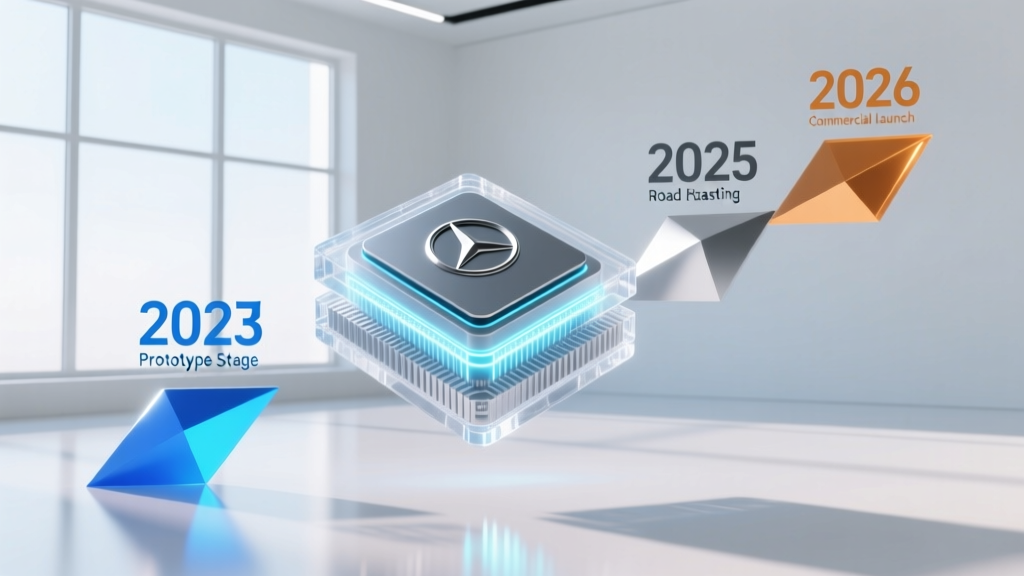
Here's the reality check: no production Mercedes vehicle offers a solid-state battery as of 2026. The technology remains in the prototype and pre-production validation phase. Mercedes has signaled that limited solid-state deployment could begin in the latter half of this decade, likely in a low-volume or flagship application first.
Solid-state batteries replace the liquid electrolyte in conventional lithium-ion cells with a solid material (ceramic, polymer, or sulfide-based). The theoretical advantages are significant:
- Higher energy density: Potential for 400-500 Wh/kg at the cell level, enabling 500+ mile ranges without larger packs
- Faster charging: Solid electrolytes can theoretically handle higher C-rates without lithium plating, potentially enabling 10-80% charges in under 10 minutes
- Improved safety: No flammable liquid electrolyte reduces thermal runaway risk substantially
- Longer cycle life: Less degradation per cycle due to reduced side reactions
The engineering challenges, however, remain formidable. Solid-state cells face issues with interfacial resistance (contact between the solid electrolyte and electrodes degrades over charge cycles), manufacturing scalability, and cost. Current solid-state prototypes cost multiples of conventional lithium-ion cells, and scaling production to automotive volumes requires entirely new factory tooling.
Realistic timeline: Expect limited solid-state deployment in flagship Mercedes models around 2028-2030, with broader availability not until the early 2030s. This is forward-looking and subject to change based on manufacturing breakthroughs.
How Long Do Mercedes EV Batteries Actually Last?
The short answer: longer than most buyers expect, and typically longer than the rest of the vehicle remains economically viable.
Real-world degradation data from high-mileage EV fleets and owner-reported measurements show that modern NMC batteries lose approximately 5-8% of total capacity in the first 50,000 miles, then degradation slows to roughly 1-2% per year or per 15,000 additional miles. This means a 2024 EQS 580 with its 107.8 kWh gross (90.6 kWh usable) battery pack might realistically hold around 88-90% of original capacity at 100,000 miles and 80-84% at 200,000 miles under normal use.
| Mileage | Estimated Capacity Retention | Range Impact (EQS 580, EPA 350 mi base) |
|---|---|---|
| New | 100% | 350 miles |
| 25,000 mi / 2 years | ~95-96% | ~333-336 miles |
| 50,000 mi / 4 years | ~92-94% | ~322-329 miles |
| 100,000 mi / 7 years | ~88-90% | ~308-315 miles |
| 150,000 mi / 10 years | ~84-87% | ~294-305 miles |
| 200,000 mi / 13 years | ~80-84% | ~280-294 miles |
Note: Degradation rates vary based on charging habits, climate, DC fast-charging frequency, and thermal management. Data synthesized from fleet studies, owner-reported SoH measurements, and manufacturer testing patterns. Individual results will vary.
The non-linear degradation curve matters: the initial capacity drop is steeper as the battery "forms" its solid-electrolyte interphase (SEI) layer, then stabilizes. Most owners will never experience degradation severe enough to require battery replacement during typical ownership periods of 8-12 years.
Mercedes-Benz EV Battery Warranty: What's Covered
Mercedes-Benz provides a high-voltage battery warranty that covers all EQ models sold in the United States. The warranty terms are competitive with the broader premium EV segment:
| Coverage Item | Term |
|---|---|
| Duration | 8 years or 100,000 miles (whichever comes first) |
| Capacity Retention Threshold | 70% of original usable capacity |
| What's Covered | Defects in materials/workmanship; capacity loss below 70% |
| What's NOT Covered | Damage from accidents, modifications, improper charging, flooding |
| Remedy | Repair, module replacement, or full pack replacement at Mercedes' discretion |
| Transferable | Yes — transfers to subsequent owners automatically |
The 70% retention threshold is industry-standard — you'll find the same benchmark at BMW, Audi, and Tesla. If your EQS battery drops below 70% capacity (meaning less than ~63.4 kWh usable from the original 90.6 kWh) within 8 years or 100,000 miles, Mercedes will remediate. In practice, warranty claims for capacity loss are rare because most batteries don't approach this threshold under normal conditions.
It's worth noting that the warranty covers the high-voltage traction battery — the large pack that powers the drive motors. The separate 12V auxiliary battery (which powers lights, infotainment, and computers) has its own standard 4-year/50,000-mile warranty and is a conventional lead-acid or lithium 12V unit, not part of the EV battery system.
EV Battery Replacement Cost: What Mercedes Owners Should Know
If a battery replacement is needed outside of warranty — whether due to physical damage, rare manufacturing defect after the warranty period, or extreme degradation — the costs are significant but rarely catastrophic in context.
| Model | Battery Size (Usable) | Estimated Full Pack Cost | Typical Need Timeline |
|---|---|---|---|
| EQE 350+ Sedan | 90.6 kWh | $18,000 - $24,000 | Rarely needed; 200,000+ mi typical life |
| EQE SUV 350+ | 90.6 kWh | $18,000 - $24,000 | Rarely needed; 200,000+ mi typical life |
| EQS 450+ Sedan | 107.8 kWh (gross) / ~90.6 kWh usable | $22,000 - $30,000 | Rarely needed; 200,000+ mi typical life |
| EQS 580 Sedan | 107.8 kWh (gross) / ~90.6 kWh usable | $22,000 - $30,000 | Rarely needed; 200,000+ mi typical life |
| EQS SUV 580 | 107.8 kWh (gross) / ~90.6 kWh usable | $22,000 - $30,000 | Rarely needed; 200,000+ mi typical life |
Costs include parts and labor at authorized Mercedes-Benz dealerships. Third-party EV repair shops may offer lower pricing. Module-level repairs (replacing individual cell groups rather than the full pack) can reduce costs to $5,000-$12,000 depending on the fault.
The key context: most EV batteries outlive the economic life of the vehicle. By the time a battery might need replacement at 200,000+ miles, the vehicle's resale value has typically depreciated to the point where a full pack replacement isn't economically rational. Module-level repairs, where only the degraded cell groups are replaced, are increasingly common and far more affordable.
Cell pricing continues to decline. NMC cells that cost $200/kWh in 2018 are approaching $110-$130/kWh in 2026, meaning replacement costs will continue falling throughout any current owner's holding period.
Maximizing Your Mercedes EQ Battery Health: Practical Care Guide
Battery degradation is inevitable but manageable. The following practices, based on lithium-ion electrochemistry fundamentals, will help preserve your pack's State of Health (SoH) over the long term:
Daily Charging Habits
- Set a daily charge limit of 80% for NMC batteries. Use the Mercedes me app or vehicle settings to configure this.
- Charge to 100% only when needed for long trips. Try to depart shortly after reaching 100% rather than letting it sit fully charged.
- Avoid routinely draining below 10-15%. The battery buffer protects against true 0%, but deep discharges still stress NMC chemistry.
DC Fast Charging
- Use DC fast charging for road trips, not daily fills. Frequent 200 kW+ charging sessions accelerate degradation due to heat and lithium plating risk.
- Precondition the battery before fast charging — the EQS and EQE do this automatically when you navigate to a charger in the MBUX system.
- Avoid fast charging above 80% SoC when possible. The charge curve tapers significantly above 80% anyway (a 200 kW peak might drop to 50 kW or less), and the heat generated during this phase is disproportionate.
Temperature Management
- Park in shade or a garage when possible in hot climates. Sustained battery temperatures above 95°F accelerate calendar degradation.
- Use preconditioning in cold weather. The EQS/EQE thermal management system warms the battery for optimal performance and charging speed.
- Don't leave the vehicle at 100% SoC in extreme heat for extended periods — this is the most stressful combination for NMC cells.
Checking Your Battery's State of Health (SoH)
Mercedes provides battery health information through the Mercedes me connect app and the MBUX infotainment system. Navigate to the vehicle status or EV settings menu to view current estimated range and battery condition. The system calculates SoH based on actual usable capacity versus original capacity.
For a more precise assessment, you can request a battery health certificate from any authorized Mercedes-Benz dealer. This diagnostic reads the BMS logs for detailed cell-level voltage data, internal resistance measurements, and capacity tests. It's particularly useful when buying a used EQ model or preparing for a warranty claim.
Third-party OBD-II diagnostic tools (such as those from OBDeleven or CarScanner with EV-compatible adapters) can also pull SoH estimates from the BMS, though dealer diagnostics remain the gold standard for warranty purposes.
Factors That Accelerate Battery Degradation
Understanding what harms your battery is as important as knowing what helps. The primary degradation accelerators, ranked by impact:
- Sustained high State of Charge: Storing an NMC battery at 100% for days or weeks causes electrolyte oxidation and cathode surface degradation. This is why daily 80% limits matter.
- Extreme heat exposure: Battery temperatures above 104°F (40°C) for prolonged periods cause accelerated SEI layer growth and electrolyte decomposition. Phoenix and Las Vegas owners should be especially mindful.
- Frequent DC fast charging: High-current charging generates internal heat and can cause lithium plating on the anode, especially at low temperatures. Daily DCFC use measurably increases degradation versus Level 2 home charging.
- Deep cycling: Routinely running the battery from 100% to near 0% puts more mechanical stress on electrode materials than partial cycles (e.g., 80% to 30%).
- Cold-weather fast charging without preconditioning: Charging a cold battery at high power causes lithium plating — metallic lithium deposits on the anode that permanently reduce capacity.
The good news: Mercedes' thermal management system actively mitigates many of these factors. The liquid-cooled battery pack maintains cells within an optimal temperature window during driving and charging, and the navigation-based preconditioning feature pre-warms or pre-cools the pack before you arrive at a fast charger.
Silicon Anode and Other Near-Term Battery Advances
While solid-state batteries dominate headlines, other battery technology improvements are reaching production sooner and may appear in future Mercedes EQ models:
Silicon-dominant anodes are the most likely near-term upgrade. Current lithium-ion cells use graphite anodes; replacing some or all of the graphite with silicon can increase energy density by 20-40%. Companies like Sila Nanotechnologies and Group14 are scaling production, and Mercedes has invested in silicon anode development through its partnership with Factorial. Expect initial deployment in the 2027-2029 timeframe.
Improved NMC formulations continue to arrive. Moving from NMC 811 (80% nickel, 10% manganese, 10% cobalt) to higher-nickel or cobalt-free variants improves energy density and reduces cost while maintaining cycle life. These incremental improvements appear in model-year refreshes without fanfare.
Sodium-ion batteries are entering production for lower-cost, shorter-range applications. While unlikely to appear in a flagship EQS, sodium-ion chemistry could power future compact Mercedes EVs where range requirements are modest and cost sensitivity is high.
Frequently Asked Questions
How long do Mercedes EQ batteries last in real-world use?
Based on degradation data from NMC lithium-ion packs, a Mercedes EQ battery should retain 80-85% of its original capacity at 200,000 miles under normal use conditions. Most batteries will outlast the vehicle's economic life. The 8-year/100,000-mile warranty guarantees at least 70% retention, but real-world performance typically exceeds this threshold by a wide margin.
How much does it cost to replace a Mercedes EQ battery?
Full pack replacement costs range from approximately $18,000 to $30,000 depending on the model and battery size, including parts and labor at an authorized dealer. However, full replacements are rarely needed — most batteries last 200,000+ miles. Module-level repairs, where only degraded cell groups are replaced, cost $5,000-$12,000 and are more common for out-of-warranty service.
Does the Mercedes battery warranty cover degradation?
Yes. The Mercedes-Benz high-voltage battery warranty covers capacity loss below 70% of original usable capacity for 8 years or 100,000 miles, whichever comes first. If your EQS battery drops below this threshold within the warranty period, Mercedes will repair or replace the battery at no cost. The warranty is transferable to subsequent owners.
How do I check my Mercedes EQ battery health?
Use the Mercedes me connect app or the MBUX vehicle status menu to view estimated battery condition and current range. For a detailed assessment, request a battery health certificate from any authorized Mercedes-Benz dealer — this includes cell-level voltage analysis, internal resistance measurements, and a full capacity test. Third-party OBD-II tools can also pull SoH estimates.
LFP vs. NMC — which battery chemistry is better?
Neither is universally better; it depends on your priorities. NMC offers higher energy density (more range per kg), making it the right choice for long-range premium vehicles like the Mercedes EQS. LFP offers longer cycle life, lower cost, and better safety, making it ideal for standard-range and budget-oriented EVs. If you want maximum range, choose NMC. If you want maximum longevity and don't mind heavier weight or shorter range, LFP wins.
When will the Mercedes solid-state battery be available?
As of 2026, no production Mercedes vehicle offers a solid-state battery. Mercedes-Benz is developing the technology with partner Factorial Energy and has tested prototypes in EQS mules, but commercial deployment is not expected before 2028-2030, initially in limited or flagship applications. Solid-state remains a forward-looking technology — buyers should make decisions based on current lithium-ion capabilities, which are already robust.
Does frequent Supercharger-style DC fast charging hurt my battery?
Yes, but the effect is manageable. Frequent DC fast charging (daily or near-daily) accelerates degradation compared to Level 2 home charging due to heat generation and high current stress on cells. Occasional DC fast charging on road trips has minimal long-term impact. For daily use, a Level 2 home charger (9.6-11.5 kW) is the best option for battery longevity.
The Mercedes solid-state battery is a genuine development program with real potential, but it's not a reason to delay an EV purchase. Current NMC lithium-ion technology in the EQS and EQE delivers 300+ miles of range, predictable degradation, strong warranty coverage, and a total cost of ownership that already undercuts comparable internal-combustion vehicles over a 5-year holding period. When solid-state arrives later this decade, it will be an incremental improvement on an already mature and capable battery ecosystem — not a revolution that makes today's EVs obsolete.