What Powers Mercedes-Benz Electric Vehicles in 2026?
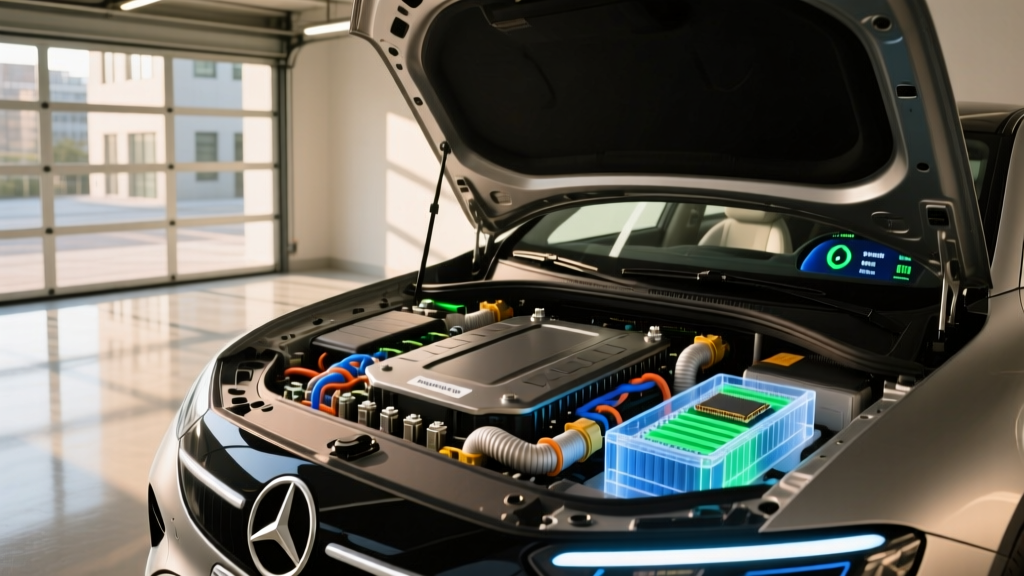
Mercedes-Benz has committed its entire passenger lineup to electrification, and the high-voltage traction battery sits at the heart of every EQ model. Whether you own an EQB compact SUV, an EQE sedan, or the flagship EQS, understanding the battery in your Mercedes is the single most important factor in predicting long-term ownership costs, real-world range retention, and resale value.
As of the 2026 model year, Mercedes deploys lithium-ion batteries sourced primarily from CATL, Farasis Energy, and ACC (Automotive Cells Company). These packs use NMC (nickel-manganese-cobalt) chemistry across nearly the entire EQ range, with the brand favoring energy density and fast-charging performance over the lower cost and extended cycle life of LFP (lithium iron phosphate). That choice has real-world implications for how your Mercedes battery ages, what it costs to replace, and how you should care for it.
This guide breaks down every critical spec — chemistry, usable kWh, degradation curves, warranty terms, replacement pricing, and health-monitoring tools — using data from Mercedes-Benz USA, the EPA, and independent battery-testing labs.
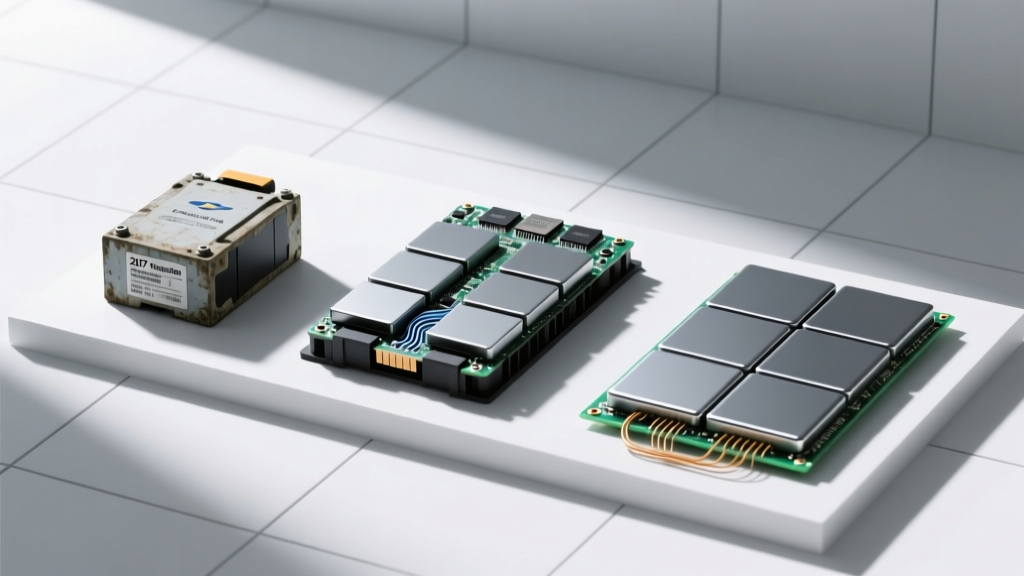
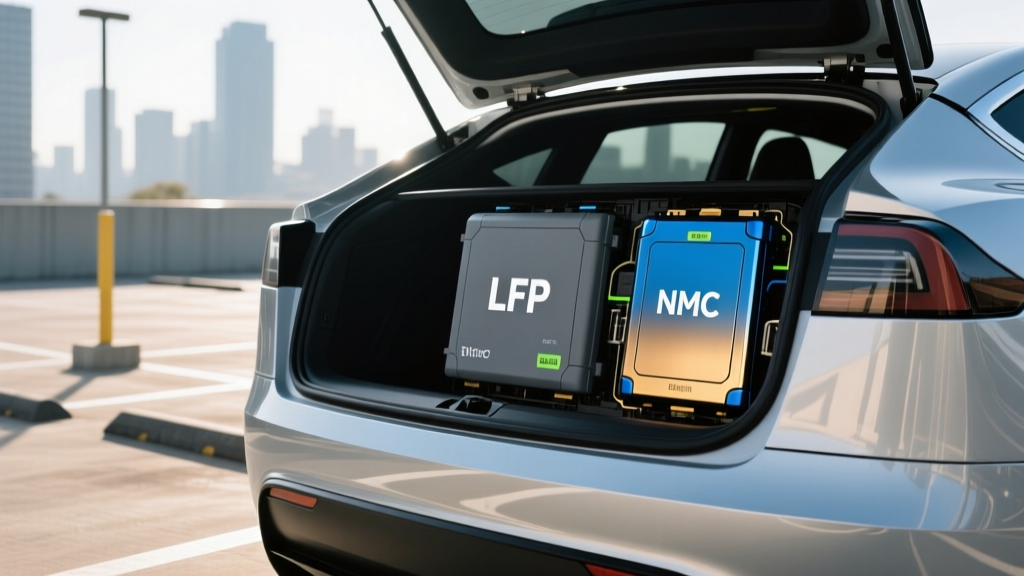
NMC vs. LFP: The Chemistry Inside Mercedes Battery Packs
Almost every battery in a Mercedes EQ vehicle uses NMC 811 or NMC 622 cathode chemistry. The numbers refer to the ratio of nickel, manganese, and cobalt — higher nickel content (811 = 80% nickel, 10% manganese, 10% cobalt) increases energy density but slightly reduces thermal stability and cycle life compared to lower-nickel blends.
Mercedes has not adopted LFP chemistry in its US-market EQ lineup as of 2026, unlike Tesla (Model 3 Standard Range), Ford (some Mustang Mach-E trims), and several Chinese-market OEMs. Here is how the two chemistries compare on the metrics that matter to owners:
| Metric | NMC (Mercedes EQ Standard) | LFP (Competitor Benchmark) |
|---|---|---|
| Energy Density | ~250–270 Wh/kg (cell level) | ~160–180 Wh/kg |
| Typical Cycle Life | 1,000–1,500 full cycles to 80% SoH | 2,500–4,000+ full cycles to 80% SoH |
| Cold-Weather Performance | Better low-temp conductivity; less range loss below 32°F | Greater range loss in cold; slower charging below freezing |
| Recommended Daily SoC | 80% (Mercedes default charge limit) | 100% (LFP tolerates full charge better) |
| Cost per kWh (pack level) | ~$130–$150 | ~$90–$110 |
| Thermal Stability | Good; requires active liquid cooling | Excellent; inherently more stable |
Why Mercedes chose NMC: The EQS and EQE prioritize maximum range in a luxury sedan package. NMC's superior energy density allows Mercedes to fit 107.8 kWh of usable capacity in the EQS 450+ while keeping the pack weight manageable. An LFP pack of equivalent capacity would add roughly 200–250 lbs and reduce interior packaging flexibility.
The trade-off: NMC batteries degrade slightly faster than LFP over thousands of charge cycles and are more sensitive to sustained high state-of-charge (above 90%). This makes daily charging habits more consequential for Mercedes EQ owners than for Tesla Model 3 RWD owners with LFP packs.
Mercedes EQ Battery Specs: Capacity, Range, and Chemistry by Model
Understanding the exact battery in your Mercedes starts with the spec sheet. Below is the 2026 US-market lineup with usable capacity, chemistry, EPA range, and real-world expectations:
| Model (2026) | Usable Battery (kWh) | Chemistry | EPA Range (mi) | Real-World Range Note |
|---|---|---|---|---|
| EQB 250+ | 70.5 | NMC 622 | 251 | Expect ~210–225 mi highway; ~185 mi in cold (20°F) |
| EQE 350+ | 90.6 | NMC 811 | 305 | Expect ~260–280 mi highway; ~230 mi in cold |
| EQE 500 4MATIC | 90.6 | NMC 811 | 270 | Expect ~235–250 mi highway; ~200 mi in cold |
| EQS 450+ | 107.8 | NMC 811 | 390 | Expect ~330–350 mi highway; ~290 mi in cold |
| EQS 580 4MATIC | 107.8 | NMC 811 | 345 | Expect ~295–315 mi highway; ~255 mi in cold |
| EQS SUV 450+ | 107.8 | NMC 811 | 305 | Expect ~260–280 mi highway; ~225 mi in cold |
Source: fueleconomy.gov (EPA) and Mercedes-Benz USA official specifications.
Real-World Range Reality: EPA range figures assume a mix of city and highway driving at moderate temperatures. On a 75 mph highway run in 35°F weather with cabin heating, expect an EQS 450+ to deliver roughly 280–300 miles before needing a charge — about 23–28% below its 390-mile sticker. Mercedes' standard heat pump (included on all 2026 EQ models) mitigates some cold-weather loss, but physics still governs.
How Long Does a Mercedes EV Battery Last? Degradation Data
The most common question from prospective EQ buyers: how long will the battery in my Mercedes actually last? The answer depends on chemistry, usage patterns, and climate — but we have enough real-world data from vehicles now surpassing 100,000 miles to provide concrete figures.
NMC batteries in Mercedes EQ models typically lose capacity in a predictable curve: faster degradation in the first 1–2 years (roughly 2–4%), followed by a long, slow linear decline. Here is what independent testing and fleet data show:
| Time / Mileage | Typical Capacity Retained (SoH) | Context |
|---|---|---|
| Year 1 / ~12,000 mi | 96–98% | Initial formation loss; normal for all Li-ion |
| Year 2 / ~24,000 mi | 94–96% | Curve flattens; calendar + cycle aging |
| Year 4 / ~48,000 mi | 91–94% | Gradual linear decline phase |
| Year 6 / ~72,000 mi | 88–92% | Still well above warranty threshold |
| Year 8 / ~100,000 mi | 84–90% | Warranty period ends; most packs still functional |
| Year 10 / ~130,000 mi | 80–87% | Projected; based on extrapolated NMC aging models |
These figures assume moderate use: a mix of Level 2 home charging (the majority), occasional DC fast charging (1–2 times per week at most), and avoidance of prolonged 100% SoC storage. Owners who frequently DC fast-charge and regularly charge to 100% may see 3–5% additional loss over the same period.
For context, an EQS 450+ starting with 107.8 kWh usable capacity and reaching 85% SoH at year 8 would still offer approximately 91.6 kWh usable — enough for roughly 330 miles of EPA-equivalent range when new, now delivering about 280 miles. That is still a highly usable daily driver.
Mercedes-Benz EV Battery Warranty: What Is Covered
Every 2026 Mercedes-Benz EQ model sold in the United States includes a high-voltage battery warranty that covers defects and excessive capacity loss. Here are the specific terms:
| Warranty Element | Mercedes-Benz EQ Coverage |
|---|---|
| Duration | 8 years or 100,000 miles (whichever comes first) |
| Capacity Retention Threshold | 70% of original usable capacity |
| What Triggers a Claim | Measured SoH falls below 70% under normal use conditions |
| Remedy | Repair, module replacement, or full pack replacement at Mercedes' discretion |
| Exclusions | Damage from accidents, flooding, unauthorized modifications, or use of non-approved chargers |
| Transferable? | Yes — warranty transfers to subsequent owners |
Source: Mercedes-Benz USA Warranty Information.
What this means practically: If your EQE 350+ battery drops below 63.4 kWh usable (70% of 90.6 kWh) within 8 years or 100,000 miles, Mercedes will remedy the issue at no cost. Based on the degradation data above, hitting this threshold under normal use is extremely unlikely — most packs retain 84–90% at the 8-year mark.
The warranty does not cover gradual range loss that stays above the 70% threshold. A battery at 78% SoH at year 7 is functioning within spec, even though you have lost roughly 22% of your original range. This is standard across the industry — BMW, Audi, and Tesla use similar 70% thresholds.
How Much Does a Mercedes EV Battery Cost to Replace?
If your battery degrades beyond the warranty threshold — or if it sustains physical damage not covered by insurance — replacement costs are significant. Here is the current pricing landscape for out-of-warranty Mercedes EQ battery replacements:
| Model | Battery Size (kWh) | Estimated Pack Cost | Labor + Diagnostics | Total Estimated Range |
|---|---|---|---|---|
| EQB 250+ | 70.5 | $12,000–$15,000 | $2,500–$4,000 | $14,500–$19,000 |
| EQE 350+ / 500 | 90.6 | $16,000–$20,000 | $3,000–$4,500 | $19,000–$24,500 |
| EQS 450+ / 580 / SUV | 107.8 | $20,000–$26,000 | $3,500–$5,000 | $23,500–$31,000 |
Important context before you panic:
- Full pack replacement is rare. Mercedes EQ batteries are modular. If a single module or cell group fails, dealerships can often replace just the faulty module for $2,000–$5,000 rather than the entire pack.
- Most batteries outlast the car. Data from Geotab's fleet study of 10,000+ EVs shows that the average EV battery retains ~87% capacity after 10 years. The vast majority of Mercedes EQ packs will never need replacement during typical ownership.
- Costs are declining. Battery pack prices have fallen from ~$1,200/kWh in 2010 to roughly $130–$150/kWh in 2025–2026. By the time a 2026 EQS might need an out-of-warranty replacement (2034+), replacement costs are projected to be 30–40% lower than today.
- Insurance covers physical damage. If your battery is damaged in a collision, comprehensive auto insurance covers replacement — the same way it covers an engine in a gas car.
How to Check and Maximize Battery Health in Your Mercedes
Mercedes provides several tools for monitoring the State of Health (SoH) of your EQ battery, and following a few evidence-based habits can meaningfully extend its lifespan.
How to Check Battery State of Health
- Mercedes me app: The Mercedes me connect app displays estimated battery health and remaining range. Navigate to Vehicle Status → Battery to see a percentage indicator. Note that this is an estimate based on the BMS (Battery Management System) algorithm, not a laboratory-grade measurement.
- MBUX onboard display: In the EQS and EQE, the Energy Flow screen in MBUX shows real-time battery temperature, charge/discharge rate, and estimated capacity. Consistent drops in estimated range at the same SoC over months can indicate degradation.
- Dealer diagnostic scan: A Mercedes dealership can perform a full BMS diagnostic read that provides a more precise SoH percentage, individual module voltage readings, and internal resistance data. Request this during routine service visits, especially before the warranty expires.
- Third-party OBD-II tools: Devices like OBDeleven or dedicated EV apps (e.g., ABRP with OBD-II dongle) can read BMS data including cell voltage spread and estimated SoH. These are useful for tracking trends over time.
Battery Care Best Practices
- Set daily charge limit to 80%. Mercedes' MBUX and the Mercedes me app allow you to set a maximum SoC. For daily driving, 80% is the sweet spot for NMC chemistry — it avoids the voltage stress that occurs above 90%.
- Charge to 100% only before long trips. If you need full range for a road trip, charge to 100% but drive away shortly after reaching it. Avoid leaving the car at 100% SoC for extended periods (overnight or longer).
- Minimize DC fast charging when possible. DC fast charging at 150+ kW generates significant heat. While Mercedes' liquid-cooling system manages this well, frequent fast charging (daily or near-daily) accelerates degradation. Use Level 2 home charging as your primary method.
- Use preconditioning before fast charging. The EQS and EQE support battery preconditioning — when you navigate to a DC fast charger in MBUX, the system pre-heats or pre-cools the battery to the optimal temperature window (~25–35°C). This improves charge speed and reduces thermal stress. Always use navigation-based preconditioning when heading to a charger.
- Avoid prolonged storage at low SoC. If storing your Mercedes for more than two weeks, leave it plugged in with the charge limit set to 50%. Storing an NMC battery below 20% SoC for extended periods can cause copper dissolution in the anode, leading to permanent capacity loss.
- Park in shade or a garage in extreme heat. Sustained battery temperatures above 40°C (104°F) accelerate calendar aging. In Phoenix or Las Vegas summers, garage parking can meaningfully extend battery life.
- Don't obsess over perfection. Modern BMS systems are sophisticated. Occasional 100% charges, fast charging on road trips, and cold-weather driving will not destroy your battery. Follow the 80% daily rule as a habit, not a source of anxiety.
Factors That Accelerate Battery Degradation
Not all miles are created equal when it comes to battery wear. Here are the factors that measurably increase degradation in the battery of a Mercedes EQ:
- High-frequency DC fast charging: Data from Recurrent Auto shows that EVs that fast-charge more than 3 times per week show an average of 2–3% additional degradation over 3 years compared to those that primarily use Level 2.
- Sustained high SoC: Storing an NMC battery at 100% SoC for days at a time causes electrolyte oxidation at the cathode. This is cumulative and irreversible.
- Extreme heat exposure: Battery temperatures consistently above 35°C (95°F) accelerate SEI (solid electrolyte interphase) layer growth on the anode, consuming lithium inventory. This is why hot-climate vehicles show slightly faster degradation than temperate-climate ones.
- Deep discharge cycles: Regularly driving the battery below 10% SoC stresses the anode. The BMS reserves a buffer (typically ~5% at the bottom), but repeatedly hitting this buffer zone is not ideal.
- High-mileage annual use: A vehicle driven 25,000+ miles per year will accumulate cycle-related degradation faster than one driven 10,000 miles per year. However, cycle aging in NMC is relatively slow — 1,000–1,500 full equivalent cycles to 80% SoH translates to 200,000–300,000+ miles for most EQ models.
Emerging Battery Technology: What's Next for Mercedes
Mercedes-Benz is actively developing next-generation battery technology, though none of it is available in production vehicles as of 2026. Here is a realistic timeline based on official announcements and industry analysis:
- Silicon-dominant anode (2027–2029): Mercedes has partnered with Sila Nanotechnologies to develop silicon-based anodes that promise 20–40% higher energy density than current graphite anodes. The EQG (electric G-Class) is expected to be the first production beneficiary. This is a confirmed development, not vaporware, but production vehicles are still 1–3 years away.
- Solid-state batteries (2030+): Mercedes has demonstrated solid-state cells in partnership with Factorial Energy, achieving 450 Wh/kg at the cell level in lab testing. However, solid-state batteries face significant manufacturing scale-up challenges. Realistic availability in a production EQ model is 2030 at the earliest, more likely 2031–2033 for mainstream models.
- LFP adoption (possible, unconfirmed): Industry pressure from lower-cost competitors may push Mercedes to adopt LFP for entry-level EQ models (e.g., a future EQA or EQB refresh). Mercedes has not confirmed US-market LFP plans as of early 2026.
Bottom line for current buyers: Do not delay a purchase waiting for solid-state batteries. The NMC packs in today's EQ models are mature, well-cooled, and backed by data showing strong longevity. Next-generation chemistries are still years from showroom floors.
Frequently Asked Questions
How long do Mercedes EQ batteries last before needing replacement?
Based on degradation data, most Mercedes EQ batteries will retain 80–87% of original capacity at 10 years / 130,000 miles under normal use. Full replacement is rarely needed — the vast majority of packs outlast the vehicle's useful economic life. The 8-year / 100,000-mile warranty covers the period of highest risk.
How much does it cost to replace a Mercedes EV battery?
A full pack replacement ranges from approximately $14,500 (EQB) to $31,000 (EQS) including labor, as of 2026. However, most out-of-warranty issues involve individual module replacements at $2,000–$5,000. Costs are projected to decline 30–40% by the early 2030s as battery manufacturing scales.
What does the Mercedes battery warranty cover?
Mercedes covers the high-voltage traction battery for 8 years or 100,000 miles. If measured capacity drops below 70% of the original usable kWh, Mercedes will repair or replace the battery at no cost. The warranty is transferable to subsequent owners and excludes damage from accidents, flooding, or unauthorized modifications.
How do I check my Mercedes battery health?
Use the Mercedes me app (Vehicle Status → Battery) for a quick SoH estimate, the MBUX Energy Flow screen for real-time data, or request a full BMS diagnostic scan at a Mercedes dealership for precise module-level readings. Third-party OBD-II tools can also read BMS data for trend tracking.
Is NMC better than LFP for a Mercedes EQ?
For the EQ lineup's goals — maximum range, fast charging, luxury packaging — NMC is the better fit. It delivers higher energy density (more kWh in less space/weight) and better cold-weather performance. LFP offers longer cycle life and lower cost but would require a heavier, larger pack for equivalent range. Mercedes prioritizes range and performance over the extended cycle life LFP provides.
Does DC fast charging damage my Mercedes battery?
Occasional DC fast charging (1–2 times per week) has a minimal effect on battery health. Frequent daily fast charging can add 2–3% extra degradation over 3 years compared to primarily Level 2 charging. Always use navigation-based preconditioning to optimize battery temperature before fast charging, and rely on home Level 2 charging as your primary method.
Should I charge my Mercedes EQ to 100% every night?
No. For NMC chemistry, sustained 100% SoC accelerates degradation. Set your daily charge limit to 80% via MBUX or the Mercedes me app. Charge to 100% only when you need full range for a long trip, and try to depart shortly after reaching full charge rather than letting the car sit at 100%.