The McDermitt Caldera Lithium Deposit: Who Controls It?
If you've been tracking the North American EV battery supply chain, you've likely seen the search: who owns McDermitt Caldera lithium? The answer is layered, because the McDermitt Caldera — a massive volcanic formation straddling the Nevada-Oregon border — contains several distinct lithium deposits rather than a single unified claim.
The most prominent project within the caldera is Thacker Pass, majority-owned by Lithium Nevada Corporation, a subsidiary of Lithium Americas Corp. (TSX: LAC). In 2023, General Motors made a landmark $650 million equity investment in Lithium Americas, securing a significant stake and an agreement for GM to source battery-grade lithium carbonate from Thacker Pass for its Ultium-based EVs. This made GM the largest single investor in the project.
Adjacent deposits within the broader caldera system include the Kings Valley and Quinn River lithium clay deposits, held by various junior mining companies and exploration-stage firms. The McDermitt Caldera as a whole is estimated to contain billions of dollars in lithium resources, making it one of the largest known lithium deposits in the United States.
Why does this matter for EV buyers? Domestic lithium sourcing directly affects battery pricing, federal tax credit eligibility under IRS §30D critical minerals requirements, and the long-term cost trajectory of the EVs you're shopping for today.
LFP vs NMC/NCA: The Two Battery Chemistries Powering Today's EVs
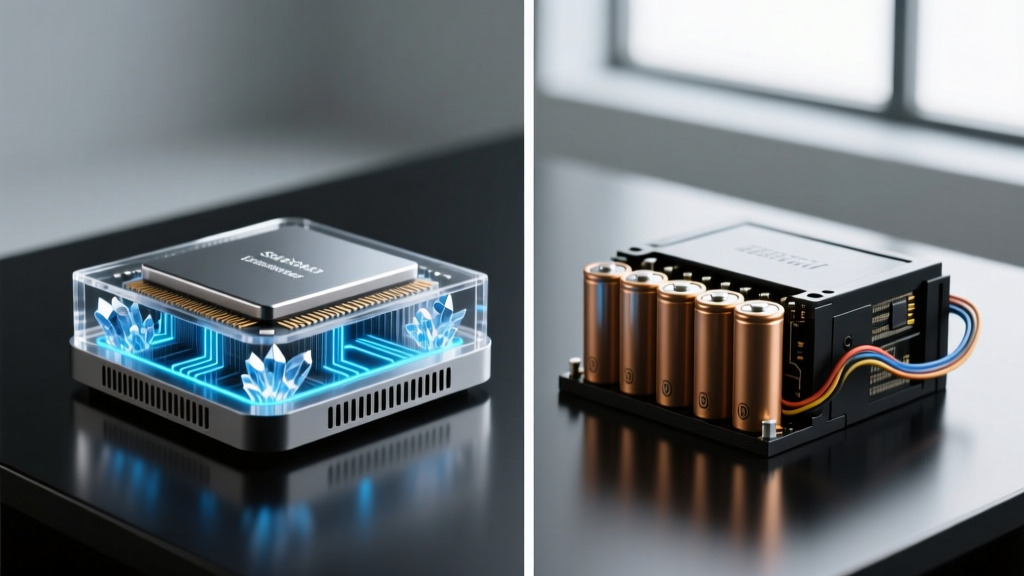
The lithium extracted from deposits like McDermitt Caldera ends up in one of two dominant cathode chemistries. Understanding the trade-offs between them is the single most important battery decision you'll make as an EV buyer.
| Attribute | LFP (Lithium Iron Phosphate) | NMC/NCA (Nickel Manganese Cobalt / Nickel Cobalt Aluminum) |
|---|---|---|
| Energy Density | ~160-180 Wh/kg (lower) | ~220-300 Wh/kg (higher) |
| Cycle Life | 3,000-5,000+ cycles | 1,000-2,000 cycles |
| Cold-Weather Performance | Moderate — greater range loss below 32°F | Better low-temp discharge efficiency |
| Thermal Stability | Excellent — very low thermal runaway risk | Good — requires more active thermal management |
| Cost (per kWh) | ~$90-110/kWh (lower) | ~$120-150/kWh (higher) |
| Typical Use | Standard-range models (Tesla Model 3 RWD, base Model Y) | Long-range & performance models (Model 3 LR, Hyundai Ioniq 5, Ford Mustang Mach-E Extended Range) |
| Recommended Charge Habit | Can charge to 100% regularly | Best kept at 80% daily; 100% for trips only |
| Cobalt/Nickel Content | None (cobalt-free, nickel-free) | Contains nickel and cobalt |
Which is better? Neither — they serve different needs. If you prioritize longevity, lower cost, and mostly commute under 200 miles daily, LFP is the pragmatic choice. If you need maximum range per charge and frequently road-trip or tow, NMC/NCA delivers the energy density to make that work. Most automakers now offer both chemistries across their lineups.
How Long Do EV Batteries Actually Last?
This is where the data contradicts the fear. Modern EV traction batteries are lasting significantly longer than early-generation packs, and most will outlive the vehicle they're installed in.
Real-World Degradation Data Points:
- Tesla Impact Report (2023): Model 3/Y batteries retain approximately 85% capacity at 200,000 miles — meaning ~15% degradation over the typical life of the vehicle.
- Recurrent Auto fleet data (2024): Across 15,000+ monitored EVs, average degradation was ~5-8% in the first 2 years, then stabilized to roughly 1-2% per year thereafter.
- Nissan Leaf (early air-cooled packs, 2011-2017): Notable outlier — some packs degraded 20-30% over 5-7 years due to lack of active thermal management. Modern liquid-cooled packs have largely solved this.
- Hyundai/Kia E-GMP platform (Ioniq 5, EV6): Owner-reported degradation of 3-5% over the first 60,000 miles, consistent with NMC packs using robust thermal management.
The pattern is clear: expect a steeper drop in the first year or two (the "formation loss"), then a long, slow plateau. A 2026-model-year EV with liquid-cooled battery management should retain 80-90% of its original capacity at 150,000 miles under normal use.
What Does the Battery Warranty Actually Cover?
Federal law mandates a minimum battery warranty of 8 years / 100,000 miles for EVs sold in the United States. California Air Resources Board (CARB) states extend this to 10 years / 150,000 miles. Most manufacturers meet or exceed these floors.
| Manufacturer | Warranty Period | Capacity Retention Threshold |
|---|---|---|
| Tesla (Model 3/Y LFP) | 8 yr / 120,000 mi | 70% minimum SoH |
| Tesla (Model 3/Y LR NMC) | 8 yr / 120,000 mi | 70% minimum SoH |
| Hyundai / Kia (E-GMP) | 10 yr / 100,000 mi | 70% minimum SoH |
| Ford (Mach-E, F-150 Lightning) | 8 yr / 100,000 mi | 70% minimum SoH |
| GM (Ultium platform) | 8 yr / 100,000 mi | 70% minimum SoH |
| Rivian (R1T / R1S) | 8 yr / 175,000 mi | 70% minimum SoH |
| BMW (iX / i4) | 8 yr / 100,000 mi | 70% minimum SoH |
Key warranty nuance: These warranties cover the battery if its State of Health (SoH) drops below the stated threshold — typically 70%. They do not cover gradual, normal degradation above that line. They also typically exclude damage from accidents, flooding, or unauthorized modifications. If your 85 kWh pack degrades to 58 kWh (below 70%) within the warranty window, the manufacturer must repair or replace it — often with a refurbished pack, not necessarily a brand-new one.
EV Battery Replacement Cost: What to Expect
Battery replacement is the number-one fear among prospective EV buyers. Here's the grounding context: most EV batteries will never need a full replacement during the original owner's time with the vehicle. But if you're buying a used EV out of warranty, or plan to keep yours past 200,000 miles, here's the cost landscape.
| Vehicle / Battery Size | Battery Capacity | Replacement Cost Range (Parts + Labor) |
|---|---|---|
| Tesla Model 3 Standard Range (LFP) | ~60 kWh | $8,000 - $12,000 |
| Tesla Model Y Long Range (NMC) | ~82 kWh | $12,000 - $16,000 |
| Hyundai Ioniq 5 (NMC) | ~77.4 kWh | $10,000 - $15,000 |
| Ford Mustang Mach-E Extended Range | ~91 kWh | $14,000 - $20,000 |
| Ford F-150 Lightning Extended Range | ~131 kWh | $20,000 - $30,000 |
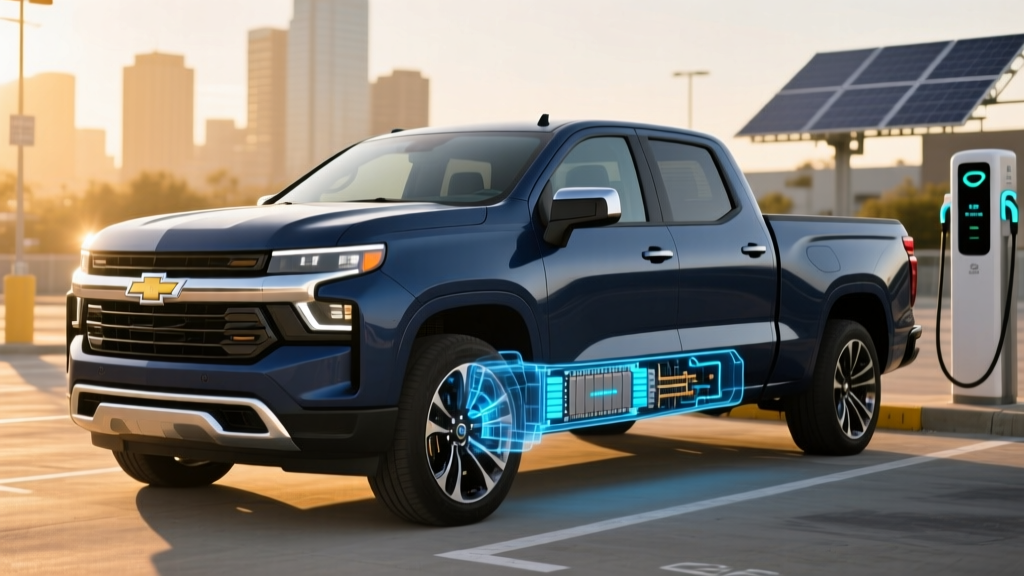
| Chevrolet Silverado EV (Max Range) | ~200 kWh | $25,000 - $38,000 |
| Rivian R1T (Large Pack) | ~128 kWh | $18,000 - $25,000 |
Costs are declining. According to BloombergNEF, average battery pack prices fell below $130/kWh in 2025 and continue trending downward. A replacement that costs $15,000 today may cost $10,000-$12,000 by 2030. Additionally, module-level repairs (replacing individual degraded modules rather than the entire pack) are becoming more common at specialized shops, reducing out-of-warranty costs to the $3,000-$7,000 range for many models.
Factors That Accelerate (or Preserve) Battery Life
Your daily habits have a measurable impact on how quickly your battery degrades. Here's what the data says matters most:
Battery Care Best Practices:
- Limit DC fast charging to road trips. Frequent use of 150+ kW DC fast chargers accelerates degradation by ~1-3% over the battery's life compared to primarily Level 2 charging. Use L2 at home as your daily driver.
- Avoid extreme SoC states. For NMC/NCA batteries, keep daily charge between 20-80%. LFP batteries can be charged to 100% regularly without significant harm — in fact, Tesla recommends periodic 100% charges for LFP to allow the BMS to recalibrate.
- Precondition before fast charging. Using your car's built-in navigation to route to a DC charger (which triggers battery preconditioning) can reduce charge time by 30-40% and reduce stress on the cells by ensuring optimal temperature.
- Minimize exposure to extreme heat. Parking in shade or a garage in hot climates (>95°F sustained) reduces calendar degradation. Cold weather reduces range temporarily but does not cause permanent damage.
- Don't store at 100% or 0% for extended periods. If leaving your EV unused for weeks, set the charge limit to ~50% and leave it plugged in so the thermal management system can operate.
- Use regenerative braking moderately. High-intensity regen on a cold battery (below 50°F) can stress cells. Many EVs automatically limit regen when the battery is cold.
How to Check Your Battery's State of Health (SoH)
State of Health (SoH) is the percentage of your battery's original capacity that remains usable. A new EV has 100% SoH; a battery at 85% SoH holds 85% of its original kWh.
How to check SoH by brand:
- Tesla: No native SoH readout in the app. Use third-party tools like TeslaFi or Scan My Tesla (via OBD-II adapter) to read actual vs. nominal pack capacity. Alternatively, charge to 100% and compare displayed range to the original EPA rating.
- Hyundai/Kia: Some models display SoH in the EV settings menu. The Car Scanner ELM OBD2 app can read SoH from the BMS on E-GMP vehicles.
- Ford: The FordPass app provides battery health status. For detailed SoH percentage, a dealer scan tool or FORScan (enthusiast OBD-II software) can pull exact figures.
- GM (Ultium): The myChevrolet/myCadillac apps show battery health status. Dealer diagnostics provide exact SoH.
- Universal method: Charge to 100%, note the displayed range, and compare to the original EPA rating on fueleconomy.gov. A consistent 10% range reduction suggests roughly 90% SoH (accounting for variables like tire wear and temperature).
Emerging Battery Tech: What's Coming (and When)
The next generation of EV battery technology is in active development, but timelines matter. Here's a realistic assessment:
Solid-state batteries: These replace the liquid electrolyte with a solid material, promising higher energy density (~400-500 Wh/kg), faster charging, and improved safety. Toyota has announced solid-state battery production for 2027-2028 in limited models. Samsung SDI and QuantumScape (backed by Volkswagen) are targeting similar timelines. Expect solid-state to reach premium models first, with mass-market availability likely 2030 or later.
Silicon anode batteries: Companies like Sila Nanotechnologies and Group14 Technologies are replacing graphite anodes with silicon, boosting energy density by 20-40%. These are closer to market — Mercedes-Benz has tested silicon-anode cells in the EQG prototype, and limited production applications are expected in 2026-2027 model-year vehicles.
Sodium-ion batteries: Using abundant sodium instead of lithium, these offer lower cost and good cycle life but lower energy density (~120-150 Wh/kg). CATL has begun production in China for smaller EVs. US-market adoption for full-size vehicles is unlikely before 2028+, but they may appear in PHEV range-extender applications sooner.
None of these technologies are available in production EVs you can buy today. Any vehicle currently on sale uses either LFP or NMC/NCA lithium-ion chemistry.
From McDermitt Caldera to Your EV: The Domestic Supply Chain Connection
The lithium from Thacker Pass and other McDermitt Caldera deposits is slated to be processed into battery-grade lithium carbonate, feeding domestic cell manufacturing plants like those operated by Panasonic (in partnership with Tesla in Nevada and Kansas), LG Energy Solution (Michigan, Tennessee), and SK On (Georgia, Kentucky).
This domestic sourcing directly affects your wallet through the §30D federal EV tax credit. Under current IRS rules, vehicles qualify for up to $7,500 in credits only if a specified percentage of their battery's critical minerals are sourced from the US or free-trade-agreement partners. As Thacker Pass comes online (production targeted for 2027), more vehicles assembled in North America will meet the critical minerals threshold — potentially expanding the list of credit-eligible models.
Current §30D eligibility requirements include:
- Vehicle MSRP cap: $55,000 for sedans; $80,000 for SUVs, vans, and trucks
- Buyer income cap: $150,000 (single) / $300,000 (joint filing)
- Critical minerals and battery component sourcing thresholds (increasing annually)
- Final assembly in North America
- Point-of-sale transfer available — the credit can be applied as a down payment reduction at the dealer
Always verify current-year eligibility on the IRS website or with a tax professional, as sourcing thresholds and qualifying vehicle lists update regularly.
Frequently Asked Questions
How long do EV batteries last in years and miles?
Based on fleet data from Tesla, Recurrent Auto, and manufacturer reports, modern liquid-cooled EV batteries typically last 15-20 years or 200,000+ miles before degrading below 70% of original capacity. Most will outlast the vehicle's other mechanical components.
How much does an EV battery cost to replace?
Full pack replacement ranges from $8,000 to $38,000 depending on battery size, from a 60 kWh Model 3 Standard Range to a 200 kWh Silverado EV. Module-level repairs are increasingly available for $3,000-$7,000. Costs are declining as pack prices fall below $130/kWh.
What does the EV battery warranty cover?
Federally mandated minimum: 8 years / 100,000 miles. The warranty covers the battery if its State of Health drops below a specified threshold (typically 70% of original capacity). It does not cover normal gradual degradation above that threshold, accident damage, or unauthorized modifications.
How do I check my EV battery's health?
Use your vehicle's native app (FordPass, myChevrolet), third-party OBD-II tools (TeslaFi, Car Scanner, FORScan), or the manual method: charge to 100%, compare displayed range to the original EPA figure on fueleconomy.gov. A sustained 10-15% range reduction indicates roughly 85-90% SoH.
LFP vs NMC — which battery chemistry is better for me?
Choose LFP if you want maximum cycle life (3,000-5,000+ cycles), lower cost, cobalt-free sourcing, and you can charge to 100% daily. Choose NMC/NCA if you need maximum range per charge, better cold-weather performance, and you primarily road-trip or tow. Both chemistries will comfortably last the life of the vehicle with proper care.
Will solid-state batteries make my current EV obsolete?
Not in the near term. Solid-state batteries are expected in limited premium models starting around 2027-2028, with mass-market availability likely 2030 or later. Your current EV's battery will remain serviceable and supported for well over a decade.