A massive lithium deposit buried beneath the Oregon-Nevada border has quietly become one of the most consequential stories in the electric vehicle supply chain. The McDermitt Caldera lithium discovery — estimated to contain up to 18 million metric tons of lithium resources within a unique clay-based hectorite deposit — represents one of the largest known lithium accumulations on Earth. For EV buyers and owners, the implications ripple outward: from battery chemistry choices at the dealership to the long-term cost trajectory of replacement packs.
But raw lithium in the ground doesn't translate overnight to cheaper EVs. Understanding how this deposit fits into the broader battery ecosystem requires a working knowledge of EV battery chemistry, degradation patterns, warranty coverage, and the emerging technologies that will shape the next decade of electric transportation. Here's the complete picture.
Why the McDermitt Caldera Lithium Discovery Matters for EV Batteries
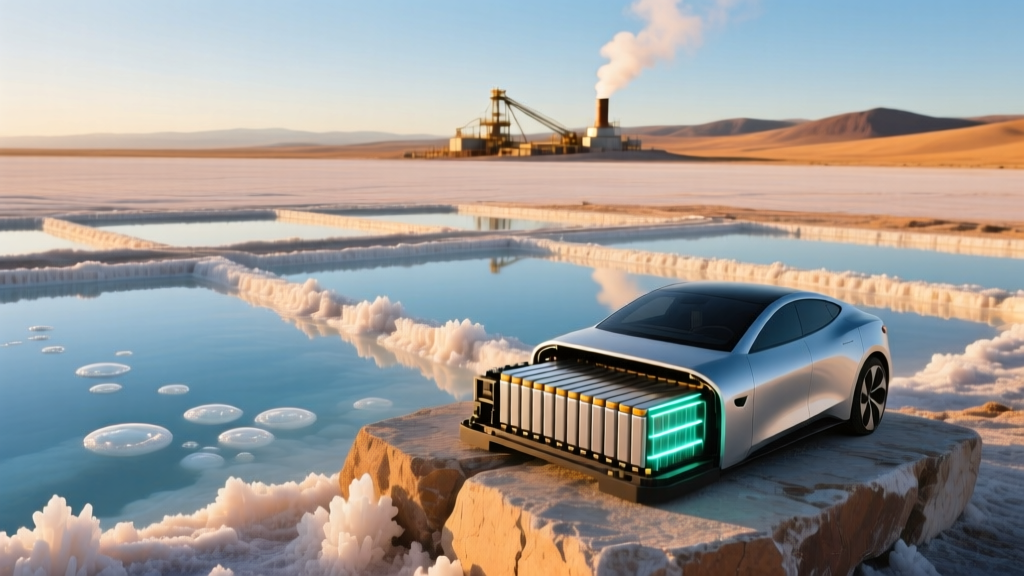
The McDermitt Caldera, a collapsed volcanic structure spanning the Oregon-Nevada border, contains lithium-rich hectorite clay that geologists and mining companies have been evaluating for years. Lithium Americas (now split into Lithium Americas Corp. for the North American Thacker Pass project and Lithium Argentina for South American assets) has been advancing the Thacker Pass project within the caldera toward production.
What makes this deposit significant for EV battery buyers:
- Scale: Estimates place the resource at 18 million metric tons of contained lithium carbonate equivalent (LCE), potentially making it the world's largest known lithium deposit.
- Domestic supply: The U.S. currently imports the vast majority of its lithium. A domestic source reduces supply chain vulnerability and may help satisfy the critical-minerals sourcing requirements of the IRS §30D federal EV tax credit.
- Clay-based extraction: Unlike hard-rock spodumene mining (Australia) or brine evaporation (Chile/Argentina), McDermitt's hectorite clay requires a different processing method — acid leaching — which carries its own cost and environmental profile.
- Timeline to market: Thacker Pass began construction in 2023, with initial production targeted for the mid-2020s and ramp-up through the end of the decade. Full-scale output won't flood the market immediately.
For the EV buyer in 2026, the practical takeaway is this: domestic lithium supply helps stabilize long-term battery pricing and supports tax-credit eligibility for vehicles using North American-sourced minerals, but it doesn't eliminate the fundamental engineering trade-offs between battery chemistries.
LFP vs NMC/NCA: The Chemistry Trade-Offs That Define Your EV
Whether lithium comes from Nevada or Chile, it ends up in one of two dominant cathode chemistries in today's EVs. Understanding the trade-offs is essential for choosing the right vehicle and maximizing battery longevity.
| Attribute | LFP (Lithium Iron Phosphate) | NMC / NCA (Nickel Manganese Cobalt / Nickel Cobalt Aluminum) |
|---|---|---|
| Energy density | ~160–180 Wh/kg (cell level) | ~220–300 Wh/kg (cell level) |
| Typical cycle life | 3,000–5,000+ cycles to 80% SoH | 1,000–2,500 cycles to 80% SoH |
| Cold-weather performance | Moderate — greater range loss below freezing | Better low-temp discharge capability |
| Thermal stability | Excellent — very low thermal runaway risk | Good — requires more active thermal management |
| Cost per kWh (2026) | ~$85–$100/kWh (cell) | ~$110–$140/kWh (cell) |
| State of Charge recommendation | Can charge to 100% daily; benefits from it for BMS calibration | Best kept at 80% daily; 100% only for trips |
| Common in | Tesla Model 3/Y RWD, BYD, Ford Mustang Mach-E Select (some trims) | Tesla Long Range/Performance, Hyundai Ioniq 5/6, BMW iX, most premium EVs |
| Cobalt content | None | Varies — trending toward low-cobalt formulations |
The practical verdict: LFP wins on longevity and cost. If you plan to own your EV for 10+ years, charge daily, and don't need maximum range per charge, LFP is the more durable choice. NMC/NCA wins on energy density — you get more miles in a lighter, smaller pack, which matters for long-range models and performance vehicles. The McDermitt Caldera's lithium supply feeds both chemistries; the cathode chemistry is determined by the other minerals (iron/phosphate vs. nickel/cobalt/manganese) blended with that lithium.
How Long Do EV Batteries Actually Last? Real Degradation Data
The single most common fear among prospective EV buyers is battery replacement cost. The data, however, tells a reassuring story: most EV batteries outlast the vehicles they're installed in.
Typical EV Battery Degradation Curve (aggregated fleet data):
- Year 1 / 15,000 miles: ~2–4% capacity loss (initial formation loss)
- Year 3 / 45,000 miles: ~5–8% total capacity loss
- Year 5 / 75,000 miles: ~7–12% total capacity loss
- Year 8 / 120,000 miles: ~10–17% total capacity loss (most still above warranty threshold)
- Year 10 / 150,000 miles: ~12–22% total capacity loss (highly dependent on charging habits and climate)
Sources: Geotab fleet studies, Recurrent Auto battery data, fueleconomy.gov EV technology overview.
Key observations from real-world fleet data:
- LFP packs degrade more slowly than NMC in most conditions, particularly when regularly charged to 100%. Tesla's LFP-equipped Model 3 RWD units have shown some of the lowest degradation rates in fleet studies.
- Early degradation is steeper, then the curve flattens. Most loss occurs in the first 20,000–30,000 miles, after which the rate slows significantly.
- Catastrophic failure is rare. Less than 1–2% of EV batteries require full replacement due to defect or failure within the warranty period, according to manufacturer and fleet data.
- Heat is the primary enemy. Vehicles in hot climates (Arizona, Texas, Middle East markets) with frequent DC fast charging show measurably higher degradation than those in temperate coastal climates with predominantly Level 2 home charging.
What the Battery Warranty Actually Covers
Federal law mandates a minimum EV battery warranty of 8 years / 100,000 miles. Most manufacturers meet or exceed this baseline. Here's what the major brands offer in the 2026 model year:
| Manufacturer | Warranty Term | Capacity Retention Threshold | Notes |
|---|---|---|---|
| Tesla (Model 3/Y LFP) | 8 yr / 100,000 mi | 70% | Covers defects + degradation below threshold |
| Tesla (Model 3/Y LR, S, X) | 8 yr / 120,000 mi | 70% | NMC/NCA packs, higher mileage threshold |
| Hyundai / Kia | 10 yr / 100,000 mi | 70% | Among the longest coverage in the industry |
| Ford (Mustang Mach-E, F-150 Lightning) | 8 yr / 100,000 mi | 70% | Covers battery and hybrid/electric components |
| GM (Ultium-based: Equinox EV, Blazer EV, Silverado EV) | 8 yr / 100,000 mi | 70% | Ultium platform warranty standard across lineup |
| BMW (iX, i4, i7) | 8 yr / 100,000 mi | 70% | Includes high-voltage battery and related systems |
| Volkswagen (ID.4, ID.7) | 8 yr / 100,000 mi | 70% | Net usable capacity guarantee |
| Rivian (R1T, R1S) | 8 yr / 175,000 mi | 70% | Highest mileage threshold among major OEMs |
What "70% capacity retention" means in practice: If your 82 kWh (usable) battery degrades to below 57.4 kWh of usable capacity within the warranty period, the manufacturer must repair or replace it. In reality, reaching this threshold within 8 years requires unusually harsh usage patterns. Most owners will sell or trade the vehicle before the battery approaches this floor.
Important caveat: Warranties cover defects and excessive degradation. They do not cover damage from accidents, flooding, improper charging equipment, or modifications. Always review the specific warranty booklet for your vehicle.
EV Battery Replacement Cost: What to Expect and When
Out-of-warranty battery replacement is the nightmare scenario EV skeptics cite most often. Here's the current cost landscape for 2026:
| Vehicle | Battery Size (usable kWh) | Chemistry | Estimated Pack Cost | Installed Cost (parts + labor) |
|---|---|---|---|---|
| Tesla Model 3 RWD | 57.5 kWh | LFP | $6,000–$8,500 | $8,500–$12,000 |
| Tesla Model Y Long Range | 75 kWh | NMC | $9,000–$12,000 | $12,000–$16,000 |
| Hyundai Ioniq 5 (Long Range) | 77.4 kWh | NMC | $10,000–$14,000 | $13,000–$18,000 |
| Ford F-150 Lightning (Extended) | 131 kWh | NMC | $18,000–$25,000 | $22,000–$32,000 |
| Chevrolet Equinox EV | 85 kWh | NMC (Ultium) | $10,000–$14,000 | $13,000–$18,000 |
| BMW iX xDrive50 | 105.2 kWh | NMC | $16,000–$22,000 | $20,000–$28,000 |
Context that matters:
- Most EVs never need a full battery replacement. Data from Recurrent Auto and Geotab shows that the vast majority of EV batteries retain sufficient capacity to remain functional for the vehicle's entire service life.
- Module-level repair is increasingly common. Many packs allow technicians to replace individual modules (a fraction of the full pack) rather than the entire battery, reducing costs by 60–80%.
- Cell prices continue declining. Battery pack prices have fallen from over $1,000/kWh in 2010 to roughly $110–$130/kWh at the pack level in 2026, per BloombergNEF tracking. Domestic lithium supply from sources like the McDermitt Caldera is expected to further stabilize pricing as production scales.
- Aftermarket and refurbished packs are becoming available for older models (early Nissan LEAF, first-gen Chevy Bolt), offering lower-cost replacement options.
Factors That Accelerate Battery Degradation (and How to Minimize Them)
Battery longevity isn't random — it's a function of how you charge, drive, and store your EV. Here's the evidence-based hierarchy of degradation factors:
High-Impact Factors (Control These First):
- Frequent DC fast charging to 100%: Repeatedly charging above 80% on DC fast chargers generates heat and high cell voltage simultaneously — the worst combination for lithium-ion longevity. For daily driving, charge to 80% on Level 2.
- Sustained high State of Charge: Sitting at 100% SoC for days (especially in heat) accelerates calendar aging. Charge to 100% only when you'll drive soon.
- Extreme heat exposure: Ambient temperatures above 95°F (35°C) combined with high SoC is the most damaging condition. Park in shade/garage when possible in hot climates.
- Deep discharge to near 0%: Regularly draining below 10% stresses cells. Most EVs have a buffer, but habitual deep cycling isn't ideal.
Moderate-Impact Factors:
- Cold-weather fast charging without preconditioning: Charging a cold battery at high power causes lithium plating on the anode. Always use your vehicle's preconditioning feature (navigation to a charger typically triggers this automatically).
- Aggressive driving / frequent high-power discharge: Performance driving generates internal heat. Occasional is fine; constant track use accelerates wear.
Low-Impact Factors (Often Overstated):
- Level 2 overnight charging: Charging at 7–11 kW overnight is gentle on the battery and is the recommended daily charging method.
- Regenerative braking: Regen does not meaningfully accelerate battery degradation. The charge rates involved are well within normal cell specifications.
How to Monitor Your EV Battery Health (State of Health)
State of Health (SoH) represents the current maximum capacity of your battery as a percentage of its original capacity. Here's how to check it:
Manufacturer apps and in-vehicle displays:
- Tesla: No direct SoH percentage in the app, but you can estimate it by charging to 100% and comparing displayed range to original EPA range. Third-party tools like Tessie or TeslaFi provide more granular data.
- Hyundai/Kia: Some models display battery health in the EV settings menu or through the dealer diagnostic tool.
- GM (Ultium): OnStar diagnostics can provide battery condition reports.
- BMW: The iDrive system and My BMW app provide battery health status in some markets.
Third-party tools:
- Recurrent Auto: A free service that connects to your EV's telematics and provides ongoing battery health reports, degradation tracking, and range estimates. Highly recommended for all EV owners.
- OBD-II dongles + apps: Tools like OBDLink SX/MX paired with apps such as ABRP (A Better Route Planner) or Car Scanner can read battery management system (BMS) data including SoH, cell voltage variance, and pack temperature.
- Dealer diagnostics: Any authorized service center can run a full battery health report. Request one before purchasing a used EV.
DIY estimation method: Charge to 100%, note the displayed range, and divide by the original EPA range. Example: if your EPA-rated 310-mile EV now shows 278 miles at 100%, your estimated SoH is ~89.7%. Note that displayed range is influenced by recent driving patterns, so this is an approximation — BMS-reported SoH via OBD-II is more accurate.
Beyond Lithium-Ion: Solid-State, Silicon Anodes, and What's Next
The McDermitt Caldera's lithium will feed today's lithium-ion batteries for decades. But the next generation of battery technology is advancing rapidly, and it's worth understanding what's coming — and when.
Solid-state batteries:
- What they promise: Replace the liquid electrolyte with a solid conductor, enabling lithium-metal anodes. Potential benefits include 40–60% higher energy density, faster charging, and improved safety (no flammable liquid electrolyte).
- Current status (2026): Toyota has demonstrated prototype solid-state cells and announced limited production in select models by the late 2020s. QuantumScape has delivered prototype cells to automotive partners. Samsung SDI is targeting 2027 for initial production.
- Realistic timeline for mainstream availability: 2028–2032 for premium vehicles; 2032+ for mass-market adoption. Manufacturing scale-up and cost reduction remain the primary challenges.
- Lithium demand impact: Solid-state batteries still use lithium — often more per cell due to lithium-metal anodes. Domestic sources like Thacker Pass remain strategically important regardless of cathode evolution.
Silicon-dominant anodes:
- What they promise: Silicon can store roughly 10× more lithium ions than graphite per unit mass. Blending silicon into anodes (currently at 5–10% silicon content) boosts energy density.
- Current status: Companies like Sila Nanotechnologies and Group14 Technologies are supplying silicon-anode materials to battery manufacturers. Mercedes-Benz's next-generation EQ models are expected to use silicon-anode cells from Amprius/Factorial Energy.
- Timeline: Already in limited production; broader adoption expected 2026–2029.
Sodium-ion batteries:
- What they offer: Eliminate lithium entirely, using abundant sodium. Lower energy density than lithium-ion, but significantly cheaper. Suited for budget EVs, stationary storage, and applications where weight/volume are less critical.
- Status: BYD and CATL are producing sodium-ion cells in China for small EVs and energy storage. Not yet available in U.S.-market vehicles.
- McDermitt Caldera relevance: Sodium-ion doesn't use lithium, but it's unlikely to replace lithium-ion in long-range passenger EVs. It's a complementary technology for the lower end of the market.
Frequently Asked Questions
How long do EV batteries last in years and miles?
Most EV batteries are designed to last the life of the vehicle — typically 15–20 years or 150,000–200,000+ miles before reaching 70–80% of original capacity. Fleet data from Geotab and Recurrent Auto shows average degradation of roughly 1.5–2.5% per year under normal use. LFP chemistry batteries tend to outlast NMC in cycle life, though NMC offers better cold-weather range retention.
How much does an EV battery cost to replace out of warranty?
Full pack replacement costs range from approximately $8,500 for a Tesla Model 3 RWD (LFP, ~57.5 kWh) to $22,000–$32,000 for a Ford F-150 Lightning Extended Range (131 kWh NMC). However, most EVs never need a full replacement. Module-level repairs cost 60–80% less, and declining cell prices — supported by domestic supply from projects like Thacker Pass in the McDermitt Caldera — continue to push costs lower.
What does the EV battery warranty actually cover?
Federal law mandates a minimum 8-year/100,000-mile warranty on EV batteries. Most manufacturers guarantee that the battery will retain at least 70% of its original usable capacity during that period. The warranty covers both manufacturing defects and excessive degradation. Some brands exceed the minimum — Hyundai/Kia offers 10 years/100,000 miles, and Rivian covers 8 years/175,000 miles. Damage from accidents, flooding, or unauthorized modifications is excluded.
How do I check and maximize my EV battery health?
Monitor State of Health (SoH) through your vehicle's app, third-party services like Recurrent Auto, or OBD-II diagnostic tools. To maximize longevity: charge to 80% on Level 2 for daily use (100% is fine for LFP), avoid repeated DC fast charging above 80%, precondition the battery before fast charging in cold weather, avoid leaving the vehicle at 100% SoC for extended periods in heat, and don't habitually drain below 10%.
Is LFP or NMC better for my EV?
It depends on your priorities. Choose LFP if you want maximum cycle life (3,000–5,000+ cycles), plan to own the vehicle 10+ years, prefer charging to 100% daily without concern, and don't need the longest possible single-charge range. Choose NMC/NCA if you need maximum range per charge, better cold-weather performance, or are buying a long-range/performance trim. Both chemistries will use lithium potentially sourced from domestic deposits like the McDermitt Caldera as U.S. supply chains mature.
Will the McDermitt Caldera lithium make EVs cheaper?
Not immediately, but it contributes to long-term price stability. Battery pack costs have declined from over $1,000/kWh in 2010 to roughly $110–$130/kWh in 2026. Domestic lithium production reduces reliance on imported material and helps satisfy the critical-minerals sourcing requirements of the §30D federal EV tax credit. As Thacker Pass and similar projects scale through the late 2020s, increased supply should moderate lithium price volatility. However, battery cost is determined by many factors beyond raw lithium — cathode chemistry, manufacturing scale, cell format, and pack engineering all play significant roles.